Tag Archives: Bible

Max Lucado – God in the Crisis


Calamities can leave us off balance and confused. Consider the crisis of Joseph’s generation as recorded in Genesis 47. “Now there was no bread in all the land; for the famine was very severe, so that the land of Canaan languished because of the famine.” Joseph faced a calamity on a global scale. Joseph told his brothers, “God sent me before you to preserve life. For these two years the famine has been in the land, and there are still five years in which there will be neither plowing nor harvesting. And God sent me before you.” Joseph began and ended his crisis with God. God preceded the famine. God would outlive the famine.

How would you describe your crisis? Do you recite your woes more naturally than you do heaven’s strength? You are assuming God isn’t in the crisis. He is. Even a famine was fair game for God’s purpose!

From You’ll Get Through This

Night Light for Couples – I’m Third


from the Denver Post

Out of the sun, packed in a diamond formation and flying as one that day, the Minute Men dove at nearly the speed of sound toward a tiny emerald patch on Ohio’s unwrinkled crazy quilt below. It was a little after nine on the morning of June 7, 1958, and the destination of the Air National Guard’s jet precision team was the famed Wright‐Patterson Air Force Base, just outside Dayton.

On the ground, thousands of faces looked upward as Colonel Walt Williams, leader of the Denver‐based Sabrejet team, gauged a high‐speed pull‐out. For the Minute Men pilots—Colonel Williams, Captain Bob Cherry, Lieutenant Bob Odle, Captain John Ferrier, and Major Win Coomer—the maneuver was routine, for they had given their show hundreds of times before millions of people.

Low across the fresh, green grass the jet stream streaked, far ahead of the noise of the planes’ own screaming engines. Judging his pull‐up, Colonel Williams pressed the microphone button on top of his throttle: “Smoke on—now!” The diamond of planes pulled straight up into the turquoise sky, a bush tail of white smoke pluming out behind. The crowd gasped as the four ships suddenly split apart, rolling to the four points of the compass and leaving a beautiful, smoky fleur‐de‐lis inscribed on the heavens. This was the Minute Men’s famed “flower burst” maneuver. For a minute the crowd relaxed, gazing at the tranquil beauty of the huge, white flower that had grown from the lush Ohio grasslands to fill the great bowl of sky.

Out on the end of his stem of the flower, Colonel Williams turned his Sabre hard, cut off the smoke trail, and dropped the nose of his F86 to pick up speed for the low‐altitude crossover maneuver. Then, glancing back over his shoulder, he froze in terror. Far across the sky to the east, John Ferrier’s plane was rolling. He was in trouble. And his plane was headed right for the small town of Fairborn, on the edge of Patterson Field. In a moment, the lovely morning had turned to horror. Everyone saw; everyone understood. One of the planes was out of control.

Steering his jet in the direction of the crippled plane to race after it, Williams radioed urgently, “Bail out, John! Get out of there!” Ferrier still had plenty of time and room to eject safely. Twice more Williams issued the command: “Bail out, Johnny! Bail out!”

Each time, Williams was answered only by a blip of smoke.

He understood immediately. John Ferrier couldn’t reach the mike button on the throttle because both hands were tugging on a control stick locked in full‐throw right. But the smoke button was on the stick, so he was answering the only way he could—squeezing it to tell Walt he thought he could keep his plane under enough control to avoid crashing into the houses of Fairborn.

Suddenly, a terrible explosion shook the earth. Then came a haunting silence. Walt Williams continued to call through the radio, “Johnny? Are you there? Captain, answer me!”

No response.

Major Win Coomer, who had flown with Ferrier for years, both in the Air National Guard and with United Airlines, and who had served a combat tour with him in Korea, was the first Minute Man to land. He raced to the crash scene, hoping to find his friend alive.

Instead, he found a neighborhood in shock from the awful thing that had happened. Captain John T. Ferrier’s Sabrejet had hit the ground midway between four houses, in a backyard garden. It was the only place where he could have crashed without killing people. The explosion had knocked a woman and several children to the ground, but no one had been hurt, with the exception of Johnny Ferrier. He had been killed instantly.

A steady stream of people began coming to Coomer as he stood in his flying suit beside the smoking, gaping hole in the ground where his best friend had just died.

“A bunch of us were standing together, watching the show,” an elderly man with tears in his eyes told Coomer. “When the pilot started to roll, he was headed straight for us. For a second, we looked right at each other. Then he pulled up right over us and put it in there.”

In deep humility, the old man whispered, “This man died for us.”

Looking ahead…

A few days after this tragic accident, John Ferrier’s wife, Tulle, found a worn card in his billfold. On it were the words “I’m Third.” That simple phrase exemplified the life—and death—of this courageous man. For him, God came first, others second, and himself third.

True to his philosophy, John Ferrier sacrificed his life for people he had never met. If you ever found yourself in a similar situation, would you do the same? In the coming week we’re going to ask how one develops the attitude of a servant.

– James C. Dobson

From Night Light For Couples, by Dr. James & Shirley Dobson

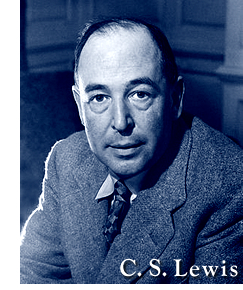
C.S. Lewis Daily – Today’s Reading On the present moment


Never, in peace or war, commit your virtue or your happiness to the future. Happy work is best done by the man who takes his long-term plans somewhat lightly and works from moment to moment “as to the Lord.” It is only our daily bread that we are encouraged to ask for. The present is the only time in which any duty can be done or any grace received.

From The Weight of Glory

Compiled in Words to Live By

Charles Stanley – The Landmine of Fear


Psalm 27:1-4

Fear has been a part of man’s emotional makeup since the fall. When Adam and Eve rebelled against the Lord, they hid themselves from Him and were afraid (Gen. 3:10). Things haven’t changed much. Anxiety often affects our thinking and controls our actions. It can keep us boxed in and unwilling to venture into unknown territory.

Let truth help you defeat fear. Remember that God is . . .

Almighty. Through the Savior’s perfect life and His sacrifice on the cross, our two greatest enemies have been defeated—Satan and death. Jesus set us free from slavery to sin; the devil has lost control over our lives. What’s more, we no longer face eternal separation from God. Jesus’ physical death has become the gateway to heaven, where we can live with the Father forever.

Always with us. Though He called Abraham to move away from all that was familiar, the Lord Himself promised to remain nearby. In Matthew 28:20, Jesus gives us similar reassurance. Through the indwelling Holy Spirit, we as believers have God not only near us but also in us. Nothing can ever separate us from His love—not past mistakes, present circumstances, or difficult people (Rom. 8:38-39).

Actively involved. God promises His help, and He always keeps His word. He knows what is happening in our lives and can turn hardships into a time of spiritual growth and ultimate blessing.

God Himself is the reason we should not be afraid. Grasp the truth of His power, presence, and involvement, and use them to disarm the landmine of fear.

Bible in One Year: Proverbs 5-8

Our Daily Bread — Grace in Our Hearts


Read: Ephesians 2:4-10

Bible in a Year: Job 38-40; Acts 16:1-21

Let your speech always be with grace. —Colossians 4:6

A few years ago, four-star General Peter Chiarelli (the No. 2 general in the US Army at that time) was mistaken for a waiter by a senior presidential advisor at a formal Washington dinner. As the general stood behind her in his dress uniform, the senior advisor asked him to get her a beverage. She then realized her mistake, and the general graciously eased her embarrassment by cheerfully refilling her glass and even inviting her to join his family sometime for dinner.

The word gracious comes from the word grace, and it can mean an act of kindness or courtesy, like the general’s. But it has an even deeper meaning to followers of Christ. We are recipients of the incredible free and unmerited favor—grace—that God has provided through His Son, Jesus (Eph. 2:8).

Because we have received grace, we are to show it in the way we treat others—for example, in the way we speak to them: “The words of a wise man’s mouth are gracious” (Eccl. 10:12). Grace in our hearts pours out in our words and deeds (Col. 3:16-17).

Learning to extend the grace in our hearts toward others is a by-product of the life of a Spirit-filled follower of Christ Jesus—the greatest of grace-givers. —Cindy Hess Kasper

Dear heavenly Father, help me today to season my words with grace. May all that I say and do be gracious to others and pleasing to You, O Lord, my strength and my redeemer.

God’s grace in the heart brings out good deeds in the life.

INSIGHT: Salvation is God’s gift and can never be earned by our good works. Paul reminds us that through Christ “we have redemption through His blood, the forgiveness of sins, according to the riches of His grace” (Eph. 1:7). In today’s passage, Paul emphasizes this grace by repeating the phrase “by grace you have been saved” (2:5,8). While we are not saved by our good works, we are saved so that we can do good works (v. 10). Paul reminds us to be “fruitful in every good work” (Col. 1:10) and “zealous for good works” (Titus 2:14).

Ravi Zacharias Ministry – Beyond the Visible


Winters, in the north-eastern part of India, especially Shillong where I live, can be bitingly cold, and more so when it rains. One year, the winter was particularly wet, and for weeks on end there seemed no respite from the cold. One gloomy day followed another with nothing to lighten the dismal scene of overcast skies and thick blankets of cloud stretched like a shroud from one end of the horizon to the other. Suffocated by the cheerless gloom that had pervaded my very heart and soul, small woes and anxieties that had seemed miniscule before, now seems threateningly gigantic. Funny how the weather can affect one’s mood! And just as I was beginning to feel that sunny days are but a distant memory, suddenly, the sun rose up one morning, bright and strong, shining in a blue cloudless sky. I was immediately reminded of a song in the Bible likening the sun to a bridegroom coming out of his chamber, rejoicing like a strong man to run its race.(1)

As I was reflecting on the sight, I noticed my neighbor’s door opened. Faithfully, as he had probably been doing every single day of his life, he turned his face to the sun and paid obeisance to it. With hands folded and eyes devoutly closed, he continued in this salutation of worship for a few minutes. As I sat there in the sun, enjoying the delicious warmth soaking into my body, I can understand exactly why people would want to worship it. There is something very nurturing, healing and life-giving about the sun’s warmth. No wonder that civilizations right from the Mayans and the ancient Egyptians to the Hindus of today, revered and worshipped it.

But does it have to end there, I thought? Should not our contemplation of the wonder of creation lead us to contemplate on the greater wonder of the One who is the cause of all existence? In his song offerings, the Gitanjali, the great seer and bard, Rabindranath Tagore captures the very essence of this truth when he sings: “The morning light has flooded my eyes—this is thy message to my heart. Thy face is bent from above, thy eyes look down on my eyes, and my heart has touched thy feet.”(2) Clearly, for Tagore, every part of creation is but the whisperings of the Almighty to the human heart.

Somehow, this thought takes me back to my young book-reading days. In my eagerness to come to the story at once, I would just glance briefly at the title and sometimes, bypass the name of the author altogether. The author was not important for me then; the story was! But through the years, I have come to appreciate a text more by also knowing something about its writer. His/Her experiences, thoughts and impressions that colour and give shape to the work. This, I find, enriches my reading experience and adds context to the text.

As I continued to enjoy the sunshine that winter morning, basking in its light and warmth, I directed my thoughts to the ultimate author who commanded the whole story into being and who continues to sustain that story from one sunrise to the other. “How wonderful this sun!” I exclaimed. “How wonderful is the One who created this sun!” an answering voice in my heart echoed.

Psalm 19, I believe, is a jubilant declaration of this truth as it points us beyond the visible to the One who is invisible and yet, whose presence and touch can be felt, can be seen, can be experienced:

The heavens declare the glory of God;

the skies proclaim the work of his hands.

Day after day they pour forth speech;

night after night they display knowledge.

There is no speech or language

where their voice is not heard.

Their voice goes out into all the earth,

their words to the ends of the world.

In the heavens he has pitched a tent for the sun,

which is like a bridegroom coming forth from his pavilion,

like a champion rejoicing to run his course.

It rises at one end of the heavens

and makes its circuit to the other;

nothing is hidden from its heat.

Ravi Zacharias recounts this story in his book The Shattered Visage: On Christmas Day, 1968, three American astronauts made the first journey that humanity will ever make around the ‘dark’ side of the moon, away from the earth. Having fired their rockets, they were homebound on Apollo 8, and beheld our planet in a way that human eyes had never witnessed before. They saw earth rise over the horizon of the moon, draped in the beauteous mixture of white and blue, bordered by the glistening light of the sun against the black void of space. In the throes of this awe-inspiring experience their first response is to open the Bible and read from the book of Genesis for the world to hear: In the beginning God created the heavens and the earth…

Let me conclude by quoting authors Thomas Howard and J.I. Packer:

“The truth is that our supreme fulfillment, as moral beings made in God’s image, is found and expressed in actively worshipping our holy Creator. When the object of homage is noble, the rendering of homage is ennobling; but when the objects of homage are not noble, the rendering of it is degrading… [But] it is impossible to worship nothing: we humans are worshipping creatures, and if we do not worship the God who made us, we shall inevitably worship someone or something else.”(3)

Tejdor Tiewsoh is a member of the speaking team with Ravi Zacharias International Ministries in Shillong, India.

(1) Psalm 19.

(2) Rabindranath Tagore, Gitanjali, Song no. 59.

(3) Thomas Howard and J.I. Packer, Christianity: The True Humanism (Vancouver: Regent College Publishing, 1984), 146.

Alistair Begg – God’s Hand in Your Life


Forget not all his benefits.

Psalm 103:2

It is a delightful and profitable occupation to mark the hand of God in the lives of ancient saints and to observe His goodness in delivering them, His mercy in pardoning them, and His faithfulness in keeping His covenant with them. But would it not be even more interesting and profitable for us to observe the hand of God in our own lives? Should we not look upon our own history as being at least as full of God, as full of His goodness and of His truth, as much a proof of His faithfulness and veracity as the lives of any of the saints who have gone before?

We do our Lord an injustice when we suppose that He performed all His mighty acts and showed Himself strong for those in the early time but does not perform wonders or lay bare His arm for the saints who are now upon the earth. Let us review our own lives. Surely in these we may discover some happy incidents, refreshing to ourselves and glorifying to our God. Have you had no deliverances? Have you passed through no rivers, supported by the divine presence? Have you walked through no fires unharmed? Have you had no manifestations? Have you had no choice favors? The God who gave Solomon the desire of his heart, has He never listened to you and answered your requests? That God of lavish bounty of whom David sang, “who satisfies you with good,”1 has He never filled you up to overflowing? Have you never been made to lie down in green pastures? Have you never been led by the still waters?

Surely the goodness of God has been the same to us as to the saints of old. Let us, then, weave His mercies into a song. Let us take the pure gold of thankfulness and the jewels of praise and make them into another crown for the head of Jesus. Let our souls produce music as sweet and as exhilarating as came from David’s harp while we praise the Lord whose mercy endures forever.

1) Psalm 103:5

Devotional material is taken from “Morning and Evening,” written by C.H. Spurgeon, revised and updated by Alistair Begg.

Charles Spurgeon – Contentment


“For I have learned, in whatsoever state I am, therewith to be content.” Philippians 4:11

Suggested Further Reading: 1 Timothy 6:6-11

The apostle Paul was a very learned man, but not the least among his manifold acquisitions in knowledge was this—he had learned to be content. Such learning is far better than much that is acquired in the schools. Their learning may look studiously back on the past, but too often those who cull the relics of antiquity with enthusiasm, are thoughtless about the present, and neglect the practical duties of daily life. Their learning may open up dead languages to those who will never derive any living benefit from them. Far better the learning of the apostle. It was a thing of ever-present utility, and alike serviceable for all generations; one of the rarest, but one of the most desirable accomplishments. I put the senior wrangler and the most learned of our Cambridge men, in the lowest form compared with this learned apostle; for this surely is the highest degree in humanities to which a man can possibly attain, to have learned in whatsoever state he is, to be content. You will see at once from reading the text, upon the very surface, that contentment in all states is not a natural propensity of man. Ill weeds grow apace; covetousness, discontent, and murmuring, are as natural to man as thorns are to the soil. You have no need to sow thistles and brambles; they come up naturally enough, because they are indigenous to earth, upon which rests the curse; so you have no need to teach men to complain, they complain fast enough without any education. But the precious things of the earth must be cultivated. If we would have wheat, we must plough and sow; if we want flowers, there must be the garden, and all the gardener’s care. Now, contentment is one of the flowers of heaven, and if we would have it, it must be cultivated.

For meditation: Proverbs 30:7-9: the balanced prayer of Agur, an observant and humble man. Covetousness is the enemy of contentment.

Sermon no. 320
9 July (Preached 25 March 1860)

John MacArthur – A Living Sacrifice


“Offer up spiritual sacrifices acceptable to God through Jesus Christ” (1 Pet. 2:5).

Every faculty you have is to be used for God’s glory.

In Romans 12:1 Paul pleads with believers to present their bodies to God as a living and holy sacrifice, which is an appropriate and acceptable act of worship. But as someone has rightly said, the problem with living sacrifices is they tend to crawl off the altar. That’s because sacrificial living demands spiritual discipline and constant dependence on the Holy Spirit. We as Christians aren’t always willing to do that.

According to Paul, the motivation and ability for self-sacrifice are found in the mercies we’ve already experienced in Christ. In Romans 1-11 he mentions several, including love, grace, peace, faith, comfort, power, hope, patience, kindness, glory, honor, righteousness, forgiveness, reconciliation, justification, security, eternal life, freedom, resurrection, sonship, intercession, and the Holy Spirit. Because you’ve received all that, you should gladly surrender every faculty you have for holy purposes.

“Body” in Romans 12:1 also includes your mind. Verse 2 says, “Do not be conformed to this world, but be transformed by the renewing of your mind, that you may prove what the will of God is, that which is good and acceptable and perfect.” A transformed mind is the key to transformed behavior.

Prior to your salvation, you had neither the desire nor the ability to make such a sacrifice. But because you are a new creation in Christ, you are not to “go on presenting the members of your body to sin as instruments of unrighteousness; but . . . as instruments of righteousness to God” (Rom. 6:13). One practical implication? Abstain from sexual immorality. Know how to possess your own body in sanctification and honor (1 Thess. 4:3-4).

You are a holy priest, and your priestly work begins with presenting yourself as a living and holy sacrifice. Is that your desire? Are you a faithful priest?

Suggestions for Prayer

Thank God for His bountiful mercies toward you.

Commit this day to Him, asking for the grace to live a holy life.

For Further Study

Read Romans 6.

What choices do you have as a believer that you didn’t have as an unbeliever?

What is the benefit of being God’s slave?

Joyce Meyer – Prayer Doesn’t Have to Be Long


Call to me and I will answer you and tell you great and unsearchable things you do not know. – Jeremiah 33:3 NIV

The length of our prayers really makes no difference to God. All that matters is that we pray the way He is teaching us to pray and that our prayers are Spirit- led, heartfelt, thankful, and accompanied by faith. Throughout the Bible, there are incredibly brief, but powerful, prayers. Here are a few of them:

Moses prayed for his sister: “Heal her now, O God, I beseech You!” (Numbers 12:13).

Elijah prayed: “O Lord my God, I pray, let this child’s soul come back to him” (1 Kings 17:21 NKJV).

Jesus prayed: “Father, forgive them, for they do not know what they do” (Luke 23:34 NKJV).

There will be times when you’ll pray longer prayers than others, but there is no correlation between how many minutes or hours we pray and whether God hears us. Just one word spoken to Him in faith from a sincere heart can reach His heart and move His hand.

Prayer of Thanks Thank You, Father, that I can pray to You from my heart, no matter how long or short that prayer may be. I am grateful that I can just be myself when I’m with You.

Campus Crusade for Christ; Bill Bright – Rescued from Darkness


“For He has rescued us out of the darkness and gloom of Satan’s kingdom and brought us into the kingdom of his dear Son” (Colossians 1:13).

A famous general invited me to his office. He was hungry for God and eager to become a Christian. Yet as we counseled together, he seemed reluctant to pray. I inquired as to his reluctance, and he said, “I don’t understand myself. I want to receive Christ, but I can’t.”

I turned to Colossians 1:13,14 and asked him to read it aloud. Then I asked him to tell me what he thought it meant. The light went on. Suddenly he realized that he was a member of Satan’s kingdom, and Satan was trying to hinder his being liberated from darkness and gloom into the glorious light of the kingdom of God’s dear Son. Satan did not want him to receive Christ into his heart.

As soon as the man realized he was a member of Satan’s kingdom, he was ready to pray and receive Christ into his life so that he would then become a member of God’s kingdom.

I, too, was once in Satan’s kingdom – not a very pleasant thought, but true. And so were you if you are a Christian. Every person born into this world is a part of Satan’s kingdom; all who are not now experiencing the saving grace and love of Christ are a part of his kingdom.

It is God the Holy Spirit who enables men to comprehend spiritual truth. It is God the Holy Spirit who liberates men from darkness into light. It is God the Holy Spirit who is responsible for the new birth that brings men into the kingdom of God.

When we go out to witness, it is not enough to know God’s plan. It is not enough to know the Four Spiritual Laws. It is not enough for us to be nicely groomed and properly scented. We need to go in the power of God’s Holy Spirit. He alone can change men.

Bible Reading: Ephesians 6:10-13

TODAY’S ACTION POINT: My first concern in everything I do and every contact I make today will be that the power of God’s Holy Spirit will be operative in my life, so that others will see His supernatural qualities in my life and want to join me in following Him.

Presidential Prayer Team; G.C. – Remember to Remember


How’s your memory these days? Can you recall the first time you were at the ocean or the smell of your grandmother’s cookies? Science is changing traditional thinking about how human memories are stored. It appears rather than a filing cabinet retrieval system in your head, memories are more like the movie of your life. They are your experiences of sight, sound, and smell providing the framework that makes you who you are today. Who would you be if you suddenly forgot your most powerful memories?

Remember your mercy, O Lord, and your steadfast love, for they have been from of old.

Psalm 25:6

God is not human, and He doesn’t struggle with a forgetful mind. He has loved you since before you arrived on Earth and every minute since then. Do you remember the first time you became aware of His amazing love? Have you ever momentarily forgotten that He loves you so intensely?

As you recount the blessings of life in America, remember to remember the love God has for America from its inception through today. Express your gratitude to God for the freedom you enjoy and remember to pray for all of those who serve this nation in Washington D.C.

Recommended Reading: Romans 13:1-10

Greg Laurie – The Eighth Commandment


“You shall not steal.”—Exodus 20:15

There is so much stealing in our culture today that we have almost become accustomed to it. In fact, I read about a study that was done on stealing in which people were asked why they didn’t steal. The number one reason given by those polled was the fear of getting caught. The next most common reason was concern that the other person might try to get even. The third most-cited reason was that the item might not be needed. What apparently didn’t occur to anyone was the fact that stealing is a sin.

Here is what God says about stealing: “Let him who stole steal no longer, but rather let him labor, working with his hands what is good, that he may have something to give him who has need” (Ephesians 4:28).

In the above verse we find three simple principles about how to live our lives as Christians.

First, if you have stolen, steal no longer. Don’t take something that doesn’t belong to you. Don’t illegally download stuff. Don’t take things that are not yours. If you have taken something, give it back or make restitution.

Second, be useful. Get out and work. Get a job. The apostle Paul said in 2 Thessalonians 3:10, “For even when we were with you, we commanded you this: If anyone will not work, neither shall he eat.” The government doesn’t owe you anything. Don’t leech off people. Go out and be responsible and look for a job.

Third, be useful. Find work wherever you can find it. Do something. Make an effort. Sometimes people who are out of work will say, “I am praying the Lord will provide.” That’s good to pray. But have they submitted your resume anywhere? Have they applied for any jobs? Keep praying. But start looking too.

Max Lucado – Our Family Reunion

The word good-bye. This word may be the challenge of your life. How does a person get through raging loneliness, strength-draining grief? The rest of the world has moved on and you ache to do the same. Take heart. God has served notice. All farewells are on the clock.

1 Thessalonians 4:16 begins, “The Master himself will give the command. Archangel thunder! God’s trumpet blast! He will come down from heaven and the dead in Christ will rise. Then the rest of us who are still alive at the time will be caught up with them into the clouds to meet the Master. Oh, we’ll be walking on air. And there will be one huge family reunion with the Master. Reassure one another with these words!”

Revelation 21:4 promises He will wipe every tear from our eyes. Isn’t this our hope? God has promised a restoration of all things. All things—and that includes yours.

From You’ll Get Through This

Night Light for Couples – I Love You!


“This is my command: Love each other.” John 15:17

One of the best ways to sustain true love between you and your mate is to build a bridge of loving memories. I am reminded of a husband named Jim who was tragically killed in an accident while driving home from work. It was his wife Carol’s fiftieth birthday. Rescue teams found two plane tickets to Hawaii in his pocket; he had planned to surprise Carol with them.

Months later, Carol was asked how she was coping. She answered that on their wedding day, she and Jim had promised to say “I love you” before noon each day of their marriage. Over the years it had become a fun—and often difficult—challenge. She recalled running down the driveway saying “I love you,” even though she was angry at Jim. On other occasions she drove to his office to drop a note in his car before the noon deadline. The effort it took to keep that promise led to many positive memories of their years together.

The morning Jim died, he left a birthday card in the kitchen, then slipped out to the car. Carol heard the engine starting and raced outside. She banged on the car window until he rolled it down, then yelled over the roar of the engine, “Here on my fiftieth birthday, Mr. James E. Garret, I, Carol Garret, want to go on record as saying ‘I love you!’”

“That’s how I’ve survived,” Carol said later. “Knowing that the last words I said to Jim were I love you!”

We can build bridges across the span of our lives in many ways— with cards and flowers, through special shared moments, or, like Jim and Carol, with a simple “I love you” expressed each day. Cherished memories established over the course of your marriage will give you and your mate the foundation for a genuine love that endures a lifetime.

Shirley M. Dobson

From Night Light For Couples, by Dr. James & Shirley Dobson

Charles Stanley – Saved by Grace


Ephesians 2:4-10

Many people believe that piling up good works makes them right with the Lord. Yet when it comes to sin, death is the only payment that can satisfy divine justice (Rom. 6:23). Since we all transgress, this leaves us in a desperate situation facing an eternity apart from God.

Grace, the expression of divine love and kindness to the utterly undeserving, prompted the solution: God sent His Son Jesus to die in our place. According to Romans 10:9, all we need to do is believe. Jesus’ death satisfied God’s justice and brought us:

New Life. Our spirit is made alive in Christ the moment we acknowledge we’re sinners, turn from our rebelliousness, and believe that His death paid our sin debt in full.

Freedom. At salvation, sin’s power over us is broken and we are set free from its hold. Jesus raised us up out of the quagmire of disobedience and gave us the faith to believe. Now we can exercise our newfound freedom and follow Him.

Security. When we accept God’s judgment that we are, by nature, sinners and acknowledge our Savior’s sacrifice as payment for our sins, we’re permanently adopted into the heavenly Father’s family. Our status changes instantly: Once objects of wrath, we are now children of God. Someday we will be seated in the heavenly realms with Christ to enjoy life everlasting with Him.

God, the very One against whom we rebelled, substituted His Son Jesus in our place to receive the punishment that was rightfully ours. How will you show your gratitude to God for His saving grace?

Bible in One Year: Proverbs 1-4

Our Daily Bread — Ordinary People


Read: Judges 6:11-16

Bible in a Year: Job 36-37; Acts 15:22-41

We have this treasure in earthen vessels, that the excellence of the power may be of God and not of us. —2 Corinthians 4:7

Gideon was an ordinary person. His story, recorded in Judges 6, inspires me. He was a farmer, and a timid one at that. When God called him to deliver Israel from the Midianites, Gideon’s initial response was “How can I save Israel? Indeed my clan is the weakest in Manasseh, and I am the least in my father’s house” (Judg. 6:15). God promised that He would be with Gideon and that he would be able to accomplish what he had been asked to do (v. 16). Gideon’s obedience brought victory to Israel, and he is listed as one of the great heroes of faith (Heb. 11:32).

Many other individuals played a significant part in this plan to save the Israelites from a strong enemy force. God provided Gideon with 300 men, valiant heroes all, to win the battle. We are not told their names, but their bravery and obedience are recorded in the Scriptures (Judg. 7:5-23).

Today, God is still calling ordinary people to do His work and assuring us that He will be with us as we do. Because we are ordinary people being used by God, it’s obvious that the power comes from God and not from us. —Poh Fang Chia

Lord, I am just an ordinary person, but You are an all-powerful God. I want to serve You. Please show me how and give me the strength.

God uses ordinary people to carry out His extraordinary plan.

INSIGHT: Today’s text provides some insight into how we should view situations for which we feel inadequate. Gideon did not feel prepared to go into battle against the Midianites who were oppressing Israel. Responding to Gideon’s understandable concern, God sent the angel of the Lord to encourage him. He said that Gideon should “go in the strength” he had (Judg. 6:14 niv), but he also said, “I will be with you” (v. 16). When God calls us to take on a difficult task, we can rely on His strength and power to help us accomplish it.

Ravi Zacharias Ministry – Why Christian?


“Why Christian?” was a question put before Professor Douglas John Hall by one of the many students who end up in his office asking more about the theology he teaches. He notes the possibility that the question was asked rhetorically, maybe even a bit sarcastically, like those near Jesus who threw questions more like daggers than candid inquiries. But it is also possible the student just wanted to hear an honest explanation: In a world of so many spiritual options, in a world of reasons to reject religion altogether, Why Christianity? Regardless of tone or motive, the seasoned professor of theology decided to answer the question, laying aside the responses that could be given easily after so many years of teaching. “I confess, I [am answering] as much for myself as for you,” he writes to the student who asked the question. “You made me realize that after all these years I needed to face that question in the quite basic and personal way you put it to me.”(1)

On a typical day, my own answer to the question of Christianity might be steeped in the signs and realities of the uniqueness of Christ. Thankfully this answer is not my own. With many who have gone before me, I cannot explain Jesus of Nazareth without concluding his uniqueness:

“Surely this man was the Son of God!”

“Nobody has ever heard of opening the eyes of a man born blind. If this man were not from God, he could do nothing” “Come and see the man who told me everything I ever did. Could this be the Christ?”(2)

Christianity is not a matter of preference or pedigree, but pilgrimage chosen specifically because a follower has found one worth following. “[Jesus] was the meekest and lowliest of all the sons of men,” wrote Scottish nobleman James Stewart, “yet he spoke of coming on the clouds of heaven with the glory of God… No one was half so kind or compassionate to sinners yet no one ever spoke such red-hot scorching words about sin… His whole life was love. Yet on one occasion he demanded of the Pharisees how they ever expected to escape the damnation of hell… He saved others but at the last, Himself He did not save. There is nothing in history like the union of contrasts which confront us in the Gospels.” Why Christian? Because there is none other like Christ.

The incomparability of Jesus Christ answers the questions of a world of spiritual options and religious hostility. Like professor Hall, facing the question “Why Christian?” is typically a matter of confessing the things I know, even as I know I now see but a reflection and will one day see face to face. Still, there are less typical days when the question comes not with hostility or sarcasm or curiosity, but from somewhere within, and the answers are somewhere caught up in despair or injustice or death. When standing over a casket or holding the hand of one whose body is riddled with cancer, “Why Christian?” takes on a different flesh—or else it wavers cold and corpselike. Christ’s uniqueness is suddenly a matter of urgency, needing to be spoken in words that have meaning in valleys of death and shadow. Standing before this body that once breathed, what does it really mean that Christ was unique? Though with a far different kind of trembling certainty, here too Christ’s incomparability is ultimately what matters.

The apologetic of the apostle Paul was always spoken starring life’s “last enemy” dead in the eyes. Whether answering the question “Why Christian?” or standing in jail having been beaten to silence, Paul kept before him the hope of the resurrection as both the proof of Christ’s uniqueness and the assurance that this uniqueness inherently matters. He spoke of the resurrection of Christ and his hope in the resurrection of the dead before the assembled Sanhedrin, before the Roman procurator Felix, and again before Felix’s successor, Festus, who conceded that Paul’s arrest was due to his proclamation “about a dead man named Jesus who Paul claimed was alive.”(3) Even before king Agrippa, Paul’s answer to the first acrimonious signs of the question “Why Christian?” was an appeal to Christ’s uniqueness in the hope of the resurrection. He asked, “Why should any of you consider it incredible that God raises the dead?…I am saying nothing beyond what the prophets and Moses said would happen—that the Christ would suffer and, as the first to rise from the dead, would proclaim light to his own people and to the Gentiles” (Acts 26:8, 22). For Paul, and for all who claim the inimitableness of Jesus, if Christ has not been raised, there is no answer to the question “Why Christian?”

Instead, the uniqueness of Christ is an answer for questions that come with sarcasm or sincerity. But so it is an answer with flesh when life’s typical comforts fall by the wayside and the valley of shadows is long and lonely.

“He is not here; he has risen, just as he said. Come and see the place where he lay.”(4) There is none other like Christ. I know of no other god who weeps with us at gravesides and then shows us in his own dying and rising that death shall not hold its sting.

Jill Carattini is managing editor of A Slice of Infinity at Ravi Zacharias International Ministries in Atlanta, Georgia.

(1) Douglas John Hall, Why Christian: For Those on the Edge of Faith (Minneapolis: Augsburg Fortress, 1998), 11.

(2) Mark 15:39, John 9:32-33, John 4:29.

(3) Acts 23:6, Acts 24:15, 21, Acts 25:19.

(4) Matthew 28:6.

Alistair Begg – The Secret Strength of Faith


Tell me where your great strength lies.

Judges 16:6

Where does the secret strength of faith lie? It lies in the food it feeds on; for faith studies what the promise is-an emanation of divine grace, an overflowing of the great heart of God. And faith says, “My God could not have given this promise except from love and grace; therefore it is quite certain His Word will be fulfilled.” Then faith thinks, “Who gave this promise?” It considers not so much its greatness as, “Who is the author of it?” She remembers that it is God, who cannot lie-God omnipotent, God immutable-and therefore concludes that the promise must be fulfilled; and onward she proceeds in this firm conviction. She remembers why the promise was given-namely, for God’s glory-and she feels perfectly sure that God’s glory is safe, that He will never stain His own insignia, nor spoil the sparkle of His own crown; and therefore the promise must and will stand.

Then faith also considers the amazing work of Christ as being a clear proof of the Father’s intention to fulfill His word. “He who did not spare his own Son but gave him up for us all, how will he not also with him graciously give us all things?”1 Moreover, faith looks back upon the past, for her battles have strengthened her, and her victories have given her courage. She remembers that God has never failed her, that He never once failed any of His children. She recalls times of great peril when deliverance came, hours of awful need when as her day her strength was found, and she cries, “No, I never will be led to think that He can change and leave His servant now. Thus far the Lord has helped me, and He will help me still.”

Thus faith views each promise in its connection with the promise-giver and, because she does so, can with assurance say, “Surely goodness and mercy shall follow me all the days of my life!”2

1) Romans 8:32

2) Psalm 23:6

Devotional material is taken from “Morning and Evening,” written by C.H. Spurgeon, revised and updated by Alistair Begg.

Charles Spurgeon – A wise desire


“He shall choose our inheritance for us.” Psalm 47:4

Suggested Further Reading: Genesis 45:4-11

If you turn to the pages of inspiration, and read the lives of some of the most eminent saints, I think you will be obliged to see the marks of God’s providence in their histories too plainly to be mistaken. Take, for instance, the life of Joseph. There is a young man who from early life serves God. Read that life till its latest period when he gave commandment concerning his bones, and you cannot help marvelling at the wondrous dealings of providence. Did Joseph choose to be hated of his brethren? But, yet, was not their envy a material circumstance in his destiny? Did he choose to be put into the pit? But was not the putting into the pit as necessary to his being made a king in Egypt as Pharaoh’s dream? Did Joseph desire to be tempted of his mistress? He chose to reject the temptation, but did he choose the trial? No; God sent it. Did he choose to be put into the dungeon? No. And had he anything to do with the baker’s dream, or with Pharaoh’s either? Can you not see, all the way through, from first to last, even in the forgetfulness of the butler, who forgot to speak of Joseph till the appointed time came, when Pharaoh should want an interpreter, that there was truly the hand of God? Joseph’s brethren did just as they liked when they put him into the pit. Potiphar’s wife followed the dictates of her own abandoned lust in tempting him. And yet, notwithstanding all the freedom of their will, it was ordained of God, and worked according together for one great end; to place Joseph on the throne; for as he said himself, “Ye meant it for evil, but God intended it for good, that he might save your souls alive!”

For meditation: You may find yourself in undesirable circumstances, but God can take these bad things and work them together for your good and his glory if you are his child (Romans 8:28). The all-knowing God knows what is best for us and can direct us clearly by our circumstances (Isaiah 48:17).

Sermon no. 33

8 July (1855)