Tag Archives: Bible

Presidential Prayer Team; J.K. – Wisdom Words


The young man who shot nine people in a church last month was in part influenced by a website filled with words of hate and prejudice. Terrorists come in all shapes and sizes – their evil deeds bare the effects of impure, lying words etched in their minds…words that lead them to inhumane acts of violence.

The words of the Lord are pure words, like silver refined in a furnace.

Psalm 12:6

God’s Word, however, remains the only Word that is pure and true, leading men to do what is good and right. One commentator stated that the Bible is just what you need. “It gives us that light, pardon, liberty, purity, joy, for which we sigh.” Scripture has been tried by criticism and analysis, science and experience, and it still comes forth as pure as refined silver. Human words can cause you to be a slave to something evil or discouraging, but the Word of God uplifts, speaks of good, and gives freedom that He only can provide.

As you enter into Independence Day weekend, remember the One who gave the founders of this country the wisdom to establish these United States. Then give Him thanks for the freedoms you enjoy, and pray for those who are missing out on the greatest words ever written.

Recommended Reading: Colossians 3:12-17

Greg Laurie – Because He Said So


“I, even I, am the LORD, and besides Me there is no savior.”—Isaiah 43:11

As children are growing up, they will hear their parents say things they don’t like, such as when Mom or Dad says, “Do you think that I have a money tree somewhere?” or “You don’t know the sacrifices I had to make when I was your age!” Then there is my favorite parental saying: “Because I said so!”

Kids today may vow to never say that to their children, but when they’re adults and their children keep pressing them, they may find themselves blurting out, “Because I said so!” (Then they’ll think, I can’t believe I just said that!)

Sometimes we may look at God’s laws, standards, and absolutes and say, “I struggle with that. I don’t know about that. How can I know it’s true?”

Meanwhile God is saying to us, “Because I said so. Really, you know it is true because I said so.”

God is the source of truth. God is truth. So if God says it is true, then it is true. You may or may not agree with it. You may not fully understand it. But that doesn’t change what it is.

I have seen a lot of drama played out in real time in many lives. I have seen what happens to men and women who get married, work on having a strong marriage, stay married, and raise their children in the way of the Lord. Of course every family has its challenges. And every family has its tragedies. But I’ve seen in the long run how it works when we pass on these biblical truths from generation to generation.

I have also seen what happens when couples get divorced, get remarried, and get divorced again. I’ve seen how problems get passed from generation to generation.

So let’s just take God at His Word.

Max Lucado – The Spite House


In 1882 in New York City, Joseph Richardson owned a narrow strip of land 5 feet wide and 104 feet long. Next door was a normal-sized lot owned by a man who wanted to erect an apartment building. He offered Richardson $1,000 for his plot. Deeply offended, Richardson demanded $5,000 which the builder refused to pay. The builder built the apartment building, assuming the slender lot would remain vacant and the view exposed. But Richardson built a house instead—blocking the view! Dubbed the “Spite House”, Richardson spent the last fourteen years of his life in the narrow residence that seemed to fit his narrow state of mind.

Revenge builds a lonely, narrow house. Space enough for one person. No wonder God insists we “keep a sharp eye out for the weeds of bitter discontent!” (Heb. 12:14-17).

From You’ll Get Through This

Night Light for Couples – “Shmily”

“Shmily”

by Laura Jeanne Allen

My grandparents were married for over half a century. From the time they met each other they played their own special game. The goal of their game was to write the word “shmily” in a surprise place for the other to find. They took turns leaving “shmily” around the house, and as soon as one of them discovered it, it was his or her turn to hide it once more. They dragged “shmily” with their fingers through the sugar and flour containers to await whoever was preparing the next meal. They smeared it in the dew on the windows overlooking the patio where my grandma always fed us warm, homemade pudding with blue food coloring. “Shmily” was written in the steam on the bathroom mirror, where it would reappear after every hot shower. At one point, my grandmother even unrolled an entire roll of toilet paper to leave “shmily” on the very last sheet. There was no end to the places “shmily” popped up. Little notes with a hastily scribbled “shmily” were found on dashboards and car seats or taped to steering wheels. The notes were stuffed inside shoes and left under pillows. “Shmily” was written in the dust upon the mantel and traced in the ashes of the fireplace. This mysterious word was as much a part of my grandparents’ house as the furniture.

It took me a long time before I fully appreciated my grandparents’ game. Skepticism has kept me from believing in true love—one that is pure and enduring. However, I never doubted my grandparents’ relationship. They had love down pat. It was more than their flirtatious little games; it was a way of life. Their relationship was based on a devotion and passionate affection that not everyone experiences.

Grandma and Grandpa held hands every chance they could. They stole kisses as they bumped into each other in their tiny kitchen. They finished each other’s sentences and shared the daily crossword puzzle and word jumble. My grandma whispered to me about how cute my grandpa was, how handsome an old man he had grown to be. She claimed that she really knew “how to pick ’em.” Before every meal they bowed their heads and gave thanks, marveling at their blessings: a wonderful family, good fortune, and each other.

But there was a dark cloud in my grandparents’ life: My grandmother had breast cancer. The disease had first appeared ten years earlier. As always, Grandpa was with her every step of the way. He comforted her in their yellow room, painted that way so that she could always be surrounded by sunshine, even when she was too sick to go outside.

Now the cancer was again attacking her body. With the help of a cane and my grandfather’s steady hand, she went to church with him every Sunday. But my grandmother grew steadily weaker until, finally, she could not leave the house anymore. For a while, Grandpa would go to church alone, praying to God to watch over his wife. Then one day, what we all dreaded finally happened. Grandma was gone.

“Shmily.” It was scrawled in yellow on the pink ribbons of my grandmother’s funeral bouquet. As the crowd thinned and the last mourners turned to leave, my aunts, uncles, cousins, and other family members came forward and gathered around Grandma one last time. Grandpa stepped up to my grandmother’s casket and, taking a shaky breath, began to sing to her. Through his tears and grief, the song came, a deep and throaty lullaby.

Shaking with my own sorrow, I will never forget that moment. For I knew that, although I couldn’t begin to fathom the depth of their love, I had been privileged to witness its unmatched beauty.

S‐h‐m‐i‐l‐y: See How Much I Love You. Thank you, Grandma and Grandpa, for letting me see.

Looking ahead…

Is there any doubt that this tender couple knew the joy that springs from true love? That they understood the meaning of intimacy and commitment in marriage? Through a simple message sent in simple ways— traced in a flour container or on the bathroom mirror—this husband and wife continually expressed their love to each other for over fifty years. And when the time came for “Grandpa” to face the world alone, through his tears he sang his bride a lullaby that told her one last time, “See how much I love you!”

So many couples today reach the end of their days without ever experiencing such genuine love—the kind that includes stealing kisses, finishing each other’s sentences, and holding hands whenever possible. They sincerely desire a deep, intimate love, but they assume it will just “happen” somewhere along the way. When it doesn’t, disillusionment and even divorce follow.

We’ll talk this week about true love—what it means and how you can achieve it in marriage. I’ll close tonight’s reading with this question: What does true love mean to you?

– James C. Dobson

From Night Light For Couples, by Dr. James & Shirley Dobson

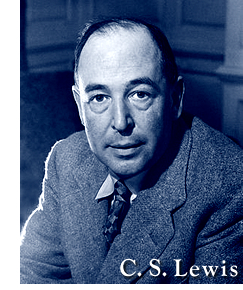
C.S. Lewis Daily – Today’s Reading – On freedom (and predestination)


It will be too late then to choose your side. There is no use saying you choose to lie down when it has become impossible to stand up. That will not be the time for choosing: it will be the time when we discover which side we really have chosen, whether we realised it before or not. Now, today, this moment, is our chance to choose the right side. God is holding back to give us that chance. It will not last forever. We must take it or leave it.

Every time you make a choice you are turning the central part of you, the part of you that chooses, into something a little different from what it was before. And taking your life as a whole, with all your innumerable choices, all your life long you are slowly turning this central thing either into a heavenly creature or into a hellish creature: either into a creature that is in harmony with God, and with other creatures, and with itself, or else into one that is in a state of war and hatred with God, and with its fellow-creatures, and with itself. To be the one kind of creature is heaven: that is, it is joy and peace and knowledge and power. To be the other means madness, horror, idiocy, rage, impotence, and eternal loneliness. Each of us at each moment is progressing to the one state or the other.

From Mere Christianity

Compiled in Words to Live By

Mere Christianity. Copyright © 1952, C. S. Lewis

Charles Stanley – Recognizing the Voice of God


John 10:3-5, 14-16

Have you ever been in a car with someone who is looking for a specific broadcast on the radio? While constantly adjusting the frequency, he cocks his ears and listens carefully. Station after station is rejected until he hears the familiar voice he’s been seeking.

In our Christian life, we know the importance of recognizing God’s voice and tuning others out. When making decisions, we want to be sure we hear the right Person. The Bible assures us that as believers, we can distinguish God’s voice from all others (John 10:27).

What are some of the conditions for recognizing His voice?

  1. Be in range. The Lord’s voice is heard through Scripture. Take time to reconnect with God through His Word. Let the Holy Spirit bring to mind the truths related to your situation.
  2. Be tuned to the right station. God always speaks words that are consistent with Scripture—He will never contradict it. Compare what you are hearing with His Word, and seek godly advice to be sure you have the whole counsel of God.
  3. Be willing to make the necessary adjustments. Sometimes what God says conflicts with what seems logical to human reasoning. Or, it might clash with our fleshly desires. It can be tempting to dismiss a voice that disagrees with our preconceived ideas, but God’s children need to align themselves with His directions regardless.

Our Savior is calling; how easily do you recognize His voice? To know His voice better, spend more time in His Word. Today is a good time to start.

Bible in a Year: Psalms 112-118

Ravi Zacharias Ministry –  Spaghetti Monsters and One Less God


Among atheist advocates, it has become fashionable to dismiss theism with the mantra that unbelievers, like theists, are atheist with regard to a host of entities considered to be divine at sundry times throughout history. Atheists, we are told, merely acknowledge one less God than theists. If believers understood why they reject Zeus, the argument goes, they would understand why atheists reject their God.

Unfortunately, dismissing theism on such grounds betrays a paltry acquaintance with the very idea of God, let alone the God revealed in the Bible. It is true that many concepts of God present us with entities that are nothing more than glorified human beings. But anyone who is familiar with the relevant religious and philosophical literature on the subject does not need to be told that such untutored notions of God are just pointless red herrings. Popular level atheism may be fodder for invigorating debates on the Internet, but it has little, if anything at all, to do with God.

Take, for instance, the idea of God defended by such a prominent ancient philosopher as Aristotle. Whereas Zeus and his associates held sway at the popular level, David Conway notes that Aristotle defended a God who was unchanging, immaterial, all-powerful, omniscient and indivisible; a God who possessed “perfect goodness and necessary existence.”(1) That is a striking parallel to the God worshipped in the major monotheistic religions of the world. Even among the so-called animistic religions, it is a mistake to think that the concept of God is limited to spirits in natural objects and events, even in cases where the latter are venerated. As Timothy Tennent notes, adherents of these religions acknowledge a being who is the ground of all being.(2)

God is not one being among other beings; God is being itself. In philosophical parlance, God exists necessarily—God cannot not exist! Every other entity finds the reason for its existence in God. Spaghetti monsters and teapots in orbit are material objects that would stand in need of explanation, even if they really did exist, since they do not exist necessarily. But we can also dismiss such examples precisely because we know enough about spaghetti and teapots to know what it would take to get them to play the roles detractors of faith in God assign to them. To say they are infinitely under qualified is a gross understatement.

But not only is God the ground of Being and the reason everything else exists, the Bible tells us that, ultimately, reality is personal. For God, the Being from whom all things came, exists as a Trinity—three Persons in One Being. These truths about God—God’s necessary existence as the grounding of all of reality, the relationships that exist within the Trinity and God’s personal nature—are profound truths about the glory and majesty of God. Only the Christian faith can countenance them all. Thus far from being a problem for Christianity, the Trinity solves a major difficulty for humanity by providing us with a coherent explanation for our origin and purpose; both in this life and in the life to come. The Bible also tells us that human beings are made in the image of God. Our powerful relational capacities are therefore not accidental: they are a reflection of reality at its very core. As a matter of fact, our capacity for relationship can only be fully satisfied when we are properly related to God.

Religious systems that conceive of God as a personal Being who nevertheless exists as a single entity cannot sufficiently account for the fullness of God since such a God lacks anyone with whom he can be in relationship. For example, such a God would have to create out of the necessity to actualize his love. But within the Trinity, there is the eternal unity and community sustained by the self-sufficiency of God.

A common objection to the claim that God, who is love, would not have had someone to love before He created is to ask how God was able to actualize attributes such as anger and mercy, which are also relational in nature, before creation. If mercy can exist in God as a latent capacity sans creation, why can’t love exist in the same way? Once again, there is a serious misconception of the nature of perfect relationships lurking in this objection. Attributes such as anger and mercy are not necessary to the nature of God. They are contingent upon there being imperfect, sentient creatures. They are by definition absent in a perfect relationship, such as the one that exists among the members of the Trinity. They will one day be eternally absent from those who choose to follow God’s way, for “when he appears we shall be like him, because we shall see him as he is” (1 John 3:2b). No criticism of faith in God that fails to take into account the fullness of God and the perfection promised those from whom sin will be eternally purged touches the essence of the Gospel message.

J.M. Njoroge is a member of the speaking team at Ravi Zacharias International Ministries in Atlanta, Georgia.

(1) Quoted by Antony Flew in There is a God: How the World’s Most Notorious Atheist Changed His Mind (San Francisco: HarperOne, 2008), 92.

(2) Timothy Tennent, “African Traditional Religion in Practice,” https://www.biblicaltraining.org, accessed June 23, 2015.


Alistair Begg – Fear Not


Our heart is glad in him. Psalm 33:21

Blessed is the fact that Christians can rejoice even in the deepest distress; although trouble may surround them, they still sing; and like many birds, they sing best in their cages. The waves may roll over them, but their souls soon rise to the surface and see the light of God’s countenance; they have a buoyancy about them that keeps their head always above the water and helps them to sing amid the tempest, “God is with me still.”

To whom shall the glory be given? Oh, to Jesus-it is all by Jesus. Trouble does not necessarily bring consolation with it to the believer, but the presence of the Son of God with him in the fiery furnace fills his heart with joy. He is sick and suffering, but Jesus visits him and makes his bed for him. He is dying, and the cold, chilly waters of Jordan are gathering about him up to the neck, but Jesus puts His arms around him and cries, “Fear not, beloved; to die is to be blessed; the waters of death have their fountainhead in heaven; they are not bitter-they are sweet as honey, for they flow from the throne of God.”

As the departing saint wades through the stream, and the billows gather around him, and heart and flesh fail him, the same voice sounds in his ears: “Fear not, for I am with you; be not dismayed, for I am your God.”1 As he nears the borders of the infinite unknown and is almost frightened to enter the realm of shades, Jesus says, “Fear not, little flock, for it is your Father’s good pleasure to give you the kingdom.”2 Thus strengthened and consoled, the believer is not afraid to die; no, he is even willing to depart, for since he has seen Jesus as the morning star, he longs to gaze upon Him as the sun in his strength. Truly, the presence of Jesus is all the heaven we desire. He is at once

The glory of our brightest days;

The comfort of our nights.

1) Isaiah 41:10

2) Luke 12:32

Devotional material is taken from “Morning and Evening,” written by C.H. Spurgeon, revised and updated by Alistair Begg.

John MacArthur – Coming to Christ


“Coming to [Christ] as to a living stone” (1 Pet. 2:4).

Jesus Christ is the source of every spiritual privilege.

Often Christians speak of salvation as “coming to Christ.” That’s an accurate, biblical description, for Jesus Himself said, “Come to Me, all who are weary and heavy-laden, and I will give you rest” (Matt. 11:28); “I am the bread of life; he who comes to Me shall not hunger, and he who believes in Me shall never thirst” (John 6:35); “If any man is thirsty, let him come to Me and drink” (John 7:37). Those are metaphors for salvation.

Coming to Christ initiates all your spiritual privileges because in Him God “granted to us everything pertaining to life and godliness” (2 Pet. 1:3). Paul said, “Blessed be the God and Father of our Lord Jesus Christ, who has blessed us with every spiritual blessing in the heavenly places in Christ” (Eph. 1:3).

The Greek word translated “coming” in 1 Peter 2:4 conveys more than initially turning to Christ for salvation. It implies remaining with Him. In the Greek translation of the Old Testament it was used of those who drew near to God for ongoing worship. It was also used of Gentile proselytes—those who chose to identify themselves with God’s people.

When you came to Christ, a permanent relationship of intimate personal communion was established. Before that, you were rebellious toward God, without hope, and alienated from God’s promises. Now you’ve been born again to a living hope, you abide in Him and in His Word, and you have wonderful spiritual privileges.

Indeed, you are a privileged person, and the greatest of those privileges is your personal relationship with Christ Himself. Continue to draw near to Him today through prayer and worship.

Suggestions for Prayer

Tell Jesus how much you love Him and how you want your relationship with Him to be all it should be.

For Further Study

Read Ephesians 2:1-22.

  • How did Paul describe our spiritual condition before salvation?
  • How are sinners reconciled to God?
  • What analogy did Paul use to describe our relationship as Christians to Jesus Christ?

Joyce Meyer – Freedom of a Child


Then little children were brought to Jesus, that He might put His hands on them and pray; but the disciples rebuked those who brought them. But He said, Leave the children alone! Allow the little ones to come to Me, and do not forbid or restrain or hinder them, for of such [as these] is the kingdom of heaven composed. Matthew 19:13–14

Children seem to be able to make a game out of anything. They quickly adjust, don’t have a problem letting other children be different than they are, and are always exploring something new. They are amazed by everything!

Oswald Chambers wrote in My Utmost for His Highest: “The freedom after sanctification is the freedom of a child, the things that used to keep the life pinned down are gone.” We definitely need to watch and study children and obey the command of Jesus to be more like them (see Matthew 18:3). It is something we have to do on purpose as we get older. We all have to grow up and be responsible, but we don’t have to stop enjoying ourselves and life.

Don’t let the world steal your confidence. Remember that you have been created on purpose by the hand of God. He has a special, unique, wonderful plan for you. Go for it! Don’t shrink back, conform, or live in fear.

Lord, I can’t be a child again, but I can have the freedom and the wonder of a child. I come to You as a child now, and I ask You to renew a childlike faith in me. Amen.

Campus Crusade for Christ; Bill Bright – Finished with Sin


“He personally carried the load of our sins in His own body when He died on the cross, so that we can be finished with sin and live a good life from now on. For his wounds have healed ours!” (1 Peter 2:24).

Following one of my messages a young woman in her early 20’s asked for counsel. She was weighted down with her guilt and sin. In fact, she was so distraught that she would not look me in the eye. All the while I was counseling her she was under such deep conviction that all I could see was the top of her head.

I asked, “Do you believe that Jesus Christ is the Son of God?” She nodded in the affirmative. “Do you believe that He died on the cross for your sins?” Again she responded affirmatively. “Would you like to invite Him into your life and ask Him to cleanse you with His precious blood, which He shed on the cross for your sins, and make you a new creature in Christ?” Again, she nodded. Together we knelt in prayer and through her sobs she surrendered to Christ, acknowledging the wickedness and filth of a life of gross immorality. She confessed to God her disobedience of her father and mother whose hearts had been broken by her prodigal ways.

After some time on our knees it was obvious that God had touched her, had forgiven and cleansed her. The sobbing had passed and now she was at peace. The Spirit within me bore witness that she had become a new creature in Christ. As we stood to our feet, she looked at me with her eyes still glistening with tears and her face radiant with joy. She now knew the reality of our promise for today. Jesus had taken the load of her sins on His own body and she was cleansed. With His wounds He had healed her and now she could live a life for the glory of God.

Who, but Jesus, could work such a miracle? Is it any wonder that those who know Him in this way want, like apostle Paul, to tell everyone who will listen about Him? He alone can forgive our sin and liberate us from the darkness and gloom of Satan’s kingdom.

Bible Reading: I Peter 2:21-25

TODAY’S ACTION POINT: With great joy and deep gratitude I will praise the Lord that He has taken upon Himself the load of my sin and through His death on the cross has paid the penalty which I could never have paid through my own effort. As an expression of my gratitude and through the enabling of the Holy Spirit, I commit myself to live a good life, a supernatural life that will glorify my God and Savior.

Presidential Prayer Team; J.R. – Authority Abuse


When Romanian dictator Nicolae Ceausescu began a speech before 80,000 of his “supporters” on December 21, 1989, he had no way of knowing he was four days from being executed by firing squad. The ruthless communist leader had carefully staged the event, as always, with strict instructions to the crowd as to where they would stand, and when they would cheer and lift up the signs bearing his image. But the throng, primed for revolution, began booing and jeering. The state-run video feed of Ceausescu’s utter shock and dismay to realize he was being publicly insulted is among the most iconic in history.

Now therefore, O kings, be wise; be warned, O rulers of the earth.

Psalm 2:10

“Be wise; be warned” is the message of Scripture to kings. They should, Psalm 2:11 says, “serve the Lord with fear, and rejoice with trembling.” Power over people is limited to what God allows…and when a leader abuses his authority, the end can come with devastating swiftness.

As you celebrate your freedom in the coming days, ask God to help America’s leaders remember that God’s blessings upon the nation can be withdrawn – and surely will be – if those in positions of authority do not serve the Lord. Pray that His name will be lifted up today and always!

Recommended Reading: Deuteronomy 11:13-28

Greg Laurie – It Starts with the Family


“Honor your father and your mother, that your days may be long upon the land which the Lord your God is giving you.”—Exodus 20:12

Few things in life can bring us as much pleasure or pain as our families. When things are working well in the family, it’s great. When things are not going so well, it’s tough. Parents have tension with children. Children have tension with parents. Husbands have tension with wives. Wives have tension with husbands. Then there are the in-laws. Families are complex. But God established the family.

In the Ten Commandments, before a word is said about how we treat one another, God starts with the family: “Honor your father and your mother, that your days may be long upon the land which the Lord your God is giving you” (Exodus 20:12).

In Genesis we have God bringing Adam and Eve together. He started with the family. He created the family. And He—and He alone—defines the family. God loves the family.

There is only one picture that God gives to a lost world to show His love for the church and the church’s love for Him. That is marriage. He says, “Husbands, love your wives, just as Christ also loved the church and gave Himself for her” (Ephesians 5:25), and “Wives, submit to your own husbands, as to the Lord” (verse 22).

Effectively, here is what God is saying: “Look at this Christian couple right here. See the way that husband loves his wife? That is how I love this church, My people. See how that wife loves her husband? That is how My church loves Me.”

Because of that, when a Christian family starts to unravel and when Christian people get divorced, that is devastating in many ways to the testimony of believers in a given community.

It has been said that a family can survive without a nation, but a nation cannot survive without the family.

Max Lucado – God’s Transforming Power

Family pain is often the deepest pain because it was inflicted so early, and because it involves people who should have been trustworthy. You were too young to process the mistreatment. You didn’t know how to defend yourself. Besides the perpetrators of your pain were so large. Your dad, mom, uncle, big brother—they towered over you, usually in size, always in rank. When they judged you falsely, you believed them. All this time you’ve been operating on faulty data. “You’re stupid. . .slow. . .dumb, like your daddy.

Decades later these voices of defeat still echo in your subconscious. But they don’t have to! Romans 12:2 says, “Let God transform you into a new person by changing the way you think.” And 1st Corinthians 13:11 adds, “Let Him replace childish thinking with mature truth!” You are not who they said you were. You are God’s child!

From You’ll Get Through This


Night Light for Couples – Still the One


We’ve talked this week about the brevity of life and the importance of making the most of the time the Lord has given us. Our journey as marital partners will someday come to an end. First one of us, and then the other, will stand before God, give an account of our days, and begin our eternal journey. Jim and I certainly look forward to that heavenly reward, but we are also enjoying our time together on this earth. Jim has recovered fully from a heart attack and a stroke, either of which could have taken his life. Those experiences have made our relationship all the sweeter and more precious. I will always thank God for bringing us together in a marriage that has continued now for more than four decades.

One of the most delightful experiences during that time came in a Marriage Encounter seminar we participated in years ago. I knew that Jim loved and needed me during the early years of our marriage, but I had begun to quietly wonder if I still held the most prominent place in his heart. On the final day of the seminar, without discussing it ahead of time, we wrote each other letters addressing just this issue. I’ll never forget the moment we came together and shared these thoughts.

Jim concluded his letter to me, in part, with these words:

I love you, S. M. D. (Remember the monogrammed shirt?) I love the girl who believed in me before I believed in myself. I love the girl who never complained about huge school bills and books and hot apartments and rented junky furniture and no vacations and humble little Volkswagens. You have been with me—encouraging me, loving me, and supporting me since August 27, 1960. And the status you have given me in our home is beyond what I have deserved.

If we love one another, God lives in us and his love is made complete in us. 1 John 4:12

So why do I want to go on living? It’s because I have you to take the journey with. Otherwise, why make the trip? The half that lies ahead promises to be tougher than the years behind us. Autumn is coming. Even now, I can feel a little nip in the air—and I try not to look at a distant, lone cloud that passes near the horizon. With whom, then, will I spend that final season of my life?

None but you, Shirls. The only joy of the future will be in experiencing it as I have the past twenty‐one years—hand‐in‐hand with the one I love, a young miss named Shirley Deere, who gave me everything she had—including her heart. Thank you, babe, for making this journey with me. Let’s finish it— together!

May the Lord continually sustain and enrich your marriage. God’s blessings to you both… and good night.

– Shirley M Dobson

From Night Light For Couples, by Dr. James & Shirley Dobson

Charles Stanley – When God Speaks


1 Samuel 3:1-21

The story of Samuel and how he learned to recognize God’s voice provides an important lesson for all believers. The Bible tells us that in Samuel’s day, communication from the Lord—by word or vision—was rare (l Sam. 3:l). At the same time, we are informed in verse 12 that God had been saying a lot to the priest Eli about his family and their evil conduct. It appears, however, that there had been very little listening.

Fortunately, young Samuel put an end to all that. At first he, too, was unable to recognize God’s voice. Even though he was immersed in religious activity, the Bible tells us that the word of the Lord had not yet been revealed to him (v. 7). When God first spoke to Samuel, the boy had to appeal to his religious superiors before he could understand what was going on.

What this suggests is that when we think we hear God’s voice, we shouldn’t hesitate to discuss it with our spiritual leaders or other mature Christians. Prayer and wise consultation of this sort can help recognize who really is speaking. The devil seeks to imitate the voice of God, so we must carefully discern the source of the message.

Once we hear from God and get our bearings spiritually, we must not shrink from testifying to what we heard. At first Samuel was fearful about sharing the message with Eli, but he finally did so. And remember, we should never ask God to speak if we are not prepared to act on the message we hear.

Bible in a Year: Psalms 107-111

Our Daily Bread — Raise Your Hand


Read: John 4:7-15,28-30

Bible in a Year: Job 20-21; Acts 10:24-48

God did not send His Son into the world to condemn the world, but that the world through Him might be saved. —John 3:17

The St. Olaf Choir from Northfield, Minnesota, is renowned for making beautiful music. One reason for its excellence is the selection process. Applicants are chosen based not only on how well they sing but also on how they sound as part of the whole. Another reason is that all members agree to make the choir their first priority and commit to a rigorous rehearsal and performance schedule.

One of the things that intrigues me the most about this choir is what happens during rehearsals. Whenever members make a mistake, they raise their hand. Instead of trying to hide the blunder, they call attention to it! This allows the conductor to help each singer learn the difficult part, and it increases the likelihood of a flawless performance.

I think this is the kind of community Jesus was establishing when He told Nicodemus that God sent His Son into the world to save it, not condemn it (John 3:17). Shortly after this conversation, Jesus encountered a Samaritan woman at the public well. He made it easy for her to admit failure by promising her a better way of life where she could enjoy His forgiveness (John 4).

As members of Christ’s body on Earth, we should not fear admitting our wrongs but welcome it as an opportunity to together experience and rejoice in the forgiveness of God. —Julie Ackerman Link

Lord, it’s our tendency to hide our sins and flaws. May we come to You in full honesty, understanding that we are loved and forgiven by You.For further help in understanding the gift of forgiveness, read The Forgiveness of God at discoveryseries.org/q0602

We can’t put our sins behind us until we are ready to face them.

INSIGHT: Jesus crossed racial, cultural, theological, gender, and social boundaries when He spoke to the woman at the well. Samaritans were the descendants of the Israelites who intermarried with the Assyrians. Because of this, Samaritan customs and theology often differed from those of the Jews. The Samaritan woman was also an outcast among her own people for her failed relationships and immoral behavior. What a wonderful picture of the Savior reaching beyond all barriers with His love.


Alistair Begg – An Abiding Stream


It shall continue in summer as in winter. Zechariah 14:8

The streams of living water that flow from Jerusalem are not dried up by the parching heats of sultry midsummer any more than they are frozen by the cold winds of blustering winter.

Rejoice, O my soul, that you are spared to testify of the faithfulness of the Lord. The seasons change, and you change, but your Lord abides evermore the same, and the streams of His love are as deep, as broad, and as full as ever. The heats of business cares and scorching trials make me need the cooling influences of the river of His grace; I may go at once and drink to the full from the inexhaustible fountain, for in summer and in winter it pours forth its flood. The upper springs are never scanty, and blessed be the name of the Lord, the lower springs cannot fail either.

Elijah found Cherith dried up, but Jehovah was still the same God of providence. Job said his brethren were like deceitful brooks, but he found his God an overflowing river of consolation. The Nile is the great confidence of Egypt, but its floods are variable; our Lord is evermore the same. By turning the course of the Euphrates, Cyrus took the city of Babylon; but no power, human or infernal, can divert the current of divine grace.

The tracks of ancient rivers have been found all dry and desolate, but the streams that take their rise on the mountains of divine sovereignty and infinite love shall ever be full to the brim. Generations melt away, but the course of grace is unaltered. The river of God may sing with greater truth than the brook in the poem–

Men may come, and men may go,

But I go on forever.

How happy you are, my soul, to be led beside such still waters! Never wander to other streams, lest you hear the Lord’s rebuke, “What do you gain by going to Egypt to drink the waters of the Nile?”1

1) Jeremiah 2:18

Devotional material is taken from “Morning and Evening,” written by C.H. Spurgeon, revised and updated by Alistair Begg.

Charles Spurgeon – The necessity of increased faith


“And the apostles said unto the Lord, Increase our faith.” Luke 17:5

Suggested Further Reading: Romans 4:13-25

The apostles said to the Lord, “Increase our faith!” They went to the right person. They did not say to themselves, “I will increase my faith;” they did not cry to the minister, “Preach a comforting sermon, and increase my faith;” they did not say, “I will read such-and-such a book, and that will increase my faith.” No, they said to the Lord, “Increase our faith.” Faith’s author can alone increase it. I could inflate your faith till it turned into presumption, but I could not make it grow. It is God’s work to feed faith, as well as to give it life at first; and if any of you desire to have a growing faith, go and take your burden this morning to God’s throne, crying, “Lord, increase our faith!” If you feel that your troubles have been increased, go to the Lord, and say, “Increase our faith!” If your money is accumulating, go to the Lord, and say, “Increase our faith;” for you will want more faith as you get more prosperity. If your property is diminishing, go to him, and say, “Increase our faith,” so that what you lose in one scale you may gain in the other. Are you sickly and full of pain this morning? Go to your Master, and say, “Increase our faith, so that I may not be impatient, but be able to bear it well.” Are you tired and weary? Go and supplicate, “Increase our faith!” Have you little faith? Take it to God, and he will turn it into great faith. There is no hot-house for growing tender plants in like a house that is within the curtains—the tabernacle of God, where his glory dwells.

For meditation: The Christian has no need to undertake pilgrimages and to seek out so-called holy men to increase his faith. The expert in increasing faith is the very one in whom we have faith, who lives in us by his Spirit (Hebrews 12:2).

Sermon no. 32

1 July (1855)

John MacArthur – Enjoying Spiritual Privileges


“Coming to Him as to a living stone . . . you also, as living stones, are being built up as a spiritual house for a holy priesthood. . . . You are a chosen race, a royal priesthood, a holy nation, a people for God’s own possession. . . . You are the people of God. . . . You have received mercy” (1 Pet. 2:4-10).

You have enormous privileges in Christ.

A university student once confessed to a pastor, “I’ve come to the conclusion that I don’t believe in God.” “I see,” the pastor replied. “Please tell me about the God you don’t believe in.” The student proceeded to describe a vengeful, unfair, arbitrary cosmic ogre who delighted in watching earthlings stumble through life in search of meaning and direction. After listening to that portrayal of God, the pastor wisely replied, “I don’t believe in that God either.”

Like that student, most people have a warped view of God because they can’t see beyond their circumstances and the conditions that plague our fallen world. Their distorted world view keeps them from understanding God’s goodness and mercy. But we as believers understand because we see beyond the physical realm and experience His grace and kindness in many ways.

Scripture speaks pointedly about the duties and responsibilities of Christians, but all of that is balanced by the rights and benefits that we have in Christ. In writing to Christians who were experiencing severe persecution, the apostle Peter reminded them of their privileges and called them to praise God for His abundant grace (1 Pet. 2:9). That is your calling as well.

This month we will consider many of those privileges, including your union with Christ, access to God, priestly role, spiritual security, election, dominion, and inheritance. The implications of them all are staggering and should be a source of great joy and thanksgiving as you study them from God’s Word.

Suggestions for Prayer

  • Thank God for the privilege of being His child.
  • Pray that He will strengthen and encourage you with the truths you learn from these studies.
  • Regardless of your circumstances, learn to focus on God’s glory and grace, allowing them continually to fill your heart with praise and worship.

For Further Study

Read 1 Peter 1:3-9 and 2:4-10. Make a list of the spiritual privileges Peter mentions.