Tag Archives: Bible

Charles Stanley – How Do You Honor Your Mother?


Exodus 20:12

The command to “honor . . . your mother” isn’t a suggestion, and nobody is exempt. Her character or effectiveness as a parent is not the issue. God established this guideline for Israel because a respectful home was crucial to the nation’s future success. The same is true for us today. God blesses our homes when we respect our mothers with words, attitudes, and actions.

LOVE HER UNCONDITIONALLY. We’re called to love our moms as God does. He didn’t qualify His love with expectations or conditions to be met first. He lavished affection on us “while we were yet sinners” (Romans 5:8).

FORGIVE HER COMPASSIONATELY. Since there are no perfect mothers, at times we’ll have to forgive them. If your mom seems harsh or unloving, show compassion. As a child, she may have experienced hardships that wounded her spirit.

REMEMBER HER GRATEFULLY. This Mother’s Day, thank Mom for all she did for you when you were young. But don’t let it end there. Nothing is more hurtful than feeling forgotten. Make room for her in your busy schedule. After all, she made countless sacrifices for you.

TREAT HER KINDLY. Let your mother know she’s valued. Take time to listen attentively to her words, and help her out when she is in need.

Does your mother feel loved and honored? What can you do to bring a big smile to her face? In our adult years, it’s easy to distance ourselves from our moms because life gets hectic and multiple demands steal our time. Make it a habit to pray for her daily and contact her regularly.

Alistair Begg – All Ours


…who has blessed us in Christ with every spiritual blessing. Ephesians 1:3

Christ bestows all the goodness of the past, the present, and the future upon His people. In the mysterious ages of the past the Lord Jesus was His Father’s first elect, and in His election He gave us an interest, for we were chosen in Him from before the foundation of the world. He had from all eternity the prerogatives of Sonship, as His Father’s only-begotten and well-beloved Son; and He has, in the riches of His grace, by adoption and regeneration, elevated us to sonship also, so that to us He has given “the right to become children of God.”1

The eternal covenant, which He has confirmed by an oath, is ours, for our strong consolation and security. In the everlasting settlements of predestinating wisdom and omnipotent decree, the eye of the Lord Jesus was fixed upon us; and we may rest assured that in the whole roll of destiny there is not a line that militates against the interests of His redeemed.

The great betrothal of the Prince of Glory is ours, for it is to us that He is engaged, as the wedding feast shall soon declare to an assembled universe. The marvelous incarnation of the God of heaven, with all the amazing condescension and humiliation that attended it, is ours. The bloody sweat, the scourge, the cross are ours forever. Whatever blissful consequences flow from perfect obedience, finished atonement, resurrection, ascension, or intercession, all are ours by His own gift.

Upon His breastplate He is now bearing our names; and in His authoritative pleadings at the throne He remembers us and pleads our case. His dominion over principalities and powers, and His absolute majesty in heaven, He employs for the benefit of them who trust in Him. His high estate is as much at our service as was His obedience unto death. He who gave Himself for us in the depths of woe and death does not withdraw His help now that He is enthroned in the highest heavens.

1) John 1:12

Devotional material is taken from “Morning and Evening,” written by C.H. Spurgeon, revised and updated by Alistair Begg.

Charles Spurgeon – The world turned upside down


“These that have turned the world upside down are come hither also.” Acts 17:6

Suggested Further Reading: Matthew 5:1-12

“Blessed are the merciful: for they shall obtain mercy.” The merciful are not much respected in this world—at least if they are imprudently merciful; the man who forgives too much, or who is too generous, is not considered to be wise. But Christ declares that he who has been merciful—merciful to supply the wants of the poor, merciful to forgive his enemies and to pass by offences, shall obtain mercy. Here, again, is the world turned upside down. “Blessed are the pure in heart: for they shall see God.” The world says, “Blessed is the man who indulges in a carefree life.” If you ask the common run of mankind who is the happy man, they will tell you, “The happy man is he who has abundance of money, and spends it freely, and is freed from restraint—who leads a merry dance of life, who drinks deep of the cup of intoxication—who revels riotously, who, like the wild horse of the prairie, is not restrained by reason, but who dashes across the broad plains of sin, unharnessed, unguided, unrestrained.” This is the man whom the world calls happy: the proud man, the mighty man, the Nimrod, the man who can do just as he wishes, and who spurns to keep the narrow way of holiness. Now, the Scripture says, not so, for “Blessed are the pure in heart, for they shall see God”

“Blest is the man who shuns the place Where sinners love to meet;
Who fears to tread their wicked ways, And hates the scoffer’s seat….”

The man who cannot touch one thing because that would be lascivious, nor another because that would spoil his communion with his Master; a man who cannot frequent this place of amusement, because he could not pray there, and cannot go to another, because he could not hope to have his Master’s sanction upon an hour so spent—that man is blessed!

For meditation: The world was turned upside down through men who had been turned upside down (Mark 9:34,35; 10:42-44). Do we need to know a lot more of that in our churches and individual lives?

Sermon no. 193
9 May (1858)

John MacArthur – Building a Leader: The Right Lessons (Peter)


The twelve apostles included “Simon, who is called Peter” (Matt. 10:2).

Peter learned five lessons that every believer must also learn.

We have seen that God uses our experiences to mold us into more effective Christians and leaders. Using Peter as our example, let’s briefly look at five lessons we can learn from our experiences: submission, restraint, humility, sacrifice, and love.

Leaders tend to be confident and aggressive, so they must learn to submit to authority. Jesus illustrated that by telling Peter to go fishing and look for a coin in the mouth of the first fish he caught (Matt. 17:24-27). He was to use that coin to pay their taxes. Peter was a citizen of God’s Kingdom, but he needed an object lesson in submitting to governmental authorities.

When the soldiers came to arrest Jesus, Peter grabbed a sword and would have fought the entire group if Jesus hadn’t restrained him. Peter needed to learn to entrust His life to the Father, just as Christ was doing.

Peter bragged that he would never leave or forsake Christ—but he did. Perhaps humility was the most painful lesson he had to learn.

Jesus told Peter that he would die as a martyr (John 21:18-19). From that day forward Peter knew his life was on the line, yet he was willing to make the necessary sacrifice and minister anyway.

Leaders tend to be task oriented and often are insensitive to people. Peter was that way, so Jesus demonstrated love by washing his feet and instructing him to do loving deeds for others (John 13:6-9, 34).

Submission, restraint, humility, sacrifice, and love should be characteristic of every believer—no matter what role he or she has within the Body of Christ. I pray they are characteristic of your life, and that you will constantly seek to grow in those graces as God continues His work in you.

Suggestions for Prayer; Spiritual lessons are sometimes painful to learn, but God is patient and gracious. Thank Him for His patience and thank Him also for Christ, who is the perfect example of what we should be.

For Further Study; Peter learned his lesson well. Read 1 Peter 2:13-18, 21-23; 4:8, 16; and 5:5. What can you learn from Peter’s instructions on submission, restraint, love, sacrifice, and humility?

Joyce Meyer – No Condemnation


Therefore, [there is] now no condemnation (no adjudging guilty of wrong) for those who are in Christ Jesus, who live [and] walk not after the dictates of the flesh, but after the dictates of the Spirit. Romans 8:1

“I should have known better,” Cindy cried out to me. “All the signs were there that he wasn’t the man for me.” She had gone through two years of a painful marriage, of verbal and finally physical abuse. Then her husband left her for another woman. Now she felt doubly condemned, condemned for marrying him in the first place and condemned that she couldn’t hold the marriage together.

“If I had been a good Christian, I could have changed him,” she moaned. I could have confronted her and said, “Yes, you did see the signs and you ignored them. You opened yourself up to this kind of treatment.” I didn’t say those words and wouldn’t. They would not have helped Cindy.

What she needed right then was for me to stretch out my hand and comfort her. She was so self-condemned that she finally asked, “Will God forgive me?”

At first, her words disturbed me. The Bible is clear that God forgives any sin. Cindy knew the Bible, so her question wasn’t due to a lack of knowledge; it was due to a lack of faith in a loving, caring God. She felt so dejected, and she didn’t know if God loved her enough to forgive her.

I assured Cindy of God’s forgiveness, but that wasn’t the real issue that troubled her. Satan had whispered in her mind for such a long time that she had failed God, that she had deliberately disobeyed, and that God was angry with her.

The devil tries to stop us every chance he gets. I often use the analogy of a baby learning to walk. We don’t expect that baby to stand the first day and walk across the room like an adult. Those little ones will fall often Sometimes they cry but they always get back up. That may be some inborn quality, but I suspect it’s because the parents are there saying, “You can do it. Come on, baby, get up and walk.”

The scene is much the same in the spiritual world. All of us fall, but when we’re encouraged, we get back up and try again. If we’re not encouraged, we tend to stay down, or at least wait a long, long time before trying to get up again.

Never underestimate Satan’s relentlessness. He will do whatever he can to trip you, and then make you feel so condemned that you won’t want to get up again He knows that his control is finished once you choose right thoughts and reject wrong ones He wants to hinder you from clear thinking. He will attempt to thwart you through discouragement and condemnation.

I want to tell you what Cindy did She wrote Romans 8:1 on file cards and pasted one on her mirror, one on her computer, and one on her dashboard. Every time she looks at the verse, she repeats it aloud. “Therefore, [there is] now no condemnation (no adjudging guilty of wrong) for those who are in Christ Jesus, who live [and] walk not after the dictates of the flesh, but after the dictates of the Spirit.”

The Message puts Romans 8:1-2 like this: With the arrival of Jesus, the Messiah, that fateful dilemma is resolved. Those who enter into Christ’s being-here-for-us no longer have to live under a continuous, low lying black cloud. A new power is in operation. The Spirit of life in Christ, like a strong wind, has magnificently cleared the air, freeing you from a fated lifetime of brutal tyranny at the hands of sin and death.

We are free in Jesus Christ, and we don’t have to listen to Satan’s condemnation. When we fail and we will-that ¬doesn’t mean we are failures. It means we failed one time in one thing. It means we didn’t do everything right. That doesn’t make us a failure. Just let Christ be strong in your weaknesses; let Him be your strength on your weak days.

Lord Jesus Christ, in Your name I pray for victory. When I fail, please remind me not only that You forgive, but that You also wipe away the guilt and condemnation. Please accept my gratitude. Amen.

From the book Battlefield of the Mind Devotional by Joyce Meyer. Copyright © 2006 by Joyce Meyer. Published by FaithWords. All rights reserved.

Campus Crusade for Christ; Bill Bright – All Who Win Souls Are Wise


“Godly men are growing a tree that bears life-giving fruit, and all who win souls are wise” (Proverbs 11:30).

I have never led anyone to Christ, and I never shall.

However, I have had the privilege of praying with thousands of people who have received Christ as a result of my witness.

When a person receives Christ, it is the work of the Holy Spirit. That is why I cannot boast over much fruit or be discouraged over little fruit.

The responsibility for fruit belongs to the Holy Spirit who works in and through the believer, producing fruit and changing the lives of those who respond favorably to our witness.

The power of our Lord Jesus Christ is available to all who trust and obey Him. We need to “understand how incredibly great His power is to help those who believe Him.”

The Lord Jesus commissioned the disciples to go into all the world and preach the gospel, with the promise that He would always be with them.

Bible Reading: Proverbs 11:24-31

TODAY’S ACTION POINT: Today I will consciously draw upon the supernatural resources of the Holy Spirit to obey God’s commands for holy living and fruitful witnessing.

Presidential Prayer Team; C.H. – Pray, Listen, Repeat


Conversation is an interaction of two people who talk, listen and respond. In today’s technology-driven world, some might say face-to-face exchange is a lost art. Statistics show many prefer texting over an actual phone call. Despite current trends, God prefers one-on-one time with His children.

As for Ishmael, I have heard you; behold, I have blessed him and will make him fruitful.

Genesis 17:20

In today’s passage, Abraham and God discuss His covenant. While God promised to create many nations through Isaac, Abraham asked about his son Ishmael – and the Lord listened and responded. Have you taken your concerns for this nation’s future to your Heavenly Father? It’s time America made a move back to real conversation with the Lord through prayer.

Take some time today to talk, listen and respond to God. Remember, He often speaks through His Word. If you struggle with daily prayer time, tell God about it. Ask Him to strengthen your prayer life as well as that of your nation’s leaders. Pray specifically for the 2016 presidential hopefuls to have a daily encounter with God through prayer.

Recommended Reading: Philippians 4:4-9

Greg Laurie – The Secret Way


“A cheerful heart is good medicine, but a broken spirit saps a person’s strength.” —Proverbs 17:22

I have a little game I play with my granddaughters. When we are out and about, I ask them the question, “Do you want to go the regular way or do you want to go the secret way?”

Of course, they excitedly squeal, “The secret way, Papa, the secret way!” And that is the way we go.

Oh, by the way, there really is no “secret way” to speak of. If we are in a car, it’s simply an alternate route. Or if we are going into a restaurant, I may take them in a side door instead of the front.

The idea is, let’s have fun when and where we can.

Life is hard enough without making it harder. Sometimes we have rough days, and sometimes life is hard—very hard. Especially for a person who has lost a loved one and is in the depths of grief.

I speak to many of these people every day because I am a fellow griever, and we always seem to find each other.

I have found that a little humor can really help. One person said, “Laughter is a temporary vacation from grief.”

I like that. Or we could just call it “the secret way.”

The Bible says “A cheerful heart is good medicine, but a broken spirit saps a person’s strength” (Proverbs 17:22 NLT).

So try to laugh today. Or instead of going the regular way to where you need to go, try to go “the secret way.”

Streams in the Desert for Kids – All Alone


Genesis 32:24

Some kids love to be alone. They like to go into their rooms and read or think or play music. Other kids can’t stand to be alone. The more company they have the better.

Being one way or another is not better or worse. We all have preferences. It is interesting, however, to think about some of the great characters of the Bible and their miracles. Many of their great miracles happened when they were alone. Jacob in the Scripture above was alone when he met an angel who wrestled with him. Moses was by himself when he saw the burning bush. Peter was alone on a housetop when he had a vision giving him instruction about what he was to do next. Jesus often went off alone by himself to pray and think.

Maybe these people knew something we need to know, especially if you are one of those who likes lots of activity and company all the time. There is so much noise in our world coming into us that it can be very hard to hear God’s voice telling us what to do. Once in a while we need to shut off the iPod, close down the computer, turn off the TV and the cell phone, and just listen to see if God might want to say something to us. You might be surprised at what he says to you.

Dear Lord, Sometimes I use all the noise in my life to keep me from talking to you and listening to see if you have something to say to me. Help me to listen for your voice. Amen.


Discovering God’s Design – Giving to the God Who Has Everything


Psalm 50:1–23

We’ve heard or asked it again and again: “What do you give the person who has everything?” The very need to frame this question should alert us that something is wrong in our society. Psalm 50, though, teaches us how to give to the God who does indeed have everything.

As Christians, we have much to learn from God’s judgment in Psalm 50:7–16 against the “religious” community. The Lord does not rebuke these people for failing to meet his minimal requirements for sacrifices and offerings (see v. 8). Instead, God reproaches them for blatant sin and ingratitude (see vv. 17–20).

So, how do we give to the God who has everything? By giving to those who have nothing (see Mt 25:44–45) and by praising him for his blessings to us (see 2Co 8:9).

Devotional writer Selwyn Hughes (1928–2006) makes an important point about the sacrifice of generosity prompted by gratitude:

If in reality we don’t own our possessions, then the obvious thing is to acknowledge this in a prayer to God. Have the sense to say to God, “I am not the owner, I am the ower.” A businessman said, “I’ve prospered in my business; now my task is to know how much I can keep for my own use.” That’s the right order. How much can I keep for myself? For everything I needlessly spend on myself is taken from some other person’s need.

Management guru Ken Blanchard and CEO S. Truett Cathy contrast the ideas of success and significance:

The successful person has learned how to make money, but the significant person has learned how to give it away—how to be generous, to share the blessings of money with those who are in need or those who help meet a variety of social and humanitarian needs.

The successful person has achieved great things—sadly sometimes at the expense of others. He or she is proud of what has already been accomplished. The significant person understands that the greatest thing anyone can accomplish is to serve others and to help them achieve their goals.

Finally, successful people have attained a measure of status. Others look up to them and maybe even see them as role models. We often discover later that those who have become our role models let us down … In direct contrast, the significant person is one who values relationships. They become trusted friends and invaluable mentors, and they invest their time in others rather than in striving to build status.

Think About It

  • The people in this psalm were offering sacrifices and giving to God, but God was displeased with their hearts. How might you ensure your attitudes and lifestyle are in keeping with God’s desires for your life?
  • How does the knowledge that God owns everything prompt you to view what you “own”?
  • What do you feel is your obligation to others in light of God’s censure to the people in Psalm 50?

Pray About It

God, I do not own anything. It is all yours. Show me how much I should keep for myself and what I should give back to you.

C.S. Lewis Daily – Today’s Reading


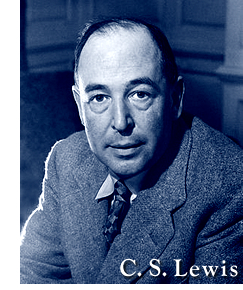
TO MARY VAN DEUSEN, who had written him of her diagnosis of cancer: On his empathy for her and even more for those in her situation who do not have faith; on the right to happiness; and on how fear of cancer may be worse than the reality of cancer.

9 October 1955

I have just got your letter of the 3rd. The news which it contained came like a thunderbolt—especially as the letter began (and it was rather wonderful that it did begin) on such a trivial subject as my book. And if that first sentence flattered my egoism, imagine how I was rebuked when I came to the next, and was suddenly brought up against the real great issues.

It is difficult to write because you must know by now what I do not yet know. I can’t tell whether I am writing to one who is giving thanks for an escape (oh how I hope you are in that position) or to one who is right up against the Cross. Thank heaven it is His Cross and not merely ours. I was most struck by your saying ‘It doesn’t seem too bad: for me, that is.’ So I am sure you are being supported. (What must such a situation be to those who are the majority, who have no faith, who have never thought of death, and to whom all affliction is a mere meaningless, monstrous interruption of a worldly happiness to which they feel they have a right?)

God bless and keep you: and your husband too. You will indeed, indeed, be in my prayers. I once had a bad scare about cancer myself, so that part I can, I think, imagine. But of course it is now, for you, either better or worse than a scare. If the reality is worse. At any rate it must be different. (The Litany [in the Book of Common Prayer] distinguishes ‘thine agony and blood sweat’ from ‘Thy cross and passion’, the fear from the reality). You know how I shall await your next letter.

From The Collected Letters of C.S. Lewis, Volume III

Compiled in Yours, Jack

The Collected Letters of C. S. Lewis

Night Light for Couples – Time and Wisdom


“For if the willingness is there, the gift is acceptable according to what one has, not according to what he does not have.” 2 Corinthians 8:12

Generosity comes in many forms. One version is material gifts. Another is the sharing of our time and wisdom. I (jcd) recall the example of one man who gave up two hours and influenced my life for years. When I was in college, my aunt heard a speech by a well‐known Christian psychologist, Dr. Clyde Narramore. “We need Christian young men and women in the field of mental health,” Dr. Narramore said to the audience. “If you know of promising students who are interested, I’ll be glad to meet with them.” My aunt told me of this invitation, and I called Dr. Narramore for an appointment. He graciously agreed to see me, even though he was busy and didn’t know me from Adam.

As we talked in his living room, he laid out a plan for how I could become a psychologist. It’s been over forty years since that conversation took place, yet I still remember the advice he gave me that day. It shaped the next five years of my life and helped channel me into a profession I love.

You may not have the financial means to help people in need, but you can offer them your time and insights. It may be just what they need to point them in the right direction.

Just between us…

  • Who has influenced us through their gifts of time and wisdom?
  • In what areas do we have expertise, insights, or available time that might help someone else?
  • Who do we know who might benefit from our generosity?

Heavenly Father, tonight we reach for a truly generous life together. Guide and strengthen our willingness to share. Thank You for putting us on earth for something bigger and more meaningful than our own comfort or happiness. Amen.

  • From Night Light For Couples, by Dr. James & Shirley Dobson

Charles Stanley – The Blessing of a Praying Parent


 1 Samuel 2:1-10

Hannah experienced great sorrow prior to the birth of her son Samuel. Through that difficult time, however, she demonstrated a strong love for the Lord and a dependence on Him through prayer.

Samuel had a mother who loved God deeply. In fact, Hannah saw herself as the Lord’s handmaid, whose life was in service to Him (1 Samuel 1:11 KJV). Even when her misery was overwhelming, she acknowledged how important He was to her, and she modeled a godly lifestyle.

We are commanded to love the Lord with our whole heart, soul, mind, and strength (Mark 12:30) and to give Him first place in our life (Deuteronomy 5:7). If we love God, we will make sure our children know about Him and understand the importance of a relationship with Him through Christ. Our lives, though flawed, will reveal the transforming power of the Holy Spirit.

Samuel was blessed because Hannah was a woman of prayer. After telling of her petition, which stemmed from misery, Scripture records her declaration of praise, which came from a heart rejoicing over God’s answer to her cries. A praying mother gives high priority to bringing family concerns before the Lord. I remember my mom kneeling with me by my bed to pray. I can still recall the phrases she used and the things she talked over with Him.

Children need committed parents who 1) demonstrate love toward both the family and God, and 2) help them experience the power and joy of prayer (James 5:16). Even one parent can make a powerful difference when Christ is the center of the home. I know my mother did.

Our Daily Bread — All Aboard


Read: 2 Peter 3:1-13

Bible in a Year: 2 Kings 4-6; Luke 24:36-53

The Lord is . . . longsuffering toward us, not willing that any should perish. —2 Peter 3:9

One day when I dropped my husband off at our local train station, I watched as the conductor scanned the area for stragglers. A woman with wet hair bounded from the parking lot and up into the train. Then, a man in a dark suit strode to the platform and climbed aboard. The conductor waited patiently while several more late-comers sprinted to the tracks and boarded at the last moment.

Just as the conductor was patient with people boarding the train, God patiently waits for people to come to know Him. However, someday Jesus will return and “the heavens will pass away with a great noise, and the elements will melt with fervent heat” (2 Peter 3:10). When this happens, or when our physical bodies die, it will be too late to establish a relationship with God.

“The Lord is . . . longsuffering toward us,” Peter says, “not willing that any should perish but that all should come to repentance” (v.9). If you have delayed deciding to follow Christ, there is good news—you can still commit yourself to Him. “If you declare with your mouth ‘Jesus is Lord,’ and believe in your heart that God raised him from the dead, you will be saved” (Rom. 10:9 NIV). He is calling. Will you run in His direction? —Jennifer Benson Schuldt

Softly and tenderly Jesus is calling, Calling for you and for me; See, on the portals He’s waiting and watching, Watching for you and for me. —Thompson

Now is the time to choose the Lord.

INSIGHT: Peter wrote to a persecuted and suffering group of Christians, which is why he highlighted the faithfulness of God. Peter wanted them to remember that the Lord would fulfill the promise of His second coming (v. 13).

Ravi Zacharias Ministry –    Signs, Slogans, and Escape Vehicles


In 2010 the Freedom From Religion Foundation launched the largest freethinkers billboard campaign ever to take place in the heart of the US “Bible Belt.” Signs reading “Imagine No Religion” “Sleep in on Sundays” and “In Reason We Trust” were placed throughout Atlanta and beyond in one of many attempts throughout the world to bring positive thoughts of atheism into public discourse. The London bus campaign a few years prior sent hundreds of buses throughout England, Scotland, Wales, and Barcelona with similar slogans: “There’s probably no God. Now stop worrying and enjoy your life.”(2) The £140,000 multi-media advertising campaign was designed to bring comfort in the probability that God does not exist, a positive contrast to religious advertisements meant to incite fear. The campaign used quotes from influential voices who have shown that embracing atheism, or at least expressing skepticism about the existence of God, is freeing. One quote reads, “An atheist strives for involvement in life and not escape into death.” Another, written by nineteenth century American humanist Robert Ingersoll, notes, “The time to be happy is now!”

Reactions to campaigns such as these are generally mixed.  With every sign, plans for additional advertising seem to pop up throughout the world. One slogan provoked strong reactions in Barcelona, where critics branded the words as “an attack on all religions.”(3) Christians in London were on all sides of the debate, with some offended—one bus driver refused to drive his bus—and others optimistic at the opportunity for discussion. Posters and billboards of this nature, says director Paul Woolley of the theology think tank Theos, “encourage people to consider the most important question we will ever face in our lives.”(4)

Christianity has in fact long been indicted as an emotional crutch for those unable to accept life’s difficult realities, those in need of an escape vehicle to take them to another world. To be fair, it is not an entirely undue critique. The Christian is indeed someone marked by an inability to accept the cruelties of this world as status quo. Like the prophets, Christians are well aware that this life marred by cancer, injustice, poverty, corruption, tears, and death is not the way it is supposed to be. We live alert with the distinct notion that humanity was created for something more. Of course, the temptation, then, and one of the more severe misapplications of the faith, is to checkout of this world, living content in Christian circles, and ever-looking upward to better life.  In such a scenario, one’s Christianity is indeed nothing more than wishful thinking, a philosophy wrenched from its founder and marched down an illogical road.

But do the growing numbers of atheists who insist that life without God is “freeing” not succumb to a similar temptation, making life and even death sound better than their own philosophies impart? If God is a farce and life is but rapidly moving time and the unapologetic force of chance is “reassured” really a viable option? If there is no divine being, no creator of time, no one hearing prayers or answering the cries of injustice, can we really be comforted, unworried, even lighthearted about life as we know it? MacBeth was far more honest about humanity on this stage:

Out, out, brief candle!

Life’s but a walking shadow, a poor player,

That struts and frets his hour upon the stage,

And then is heard no more. It is a tale

Told by an idiot, full of sound and fury,

Signifying nothing.

Surely we can attempt to dress such a philosophy in beautiful robes, but in the end we will find it was all an act. Whatever our philosophies, whatever colorful billboards catch our eyes, we do well to follow them to their logical ends.

And thus, whether in the eyes of Christians or atheists, it is more than lamentable that belief in Christ has come to be seen as something for another world, a philosophy for another time, a religion that merely attempts to frighten us in the present for the sake of the future. For the Christian does not make her pilgrimage to new life by way of escape vehicle, sounding sirens along the way. Quite the contrary, Christianity promises glimpses of new life even now, gifts worth searching for as if searching for prized treasure or lost coins. We can live as people transformed by the vicarious humanity of Christ in all his fullness, and we can lament and groan as humans yearning for the fulfillment of more to come. Faith in God is not a source of worry, as the buses and billboards (and perhaps some Christians) suggest, nor is faith in Christ an obstacle for enjoying life. Far from this, by faith the Christian is given a life truly like that of Christ’s—fully human, fully alive. And whether Christian or atheist, freethinker or fretting player, we must take care not to raise billboards that suggest something other than our philosophies impart.

Jill Carattini is managing editor of A Slice of Infinity at Ravi Zacharias International Ministries in Atlanta, Georgia.

(1) “Atheist Activists’ Biggest Billboard Campaign Targets Atlanta,” September 10, 2010, http://newsmax.com, accessed September 10, 2010.

(2) Ariane Sherine, “The Atheist Bus Journey,” January 6 2009, http://guardian.co.uk, accessed January 12, 2009.

(3) Giles Tremlett, “Atheist Bus Ad Campaign Provokes Bitterness in Barcelona,” January 7, 2009, guardian.co.uk, accessed January 12, 2009.

(4) Maria Mackay, “Atheist Bus Ads Say ‘Probably No God’” January 6, 2009, http://christiantoday.com, accessed January 12, 2009.

 

Alistair Begg – Partial Knowledge


The man who had been healed did not know who it was. John 5:13

Years pass quickly for the happy and the healthy; but thirty-eight years of disease must have seemed like forever in the life of the poor impotent man. When Jesus, therefore, healed him by a word while he lay at the pool of Bethesda, the man was delightfully aware of a change. Even so the sinner who has for weeks and months been paralyzed with despair and has wearily sighed for salvation is very conscious of the change when the Lord Jesus speaks the word of power and gives joy and peace in believing. The evil removed is too great to be removed without our discerning it; the life imparted is too remarkable to be possessed and remain inoperative; and the change is too marvelous not to be perceived.

Yet the poor man was ignorant of the author of his cure; he did not know this person, or the part that he played, or the plan that had brought Him among men. Hearts that feel the power of His blood may still be ignorant of His ways. We must not be too quick to condemn men for lack of knowledge; but where we can see the faith that saves the soul, we must believe that salvation has been bestowed. The Holy Spirit makes men penitents long before He makes them ministers; and he who believes what he knows shall soon know more clearly what he believes.

Ignorance is, however, an evil; for this poor man was much tantalized by the Pharisees and was quite unable to cope with them. It is good to be able to answer our critics; but we cannot do so if we do not know the Lord Jesus clearly and with understanding. The cure of his ignorance, however, soon followed the cure of his infirmity, for he was visited by the Lord in the temple; and after that gracious discourse, he was soon declaring to all “that it was Jesus who had healed him.” Lord, if You have saved me, show me Yourself, that I may declare You to the sons of men.

Devotional material is taken from “Morning and Evening,” written by C.H. Spurgeon, revised and updated by Alistair Begg


Charles Spurgeon – The necessity of the Spirit’s work


“And I will put my Spirit within you.” Ezekiel 36:27

Suggested Further Reading: 1 Corinthians 12:1-13

Talking one day with a countryman, he used this figure: “In the middle of winter I sometimes think how well I could mow; and in early spring I think, how I would like to reap; I feel just ready for it; but when mowing time comes, I find I have no strength to spare.” So when you have no troubles, couldn’t you mow them down at once? When you have no work to do, couldn’t you do it? But when work and trouble come, you find how difficult it is. Many Christians are like the stag, who talked to itself, and said, “Why should I run away from the dogs? Look what a fine pair of horns I’ve got, and look what heels I’ve got too; I might do these hounds some mischief. Why not let me stand and show them what I can do with my antlers? I can keep off any quantity of dogs.” No sooner did the dogs bark, than off the stag went. So with us. “Let sin arise,” we say, “we will soon rip it up, and destroy it; let trouble come, we will soon get over it;” but when sin and trouble come, we then find what our weakness is. Then we have to cry for the help of the Spirit; and through him we can do all things, though without him we can do nothing at all. In all the acts of the Christian’s life, whether it be the act of consecrating one’s self to Christ, or the act of daily prayer, or the act of constant submission, or preaching the gospel, or ministering to the necessities of the poor, or comforting the desponding, in all these the Christian finds his weakness and his powerlessness, unless he is clothed about with the Spirit of God.

For meditation: The Christian is dependant on the Holy Spirit for gifts, graces (Galatians 5:22,23) and devotions (Romans 8:26). Do you serve God in the strength which he supplies (1 Peter 4:11) or are you content to struggle on uselessly in your own strength?

Sermon no. 251
8 May (1859)

John MacArthur – Building a Leader: The Right Experiences (Peter)


The twelve apostles included “Simon, who is called Peter” (Matt. 10:2).

Your present experiences contribute to your future leadership ability.

Stan Carder is a dear brother in Christ and one of the pastors on our church staff. Before coming to Grace Church he pastored a church in Montana. While there, he was riding one night in a truck that was involved in a very serious accident. Stan suffered a broken neck and other major injuries. As a result he underwent months of arduous and painful therapy.

That was one of the most difficult periods in Stan’s life, yet God used it for a specific purpose. Today, as pastor of our special-ministries department, Stan ministers to more than 500 physically and mentally handicapped people. God needed a man with unique qualifications to show love to a group of very special people. He chose Stan and allowed him the necessary experiences to fit him for the task.

God doesn’t always permit such serious situations, but He does lead each of us into life-changing experiences that heighten our effectiveness in ministry.

Peter had many such experiences. In Matthew 16:15-16, for example, God gave him special revelation about the deity of Christ. In Acts 10 God sent him to preach the gospel to Gentiles—something unheard of at the time because Jewish people resisted any interaction with Gentiles. Perhaps the most tragic experience of Peter’s life was his denial of Christ. But even that only increased his love for Christ and his appreciation of God’s grace. After His resurrection, Christ forgave him and restored him to ministry (John 21:15-19).

Peter’s many experiences helped prepare him for the key role he was to play in the early church. Similarly, your experiences help prepare you for future ministry. So seek to discern God’s hand in your circumstances and rejoice at the prospect of becoming a more effective Christian.

Suggestions for Prayer

Thank God for both the good and bad experiences you have, knowing that each of them is important to your spiritual growth (cf. James 1:2-4).

For Further Study

Read Acts 10, noting what Peter learned from his experience.

  • What vision did Peter have?
  • What was the point of the vision?

Joyce Meyer – Trust God’s Timing


I trusted in, relied on, and was confident in You, O Lord; I said, You are my God. My times are in Your hands. Psalm 31:14-15

Trust requires you to place your time in God’s hands, believing that His timing is perfect for all things in your life.

Your human nature wants good things to happen in your life now—not later. But as you mature in the Christian life you learn to believe for things not now, but in God’s perfect timing.

Trusting God often means not knowing how God is going to accomplish something and not knowing when He will do it. But not knowing “how and when” stretches your faith and teaches you lessons in trust. Remember: Trust is not inherited; it is learned.

Timing plays an important part in learning to trust God. As you experience His faithfulness over and over, you will give up trusting yourself and place your life in His very capable hands. What a wonderful place to be!

Campus Crusade for Christ; Bill Bright – He Gives Attention


“For the eyes of the Lord are intently watching all who live good lives, and He gives attention when they cry to Him” (Psalm 34:15).

A mother and her little 4-year-old daughter were preparing to retire for the night. The child was afraid of the dark, and the mother, on this occasion alone with the child, also felt fearful.

After the light was turned out, the child glimpsed the moon outside the window.

“Mother,” she asked, “is the moon God’s light?”

“Yes,” replied the mother.

“Will God put out His light and go to sleep?”

“No, my child,” the mother replied, “God never goes to sleep.”

“Well,” said the child, with the simplicity of childlike faith, “as long as God is awake, there is no sense in both of us staying awake.”

God expects you and me – with that same kind of childlike faith – not only to live good lives but also to cry out to Him in our times of need, knowing that He watches intently and gives attention to our every cry.

Again we have that helpful imagery of guiding eyes, the eyes of Him who rules and reigns over all – who is concerned about each one of His children, and equally concerned about those who have not yet trusted in Him for He is not willing that any should perish.

Bible Reading: Psalm 34:16-22

TODAY’S ACTION POINT: I shall not be afraid to cry out to the Lord when circumstances warrant a call to the Almighty. In the meantime I will devote special time today to worship, praise and thank Him for His goodness to me.