Tag Archives: holy spirit

Campus Crusade for Christ; Bill Bright – He Fulfills God’s Promises 


“Jesus Christ, the Son of God–isn’t one to say ‘yes’ when he means ‘no’. He always does exactly what He says. He carries out and fulfills all of God’s promises, no matter how many of them there are and we have told everyone how faithful He is giving glory to His name” (2 Corinthians 1:19,20).

From Genesis to Revelation the Word of God contains thousands of promises which we as believers in Christ can claim. We are reminded in Matthew 28:18 that all authority in heaven and earth has been given to Him, and in Colossians 2:2,3 that God’s great secret plan now at last made known is Christ Himself; that in Him lie hidden all the mighty untapped treasures of wisdom and knowledge, “For in Christ there is all of God in a human body; so you have everything when you have Christ, and you are filled with God through your union with Christ” (Colossians 2:9,10).

So make a list of all the promises of God that apply to you, and claim those promises in the name of the Lord Jesus Christ. For “He always does exactly what He says. He carries out and fulfills all of God’s promises.” Begin to live supernaturally by drawing upon the supernatural resources of God, claiming His promises by faith.

Bible Reading: II Corinthians 1:15-19

TODAY’S ACTION POINT: I refuse to live the typical Christian existence. I want my life to be characterized by the supernatural, so by faith in the name of the Lord Jesus Christ, I will claim those promises which will enable me to live supernaturally as a testimony that I serve the Lord Jesus Christ.

Presidential Prayer Team; C.P. – Wise Advice


If God gave you one wish, what would it be? Though God loved Solomon from the time he was born (II Samuel 12:24), when God said to ask for whatever he wanted, Solomon found God’s favor by asking for wisdom instead of riches and power (II Chronicles 1:11-12).

Fear God and keep his commandments, for this is the whole duty of man.

Ecclesiastes 12:13

Before Solomon was born he was chosen to build the temple, something his father David wanted to do (I Chronicles 28:3). When Solomon prayed and dedicated the temple, God showed up in a mighty way (II Chronicles 7:1). Even though Solomon was a great king, he had his faults. He sinned against God through his activities with women from other countries (Nehemiah 13:26). In Ecclesiastes, Solomon looked back on his life – his riches, his education and his accomplishments – and he concluded that all of it was vanity. He summed up the purpose of life with today’s verse.

Today, you have that advice gleaned from all of Solomon’s wisdom and experience, not to mention Jesus’ greatest commands to love God and others. Seek to live a life pleasing to God, then pray that He will rise up national leaders like Solomon who will humble themselves in prayer and rely on God’s wisdom.

Recommended Reading: Matthew 6:19-33

Greg Laurie – Who Will Go?


“Also I heard the voice of the Lord, saying: ‘Whom shall I send, and who will go for Us?’ Then I said, ‘Here am I! Send me.’ ” — Isaiah 6:8

God said in the presence of Isaiah, “Whom shall I send, and who will go for Us?” In a sense, God is still asking this question. Whom shall I send? Who will go for us? Will you go? Will you stand in the gap?

If God’s Holy Spirit were to search among us today, I wonder if He would find men or women willing to stand in the gap. Willing to pray. Willing to be available. Willing to reach out to those who do not know Him.

A lot of Christians will say, “I’m too timid. I’m afraid of this and that.” But I think a lot of Christians don’t really have a burden for those who don’t know the Lord. I think if that burden is burning with enough passion, a believer will work through the obstacles.

That is not to say there aren’t things we should learn so we can share our faith more effectively. But if the burden is really there, a believer will go out and do something with it.

The bottom line is that sharing our faith isn’t really a big deal to many of us. This is why it is so important that we have a God-given burden for unbelievers.

I would rather make every mistake to be made in sharing my faith than to never do anything. At least I will hopefully learn something from my mistakes.

But when we do nothing for fear of being rejected or for fear we will not meet with resounding success, we are really missing what God has called us to do.

Max Lucado – God Makes His Point


There are certain things everyone knows not to do. You don’t try to lasso a tornado. You don’t fight a lion with a toothpick. You don’t sneeze into the wind. You don’t go bear hunting with a cork gun. And you don’t send a shepherd boy to battle a giant. You don’t, that is, unless you’re out of options. Saul was. And it’s when we’re out of options that we are most ready for God’s surprises.

Was Saul ever surprised! The king tried to give David some equipment. What do you want, boy? Shield? Sword? Grenades? Rifles? A helicopter?” David had something else in mind. Five smooth stones and an ordinary leather sling. The soldiers gasped. Saul sighed. Goliath jeered. David swung. And God made His point. Anyone who underestimates what God can do with the ordinary has rocks in his head!

From The Applause of Heaven

Night Light for Couples –No Fear


“Do not let your hearts be troubled. Trust in God.” John 14:1

When Focus on the Family was in its early stages and our children were young, Jim often traveled. One night when he was away, I awoke with a start at 2 A.M. I was afraid and didn’t know why. After a few minutes of worrying, I forced myself out of bed and sank to my knees on the floor.

“Oh, Lord,” I prayed, “I don’t know why I’m so frightened. I ask You to watch over our home and protect our family. Send Your guardian angel to be with us.” I climbed back into bed and fell asleep about a half hour later.

The next morning one of our teenage neighbors ran over from across the street. “Mrs. Dobson, did you hear what happened? A burglar robbed your next‐door neighbor’s house last night!” It was true. A thief had broken in and escaped with the family’s vacation money, about $500. Then my neighbor told me that the police had determined the time of the robbery—about 2 A.M., the same time I had awakened in fear!

My mind reeled at the thought. “If a burglar wanted to break into our house,” I said, “he would probably try to get in through the bathroom window near our children’s bedrooms. Let’s go look.” We walked to the window and saw that the screen was bent and the window sill splintered. Someone had indeed tried to break in. What had stopped him?

I am convinced that God protected us that night through my panicked prayer. In a frantic moment my trust was tested and God again proved faithful. I can’t explain why He sometimes allows us to experience fearful situations even though we are praying. But I know that even in those threatening circumstances, He is “an ever‐present help in trouble” (Psalm 46:1). That is why we can say, with the psalmist, “We will not fear…. The Lord Almighty is with us” (Psalm 46:2, 7).

– Shirley M Dobson

From Night Light For Couples, by Dr. James & Shirley Dobson

Charles Stanley – Success God’s Way

Proverbs 3:5-6

What causes some people to fail and others to achieve their goals? One theory is that background, education, and ability are the main factors. But why, then, do we hear stories of victory achieved by people who have come from difficult backgrounds, struggled with disabilities, or had little instruction? Surely, something else determines whether we accomplish our objectives.

Contrary to the word’s common definition—which usually involves fame, fortune, or power—true success means becoming the people God wants us to be and reaching the goals He has set for our lives. Hebrews 12:1 offers His perspective on this: “Therefore, since we have so great a cloud of witnesses surrounding us, let us also lay aside every encumbrance and the sin which so easily entangles us, and let us run with endurance the race that is set before us.”

Here, we see the keys to success. First, it is important to find encouragement from the lives of other believers who have seen Christ’s faithfulness and followed His direction. Next, we should get rid of anything that holds us back from obeying God. Finally, we are to persevere, even through difficult or discouraging times. Today’s passage answers our original question: We achieve success only by relying on Jesus for guidance and strength.

God has a wonderful plan for blessing and fulfillment in your life, and part of His plan is that you live with purpose and perseverance. The Father’s guidance will become clearer as you read His Word, pray for direction, and seek godly counsel. Does your definition of success for your life match the good plan God has for you?

Bible in One Year: Lamentations 3-5

Our Daily Bread — The Power of Words


Read: Proverbs 18:1-8, 20-21

Bible in a Year: Psalm 119:89-176; 1 Corinthians 8

Death and life are in the power of the tongue, and those who love it will eat its fruit. —Proverbs 18:21

Nelson Mandela, who opposed the South African apartheid regime and was imprisoned for almost 3 decades, knew the power of words. He is often quoted today, but while in prison his words could not be quoted for fear of repercussion. A decade after his release he said: “It is never my custom to use words lightly. If 27 years in prison have done anything to us, it was to use the silence of solitude to make us understand how precious words are, and how real speech is in its impact on the way people live and die.”

King Solomon, author of most of the Old Testament book of Proverbs, wrote often about the power of words. He said, “Death and life are in the power of the tongue” (Prov. 18:21). Words have the potential to produce positive or negative consequences (v. 20). They have the power to give life through encouragement and honesty or to crush and kill through lies and gossip. How can we be assured of producing good words that have a positive outcome? The only way is by diligently guarding our hearts: “Above all else, guard your heart, for everything you do flows from it” (4:23 niv).

Jesus can transform our hearts so that our words can truly be their best—honest, calm, appropriate, and suitable for the situation. —Marvin Williams

Let the words of my mouth and the meditation of my heart be acceptable in Your sight, O Lord, my strength and my Redeemer. Psalm 19:14

Our words have the power to build up or tear down.

INSIGHT: The Insight for August 4 discussed two Hebrew poetic devices that mark Jewish poetry. In Proverbs 18 we see another poetic device, synonymous parallelism, which repeats the same thing in a similar way. Proverbs 18:20 is an example of this. “Fruit of his mouth” parallels “produce of his lips,” while “shall be satisfied” lines up with “shall be filled.” As you read through the proverbs, see if you can find other examples of synonymous parallelism. Bill Crowder

Ravi Zacharias Ministry – Lazarus Waits, Rachel Weeps


Jesus tells the story of a rich man who is content to live comfortably with the great chasm between his success and a poor man’s predicament. At his own gate each day, the man passes a beggar named Lazarus, who is covered in sores and waits with the hope that he might be satisfied with something that falls from the rich man’s table. But as Jesus describes the rich man, he sees neither Lazarus nor his plight. Ironically, when the rich man dies and is suffering in Hades with his own agony and aspirations, he still chooses to view Lazarus as inferior, worthy only of being a servant. “Father Abraham, have mercy on me,” he pleads, “and send Lazarus to dip the tip of his finger in water and cool my tongue; for I am in agony.”(1) Twice he makes it clear in his requests that he sees the man who sat at his gate as subordinate at best. Having refused all his days to see the waiting Lazarus as a fellow soul, a suffering neighbor, the chasms the rich man allowed in life had now grown fixed in death.

Another story that emerges from the life of Jesus came before he was old enough to tell stories of his own. The prophet Isaiah told of a child who would be born for the people, a son given to the world with authority resting on his shoulders. Hundreds of years later, in Mary and Joseph of Nazareth, this prophecy was being fulfilled: The angel had appeared. A child was born. The magi had come. The ancient story was taking shape in a field in Bethlehem. But when Herod learned from the magi that a king would be born, he gave orders to kill all the boys in and around Bethlehem who were two years old and under. At this murderous edict, another prophecy, this one spoken through the prophet Jeremiah, was sadly fulfilled: “A voice is heard in Ramah, mourning and great weeping; Rachel weeping for her children and refusing to be comforted, because they are no more.”(2) While the escape of Mary and Joseph to Egypt allowed Jesus to tell the story of Lazarus years later, the cost, as Rachel and all the mothers’ who didn’t escape knew well, was wrenchingly great.

Of the many objections to Christianity, one that stands out in my mind as troubling is the argument that to be Christian is to withdraw from the world around us, to follow fairy tales with wishful hearts and myths that insist we stop thinking and believe that all will be right in the end because God says so. In such a vein, Karl Marx depicts Christianity as a kind of drug that anesthetizes people to the suffering in the world and the wretchedness of life. Likewise, in Sigmund Freud’s estimation, belief in God functions as an infantile dream that helps us evade the pain and helplessness we both feel and see around us. I don’t find these critiques and others like them troubling because I find them accurate of the kingdom Jesus described in any way. I find them troubling because so many Christians live as if Freud and Marx are quite right in their analyses.

In our impervious boxes and minimalist depictions of the Christian story, we can comfortably live as if in our own world, blind and unconcerned with the world of suffering around us, intent to tell our feel-good stories while withdrawing from the harder scenes of life. In fact, to pretend as if Christianity does not at times function as a wishful escape from the world is perhaps another kind of wishful thinking. There are some critiques of Christianity we ignore at our own peril.

But in reality the stories Jesus left us with reach unapologetically beyond wishful thinking; his proclamations of the kingdom among us are far from declarations of escapism. The story of Rachel weeping for her slaughtered children and Lazarus waiting in agony at the gate of someone who could make a difference are two stories among many that refuse to let us sweep the suffering of the world under the rug of unimportance. The fact that they are included in the gospel that brings us the hope of Christ is not only what makes that hope endurable, but what proves Freud and Marx entirely wrong. Jesus brings the kind of hope that can reach even the most hopeless among us. He hasn’t overlooked the suffering of the world anymore than he has invited his followers to do so. It is a part of the very story he tells.

Thus, precisely because the faith Christians proclaim is not a drug that anesthetizes or a dream that deludes, we must tell the whole story and not merely the parts that lessen our own pain. We must also live as people watchful and ready to be near those who weep and wait—the poor, the demoralized, and the suffering. There are far too many Rachels who are still weeping and Lazaruses who are still waiting, waiting for men and women of faith to be the good news they proclaim.

Jill Carattini is managing editor of A Slice of Infinity at Ravi Zacharias International Ministries in Atlanta, Georgia.

(1) Luke 16:24.

(2) Jeremiah 31:15, Matthew 2:16-18.

Charles Spurgeon – Law and grace


“Moreover the law entered, that the offence might abound. But where sin abounded, grace did much more abound.” Romans 5:20

Suggested Further Reading: 2 Peter 3:10-14

There has always been the salt of grace in the world to counteract the power of sin. The clouds have never been so universal as to hide the day. But the time is fast approaching when grace shall extend all over our poor world and be universal. According to the Bible testimony, we look for the great day when the dark cloud which has swathed this world in darkness shall be removed, and it shall shine once more like all its sister planets. It has been for many a long year clouded and veiled by sin and corruption; but the last fire shall consume its rags and sackcloth. After that fire, the world in righteousness shall shine. The huge molten mass now slumbering in the bowels of our common mother shall furnish the means of purity. Palaces, and crowns, and peoples, and empires, are all to be melted down; and after, like a plague-house, the present creation has been burned up entirely, God will breathe upon the heated mass, and it will cool down again. He will smile on it as he did when he first created it, and the rivers will run down the new made hills, the oceans will float in new-made channels; and the world will be again the abode of the righteous for ever and for ever. This fallen world will be restored to its orbit; that gem which was lost from the sceptre of God shall be set again, yea, he shall wear it as a signet about his arm. Christ died for the world; and what he died for, he will have. He died for the whole world, and the whole world he will have, when he has purified and cleansed it, and fitted it for himself. “Where sin abounded, grace did much more abound;” for grace shall be universal, whereas sin will be destroyed.

For meditation: The believer’s sure and certain hope of being freed completely from the presence of sin then, is a strong motive for seeking to be as free as possible from it now (1 John 3:2,3).

Sermon no. 37

26 August (1855)

John MacArthur – Hoping in God


“[Love] hopes all things” (1 Cor. 13:7).

Love refuses to take human failure as final.

Even when faith falters, hope comes to the rescue. It is that long rope that keeps us linked to the sovereignty and power of God.

The apostle Peter wrote to believers who were experiencing severe trials. To encourage them he began, “Blessed be the God and Father of our Lord Jesus Christ, who according to His great mercy has caused us to be born again to a living hope through the resurrection of Jesus Christ from the dead” (1 Pet. 1:3).

Our hope is a living hope because our God is a living God. No matter how bleak your situation might seem, God is at work to accomplish His purposes. As Christ hung on the cross, it seemed as if sin had finally triumphed over righteousness. But sin’s finest hour became its death knell when Christ arose from the grave as Lord of life and Redeemer of His people. Now “He who raised Christ Jesus from the dead will also give life to your mortal [body] through His Spirit who indwells you” (Rom. 8:11). Trials and death have no power over you. They simply bring you closer to Christ.

When ministering to others, hope gives you confidence that as long as there is life, human failure is never final. God refused to accept Israel’s failures; Jesus refused to accept Peter’s; and Paul refused to accept that of the Corinthians. When your attempts to cover the sins of others have failed or your righteous expectations have been shattered, hope says, “Don’t give up. God can still work this out for good.”

Hope is illustrated in the true story of a dog who was abandoned at the airport of a large city. He stayed there for over five years, waiting for his master to return. People at the airport fed and cared for him, but he refused to leave the spot where he last saw his master. If a dog’s love for his master can produce that kind of hope, how much more should your love for God produce abiding hope?

Suggestions for Prayer

Praise God for His sovereignty and power, and for the hope that is yours in Christ.

For Further Study

Read Psalm 42, noting how the psalmist related the distressing circumstances of his life to his hope in God.

Joyce Meyer – Chosen and Adopted


Even as [in His love] He chose us [actually picked us out for Himself as His own] in Christ before the foundation of the world, that we should be holy (consecrated and set apart for Him) and blameless in His sight, even above reproach, before Him in love. For He foreordained us (destined us, planned in love for us) to be adopted (revealed) as His own children through Jesus Christ, in accordance with the purpose of His will [because it pleased Him and was His kind intent].- Ephesians 1:4-5

You understand adoption in the natural sense. You know some children without parents are adopted by people who purposely choose them and raise them as their own. In the same way you have been chosen and brought into the family of God even though you were previously an outsider, unrelated to God in any way.

God in His great mercy redeemed you and purchased you with the blood of His own Son, and He has provided an inheritance that is wonderful beyond understanding. God has many good things in His plan for you so start expecting blessings!

Campus Crusade for Christ; Bill Bright – Anyone Who Calls 


“Anyone who calls upon the name of the Lord will be saved” (Romans 10:13).

I have been privileged to counsel personally thousands of people – men, women, young people, children – about their spiritual needs. The experiences that remain uppermost in my heart and mind have a direct bearing on this verse.

Helping people to see their truly desperate plight outside of saving faith in Jesus Christ is sometimes difficult, but what a reward awaits those who become aware of their condition. No matter what their background – criminal, alcoholic, self-righteous, or whatever – uninformed people need to recognize the fact that they are lost without Christ.

Accomplishing that purpose is a long step toward their genuine conversion, for I have heard many thousands come to the place where they do indeed “call upon the name of the Lord” and they are saved.

If you can help your loved one, neighbor or friend – or even a total stranger – to become sufficiently alarmed about their eternal welfare that they call on the name of the Lord, you have come a long way toward bringing that person to Christ in a saving relationship.

Some people are bothered by the simplicity of the gospel. I am grateful that it is so simple that anyone can understand, believe, and receive. The promise of this verse is emphatic: “Anyone who calls upon the name of the Lord will be saved.” Let’s believe and share it.

Bible Reading: Romans 10:14-17

TODAY’S ACTION POINT: I will not let the utter simplicity of the gospel keep me from sharing the Good News that we need only call upon the name of the Lord to be saved.

Presidential Prayer Team;  J.R. – Select Seeking


If you are a parent saving for your child’s education, sit down before you read this. CNN recently reported that Sarah Lawrence College is the most expensive institute of higher education in the nation. The total for tuition, room, board and other required fees: $65,480 per year. A separate study found that the median starting salary for a Sarah Lawrence graduate is $38,600. Some advisors question the wisdom of obtaining knowledge at such a high cost and with such a low return.

And when the queen of Sheba had seen all the wisdom of Solomon…there was no more breath in her.

I Kings 10:4-5

The cost of knowledge can be measured – but wisdom is invaluable. Little is known about the Queen of Sheba, but one thing is certain: she sought out wisdom. She could have purchased knowledge and had it delivered to her. Wisdom, Sheba recognized, could only be garnered from certain, select sources. The queen traveled a thousand miles or more, at great risk and cost, to personally hear Solomon’s wisdom so that she might increase her own.

As you pray for America today, plead for wisdom…for yourself and for your nation’s leaders and its citizens. Unlike a college education, God gives it freely to all who ask.

Recommended Reading: James 3:13-18

Greg Laurie – No Room for Prejudice


Then Philip went down to the city of Samaria and preached Christ to them.—Acts 8:5

Being an effective communicator of the gospel requires a willingness to reach out to people who are different from you. We tend to want to hang around people who look like us, who talk like us, and who are just like us. But how willing are we to leave our comfort zone and go to a person completely different from us with the message of the gospel?

To put it another way, are we willing to acknowledge that all prejudice is wrong? Everyone needs Jesus, and we need to go without embarrassment and share the gospel with them. We can talk all day about how to do evangelism effectively. We can go to classes on how to share our faith and read books about it. We can memorize a list of conversation-starters that can help turn a conversation toward evangelism. All these things are good. But none of them will matter if we don’t care about others. People can tell whether or not we care about them. Even a dog can tell. And a person will know whether you are sharing the gospel out of sincerity or a mere sense of duty.

The Bible gives us the example of Philip, who had a heart for unbelievers. Along with Stephen and others, he was called to be a deacon in the church. And when Stephen was martyred and Saul of Tarsus began to attack Christians, where did Philip go? To Samaria. Philip was a Jew, yet he went to Samaria. This was significant, because Jews hated Samaritans, and Samaritans hated Jews. Yet Philip went to these people, people whom Jews normally would not speak to, much less want to reach.

May God give us compassion for people who do not yet know Him. Philip had that, and we should too.


Max Lucado – What Matters is Who God Is


When God announced Moses was to deliver the Israelites, Moses wasn’t convinced! God demonstrated that who Moses was didn’t matter. What mattered was who God was.

“Moses,” spoke the voice from the bush, “throw down your staff” (Exodus 4:3).

God you may not know…well, you don’t go around throwing down your staff. You never know when. . .

“Throw it down.”

When the rod became a snake, Moses began to run.

“Moses! Pick it up by the tail.”

God, out here, well, you don’t pick up snakes too often and never by the tail.

“Moses!”

Yessir!

As Moses touched the squirmy scales, it hardened. Moses lifted up the rod—the same rod he would lift up to divide the water and guide two million people through the desert. If God can do something with stubborn hearts and a stiff-necked people. . .he can do something with the common!

From The Applause of Heaven

Night Light for Couples – Times of Plenty


“I have set the Lord always before me.” Psalm 16:8

Just as we’re tempted to think God has forgotten about us when hard times come, so we tend to forget God when times are easy. Think about the marriages you have seen slide into trouble just when the couples seemed to have everything going their way.

Jesus told a story about a rich farmer who had no need for God. The farmer had his life nicely laid out. One year he produced such a bumper crop that he couldn’t store it all. In a world of suffering and starvation, that was his biggest problem! Then he said, “This is what I’ll do. I will tear down my barns and build bigger ones, and there I will store all my grain and my goods. And I’ll say to myself, ‘You have plenty of good things laid up for many years. Take life easy; eat, drink, and be merry.’ ” But God said to him, “You fool! This very night your life will be demanded from you. Then who will get what you have prepared for yourself?” (Luke 12:18–20).

Are you in a time of relative plenty in your life together? If so, be careful about slipping into arrogance and self‐contentedness. The next thing you know you’ll be behaving like the fool in Jesus’ story—as if you don’t need God. An old‐time preacher once wrote, “Blessedness is the greatest of perils because it tends to dull our keen sense of dependence on God and make us prone to presumption.”

Take a moment tonight to thank and praise God for all the good you enjoy. And remember to fully depend on Him each day, even when everything is going wonderfully.

Just between us…

  • Do we trust God in good times, or do we begin to feel self‐sufficient?
  • Do we give God the credit and praise when life is good?
  • How can we encourage each other to rely on the Lord at all times?

Lord, You have poured out Your goodness on our lives, and we are truly grateful. Forgive us when we let satisfaction dull our devotion to You. Amen.

From Night Light For Couples, by Dr. James & Shirley Dobson

Charles Stanley – A Lifestyle of Forgiveness


Ephesians 4:29-32

Showing mercy to those who hurt us does not come naturally— it’s easier to get angry at them and remain that way. We justify our lack of forgiveness by pointing to the injustice that took place or harm that was done. But God commands us to be merciful (Luke 6:36). We who have been shown divine mercy are to practice a lifestyle of forgiveness.

So why don’t we obey? Sometimes our pride gets in the way. We are angered when treated with disrespect, passed over for a job opportunity, or ignored despite our accomplishments. At other times we get focused on other people’s refusal to change, so we withhold mercy until they improve their behavior. And some of us have been badly hurt or treated unjustly. Our minds are filled with such pain that we become stuck in the past and cannot see how we’ll ever be able to forgive.

An unforgiving attitude can have all sorts of unwanted consequences, including broken relationships, emotional bondage, and indifference toward the Lord. The longer we hold on to our anger, the more it will affect our fellowship, not only with other people but also with our heavenly Father. Over time, we may become bitter and hostile, which certainly doesn’t fit with our identity in Christ.

It is hard for us to pardon those who tell lies about us, treat us badly, or cause harm to our loved ones. And yet their behavior toward us is not a reason to withhold mercy. God calls us to forgive as He forgave us—and with His help, we can do just that.

Bible in One Year: Lamentations 1-2

Our Daily Bread — When Things Don’t Go Well


Read: Romans 8:28-30

Bible in a Year: Psalm 119:1-88; 1 Corinthians 7:20-40

We know that all things work together for good to those who love God. —Romans 8:28

The first words that many people like to quote when misfortune hits are: “We know that all things work together for good to those who love God, to those who are the called according to His purpose” (Rom. 8:28). But that’s hard to believe in hard times. I once sat with a man who had lost his third son in a row, and I listened as he lamented, “How can this tragedy work for my good?” I had no answer but to sit silently and mourn with him. Several months later, he was thankful as he said, “My sorrow is drawing me closer to God.”

Tough as Romans 8:28 may be to understand, countless testimonies give credence to the truth of it. The story of hymn writer Fanny Crosby is a classic example. The world is the beneficiary of her memorable hymns, yet what worked together for good was born out of her personal tragedy, for she became blind at the age of 5. At only age 8, she began to write poetry and hymns. Writing over 8,000 sacred songs and hymns, she blessed the world with such popular songs as “Blessed Assurance,” “Safe in the Arms of Jesus,” and “Pass Me Not, O Gentle Savior.” God used her difficulty to bring good for her and us and glory for Him.

When tragedy befalls us, it’s hard to understand how anything good can come from it, and we won’t always see it in this life. But God has good purposes and always remains with us. —Lawrence Darmani

What trial in your life have you found to be for your good? What good things have come from it? What are you now suffering that you pray will bring something good?

God always has good purposes for our trials.

INSIGHT: Romans 8:28 is often given as a promise to comfort and encourage those who are going through difficult and painful times. This promise is all-encompassing, for “all things” must include the good and the bad circumstances of life. It assures us that God is not absent and is sovereignly working in all things for our good. Although He may seem silent or even out of sight, nothing is ever wasted in the hands of God. The Old Testament equivalent of Romans 8:28 is Genesis 50:20: “You intended to harm me, but God intended it all for good” (nlt). Romans 8:28 is a promise with a redemptive purpose, for God wants us “to become like his Son” (v. 29 nlt). Sim Kay Tee

Ravi Zacharias Ministry – Latent Christianity


Many years ago, I had the opportunity to travel to Greece and Turkey. While there, I marveled at the ancient ruins of the Greek temples, and wondered at the beautiful mosaics of Christ covering the ceilings of every church—from a tiny chapel in the countryside to the great cathedral of the Hagia Sophia in Istanbul. During the tour, we often saw the ruins of the temples standing side by side with ancient Christian churches. Other times, our guide informed us that the Christian church was built upon the now decimated ruins of an ancient temple.

I remember feeling a bit disturbed over the loss of these ancient ruins which would never be seen again, now built over by largely abandoned Christian chapels. And yet I understood the sweeping movement of Christianity—overturning the pagan environment of Greece and Rome and building churches and chapels as signposts of that victory.

This scene replicated across the landscapes of Greece and Turkey served metaphorically as a picture of the uneasy tension between Christianity and its surrounding culture. On the one hand, church and pagan temple stood side by side, a living picture of the parable Jesus once told about allowing wheat and tares to grow up together until the judgment. On the other hand, churches built on the ruins of pagan temples presented the image of Christianity conquering the pagan religions of the day, standing in triumph and uprooting the tares in victory.

Christianity wrestles with this same tension today, vacillating between constructive engagement in culture on the one hand, and eschewing the culture on the other. The art world is often an arena for this battle. Should Christians engage in the arts? If so, how should we engage in the arts? Should we have Christian music, art, and literature? Or should we be Christians who make music, produce art, and write literature? In other words, do we build next to the pagan temple, or do we replace the pagan temple with a church?

While the answers to these questions can often be complex, perhaps there are some insights from another picture of early Christian interaction using art from the prevailing culture. The catacombs under the streets of Rome are filled with art produced by the early Christians. Interestingly enough, however, the Christian scenes normally used non-Christian forms. Some of the portrayals of Jesus as the Good Shepherd are clearly modeled after pagan pictures in which Orpheus was the central figure.(1) It is not an accident that the early Christians chose to model their art after the pagan depictions of Orpheus. In Greek mythology, Orpheus was such a brilliant musician that “he moved everything animate and inanimate; his music enchanted the trees and rocks and tamed wild beasts, and even the rivers turned in their course to follow him.”(2) Clearly, the early Christians used this artistic rendering for apologetic reasons; like the myth of Orpheus, they believed Jesus had a cataclysmic influence on all of creation.

In every generation, art has been used as a means to communicate the Christian faith, even as an uneasy tension exists with artistic engagement. Yet, without thoughtful engagement a vacuum is left, unfilled. Without a new Orpheus, all that is left to do is bemoan the binding of the arts to darker forces. And while Christians often raise the complaint, we are too often blinded to the very ways in which we are inextricably bound to culture.

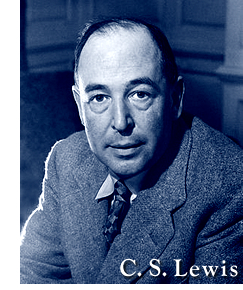
C.S. Lewis once wrote about the value of Christian involvement in popular scholarship. When understood broadly, Lewis’s words are instructive for Christian engagement in the arts or in any other discipline. “I believe that any Christian who is qualified to write a good popular book on any science may do much more by that than by any directly apologetic work….What we want is not more little books about Christianity, but more little books by Christians on other subjects—with their Christianity latent.”(3) Perhaps building such subtle cathedrals on the landscape of culture is indeed more winsome than making ruins.

Margaret Manning Shull is a member of the speaking and writing team at Ravi Zacharias International Ministries in Bellingham, Washington.


(1) Kenneth Scott Latourette, A History of Christianity: Beginnings to 1500, vol. 1 (San Francisco: Harper San Francisco, 1975), 251.

(2) Encarta, Orpheus.

(3) Cited in John Stackhouse, Humble Apologetics (Oxford: Oxford University Press, 2002), 215.

Alistair Begg – Faith in Every Sense


His fruit was sweet to my taste. Song of Songs 2:3

Faith is described in a variety of ways in the Bible. It is sight: “Turn to me and be saved.”1 It is hearing: “Hear, that your soul shall live.”2 Faith is smelling: “Your robes are all fragrant with myrrh and aloes and cassia”;3 “your name is oil poured out.”4 Faith is spiritual touch. By this faith the woman came behind and touched the hem of Christ’s garment, and by this we handle the things of the good word of life. Faith is equally the spirit’s taste. “How sweet are your words to my taste, sweeter than honey to my mouth.”5 “Whoever feeds on my flesh and drinks my blood has eternal life.”6

One of the first performances of faith is hearing. We hear the voice of God not only with the physical ear, but with the spiritual ear; we hear it as God’s Word, and we believe it as such; that is the hearing of faith. Then our mind looks upon the truth as it is presented to us; that is to say, we understand it, we perceive its meaning; that is the seeing of faith. Next we discover its preciousness; we begin to admire it and find how fragrant it is; that is faith in its smell. Then we appropriate the mercies that are prepared for us in Christ; that is faith in its touch. Then follow the enjoyments, peace, delight, communion, which are faith in its taste. Any one of these acts of faith is saving. To hear Christ’s voice as the sure voice of God in the soul will save us; but that which gives true enjoyment is the aspect of faith whereby we taste and see that the Lord is good. In this way we receive Christ, and He becomes, by inward and spiritual apprehension, to be the precious food for our souls. Here we learn to sit under His shadow “with great delight”7 and find His fruit sweet to our taste.

1) Isaiah 45:22

2) Isaiah 55:3

3) Psalm 45:8

4) Song of Solomon 1:3

5) Psalm 119:103

6) John 6:54

7) Song of Solomon 2:3

The Family Bible Reading Plan

  • 1 Samuel 17
  • Romans 15

Devotional material is taken from “Morning and Evening,” written by C.H. Spurgeon, revised and updated by Alistair Begg