Tag Archives: love

Max Lucado – A Radical Reconstrution


God promises a special blessing. A sacred delight. It’s not a gimmick to give goose bumps or a mental attitude that has to be pumped up. No, Matthew 5 describes God’s radical reconstruction of the heart. Observe the sequence in the Beatitudes. We recognize we are in need—we’re poor in spirit. Next, we repent of our self-sufficiency—we mourn. We quit calling the shots—we’re meek. We are so grateful for his presence that we yearn for more—we hunger and thirst. We forgive others—we’re merciful. We change our outlook—we’re pure in heart. We love others—we’re peacemakers. We endure injustice—we’re persecuted.

It’s no casual shift of attitude. It is a demolition of the old and a creation of the new. The more radical the change, the greater the joy. And it is worth every effort, for this is the joy of God! A special blessing….a sacred delight.

From The Applause of Heaven

Night Light for Couples – A Wife’s Countenance


“He is to be free to stay at home and bring happiness to the wife he has married.” Deuteronomy 24:5

If you really want to know about a man and what kind of character he has, you need only look at the countenance of his wife. Everything he has invested, or withheld, will be there.”

That was the message Bill McCartney, then head coach of the University of Colorado football team, heard in a 1994 sermon. The words cut straight to his heart. McCartney had built the Colorado football program into a powerhouse that won a national championship in 1990. He had also cofounded a national men’s movement, Promise Keepers. But those achievements came at a price. For years McCartney had withheld his time and energy from his wife, Lyndi, and their four children. In 1994 Bill McCartney didn’t like what he saw in Lyndi’s countenance— so he resigned his position at Colorado to devote more time to his wife and family.

As a husband, you bear the primary responsibility for your wife’s welfare and emotional well‐being. What do you see in her face tonight?

Just between us…

  • (husband) Do you ever feel like you’re competing for my attention?
  • (husband) Do I appear preoccupied by my work or recreational activities?
  • (wife) What do you imagine it was like for Bill McCartney to walk away from his successful coaching career?
  • (wife) Do you ever struggle with trying to care for my emotional well‐being? Is there anything I can do to help?

(husband) Almighty God, with Your help I wholeheartedly accept my responsibility to care for my wife’s emotional well-being. May I increasingly become a master at it, so that I can see joy and contentment in her face. Amen.

From Night Light For Couples, by Dr. James & Shirley Dobson

Charles Stanley – Don’t Waste Your Adversities


James 1:2-4

Are you wasting your troubles? Any time God allows trials to enter your life, He has a purpose for them. He wants you to squeeze out every ounce of spiritual growth instead of letting difficulties force you into despair and discouragement. If you’ll just respond in the right manner, the trial that looks as if it could destroy you becomes an instrument of blessing.

The most natural response to adversity is to groan and plead with the Lord to remove it. If that doesn’t work, we might get angry or try to find our own way out of the difficulty or pain. Sometimes we resort to blaming others for the trouble. And in truth, someone else might have caused the problem, but ultimately God allowed it. No matter where affliction originates, who is involved, or how evil their intentions, by the time it reaches you, it’s been dipped in the Father’s love and shaped to accomplish His good purpose. The question is, will you cooperate with Him, or will you resist?

Perhaps the key word is found in verse 4 of today’s reading. God wants to use our trial to develop spiritual maturity, but unless you let it do its work, that opportunity will be lost. If we could foresee every benefit the Lord designed our trials to accomplish, maybe we’d be more cooperative.

Although we can’t see all the specifics of God’s plan, we know that His goal is to use our adversity to supply something we lack so we can be mature and complete. Even though the experience is painful, rest in the Father’s comforting arms, and let Him do His perfect work in you.

Bible in One Year: Jeremiah 6-8

Our Daily Bread — I’ve Come to Help


Read: James 1:19-27

Bible in a Year: Psalms 79-80; Romans 11:1-18

Be doers of the word, and not hearers only, deceiving yourselves. —James 1:22

Reporter Jacob Riis’s vivid descriptions of poverty in 19th-century New York City horrified a generally complacent public. His book How the Other Half Lives combined his writing with his own photographs to paint a picture so vivid that the public could not escape the certainty of poverty’s desperate existence. The third of fifteen children himself, Riis wrote so effectively because he had lived in that world of terrible despair.

Shortly after the release of his book, he received a card from a young man just beginning his political career. The note read simply, “I have read your book, and I have come to help. Theodore Roosevelt.” (This politician later became a US President.)

True faith responds to the needs of others, according to James (1:19-27). May our hearts be moved from inaction to action, from words alone to deeds that back them up. Compassionate action not only aids those mired in life’s difficulties, but it may also make them open to the greater message from our Savior who sees their need and can do so much more for them. —Randy Kilgore

O Lord, it is so easy to be overwhelmed, or to judge and therefore to refrain from helping others. Lift our eyes above our own thoughts and circumstances, and let us care as You care.

Others will know what the words “God is love” mean when they see it in our lives.

INSIGHT: James’s letter was written to people enduring difficult times. In James 1:1 we read, “James, a bondservant of God and of the Lord Jesus Christ, to the twelve tribes which are scattered abroad: Greetings.” The “twelve tribes which are scattered abroad” were Jewish followers of Christ who had been driven from their homes in Jerusalem by persecution. Many of them had lost everything because of their faith in Christ, and they were struggling. Perhaps that is why James spoke so passionately about caring for orphans and widows (1:27) and the poor (ch.2). Because the believers had suffered so much themselves, they should have understood the importance of responding to the needs of others. Bill Crowder

Ravi Zacharias Ministry – Collaborative Creativity


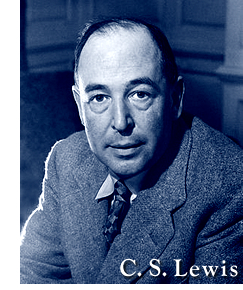
They gathered every Thursday around nine in the evening with pipes and pints in hand. At any given meeting there was likely to have been at least one historian, a philosopher, a physician, several poets, and a number of professors. The Inklings, as they called themselves, were literary enthusiasts who praised the value of good narrative and gathered to encourage, challenge, and better one another in their various attempts at creating it. Out of these spirited meetings, in which it is said that “praise for good work was unstinted, but censure for bad work, or even not-so-good work, was often brutally frank,” there arose the final drafts of The Lord of the Rings, Out of the Silent Planet, All Hallows’ Eve, and The Great Divorce to name a few.(1)

Contrary to the many critics who insist these writers had little influence on one another (the Inklings’ themselves said of Tolkien that it was easier to influence a “bandersnatch” than the creator of Middle Earth), Diana Pavlac Gyler avers they would not have been the same writers had they not written within the community of the Inklings. “[E]ach author’s work is embedded in the work of others,” writes Gyler, “and each author’s life is intertwined with the lives of others.”(2) Influence, after all, is far from imitation. While it is true that these authors came to their meetings with determined ideas, their reflective and challenging interactions sharpened thoughts, minds, and lives. J.R.R. Tolkien and Charles Williams, as well as C.S. Lewis, would likely have imagined far different worlds had they not participated in the regular reading and criticism of their works in progress.

This idea of communal creativity is one I resonant with from my own experience of thinking and writing. Even my most original thoughts or imaginative creations are indelibly shaped by a lifetime of encounters with artists, theologians, family, and community. We do not interpret the world alone nor do we live without influencing one another profoundly. In this sense, we might say that creativity in all its forms—even in the simplest acts of living and acting—is inherently an interactive process. What J.R.R. Tolkien notes on the lips of Frodo can indeed be said of our own interacting stories. Peering at the large red book in which Bilbo started to tell the story and Frodo then continued, Sam looks down in wonder, “Why, you have nearly finished it, Mr. Frodo!” he exclaims.

“I have quite finished, Sam,” answers Frodo. “The last pages are for you.”(3)

When the New Testament writers began to speak of creation through the light of all they saw in Jesus Christ, they affirmed the Old Testament understanding of total dependence upon the maker of heaven earth, but they spoke also of Christ’s presence as the Word at the beginning. Likewise, the early church began to see the role and presence of the Spirit in God’s creative work. Creation, they came to understand, and all we see within it, is the work of God in community. All of creation declares the glory of God, the work of the loving interaction between Father, Son, and Spirit—the very first creative community.

As a Christian, I believe this ultimate image of creative collaboration is one that explains our longing for community and connection, our desire to create and work. We are creatures and co-creators alike. The creative collaboration of the Trinity throughout time and creation invites the notion that God has made us for community and relationship, that our stories come together as if a great book with room for more, and that the grace of a good storyteller is working to make the work inherently beautiful. As the Father has invited us to participate in his good work of creation, so Christ has called us to join him in the community of the kingdom among us, each of us works in progress by the Spirit.

Jill Carattini is managing editor of A Slice of Infinity at Ravi Zacharias International Ministries in Atlanta, Georgia.

(1) W.H. Lewis, “C.S. Lewis: A Biography” (Unpublished Manuscript, 268-269); Wade Collection, Wheaton College, Wheaton, Illinois.

(2) Diana Pavlac Gyler, The Company They Keep: C.S. Lewis and J.R.R. Tolkien as Writers in Community (Kent, OH: Kent State University Press, 2007).

(3) J.R.R. Tolkien, The Lord of the Rings (New York: Harper Collins, 2004), 1027.

Charles Spurgeon – The day of atonement


“This shall be an everlasting statute unto you, to make an atonement for the children of Israel for all their sins once a year.” Leviticus 16:34

Suggested Further Reading: Hebrews 9:6-14

Jesus Christ “died, the just for the unjust, to bring us to God.” That day of atonement happened only once a year, to teach us that only once should Jesus Christ die; and that though he would come a second time, yet it would be without a sin offering unto salvation. The lambs were perpetually slaughtered; morning and evening they offered sacrifice to God, to remind the people that they always needed a sacrifice; but the day of atonement being the type of the one great propitiation, it was but once a year that the high priest entered within the veil with blood as the atonement for the sins of the people. And this was at a certain set and appointed time; it was not left to the choice of Moses, or to the convenience of Aaron, or to any other circumstance which might affect the date; it was appointed to be on a peculiar set day, as you find at the 29th verse: “In the seventh month, on the tenth day of the month;” and at no other time was the day of atonement to be, to show us that God’s great day of atonement was appointed and predestined by himself. Christ’s expiation occurred but once, and then not by any chance; God had settled it from before the foundation of the world; and at that hour when God had predestined, on that very day that God had decreed that Christ should die, he was led like a lamb to the slaughter, and as a sheep before her shearers, he was dumb. It was but once a year, because the sacrifice should be once; it was at an appointed time in the year, because in the fulness of time Jesus Christ should come into the world to die for us.

For meditation: Daily and annual sacrifices of animals could never bring salvation from sin—that required only the single sacrifice of Christ on a single day (Zechariah 3:9; 12:10; 13:1; Hebrews 9:25,26; 10:11,12).

Sermon no. 95

10 August (1856)

John MacArthur – Benevolence Without Love


“If I give all my possessions to feed the poor . . . but do not have love, it profits me nothing” (1 Cor. 13:3).

Love is characterized by self-sacrifice, but not all self-sacrifice is an act of love.

If you’ve ever donated to your church or another charitable organization out of obligation, peer pressure, legalism, guilt, a desire for recognition, or simply a tax deduction, you know what it means to give without love. In our society it’s easy to fall prey to that kind of giving because the needs are so great and fund raisers appeal to every conceivable motive. In addition, many cults and false religions encourage the giving up of possessions and other sacrificial gestures as a supposed means of earning God’s favor. But God is more interested in why you give than what you give.

Paul’s hypothetical illustration in 1 Corinthians 13:3 is of someone who sacrificed everything he had to feed the poor. The Greek word translated “to feed” means “to dole out in small quantities.” Apparently this guy didn’t simply write out a check for a food distribution program; he was personally involved in a long-term, systematic program that would eventually consume every resource he had.

Paul doesn’t mention motives—only that this person lacked love. Consequently, the benefits of his benevolence were limited to the physical realm. Any spiritual benefits were forfeited.

Jesus, making a similar point, said, “Beware of practicing your righteousness before men to be noticed by them; otherwise you have no reward with your Father who is in heaven” (Matt. 6:1). If your motive for giving is to gain the approval of men, their accolades will be your only reward. If you’re motivated by love for God, He will reward you abundantly (vv. 2-4).

When you give to the Lord, what is your motive? Do you want others to think more highly of you? Do you feel obligated? Those are subtle influences, so be sure to guard your motives carefully. Remember, the only acceptable motive is love.

Suggestions for Prayer

Ask the Holy Spirit to keep you sensitive to the needs of others, enabling you always to give out of genuine love.

For Further Study

Read Luke 18:9-14.

  • How did the Pharisee’s prayer differ from the tax-gatherer’s?
  • How did God respond to each prayer?

Joyce Meyer – Listen Carefully


And He said to them, Be careful what you are hearing. The measure [of thought and study] you give [to the truth you hear] will be the measure [of virtue and knowledge] that comes back to you the more [besides] will be given to you who hear. – Mark 4:24

The Bible says that in the latter days many false prophets will rise up and tell people what their itching ears want to hear. People will search for one teacher after another who will tell them something pleasing and gratifying. To suit their own desires, they will turn away from hearing the Truth and will wander off into listening to myths and man-made fiction (see 2 Timothy 4:3–4). They will turn to methods that may be called “spiritual,” but are not safe in God’s Kingdom. They are “spiritual,” but they come from the wrong spirit!

Never before have we seen such an influx of psychics vying for a ready ear. Television shows feature mediums who claim to communicate with people who have died. These people are actually communicating with familiar spirits who tell half-truths about the past and lies about the future. This is strictly forbidden in Scripture (see Leviticus 19:31). God says He will set His face against anyone who turns to mediums and spiritists (see Leviticus 20: 6–7), yet Christians still read horoscopes and consult psychics—then wonder why they live in confusion and don’t have peace.

We must realize that it is wrong to seek guidance for our lives through anything other than God Himself. In fact, our seeking guidance through other sources offends Him. No one who does so will have the peaceful, joy-filled, blessed life God intended.

If you have been involved in activity of this kind, I urge you to thoroughly repent; ask God to forgive you; and turn away completely from such practices. God alone has all the answers you need, so go to Him and let Him give you the guidance and encouragement you need.

Campus Crusade for Christ; Bill Bright – Perfect Peace


“He will keep in perfect peace all those who trust in Him, whose thoughts turn often to the Lord” (Isaiah 26:3).

John shared how, during the serious illness and death of his beloved Agnes, God had enveloped him with His perfect peace. Tom spoke with moistened eyes, of how God filled his heart with peace when he lost his job of more than 25 years. Roger and Kim shared how they experienced perfect peace in the loss of their darling two-year-old who had just died of leukemia. Peter had just received the solemn word from his doctor that he had no more than six months to live. What joy, soon he would see his Lord and witness perfect peace!

How can these things be?

Because the Prince of Peace dwells within the heart of every believer and He promised, “Peace I leave with you, My peace I give unto you: not as the world giveth, give I unto you. Let not your heart be troubled, neither let it be afraid” (John 14:27 KJV). God is waiting to pour out His supernatural peace upon all who will trust and obey Him.

In my experience with thousands of businessmen, laymen and students, I have discovered an interesting fact. In a time of crisis when one’s world is crumbling, wealth, fame, power, position, glory, are not important any more. It is inner peace that every man longs for and for which he would gladly give his fortune. But remember that perfect peace comes only to those who walk in faith and obedience. Such peace is not the experience of those who live self-centered lives, violating the laws of God.

Bible Reading: John 14:27-31

TODAY’S ACTION POINT: As a candidate for God’s perfect peace, I will meditate upon His laws and through the enabling of His Holy Spirit, seek to obey His commands.

Presidential Prayer Team; – J.R. -Why Me, Lord?


If you are given to hypochondriasis or “illness anxiety disorder,” you surely would not want to be transported back to biblical times. First, they had a host of frightening diseases and illnesses which, in modern times, have been eradicated. Second, they had almost no understanding of the causes; germs and bacteria, for example, were unknown in the ancient world. And third, the treatments – administered by priests, magicians and quacks – were at best useless and more often barbaric.

Why is this granted to me that the mother of my Lord should come to me?

Luke 1:43

You especially would not want to be an expectant mother in biblical times. Pregnancy and childbirth represented the pinnacle of risk…from infection, bleeding, high blood pressure or other complications. Elisabeth, pregnant with the baby who would become John the Baptist, asked, “Why Me, Lord?” But it wasn’t a complaint. She wondered why she could be so favored. She was overjoyed to be part of the fulfillment of what was spoken to her from the Lord.

What’s troubling you today? A personal need, a family difficulty, or the disgraceful state of America? Whatever it may be, is there an opportunity in it for you to be a blessing? As you pray today, find the answer! “Why me, Lord?”

Recommended Reading: Psalm 40:1-8

Greg Laurie – Justice, Mercy, and Grace


For by grace you have been saved through faith, and that not of yourselves; it is the gift of God, not of works, lest anyone should boast.—Ephesians 2:8–9

Don’t ever pray, “God, give me justice.” You don’t want God to give you what you deserve, which is judgment. Rather, a better thing to pray would be, “God, be merciful to me. God, extend your grace to me.” When God extends mercy, He doesn’t give you what you deserve. And when God extends grace, He gives you His unmerited favor and blessing.

The Bible tells us that it is “by grace you have been saved through faith, and that not of yourselves; it is the gift of God, not of works, lest anyone should boast” (Ephesians 2:8–9).

We find a classic example of grace in the story of the prodigal son. The son had sinned. He dragged the family name through the mud. If the father had dealt with his prodigal son justly, he would have allowed the boy to be stoned. That would have been justice.

If the father would have dealt with the son in mercy, he would have let him come on as a hired hand as the boy had requested.

But the father dealt with him in grace when he provided his son with luxurious attire and placed a signet ring on his finger. That was grace, not justice, and it was even more than mercy. It was grace extended.

It was God’s grace that sustained the apostle Paul in his days of difficulty with his thorn in the flesh. Paul had some kind of physical infirmity. It may have been a disability or an injury resulting from one of his stonings or shipwrecks. Whatever it was, he asked God three times to take it away. But God told him, “My grace is sufficient for you, for My strength is made perfect in weakness” (2 Corinthians 12:9).

Grace is getting what we don’t deserve.

Max Lucado – Everything Needed for Joy

Robert had cerebral palsy. The disease kept him from riding a bike, or going for a walk. But it didn’t keep him from graduating from high school or attending university. Having cerebral palsy didn’t keep him from teaching at a Junior College or from venturing overseas on five missions trips. And Robert’s disease didn’t prevent him from becoming a missionary in Portugal.

He moved to Lisbon, alone. He rented a room, found a restaurant owner who fed him after the rush hour and a tutor who instructed him in the language. And daily in the park, he passed out booklets about Christ. Within six years he led seventy people to the Lord. I heard Robert speak. He could’ve asked for sympathy or pity. He did just the opposite. A Bible in his lap, he held his bent hand up in the air and boasted, “I have everything I need for joy.” So do we.

From The Applause of Heaven47

Night Light for Couples – The Renegade Male


“Fathers, do not exasperate your children; instead, bring them up in the training and instruction of the Lord.” Ephesians 6:4

Author Derek Prince has described the “renegade male” as one of society’s biggest problems. The word renegade actually means “one who has shirked his primary responsibilities.” It is an accurate description of those husbands and fathers who pour every resource into work or pleasure, leaving the child‐rearing task entirely to their wives. Both boys and girls desperately need their fathers, who have a specific role to play in their lives.

Research in the field of child development has confirmed that the absence of positive masculine influence plays a key role in adolescent rebellion, sex‐role identity, and cohesion within the family. Conversely, those who accept their God‐given responsibilities at home have a fleeting—and golden—opportunity to shape the little lives entrusted to their care.

Just between us…

  • (husband) Do I ever resemble a renegade male? How?
  • (husband) In what ways have I been a good father? (For couples without children: What kind of father would I be?)
  • (wife) How have our own fathers been good or poor examples of fulfilling their responsibilities at home?
  • (wife) How, as a wife, can I help you be a better father?

(husband) Dear God, thank You for the responsibility and opportunity to impact my children for good. I want to be faithful. Help me to celebrate— not resent—my fatherly duties. Through my sometimes inadequate efforts, accomplish great things in the lives of my kids. Amen.

From Night Light For Couples, by Dr. James & Shirley Dobson

Charles Stanley – Accepting Criticism


Proverbs 10:17-18

Nobody likes criticism. It’s often unsolicited and rarely fun. Many times, we reject our critic’s words because of the harsh spirit in which they are spoken.

Yet God can take even a wrong attitude, bad timing, or harsh tone of voice and still tell us something we need to hear. That’s why we are wise to pay attention when someone critiques us. Invited or not, criticism forces us to examine ourselves and take notice of weak areas. This helps us discover who we really are and avoid unnecessary mistakes. If we fail to listen, our potential for mental, emotional, and spiritual growth is limited.

While not all opinions are valid, it’s important to respond well and evaluate criticism correctly. First, do not immediately reject the comment, blame the person, or defend yourself. Instead, consider what was said and ask God if He’s trying to tell you something. Then, thank the person for his interest in your growth, and explain that you’ll reflect on his observation. If he was sincere, he’ll be appreciative, but if his intentions were negative, this will disarm him. Next, evaluate the criticism and determine what exactly is under scrutiny—your beliefs, your character, your behavior, or God? Finally, view this as an opportunity for growth, and, if necessary, apologize to the person you’ve offended.

Jesus died on the cross for our sake, so we as believers are certain of His approval. When we remember this, the disapproval of others will take on less significance and cause less hurt. Then, as we learn to respond correctly, we will be blessed to find ourselves growing.

Bible in One Year: Jeremiah 4-5

Our Daily Bread — Batter in the Bowl


Read: Ruth 2:1-12

Bible in a Year: Psalms 77-78; Romans 10

Please let me glean . . . after the reapers among the sheaves. —Ruth 2:7

My daughter and I consider brownies to be one of the seven wonders of the culinary world. One day, as we were mixing the ingredients of our favorite chocolate treat, my daughter asked if I would leave some batter in the bowl after pouring most of it into the baking pan. She wanted to enjoy what was left over. I smiled and agreed. Then, I told her, “That’s called gleaning, you know, and it didn’t start with brownies.”

As we enjoyed the remnants of our baking project, I explained that Ruth had gathered leftover grain in order to feed herself and her mother-in-law Naomi (Ruth 2:2-3). Because both of their husbands had died, the women had returned to Naomi’s homeland. There Ruth met a wealthy landowner named Boaz. She asked him, “Please let me glean . . . after the reapers among the sheaves” (v. 7). He willingly consented and instructed his workers to purposely let grain fall for her (v. 16).

Like Boaz, who provided for Ruth from the bounty of his fields, God provides for us out of His abundance. His resources are infinite, and He lets blessings fall for our benefit. He willingly provides us with physical and spiritual nourishment. Every good gift we receive comes from Him. —Jennifer Benson Schuldt

Dear God, thank You for the blessings I enjoy! You minister to Your children out of Your limitless abundance. I worship You as my provider.

Our greatest needs cannot exceed God’s great resources.

INSIGHT: God commanded His people to be generous and to allow the poor to gather food from their lands at harvest time (Lev. 19:9-10; Deut. 24:19-22). God is the defender, protector, and provider of the poor, the helpless, and the oppressed (Deut. 10:17-19; Ps. 9:9-10; 146:5-9). Sim Kay Tee

Alistair Begg – The City of God


The city has no need of sun or moon to shine on it. Revelation 21:23

Further on, in the better world, the residents are not dependent upon creature comforts. They do not need new clothes; their white robes never wear out, nor do they become soiled or tattered. They don’t need medicine to heal diseases, for no one will ever say, “I am sick.” They do not need sleep to restore their strength-they do not rest by day or night as they praise God in His temple. They do not need social relationships to grant comfort, and whatever happiness they may derive from association with their fellows is not essential to their bliss, for the presence of Jesus is enough for their largest desires. They do not need teachers there; they doubtless commune with one another concerning the things of God, but they do not need to be instructed; they will all be taught of the Lord.

We receive donations at the King’s gate, but they feast at the table itself. Here we lean upon the friendly arm, but there they lean upon the Beloved and upon Him alone. Here we need the help of our companions, but there they find all they need in Christ Jesus. Here we look to the food that perishes and to the clothing that decays before the moth, but there they find everything in God. We use the bucket to fetch water from the well, but there they drink from the fountainhead and put their lips down to the living water. Now the angels bring us blessings, but then we will not need messengers from heaven. They do not need angels there to bring their love-notes from God because they see Him face to face. What a blessed time it will be when having moved beyond every secondary cause we rest upon the bare arm of God! What a glorious hour when God, and not His creatures-the Lord, and not His works-will be our daily joy! Our souls will then have attained the perfection of bliss.

The Family Bible Reading Plan

  • Ruth 2
  • Acts 27

Devotional material is taken from “Morning and Evening,” written by C.H. Spurgeon, revised and updated by Alistair Begg.

Charles Spurgeon – Love thy neighbour


“Thou shalt love thy neighbour as thyself.” Matthew 19:19

Suggested Further Reading: Romans 12:6-13

Remember that man’s good requires that you should be kind to your fellow creatures. The best way for you to make the world better is to be kind yourself. Are you a preacher? Preach in a surly way, and in a surly tone to your church; a pretty church you will make of it before long! Are you a Sunday-school teacher? Teach your children with a frown on your face; a fine lot they will learn! Are you a master? Do you hold family prayer? Get in a passion with your servants, and say, “Let us pray.” A vast amount of devotion you will develop in such a manner as that. Are you a warder of a gaol, and have prisoners under you? Abuse them and ill-treat them, and then send the chaplain to them. A fine preparation for the reception of the word of God! You have poor around you; you wish to see them elevated, you say. You are always grumbling about the poverty of their dwellings, and the meanness of their tastes. Go and make a great stir at them all—a fine way that would be to improve them! Now, just wash your face of that black frown, and buy a little of the essence of summer somewhere, and put it on your face; and have a smile on your lip, and say, “I love you. I am no cant, but I love you, and as far as I can I will prove my love to you. What can I do for you? Can I help you over a stile? Can I give you any assistance, or speak a kind word to you? Perhaps I could look after your little daughter. Can I fetch the doctor to your wife now she is ill?” All these kind things would be making the world a little better.

For meditation: The effectiveness of what we say and do can depend to a large extent on how we say and do it (1 Corinthians 13:1-3). Faith, virtue, knowledge, temperance, patience and godliness are to be supplemented by brotherly kindness and love (2 Peter 1:5-7).

Sermon no. 145

9 August (1857)

John MacArthur – Faith Without Love


“If I have all faith, so as to remove mountains, but do not have love, I am nothing” (1 Cor. 13:2).

Loveless faith is useless faith.

In Matthew 17:19 the disciples came to Jesus wanting to know why they couldn’t cast a demonic spirit from a child. Jesus responded, “Because of the littleness of your faith; for truly I say to you, if you have faith as a mustard seed, you shall say to this mountain, ‘Move from here to there,’ and it shall move; and nothing shall be impossible to you” (v. 20). He repeated the same principle in Matthew 21:21: “Truly I say to you, if you have faith, and do not doubt, you shall . . . say to this mountain [the Mount of Olives], ‘Be taken up and cast into the sea,’ [and] it shall happen.”

Those passages have puzzled many people because they’ve never seen anyone move a mountain. But Jesus wasn’t speaking literally. Moving mountains would cause all kinds of ecological problems and would be a pointless miracle. The expression “able to move mountains” was a common figure of speech in that day, meaning “to surmount great obstacles.” Jesus was speaking of those who have the gift of faith—who can move the hand of God through unwavering prayer.

The gift of faith is the ability to believe that God will act according to His will, no matter the circumstances. People with that gift are prayer warriors and tend to stand as rocks when others around them are falling apart. They see God’s power and purposes at work and trust Him even when others doubt.

But, says Paul, even if you have such faith, if you don’t have love, you are nothing. That’s a harsh rebuke, but it places the emphasis where it belongs: on our motives. The Corinthians’ motives were evident in their selfish pursuit of the showy gifts.

What motivates you? Remember, without love it doesn’t matter what gifts you have, how eloquent your speech is, what you know, or what you believe. Only love can validate your service to Christ.

Suggestions for Prayer

Ask God for a greater capacity to trust Him, and the motivation to pray more fervently.

For Further Study

Read Hebrews 11, drawing from the examples of the people of great faith mentioned there.

Joyce Meyer – Express Your Faith


Because if you acknowledge and confess with your lips that Jesus is Lord and in your heart believe (adhere to, trust in, and rely on the truth) that God raised Him from the dead, you will be saved. For with the heart a person believes (adheres to, trusts in, and relies on Christ) and so is justified (declared righteous, acceptable to God), and with the mouth he confesses (declares openly and speaks out freely his faith) and confirms [his] salvation.- Romans 10:9-10

This is a very important principle that we are in danger of missing. We are saved by faith, but James said that faith without works is dead. I can believe in my heart that God is worthy of worship; but if I don’t take action to worship Him, it doesn’t do much good. I can say I believe in tithing; but if I don’t tithe, it won’t help me financially.

Be bold—take some action and be expressive in your praise and worship. A lot of people even refuse to talk about God. They say, “Religion is a private thing.” I cannot find anyone in the Bible who met Jesus and kept it private.

When we are excited about praising and worshiping Him, it is difficult to have no outward expression. When He fills our hearts, the good news about Him comes out of our mouths.

Campus Crusade for Christ; Bill Bright – True Spiritual Life


“Only the Holy Spirit gives eternal life. Those born only once, with physical birth, will never receive this gift. But now I have told you how to get this true spiritual life” (John 6:63).

A businessman called to ask if he could bring one of his associates to talk to me about receiving Christ. As the three of us talked together, it became apparent that the businessman who arranged the meeting was not a Christian either. So after his friend had received Christ, I asked him if he believed that Jesus Christ was the Son of God.

“Yes,” he said.

“Do you believe that He died for your sins?”

“Of course.”

“Have you ever received Him into you life as your Savior and Lord?”

“No,” he said, “I haven’t.”

“Wouldn’t you like to do so?”

“Yes,” he said, “I would. But I have been waiting for that peculiar time when God would speak to me in a very emotional way.”

He explained that this was the way his mother had become a Christian, and he felt that this was the way he should become a Christian, too.

Once again I reviewed very simply the plan of salvation, explaining that only the Holy Spirit gives eternal life and there may or may not be an emotional experience accompanying the moment of salvation. I explained that salvation is a gift of God, which we receive by faith on the basis of His promise.

So together we prayed, and though I had explained that he should not expect any emotional experience, God graciously touched him in a very dramatic way emotionally, contrary to my own experience and that of the majority of people with whom I counsel and pray.

Bible Reading: John 6:60-65

TODAY’S ACTION POINT: Realizing that no one can enter the kingdom of God apart from a spiritual birth, I will today pray for many opportunities to share the good news of God’s love and forgiveness in Christ with others.