Tag Archives: Peace

Charles Spurgeon – The tomb of Jesus


“Come, see the place where the Lord lay.” Matthew 28:6

Suggested Further Reading: John 20:1-10

Come, Christian, for angels are the porters to unbar the door; come, for a cherub is thy messenger to usher thee into the death-place of death himself. Nay, start not from the entrance; let not the darkness frighten thee; the vault is not damp with the vapours of death, nor does the air contain anything of contagion. Come, for it is a pure and healthy place. Fear not to enter that tomb. I will admit that catacombs are not the places where we, who are full of joy, would love to go. There is something gloomy and offensive about a vault. There are noxious smells of corruption; often pestilence is born where a dead body has lain; but fear it not, Christian, for Christ was not left in hell,in hades,neither did his body see corruption. Come, there is no foul smell, but rather a perfume. Step in here, and, if thou didst ever breathe the gales of Ceylon, or winds from the groves of Arabia, thou shalt find them far excelled by that sweet holy fragrance left by the blessed body of Jesus, that alabaster vase which once held divinity, and was rendered sweet and precious thereby. Think not thou shalt find anything obnoxious to thy senses. Corruption Jesus never saw; no worms ever devoured his flesh; no rottenness ever entered into his bones; he saw no corruption. Three days he slumbered, but not long enough to putrify; he soon arose, perfect as when he entered, uninjured as when his limbs were composed for their slumber. Come then, Christian, summon up thy thoughts, gather all thy powers; here is a sweet invitation, let me press it again. Let me lead thee by the hand of meditation, my brother; let me take thee by the arm, and let me again say to thee, “Come, see the place where the Lord lay.”

For meditation: “Come, see …. Go …and tell.” (Matthew 28:6,7).

Sermon no. 18
7 April (Preached 8 April 1855—Easter)

John MacArthur –Maintaining Spiritual Sensitivity


“Blessed are those who mourn, for they shall be comforted” (Matt. 5:4).

Sin is a serious issue with God. He never winks at it or takes it lightly.

Satan desires to desensitize Christians to the heinousness of sin. He wants you to stop mourning over sin and start enjoying it. Impossible? Many who once thought so have fallen prey to its power. It usually doesn’t happen all at once. In fact, the process can be slow and subtle— almost imperceptible. But the results are always tragic.

How can you remain alert to the dangers of sin and protect yourself from compromise? First, be aware of your sin. David said, “My sin is ever before me” (Ps. 51:3). Isaiah cried out, “Woe is me, for I am ruined! Because I am a man of unclean lips, and I live among a people of unclean lips” (Isa. 6:5). Peter said to Jesus, “Depart from me, for I am a sinful man, O Lord!” (Luke 5:8). Paul called himself the chief of sinners (1 Tim. 1:15). Those men shared a common awareness of their own sinfulness and it drove them to God for forgiveness and cleansing.

Second, remember the significance of the cross. If you allow a pattern of sin to develop in your life, you’ve forgotten the enormous price Christ paid to free you from its bondage.

Third, realize the effect sin has on others. The psalmist said, “My eyes shed streams of water, because they do not keep Thy law” (Ps. 119:136). Jesus mourned over Jerusalem, saying, “O Jerusalem, Jerusalem, who kills the prophets and stones those who are sent to her! How often I wanted to gather your children together, the way a hen gathers her chicks under her wings, and you were unwilling” (Matt. 23:37). Your heart should ache for those enslaved to sin.

Finally, eliminate anything that hinders your sensitivity to sin, such as deliberately sinning, rejecting God’s forgiveness, being proud, presuming on God’s grace, or taking sin lightly. Such things will quickly dull your spiritual senses and give Satan the opportunity to lead you into greater sin.

Suggestions for Prayer

  • Thank God that He brings comfort and happiness to those who mourn over their sin.
  • Ask Him to guard your heart from anything that will diminish your sensitivity to the awfulness of sin.

For Further Study

Read 1 Samuel 15.

  • What was Saul’s sin?
  • Did he mourn over his sin? Explain.

Joyce Meyer – The Faith Connection


. . . As [Jesus] was leaving Jericho with His disciples and a great crowd, Bartimaeus, a blind beggar, a son of Timaeus, was sitting by the roadside. And when he heard that it was Jesus of Nazareth, he began to shout, saying, Jesus, Son of David, have pity and mercy on me [now]! Mark 10:46-47

The Word of God tells us that our faith—our positive, hopeful expectation—pleases God (see Hebrews 11:6), and several times in the Gospels, we see that Jesus was moved to act because of the faith—the expectations—of those He encountered (see Matthew 9:29, Mark 5:34, Luke 7:50, and Luke 17:19). One such miracle is found in Mark chapter 10. I love this story, and I think it has great relevance for you and me today because it’s all about the importance of expectation.

If you think about it, Bartimaeus had every reason to expect the worst. He was a blind beggar who sat by the roadside every day, trying to survive on spare change. He was living a very difficult life, and if anybody was going to tone down his level of expectation, you would think it would be Bartimaeus. He could have thought This is useless. It won’t work. Nothing’s going to change. Jesus probably won’t even notice me. Why get my hopes up? No one would have blamed him.

But Bartimaeus dared to hope for something greater in life. He started to think about what might happen instead of what might not happen. There was nothing “toned down” about his level of expectation as he began to shout with all of his might, “Jesus, Son of David, have pity and mercy on me [now]!” Can you hear the insistence in his voice? It’s as if Bartimaeus had decided there was absolutely no way he was going to miss this chance. Even though many in the crowd “censured and reproved him, telling him to keep still” (see Mark 10:48), Bartimaeus would not be quieted. He shouted louder and louder until Jesus stopped and called for him.

Here is one of the most amazing parts of this story: When Bartimaeus was brought to Jesus, the Lord asked him an almost unthinkable question. In verse 51, Jesus said to this blind beggar, What do you want Me to do for you?

That seems like a strange question, doesn’t it? The disciples may have been thinking What do you want me to do for you? Lord, isn’t it obvious? The man is blind. How can You ask him that? But Jesus was asking something deeper—He was asking Bartimaeus: What are you expecting? Are you only expecting a meal? Are you wanting someone to lead you around by the hand? Are you merely expecting a handout?All of those things were certainly things Bartimaeus needed, and if he was living with little faith, he may have settled for one of those things.

But Bartimaeus had a greater level of expectation. When Jesus asked, What do you want Me to do for you? Bartimaeus didn’t hesitate, he didn’t have to think about it, he didn’t wonder if he was asking for too much. Bartimaeus boldly said, Master, let me receive my sight. You probably know the rest of the story. Jesus was greatly moved by Bartimaeus’ faith. Verse 52 says: And Jesus said to him, Go your way; your faith has healed you. And at once he received his sight and accompanied Jesus on the road.

Because Bartimaeus was bold enough to believe for God’s best, that is exactly what he received from the Lord. The same is true in your life, and this is why the level of your expectation is so important to the kind of life you’re going to live. If you don’t expect God to do anything great in your life, He won’t. But if you dare to raise your level of expectation and begin anticipating that God wants to do something great in your life, you’ll begin to dream, believe, ask, and act with a confident boldness, knowing God is for you and has a great plan for your life.

From the book Get Your Hopes Up by Joyce Meyer.

Campus Crusade for Christ; Bill Bright – One More Reason to Praise 


“His presence within us is God’s guarantee that He really will give us all that He promised; and the Spirit’s seal upon us means that God has already purchased us and that He guarantees to bring us to Himself. This is just one more reason for us to praise our glorious God” (Ephesians 1:14).

To me, this wonderful verse means that, as children of God, we have the ability to obey God’s laws if we are filled continually with the Holy Spirit and refuse to obey the old evil nature within us.

In order to live the supernatural life which is available to us through the indwelling Holy Spirit, we must know our rights as children of God. We need to know our spiritual heritage. We must know how to draw upon the inexhaustible, supernatural resources of God’s love, power, forgiveness and abundant grace.

The first step is to learn everything we can about God. We also need to know about the nature of man and why he behaves as he does. The best way to learn who God is, who man is and about our rights as children of God is to spend much time – even at the sacrifice of other needs and demands on our schedules – in reading, studying, memorizing and meditating on the Word of God, and in prayer and witnessing.

Paul wrote to the Christians at Rome, “For His Holy Spirit speaks to us deep in our hearts, and tells us that we really are God’s children. And since we are His children, we will share His treasures – for all God gives to His Son Jesus is now ours too. But if we are to share His glory, we must also share His suffering” (Romans 8:16,17).

Bible Reading: Ephesians 1:15-23

TODAY’S ACTION POINT:  I will acknowledge God’s presence, believe His promises and surrender to His special will for me, and thus will I praise Him throughout the day.

Presidential Prayer Team; A.W. – Monumental Salvation


In 1994, the Washington Monument underwent a renovation. While under construction, workers found nineteenth century graffiti on the lobby walls, but not the kind you might expect on buildings or subways today. The writing, covered during decorating at the turn of the century, said, “Whoever is the human instrument under God in the conversion of one soul, erects a monument to his own memory more lofty and enduing than this.” In other words, leading just one person to salvation is monumental.

For Christ did not send me to baptize but to preach the gospel, and not with words of eloquent wisdom.

I Corinthians 1:17

In today’s verse, Paul was writing the church at Corinth. He reminded them they were to follow Christ only. He explained they shouldn’t get caught up in lofty words or logistics of baptism, but in the plain directive from Christ to preach the gospel and share the salvation story with others.

Jesus commands you to do the same (Mark 16:15). Know that if you convert one soul by sharing Christ, you’ve made a lasting monument. As you pray today for America and its leaders, ask God to direct you to lost people with whom you can share the power of the cross.

Recommended Reading: Romans 10:11-17


Greg Laurie – There’s Nothing Like It


So we, being many, are one body in Christ, and individually members of one another. —Romans 12:5

When someone loses a loved one, perhaps a grandparent, a parent, a spouse, or even a child, where does that person usually turn? Many people will turn to the church. Even if they aren’t a part of the church, they often will come to the church looking for help. And they find help and solace there.

Think of the ways that God has met your needs through the church over the years. When you needed direction in life, where did you find it? You found it at church. Maybe you were having problems with your kids, so you went to church, where the youth pastor intervened and helped you out.

And where did you find Christ? Chances are that you found the Lord in the church.

Maybe it was in the church where you discovered that you have musical ability. I am amazed at how many professional vocalists today have said they got their start by singing at church.

I met my wife at church. She was there with her two sisters, and I invited them all out for coffee afterward. The church is the best place to meet someone who loves the Lord.

Not only that, but the church is good for you physically. Scientific studies have shown that the blood pressure of people who attend church is lower than those who don’t.

These are not the reasons we should go to church, of course. We should go to church because it’s a place where we can draw closer to God. It’s a place where we can grow spiritually. It’s a place where we can give. And it’s a place where we can receive.

I know the church has its flaws. I know it has its shortcomings. But there is nothing out there like the church. It stands apart.

Max Lucado – Just the Way You Are


Don’t confuse God’s love with the love of people. That kind of love often increases with performances and decreases with mistakes. When my daughter was a toddler, she loved going to the park and playing in the sandbox. And often I’d give her an ice-cream treat. One day as I turned to do that, I saw her mouth was full of sand. Where I intended to put a delicacy, she had put dirt. Did I love her with dirt in her mouth? Absolutely. Was I going to allow her to keep the dirt in her mouth? No way. I loved her right where she was, but I refused to leave her there.

God does the same for us. “Spit the dirt out, honey,” our Father urges. I’ve got something better for you.” Jesus wants to give us a heart like his. Can you imagine a better offer?

From Just Like Jesus

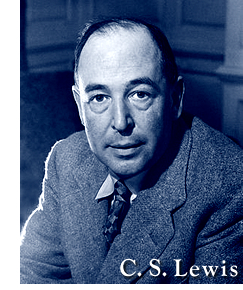
C.S. Lewis Daily – Today’s Reading


To shrink back from all that can be called Nature into negative spirituality is as if we ran away from horses instead of learning to ride. There is in our present pilgrim condition plenty of room (more room than most of us like) for abstinence and renunciation and mortifying our natural desires. But behind all asceticism the thought should be, ‘Who will trust us with the true wealth if we cannot be trusted even with the wealth that perishes?’ Who will trust me with a spiritual body if I cannot control even an earthly body? These small and perishable bodies we now have were given to us as ponies are given to schoolboys. We must learn to manage: not that we may some day be free of horses altogether but that some day we may ride bare-back, confident and rejoicing, those greater mounts, those winged, shining and world- shaking horses which perhaps even now expect us with impatience, pawing and snorting in the King’s stables. Not that the gallop would be of any value unless it were a gallop with the King; but how else— since He has retained His own charger—should we accompany Him?

From Miracles
Compiled in A Year with C.S. Lewis

Charles Stanley – How to Listen to God’s Word

Nehemiah 8

How is it that two people can sit in the same pew, hear the same sermon about the same portion of Scripture, and walk away with two different reactions? One is joyful and the other is unaffected. I think the reason is that some people do not know how to listen to the Word of God.

Nehemiah 8 is an amazing scene of God’s people coming together to hear His Word. Remember that they didn’t have individual copies of Scripture to read. For generations, the events of Genesis through Deuteronomy were passed down from parent to child. Moreover, the people had been in captivity for many years. This was the first time most of them heard the Word read. Imagine their excitement as they listened attentively for the Lord to speak to them.

The Israelites were hungry for God’s Word. Are you? Do you listen eagerly and with an expectant mind and heart? The length of a person’s attention span is directly related to the intensity of his hunger for something. If you crave to know more of God, then your mind is going to be fastened on what He’s saying through your pastor or your personal reading. And the reality is that nothing in the world matters as much as what the Lord has to say.

So many things clamor for our focus but few truly deserve it. The Lord is worthy of nothing less than our undivided attention. He has something to say to every person. So whoever listens to God’s Word with an open heart and alert mind will receive from Him.

Our Daily Bread — Solid-Rock Faith


Read: Psalm 18:1-3,46
Bible in a Year: 1 Samuel 4-6; Luke 9:1-17


The Lord is my rock and my fortress and my deliverer. —Psalm 18:2

My wife and I both have grandmothers who have lived past 100. Talking with them and their friends, I detect a trend that seems almost universal in the reminiscences of older people: They recall difficult times with a touch of nostalgia. The elderly swap stories about World War II and the Great Depression; they speak fondly of hardships such as blizzards, the childhood outhouse, and the time in college when they ate canned soup and stale bread 3 weeks in a row.

Paradoxically, difficult times may help nourish faith and strengthen personal bonds. Seeing this principle lived out, I can better understand one of the mysteries relating to God. Faith boils down to a question of trust. If I do stand on a solid rock of trust in God (Ps. 18:2), the worst of circumstances will not destroy that relationship.

Solid-rock faith allows me to believe that despite the chaos of the present moment, God does reign. Regardless of how worthless I may feel, I truly matter to a God of love. No pain lasts forever, and no evil triumphs in the end.

Solid-rock faith sees even the darkest deed of all history, the death of God’s Son, as a necessary prelude to the brightest moment in all history—His resurrection and triumph over death. —Philip Yancey

Lord, You are the Rock, the object of my faith. My faith stands on You and not on my shifting feelings; otherwise I would be sure to fall.

Christ, the Rock, is our sure hope.

INSIGHT: Psalm 18 is a song of thanksgiving. The long superscription, taken from 2 Samuel 22:1, gives the circumstances that led David to write this song of deliverance: “A Psalm of David the servant of the Lord, who spoke to the Lord the words of this song on the day that the Lord delivered him from the hand of all his enemies and from the hand of Saul.” David used seven metaphors to describe the Lord: He is a rock, fortress, and deliverer. He is our strength, shield, horn of salvation, and stronghold (vv. 2-3).

Alistair Begg – Outside the Camp


Therefore let us go to him outside the camp. Hebrews 13:13

Jesus, bearing His cross, went to suffer outside the gate. The Christian’s reason for leaving the camp of the world’s sin and religion is not because he loves to be isolated, but because Jesus did so; and the disciple must follow his Master. Christ was “not of the world.” His life and His testimony were a constant protest against conformity with the world. Although He displayed overflowing affection for men, He was still separate from sinners.

In the same way Christ’s people must “go to him.” They must take their position “outside the camp,” as witness-bearers for the truth. They must be prepared to walk the straight and narrow path. They must have bold, unflinching, lion-like hearts, loving Christ first, and His truth next, and Christ and His truth more than all the world. Jesus desires His people to “go . . . outside the camp” for their own sanctification.

You cannot grow in grace to any high degree while you are conformed to the world. The life of separation may be a path of sorrow, but it is the highway of safety; and though the separated life may be painful and make every day a battle, yet it is a happy life after all. No joy can excel that of the soldier of Christ: Jesus reveals Himself so graciously and gives such sweet refreshment that the warrior feels more calm and peace in his daily strife than others in their hours of rest.

The highway of holiness is the highway of communion. It is in this way we shall hope to win the crown if we are enabled by divine grace faithfully to follow Christ “outside the camp.” The crown of glory will follow the cross of separation. A moment’s shame will be well rewarded by eternal honor; a little while of witness-bearing will seem nothing when we are forever with the Lord.

Devotional material is taken from “Morning and Evening,” written by C.H. Spurgeon, revised and updated by Alistair Begg.

Charles Spurgeon – Effects of sound doctrine


“For there shall arise false Christs, and false prophets, and shall shew great signs and wonders; insomuch that, if it were possible, they shall deceive the very elect.” Matthew 24:24

Suggested Further Reading: 1 Peter 2:4-10

What effect does election have on our actions? If this doctrine be fully received and known, it breathes with all gratitude to God, an earnest desire to show forth his praise. It leads to all kinds of holy activity, and a hearty endeavour for the service of God. We are told continually by philosophic writers, that the idea of necessity—the idea that anything is fixed or decreed—tends at once to damp activity. Never was there a grosser misrepresentation. Look abroad, everything that has been great in the spirit of the age has had a Necessitarian at the bottom of it. When Mohammed preached predestination, he took a necessitarian view. Did that doctrine of predestination make his followers idle? Did it not make them dash into the battle, declaring they must die when the appointed time came, and while they lived they must fight, and earnestly defend their faith? Or to take an instance from the history of our own country. Did the Calvinism of Oliver Cromwell make his Ironsides idle? Did they not keep their powder dry? They believed that they were chosen men of God, and were they not men of valour? Did this doctrine mar their energy? So in every good enterprise our churches are never behind. Are we backward in missionary enterprise? Are we slow to send forth men of God to preach in foreign lands? Are we deficient in our efforts? Are we the people who would preach to a select few?—who would erect buildings for worship that the poor scarcely dare to enter? Are we the people who would keep our religious services for a privileged circle? The fact is, the most zealous, the most earnest, and the most successful of men, have been those who have held this truth.

For meditation: The doctrine of election is not supposed to turn us in upon ourselves, but to send us out to others (John 15:16; Acts 9:15).

Sermon no. 324
6 April (Preached 22 April 1860)

John MacArthur – Mourning Over Your Sin


“Blessed are those who mourn, for they shall be comforted” (Matt. 5:4).

When your sins are forgiven, you are a happy person!

Human sorrow is mourning over some tragic or disappointing turn of events. At such times believers are assured of God’s sustaining and comforting grace (2 Cor. 1:3-4). But when Jesus said, “Blessed are those who mourn, for they shall be comforted” (Matt. 5:4), He was referring to godly sorrow, which is mourning over your sin.

“Mourn” in Matthew 5:4 translates the strongest Greek word used in the New Testament to express grief. It is often used of the passionate lament expressed over the loss of a loved one (e.g., Mark 16:10). David was expressing that kind of sorrow over his sin when he wrote, “When I kept silent about my sin, my body wasted away through my groaning all day long. For day and night Thy hand was heavy upon me; my vitality was drained away as with the fever heat of summer” (Ps. 32:3-4). His grief and despair made him physically ill.

At that point David wasn’t a happy person, but the blessing godly sorrow brings isn’t found in the sorrow itself, but in God’s response to it. As Paul said to the Corinthians, “I now rejoice, not that you were made sorrowful, but that you were made sorrowful to the point of repentance; for you were made sorrowful according to the will of God. . . . For the sorrow that is according to the will of God produces a repentance without regret, leading to salvation; but the sorrow of the world produces death” (2 Cor. 7:9-10, emphasis added). Godly sorrow is the path to repentance and forgiveness.

After David confessed his sin he proclaimed with great joy, “How blessed is he whose transgression is forgiven, whose sin is covered! How blessed is the man to whom the Lord does not impute iniquity, and in whose spirit there is no deceit!” (vv. 1-2). When you understand that your sins are forgiven, you are a happy person!

How do you deal with your sins? Do you deny and try to hide them, or do you mourn over them and confess them (cf. Prov. 28:13)?

Suggestions for Prayer; If you have allowed some sin to rob you of your happiness, don’t let it continue a moment longer. Like David, confess your sin and know the joy of forgiveness.

For Further Study; Read Luke 15:11-24. How did the prodigal son deal with his sin?


Joyce Meyer – Raise Your Level of Expectation


Wait and hope for and expect the Lord; be brave and of good courage and let your heart be stout and enduring. Yes, wait for and hope for and expect the Lord. Psalm 27:14

We’ve all found ourselves dealing with pessimistic attitudes and low expectations-describing the weather as “partly cloudy” rather than “partly sunny,” seeing the glass as “half empty” instead of “half full.”

For many people, low expectations keep them from enjoying their lives. They go through each day with negative, faultfinding, critical attitudes, rarely hoping for the best because they’re too busy expecting the worst. When things are going poorly they think I had a feeling today was going to be a bad day, and when things are going well they think This probably won’t last long. Good days or bad, on the mountaintop or in the valley, they’re not enjoying their lives . . . because they’ve never expected they could.

Low expectations are more than a few grumpy complaints on a longer-than-usual Monday or a feeling that maybe you woke up on the wrong side of the bed. Low expectations are symptoms of a deeper problem, a spiritual problem. A person may have a history of disappointments that caused him to form a habit of expecting more of the same. Some people have such low self-esteem that they assume they are not worth anything nice, so they never expect it. And then there are those who don’t know that God is good and wants to do good things for His children.

What are your symptoms? If you were to conduct an honest evaluation of your heart, what would you find there?

Are you excited about the future, expecting today to be better than yesterday and tomorrow to be even better than today? Do you wake up each morning with a happy anticipation that God is going to do something amazing in your life?

Or do you find yourself bracing for the worst? Do you worry about bad things happening before they actually happen? Do you use phrases like here we go again, this will never work out, I should’ve known things would go sour, and I’ve got a bad feeling about this

The level of your expectation is the level of your faith. Show me a person with low expectations, and I’ll show you a person using very little faith. But show me a person with big expectations, and I’ll show you a person acting with bold faith. Just remember that we are talking about having our expectation in God. It is more than a mere positive attitude; it is trusting God to take care of you and everything that concerns you.

Campus Crusade for Christ; Bill Bright – Reap What You Sow 


“Don’t be misled; remember that you can’t ignore God and get away with it: a man will always reap just the kind of crop he sows!” (Galatians 6:7).

Steve had just been introduced to this great and exciting law of sowing and reaping. “Is it really true,” he asked, “that I will always reap what I sow – and more than I sow – good or bad?”

I was able to assure him, from the authority of Scripture, from experience of 36 years of walking with Christ and by observing closely the lives of many thousands of Christians with whom I have counseled and worked, that the law of sowing and reaping is just as true and inviolate as the law of gravity.

If you want to judge a man, an American humorist once said, you should not look at him in the face but get behind him and see what he is looking at, what he is sowing.

For example, is he looking at God with reverence – or with no deference at all? Does he really believe God means what He says?

A student once asked, “If I give my life to Christ, do I become a puppet?”

The answer is a resounding no! We never become puppets. We have the right of choice; we are free moral agents. God’s Word assures us that He guides and encourages us, but we must act as a result of our own self-will. God does not force us to make decisions.

The more we understand the love, the wisdom, the sovereignty, the grace and power of God, the more we will want to trust Him with every detail of our lives. The secret of the supernatural life is to keep Christ on the throne of our lives and delight ourselves in Him as Lord.

We fail in the Christian life when we, as a deliberate act of our will, choose to disobey the leading of the Holy Spirit.

It is a tragedy of the human will that we often think we have a better way than God has for living the Christian life. But do not deceive yourself or allow Satan to mislead you: God’s way is best!

Bible Reading: Galatians 6:6-10

TODAY’S ACTION POINT:  I will seek to sow seeds of love and kindness and faith knowing that as a result I will reap God’s best for my life.

Presidential Prayer Team; H.L.M.- Resurrected Heart


Brian Ivie wanted to produce a film that would compete at the Sundance Film Festival. Then he read about Pastor Lee Jong-rak of Seoul, South Korea. Lee and his wife, Chun-Ja, felt a supernatural call to personally care for South Korea’s abandoned children, many of whom are disabled. “Here was a story of a pastor who had built a mailbox for babies at this church. I thought this could be my golden ticket to Sundance,” Ivie said.

He who raised Christ Jesus from the dead will also give life to your mortal bodies.

Romans 8:11

Ivie lived in Lee’s home while he made a documentary about his work – and found faith rather than fame. “When I witnessed the love and courage of Pastor Lee, I saw the real deal. He was giving his life for something that wasn’t cultural,” he said. Ivie discovered eternal life through Christ as well as freedom from anger issues and an addiction to pornography.

As the body and its desires act as the rudder for the unbeliever, the same Holy Spirit that resurrected Jesus from the dead is available to guide every person today. As you pray for the nation’s citizens and leaders, intercede for unbelievers to experience resurrected hearts by trusting in the Lord.

Recommended Reading: Philippians 3:7-14

Greg Laurie – An Oasis of Hope


I was glad when they said to me, “Let us go into the house of the Lord.”—Psalm 122:1

I think we sometimes approach church more from the standpoint of consumers than communers. We may think of going to church the way we think of going to a movie: What time does the movie start? At seven? Well, they roll the trailers for the first twenty minutes, so we’ll get there at about seven. We’ll park and grab some popcorn first. And when the movie is over, we don’t want to wait for the credits to roll, so we’ll get up and leave.

We can have the same mentality toward church. Oh well, it’s just that worship stuff at the beginning. . . . I’ll get in late and maybe check my texts and e-mail while I’m waiting. Oh, and I’ll leave early.

But that is not the way to go to church. It is a place of worship, it is the house of God, and believers are the family of God. So we need to change the way we think about it. Worship is not the opening act; worship is prayer set to song. It is a time of communing with God.

And we should not go to church merely to have our needs met. Sometimes people will hop around to different churches because they like the style of music at one church or the teaching at another church. But that is actually not good for us spiritually.

We need a consistent place so we can get a consistent theology. We also need a place to be accountable to those who know us and can check in with us and help us in life—as we help them as well. We need a place to develop our gifts and serve the Lord.

The church is like an oasis of hope in a desert of hopelessness.

Max Lucado – A Heart Like His


What if, for one day, Jesus were to become you? His priorities would be governing your actions. His love would be directing your behavior. Would people notice a change? How about your enemies? Would they receive more mercy? Keep working on this for a moment. Adjust the lens of your imagination until you have a clear picture of Jesus leading your life—then snap the shutter and frame the image. What you see is what God wants. Nothing short of a new heart. In Philippians 2:5 it says, to “think and act like Christ Jesus.” He wants you to have a heart like His.

I’m going to risk something here. It’s dangerous to sum up grand truths in one statement, but I’m going to try. God loves you just the way you are, but he refuses to leave you that way. He wants you to be just like Jesus!

From Just Like Jesus

Charles Stanley – TRIUMPHANT MESSAGE OF THE RESURRECTION


The reality of Christ’s triumph over sin and death changed the disciples’ lives forever and can transfigure any situation we face.

Do you ever find it difficult to believe? In the midst of painful circumstances, is it sometimes challenging to trust that your situation can ever be better or that something good can come from it?

Even the disciples who walked with Jesus were completely devastated after the crucifixion. The Savior had told them repeatedly, “The Son of Man must suffer many things and be rejected by the elders and the chief priests and the scribes, and be killed, and after three days rise again” (Mark 8:31). Yet they doubted. They simply could not see past their human perceptions or expectations to claim His promises.

The disciples were brokenhearted and despondent. They felt absolutely helpless. Deep within their hearts, they believed it was all over. They had seen Jesus suffer and die on the cross with their own eyes. From their perspective, all of their hopes and dreams had been irrevocably dashed. Why? John 20:9 tells us, “As yet they did not understand the Scripture, that He must rise again from the dead.”

How often do you and I get caught up in the same attitude of defeat? We’re overwhelmed by our circumstances because we’re focused on our limited comprehension of them instead of the Father’s awesome purposes. Yet if we could see past our imperfect understanding to our extraordinary Redeemer, we would be filled with joy. Our lives would be radically transformed—just as the disciples were after the resurrection.

Nothing—not even death—can separate us from God once we accept Christ as our Savior.

We would do well to remember the life-changing truths the disciples learned after Jesus rose from the grave. The reality of Christ’s triumph over sin and death changed their lives forever and can transfigure any situation we face—filling it with hope.

So what did they discover?

First, they realized that God always succeeds in carrying out His plans. Jesus promised to pay for our transgressions and deliver us from the penalty of death—and that is exactly what He did (Luke 24:46-48). There was no power on earth that could divert Him from achieving His goal … not the Sanhedrin, nor even the great Roman army.

The same is true in your life. Regardless of what you face or how your situation currently appears, the Lord is greater. He has conquered the grave and can overcome any problem you encounter. Therefore, continue walking in the center of His will. He is certain to keep all of His promises to you.

Second, the disciples learned that nothing—not even death—can separate us from God once we trust Christ as our Savior (Rom. 8:31-39). Although the disciples thought they had lost Jesus through the crucifixion, the resurrection showed them they would never be divided from Him again.

Likewise, we have been reconciled to the Father forever. This means we always have Him with us—guiding, teaching, and providing for us. No matter how lonely or helpless we may feel, the fact is, we are never alone or powerless. The Lord God Almighty, our Comforter and Defender, will never leave, fail, or forsake us.

Third, the disciples discovered that in the grand scope of things, any adversity we experience is temporary because Jesus has given us eternal life. Although they knew they would face resistance and persecution as they preached the gospel, the disciples understood the Father would ultimately deliver them—whether on earth or by taking them to their home in heaven (1 Pet. 4:12-19). Their futures were absolutely secure because they were in God’s loving and capable hands.

He has conquered the grave and can overcome any problem you encounter.

Again, you have the same assurance. You may feel as if your situation is impossible to overcome. It may appear unending, and you may be weary and disheartened. But don’t give up hope. Cling to the promise that God acts on behalf of those who wait for Him. Keep seeking Him, and He will deliver you from the trials you’re enduring.

Now I ask you to look deep within your heart and be completely honest with yourself and with the Father. Do you have doubts? Are you finding it difficult to believe in the Lord because of the troubles you’re experiencing? Is it challenging to trust that your situation can ever be better or that something good can come from it?

You can experience victory if you will apply these three important principles to your life. The Lord will succeed in carrying out His plans and keep all of His promises to you. Nothing—not even death—can separate you from the Father, so you will never be alone or helpless. And no matter what happens to you—it is only temporary. Eventually, God will set you free from the problems you face.

Keep reminding yourself of these triumphant truths from the resurrection because that is the way to true and lasting victory—today and every day. May our risen Savior remind you of these certainties and encourage your heart deeply, abundantly, and with never-ending joy.

Resurrection


Our Daily Bread — Come To Me


Read: John 20:24-31
Bible in a Year: 1 Samuel 1-3; Luke 8:26-56


Blessed are those who have not seen and yet have believed. —John 20:29

Charlotte Elliott wrote the hymn “Just As I Am” in 1834. She had been an invalid for many years, and though she wanted to help with a fund-raiser for a girl’s school, she was too ill. She felt useless, and this inner distress caused her to begin doubting her faith in Christ. She wrote “Just As I Am” as a response to her doubt. The crux of her distress is perhaps best expressed in these words:

Just as I am, though tossed about
With many a conflict, many a doubt,
Fightings and fears within, without,
O Lamb of God, I come!

Three days after His death and burial, Jesus rose from the grave and invited the disciple whom history has nicknamed “Doubting Thomas” to examine the marks of His crucifixion (John 20:27). When Thomas touched Jesus’ wounds, he finally believed in the resurrection. Christ responded, “Thomas, because you have seen Me, you have believed. Blessed are those who have not seen and yet have believed” (v.29).

As Christians today, we are the ones who have not seen but still believe. Yet at times our earthly circumstances create serious questions in our souls. Even then, we cry out: “Lord, I believe; help my unbelief!” (Mark 9:24). Jesus welcomes us to come to Him just as we are. —Jennifer Benson Schuldt

Dear Jesus, help me to trust You when life doesn’t make sense. Please take my doubt and replace it with fresh faith in You.

The risen Christ opens the door for you to have fullness of life.

INSIGHT: The world remembers Thomas the disciple for his statement of doubt about Jesus’ resurrection. However, it was also Thomas who showed more loyalty to Christ than many of the others. When the Pharisees were actively seeking to kill Him, Jesus said to His disciples, “Let us go to Judea again” (John 11:7). Thomas is the one who said, “Let us also go that we may die with Him” (v. 16).