Tag Archives: Peace

Alistair Begg – Your Cross


…laid on him the cross, to carry it behind Jesus. Luke 23:26

We see in Simon’s carrying the cross a picture of the work of the church throughout all generations; she is the cross-bearer after Jesus. Notice, Christian, that Jesus does not suffer so as to prevent your suffering. He bears a cross, not that you may escape it, but that you may endure it. Christ exempts you from sin, but not from sorrow. Remember that, and expect to suffer. But let us comfort ourselves with this thought, that in our case, as in Simon’s, it is not our cross but Christ’s cross that we carry. When you are persecuted for your piety, when your faith is the occasion of cruel jokes, then remember it is not your cross, it is Christ’s cross; and what a privilege it is to carry the cross of our Lord Jesus!

You carry the cross after Him. You have blessed company; your path is marked with the footprints of your Lord. The mark of His blood-red shoulder is upon that heavy burden. It is His cross, and He goes before you as a shepherd goes before his sheep. Take up your cross daily, and follow Him.

Do not forget, also, that you bear this cross in partnership. It is the opinion of some that Simon only carried one end of the cross, and not the whole of it. That is very possible. Christ may have carried the heavier part, against the transverse beam, and Simon may have borne the lighter end. Certainly that is the case with you; you only carry the light end of the crossChrist bore the heavier end.

And remember, though Simon had to bear the cross for only a short while, it gave him lasting honor. Even so, the cross we carry is only for a little while at most, and then we shall receive the crown, the glory. Surely we should love the cross and, instead of shrinking from it, count it very dear, for it works out for us an eternal weight of glory beyond all comparison.

Devotional material is taken from “Morning and Evening,” written by C.H. Spurgeon, revised and updated by Alistair Begg


Charles Spurgeon – Justification by grace


“Being justified freely by his grace through the redemption that is in Christ Jesus.” Romans 3:24

Suggested Further Reading: Hebrews 10:11-18

God demanded of Christ the payment for the sins of all his people; Christ stood forward, and to the utmost farthing paid whate’er his people owed. The sacrifice of Calvary was not a part payment; it was not a partial exoneration, it was a complete and perfect payment, and it obtained a complete and perfect remission of all the debts of all believers that have lived, do live, or shall live, to the very end of time. On that day when Christ hung on the cross, he did not leave a single farthing for us to pay as a satisfaction to God. The whole of the demands of the law were paid down there and then by Jehovah Jesus, the great high priest of all his people. And blessed be his name, he paid it all at once too. So priceless was the ransom, so princely and generous was the price demanded for our souls, one might have thought it would have been marvellous if Christ had paid it by instalments; some of it now, and some of it then. Kings’ ransoms have sometimes been paid part at once, and part in dues afterwards, to run through years. But not so our Saviour: once for all he gave himself a sacrifice; at once he counted down the price, and said, “It is finished,” leaving nothing for him to do, nor for us to accomplish. He did not drivel out a part-payment, and then declare that he would come again to die, or that he would again suffer, or that he would again obey; but down upon the nail, to the utmost farthing, the ransom of all people was paid, and a full receipt given to them, and Christ nailed that receipt to his cross.

For meditation: Those who attempt to complete or repeat a finished piece of work insult its maker and render it useless to themselves (Galatians 5:2).

Sermon no. 126
5 April (1857)


John MacArthur – Dealing with Sorrow


“Blessed are those who mourn, for they shall be comforted” (Matt. 5:4).

Human sorrow is a natural and healthy emotion, but beware of mourning over unfulfilled sinful desires.

Most people in our society have an amusement-park mentality. They spend much of their time and money on entertainment, wanting to enjoy life and avoid problems whenever possible. To them, Matthew 5:4 is a paradox. How can someone who mourns be happy? The answer lies in the difference between godly sorrow and human sorrow. Godly sorrow is sorrow over sin; human sorrow is sorrow over some tragic or disappointing turn of events (2 Cor. 7:8-11).

In Matthew 5:4 Jesus is referring to godly sorrow, which is our topic for tomorrow. But we all face human sorrow, so I want to discuss it briefly today.

Human sorrow is a natural emotion. Our Lord Himself was “a man of sorrows, and acquainted with grief” (Isa. 53:3). Many things can cause it: we might mourn out of love, disappointment, loneliness, or physical illness. There is nothing wrong with that kind of mourning. It is a God- given relief valve for the pain and sorrow in this fallen world, and promotes the healing process.

Scripture gives many examples of human sorrow. Abraham wept when his wife, Sarah, died (Gen. 23:2). Through tears Jeremiah preached God’s message of judgment (Jer. 9:1). Paul expressed his concern for the church with his tears (Acts 20:31). Those are natural, healthy expressions of human sorrow.

However, sorrow can also be caused by evil desires or a lack of trust in God. King Ahab mourned to the point of sulking and not eating when he couldn’t have another man’s property (1 Kings 21:4). Some Christians mourn excessively when they lose a loved one. Forsaking the comfort of the Spirit, they focus only on their own grief. Extreme or prolonged manifestations of sorrow are sinful and must be confessed rather than comforted.

God is gracious to His children amid times of human sorrow. Ultimately He will do away with mourning and pain forever (Rev. 21:4). Rejoice in that promise and be comforted by His wonderful grace!

Suggestions for Prayer; Thank God for the ministry of the Spirit, who is the great Comforter or Helper (John 14:16-17). When sorrow occurs, lean on the Spirit, feed your soul on God’s Word, and commune with Him in prayer.

For Further Study; Read Psalm 55. How did David express his desire to escape his difficult situation? What was his final resolve?

Joyce Meyer – Patience Grows Under Trial


In the world you have tribulation and trials and distress and frustration; but be of good cheer [take courage; be confident, certain, undaunted]! For I have overcome the world. [I have deprived it of power to harm you and have conquered it for you.] John 16:33

Patience is a fruit of the Spirit we desperately need in our lives. But when we pray for patience, we often experience challenges that give us opportunity to develop patience. We may not like it, but God has something good in mind—He is actually answering our prayers and we just don’t realize it.

God wants us to bless Him at all times, not just when things are going our way. When challenges arrive in your life, remember you can be peaceful, enjoy the journey, have faith, and learn patience because Jesus is with you at every moment. And He will bring you through to the other side.

Power Thought: I keep an attitude of good cheer in all circumstances because God is with me.


Campus Crusade for Christ; Bill Bright – Fair in Everything


“The Lord is fair in everything He does, and full of kindness. He is close to all who call on Him sincerely” (Psalm 145:17,18).

Are you afraid to trust the Lord? I find that many people who have had unfortunate experiences in their youth with their parents, especially their fathers, have a reluctance to trust God.

In my talks with thousands of students, I have found a number of young people who have such an attitude problem.

Even the best of earthly parents, at times, are unfair and fail to demonstrate kindness. Yet how wonderful it is to know that our Lord is fair in everything He does and is full of kindness, and He is always close to all who call upon Him sincerely.

Notice that the Scripture promise quoted above is a categorical statement. The psalmist permits no exceptions, even when we are sure we deserved better than we received. Thus we need to claim the promise in God’s Word by faith and live by it. Some day we will see events from God’s side and recognize the fairness we could not see here.

We often see “as in a glass darkly,” but God has perfect 20/20 vision. That’s why the attitude of trust alone will help us overcome our feelings that God or the world, is unfair. Only then can we live a supernatural life of daily acceptance of what God sends our way.

Bible Reading: Psalm 145:8-12

TODAY’S ACTION POINT:  Today I will put my trust in God and His goodness, no matter how I feel. I will move beyond preoccupation with my disappointments and carry out God’s appointments in the certainty that our Lord is fair in everything He does and will enable me to live supernaturally as I continue to trust and obey Him.

Presidential Prayer Team; C.H.- Easter Sunday


Extraordinary from Ordinary

The definition of “common,” according to Merriam-Webster, is “falling below ordinary standards” or “lacking refinement or special status.” A common person lacks distinction. That’s how the Pharisees characterized Peter and John after questioning them.

When they saw the boldness of Peter and John, and perceived that they were…common men, they were astonished.

Acts 4:13

The two disciples had healed a beggar instead of giving the lame man money. Astonished, the Jewish council wanted to know by what power they performed such a miracle. “Jesus,” was their answer. “There is salvation in no one else.” (Acts 4:12) God frequently chooses to use common people to do extraordinary things. In doing so, the glory goes to the Almighty. As today’s verse continues, when people saw the miracle of Peter and John, “they recognized that they had been with Jesus.”

Will people look at the events, attitudes and actions of your life and recognize you have spent time with the Lord? God used common people then – and can still use ordinary people today. Pray for God to use your life for His glory and to bring others to salvation in Him. Pray, too, for your national leaders to know Christ this Easter.

Recommended Reading: Acts 3:1-10

Charles Stanley – The Resurrection: Christ’s Destiny—And Ours

1 Corinthians 15:3-22

Throughout the past week, Christians around the world have contemplated Jesus’ final steps as He made His way to the cross. His humiliation and suffering have broken our hearts, but just beneath the surface lay the expectation of what we knew was coming: He is risen!

The resurrection was the Savior’s destiny—but so was the cross. Jesus came as the Lamb of God to take away the sin of the world (John 1:29). But did you know that the cross is also God’s ordained destiny for believers? It’s the only way to deal with sin. When Jesus died at Calvary, He bore the punishment for our sins so that everyone who believes in Him can be forgiven and declared “Not Guilty!” From God’s judicial standpoint, we have already been crucified with Christ because the penalty for our sin has been paid. However, salvation doesn’t remove our old sinful thought patterns and desires.

What Christ did in removing the penalty of sin, we must each do personally to overcome the power of sin in our lives. But the cross is the last place we want to go. It not only brings pain, but the road leads through Gethsemane, where we have to say to God, “Not My will, but Yours be done” (Luke 22:42).

Though we long to overcome sin in our life, many of us are unwilling to do what’s required. Yet if we try to avoid the cross, we’ll miss the abundant life God wants to give us. Instead of living in consistent triumph over temptation, we will be on a roller coaster of ups and downs. Each time we fail, we’ll try harder, but there is no way to improve or reform our sinful tendencies. They have to be put to death.

The cross is not the end point. God’s goal is that we “walk in newness of life” (Rom. 6:4). Once we nail those old fleshly cravings to the cross, they’ll start to lose their appeal, and our hearts will begin to find delight in obeying the Lord. Just as Christ was raised from the dead, we, too, will find vibrant life and victory beyond our Golgotha.

Ask yourself these questions: What is at the center of my life? What drives me and gives me a sense of purpose? Does anything other than the Holy Spirit have control over me? What am I unwilling to surrender to the Lord? If anything or anyone in your life has priority over Christ, it’s idolatry. Whatever you are holding onto or whatever is holding onto you needs to be taken to the cross. A new life of freedom and power is waiting on the other side of the grave.

—Charles F. Stanley

Our Daily Bread — The Tree Of Love


Read: Matthew 27:27-35
Bible in a Year: Ruth 1-4; Luke 8:1-25


[Jesus] bore our sins in His own body on the tree. —1 Peter 2:24

The corkscrew willow tree stood vigil over our backyard for more than 20 years. It shaded all four of our children as they played in the yard, and it provided shelter for the neighborhood squirrels. But when springtime came and the tree didn’t awaken from its winter slumber, it was time to bring it down.

Every day for a week I worked on that tree—first to fell it and then to chop two decades of growth into manageable pieces. It gave me a lot of time to think about trees.

I thought about the first tree—the one on which hung the forbidden fruit that Adam and Eve just couldn’t resist (Gen. 3:6). God used that tree to test their loyalty and trust. Then there’s the tree in Psalm 1 that reminds us of the fruitfulness of godly living. And in Proverbs 3:18, wisdom is personified as a tree of life.

But it is a transplanted tree that is most important—the crude cross of Calvary that was hewn from a sturdy tree. There our Savior hung between heaven and earth to bear every sin of every generation on His shoulders. It stands above all trees as a symbol of love, sacrifice, and salvation.

At Calvary, God’s only Son suffered a horrible death on a cross. That’s the tree of life for us. —Dave Branon

Father, on this day between Good Friday and Easter Sunday, we’re grateful for the cross and for Your Son who gave His life so that we might have life. Thank You.

The cross of Christ reveals man’s sin at its worst and God’s love at its best.

INSIGHT: The “garrison” of Roman troops mentioned in verse 27 is a detail that adds to our understanding of the events surrounding Christ’s death. Mark’s account of the same event translates the word as cohort (15:16 NASB). Garrison or cohort was a Roman military term that described a company of soldiers consisting of at least 200 and perhaps as many as 600 men. The same Greek word is used in John 18:3 when a “detachment of troops” comes to arrest Jesus in the garden. Imagine, possibly hundreds of men were sent to arrest Jesus and hundreds gathered around Him when He was tormented.

Alistair Begg – Why Are You Upset?


For our sake he made him to be sin who knew no sin, so that in him we might become the righteousness of God. 2 Corinthians 5:21

Mourning Christian, why are you weeping? Are you mourning over your own sins and failings? Look to your perfect Lord, and remember, you are complete in Him. You are in God’s sight as perfect as if you had never sinned; more than that, the Lord our Righteousness has clothed you with a royal robe of righteousness, which is wholly undeserved–you have the righteousness of God.

You who are mourning by reason of inbred sin and depravity, remember, none of your sins can condemn you. You have learned to hate sin; but you have also learned how that sin is not yours–it was laid upon Christ’s head. Your standing is not in yourself–it is in Christ. Your acceptance is not in yourself, but in your Lord; you are just as accepted by God today, with all your sinfulness, as you will be when you stand before His throne, free from all corruption.

So I urge you, take hold of this precious thought–perfection in Christ! For you are “complete in him.”1 With your Savior’s garment on, you are as holy as the Holy One. “Who is to condemn? Christ Jesus is the one who died–more than that, who was raised–who is at the right hand of God, who indeed is interceding for us.”2

Christian, let your heart rejoice, for you are “accepted in the beloved”3–what do you have to fear? Keep a smile on your face! Live near your Master; live in the suburbs of the Heavenly City; for soon, when your time has come, you will rise up to where Jesus sits and reign at His right hand; and all because the Lord Jesus was made “to be sin who knew no sin, so that in him we might become the righteousness of God.”

1) Colossians 2:10, KJV   2) Romans 8:34    3) Ephesians 1:6

Devotional material is taken from “Morning and Evening,” written by C.H. Spurgeon, revised and updated by Alistair Begg.

Charles Spurgeon – The form and spirit of religion

“Let us fetch the ark of the covenant of the Lord out of Shiloh unto us, that, when it cometh among us, it may save us out of the hand of our enemies.” 1 Samuel 4:3

Suggested Further Reading: 1 Corinthians 1:13-17

How vain are the hopes that men build upon their good works, and ceremonial observances! How frightful is that delusion which teaches for the gospel a thing which is not “the gospel”, nor “another gospel”; but it is a thing that would pervert the gospel of Christ. Let me ask thee solemnly, what is thy ground of hope? Dost thou rely on baptism? O man, how foolish thou art! What can a few drops of water, put upon an infant’s forehead, do? Some lying hypocrites tell us that children are regenerated by drops of water. What kind of regeneration is that? We have seen people hanged that were regenerated in this fashion. There have been men that have lived all their lives as whoremongers, adulterers, thieves, and murderers, who have been regenerated in their baptism by that kind of regeneration. Oh, be not deceived by a regeneration so absurd, so palpable even to flesh and blood, as one of the lying wonders that have come from hell itself. But maybe thou sayest, “Sir, I rely upon my baptism, in after life.” Ah, my friends, what can washing in water do? As the Lord liveth, if thou trustest in baptism thou trustest in a thing that will fail thee at last. For what is washing in water, unless it is preceded by faith and repentance? We baptize you, not in order to wash away your sins, but because we believe they are washed away beforehand; and if we did not think you believed so, we would not admit you to a participation in that ordinance. But if you will pervert this to your own destruction, by trusting in it, take heed; you are warned this morning. For as “circumcision availeth nothing, nor uncircumcision, but a new creature,” so baptism availeth nothing.

For meditation: Baptism is supposed to illustrate the gospel, not to replace it. The command to be baptised follows the new birth, repentance and faith in Christ (Mark 16:16; Acts 2:38; 8:12,36-38; 9:17-18; 10:47-48; 16:14-15,31-34; 18:8).

Sermon no. 186
4 April (1858)

John MacArthur – Being Poor in Spirit


“Blessed are the poor in spirit, for theirs is the kingdom of heaven” (Matt. 5:3).

If you are poor in spirit, certain characteristics will mark your life.

The Puritan writer Thomas Watson listed seven ways to determine if you are poor in spirit (The Beatitudes [Edinburgh: The Banner of Truth Trust, 1971], pp. 45-48):

  1. You will be weaned from self—Psalm 131:2 says, “Like a weaned child rests against his mother, my soul is like a weaned child within me.” When you are poor in spirit you will focus not on yourself but on glorifying God and ministering to others.
  2. You will focus on Christ—Second Corinthians 3:18 says that believers are “beholding as in a mirror the glory of the Lord, [and] are being transformed into the same image from glory to glory, just as from the Lord, the Spirit.” When you are poor in spirit, the wonder of Christ captivates you. To be like Him is your highest goal.
  3. You will never complain—If you are poor in spirit you accept God’s sovereign control over your circumstances, knowing you deserve nothing anyway. Yet the greater your needs, the more abundantly He provides.
  4. You will see good in others—A person who is poor in spirit recognizes his own weaknesses and appreciates the strengths of others.
  5. You will spend time in prayer—It is characteristic of beggars to beg. Therefore you will constantly be in God’s presence seeking His strength and blessing.
  6. You will take Christ on His terms—Those who are poor in spirit will give up anything to please Christ, whereas the proud sinner wants simply to add Christ to his sinful lifestyle.
  7. You will praise and thank God—When you are poor in spirit, you will be filled with praise and thanks for the wonder of God’s grace, which He lavishes on you through Christ (Eph. 1:6).

Do those principles characterize your life? If so, you are poor in spirit and the kingdom of heaven is yours (Matt. 5:3). If not, you must seek God’s forgiveness and begin to live as His humble child.

Suggestions for Prayer; Ask the Holy Spirit to search your heart, revealing any attitudes or motives that displease Him. Seek His grace in changing them.

For Further Study; Read 3 John. Would you characterize Gaius as poor in spirit? Diotrephes? Explain.


Joyce Meyer – Getting Off to a Good Start


Then the Lord said to me, “Arise, begin your journey…” Deuteronomy 10:11 NKJV

One way to love yourself is to keep your physical body in shape, and one of the best ways to do that is to be committed to some kind of exer¬cise. I often say the toughest part of a new exercise program is getting started. Following are some extremely simple ways to begin exercise programs that stick.

  1. A Daily Walk. Something as simple as walking thirty minutes every day is very beneficial for your health. Do what’s manage¬able, not what leaves you gasping!
  2. Indoor Exercise. You can exercise in the privacy of your own home using a video, or you can take an exercise class.
  3. Strength Training. Strengthening your muscles can be done quickly and at home, without any special machines. Sit-ups, push-ups, or lifting simple weights doesn’t take long or cost much, but these things are good for you!
  4. Running or Biking. Running and biking are good options, but riding a bicycle is easier on your joints than running.
  5. Swimming. Swimming provides a good, gentle cardiovascular workout and works many muscle groups at once.

Start slowly, do your best, and keep it up. Soon you’ll find yourself in better shape!

Love Yourself Today: Take care of your physical body through regular exercise, and do something to get yourself off to a good start today.

Campus Crusade for Christ; Bill Bright – Your Joy Restored

“Create in me a clean heart, O God: and renew a right spirit within me. Cast me not away from Thy presence: and take not Thy Holy Spirit from me. Restore unto me the joy of Thy salvation: and uphold me with Thy free Spirit. Then will I teach transgressors Thy ways; and sinners shall be converted unto Thee” (Psalm 51:10-13, KJV).

“The Christian owes it to the world to be supernaturally joyful,” said A. W. Tozer.

How do we attain that joy?

When we refuse to exhale spiritually by confessing our sins, we are miserable. On the other hand, when we do confess our sins, we experience God’s complete forgiveness. He removes our guilt and fills our lives with joy, the kind of joy we will very much want to share with others.

The psalmist also knew this when he wrote: “Create in me a new, clean heart, O God, filled with clean thoughts and right desires…Restore to me again the joy of Your salvation, and make me willing to obey You. Then I will teach Your ways to other sinners, and they – guilty like me – will repent and return to You” (Psalm 51:10,12,13).

There was a time when I allowed moods and circumstances to prevent the joyful launching of a new day with the Lord. As a result, I did not feel that close relationship with Him, that beautiful awareness of His presence that comes from fellowship with Him in His Word and in prayer, and through faithful witnessing of His reality to others.

Without that time with Him, there is no joy and the day often begins and continues in the energy of the flesh. There is no personal awareness of God’s presence, and things just seem to go wrong. We can begin every day with that joyful communion with Christ that gives us the assurance of His presence throughout the day. We are the ones who make that choice. God is available; we are the variable.

Bible Reading: Psalm 51:1-9

TODAY’S ACTION POINT:  I will begin this day on my knees, praising and rejoicing in the Lord as an expression of my desire to be with Him. I will read His Word and offer prayers of adoration, confession, thanksgiving and supplication. I will ask Him to lead me to others whose hearts He has prepared for this same joyful relationship with God.

Presidential Prayer Team; J.K. – Sought After


In many instances, Jesus healed maladies immediately with just a word. For the blind beggar, it was different. Christ made mud with dirt and his saliva, put it on the eyes of the man, and told him to go wash in the pool of Siloam. Obeying was not easy, but he did as he was told and received his sight.

One thing I do know, that though I was blind, now I see.

John 9:25

When the Pharisees, the religious leaders, grilled him about how he got healed, he would not be dissuaded. With boldness, he spoke of his healer: “Never since the world began has it been heard that anyone opened the eyes of a man born blind. If this man were not from God, he could do nothing.” (John 9:32-33) The Pharisees rejected his message and expelled him from the temple. But Jesus sought him out…to encourage him in his faith and to confirm that his healer was the Son of God. (John 9:34-38)

Today, the Lord seeks you out to give comfort and confidence when you go through trials…and when your faith is questioned. Stand boldly and declare His goodness. Then intercede for this nation and its leaders that they may seek Jesus and believe in Him as their Lord and Savior.

Recommended Reading: Isaiah 55:6-13

Greg Laurie – Are We Victims of Fate or Does God Have a Plan?


“To everything there is a season, a time for every purpose under heaven: a time to be born, and a time to die.”—Ecclesiastes 3:1–2

It has been said that men talk of killing time while time quietly kills them. According to the Bible, we live our lives for a certain period of time—not a moment longer and not a moment shorter.

Solomon wrote, “There is a time for everything, and a season for every activity under the heavens: a time to be born and a time to die, a time to plant and a time to uproot” (Ecclesiastes 3:1–2). The problem is that we spend a lot of our lives doing things we would rather not be doing. For example, the average American will watch 1,700 hours of television every year. We have control over some of these things, but not all of them.

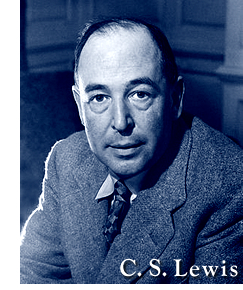
  1. S. Lewis said, “The future is something which everyone reaches at the rate of 60 minutes an hour, whatever he does, whoever he is.” We live by time. But God lives in the eternal realm. His interpretation of time is quite different than ours. He has His own timing.

As we get older, we eventually realize that many of the bad times will, in retrospect, turn out to be good times. It is through those so-called bad times that we will learn some of life’s most important lessons.

If I decided how my day would go, I would never experience crisis. But we are not in charge of our own lives. God is. And He will let “bad” things happen. But as time goes by, you will find the important lessons you have learned in life did not come from the good times. They came from those times of crisis when perhaps you were more dependent on God.

As Solomon observed, there is a season for everything. We are not victims of the fickle finger of fate or dumb luck. If you are a Christian, then you have come into God’s providence, which means that He will guide and direct your steps. It means that your times are in His hands.

Streams in the Desert for Kids -You Are Worth More than Flowers


Matthew 6:30–33, The Message

Have you ever wandered deep into the woods and found a beautiful flower blooming there? Ever wondered who, besides you, will ever see that beautiful flower? Jesus talked about that. He said that God gives a flower so much beauty and detail and then he may put it in a place where no one ever sees it. Why? It is because God makes everything perfect whether or not anyone notices. Everything he makes has a purpose. You have a purpose. And he didn’t make any mistakes when he made you. Even if you sometimes feel like you are hidden in the woods where no one notices you, God has a purpose for your life.

Because you are his child, God will take care of all your needs. Jesus told the people of his time to stop worrying about everything. He told them that God knew they needed certain things to live. He said that if God dressed the flowers that are here today and gone tomorrow, God will certainly take care of his children—that includes you—who are much more important to him than flowers.

If you can understand that God loves you and wants to take care of you, life will be a lot easier. God knows what you need. God knows what your family needs. Count on the fact that God knows, and trust him.

Dear Lord, I know you love me and that you care about my needs. Help me to trust you to take care of me and my family. Amen.

Discovering God’s Design – It Is Finished


Mark 15:33–39

And with Jesus’ last cry, redemptive history reached a watershed. The apostle John added that Jesus said, “It is finished” (Jn 19:30). Jesus had fulfilled God’s plan that the Father had “purposed in Christ, to be put into effect when the times reach their fulfillment—to bring unity to all things in heaven and on earth under Christ” (Eph 1:9–10). Stewardship theologian A. C. Conrad comments:

When, in the far reaches of the past, God planned the creation of the world and man, he did so in connection with his Son, the revealed oikonomos, or steward … It is evident in this passage [in Eph 1:9–10] and others that the entire plan of the ages and scheme of redemption was in the mind of God in the far distant past … The essence and heart of God’s purpose is revealed in the redemptive work of Christ. [The kinship between God and humanity] is established in the presence of his Son upon the earth and fully sealed through his sacrificial death upon the cross.

In his death Jesus became the great high priest, fulfilling all the requirements of the old law, interceding between God and humans “once for all when he offered himself” (Heb 7:27). Says stewardship theologian T. A. Kantonen (1900–1993):

He is the High Priest who laid down his life on the altar of the Cross to redeem us from sin and death. He defines the central purpose of his mission thus: “[The Son of Man did not come to be served, but to serve, and to give his life as a ransom for many]” [Mt 20:28]. Redemption presupposes that man is a sinner and as such he is cut off from the power to carry out the tasks growing out of that son ship.

Kantonen goes on to explain the ramifications of Jesus’ redemptive work for stewardship:

Those who accept the gospel of forgiveness in faith receive the power to become not only God’s trustees but also his children. The motive for their action is grateful love; the more livingly we know him who loved us and gave himself for us the more completely we give ourselves to him. And because genuine love is “[not love with words or speech but with actions and in truth]” (1Jn 3:18), we shoulder the responsibilities of Christian stewardship.

In the death of Christ on the cross, not only humanity, but indeed all creation is set free from bondage (see Ro 8:20–23); Christ’s redemptive work establishes his victory over all the powers in this world opposed to his purposes. These are at work in individual sinners and in the world’s systems to produce injustice, lawlessness, cruelty, faithlessness, greed, jealousy and death. God is liberating his people by redeeming them and his creation from individual sins and from the dominion of darkness (see Col 1:19–20).

Think About It

  • How was the passion of Jesus a part of God’s plan even before creation?
  • In what ways was Jesus a steward?
  • What is your response to Jesus’ redemptive and liberating work?

Pray About It

Lord, thank you for your perfect plan for the world and for me.

Charles Stanley – The Turning Point of Time

 Mark 15:16-39

We often hear the phrase “the crux of the matter” or “the crux of a situation.” The word crux comes from Medieval Latin, and simply means “cross.” Why has the word crux come to be associated with a critical juncture or point in time? Because the cross of Christ is truly the crux of history. Without the cross, history itself cannot be defined or corrected.

There is another word we often hear when we are in the throes of indescribable pain: the word excruciating. That, too, derives from the Latin and means “out of the cross.” Through time and human experience, the historical event of the cross intersects time and space and speaks to the deepest hurts of the human heart.

But we live with more than pain and suffering. We also live with deep hungers within the human heart, such as the hunger for truth, for justice, forgiveness, and peace. As I see it, there is only one place in the world where these hungers converge: It is in the cross of Christ, where perfect peace and perfect justice became united in one death on a Friday afternoon.

The cross defines what love’s entailments are. You see, in Christian terms, love does not stand merely as an emotion or even as an expression to just be reconciled to God. In a relationship with God, love ultimately flowers into worship. All earthly relationships as we know them will someday end. It is in worship alone that wonder and truth coalesce, prefiguring the consummation of eternal communion. That enrichment from worship feeds all other relationships and helps us to hold sacred all of life’s needed commitments.

Never has it been more obvious that this world needs redemption—and that redemption is costly. The cross more than ever, in our language and in our longings, is necessary to bridge the divide between God and us and between ourselves. Without the cross, the chasm that separates us all from truth, love, justice, and forgiveness can never be bridged. The depths of mystery and love found in the cross can never be fully plumbed, but it must be the lifelong pursuit of the Christian to marvel at its costliness and to celebrate its meaning.

That is why we celebrate Easter. The cross stands as the defining counter-perspective to everything this world has to offer. As you observe this Holy Week, may you be moved to wonder and worship.

—Ravi Zacharias

Our Daily Bread — And Then You Laugh


Read: 2 Corinthians 5:1-8
Bible in a Year: Judges 19-21; Luke 7:31-50


[God] made Him who knew no sin to be sin for us, that we might become the righteousness of God in Him. —2 Corinthians 5:21

Noise. Vibration. Pressure. Fireball. Canadian astronaut Chris Hadfield used these words to describe being launched into space. As the rocket raced toward the International Space Station, the weight of gravity increased and breathing became difficult. Just when he thought he would pass out, the rocket made a fiery breakthrough into weightlessness. Instead of lapsing into unconsciousness, he broke into laughter.

His description made me think of the days leading to my mother’s death. The heaviness of life kept increasing until she no longer had the strength to breathe. She was then released from her pain and broke free into the “weightlessness” of heaven. I like to think of her laughing when she took her first breath in Jesus’ presence.

On the Friday we call “good,” something similar happened to Jesus. God placed on Him the weight of the entire world’s sin—past, present, and future—until He could no longer breathe. Then He said, “Father, ‘into Your hands I commit My spirit’ ” (Luke 23:46). After being suffocated by our sin, Jesus received back from God the life entrusted to Him and now lives where sin and death have no power. All who trust Christ will one day join Him, and I wonder if we’ll look back at this life and laugh. —Julie Ackerman Link

Father in heaven, words cannot describe our gratitude for Your Son Jesus, who bore the weight of our sins. Thank You that to be absent from this body with its heavy burdens is to be present with You forever.

The sacrifice of Jesus points us to the joy of heaven.

INSIGHT: Paul uses metaphors such as “earthen vessels,” “earthly house,” and “tent” (2 Cor. 4:7; 5:1) to contrast the frailty and mortality of our earthly existence with the indestructibility, immortality, and glory of our resurrection bodies. When a believer dies, the body goes to the grave, becoming dust (Gen. 3:19; Job 34:15; Eccl. 3:20), but the spirit goes to be with Christ (Eccl. 12:7; 2 Cor. 5:8; Phil. 1:21–25). When Jesus Christ returns for His own (John 14:3), our body and spirit shall be raised together for a glorious eternity with God (5:28-29; 1 Cor. 15:50-53; Phil. 3:21; 1 Thess. 4:16–18).

Ravi Zacharias Ministry – We Call This Friday Good


Simon of Cyrene had every reason to be shocked. He was on his way in from the country, likely headed to Jerusalem for the Passover, when he was seized from the crowd and forced to join a procession heading toward Golgotha, the place of the Skull. They put a crossbeam on him, one to be used in the execution of a criminal, and made him carry it. The offense of this object and unchosen assignment would have been blatant to Simon and everyone around him. He had been recruited to play a role in a crucifixion; there was no more dishonorable form of judicial execution in the Roman Empire. Among Jews, anyone condemned to hang on a tree was thought accursed. Staggering in front of Simon, beaten and bloodied, was the shamed man to whom this cross belonged.

In many ways, it was a day of shocking and paradoxical darkness, akin to the sort of half-understood encounter T.S. Eliot so aptly describes:

You say I am repeating

Something I have said before. I shall say it again.

Shall I say it again? In order to arrive there,

To arrive where you are, to get from where you are not,

You must go by a way wherein there is no ecstacy.

In order to arrive at what you do not know

You must go by a way which is the way of ignorance.

In order to possess what you do not possess

You must go by the way of dispossession.

In order to arrive at what you are not

You must go through the way in which you are not.

And what you do not know is the only thing you know

And what you own is what you do not own

And where you are is where you are not.(1)

For Simon, thrust in the middle of angry men and wailing women, the day held a burden he did not deserve, a shame he did not seek to bear for himself. He was on his way inside the holy city to celebrate the Passover, the release of his ancestors from the bondage of slavery—the central act of God in Israel’s history—and he found himself forced to carry the cross of a condemned man outside the city walls. It was the furthest he could be taken from the sense of place he wanted to possess.

The crowd pressed in behind them as they walked forward. Simon would hear Jesus turn to the women who were mourning and wailing and offer a curious response: “Daughters of Jerusalem, do not weep for me; weep for yourselves and for your children. For the time will come when you will say, ‘Blessed are the barren women, the wombs that never bore and the breasts that never nursed! They will say to the mountains, “Fall on us!” and to the hills, “Cover us!”‘ For if men do these things when the tree is green, what will happen when it is dry?”(2) Simon would have recognized these lines as words of the prophet Hosea, the prophet through whom God would show his heart, to demonstrate a love that would not quit.

When they made it to Golgotha, Simon’s task was finished. The beam was taken from him and the man he followed to the place of the Skull was stripped of his garment and nailed to the cross. Nothing further is mentioned about Simon the Cyrene in any of the gospel accounts of the crucifixion. But surely much is left to wonder. Did he stay after the burden had been lifted from his own shoulders? Did he hear Jesus cry out, “Father, forgive them, for they know not what they do” or watch him extend the invitation of paradise to the broken criminal on the cross beside him? What went through Simon’s mind as he walked behind the weak and beaten Jesus, the events of Passover brutally interrupted by the events of the cross? Did he look on as they mocked the “King of the Jews” who remained silent through the insults? Was he filled with thoughts of the Passover he was missing, the life he needed to resume, as they challenged Jesus to come down from the cross? Or perhaps Simon was more deeply disturbed by the end of the journey than he was of its beginning. What we call the beginning is often the end, says Eliot.

We die with the dying:

See, they depart, and we go with them.

We are born with the dead:

See, they return, and bring us with them.(3)

Matthew reports the conclusion of the first Good Friday and the cross that would become a stumbling block for all of history: “When Jesus had cried out again in a loud voice, he gave up his spirit. At that moment the curtain of the temple was torn in two from top to bottom. The earth shook and the rocks split… When the centurion and those with him who were guarding Jesus saw the earthquake and all that had happened, they were terrified, and exclaimed, ‘Surely this man was the Son of God!’”(4)

It is impossible to tell what became of Simon after he carried the burden of the one sentenced to die. But it is a vision terribly full, if half-understood: The memorial Simon had celebrated his entire life—the redemption of Israel from the yoke of slavery, the blood of the unblemished lamb, the Passover hope for the liberating Messiah—had emerged before him, the slaughter of the paschal lamb.

The dripping blood our only drink,

The bloody flesh our only food:

In spite of which we like to think

That we are sound, substantial flesh and blood-

Again, in spite of that, we call this Friday good.(5)

One thing is yet clear: Simon of Cyrene was on his way somewhere else and the cross was a shocking interruption. And so it remains.

Jill Carattini is managing editor of A Slice of Infinity at Ravi Zacharias International Ministries in Atlanta, Georgia.

(1) T.S. Eliot, The Four Quartets (Harcourt: New York, 1971), 28-29.

(2) Luke 23:28-31.

(3) Eliot, 58.

(4) Matthew 27:50-53.

(5) Eliot, 30.