Tag Archives: theology

Our Daily Bread — The Checkup


Read: Psalm 139:17-24

Bible in a Year: Psalms 43-45; Acts 27:27-44

Search me, O God, . . . and see if there is any wicked way in me. —Psalm 139:23-24

It’s that time of year when I go to the doctor for my annual physical. Even though I feel well and I’m not experiencing any health problems, I know that routine checkups are important because they can uncover hidden problems that if left undiscovered can grow to be serious health issues. I know that giving permission to my doctor to find and remedy the hidden problems can lead to long-term health.

Clearly the psalmist felt that way spiritually. Pleading for God to search for hidden sin, he prayed, “Search me, O God, . . . and see if there is any wicked way in me, and lead me in the way everlasting” (Ps. 139:23-24). Pausing to give God the opportunity for a full and unconditional inspection, he then surrendered to the righteous ways of God that would keep him spiritually healthy.

So, even if you are feeling good about yourself, it is time for a checkup! Only God knows the true condition of our heart, and only He can forgive, heal, and lead us to a cleansed life and productive future. —Joe Stowell

Lord, You know me better than I know myself. Search the deepest parts of my heart for anything that is displeasing to You. Cleanse me of my wandering ways and lead me in Your good and righteous way.

God’s work in us isn’t over when we receive salvation—it has just begun.

INSIGHT: Often when discussing the greatness of God, Bible scholars speak in terms of His “omni”-attributes. These reveal God to be all-knowing (omniscient), everywhere-present (omnipresent), and all-powerful (omnipotent). In Psalm 139 David gives us descriptions of all three. God’s perfect knowledge and understanding are pictured in verses 1-6, His continual presence is praised in verses 7-12, and His mighty power is in view in verses 13-18. We serve a God who is both great and good—a God who is big enough for all we will ever face.

Ravi Zacharias Ministry – Pharisee


“You are nothing but a Pharisee,” said Maggie with vehemence. “You thank God for nothing but your own virtues; you think they are great enough to win you everything else.”(1)

Whether familiar or new to the scathing words of Maggie Tulliver to her brother Tom in George Eliot’s The Mill on the Floss, it is clear that she is not speaking complimentary. The word “Pharisee,” as this interchange illustrates, is often used as something of a synonym for hypocrite, a haughty individual with a holier-than-thou air about them. Webster’s dictionary further articulates this common usage, defining the adjective “pharisaical” as being marked by “hypocritical censorious self-righteousness,” or “pretending to be highly moral or virtuous without actually being so.”(2) To be called a Pharisee is far from a compliment; it is to be accused of living with a false sense of righteousness, being blind and foolish with self-deception, or carrying oneself with a smug and hypocritical legalism.

The etymology of the word from its roots as a proper noun to its use as an adjective is one intertwined with history, drawing on the very tone with which a rabbi from Nazareth once spoke to the religious group that bore the name. In seven consecutive statements recorded in the book of Matthew, Jesus begins his stern rebukes with the scathing introductions: “Woe to you, scribes and Pharisees, you hypocrites!” “Woe to you blind guides!” His conclusion is equally pejorative: “You snakes! You brood of vipers! How can you escape being sentenced to hell?”(3) The word “Pharisee” has become far more associated with this critique than its greater context. Thus Maggie can call her brother a Pharisee and not be thinking of the Jewish sect of leaders for which Jesus had harsh words, but of the harsh words themselves.

Yet taking something out of context, even if Webster’s dictionary grants the permission, can be dangerously misleading. These were not always the connotations of the word Pharisee, and we do ourselves and the words of Jesus a disservice by assuming that his harsh words are all we need to remember about them. Quite ironically, the description “pharisaical” would once have been a great compliment. The Pharisees were highly regarded guardians of the strict interpretation and application of Jewish Law. They were known for their zeal and for their uncompromising ways of following the God of their fathers. It is likely that the apostle Paul was a Pharisee, and it is suggested that much of his Christian theology owes something to the shape and content of this earlier training.(4) In other words, to be a Pharisee was not an easy life riddled with loopholes and duplicities, like we might assume. The Pharisees were so certain there was a right way to follow God that they sought to follow this God to that very letter with all of their lives.

In this light, Jesus’s words seem a little harsher, his tone a little crueler—and perhaps his warnings a little closer to home. In the Pharisees, Jesus scolded the very best of the religious crowd, those who dedicated everything, and cared the deepest about following God. If Jesus came today into churches and singled out the ministers who work the hardest, the youth who are most involved, and the families who serve most consistently and called them a brood of vipers, we would be hurt and confused and even defensive. This is exactly what happened amongst the Pharisees.

But not all were so defensive that they refused to hear. Nicodemus came to Jesus in the obscurity of darkness and found himself confronted by a conversation about flesh and light. Nicodemus was a Pharisee, a member of the Jewish ruling council, who was highly regarded. This most likely explains the veil of night by which he sought to meet Jesus; the comments against his fellow Pharisees were not met with open arms. Even so, it was an act of faith to seek out this controversial young man from Galilee; it was an act of humility to grapple with a message that thoroughly confused him, accusations that cut to his very core, and words that called even the God he knew into question. Yet this initial meeting with Jesus was for Nicodemus the beginning of life made new. This Pharisee who had come so far in his faith, who had lived so great a commitment to God, had not come so far as to reject the idea that even he might need to stop and turn around. Might the Pharisee in all of us respond similarly.

Jill Carattini is managing editor of A Slice of Infinity at Ravi Zacharias International Ministries in Atlanta, Georgia.

(1) George Eliot, The Mill on the Floss (New York: Penguin, 2002), 394.

(2) Merriam-Webster Online, http://www.merriam-webster.com/dictionary/pharisaical, and Webster’s New World Dictionary of the American Language (Cleveland: William Collins Publishers, 1980), 1066.

(3) Matthew 23:33.

(4) N.T. Wright, The New Testament and the People of God (Minneapolis: Fortress Press, 1992), 182.


Alistair Begg – Consider the Promiser


…precious and very great promises. 2 Peter 1:4

If you would know experimentally [experientially] the preciousness of the promises and enjoy them in your own heart, meditate much upon them. There are promises that are like grapes in the winepress; if you will tread them, the juice will flow. Thinking over the hallowed words will often be the prelude to their fulfillment. While you are musing upon them, the benefit that you are seeking will insensibly come to you. Many a Christian who has thirsted for the promise has found the favor that it ensured gently distilling into his soul even while he has been considering the divine record; and he has rejoiced that he was ever led to lay the promise near his heart.

But besides meditating upon the promises, seek in your soul to receive them as being the very words of God. Say to your soul: “If I were dealing with a man’s promise, I would carefully consider the ability and the character of the man who had covenanted with me. So with the promise of God, my eye must not be so much fixed upon the greatness of the mercy-that may stagger me-as upon the greatness of the promiser-that will cheer me.

My soul, it is God, even your God, God who cannot lie, who speaks to you. This word of His that you are now considering is as true as His own existence. He is an unchangeable God. He has not altered the thing that has gone out of His mouth, nor called back one single soothing sentence. Nor does He lack any power; it is the God who made the heavens and the earth who has spoken. Nor can He fail in wisdom as to the time when He will bestow the favors, for He knows when it is best to give and when better to withhold. Therefore, seeing that it is the word of a God so true, so immutable, so powerful, so wise, I will and must believe the promise.” If in this way we meditate upon the promises and consider the Promiser, we shall experience their sweetness and obtain their fulfillment.

The Family Bible Reading Plan

  • Judges 10, 11:1-10
  • Acts 14

Devotional material is taken from “Morning and Evening,” written by C.H. Spurgeon, revised and updated by Alistair Begg.

Charles Spurgeon – The Father of lights


“Every good gift and every perfect gift is from above, and cometh down from the Father of lights, with whom is no variableness, neither shadow of turning.” James 1:17

Suggested Further Reading: Revelation 21:22-22:5

The apostle, having thus introduced the sun as a figure to represent the Father of lights, finding that it did not bear the full resemblance of the invisible God, seems constrained to amend it by a remark that, unlike the sun, our Father has no turning or variableness. The sun has its daily variation; it rises at a different time each day, and it sets at various hours in the course of the year. It moves into other parts of the heavens. It is clouded at times, and eclipsed at times. It also has tropic; or, turning. It turns its chariot to the South, until, at the solstice, God bids it reverse its rein, and then it visits us once more. But God is superior to all figures or emblems. He is immutable. The sun changes, mountains crumble, the ocean shall be dried up, the stars shall wither from the vault of night; but God, and God alone, remains ever the same. Were I to enter into a full discourse on the subject of immutability, my time, if multiplied by a high number, would fail me. But reminding you that there is no change in His power, justice, knowledge, oath, threatening, or decree, I will confine myself to the fact that His love to us knows no variation. How often it is called unchangeable, everlasting love! He loves me now as much as he did when first he inscribed my name in his eternal book of election. He has not repented of his choice. He has not blotted out one of his chosen; there are no erasures in that book; all whose names are written in it are safe for ever.

For meditation: As part of creation the sun speaks of the character of God (Romans 1:20) but even at its brightest can only give a glimpse of his glory. Praise God for the Lord Jesus Christ, the true light (John 1:9) whose face, when transfigured, shone like the sun (Matthew 17:2); God the Son has made God the Father of light known to us (John 1:18).

1st sermon at New Park St.

27 July (Preached 18 December 1853)

John MacArthur – Rejoicing in Your Inheritance


“In this you greatly rejoice” (1 Pet. 1:6).

Contemplating your eternal inheritance should give you joy that transcends any temporal circumstance.

Joy is a major theme in Scripture. The psalmist said, “Sing for joy in the Lord, O you righteous ones; praise is becoming to the upright” (Ps. 33:1); “My lips will shout for joy when I sing praises to Thee; and my soul, which Thou hast redeemed” (Ps. 71:23).

Even creation itself is said to rejoice in the Lord: “Thou dost make the dawn and the sunset shout for joy. . . . Let the heavens be glad, and let the earth rejoice; let the sea roar, and all it contains; let the field exalt, and all that is in it. Then all the trees of the forest will sing for joy before the Lord. . . . Let the mountains sing together for joy before the Lord; for He is coming to judge the earth” (Ps. 65:8; 96:11-13; 98:8-9).

Joy is the special privilege of every believer, regardless of his or her circumstances. You might suffer untold heartache and persecution for your faith in Christ, but amid the severest trials, God wants you to know profound joy. That’s why Peter said, “To the degree that you share the sufferings of Christ, keep on rejoicing; so that also at the revelation of His glory, you may rejoice with exultation” (1 Pet. 4:13).

First Peter 1:6-9 identifies five elements of your Christian life that should bring you joy amid trials. The first is your protected inheritance. That’s what Peter referred to when he said, “In this you greatly rejoice” (v. 6, emphasis added). Other elements include a proven faith, a promised honor, a personal fellowship, and a present deliverance (vv. 6-9), which we will explore in coming days.

The Greek word translated “greatly rejoice” in 1 Peter 1:6 is not the usual Greek word for “rejoice.” Peter used a more expressive and intense word, which speaks of one who is happy in a profound spiritual sense rather than a temporal or circumstantial sense. That’s the quality of joy God grants to those who trust in Him and look beyond their temporal trials to the glory of their eternal inheritance. Let that be your focus as well.

Suggestions for Prayer

Thank God for the joy that transcends circumstances.

For Further Study

Read John 16:16-22.

  • According to Jesus, why would the disciples lament?
  • What would bring them joy?
  • What does their experience teach you about the basis for your joy as a Christian?

Joyce Meyer – Love One Another


[Let your] love be sincere . . . hate what is evil [loathe all ungodliness, turn in horror from wickedness], but hold fast to that which is good. Love one another with brotherly affection…giving precedence and showing honor to one another. – Romans 12:9-10

As a Christian, you are to have sincere love—God’s kind of love. God doesn’t always love the way people act or the things they do, but He always loves them as people. God calls you to that same kind of love. You don’t have to like everything someone does—in fact you are told to turn from wickedness—but it is your Christian responsibility to follow the example of Christ. When you recognize that everyone is God’s creation, it is easier to obey His command to love and honor them.

You must have a loving attitude toward people, an attitude that is filled with mercy, kindness, and sincere love. This doesn’t always come easy, but God will provide the strength you need to show His kind of love to others.

Campus Crusade for Christ; Bill Bright – We Help Conquer Satan


“They defeated him by the blood of the Lamb, and by their testimony; for they did not love their lives but laid them down for Him” (Revelation 12:11).

Down through the years, you and I have lauded and applauded the martyrs – and rightly so.

These heroes of the faith – like Chester Bitterman of the Wycliffe Bible Translators, one of the latest in a long line of martyrs – preferred death to disloyalty to God and to Christ. Their testimony literally was written in blood.

Truly, “they did not love their lives but laid them down for Him.” And by so doing, they became partners with God and with Christ in defeating the enemy of men’s souls, Satan. Satan is to be conquered not only by the blood of the Lamb, but also by reason of the testimony of the martyrs.

T.E. McCully, father of missionary martyr Ed McCully, who, along with Jim Elliot, Pete Fleming, Nate Saint and Roger Youderian, lost his life to the Auca Indians on January 8, 1956, made a sage observation about the great sacrifice these young men had made.

“Sometimes,” he said, “it’s harder to be a living sacrifice than it is to be a dead sacrifice.” And this hits us all right where we live, in our walk with Christ today. The daily grind, the commitment and recommitment, the enduring of trial and testing – all of this takes a daily sacrifice. This is an opportunity for our lives to be a “sacrifice of praise” to our God.

Bible Reading: Revelation 12:7-12

TODAY’S ACTION POINT: Claiming the power of the Holy Spirit by faith, I will seek to be a living sacrifice, so that my life will be part of Satan’s defeat.

Presidential Prayer Team; C.P. – In Appreciation


How often do you hear about people who live near a great landmark, such as the Statue of Liberty, and never go see it? People grow accustomed to the things around them and don’t stop to appreciate the gifts they’ve been given.

Come, bless the Lord, all you servants of the Lord, who stand by night in the house of the Lord!

Psalm 134:1

So it is with reaction to the Lord. Americans have the freedom to worship God, yet how many of the nation’s churches are nearly empty each Sunday? Many people are not even aware of how wonderful and beautiful it is to give oneself over in complete worship of the Creator of the Universe. “Therefore let us be grateful for receiving a kingdom that cannot be shaken, and thus let us offer to God acceptable worship, with reverence and awe.” (Hebrews 12:28)

Spend time today worshipping Him in spirit and truth (John 4:24) and appreciating His gifts to you. Ask the Lord to move on His people to give Him honor and praise due His name. Pray for God to send a revival to this country and turn many hearts to Jesus – so they, too, may revel in the reality of His resurrection and bless the Lord!

Recommended Reading: Matthew 28:1-7, 16-20

Greg Laurie –Ask for Directions


If any of you lacks wisdom, let him ask of God, who gives to all liberally and without reproach, and it will be given to him. —James 1:5

Have you ever had an electronic gadget that you couldn’t figure out how to turn on or off? You dug out the manual, read through it, and found the little illustration. It is so obvious now that you know. But you didn’t know until you read the manual.

James reminds us, “If any of you lacks wisdom, let him ask of God, who gives to all liberally and without reproach, and it will be given to him” (James 1:5). When we consult God’s Word, the user’s manual of life, He will guide us.

The psalmist said, “Your word is a lamp to my feet and a light to my path” (Psalm 119:105). As we read God’s Word, we will know His way. We find out things in His Word that we would not know otherwise.

When Moses asked God for divine direction, God told him, “My Presence will go with you, and I will give you rest” (Exodus 33:14). Or literally, “My face will go with you.” God was telling Moses, “You have my full attention, and I will be watching your every move.”

Have you ever been talking to someone who wasn’t looking at you? You are telling him something, and he is looking past you or looking around or checking his watch.

God was saying to Moses, “I’m going to go with you. And not only am I going to go with you, but I am going to be looking at you. I will keep My eye on you. I am going to be really dialed into everything you are experiencing.”

So often we try to do in our own strength what God promises to do for us. And worrying is completely useless. Worry does not empty tomorrow of its sorrow; it empties today of its strength.

Max Lucado – Give Grace


Forgiveness is not foolishness. Forgiveness, at its core, is choosing to see your offender with different eyes. By the way, how can we grace-recipients do anything less? Dare we ask God for grace when we refuse to give it? This is a huge issue in Scripture! Jesus was tough on sinners who refused to forgive other sinners. Remember his story in Matthew 18, about the servant freshly forgiven a debt of millions who refused to forgive a debt equal to a few dollars? He stirred the wrath of God. “You evil servant! I forgave you that tremendous debt. Shouldn’t you have mercy just as I had mercy on you?” (Matthew 18:32).

In the final sum, we give grace because we’ve been given grace. And we’ve been given grace so we can freely give it. See your enemies as God’s child and revenge as God’s job.

From Facing Your Giants

Night Light for Couples –Doing the Right Thing


“If anyone does not provide for his relatives, and especially for his immediate family, he has denied the faith.” 1 Timothy 5:8

Our friends Keith and Mary Korstjens have been married for more than forty years. Shortly after their honeymoon, Mary was stricken with polio and became quadriplegic. The doctors informed her that she would be confined to a wheelchair for the rest of her life. It was a devastating development, but Keith never wavered in his commitment to Mary. For all these years he has bathed and dressed her, carried her to and from her bed, taken her to the bathroom, brushed her teeth, and combed her hair.

Obviously, Keith could have divorced Mary in 1957 and looked for a new and healthier wife, but he never even considered it. We admire this man not only for doing the right thing, but for continuing to love and cherish his wife. Though the problems faced by the rest of us may be less challenging than those encountered by the Korstjens, each of us will confront some kind of hardship in the years ahead. How will we respond?

Just between us…

  • Do you worry about failing health down the road?
  • When you’re sick, how well do I care for you?
  • Have you ever resented having to serve me during times of sickness or disability?
  • How could illness—either minor or serious—actually strengthen our marriage?

Lord, we don’t want to deny the faith by failing to provide for those You have entrusted to our care. We ask for Your strength—especially when hardships come—to show enduring love in our marriage and in our family. Amen.

From Night Light For Couples, by Dr. James & Shirley Dobson

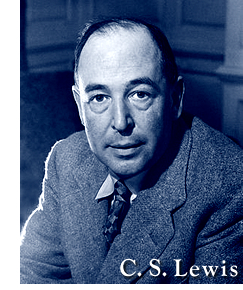
C.S. Lewis Daily – Today’s Reading


When it comes to a question of our forgiving other people, it is partly the same and partly different. It is the same because, here also, forgiving does not mean excusing. Many people seem to think it does. They think that if you ask them to forgive someone who has cheated or bullied them you are trying to make out that there was really no cheating or no bullying. But if that were so, there would be nothing to forgive. They keep on replying, “But I tell you the man broke a most solemn promise.” Exactly: that is precisely what you have to forgive. (This doesn’t mean that you must necessarily believe his next promise. It does mean that you must make every effort to kill every taste of resentment in your own heart—every wish to humiliate or hurt him or to pay him out.) The difference between this situation and the one in which you are asking God’s forgiveness is this. In our own case we accept excuses too easily; in other people’s we do not accept them easily enough.

From The Weight of Glory

Compiled in A Year with C.S. Lewis

Charles Stanley – Fearfully and Wonderfully Made


Psalm 139:1-10

When God looked at the world He’d made, He declared it good. Genesis 1:27 summarizes the crowning achievement of His creative work: “God created man in His own image . . . male and female He created them.” Psalm 139 reminds us that we are “fearfully and wonderfully made.”

The Lord has given each of His children great potential for service in His kingdom. However, some of us have serious doubts that this is true. When we compare ourselves to other people, we notice the things we lack. At other times, we repeatedly criticize ourselves for mistakes we’ve made. How can we have awesome potential when we see so many ways in which we fall short? Consider these biblical examples:

Moses appeared to have many advantages while he was growing up in Pharaoh’s household. Then he killed an Egyptian and fled the country. No longer did he seem a likely candidate to lead the Israelites out of Egypt. But God looked beyond what Moses had done and saw who he could become.

Paul, prior to salvation, had vehemently persecuted those who believed in Jesus. Yet through God’s mercy, the apostle became a mighty evangelist and author of nearly a third of the New Testament.

Peter was a simple fisherman who denied—not once but three times—that he knew Jesus. Still, the Lord chose him to become the leader of the Jerusalem church.

Our Father sees beyond our human frailties to the potential we have in Christ. Because we were made in God’s image and His Spirit dwells in us, we have a greater capacity for spiritual transformation and service than we could imagine. Seek to become the person God has equipped you to be.

Bible in One Year:Isaiah 15-18


Our Daily Bread — A Devoted Heart


Read: 2 Chronicles 17:1-11

Bible in a Year: Psalms 40-42; Acts 27:1-26

He did what was right in the eyes of the Lord. —2 Chronicles 20:32

A successful Christian businessman shared his story with us at church. He was candid about his struggles with faith and abundant wealth. He declared, “Wealth scares me!”

He quoted Jesus’ statement, “It is easier for a camel to go through the eye of a needle than for someone who is rich to enter the kingdom of God” (Luke 18:25 niv). He cited Luke 16:19-31 about the rich man and Lazarus and how in this story it was the rich man who went to hell. The parable of the “rich fool” (Luke 12:16-21) disturbed him.

“But,” the businessman stated, “I’ve learned a lesson from Solomon’s verdict on the abundance of wealth. It’s all ‘meaningless’ ” (Eccl. 2:11 niv). He determined not to let wealth get in the way of his devotion to God. Rather, he wanted to serve God with his assets and help the needy.

Throughout the centuries, God has blessed some people materially. We read of Jehoshaphat in 2 Chronicles 17:5, “The Lord established the kingdom . . . so that he had great wealth and honor.” He did not become proud or bully others with his wealth. Instead, “his heart was devoted to the ways of the Lord” (v. 6). Also, “he followed the ways of his father Asa and did not stray from them; he did what was right in the eyes of the Lord” (20:32).

The Lord is not against wealth for He has blessed some with it—but He’s definitely against the unethical acquisition and wrong use of it. He is worthy of devotion from all His followers. —Lawrence Darmani

Giving thanks to God often helps us learn contentment with what we do have. What are you thankful for?

Wealth or no wealth, devoted hearts please the Lord.

INSIGHT: Jehoshaphat’s devotion to the Lord is evidenced by his obedience to God’s Word (17:4). He removed idols (v. 6) and sent teachers all over the country to teach the Scriptures (vv. 7-9). When in trouble, he trusted in God (20:6-12).

Alistair Begg – Faith and Virtue


Make every effort to supplement your faith with virtue, and virtue with knowledge, [etc.] 2 Peter 1:5-6

If you would enjoy the eminent grace of the full assurance of faith, under the blessed Spirit’s influence and assistance, do what the Scripture tells you: “Make every effort.” Take care that your faith is the right kind-that it is not a mere belief of doctrine, but a simple faith, depending on Christ and on Christ alone.

Pay careful attention to your courage. Plead with God that He would give you the face of a lion, that you may, with a consciousness of right, go on boldly. Study the Scriptures diligently and get knowledge; for a knowledge of doctrine will help a great deal to confirm faith. Try to understand God’s Word; let it dwell in your heart richly.

When you have done this, add to your “knowledge . . . self-control.” Pay attention to your body and soul. Be controlled in speech, life, heart, and thought. Add to this, by God’s Holy Spirit, patience; ask Him to give you that patience that endures affliction, which, when it is tried, will come forth as gold. Array yourself with patience, so that you do not murmur or be depressed in your afflictions.

When that grace is won, look to godliness. Godliness is something more than religion. Make God’s glory your object in life; live in His sight; dwell close to Him; seek fellowship with Him; then you will have “godliness”; and to that add brotherly love. Have a love for all the saints: And add to that a charity that opens its arms to all men and loves their souls. When you are adorned with these jewels, and just in proportion as you practice these heavenly virtues, you will come to know by clearest evidence “your calling and election.” “Make every effort,” if you would get assurance, for lukewarmness and doubting very naturally go hand in hand.

The Family Bible Reading Plan

  • Judges 9
  • Acts 13

Devotional material is taken from “Morning and Evening,” written by C.H. Spurgeon, revised and updated by Alistair Begg.

Charles Spurgeon – A preacher from the dead


“And he said unto him, If they hear not Moses and the prophets, neither will they be persuaded, though one rose from the dead.” Luke 16:31

Suggested Further Reading: 1 Samuel 28:3-19

Spirit that hath returned from another world, tell me, how are men judged? Why are they condemned? Why are they saved? I hear him say, “Men are condemned because of sin. Read the ten commandments of Moses, and you will find the ten great condemnations whereby men are for ever cut off.” I knew that before, bright Spirit; thou hast told me nothing! “No,” says he, “and nothing can I tell.” “Because I was hungry, and ye gave me no meat; I was thirsty, and ye gave me no drink; I was sick, and ye visited me not; I was in prison, and ye came not unto me; therefore, inasmuch as ye did it not unto one of the least of these my brethren, ye did it not to me. Depart, ye cursed!” “Why, Spirit, was that the word of the king?” “It was” says he. “I have read that too; thou hast told me no more.” If you do not know the difference between right and wrong from reading the Scripture, you would not know it if a spirit should tell you; if you do not know the road to hell and the road to heaven from the Bible itself, you would never know it at all. No book could be more clear, no revelation more distinct, no testimony more plain. And since without the agency of the Spirit, these testimonies are insufficient for salvation, it follows that no further declaration would avail. Salvation is ascribed wholly to God, and man’s ruin only to man. What more could a spirit tell us, than a distinct declaration of these two great truths.—“O Israel, thou hast destroyed thyself; but in me is thine help found!” Beloved, we do solemnly say again, that Holy Scripture is so perfect, so complete, that it cannot want the supplement of any declaration concerning a future state. All that you ought to know concerning the future you may know from Holy Scripture.

For meditation: The rich man in the account (not called a parable) given by Jesus was full of false doctrine—praying to a saint, seeking some kind of second chance after death, rejecting the sufficiency of Scripture (Luke 16:24,30). Note the place from which these doctrines come (1 Timothy 4:1; James 3:15).

Sermon no. 143

26 July (1857)

John MacArthur – Your Secure Inheritance


“To obtain an inheritance which is . . . reserved in heaven for you, who are protected by the power of God through faith for a salvation ready to be revealed in the last time” (1 Pet. 1:4-5).

Your eternal inheritance is doubly secure: it is reserved for you, and you are reserved for it.

When Peter wrote his first epistle, attitudes toward Christians in the Roman Empire were not at all favorable. Because they would not worship the emperor as a god, or enter into other sinful pagan practices, Christians were looked upon with suspicion and disdain. In addition, Nero had blamed them for burning Rome (an act he himself perpetrated), so anger and hatred toward them was at its peak.

Peter wrote to encourage them—and all believers—to live out their faith amid persecution, just as Jesus had done when He suffered unjustly (cf. 1 Pet. 2:21-23). He reminded them that despite the sufferings they might endure in this life, God will reward them with an inheritance that is eternally secure because it is reserved in heaven for them.

“Reserved” in 1 Peter 1:4 indicates an inheritance that already exists, is presently protected, and will continually be protected. The place of its protection is heaven, where “neither moth nor rust destroys, and where thieves do not break in or steal” (Matt. 6:20), and where “nothing unclean and no one who practices abomination and lying, shall ever [enter], but only those whose names are written in the Lamb’s book of life” (Rev. 21:27). There is no safer place!

Not only is your inheritance protected for you, but also you are protected for it! That’s what Peter meant when he said that it is “reserved in heaven for you, who are protected by the power of God through faith for a salvation ready to be revealed in the last time” (1 Pet. 1:4-5). The omnipotent, sovereign power of God will continually protect you until His work is fully accomplished in your life. Then He will grant you glorification: the fullness of the salvation for which He redeemed you.

You needn’t fear the loss of your inheritance. Instead, rejoice in the protection of our gracious God.

Suggestions for Prayer

Thank God for His protection and for the assurance of your inheritance.

For Further Study

What do these verses teach about the security of your salvation: Romans 8:31-39, Philippians 1:6, and Jude 24?

Campus Crusade for Christ; Bill Bright – Promise of the Spirit


“And Peter replied, ‘Each one of you must turn from sin, return to God, and be baptized in the name of Jesus Christ for the forgiveness of your sins; then you also shall receive this gift, the Holy Spirit. For Christ promised Him to each one of you who has been called by the Lord our God and to your children and even those in distant lands!'” (Acts 2:38- 39).

The most important truth that I or anyone else could share with Christians is to help them understand the person and the ministry of the Holy Spirit. My own life was dramatically transformed when by faith I claimed the fullness and power of the Holy Spirit.

“One day in New York – what a day!” declared Dwight L. Moody. “I can’t describe it. I seldom refer to it. It is almost too sacred for me to name. I can only say that God revealed Himself to me. I had such an experience of love that I had to ask Him to stay His hand.

“I went to preaching again. The sermons were no different. I did not present any new truth. Yet hundreds were converted. I would not be back where I was before that blessed experience if you would give me Glasgow.”

The Holy Spirit is the key to revival. He is the key to revival because He is the key to supernatural living, and apart from living supernaturally – living in the fullness of the Holy Spirit – the believer has no power to introduce others to Christ and help fulfill the Great Commission.

The Holy Spirit is convicting many Christians of their lethargy, their coldness of heart and unbelief, the loss of their first love. A spiritual Mount St. Helens is about to erupt, spreading the good news of love and forgiveness of our Lord Jesus Christ far and wide through our land and the world. We shall see a resurgence in evangelism and a zeal unparalleled in church history as we endeavor – in the power of the Holy Spirit – to help fulfill the Great Commission.

Bible Reading: Acts 2:32-37

TODAY’S ACTION POINT: I shall ask the Holy Spirit to empower and control my life so that I may be a part of a mighty spiritual awakening to help fulfill the Great Commission, beginning in my home, community and church in obedience to the Lord’s command.

Presidential Prayer Team; J.K. – Not in Vain


Alexander Hamilton, signer of the Constitution of the United States, was known for his efforts in securing ratification of the Constitution by the states. He did not take the credit, however. In 1787 he wrote, “For my own part, I sincerely esteem it a system which without the finger of God, never could have been suggested and agreed upon by such a diversity of interests.”

Unless the Lord builds the house, those who build it labor in vain.

Psalm 127:1

In context, today’s verse makes the same application…to your family, your occupation, or to the government of this nation. If God is not a part of your actions or decisions, the results of your labor are in vain. Likewise, the efforts of the nation’s leaders will fall woefully short if God’s direction is not sought or followed.

Certainly, if you are discouraged with rulings in this country, letters or phone calls to your representatives will help. But infinitely more powerful is prayer! A preacher during war time in the 1940s, E.C. Olsen, said, “I believe that our difficulties would soon be past if the godly people of this country would earnestly pray.” You cannot thwart the purposes of God, but He listened as Abraham prayed for Sodom, and He will listen to you.

Recommended Reading: Genesis 18:22-33

Night Light for Couples – Roman Bridges


“The winds blew and beat against that house; yet it did not fall, because it had its foundation on the rock.” Matthew 7:25

Yesterday we talked about being committed to your partner for better and for worse. Another way to look at this issue was once related by the late Dr. Francis Schaeffer. He described the bridges that were built in Europe by the Romans in the first and second centuries A.D. The bridges still stand today, despite the unreinforced brick and mortar with which they were made, because they are used for nothing but foot traffic. If an eighteen‐wheel semi were driven across those historic structures, they would crumble in a cloud of dust and debris.

Marriages that lack an iron‐willed determination to hang together are like those Roman bridges. They appear to be secure and may indeed remain upright for many years—until they are put under heavy pressure. Then the supports split and the structure crumbles.

Is your marriage constructed to withstand unusual stress as well as normal wear? Take the time to install a proper foundation—the Lord Jesus Christ. Then build your relationship on habits and attitudes that will sustain it under heavy pressure.

Just between us…

  • Has there ever been a time when our marriage seemed less than solid?
  • Do we know a couple whose marriage has stayed secure under stress?
  • What’s their secret? Do we see any cracks—even tiny ones—beginning to appear in our marriage? What can we do to repair them?

Father, we turn to the unshakable truths of Your Word and the unfailing promise of Your presence to hold our marriage together. Thank You that we can live and love securely—even under stress—because You are in this marriage with us. Amen.

From Night Light For Couples, by Dr. James & Shirley Dobson