
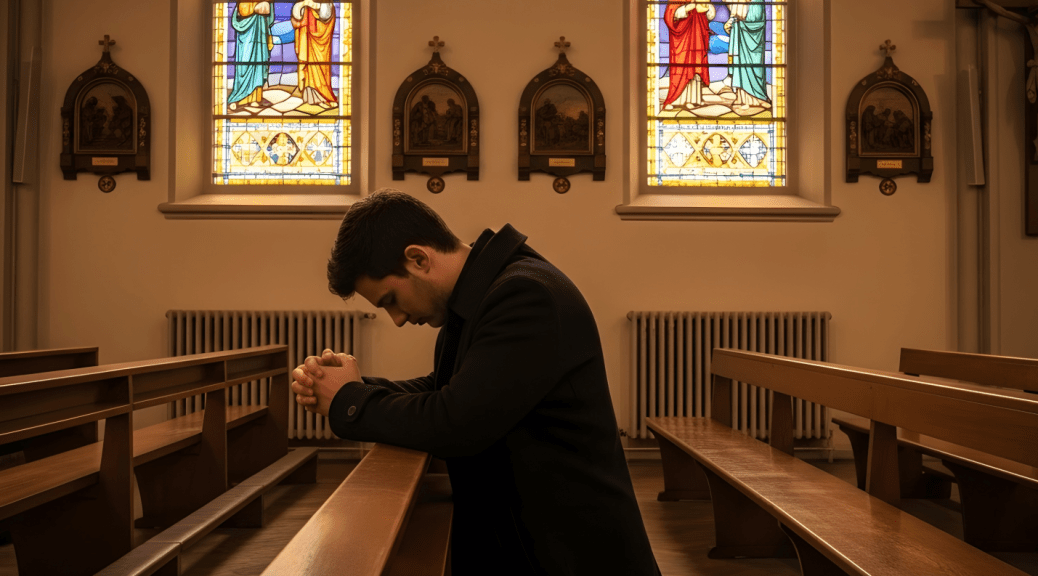
It has been 75 years since a young Yale graduate, William F. Buckley, indicted his alma mater in his masterful God and Man at Yale, arguing that Yale showed contempt for the traditional religious values inculcated in most new graduates during their formative youth. In the three generations since, Americans more generally have become far less religious, evidenced by a sharp drop in church attendance. But a few years ago, something happened in this march towards an agnostic, if not an atheistic society: young men started going back to church in impressive numbers.
A new Gallup poll says 42 percent of men in their 20s say religion is “very important” to them, up very sharply from only 28 percent in a poll conducted just three years earlier. By contrast, there is no similar spiritual upsurge among women, so now a far higher proportion of young men say that they are religious than women, a startling result since historically women have shown a stronger affinity for religion, and that still holds for older age groups. Speaking anecdotally from the vantage point of living in a college town, I have seen a marked upsurge in church attendance at my rather typical state university, concentrated among men, to be sure, with some occasionally bringing along their girlfriends. (Read “Catholic Converts and the Limits of the Trend” and “Why Are So Many Protestant Students Converting to Catholicism?“)
Why is this happening? I think it is because college-aged American males feel like they are part of an oppressed minority group, and that American collegiate society shows hostility and contempt for them. The secular world of the present has replaced a historic role of venerating men for their leadership in the evolution of Western civilization with a new one where males are portrayed for having caused most of the evil inflicted in modern society.
In the last decade, the federal government, namely the U.S. Department of Education, declared that male campus sexual molestation was a huge problem, beginning a period of Star Chamber justice directed against collegiate males and their alleged propensity for sexual violence. “Diversity, equity, and inclusion” (DEI) initiatives were explicitly anti-male as well. Even TV commercials have sharply reduced the use of male actors, especially white ones. History was refashioned, with figures like Thomas Jefferson portrayed increasingly as wealthy, randy white guys who raped slaves when they were not otherwise mistreating them, as opposed to their earlier veneration for such things as authoring the Declaration of Independence or founding the University of Virginia.
The young U.S. male college student of, say, 1970 or even 2000 felt like they were part of a gender that had done many great things for society, like leading innovations in business that propelled the nation to unprecedented prosperity, as well as a host of positive advances such as ending slavery—the overwhelming majority of the over 600,000 Civil War deaths were among white males—and expanding life expectancy through scientific innovations. College-age guys were proud of their male heritage.
Even as late as 2010, men were generally proud of their important, even dominant, role in the positive evolution of our prosperous and largely peaceful society. But the Woke Revolution that came after 2010 changed all of that. In campus narratives, men were now part of the problem, not the solution. Men started searching for solace and relief from discriminatory oppression, especially notable on many campuses, where they were also now distinctly numerically in the minority.
Religion offered comfort. The dominant Christian religion venerated a male, Jesus Christ, while other religious perspectives, such as Islam, largely did the same thing. Venerated figures such as Jesus, Mohammed, and the Buddha were guys. The Roman Catholic and some Protestant denominations, even now, require priests and ministers to be men. In the religious world, men were not all bad; indeed, they were usually considered a force for good, for solace, prosperity, wisdom, and progress, and while imperfect morally, the Bible and other holy works suggested that their sins could be forgiven.
So, increasingly today, young men are seeking the solace that religion can provide. “The Collegiate War on Men” did not apply to women, who indeed increasingly were achieving new heights both on campuses and in the real world of business and politics. So while women far outnumber men in religious devotion in older age groups, they are very often a minority these days in church attendance among young Americans.
Upsurges in religious devotion are fairly common throughout American history, but this one is unique in its male emphasis. As the Woke Supremacy embodied in DEI programs continues to face mounting pushback on college campuses, it will be worth watching whether gender patterns in religious affiliation begin to return to their earlier historical norms.
Source: The Return of the Religious Male — Minding The Campus

