Tag Archives: Jesus

John MacArthur – Speaking the Truth in Love


“If I have the gift of prophecy . . . but do not have love, I am nothing” (1 Cor. 13:2).

Love is an indispensable ingredient in the learning process.

I have the privilege of spending time each week with hundreds of young people who attend The Master’s College. As I observe their progress, I see the impact godly teachers have had on their lives, and I’m convinced that students learn best when they know their teachers genuinely care about them.

Isn’t that true in any relationship? Don’t you respond more readily to those who love you and have your best interests at heart? That’s certainly true in ministry. Think of the pastors and teachers who have meant the most to you over the years. They’re probably the ones who have loved and ministered to you in special ways.

Whether it’s a pastor, teacher, family member, or friend, whoever speaks to people on behalf of God must do so with genuine love and concern. That’s the positive side of Paul’s negative statement in 1 Corinthians 13:2. Jeremiah was such a man. He loved the people of Israel deeply and was grieved at their apostasy and impending judgment. “Oh, that my head were waters,” he said, “and my eyes a fountain of tears, that I might weep day and night for the slain of the daughter of my people!” (Jer. 9:1). That’s the spirit of a loving prophet, and typical of Jeremiah’s lament over his people’s sin.

Loveless preaching and teaching misrepresent God’s character and hinder the gospel; loving proclamation is winsome and effective. That doesn’t mean all who hear you will respond positively—quite the contrary. The people of Judah didn’t listen to Jeremiah so they incurred severe judgment. Similarly, some to whom you speak will politely reject what you say; others will react with hostility. But those who respond in faith will appreciate your loving concern for their spiritual well-being.

Suggestions for Prayer

Thank God for those who have ministered to you in love. Seek to follow their example as you reach out to others.

For Further Study

Read Acts 20:19, 31; Romans 9:2-3; and 2 Corinthians 2:4, noting the things that prompted Paul to weep for the people he ministered to.

Joyce Meyer – The Invitation


What I have forgiven …has been for your sakes …to keep Satan from getting the advantage over us; for we are not ignorant of his wiles and intentions.- 2 Corinthians 2:10-11

Suppose we receive a package from an overnight carrier.

After we open it, we stare at a beautiful, oversized envelope, with our name written on it in exquisite calligraphy. Inside, the invitation starts with these words: You are invited to enjoy a life filled with misery, worry, and confusion.

Which one of us would say yes to such an outrageous invitation? Don’t we seek the kind of life that keeps us free from such pain and distractions? Yet many of us choose such a life. Not that we blatantly make that choice, but we sometimes surrender even temporarily to Satan’s invitation. His attack is ongoing and relentless-the devil is persistent! Our enemy bombards our minds with every weapon at his disposal every day of our lives.

We are engaged in a warfare, a warfare that rages and never stops. We can put on the whole armor of God, halt the evil one’s advances, and stand fast on the Word of God, but we won’t put a complete end to the war. As long as we are alive, our minds remain Satan’s battlefield. Most of our problems are rooted in thinking patterns that produce the problems we experience. This is where Satan triumphs. He offers wrong thinking to all of us. This isn’t a new trick devised for our generation; he began his deceptive ways in the Garden of Eden. The serpent asked the woman, Can it really be that God has said, You shall not eat from every tree of the garden? (Genesis 3:1a). That was the first attack on the human mind. Eve could have rebuked the tempter; instead, she told him God would let them eat from the trees, but not from one particular tree. They couldn’t even touch that tree, because if they did, they would die.

But the serpent said to the woman, You shall not surely die, For God knows that in the day you eat of it your eyes will be opened, and you will be like God, knowing the difference ‘between good and evil and blessing and calamity (vv. 4-5). This was the first attack, and it resulted in Satan’s first victory. What we often miss about temptation and the battle our enemy levels against us is that it comes to us deceptively.

Suppose he had said to the woman, “Eat of the fruit. You’ll bring misery, anger, hatred, bloodshed, poverty, and justice into the world.” Eve would have recoiled and run away. He tricked her because he lied and told her what would appeal to her. Satan promised, “You will be like God. You’ll know good and evil.” What a marvelous appeal to the woman. He wasn’t tempting Eve to do something bad, or at least he phrased it in such a way that what she heard sounded good.

That’s always the appeal of sin or satanic enticement. The temptation is not to do evil or to cause harm or bring injustice. The lure is that we will gain something. Satan’s temptation worked on Eve. And when the woman saw that the tree was good (suitable, pleasant) for food and that it was delightful to look at, and a tree to be desired in order to make one wise, she took of its fruit and ate; and she gave some also to her husband, and he ate (v.6).

Eve lost the first battle for the mind, and we have continued to fight for it since that time. But because we have the power of the Holy Spirit in our lives, we can win and we can keep on winning.

Victorious God, help me resist the onslaughts of Satan, who attacks my mind and makes evil seem good. I ask this in the name of Jesus Christ. Amen.

Campus Crusade for Christ; Bill Bright – His Mighty Power Within


“Last of all I want to remind you that your strength must come from the Lord’s mighty power within you” (Ephesians 6:10).

When my saintly mother became a Christian at 16, she immediately determined to become a woman of God with the help of the Holy Spirit. She devoted her life to my father and to the rearing of seven children.

Through the years, as I have observed her attitudes and actions closely, I have never seen her do anything that reflected negatively on the Lord.

As a result, my life has been greatly affected in a positive way. There is no question in my mind that everything God has done and ever will do in and through me will be, in no small measure, a result of those unique, godly qualities of my mother, and especially of her prayers.

In today’s world, there often is considerable criticism of a woman who finds her fulfillment as a wife, mother and homemaker, as though such roles are demeaning to the woman. The popular thought is that there is something better, such as a professional career.

I would not minimize the fact that there are gifted women who should be involved in business and professional life, but in most cases this would be a secondary role compared to the privilege of being a mother, especially a godly Christian mother in whose life the fruit of the Spirit is demonstrated.

What I can say about my mother, I believe my sons can say about theirs, for Vonette has demonstrated those same godly, Christlike qualities toward them as a mother – and , as a wife, toward me.

These two examples underscore a wonderful, basic truth of supernatural living: As we continue to live supernaturally, walking in the power and under the guidance and control of the Holy Spirit, the personality and character of Christ become more and more a part of us.

Bible Reading: Ephesians 6:11-20

TODAY’S ACTION POINT: When I need special strength – whether physical or spiritual – I will claim by faith the Lord’s mighty power within me to meet the need.

Presidential Prayer Team; C.H. – Moved to Serve


“Let me know if I can do anything for you.” This phrase is often tossed out by well-meaning people who care about others. But those truly burdened to help don’t say, “Let me know…” They say, “I’m bringing dinner. What time should I come?” Or “I’d like to babysit. What night do you want to go out with your spouse?”

“If you have judged me to be faithful to the Lord, come to my house and stay.”

Acts 16:15

In Acts, the author tells of Lydia’s conversion. When she and her family were baptized, Lydia insisted the apostle Paul and his companions come home with her. Today’s passage in The Message version says, “[Lydia] wouldn’t take no for an answer.” Lydia’s generosity for the servants of God teaches modern-day Christians how to meet needs as well.

Lydia was moved to hospitality. She didn’t say, “Let me know…” She insisted on the missionaries’ attendance. Do you meet the needs of others with as much passion as Lydia? Ask God to point out needs you can meet for others. Pray for servant hearts in Christians who are national leaders – that their service would reflect Christ on those who don’t know Him.

Recommended Reading: Acts 16:10-15

Greg Laurie – A Smile from God


May the Lord smile on you and be gracious to you. —Numbers 6:25

In the song, “Positively Fourth Street,” Bob Dylan sings, “I wish that for just one time, you could stand inside my shoes. You’d know what a drag it is to see you.”

We may think that God feels that way about us sometimes: “Oh, what a drag. Greg is here. Hi, Greg.” But that is not how God feels about us. He smiles.

Think about when someone you really love shows up. Your face lights up, doesn’t it? That is how God is with us.

In contrast, have you ever noticed how idols are always frowning? I have visited museums where I have seen various idols, and they always look like they are mad about something. They are never smiling.

But that is not God. He looks at us and smiles. He loves to bless us. And here is something else we may not know: He sings over us. Zephaniah 3:17 says, “For the LORD your God is living among you. He is a mighty savior. He will take delight in you with gladness. With his love, he will calm all your fears. He will rejoice over you with joyful songs.” I love that.

Recently I was pushing my granddaughter on the swing, and as I pushed her I was singing to her. I took the Chris Tomlin song, “Sing, Sing, Sing” but instead sang, “Swing, swing, swing.” Since then, whenever I ask her if she wants to go swing, she’ll start singing, “Swing, swing, swing.” She knows what that song is associated with. I sing over my granddaughter. I sing her Christian songs. I sing her biblical lyrics. I want them to be ingrained in her little mind so she remembers them.

God sings over you. He delights to be in your presence. And I hope you delight to be in His.


Max Lucado – How’s Your Marriage


How’s your marriage? On your wedding day, God loaned you an intricately crafted, precisely formed masterpiece. He entrusted you with a one-of-a-kind creation. Value her. Honor him. Some men collect wives as trophies; a means for pleasure, instead of a part of God’s plan. Don’t make this mistake. Be fiercely loyal to one spouse. Fiercely loyal. Don’t even look twice at someone else. No flirting. No teasing. No loitering at her desk or lingering in his office. Who cares if you come across as rude or a prude? You’ve made a promise. Keep it.

Your spouse is not your trophy but your treasure. Make your wife the object of your highest devotion. Make your husband the recipient of your deepest passion. Love the one who wears your ring. Make her, make him your giant-size privilege, your towering priority!

From Facing Your Giants


Night Light for Couples – Head of the House


by Thom Hunter

My preteen son Patrick doesn’t take many things seriously, but occasionally something grabs hold of him and he just won’t let it go. He will question an idea or concept until he is satisfied that society isn’t misleading him and that all is right in his world.

I’m never prepared for his persistence.

“Dad, can we go to the movies today?” he asked as we crawled down the optimistically named Northwest Expressway. “Maybe,” I said. “I’ll check with Mom when we get home.” “She’ll say no,” he said. “She’ll say we need to clean our rooms, or read a book, or play outside. Or… or something else.” The tires on the van made a couple more rotations. “Dad?” asked Patrick. “Can we get another hamster?” What a radical idea. We hadn’t had a hamster die on us in weeks. “Well, maybe,” I answered. “We’ll see what Mom thinks.”

I turned off the radio. “Dad?” came the voice again. “Can we eat out tonight?” “Probably,” I said. “If Mom doesn’t already have something planned.” I pushed a cassette tape into the player. “Dad?” Patrick asked. “Is Mom the head of our house?” Wham! I felt like I was in a ten‐car pileup. My face was turning red.

My temperature was rising. I was suddenly feeling closed in by the cars surrounding me. I looked in the rearview mirror. Patrick was perched in the middle of the seat behind me, an innocent little grin on his face.

“Patrick,” I said, “I am the head of the household. I make the decisions. And don’t you forget it. Understand?”

“Okay,” he said. “Does that mean we can eat out, go to the movies, and pick up a new hamster on the way home?”

He’d set me up. And I almost fell for it. He was watering down the parent partnership, looking for a crack in which to stick a wedge, testing a biblical concept, and looking for the advantage in the process.

What do pizza, hamsters, and big‐screen fantasy have to do with whether or not I am fulfilling my role as head of the family? I asked myself that question as I zeroed in on the bumper in front of me. I slammed on the brakes and avoided the accident. Fortunately, we were at the expressway’s top speed of seven miles an hour.

For scoring purposes, we did eat out and go to the movies that night, but we decided to sell the hamster cage. “We” made those decisions, his mother and I. This “head of the household” thing is very touchy to me. When I was growing up, there was never any doubt. Mother was the head of the household. But she had never intended it to be that way. She was supposed to have had a partner. She understood the concept of a helpmeet. If my father had been a different kind of man and hadn’t left us when I was six years old, she would have made a wonderful complement to him.

“You must be a man,” she would tell me when I was a teenager. “Take the responsibility; don’t run from the decisions; love your wife; cherish your children.”

And be the head of the household.

So I always wanted to be the head of the household: ruler over all I surveyed, supreme commander, father and master of my many loyal subjects. I carried this dream to the altar and later into the delivery room—five times. My kingdom went from squalling to crawling to sprawling all around me.

So, if I am the head of the household, why is the head aching and the house barely holding together? And if I am the head of the household, why do I sometimes go to bed with dishpan hands and worry that I’ve forgotten to unplug the iron?

If I am the head of the household, why do I have to barter for time to watch a football game on television, promising to ride bikes for two hours in exchange for ten minutes of solitude?

And, if I am the head of the household, why do I have to cut my subjects’ plates of meat after I set the table? And why do I have to clear the table and pick up mushy mashed potatoes from the floor with my bare hands while everyone else has dessert they weren’t supposed to get unless they ate all their mashed potatoes?

And, if I am the head of the household, why do I have to cover five other bodies before I pull my own blanket up to my own chin; explain away everybody else’s nightmares before I take on my own; fluff their pillows and tuck their feet back under the sheets; get them one more drink; and plug in their night‐lights?

And if I am the head of the household, why do I have to rub my wife’s back before she can go to sleep?

Why, I ask? Why do I have to do all these things? Because I am the head of the household, that’s why. If I don’t listen… if I am inconsiderate of others… if I make decisions without the input of the wife God gave me…if I try to do it on my own without God, then I may as well forget about being the head of the household.

That’s what I’ll tell Patrick next trip down the Northwest Expressway. We’ll have plenty of time.

Looking ahead…

Husband, this week is designed especially for you. (But we still want your wife to participate!) Like the author of the story above, do you sometimes struggle with your role as “head of the house”? What exactly does that mean, anyway? It is a controversial topic in today’s world, but there are biblical truths on which to base an understanding.

We’ll offer some of these principles this week. For tonight, why don’t you tell your wife how you define “head of the house”—then ask if she agrees.

– James C Dobson

From Night Light For Couples, by Dr. James & Shirley Dobson

Charles Stanley – The Power of the Cross


Romans 1:16-17

The scene of the cross is a paradox. It demonstrates the power of God in what appears to be the weakest moment of His Son’s life. With hands and feet nailed to rough wood, Jesus looked totally helpless. Adding to that impression was the fact that He remained there while the crowd jeered, “If You are the Son of God, come down from the cross” (Matthew 27:40).

Strength is not always revealed in a dramatic display; at times, it’s demonstrated in determined endurance. What power held Jesus on that cross, when with one spoken word He could have been free? It was divine love that kept Him there. With mankind’s eternal destiny at stake, Christ hung on the cross until our salvation was secured.

But the power of the cross didn’t end when Jesus finally finished His suffering, gave up His spirit, and died. His death thrust open the door of salvation to all people—those who walk through it by faith are forgiven for every sin and ensured a place in heaven.

Yet even after salvation, the power of the cross continues in believers’ lives. Millions of people have been transformed as a result of the Savior’s victory over sin and death. He sets us free from sinful habits and addictions, empowering us to live victoriously in His righteousness.

Have you let the cross do its work in your life? The Lord does not force its benefits on anyone. Rather, He offers them freely to all who will believe in Him and walk in His ways. With each step of faith that we take, the mighty work of God in us increases.

Bible in One Year: Isaiah 58-62

Alistair Begg – Know Your Enemies


Watchman, what time of the night? Isaiah 21:11

What enemies are around? Errors abound, and new ones appear every hour: Against what heresy am I to be on my guard? Sins creep from their lurking places when the darkness reigns; I need to climb the watchtower and give myself to prayer. Our heavenly Protector anticipated all the attacks that are about to be made upon us, and when the evil designed for us is still in the desire of Satan, He prays for us that our faith will not fail when we are sifted as wheat. Continue then, gracious Watchman, to warn us of our foes, and for Zion’s sake do not remain silent.

“Watchman, what time of the night?” What weather is coming for the Church? Are the clouds rolling in, or is it all clear and fair overhead? We must care for the Church of God with sincere and thoughtful love; and now that empty religion and irreligion both threaten, let us observe the signs of the times and prepare for conflict.

“Watchman, what time of the night?” What stars are visible? What precious promises are relevant to our circumstances? You sound the alarm and also give us the consolation. Christ, like the North Star, is always fixed in His place, and all the stars are secure in the right hand of their Lord.

But, watchman, when comes the morning? The Bridegroom delays. Are there no signs of His appearing as the Sun of Righteousness? Hasn’t the morning star arisen as the pledge of day? When will the day dawn and the shadows flee away? O Jesus, if You don’t come in person to Your waiting Church today, still come in Spirit to my sighing heart, and make it sing for joy.

Now all the earth is bright and glad

With the fresh morn;

But all my heart is cold, and dark and sad:

Sun of the soul, let me behold Thy dawn!

Come, Jesus, Lord,

O quickly come, according to Thy word.

The Family Bible Reading Plan

  • Judges 20
  • Acts 24

Devotional material is taken from “Morning and Evening,” written by C.H. Spurgeon, revised and updated by Alistair Begg.

Charles Spurgeon – Vessels of mercy—a sermon of self-examination


“And that he might make known the riches of his glory on the vessels of mercy, which he had afore prepared unto glory, Even us, whom he hath called, not of the Jews only, but also of the Gentiles?” Romans 9:23,24

Suggested Further Reading: Jeremiah 18:1-6

Like every potter he first of all makes the outlines in the clay. You may have seen a man at work executing designs in glass. Perhaps at the very first moment you may form a rough guess of what the whole thing is to be, though the ornament and elaboration which constitute the main part of the beauty you cannot yet discover. Certain it is, that the moment a man begins to be prepared for heaven by the grace of God in his soul, you may see the outlines of what he is to be, although it is but the bare outlines. Shall I tell you what those outlines are? There is first of all in him—faith in Christ; a simple, child-like trust in him that did hang upon the tree. There is next in him another mark of the potter’s hand—that is love to Christ—a love that is strong as death, though sometimes it seems to be feeble as a worm. There is in him also a hope that makes not ashamed, and a joy which makes glad his countenance. It is but the bare outline, as I have said, for the glory which excels is not there. The vase is only in its embryo, but yet sufficiently developed to give prophecy of its finished form; as for the pictures that shall be inlaid, as for all the many colours that shall be used on it, you cannot guess as yet, nor could you, unless you could climb to the potter’s seat and see the plan upon which he looks as the clay revolves upon the wheel. Dear brothers and sisters, have you anything in you as yet of the great outlines? Can you say in truth, “I believe on the Lord Jesus?” Fear not then, my hearer, you are a vessel of mercy.

For meditation: We have no right to talk rebelliously against our Maker (Isaiah 45:9), but the Christian has the right to pray to “Our Father and Potter in Heaven” (Isaiah 64:8).

Sermon no. 327

6 August (Preached 5 August 1860)

Campus Crusade for Christ; Bill Bright – Praying in His Will


“This is the confidence which we have before Him, that, if we ask anything according to His will, He hears us. And if we know that He hears us in whatever we ask, we know that we have requests which we have asked from Him” (1 John 5:14,15 NAS). 

A very dedicated church member, who came to me for counsel concerning her prayer life, said, “I pray all the time, but I don’t seem to get any answers. I have become discouraged and I wonder if God really answers prayer.”

I showed her this wonderful promise and asked, “First of all, do you pray according to the will of God?” This was a new thought to her.

“What do you mean?” she inquired. I explained by reminding her what God’s Word says. How do our requests relate to the Word of God and to the desires which He places in our hearts? As we read in Psalm 37:4, if we delight ourselves in the Lord, He gives us the desires of our hearts, and in Phillipians 2:13 Paul states that it is God who works in us both to will and to do His good pleasure. For example, we can always know that we are praying according to the will of God and the Word of God when we pray for the salvation of souls, for God is not willing that any should perish, but that all should come to repentance. We can pray for the maturing of believers because God wants all of us to be conformed to the image of Christ. We can also pray for all the needs of our brothers and sisters materially, emotionally, and most of all, spiritually – because God’s Word promises that He will supply all of our needs according to His riches in glory in Christ Jesus.

One can know that selfish prayers for “me, myself and only my interests” are not likely to be heard because we are to seek first God’s kingdom.

If we want to receive blessings from God for ourselves, we must forget ourselves and help others find their fulfillment. In the process, God will meet our needs. This does not suggest that we should not give attention to our own needs and to the needs of our loved ones, but rather we are not to seek only that which is for our personal best.

No prayer life can be effective without a thorough knowledge and understanding of God’s Word, the basis from which we can know the will of God and thus pray with assurance that our prayers will be answered.

Bible Reading: I John 3:22-24

TODAY’S ACTION POINT: I will saturate my mind with the Word of God and seek to know and do His will so that when I pray, my prayers will have ready answers.

Presidential Prayer Team; G.C. – Amazing Plans


When America’s forefathers were anticipating the future of their fledgling nation, they could not possibly have imagined the cultural and economic complexities challenging America today. John Adams, though, acknowledged the source and power behind their vision of the future: “the right to freedom, being the gift of God Almighty, is not in the power of Man to alienate.”

He said to them, “Hear this dream that I have dreamed.”

Genesis 37:6

In the Bible, God had big plans for a man named Joseph. He gave him dreams about a place of service and honor being prepared specifically for him. Joseph’s aspirations to fulfill God’s plan made him a target for resentment. His adversaries thought they could derail both his dreams and God’s purposes by contriving to have Joseph imprisoned and enslaved. They succeeded in putting Joseph in prison – but ultimately his enemy’s antics merely served to prepare Joseph for God’s amazing plans.

Mortal man is not the author and finisher of your story…or of America’s future. Regardless of what you see happening in the news today, be assured that no evil can upend God’s purposes and plans. Be confident and committed to pray for the nation’s leaders today.

Recommended Reading: Ephesians 1:3-14

Greg Laurie – With Us in the Storm


These things I have spoken to you, that in Me you may have peace. In the world you will have tribulation; but be of good cheer, I have overcome the world.” —John 16:33

When the Bible says that God will keep us, it doesn’t mean that He will always keep us from trouble. But it does mean that He will keep us while we’re in the midst of trouble.

When the Israelites saw the Egyptian army closing in on them at the Red Sea, God had allowed them to get into that situation. Why? It was so they would pray and see His glory on display. And then, when He answered them by opening up the Red Sea so they could walk through on dry ground, they saw that God walked with them through their difficulties.

God could have kept Daniel from the lion’s den. Instead, God kept Daniel in the lion’s den. God could have kept Shadrach, Meshach, and Abednego from the fiery furnace. Instead, God walked with Shadrach, Meshach, and Abednego in the fiery furnace. Jesus could have kept the disciples from all the storms on the Sea of Galilee. Instead, He was with them as they went through the storms.

Maybe you are in trouble right now. Maybe you are frightened and unsure about your future. You don’t know what is going to happen next. Know that you’re not alone. God is with you in the midst of your troubles.

Sometimes I think we believe that we have the right to live easy, tranquil lives, and then one day we will die in our sleep. Everything will be nice, cozy, and comfortable. But the Bible doesn’t promise that. Jesus said, “In the world you will have tribulation” (John 16:33). But He also said, “Be of good cheer, I have overcome the world.”

Sometimes God will keep us from a problem. And sometimes He will let us go through the problem and will be with us in the midst of it.

Max Lucado – A Cure for the High and Mighty


God doesn’t dislike arrogance…he hates it. Could he state it any clearer than Proverbs 8:13: “I hate pride and arrogance.” And then a few chapters later it says God can’t stomach arrogance or pretense. Believe me, he’ll put those upstarts in their place. You don’t want God to do that. It’s far wiser to descend the mountain than fall from it!

Pursue humility. Humility doesn’t mean you think less of yourself but that you think of yourself less. Paul described it in Romans 12:3, “Don’t cherish exaggerated ideas of yourself or your importance, but try to have a sane estimate of your capabilities by the light of the faith that God has given to you.” God has a cure for the high and mighty: come down from the mountain before he employs it. You’ll be amazed what you hear and who you see. And you’ll breathe a whole lot easier!

From Facing Your Giants

Night Light for Couples – The Conversation Game


“As a fair exchange… open wide your hearts.” 2 Corinthians 6:13

My husband has used a single illustration to help parents teach the art of communication to their children. It might be useful to our female readers, as well, in explaining to their husbands how to talk to them. It goes like this:

Give three tennis balls to your husband and ask him to throw them back one at a time. Instead of returning the balls, however, simply hold them. He’ll be left wondering what to do next. Obviously, it isn’t much of a game. Then explain your point—good conversation is much like a game of catch. You “throw” an idea or comment to your husband (How was work?), and he tosses it back (Great! I finally finished that project for the boss). If your husband doesn’t return it (Work was fine), the game ends. Both players feel awkward and wish they were somewhere else.

Of course, husbands and wives should do more than toss superficial details to each other. They should practice sharing dreams, feelings, marriage, spiritual goals, etc. But it all starts with playing the conversation game.

– Shirley M Dobson

From Night Light For Couples, by Dr. James & Shirley Dobson

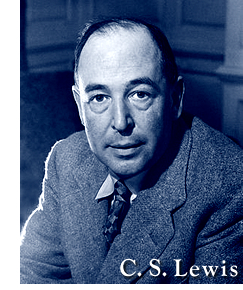
C.S. Lewis Daily – Today’s Reading


If the old fairy-tale ending ‘They lived happily ever after’ is taken to mean ‘They felt for the next fifty years exactly as they felt the day before they were married’, then it says what probably never was nor ever would be true, and would be highly undesirable if it were. Who could bear to live in that excitement for even five years? What would become of your work, your appetite, your sleep, your friendships? But, of course, ceasing to be ‘in love’ need not mean ceasing to love. Love in this second sense—love as distinct from ‘being in love’—is not merely a feeling. It is a deep unity, maintained by the will and deliberately strengthened by habit; reinforced by (in Christian marriages) the grace which both partners ask, and receive, from God. They can have this love for each other even at those moments when they do not like each other; as you love yourself even when you do not like yourself. They can retain this love even when each would easily, if they allowed themselves, be ‘in love’ with someone else. ‘Being in love’ first moved them to promise fidelity: this quieter love enables them to keep the promise. It is on this love that the engine of marriage is run: being in love was the explosion that started it.

From Mere Christianity

Compiled in A Year with C.S. Lewis

Charles Stanley – The Justice and Mercy of the Cross


Romans 3:23-27

The cross of Jesus Christ presents us with a dilemma. If the heavenly Father is good and loving, why would He let His Son endure the agony of crucifixion? From our human perspective, there’s nothing loving in this scene. But by looking beyond the obvious, we’ll see an awesome demonstration of love.

To grasp what took place at the cross, we first need to understand that the Lord is absolutely righteous and just. He always does what’s right and never acts contrary to His nature or His Word. On the other hand, mankind is sinful and deserving of eternal punishment. God couldn’t simply decide to forgive us, because He would then cease to be just—justice requires that a penalty be paid for sin. Either the Lord had to condemn us all to suffer His wrath, or He needed to devise a plan that would satisfy His justice yet allow Him to show mercy.

Before the foundation of the world, God already had a plan in place for His sinless Son to come to earth in human flesh to bear our sins (Revelation 13:8). The Father placed upon Him all our guilt and punishment. Because the Savior’s payment fully satisfied divine justice, sinful man could now be declared righteous. Justice punished sin, and mercy rescued sinners.

No matter who you are or what you’ve done, if you accept Christ’s payment on your behalf, you will be saved. God’s goodness and love are proved by the very act that looked cruel and hateful. This was the sole plan that could save us, and God’s perfect Son was the only one qualified to give His life in our place. What’s more, Jesus did it willingly.

Bible in One Year: Isaiah 54-57

Ravi Zacharias Ministry – Implementing Easter


The dominating time-piece is nothing if not thought-provoking. British inventor John Taylor’s “Chronophage” (literally ‘time eater’ from the Greek chronos and phageo) keeps watch outside Cambridge’s Taylor Library of Corpus Christi College.(1) A foreboding metal grasshopper with an ominous chomping mouth appears to devour each minute with eerie pleasure and constancy. The toll of the hour is marked by the clanging of a chain into a tiny wooden coffin, which then slams shut—”the sound of mortality,” says Taylor.(2) The pendulum also speeds up sporadically, then slows to a near halt, only to race ahead again as if somehow calculating the notion that time sometimes flies, sometimes stands still. The invention, according to Taylor, is meant to challenge our tendency to view time itself as we might view a clock. “Clocks are boring. They just tell the time, and people treat them as boring objects,” he added. “This clock actually interacts with you”—indeed, striking viewers with the idea that time is nothing to take for granted.(3)

The Christian worldview is one that recognizes at the deepest level that something about humanity is not temporal. Easter, in fact, is the celebration that this is not just a suspicion, but a reality. Christians believe in eternal dwellings, a day when tears will be no more, and in one who is preparing a house of rooms and welcome.(4) And yet, we also very much live with the distinct experience of these promises within time. Christ is not merely the one who will be with us in all eternity, the one who will dry our eyes at time’s end. Christians believe he is also alive and among us today, welcoming a kingdom that is both present and approaching. “Remember, I am with you always,” ends one of account of the life of Jesus, “even to the end of the age” (Matthew 28:20). For the Christian, all of time is filled with the hope of resurrection, even as it is filled with Christ himself.

Why then, I wonder, are there moments when time seems so oppressive, the hope of eternity a distant glimmer, the presence of a resurrected Christ beside the daily pendulum an inapplicable promise? If the Christian life is about moving closer and closer to the glory of the resurrected Christ, why is there not more light and less darkness, a more vibrant Church and less grumbling, greater outreach and less greed, followers who look more like Jesus and less like the world around them? The expectation in the life of a Christian is that there will be a dramatic difference, or at least steady progression, of lives transformed by Christ. But instead we often find little difference—or we find the opposite of progression, so that both inside and outside of the church people are left wondering: Where is transformation as all this time marches onward?

John Taylor’s menacing grasshopper is an apt image for such a confession. Time marches on oppressively, unapologetically, while the promise of “being transformed into [Christ’s likeness] from one degree of glory to another” seems to remain a distant mirage.(5) Christians begin to doubt. Skeptics point out the obvious fantasy of faith. *But perhaps something in Taylor’s clock also challenges this fearful view of time and transformation. Time is indeed a linear progression, marching onward in precise increments, but our experience of time is far less like this. We are at times startled by its passing, other times painfully aware of its tedious movement. We interact with time knowing that some minutes are fuller than others, but that time is always more than a linear, monotonous experience.

Similarly, when I think of transformation, I often think of dramatic change: an acorn turned into an oak tree, the apostle Paul changed from zealous tormentor to zealous Christian, Lazarus moved from death to life. And I believe there is indeed something quite like this that takes place in the life of one willing to follow resurrected Christ—a creature who actually stops being one thing in order to become something else. It should not be surprising that around the world we find Christians in the most unlikely places, administering aid, speaking hope, exhibiting this change of which the gospel speaks. For clothed in Christ’s perfect nature, the nature of a person is truly changed. Though we stand before God imperfect and discouraged, it is the Son the Father now sees. And this part of Christian transformation is as dramatic as it is complete, allowing us—and the world—to stand assured of God’s work within.

But this is not to say that God is finished working. To the one who has been united with Christ, the daily indwelling of God is a gift! Within the Christian’s experience of time, the message of the gospel is all the more transformational, the vicariously human Christ is our moral influence daily, and through the Holy Spirit we are being further transformed into his image. This kind of transformation is neither the dramatic change often expected, nor the steady linear progression for which we might hope. Like Paul himself, we can find ourselves doing the things we don’t want to do, falling back into mindsets that need to be renewed, imitating a broken world more than we imitate Christ. Transformation at these times seems far less like Lazarus rising from the grave and more like a would-be butterfly refusing to come out of its cocoon.

But even here, Christ is surely near, the eternal urging the world of souls to see the potential in this very moment: “The intermediate hope—” writes N.T. Wright, “the things that happen in the present time to implement Easter and anticipate the final day—are always surprising because, left to ourselves, we lapse into a kind of collusion with entropy, acquiescing in the general belief that things may be getting worse but that there’s nothing much we can do about them. And we are wrong. Our task in the present… is to live as resurrection people in between Easter and the final day.”(6)

That is to say, Easter is being implemented. Whether we make our bed in the depths, whether we fall repeatedly or seem to be moving backward, God is both near and at work, the reality of the resurrection working its way into every ticking minute. In the experience of time before us is the radical promise of both the intermediate hope and transformation and the gift of looking glory full in the face. By the power of the Spirit, God takes the most wretched of creatures and changes it into the likeness of Christ, the most beautiful creature. Whether time is flying or standing still, for the worst of us, even menacing grasshopper types, this is indeed very good news.

Jill Carattini is managing editor of A Slice of Infinity at Ravi Zacharias International Ministries in Atlanta, Georgia.

(1) Maev Kennedy, “Beware the time-eater: Cambridge University’s Monstrous New Clock,” The Gaurdian, September 18, 2008.

(2) Robert Barr, “Fantastical New Clock Even Tells Time,” MSNBC, September 19, 2008.

(3) Ibid.

(4) Luke 16:9, Revelation 21:4, John 14:2.

(5) 2 Corinthians 3:18.

(6) N.T. Wright, Surprised by Hope (New York: Harper, 2008), 29-30.

Alistair Begg – What Do We Know?


We know that for those who love God all things work together for good. Romans 8:28

Upon some points a believer is absolutely sure. He knows, for instance, that God sits in the center of the vessel when it rocks most. He believes that an invisible hand is always on the world’s tiller, and that wherever providence may drift, God is steering it. That reassuring knowledge prepares him for everything. He looks over the raging waters and sees the spirit of Jesus walking on the water, and he hears a voice saying, “It is I-do not be afraid.” He knows too that God is always wise, and knowing this, he is confident that there can be no accidents, no mistakes and that nothing can occur that ought not to happen. He can say, “If I should lose everything, it is better that I should lose it than keep it if it is God’s will: The worst disaster is the wisest and the kindest thing that I could face if God ordains it.”

“We know that for those who love God all things work together for good.” The Christian does not merely hold this as a theory, but he knows it as a matter of fact. So far everything has worked for good; the poisonous drugs mixed in proper proportions have effected the cure; the sharp cuts of the scalpel have cleaned out the disease and facilitated the healing. Every event as yet has worked out the most divinely blessed results; and so, believing that God rules all, that He governs wisely, that He brings good out of evil, the believer’s heart is assured, and he is learning to meet each trial calmly when it comes. In the spirit of true resignation the believer can pray, “Send me what You will, my God, as long as it comes from You; there never was a poor portion that came from Your table to any of Your children.”

Do not say, my soul, “Where will God find one to relieve my care?”

Remember that Omnipotence has servants everywhere.

His method is sublime and His heart profoundly kind,

God is never too early and never behind!

The Family Bible Reading Plan

  • Judges 19
  • Acts 23

Devotional material is taken from “Morning and Evening,” written by C.H. Spurgeon, revised and updated by Alistair Begg.


Charles Spurgeon – Preach the gospel


“For though I preach the gospel, I have nothing to glory of: for necessity is laid upon me; yea, woe is unto me, if I preach not the gospel!” 1 Corinthians 9:16

Suggested Further Reading: Philippians 1:12-18

There was a young woman under great distress of soul; she came to a very pious Christian man, who said “My dear girl, you must go home and pray.” Well I thought within myself, that is not the Bible way at all. It never says, “Go home and pray.” The poor girl went home; she did pray, and she still continued in distress. Then he said, “You must wait, you must read the Scriptures and study them.” That is not the Bible way; that is not exalting Christ. I find a great many preachers are preaching that kind of doctrine. They tell a poor convinced sinner, “You must go home and pray, and read the Scriptures; you must attend the ministry;” and so on. Works, works, works—instead of “By grace are ye saved through faith.” If a penitent should come and ask me, “What must I do to be saved?” I would say, “Christ must save you—believe on the name of the Lord Jesus Christ.” I would neither direct to prayer, nor reading of the Scriptures, nor attending God’s house; but simply direct to faith, naked faith in God’s gospel. Not that I despise prayer—that must come after faith. Not that I speak a word against the searching of the Scriptures—that is an infallible mark of God’s children. Not that I find fault with attendance on God’s word—God forbid! I love to see people there. But none of these things are the way of salvation. It is nowhere written—“He that attendeth chapel shall be saved;” or, “He that readeth the Bible shall be saved.” Nor do I read—“He that prayeth and is baptised shall be saved;” but, “He that believeth,”—he that has a naked faith in the “Man Christ Jesus,”—in his Godhead, in his manhood, is delivered from sin. To preach that faith alone saves is to preach God’s truth.

For meditation: The good news of the Gospel is not to be confused with our not-so-good advice. To think we are giving good news is not good enough (2 Samuel 4:10).

Sermon no. 34

5 August (1855)