Tag Archives: Jesus

John MacArthur – The Impartiality of God


“My brethren, do not hold your faith in our glorious Lord Jesus Christ with an attitude of personal favoritism” (James 2:1).

Because God is impartial, we as Christians must be impartial too.

People are prone to treat others differently based upon external criteria such as looks, possessions, or social status, but God is utterly impartial. He never shows favoritism and always judges righteously.

Favoritism can be defined as a preferential attitude and treatment of a person or group over another having equal claims and rights. It is unjustified partiality. James 2:1-13 confronts it as sin and admonishes us to avoid it at all costs.

God’s impartiality is seen throughout Scripture. For example, Moses said to the people of Israel, “The Lord your God is the God of gods and the Lord of lords, the great, the mighty, and the awesome God who does not show partiality, nor take a bribe. He executes justice for the orphan and the widow, and shows His love for the alien by giving him food and clothing. So show your love for the alien, for you were aliens in the land of Egypt” (Deut. 10:17-19). Jehoshaphat, king of Judah, warned his judges to rule without partiality because God Himself has “no part in unrighteousness, or partiality” (2 Chron. 19:7).

God’s impartiality is also seen in His gracious offer of salvation to people of every race. In Acts 10:34-35 Peter says, “I most certainly understand now that God is not one to show partiality, but in every nation the man who fears Him and does what is right, is welcome to Him.”

God is also impartial in judgment. Romans 2:9-11 says that God will bring “tribulation and distress for every soul of man who does evil . . . but glory and honor and peace to every man who does good. For there is no partiality with God.”

Our text is a timely admonition because prejudice, discrimination, and bigotry are ever-present evils in our society—both inside and outside the church. I pray that God will use these studies to guard you from favoritism’s subtle influences and strengthen your commitment to godly living.

Suggestions for Prayer

Ask God to reveal any partiality you might be harboring. As He does, confess it and turn from it.

For Further Study

Read Ephesians 6:5-9 and 1 Timothy 5:17-21. How does God’s impartiality apply to how you should respond to your co- workers and your church leaders?

Joyce Meyer – Loving Correction

For the time being no discipline brings joy, but seems grievous and painful; but afterwards it yields a peaceable fruit of righteousness to those who have been trained by it.Hebrews 12:11

When we need correction—and we all need it at one time or another—it is the Lord’s desire to correct us Himself. Whom the Lord loves, He chastens (see Hebrews 12:6). God’s correction or chastisement is not a bad thing; it is always and ultimately only for your good.

The fact that it works toward your good does not mean it always feels good or that it is something you enjoy immediately. In fact, correction can be one of the most difficult things to receive—especially when it comes through another person. Even if you have problems, you don’t want others to know you have them. Usually God prefers to correct you privately, but if you won’t accept His correction, He will use whatever tools are at His disposal. In Balaam’s case, God used his donkey! Whatever God decides to use to correct us, we should submit to Him knowing that He loves us and only has our ultimate good in mind.

Presidential Prayer Team; C.P. – The Greatest Commandment


The world values spirituality – no matter how psychologists, psychiatrists, and scientists try to explain it away. People still seek to nurture their spirit by turning to various gods, peace in nature, art, music, or to the universe. When they do, they experience some solace, perhaps…but they cannot possibly know the fullness of spiritual fulfillment unless they seek the only one who can truly provide it.

Love the Lord your God with all your heart and with all your soul and with all your mind.

Mark 12:30

Jesus said the greatest commandment was to love God. He was talking about the Creator of the universe, God of Adam and Eve, Noah, Abraham, the Jews, and Christians. The great commandment is not talking about some generic force. Its meaning is very specific: the three-in-one God, The Father, Son and Holy Spirit, whom you are to love with your mind, emotions, and physical body…indeed, your very life and breath.

This is the greatest commandment. Pray that the Holy Spirit will move on the people of the United States to turn to Jesus, the only way to the Father (John 14:6). Then ask the mighty, triune God to make Himself undeniably real to your national leaders in Washington, D.C.

Recommended Reading: Matthew 22:34-46

Greg Laurie – “Here I Am, Lord. Send Him.”


But Moses again pleaded, “Lord, please! Send anyone else.” —Exodus 4:13

When God called Moses to return to Egypt, I find it interesting that Moses used the word Lord and then effectively said no: “Lord, please! Send anyone else” (Exodus 4:13).

It reminds me of Peter, when he had that vision on the housetop of Simon (see Acts 10:9–16). In his vision, a great sheet was lowered from Heaven with creatures that Peter was forbidden to eat, according to Mosaic Law. God told him, “Get up, Peter; kill and eat them” (verse 13).

But Peter said, “No, Lord” (verse 14).

Those words don’t go together. You don’t say, “No, Lord.” Rather, it is, “Yes, Lord.”

Moses was saying to God, “No, Lord, I don’t want to do this. I can’t do this. I am not the right guy. Send someone else.”

This angered God. Moses should have just done what God called him to do.

Here is something to consider. If God is calling you in some way, shape, or form, to not respond actually can be a sin. Yes, God has given you a free will, and I suppose you can live your life as you want to live it for the most part. But if God calls you to do something for Him and you say no, that is disobedience, and that is a sin. To not obey Him is to sin against Him.

“But I am not qualified,” you might say. Well really, who is? In fact, often the ones who think they are qualified are disqualified. They’re so full of themselves that God won’t use them. God likes to use people who don’t think they’re worthy. God likes to use people who don’t think they ever could be used by Him. God likes to use ordinary people in extraordinary ways so that He receives the glory.

Max Lucado – Do What Pleases God

Years ago a friend gave me this counsel: Make a list of all the lives you would affect by your sexual immorality. I did. The list includes Denalyn, my three daughters, my sons-in-law, and my grandchild. Every so often, I reread it.  And the list reminds me that one act of carnality is a poor exchange for a lifetime of lost legacy.

Dads, would you intentionally break the arm of your child? Of course not. Such an action would violate every fiber of your moral being. Yet if you engage in sexual activity outside your marriage, you’ll bring much more pain into the life of your child than would a broken bone.

In 1 Corinthians 6:19, Paul asked the rhetorical question: “Do you not know that your body is the temple of the Holy Spirit who is in you?”

Actions have consequences. So what do you do? Do what pleases God!

From You’ll Get Through This


Night Light for Couples – The Afterlife


“We rejoice in the hope of the glory of God.” Romans 5:2

Our hope for the afterlife was once expressed to me (jcd) by my father. We were walking on a country road, talking about life and its meaning, when he made a comment that I will never forget. He said that when he was a young man, the possibility of a future heavenly existence was not a matter of great value to him. He had enjoyed his youth, and the thought of life beyond the grave was like a pearl that was crusted over with scales and grime. The beauty of the pearl was assumed, but not apparent or realized. But as he grew older and began to experience problems associated with aging, including a serious heart attack and assorted aches and pains, the beauty of the pearl of eternal life began to shine. It shone more and more brilliantly until it became the most prized of any of his possessions.

My father died shortly after that conversation. He has at last grasped the “pearl” of eternal life. Thankfully, that same blessed hope is available to all of God’s children, including you and me. And it is a hope that can bring grace and meaning to every word and activity in our marriage.

Just between us…

  • How do you picture heaven?
  • As the years pass, do you find yourself thinking more about eternity,

or less?

  • What is your greatest hope for the future?
  • Do we understand that the only “thing” we can take with us to heaven is other people and the Word of God? Do we live as though we believed that?

Father, we are so thankful that You have prepared a place for us in Your kingdom. Help us to make the most of our time in this life. May we do everything in our power to spread the good news of this eternal hope to those who don’t know You. Amen.

From Night Light For Couples, by Dr. James & Shirley Dobson

Charles Stanley – Reasons for Taking Risks


Joshua 1:6-9

In the first chapter of Joshua, God delivers the greatest pep talk in all of Scripture. Moses had just died, and now his successor was called upon to lead the nation of Israel into the Promised Land—a military action that would surely involve significant risk. Joshua was no doubt unsettled by the prospects of facing a strong hostile army. Therefore, the Lord spoke words of encouragement to him that still ring true for us today.

What would have happened if Joshua had refused this daunting assignment? Most likely, the nation of Israel would have languished in the desert indefinitely. Fortunately, this leader was a man of great faith and courage, and he boldly took up the cause of God.

Like Joshua, we face daily obstacles that seem to push our faith to the breaking point. And yet, it is in the throes of adversity that God hones our faith (James 1:2-4). When we refuse to follow Him into risky situations, the results can be devastating to our spiritual growth. Consider the consequences of disobedience on your life:

  1. You will never become the person that God wants you to be.
  2. You limit your usefulness to the Lord.
  3. You are willing to live a life of rationalized disobedience.
  4. You’ll be governed by fear rather than faith.
  5. You risk losing not only rewards in heaven but also blessings on earth.

Are you in some way refusing God’s call? The Lord is trustworthy. Whatever His plan of action for you, be assured He will see you safely through the ordeal.

Bible in One Year: Psalms 29-34

Our Daily Bread — Our Anchor


Read: Hebrews 6:13-20

Bible in a Year: Nehemiah 4-6; Acts 2:22-47

This hope we have as an anchor of the soul, both sure and steadfast. —Hebrews 6:19

After Estella Pyfrom retired from teaching, she bought a bus, decked it out with computers and desks, and now drives the “Brilliant Bus” through Palm Beach County, Florida, providing a place for at-risk children to do their homework and learn technology. Estella is providing stability and hope to children who might be tempted to throw away their dream for a better tomorrow.

In the first century, an avalanche of suffering and discouragement threatened the Christian community. The author of Hebrews wrote to convince these followers of Christ not to throw away their confidence in their future hope (2:1). Their hope—a faith in God for salvation and entrance into heaven—was found in the person and sacrifice of Christ. When Jesus entered heaven after His resurrection, He secured their hope for the future (6:19-20). Like an anchor dropped at sea, preventing a ship from drifting away, Jesus’ death, resurrection, and return to heaven brought assurance and stability to the believers’ lives. This hope for the future cannot and will not be shaken loose.

Jesus anchors our souls, so that we will not drift away from our hope in God. —Marvin Williams

Jesus, in the face of all kinds of trouble and uncertainty, help me to have a confident expectation that is grounded in Your unfailing love for me.

Our hope is anchored in Jesus.

INSIGHT: The book of Hebrews is a book of comparisons between the Old Testament and the person of Christ. Throughout the book, the author makes comparisons between what is good and what is better: Jesus is better than the prophets and angels (ch. 1), better than Moses (ch. 3), better than the priesthood (chs. 4-8), and better than the sacrificial system (chs. 9-10). The greatness of Jesus is our hope and our anchor, an anchor that Hebrews reminds us is “both sure and steadfast” (6:19).

Ravi Zacharias Ministry – Hell Is Other People


French existentialist Jean Paul Sartre closes his play Huis Clos (“No Exit”) with the pronouncement, “Hell is other people.” The play offers a sardonic vision of hell as the place in which one must spend eternity with individuals one would barely seek to spend five minutes with in real life. As one writer notes, “The most terrible, exasperating torment, in Sartre’s eyes, is the agony of soul caused by having to live forever alongside someone who drives you up the wall. Their annoying habits, their pettiness or cynicism or stupidity, their disposition and tastes that so frustratingly conflict with yours and require, if you are to live in communion with them, some sort of accommodation or concession of your own likes and desires—that, says Sartre, is Hell.”(1) Living in a world in which tolerance is the highest value, most readers find Sartre’s vision highly narcissistic or the logical conclusion of an exclusively individualistic, existentialist philosophy.

For many others, however, Sartre’s sentiments are not so easily dismissed. Living, working, and interacting with other people can indeed create a hellish existence for many. And most of us, if we are honest, can quickly think of the names of individuals whose personal habits or grating personalities makes relating to them very difficult at best. Sartre’s honesty, albeit through a cynical lens, also exposes clear boundaries of human tolerance. On the one hand, the capacity for tolerance is generally based on loving those who are easy to love or who share our own way of living in and viewing the world. On the other hand, the capacity for tolerance easily extends towards external causes, idealism, and abstract principles. These are quickly shattered when we come into contact with the real people who exist not as causes or ideals or principles.

An example from my own life serves to illustrate Sartre’s insight. I am involved in causes working for justice in situations of homelessness, which is a perennial issue where I live. It is easy for me to “love” the broad category of people who are “the homeless” as long as they remain an idea or a concept. Yet, every month when my church holds a dinner for the homeless in our community—the full-range of humanity on display right in front of me—I often feel my “love” is really just thinly veiled patronage. Eating with individuals who have not showered in weeks (or months), who suffer from mental illness, or chemical dependency tests my tolerance in ways that the idea of homelessness never will. This monthly meal highlights how little I truly love those real people seated all around me.

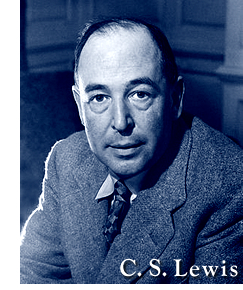
A contemporary of Sartre, C.S. Lewis wrote about this tendency to love causes and ideals more than real people in his novel The Screwtape Letters. He saw this hellish tendency as a carefully constructed diabolical strategy. The demon, Wormwood, was advised to “aggravate that most useful human characteristic, the horror and neglect of the obvious.”(2) The obvious, Lewis notes through his character Screwtape, is the human capacity for both benevolence and malice. Their misdirection and exploitation is not as obvious to us. Diabolical Uncle Screwtape explains to his nephew Wormwood:

“The great thing is to direct the malice to his immediate neighbors whom he meets every day and to thrust his benevolence out to the remote circumference, to people he does not know. The malice thus becomes wholly real and the benevolence largely imaginary…but you must keep on shoving all the virtues outward till they are finally located in the circle of fantasy.”(3)

If benevolence, tolerance, or love are simply attached to ideals involving people we never have any direct contact with in the day to day, how can that really be benevolence? In the same way, how can we say we love our neighbor when our malice towards particular habits or personality quirks is on full display? How quickly we lose our temper with family members; how easily we show offense at those who do not see it our way; how readily we devise strategies to withhold love, or to punish our ever-present offenders?

Lewis highlights a predominant theme in the teaching of Jesus. Throughout the gospels, Jesus corrects the prevailing notion that the neighbor is one just like me, who agrees with me, and sees the world as I see it. The “neighbor” is other people—not an abstraction, but a living, breathing person with habits, views, and quirks that will not only get on our nerves, but also tempt us toward contempt. And love is only a real virtue when it is lived out among real, human relationships. As Lewis’s character Screwtape notes wryly:

“All sorts of virtues painted in the fantasy or approved by the intellect or even, in some measure, loved and admired, will not keep a man from [Satan’s] house: indeed they may make him more amusing when he gets there.”(4)

Sartre was honest in revealing the often hellish reality of living with other people. We would much rather love an ideal, a concept (the homeless, or starving children across the world) than the people right in front of us, in our lives right now. In the life of Jesus, we see a man who loved those individuals directly in front of him; he gathered around him a group of disparate people from tax-collectors on the left, to zealot revolutionaries on the right. He delayed arrival at a temple official’s home because an unknown woman touched the hem of his garment. He delivered a man so out of his mind that he had been driven from his community to live in desolate caves. In front of the most important religious officials of his day, he allowed a woman of questionable reputation to anoint his feet with perfume and use her tears and to wipe them with her hair.

The love of Jesus is not a pie in the sky ideal for people he never knew; it was tangible, messy, and ultimately cost him his life. In Jesus, we see heaven on display in the hell of individual lives. If we seek to follow him, vague ideals about tolerance must give way to flesh and blood reality—loving the all-too-human in front of us.

Margaret Manning is a member of the speaking and writing team at Ravi Zacharias International Ministries in Seattle, Washington.

(1) Lauren Enk, “Hell is Other People; Or is It?” catholicexchange.com, August 12, 2012, accessed July 10, 2013.

(2) C.S. Lewis, The Screwtape Letters, Rev. ed., (New York: Collier Books, 1982), 16.

(3) Ibid., The Screwtape Letters, 30.

(4) Ibid., 31.

Alistair Begg -The Danger of Unbelief


I give them eternal life, and they will never perish. John 10:28

The Christian should never think or speak lightly of unbelief. For when a child of God mistrusts His love, His truth, His faithfulness, it is greatly displeasing to Him. How can we ever grieve Him by doubting His upholding grace?

Christian, it is contrary to every promise of God’s precious Word that you would ever be forgotten or left to perish. If it could be so, how could He be true who has said, “Can a woman forget her nursing child, that she should have no compassion on the son of her womb? Even these may forget, yet I will not forget you.”1 What would be the value of the promise–“‘The mountains may depart and the hills be removed, but my steadfast love shall not depart from you, and my covenant of peace shall not be removed,’ says the LORD, who has compassion on you”?2 What truth would there be in Christ’s words–“I give them eternal life, and they will never perish, and no one will snatch them out of my hand. My Father, who has given them to me, is greater than all, and no one is able to snatch them out of the Father’s hand”?3 What value would there be in the doctrines of grace? They would be all disproved if one child of God should perish. What value could be placed in the veracity of God, His honor, His power, His grace, His covenant, His oath, if any of those for whom Christ died, and who have put their trust in Him, should nevertheless be cast away?

Banish then those unbelieving fears, which so dishonor God. Arise, shake yourself from the dust, and put on your beautiful clothes. Remember, it is sinful to doubt His Word in which He has promised you that you will never perish. Let the eternal life within you express itself in confident rejoicing.

The gospel bears my spirit up:

A faithful and unchanging God

Lays the foundation for my hope,

In oaths, and promises, and blood.


1) Isaiah 49:15

2) Isaiah 54:10

3) John 10:28-29

Devotional material is taken from “Morning and Evening,” written by C.H. Spurgeon, revised and updated by Alistair Begg.

Charles Spurgeon – Unimpeachable justice


“Against thee, thee only, have I sinned, and done this evil in thy sight: that thou mightest be justified when thou speakest, and be clear when thou judgest.” Psalm 51:4

Suggested Further Reading: 1 Samuel 15:1-31

We have heard of men who have confessed their guilt, and afterwards tried to extenuate their crime, and show some reasons why they were not so guilty as apparently they would seem to be; but when the Christian confesses his guilt, you never hear a word of extenuation or apology from him. He says, “Against thee, thee only, have I sinned, and done this evil in thy sight:” and in saying this, he makes God just when he condemns him, and clear when he sentences him for ever. Have you ever made such a confession? Have you ever thus bowed yourselves before God? Or have you tried to palliate your guilt, and call your sins by little names, and speak of your crimes as if they were but light offences? If you have, then you have not felt the sentence of death in yourselves, and you are still waiting till the solemn death-knell shall toll the hour of your doom, and you shall be dragged out, amidst the universal hiss of the execration of the world, to be condemned for ever to flames which shall never know abatement. Again: after the Christian confesses his sin, he offers no promise that he will of himself behave better. Some, when they make confessions to God, say, “Lord, if thou forgive me I will not sin again;” but God’s penitents never say that. When they come before him they say, “Lord, once I promised, once I made resolves, but I dare not make them now, for they would be so soon broken, that they would increase my guilt; and my promises would be so soon violated, that they would sink my soul deeper in hell. I can only say, if thou wilt create in me a clean heart, I will be thankful for it, and will sing to thy praise for ever; but I cannot promise that I will live without sin, or work out a righteousness of my own. I dare not promise, my Father, that I shall never go astray again.”

For meditation: Does your confession of sin to God include the excuses of a King Saul or the acquiescence of a King David, the man after God’s own heart (1 Samuel 13:14)?

Sermon no. 86
16 June (Preached 15 June 1856)

John MacArthur – Taking Spiritual Inventory


“This is pure and undefiled religion in the sight of our God and Father . . . to keep oneself unstained by the world” (James 1:27).

God doesn’t tolerate compromise with the world.

Keeping yourself unstained by the world is an important test of your spiritual condition. The apostle John said, “Do not love the world, nor the things in the world. If anyone loves the world, the love of the Father is not in him” (1 John 2:15). At first glance that might sound contradictory since God Himself so loved the world that He gave His Son to die for it (John 3:16). But John 3:16 refers to the inhabited earth—the people for whom Christ died. First John 2:15 refers to the evil world system in which we live, which includes the life-styles, philosophies, morality, and ethics of our sinful culture. That world and everything it produces is passing away (1 John 2:16-17).

James 4:4 says, “You adulteresses, do you not know that friendship with the world is hostility toward God? Therefore whoever wishes to be a friend of the world makes himself an enemy of God.” Those are strong words but compromise is intolerable to God. You can’t be His friend and a friend of the world at the same time!

Separation from the world is the final element of true religion mentioned in James chapter one. Before progressing to chapter two, take a final spiritual inventory based on the checklist provided in verses 26-27: (1) Do you control your tongue? Review the quality of your conversation often. What does it reveal about the condition of your heart? Are there speech habits you need to change? (2) Do you demonstrate love for others? Do you have a sincere desire to help those in need? When you do help, are your motives pure, or are you simply trying to sooth your conscience or make others think more highly of you? (3) Do you remain unstained by the world? What is your attitude toward the world? Do you want to win it for Christ and remain unstained by its evil influences, or do you want to get as much out of it as you possibly can?

Suggestions for Prayer

If your spiritual inventory reveals any sinful motives or practices, confess them and begin to change today.

For Further Study

Reread James 1:19-27, reviewing the principles you’ve learned from those verses.

Joyce Meyer – Follow Your Heart’s Desires


Who is the man who reverently fears and worships the Lord? Him shall He teach in the way that he should choose. He himself shall dwell at ease, and his offspring shall inherit the land.Psalm 25:12–13

To enjoy your life, start following the God-given desires of your heart instead of the desires of your flesh. You may need to mature in faith before you can tell the difference between your flesh and Spirit-led desires.

One way to tell if you are following a desire of your flesh is that when you step out to do it, you will lose your peace and face a struggle. If it is not of God, you will feel like you are pushing a dead horse uphill. If it is a God-given desire of the Spirit, it will work like a well-oiled machine. It will flow, with what I call a “Holy ease.” Start your day right, and follow your heart.

Campus Crusade for Christ; Bill Bright – He Forgets Our Sins


“And then he adds, ‘I will never again remember their sins and lawless deeds'” (Hebrews 10:17).

We were seated at the breakfast table, talking about the exciting adventure of the Christian life. Chuck and Mary were just discovering new facets and understanding of the life in Christ.

“Can you tell us in a few words what should be our objective as Christians?” they asked me.

In very brief summary, I replied, “The Christian life is the process of becoming in our experience through the enabling of the Holy Spirit what we already are in God’s sight, in order to bring maximum glory, honor and praise to His name.”

Christ gave Himself to God for our sins – as one sacrifice for one time. Then He sat down at the place of highest honor at God’s right hand. For by that one offering He made forever perfect in the sight of God all those whom He is making holy.

I am perfect in God’s sight, because in His sight there is no such thing as time and space. Let me hasten to all: I know that I am not perfect in my experience. That is a process which takes time, knowledge of God and His Word, and growth in faith in order to claim these truths as reality in our lives.

I am perfect in God’s sight because He sees me in Christ, and in Christ, who is perfect and without sin. He sees me without spot or blemish. Someone has referred to this great experience of being crucified, baptized and enthroned with Christ as a different life altogether. As we are reminded in 2 Corinthians 5:17 (KJV), “Therefore if any man be in Christ, he is a new creature: old things are passed away; behold, all things are become new.”

Bible Reading: Hebrews 8:8-12

TODAY’S ACTION POINT: Because God has forgiven and forgotten all my sins and lawless deeds. I will now, through the enabling of His Holy Spirit, receive His forgiveness and cleansing and never again be burdened with those sins of the past. I will claim my new supernatural life in Christ for the glory of God. Because this is such great good news, I will not keep it to myself. I must tell others.

Presidential Prayer Team; J.K. – Clouded Truth


Low barometric pressure, a sign of an oncoming storm, is only one of many variables used to explain and forecast weather. Traffic signs can warn you of impending danger or give good direction for your travel. You can take your cues from the signs given, or you can disregard them to your own fate.

They asked him to show them a sign from heaven.

Matthew 16:1

The Pharisees and Sadducees of Jesus’ day knew God’s Word. But the first group added their own rules, and the second faction discounted doctrines that didn’t suit them. They clouded the truths given by God. The two groups, usually at odds, now joined forces to resist Jesus. They could not give up their own ideas of religion in order to see the signs that the Messiah, foretold in Scripture, stood before them in the person of Christ. Jesus healed the sick, gave sight to the blind, and raised the dead to life.

Hold fast to the Word of God. It is your guide to discerning truth. The greatest sign of Jesus’ ministry was His resurrection. Leaders of His day refused to believe in Him. Intercede now for today’s leaders…that they may see the matters of this world in the framework of the Gospel of Jesus Christ.

Recommended Reading: Luke 16:5-17

Greg Laurie – His Ambassadors


So we are Christ’s ambassadors; God is making his appeal through us. We speak for Christ when we plead, “Come back to God!” —2 Corinthians 5:20

When I would hunt snakes as a kid, I would never pick them up by the tail. I would use my foot to pin them down by the neck, being careful not to crush them, and then I would carefully pick them up, holding them right behind the head. I would never pick up a snake by the tail, because a snake could turn around and bite.

When God told Moses to throw down his rod, which became a snake, and then pick it up by the tail, it was a step of faith. Most likely the snake was a cobra, the symbol of Egypt. I presume it was this type of snake because it was common in that part of the world. It also has a venomous bite. If you are bitten by a cobra, you have a serious problem on your hands.

So God told Moses to take the symbol of Egypt and grab it by the tail. He was effectively telling him, “I don’t want you to be afraid. I am going to defeat this serpent. I am going to overpower Pharaoh. I am going to do it through you, so overcome your fears, step forward, and go for it.”

Moses was called to represent God to a pagan culture. And we have been called by God to do the same. The United States is becoming increasingly pagan, and I mean that in a descriptive, not derogative, sense. There is belief in false gods and in many gods. It seems like there is belief in every god but the right God.

The Lord has called Christians to represent Him and has given us authority: we are His ambassadors (see 2 Corinthians 5:20). And as ambassadors of Christ, we are charged with bringing His message to the world.

Max Lucado – Quarry the Deep Qualities of God


Don’t equate the presence of God with a good mood or a pleasant temperament. God is near whether you are happy or not. But do quarry from your Bible a list of the deep qualities of God, and press them to your heart. My list reads like this:

He is still sovereign. He still knows my name.

Angels still respond to His call.

God is still faithful. He is not caught off guard.

He uses everything for His glory and my ultimate good.

Lay hold of the unchanging character of God. Pray your pain out. Pound the table. Even Jesus offered up prayers with what Hebrews 5:7 describes as “loud cries and tears.” Your family may be gone. Your supporters may have left. But God has not budged! His promise still stands: “I am with you and will watch over you wherever you go” (Gen. 28:15).

From You’ll Get Through This

Night Light for Couples – Anchor For the Soul


“In him our hearts rejoice, for we trust in his holy name.” Psalm 33:21

When a sudden storm strikes a ship at anchor, only the links of chain and the anchor wedged in the rocks keep vessel and crew from being set dangerously adrift. Obviously, the more tumultuous the times, the more important the moorings. In our own stressful moments, our hopes need to be anchored securely—not in wishes or feelings, but in God’s promise. As the author of Hebrews said, “We have this hope as an anchor for the soul, firm and secure”(Hebrews 6:19).

Isn’t it comforting to know that we have a secure anchor in our marriages? When storms threaten to overtake us, Jesus Christ will not let us drown. We can count on Him to deliver what He has promised. We may not know what the future holds for our family, career, finances, or dreams—but we can rest in the knowledge that our souls are safe in the hands of almighty God.

Just between us…

  • Can you think of a time when you thought the storms of life would capsize you? What kept you float?
  • Besides God, who or what provides security and stability in your life?
  • Do you ever feel adrift spiritually? If so, how can I help?
  • Have we placed our hopes and dreams firmly in God’s hands? If not,

can we do that together now?

Lord, You know the desires of our hearts; You know our secret fears, too. But we acknowledge Your unfailing promises and steadfast love. Thank You for being our rock. Tonight we cast our hopes and dreams on You for safekeeping, because we trust You. Amen.

From Night Light For Couples, by Dr. James & Shirley Dobson

Charles Stanley – Trusting the God of Love


Hebrews 8:6-13

Trusting God is a foundational principle in the Christian life. We are expected to accept that God is perfect in love, infinite in wisdom, and sovereign in control. We don’t automatically grasp these truths at the moment of salvation; rather, we learn them over time. Of these three facts, however, the one we most seem to doubt is the Lord’s love for us. However, Scripture gives us three proofs to rely upon when our certainty starts to waver.

Character love—God’s very nature is love (l John 4:8). The Bible also tells us that God is light and there is no darkness in Him (l:5). In other words, there’s nothing sinful or imperfect in His character. If the Father is perfect and loving, He will never mistreat one of His children.

Calvary love—Jesus’ sacrificial death on the cross for our sins provides irrefutable evidence of divine love. The Father’s heart for humanity was revealed when He gave His Son to die in our place. Through Christ, salvation is available to all, but He would have made the same choice if you had been the only person on earth.

Covenant love—God is committed to making us heirs (Heb. 8:10). We know that when we receive Jesus Christ as our Savior, we become children of God. Our immaturity is the reason He is patient and kind to us. God sees us as we are—little ones learning to navigate in our short-term earthly home.

As growing believers, we can’t trust God if we doubt His devotion. Thankfully, we possess these amazing proofs. It is the heavenly Father’s very nature to love, which He demonstrated at the cross and continues to prove by adopting us as His sons and daughters.

Bible in One Year: Psalms 23-28

Our Daily Bread — Look Up!


Read: Psalm 121

Bible in a Year: Nehemiah 1-3; Acts 2:1-21

My help comes from the Lord, who made heaven and earth. —Psalm 121:2

In a park near our home there’s a trail I enjoy walking on. Along one section there’s a panoramic view of red sandstone rocks in the Garden of the Gods with the majestic 14,115-foot Pikes Peak behind them. From time to time, though, I find myself walking that section occupied with some problem and looking down at the wide, smooth trail. If no one is around, I may stop and say aloud, “David, look up!”

The psalms known as “Songs of Ascents” (Ps. 120–134) were sung by the people of Israel as they walked the road up to Jerusalem to attend the three annual pilgrim festivals. Psalm 121 begins, “I will lift up my eyes to the hills. From whence comes my help?” (v. 1). The answer follows, “My help comes from the Lord, who made heaven and earth” (v. 2). The Creator is not an aloof being, but a companion who is always with us, always awake to our circumstances (vv. 3-7), guiding and guarding our journey through life “from this time forth, and even forevermore” (v. 8).

Along life’s path, how we need to keep our eyes fixed on God, our source of help. When we’re feeling overwhelmed and discouraged, it’s all right to say aloud, “Look up!” —David C. McCasland

I look up to You, Father, for You are the One who can help me. Thank You for the joys and trials in my life right now. I’m grateful that I never walk alone.

Keep your eyes on God—your source of help.

INSIGHT: This psalm reminds us that God is our Helper (vv. 1-3) and Keeper (vv. 4-8). As Helper, the Creator of the universe (v. 2) assists us as we journey through life, giving us the security and stability (v. 3) we need. As Keeper, God is the vigilant watchman, fully aware of the events of our lives because He never sleeps (v. 4). This reality allows us to rest in safety and serenity (Ps. 3:5; 4:8; Prov. 3:24).