Tag Archives: nature

  Our Daily Bread — Our Strength And Song


Read: Exodus 15:1–2,13–18

Bible in a Year: 1 Chronicles 25-27; John 9:1-23

The LORD shall reign forever and ever. —Exodus 15:18

Often called “The March King,” composer and band director John Philip Sousa created music that has been played by bands around the world for more than a hundred years. As Loras John Schissel, music historian and conductor of the Virginia Grand Military Band, said, “Sousa is to marches what Beethoven is to symphonies.” Sousa understood the power of music to motivate, encourage, and inspire people.

In Old Testament times, the people of Israel were often inspired to compose and sing songs to celebrate God’s help during times of need. When the Lord saved His people from certain destruction by Pharaoh’s army, “Moses and the children of Israel sang this song to the LORD . . . ‘I will sing to the LORD, for He has triumphed gloriously! The horse and its rider He has thrown into the sea! The LORD is my strength and song, and He has become my salvation’ ” (Ex. 15:1-2).

Music has the power to lift our spirits by reminding us of God’s faithfulness in the past. When we’re discouraged, we can sing songs and hymns that raise our eyes from the challenging circumstances we face to see the power and presence of the Lord. We are reminded that He is our strength, our song, and our salvation. —David McCasland

Trust in Him, ye saints, forever— He is faithful, changing never; Neither force nor guile can sever Those He loves from Him. —Kelly

Songs of praise raise our eyes to see God’s faithfulness.

INSIGHT: Moses’s song after the Israelites had passed through the Red Sea and were delivered from the pursuing Egyptians has two perspectives—one looking back and one looking forward. In the first verses, Moses reflects on what God has done to deliver His people (vv. 1-2). In the later verses, Moses looks forward to what God will do to establish His people in their new land (vv. 13-18).


Ravi Zacharias Ministry – Exploring a New Regime


The 1748 essay “Of Miracles” by David Hume was influential in leading the charge against the miraculous, thoughts that were later sharpened (though also later recanted) by Antony Flew. Insisting the laws of a natural world incompatible with the supernatural, the new atheists continue to weigh in on the subject today. With them, many Christian philosophers and scientists, who are less willing to define miracle as something that must break the laws of nature, join the conversation with an opposing gusto. Physicist and Anglican priest John Polkinghorne, for instance, suggests that miracles are not violations of the laws of nature but rather “exploration of a new regime of physical experience.”(1)

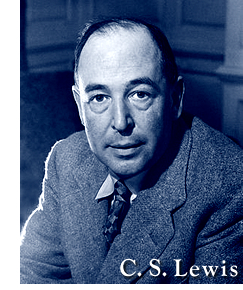
The possibility or impossibility of the miraculous fills books, debates, and lectures. What it does not fill is that moment when a person finds herself—rationally or otherwise—crying out for intervention, for help and assurance, indeed, for the miraculous. “For most of us” writes C.S. Lewis, “the prayer in Gethsemane is the only model. Removing mountains can wait.”(2) To this I would simply add that often prayer is both: both the anguished cry of Gethsemane—”please, take this from me”—prayed at the foot of an impossible mountain.

Whether this moment comes beside a hospital bed, a dying marriage, a grave injustice, or debilitating struggle, we seem almost naturally inclined in some way to cry out for an intervening factor, something or someone beyond the known laws of A + B that sit defiantly in front of us. For my own family that moment came with cancer, complicated by well-intentioned commands to believe without doubt that God was going to take it away. When death took it away instead, like many others in our situation, our faith in miracles—and the God who gives them—were equally defeated.

In the throes of that heart-wrenching scene, every time I closed my eyes to pray, the vision of an empty throne filled my mind. It was something like the vision of Isaiah in the temple, only there was no robe and no body filling anything.(3) My prayers seemed to be given not a resounding “no,” but a non-answer, a cold, agonizing silence, which was also very much an answer. It was only years after the scene of my failed prayers for the miraculous that I was physically startled, again like Isaiah, at the thought that the throne was empty because the one who fills it had stepped down to sit beside us as we cried.

Such a miracle was nothing close to the one we were hoping for, and yet, years now after the sting of death, the incarnational gift of a God who comes near—in life, in suffering, even unto the grave—is inarguably the miracle far more profound. I don’t fully know why in the midst of our pain we felt alone and abandoned. Perhaps our eyes were too focused on the scene of the miracle we wanted, such that no other could be seen. “God sometimes seems to speak to us most intimately when God catches us, as it were, off our guard,” writes C.S. Lewis. “Our preparations to receive [God] sometimes have the opposite effect. Doesn’t Charles Williams say somewhere that ‘the altar must often be built in one place in order that the fire from heaven may descend somewhere else‘?”(4)

And this somewhere else, this new regime, the place that catches us off-guard, is maybe even quite often right in front of us, near but unnoticed, miraculous but missed. In the words of Pulitzer Prize winning novelist Marilynne Robinson, “I have spent my life watching, not to see beyond the world, merely to see, great mystery, what is plainly before my eyes. I think the concept of transcendence is based on a misreading of creation. With all respect to heaven, the scene of miracle is here, among us.”(5)

What if we were to start looking, not for miraculous signs and antepasts from beyond, but for a closer scene of miracle, for invitations to explore that new regime of physical existence brought about by the Incarnation, for foretastes of a banquet to which we are invited even today. Miracle and mystery may well be plainly before our eyes. For of course, Christianity is the story of the great Miracle, the story of the vicariously human Son of God coming not where we expected, but where we needed him most. Like the kingdom itself and the Christ who came to announce it, the scene of miracle may be nearer than we think.

Jill Carattini is managing editor of A Slice of Infinity at Ravi Zacharias International Ministries in Atlanta, Georgia.

(1) John Polkinghorne, Faith, Science and Understanding (New Haven: Yale University Press, 2000), 59.

(2) C.S. Lewis, Letters to Malcolm Chiefly on Prayer (San Diego: Harcourt, 1992), 60.

(3) See Isaiah 6.

(4) Lewis, 117.

(5) Marilynne Robinson, The Death of Adam (New York: Houghton Mifflin, 1998), 243.

Alistair Begg – When Do You Pray?


Do not forsake me, O Lord! Psalm 38:21

We frequently pray that God would not forsake us in the hour of trial and temptation, but we are prone to forget that we need to pray like this at all times. There is no moment of our life, however holy, in which we can do without His constant upholding. Whether in light or in darkness, in communion or in temptation, we need always to pray, “Do not forsake me, O LORD!” “Hold me up, that I may be safe.”1

A little child, while learning to walk, always needs the nurse’s aid. The ship left by the pilot drifts immediately off course. We cannot do without continued aid from above; let it then be your prayer today, “Do not forsake me. Father, do not forsake Your child, lest he fall by the hand of the enemy. Shepherd, do not forsake Your lamb, lest he wander from the safety of the fold. Farmer, do not forsake Your crops, lest they wither and die. ‘Do not forsake me, O LORD,’ now or at any moment of my life. Do not forsake me in my joys, lest they absorb my heart. Do not forsake me in my sorrows, lest I murmur against You. Do not forsake me in the day of my repentance, lest I lose the hope of pardon and fall into despair; and do not forsake me in the day of my strongest faith, lest faith degenerate into presumption. Do not forsake me, for without You I am weak, but with You I am strong. Do not forsake me, for my path is dangerous and full of snares, and I cannot do without Your guidance. As the hen does not forsake her brood, so You, O Lord protect me, and permit me to find my refuge in You. ‘Be not far from me, for trouble is near, and there is none to help.’2 Cast me not off; forsake me not, O God of my salvation!'”3

Forever in our cleansed breast,

May Thy Eternal Spirit rest;

And make our secret soul to be

A temple clean and pure for Thee.

1) Psalm 119:117     2) Psalm 22:11    3) Psalm 27:9

Devotional material is taken from “Morning and Evening,” written by C.H. Spurgeon, revised and updated by Alistair Begg.

Charles Spurgeon – The God of the aged


“Even to your old age I am he; and even to hoar hairs will I carry you: I have made, and I will bear; even I will carry, and will deliver you.” Isaiah 46:4

Suggested Further Reading: Psalm 71:1-18

Middle aged man! Listen to what David says, again, “I have been young, and now am old; yet have I not seen the righteous forsaken, nor his seed begging bread.” Go on, then, unsheath your sword once more. “The battle is the Lord’s;” leave your declining years to him, and give your present years to him. Live to him now, and he will never cast you away when you are old. Do not lay up for old age and keep back from the cause of God; but rather trust God for the future. Be “diligent in business;” but take care you do not hurt your spirit, by being too diligent, by being grasping and selfish. Remember you will

“Want but little here below, Nor want that little long.”

And lastly, my dear venerable fathers in the faith, and mothers in Israel, take these words for your joy. Do not let the young people catch you indulging in melancholy, sitting in your chimney corner, grumbling and growling, but go about cheerful and happy, and they will think how blessed it is to be a Christian. If you are surly and fretful, they will think the Lord has forsaken you; but keep a smiling countenance, and they will think the promise is fulfilled. “And even to your old age I am he; and even to hoar hairs will I carry you: I have made, and I will bear; even I will carry, and will deliver you.” Do, I beseech you, my venerable friends, try to be of a happy temperament and cheerful spirit, for a child will run away from a surly old man; but there is not a child in the world who does not love his grandfather if he is cheerful and happy. You can lead us to heaven if you have got heaven’s sunlight on your face.

For meditation: Elderly believers—the Bible tells us about their testimony (Psalm 92:14,15; Proverbs 16:31), their teaching (Titus 2:2,3) and their treatment (1 Timothy 5:1,2).

note: This sermon was substantially repeated at Stambourne, Essex, two days later on the commemoration of the jubilee of Spurgeon’s grandfather, Rev James Spurgeon.

Sermon nos. 81-82
25 May (1856)


John MacArthur – Living Courageously (Thaddaeus)


The twelve apostles included “Thaddaeus” (Matt. 10:3).

Victorious Christian living requires great courage.

Thaddaeus was a man of many identities. In the King James translation of Matthew 10:3 he is called “Lebbaeus, whose surname was Thaddaeus.” He is also called “Judas the son of James” (Luke 6:16; Acts 1:13) and “Judas (not Iscariot)” (John 14:22).

Judas, which means “Jehovah leads,” was probably the name given him at birth, with Thaddaeus and Lebbaeus added later as nicknames to reflect his character. Apparently Thaddaeus was the nickname given to him by his family. It comes from a Hebrew root word that refers to the female breast. Basically it means a “breast-child.” Perhaps Thaddaeus was the youngest child in the family or especially dear to his mother. Lebbaeus comes from a Hebrew root that means “heart.” Literally it means a “heart-child,” and speaks of someone who is courageous. That nickname was likely given him by his friends, who saw him as a man of boldness and courage.

Early church tradition tells us that Thaddaeus was tremendously gifted with the power of God to heal the sick. It is said that a certain Syrian king named Adgar was very ill and sent for Thaddaeus to come and heal him. On his way to the king, Thaddaeus reportedly healed hundreds of people throughout Syria. When he finally reached the king, he healed him then preached Christ to him. As a result, the king became a Christian. The country, however, was thrown into chaos, and a vengeful nephew of the king had Thaddaeus imprisoned then beaten to death with a club. If that tradition is true, it confirms that Thaddaeus was a man of great courage.

It takes courage to die for Christ but it also takes courage to live for Him. That’s why Paul said that God hasn’t given us a spirit of timidity, but of power and love and discipline (2 Tim. 1:7). Each day trust in God’s promises and rely on His Spirit. That’s how you can face each new challenge with courage and confidence.

Suggestions for Prayer

Thank God for the courage He has given you in the past and ask Him to help you face future spiritual battles without retreat or compromise.

For Further Study

Read Daniel 3:1-30.

  • Why were Shadrach, Meshach, and Abednego punished by King Nebuchadnezzar?
  • How did God honor their courage?

Joyce Meyer – Be a True Worshipper


A time will come, however, indeed it is already here, when the true (genuine) worshipers will worship the Father in spirit and in truth (reality); for the Father is seeking just such people as these as His worshipers. John 4:23

Worship is so much more than singing songs. It is a condition of the heart and a state of mind. Our worship for God is born in our hearts, it fills our thoughts, and it is expressed through our mouths and through our actions. Worship is about a personal relationship, spiritual intimacy, and passionate expressions of devotion from people who love God with all their hearts.

The Bible says God is seeking those who worship Him in spirit and in truth. He wants us to worship Him in all that we do out of our sincerely devoted hearts. He does not want to be worshipped out of fear, obligation, or religion; true worship is never the result of mere obligation, but a result of intimacy with God.

Power Thought: I worship God in spirit and in truth.

Campus Crusade for Christ; Bill Bright – Give Him the First Part


“Honor the Lord by giving Him the first part of all your income, and He will fill your barns with wheat and barley and overflow your wine vats with the finest wines” (Proverbs 3:9,10).

“Yes, I tithe,” said John D. Rockefeller, Sr., “and I would like to tell you how it all came about.

“I had to begin work as a small boy to help support my mother. My first wages amounted to $1.50 per week. The first week after I went to work I took the $1.50 home to my mother and she held the money in her lap and explained to me that she would be happy if I would give a tenth of it to the Lord.

“I did,” Rockefeller said, “and from that week until this day I have tithed every dollar God has entrusted to me. And I want to say if I had not tithed the first dollar I made I would not have tithed the first million dollars I made.

“Tell your readers to train the children to tithe, and they will grow up to be faithful stewards of the Lord.”

As R. G. Le Tourneau observed years ago, “We do not give to God because it pays, but it does pay to give to God and to serve Him faithful.” Without any question, God honors faithful stewardship – of time, energy, money, all that we have and are.

The importance of tithing is one of the first lessons I learned as a new Christian. Now I realize that that is only the beginning, because everything that I enjoy has been entrusted to me by a gracious, loving Father, who expects me to maximize all that he has put into my hands; therefore, tithing must be followed by offerings, based on clear Word of God that as we sow we reap. The more we give back to God, the more He will entrust to us, but we are to give with a cheerful heart out of a deep sense of gratitude for all that God has given to us.

Bible Reading: Malachi 3:8-12

TODAY’S ACTION POINT: God will have the first fruits of my life, the first part of my money, my time, my talent, my energy.

Presidential Prayer Team; J.R. – Memorial Day – 2015


Perfectly Positioned Protector

It is was a big surprise when Terry L. Ferguson, a Syracuse, New York teacher, walked into the Central Technical Vocational Center one morning to find fellow teachers and students immersed in grief. And they were even more than shocked to see Terry walk in…because it was Terry’s death they were grieving. It turns out that another Terry L. Ferguson – who lived nearby and drove the same type of vehicle – had been the victim of a fatal accident the prior evening.

“Surely he has been torn to pieces,” and I have never seen him since.

Genesis 44:28

Joseph’s father Jacob lived for many years with the mistaken belief that his beloved son was dead. Jacob had been led to understand by his other scheming sons that Joseph had been “torn to pieces” by a wild animal. But what a day it was when he learned that Joseph was not only alive and well, but was perfectly positioned to deliver the family from famine and oppression.

Too many Christians live as if Jesus died on the cross and has never been seen since. But He is alive…ready to deliver you, change your future, and restore America. May He hear from you today!

Recommended Reading: Psalm 91:1-11

Greg Laurie – The Company You Keep


It isn’t my responsibility to judge outsiders, but it certainly is your responsibility to judge those inside the church who are sinning. God will judge those on the outside; but as the Scriptures say, “You must remove the evil person from among you.”—1 Corinthians 5:12–13

When I’m around nonbelievers, I don’t expect them to behave like believers. I don’t hold them to the standards of Christians. But sometimes Christians will get really uptight around nonbelievers. They used a cuss word. They said something that is contrary to my faith.

I am not saying that we should condone everything that nonbelievers say or do. But I am saying that we should love them, be kind to them, and engage them as much as we can. We want to build a bridge to nonbelievers.

The apostle Paul told the believers at Corinth, “When I wrote to you before, I told you not to associate with people who indulge in sexual sin. But I wasn’t talking about unbelievers who indulge in sexual sin, or are greedy, or cheat people, or worship idols. You would have to leave this world to avoid people like that” (1 Corinthians 5:9–10).

If we break off all communication with nonbelievers, then how will they ever become believers? So we do want to have relationships with people who don’t know the Lord. The goal is to win them to Christ.

But there are certain people whom the Bible says we are not to associate with. Paul said, “You are not to associate with anyone who claims to be a believer yet indulges in sexual sin, or is greedy, or worships idols, or is abusive, or is a drunkard, or cheats people. Don’t even eat with such people” (verse 11).

The apostle was talking about those who claim to be Christians but are engaged in sexual sin, are drunkards, or are involved in the other things that he mentioned. Paul was saying, “Don’t hang out with those people. In fact, don’t even have lunch with them.” Why? Because they will drag you down spiritually.

Max Lucado – Get Over Yourself

Proverbs 16:5 says, “The Lord despises pride.” So, get over yourself!

An elementary boy came home from tryouts for the school play. “Mommy, mommy” he announced, “I got a part. I’ve been chosen to sit in the audience and clap and cheer.” When you have a chance to clap and cheer, do you take it? If you do, your head is starting to fit your hat size.

Demanding respect is like chasing a butterfly. Chase it, and you’ll never catch it. Sit still, and it may light on your shoulder. The Bible says in Proverbs 27:2, “Don’t praise yourself. Let someone else do it.” Does your self-esteem need attention? You need only pause at the base of the cross and be reminded of this: The maker of the stars would rather die for you than live without you. And that’s a fact!

From Traveling Light

Night Light for Couples – A Tale of Two Homes


“If a house is divided against itself, that house cannot stand.” Mark 3:25

Suppose that you’re seven years old. You arrive home from school, and your mother welcomes you with a smile and a snack. Later your father comes home. Mom and Dad greet each other with a kiss and loving words. Dad gives you a warm hug. That night, after you finish your homework, the three of you enjoy a family game. Finally, you say your prayers and fall asleep.

Now put yourself in another seven‐year‐old’s place. You come home from school to a mother who, when she’s home at all, is on the phone or watching television. You eat a bag of candy by yourself. Later your father returns. Mom complains about the unfinished garage project. Dad replies angrily and walks past you to the kitchen. You watch television all evening, then crawl into bed and fall asleep listening to your parents argue.

One home is safe and nurturing; the other lonely and contentious. Too often, children grow up in homes like the latter—or worse. So ask yourself: Which scenario best describes your family? Further, how would you describe the mood of your household? Divided or united? Amiable or argumentative? Supportive or sarcastic? Every day, the story of your home is etching itself into the spirit and memory of your children.

Just between us…

  • How does the way we were brought up affect the mood in our household today?
  • How do you think our children would describe our home?
  • How can we make sure our home is a positive environment?

Loving Lord, we know that our relationship sets the tone for our children’s growing-up experience. Help us make our marriage the starting point of a good home and of a happy, Christ-honoring childhood for our kids. Amen.

From Night Light For Couples, by Dr. James & Shirley Dobson

Charles Stanley – Life Principle 13: Listening to God — Walking With God


One of the most important lessons we can learn is how to listen to God. In our complex and hectic lives, nothing is more urgent, nothing more necessary, and nothing more rewarding than hearing what God has to say to us.

Life Principle 13 – Listening to God is essential to walking with God.

Psalm 81:8

One of the most important lessons we can learn is how to listen to God. In our complex and hectic lives, nothing is more urgent, nothing more necessary, and nothing more rewarding than hearing what God has to say to us and obeying Him.

If we fail to learn how to listen to the Lord, we will make some very unwise and costly mistakes.

A true conversation, of course, involves both talking and listening. Most of us do better with the talking part.

At one point, I became so occupied doing the Lord’s work, I had very little time for anything else. I preached six times a week, taped two television programs, and was the senior pastor of a large church. We also were developing an international broadcast ministry. I spent a great deal of time talking to God, but one day I realized I was not spending as much time listening to what He was saying to me. I knew something had to change. If we fail to learn how to listen to the Lord, we will make some very unwise and costly mistakes.

You may ask, “Does the Lord really speak to us today?” The Bible assures us that He does. The book of Hebrews opens this way: “God, after He spoke long ago to the fathers in the prophets in many portions and in many ways, in these last days has spoken to us in His Son” (Heb. 1:1, 2). Our God is not silent. Our heavenly Father is alive and active. He speaks to us individually and in a way that we can hear Him, receive His message, and obey Him. He is infinite, fully capable of communicating with each of us, right where we are—in the midst of our circumstances—in a very personal way.

Our heavenly Father is alive and active. He speaks to us individually and in a way that we can hear Him, receive His message, and obey Him.

This may be one of the most important concepts you will grasp in learning how to listen to God. When the Lord speaks, He is speaking to you. The Word of God contains His truth; therefore, take it personally. Allow His Holy Spirit to open your heart so you will have a deeper understanding of Scripture. When you do, you can begin to claim His promises for your life. You also will gain a deeper understanding of His provision, care, and love.

God is serious about His relationship with you. He speaks for your benefit, and it is important for you to listen to Him and respond in obedience. Sometimes He will challenge you to change your thinking or to release certain unhealthy feelings and opinions. Sometimes He will command you to change aspects of your behavior. Yet with every instruction He gives, you can be certain it is for your good. He desires to encourage and mature you so that you might live with greater joy and strength. He also wants to transform you into the likeness of His Son, Jesus Christ—helping you to become the very best you can be.

Learning to listen to God through the reading of His Word is the most important thing you can do because there is no other way to enjoy the amazingly wonderful abundant life He offers. Therefore, pay close attention to what He has to say, and He will certainly “tell you great and mighty things, which you do not know” (Jer. 33:3).

Adapted from The Charles F. Stanley Life Principles Bible, © 2009.

Our Daily Bread — Chipmunk Chatter


Read: Isaiah 41:10-13

Bible in a Year: 1 Chronicles 22-24; John 8:28-59

Fear not; I will help you. —Isaiah 41:13

I had laid out some landscape netting in my yard, upon which I was going to spread decorative stones. As I was preparing to finish the job, I noticed a chipmunk tangled up in the netting.

I put on my gloves and gingerly began clipping away at the netting. The little guy was not happy with me. He kicked his hind feet and tried to bite me. I calmly told him, “I’m not going to hurt you, buddy. Just relax.” But he didn’t understand, so in fear he resisted. I finally snipped the last restricting loop and sent him scampering home.

Sometimes humans feel entangled and react in fear to the Lord. Through the centuries, He has offered rescue and hope to people—yet we resist Him, not understanding the help He provides. In Isaiah 41, the prophet quotes the Lord as saying, “For I, the LORD your God, will hold your right hand, saying to you, ‘Fear not; I will help you’” (v.13).

As you think about your situation, how do you see God’s role? Are you afraid to turn things over to Him—for fear that He might harm you? He is good and He is near, wanting to free you from life’s entanglements. You can trust Him with your life. —Dave Branon

In what area of your life do you need freedom? Ask the Lord to show you and to give you the faith to trust Him for His deliverance.

Faith is the best antidote for fear.

INSIGHT: Of the prophet Isaiah, The International Standard Bible Encyclopedia says: “Isaiah was the son of Amoz (not Amos). He seems to have belonged to a family of some rank, as may be inferred from his easy access to the king (Isa 7:3), and his close intimacy with the priest (Isa 8:2). Tradition says he was the cousin of King Uzziah. He lived in Jerusalem and became court preacher. He was married and had two sons: Shear-jashub, his name signifying ‘a remnant shall return’ (Isa 7:3), and Maher-shalal-hash-baz, ‘hasting to the spoil, hurrying to the prey,’ symbolic of Assyria’s mad lust of conquest (Isa 8:3).”

Alistair Begg – Your Cold Prayers


Blessed be God, because he has not rejected my prayer. Psalm 66:20

In looking back upon the character of our prayers, if we do it honestly, we shall be filled with wonder that God has ever answered them. There may be some who think their prayers worthy of acceptance–as the Pharisee did; but the true Christian, who sees things clearly, must surely weep over his prayers, and if he could retrace his steps he would desire to pray more earnestly.

Remember, Christian, how cold your prayers have been. When in your closet you should have wrestled as Jacob did; but instead your petitions have been faint and few–far removed from that humble, believing, persevering faith that cries, “I will not let you go unless you bless me.” Yet, how wonderful to know that God has heard these cold prayers of yours, and not only heard, but answered them.

Unbelief insinuates: “Reflect also how infrequent have been your prayers unless you have been in trouble, and then you have gone often to the mercy-seat: But when deliverance has come, what happened to your constant supplication? Yet, even though you have stopped praying as you once did, God has not stopped blessing. When you have neglected the mercy-seat, God has not deserted it, but the bright light of His glory has remained visible between the wings of the cherubim. How marvelous that the Lord should pay attention to our intermittent spasms of prayerfulness that ebb and flow with our needs. What a God He is to hear the prayers of those who come to Him when they have pressing concerns but neglect Him when they have received a mercy; who approach Him when they are forced to come but who almost forget to address Him when benefits are plentiful and sorrows are few.

Let His gracious kindness in hearing such prayers touch our hearts, so that from now on we may be found “praying at all times in the Spirit, with all prayer and supplication.”1

1) Ephesians 6:18

Devotional material is taken from “Morning and Evening,” written by C.H. Spurgeon, revised and updated by Alistair Begg.

Charles Spurgeon – Heavenly rest


“There remaineth therefore a rest to the people of God.” Hebrews 4:9

Suggested Further Reading: Revelation 14:12-16

From Monday morning till Saturday night, many of you will not be able to lay aside your needle and your thread, except when, tired and weary, you fall back on your chair, and are lulled to sleep by your thoughts of labour! Oh! how seasonable will heaven’s rest be to you! Oh! how glad will you be, when you get there, to find that there are no Monday mornings, no more toil for you, but rest, eternal rest! Others of you have had manual labour to perform; you have reason to thank God that you are strong enough to do it, and you are not ashamed of your work; for labour is an honour to a man. But still there are times when you say, “I wish I were not so dragged to death by the business of London life.” We have but little rest in this huge city; our day is longer, and our work is harder than our friends in the country. You have sometimes sighed to go into the green fields for a breath of fresh air; you have longed to hear the song of the sweet birds that used to wake you when you were young; you have regretted the bright blue sky, the beauteous flowers, and the thousand charms of a country life. And, perhaps, you will never get beyond this smoky city; but remember, when you get up there, “sweet fields arrayed in living green,” and “rivers of delight” shall be the place where you shall rest, you shall have all the joys you can conceive of in that home of happiness.

For meditation: The Christian’s rest in heaven will be enriched by the worth of his work for Christ on earth (1 Corinthians 3:13-15). Spurgeon says:- “There, up in heaven, Luther has no more to face a thundering Vatican; Paul has no more to run from city to city, and continent to continent; there Baxter has no more to toil in his pulpit, to preach with a broken heart to hard hearted sinners; there no longer has Knox to “cry aloud and spare not” against the immoralities of the false church.” What will you be missing?

Sermon no. 133

24 May (1857)

John MacArthur –Saluting an Unknown Soldier (James, Son of Alphaeus)


The twelve apostles included “James the son of Alphaeus” (Matt. 10:3).

God often uses ordinary people to accomplish great things.

Like most Christians, James the son of Alphaeus is an unknown and unsung soldier of the cross. His distinguishing characteristic is obscurity. Nothing he did or said is recorded in Scripture—only his name.

In Mark 15:40 he is called “James the Less,” which literally means “Little James.” That could refer to his stature (he might have been short), his age (he might have been younger than James the son of Zebedee), or his influence (he might have had relatively little influence among the disciples).

In Mark 2:14 Matthew (Levi) is called the son of Alphaeus. Alphaeus was a common name, but it’s possible that James and Matthew were brothers, since their fathers had the same first name. Also, James’s mother is mentioned in Mark 15:40 as being present at Christ’s crucifixion, along with other women. She is referred to as the wife of Clopas in John 19:25. Since Clopas was a form of Alphaeus, that further supports the possibility that James and Matthew were related.

From those references we might conclude that James was a small young man whose personality was not particularly powerful. If he was Matthew’s brother, perhaps he was as humble as Matthew, willing to serve the Lord without any applause or notice. Whichever the case, be encouraged that God uses obscure people like James, and rewards them accordingly. Someday James will sit on a throne in Christ’s millennial kingdom, judging the twelve tribes of Israel—just like the other more prominent disciples (Luke 22:30).

No matter how obscure or prominent you are from a human perspective, God can use you and will reward you with a glorious eternal inheritance.

Suggestions for Prayer

  • Thank the Lord for all those people unknown to you whom He has used to shape your life for His glory.
  • Seek to be more like James, serving Christ faithfully without applause or glory.

For Further Study

  • Read Luke 9:23-25. What did Jesus say is necessary to be His disciple?
  • Read Luke 9:57-62. What were those men unwilling to give up to follow Christ?


Joyce Meyer – The Time Will Come


And the Israelites wept for Moses in the plains of Moab thirty days; then the days of weeping and mourning for Moses were ended. Deuteronomy 34:8

When Moses died, the Israelites mourned deeply over the loss of their leader. They wept for him for thirty days; then the days of mourning were ended.

I am not suggesting that the grieving process should only last thirty days. But I believe the principle behind this verse is important. I think it is letting us know that eventually we have to move on. Sometimes the best thing you can do when you are hurting is to do something. Find a place of new beginnings. Get up, get dressed, and keep moving. Go take a walk and talk to God. Do something for somebody else. As you work through your grief, you may have times when you simply need to get your mind off of what you’re going through because you have done everything you can do about it; there is nothing else you can do except wait for the full healing to come.

It is proper to grieve, but don’t let a spirit of grief control your life. If you have been through a recent tragic loss, you may not be ready to go on yet. Know, though, that the time will come when you do need to get busy again. It may not be easy, but it will be important to your healing. So, don’t rush it, but when it comes, embrace it and trust the Holy Spirit to guide and comfort you as you move forward.

Love Yourself Today: Always remember that no matter what you have lost, you still have a lot left, and God has a purpose yet to be fulfilled in your life.


Campus Crusade for Christ; Bill Bright – Long, Satisfying Life


“If you want a long and satisfying life, closely follow my instructions” (Proverbs 3:2).

A famous children’s specialist declared, “When it comes to a serious illness, the child who has been taught to obey has four times the chance of recovery that the spoiled and undisciplined child has.”

Every parent should consider well the implications of that statement. We have all been taught that one of the Ten Commandments was for children to obey their parents.

But it is doubtful that many of us have ever considered that obedience might mean the difference between the saving or losing of a child’s life.

The hymnwriter who said that we should “trust and obey, for there’s no other way to be happy in Jesus” well knew what he was saying. A “long and satisfying life” certainly would be synonymous with a “happy life.”

Many Christians have every intention of following God’s instructions – without ever really knowing what those instructions are. That is why it is supremely important for every believer to spend time in God’s Word, the book of instructions for Christians.

Are you one of those who truly want a long satisfying life? Then, are you willing to follow God’s instructions for your life? Are you willing to familiarize yourself thoroughly with His instructions so that you will have no difficulty knowing and following them?

Bible Reading: Proverbs 3:1-8

TODAY’S ACTION POINT: I will follow closely God’s instructions in order that I may live a long and satisfying life.

Presidential Prayer Team; C.P. – First Things First


Many people have said, “When all else fails, pray!” However, a mature Christian knows that in order for all not to fail, prayer must be done first.

May God Almighty grant you mercy.

Genesis 43:14

When Jacob believed his dear son Joseph was dead, he did his best to keep Joseph’s younger brother Benjamin safe. When it boiled down to either sending Benjamin to Egypt or watching his entire family starve to death, Jacob finally put the situation into God’s hands. His son Judah said, “If we had not delayed, we would now have returned twice.” (Genesis 43:10) Seek God’s will and entrust your plans to God before attempting anything else. The Bible says, “Commit your way to the Lord; trust in him, and he will act.”(Psalm 37:5)

Each day, bring God all your fears, problems, and ventures. In addition, pray concerning the threats leveled at the United States – and at Christians in particular. Between now and the next election, ask God to raise up leaders in America who will do what is right in His sight. Do not wait until all else fails. Pray now!

Recommended Reading: James 4:7-17

Night Light for Couples -Balloons and Children


“My time has not yet come.” John 2:4

I (jcd) once attended a wedding in a beautiful garden setting. After the minister told the groom to kiss the bride, about 150 colorful, helium‐filled balloons were released into the blue sky. Within a few seconds the balloons were scattered, some rising hundreds of feet overhead and others cruising toward the horizon. A few balloons struggled to clear the upper branches of the trees, while the showoffs became mere pinpoints of color in the sky.

Like balloons, some boys and girls are born with more helium than others. They soar effortlessly to the heights, while others wobble dangerously close to the trees. Their frantic folks run along underneath, huffing and puffing to keep them airborne.

Are you a parent of a low‐flying child? Over the years, I’ve worked with hundreds of families whose children were struggling in one way or another. Based on what I’ve seen, let me pass along a word of encouragement to worried parents: Sometimes the child who has the most trouble getting off the ground eventually reaches the greatest height!

Just between us…

  • What kinds of balloons do our kids most resemble?
  • Do we tend to panic when our low‐fliers drift in the wrong direction?
  • Do we love them any less than those who soar?
  • How can we avoid prematurely judging how a child will turn out?
  • How can we pump more “helium” into our relationship with our low‐flier?

Heavenly Father, tonight we ask for wisdom and patience as we raise our children. We let go of our own requirements and timelines for their lives. We trust Your providence and grace. Every day, help us obey You in this great calling of being a parent. Amen.

From Night Light For Couples, by Dr. James & Shirley Dobson