Tag Archives: Peace

Campus Crusade for Christ; Bill Bright – Nothing You Cannot Do


“I can do all things through Christ, which strengtheneth me” (Philippians 4:13, KJV).

What would you give for the power to live a truly holy, fruitful life? Strangely enough, it is yours for the asking. If your problem is timidity in witnessing, God promises to help you share your faith with others: “For the Holy Spirit, God’s gift, does not want you to be afraid of people, but to be wise and strong, and to love them and enjoy being with them” (2 Timothy 1:7).

If it is victory over temptation, He reminds us that temptation is not a sin; it is only in the yielding that it becomes sin.

If you need victory in your thought-life, He promises to allow no tempting or testing above that you are able to bear – and that certainly includes your thought-life (1 Corinthians 10:13). You are invited to “cast all your anxiety upon the Lord, because He cares for you” (1 Peter 5:7).

If it is forgiveness you seek, He offers it freely. “If we confess our sins, he is faithful and just to forgive us our sins, and to cleanse us from all unrighteousness” (1 John 1:9, KJV).

In short, you have no burden, no problem, no need that is too big for our Lord to handle. “Ye receive not, because ye ask not,” He reminds us.

If your need is for physical healing, know that He is able to heal you if it is His will. If His answer to your prayer is no, thank Him for the sure knowledge that His grace is sufficient in the midst of pain and suffering. Acknowledge His sovereign right to be God in your life, whatever the cost may be. “Commit everything you do to the Lord. Trust Him to help you do it and He will” (Psalm 37:5).

Bible Reading: Philippians 4:6-12

Today’s Action Point: I will begin this day – and every day – by committing everything I do to the Lord and expecting Him to help me. I will remember that I can do everything God asks me to do with the help of Christ, who gives me the strength and power (Philippians 4:13).

Presidential Prayer Team; A.W. – Beyond Beautiful


One day, a farmer found a brier bush on his property. The brier was wilting and on the verge of dying. The farmer also had a lush rose garden. He dug up the brier and planted it among the flowers. Then he cut a slit in the brier’s branch and grafted a rose into it. In the spring, the brier, now healthy, bloomed with colorful roses. The brier once considered worthless was given a new beginning and grew into something beautiful.

You, although a wild olive shoot, were grafted in among the others and now share in the nourishing root.

Romans 11:17

This is what Jesus does in the lives of people who accept Him as Savior and Lord. He makes them a new creation and gives them a new beginning. Paul used a parable in today’s verse to explain how this happens. God, the master gardener, grafts you into Him, nourishing you and growing your life into something beyond beautiful.

Are you feeling useless or without purpose? God has a plan for you. As you pray today, ask Him to revive you with renewed life. Pray also for the nation’s citizens and leaders to be rooted in Christ and return to Him for strength and direction.

Recommended Reading: John 15:1-11

Greg Laurie – What Happens to Children When They Die?


“Let the little ones come to me for of such is the kingdom of heaven” —Matthew 19:14

Someone asked this question on my Facebook page.

“My family lost our 14 month old daughter on June 2, and so my question is, what happens to babies when they die? I believe they go to heaven, but as I was reading that people in heaven know about what is happening here on earth, do babies know what is going on? Do they have someone guiding them? Seeing that she was so young, how will she know?”

My response:

Thanks for your question.

I am so very sorry that your daughter left you so soon. This must be heartbreaking for you and your family, but Michael, I have good news: Your daughter is in heaven. Jesus said “Let the little ones come to me for of such is the kingdom of heaven” (Matthew 19:14). I believe when children die, they go into God’s presence. When King David’s child died, he said “I will go to him one day, but he cannot return to me” (2 Samuel 12:23 NLT).

Yes Michael, if you have put your faith in Christ, you will go to your daughter one day and be reunited with her. You do not have to worry about your daughter knowing what is going on, as you asked, for Scripture teaches when we arrive in heaven we will know far more than we do now. The Bible says, “Now we see things imperfectly, like puzzling reflections in a mirror, but then we will see everything with perfect clarity. All that I know now is partial and incomplete, but then I will know everything completely, just as God now knows me completely” (1 Corinthians 13:12 NLT).

When you arrive in heaven, your daughter will recognize you and you her. As far as someone guiding her, the answer is yes. Jesus is, and she is safe with Him.

Hope that helps.

Bible Gateway’s Discovering God’s Design – Stewardship Study Bible


The Word Incarnate

John 1:1–18

Jesus the Word is the creator of everything; this is his world. This passage not only underscores Jesus’ full ownership of all creation as his rightful possession but also serves as a foundation of his love and providential care for all he has made. Jesus, the Creator of the world, was unwilling to leave his “very good” creation to the destructive powers of sin, but rather, he came to redeem his handiwork. The incarnation has profound implications for Christian stewardship. Pastor Robert Simms says,

In the wisdom of God, to redeem man from his sin required the Son to become a man himself … The Word himself had to become flesh. John’s Gospel begins with the astounding declaration of the act of God in becoming one of his own creation …

If stewardship, in its simplest implication, is about giving, thenJohn 1:1 confronts the world with the most sublime gift ever given, the most astounding act of generosity that can be imagined. As a monument to the unsurpassed stewardship of the Son of God, the Incarnation rises high above the horizon of all other demonstrations of giving …

God presented his most valuable gift to man in the Eternal Word made flesh. Once in the world, Jesus the Incarnate Son then gave himself to the Father in complete submission and to the world as the Servant from God. In his earthly existence, Jesus was a steward charged with a divine mandate. Stewardship can be defined as “the obedient management of life and all its resources under the guidance of the Holy Spirit to the glory of God and the advancement of his kingdom.”

Jesus fulfilled his role of steward perfectly:

No matter how difficult the testing became, no matter how demanding the giving of self, no matter how costly in terms of friendship, following, or popularity, Jesus managed his life faithfully. When ultimately such perfect management meant giving up his life for the cause of the kingdom of God, Jesus was willing, and he did so. He made no exception to his total stewardship of life for anything, including his life itself …

Looking at a world filled with people facing the death sentence of sin, Jesus Christ laid aside the riches of heaven and came to be Savior. As he walked the earth, he continued to give his all, managing every opportunity, every gift, every resource, for the glory of God and the building of his kingdom. Even faced with death, he gave his last treasure, his own life, to save the lives of others. He went to the cross with no regret that if he had been a better steward, he might have done more. He had done everything God wanted of him, and he became the master steward, both Savior of humanity and example to those who would follow him.

Think About It

  • How is the Word made flesh the most valuable gift ever?
  • In what ways was Jesus a servant and a steward?
  • How does the Spirit guide your endeavors as a steward?

Pray About It

Thank you, Lord, for the gifts of Jesus Christ and of the Holy Spirit, who enables me to be a steward of all you have entrusted to me.

Streams in the Desert – Bible Gateway.


Happy Just to Be … Myself

Philippians 4:11

Have you ever noticed how easy it is to compare yourself to others? Even if we know better, we look at someone else and think he or she has it better. How many times have you thought: If only I had the right hair or clothes or shape … If only I were taller or faster or bolder or funnier …

There’s an old story of a king who went to his garden and found everything withered and dying. He asked the oak tree what was wrong. The oak tree said it was sick of living because it was not as tall and beautiful as the pine tree. The pine was dropping needles because it couldn’t grow grapes like the grapevine. And the grapevine let itself shrivel up because it couldn’t stand straight and tall like the peach tree. Every plant in the garden was discontented and wanted to be something different, except the violet. There it stood with its happy face turned toward the sun. The king asked the little flower why it was so happy and content when every other plant in the garden was so miserable. “Well,” said the flower, “I figured that if you had wanted a big oak tree or a pine tree or a peach tree in my spot, you would have planted one; but you planted me—a violet. Since I knew you wanted a violet, I’ve made up my mind to be the best little violet I can be.”

You were made by the almighty Creator with a purpose in mind. Wishing to be anything other than who you are does nothing more than steal your time, energy, and joy. But when you see yourself how God does, you realize how great you really are. So you can stop concentrating on other people and instead focus on your own blessings. Only then will you find you are ready for all the plans and adventures God has for you.

Dear Lord, Help me stop comparing myself to other people and worrying about the things I think I lack. Thank you for all of the gifts you have given me. Show me how I can best use them for your glory. Amen.

Bible Gateway Youth

Charles Stanley – The Priority of Prayer

Read | Luke 5:15-16

Have you ever forgone your daily prayer time, thinking, I am just too busy to pray today?Whenever we surrender quiet time for something else, we are making a statement about our priorities. It is a not-so-subtle way of saying, “Jesus, my calendar is more important to me than You are today. I’ll have to catch up with You later.”

We all do this on occasion, don’t we? Skipping prayer now and then is all too easy because, since we know the Lord is always there, we figure we can make up the time later. It’s as though we have taken God’s eternal, indwelling presence for granted with the thought, The Lord will still be here tomorrow, but I’ve got to get this done today!

What we fail to realize is that our quiet time with God is what empowers us to face the challenges of the day. Therefore, the busier our day, the more time we should spend in prayer preparing for it!

The Bible clearly shows that Jesus Himself protected His private time with the Father. I cannot imagine any person having more on his mind, having more things to do, or being in greater demand than Jesus. And yet the times when He was busiest are the times we see Him pulling away from the crowds in order to pray.

Is prayer the first thing you cut from your daily agenda when the schedule fills up? Protect that time every day at all costs. Remember, Jesus is God; if He considered prayer necessary to prepare for His busiest days, then it is an absolute essential for the rest of us

Our Daily Bread — Love Letter


READ: Psalm 119:97-104

Oh, how I love Your law! It is my meditation all the day. —Psalm 119:97

Each morning when I reach my office, I have one simple habit—check all my emails. Most of the time, I’ll work through them in a perfunctory fashion. There are some emails, however, that I’m eager to open. You guessed it—those from loved ones.

Someone has said that the Bible is God’s love letter to us. But perhaps on some days, like me, you just don’t feel like opening it and your heart doesn’t resonate with the words of the psalmist: “Oh, how I love Your law!” (Ps. 119:97). The Scriptures are “Your commandments” (v.98), “Yourtestimonies” (v.99), “Your precepts” (v.100), “Your word” (v.101, emphasis added).

A question by Thomas Manton (1620–1677), once a lecturer at Westminster Abbey, still holds relevance for us today. He asked: “Who is the author of Scripture? God. . . . What is the end of Scripture? God. Why was the Scripture written, but that we might everlastingly enjoy the blessed God?”

It is said of some people that the more you know them the less you admire them; but the reverse is true of God. Familiarity with the Word of God, or rather the God of the Word, breeds affection, and affection seeks yet greater familiarity.

As you open your Bible, remember that God—the One who loves you the most—has a message for you. —Poh Fang Chia

Oh, may I love Thy precious Word,
May I explore the mine,
May I its fragrant flowers glean,
May light upon me shine! —Hodder

Knowing the Bible helps us know the God of the Bible.

Bible in a year: Genesis 23-24; Matthew 7

Insight

The author of Psalm 119 (the longest psalm in the Bible) is not named. Some scholars say it was penned by Ezra, whose devotion to God’s Word is well-attested (Ezra 7:10; Neh. 8:1-9). Others say David composed it. Despite being scorned and ridiculed for trusting the Scriptures (vv.22-23,31,42,46,78), the psalmist did not waver but remained fully committed to them. In today’s passage, the psalmist affirms his deep love for God’s law (v.97) and testifies how constant meditation on it has made him wiser than his enemies (v.98), his teachers (v.99), and the older (wiser) men of his day (v.100). God’s Word provides wisdom and perspective for living.


Ravi Zacharias Ministry – The Nature of Belief


“Miracles,” said my friend. “Oh, come. Science has knocked the bottom out of all that. We know now that Nature is governed by fixed laws.”

“Didn’t people always know that?” I said.

“Good Lord, no,” he said. “For instance, take a story like the Virgin Birth. We know now that such a thing couldn’t happen.”

“But look here,” I said. “St Joseph, the husband of the Virgin Mary; if you’ll read the story in the Bible you’ll find that when he saw his fiancée was going to have a baby he decided to cry off the marriage. Why did he do that?”

“Wouldn’t most men?”

“Any man would,” I said, “provided he knew the laws of Nature—provided he knew that a girl doesn’t ordinarily have a baby unless she’s been sleeping with a man. St Joseph knew that law just as well as you do.”(1)

It’s not difficult to find any number of people who have trouble with the nativity scene at the heart of the Christmas story. According to the Barna Research group even Christians are struggling with the virgin birth at the center of their own faith tradition. More than fifteen percent of Christians in the United States admit not believing in the virgin birth, a statistic which is readily increasing.

Across continents, atheist campaigns each year ask the world to admit over its primitive nativity scenes that we know it is only a myth or to celebrate reason instead this season. The battle these voices propose between science and faith describes something like two opposing swordsmen sworn to fight to the death. Though it is an image supported at times by both sides of the fight, it is at best a blind spot in the minds of many and, at worst, a wishful delusion.

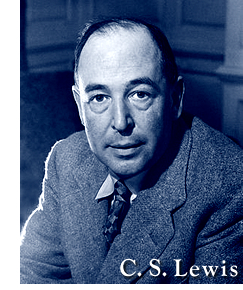
In his 1945 essay “Religion and Science,” which begins with the above conversation, C.S. Lewis exposed one of the most common false assumptions at the heart of the science/faith divide, particularly as it pertains to the nativity of Jesus. The assumption is that this “primitive” nativity was likewise filled with primitive thinkers devoid of any sort of knowledge of biology or natural reasoning. Here and elsewhere, Lewis saw that we hold our scientific advancements as something like demerits for prior generations, perpetuating the mentality that the only accurate thought is current thought, the only mind worth trusting is an ‘enlightened’ one—of which we, of course, are conveniently members.

Yet, Joseph knew enough about the laws of nature to at first conclude the infidelity of his fiancée. He knew that babies and pregnancies did not appear on their own and thus intended to divorce Mary quietly, until something changed his mind. The disciples, too, knew enough about the laws of physics to be completely terrified by the man walking on the water toward their boat. The crowd of mourners knew enough about death to laugh at Jesus when he insisted that the dead girl was only sleeping, and to walk away astonished when she came back to life. There were also the magi, astrologers who followed their scientific calculations to the child; Philip and Andrew who knew that the mathematics of two fish and a starving crowd were not going to divide well; Mary and Martha who knew that their brother’s death was the last word; and Thomas who knew the same after he watched Jesus crucified.

In each of these objections, I thankfully hear my own. So much so, that it would appear fairly clearly that faith is not a turning of one’s back on the fixed laws of nature or physics or mathematics, but rather, a recognition in the very face of these laws which we know and trust that something from outside the law must have reached into the picture. I find each of these scenes both remarkable and reasonable precisely because of the reactions of men and women with a grasp of natural law and the same objections that any of us would have offered had we been present. It would be blind faith indeed if we were receiving a story that wanted us at the onset to fully reject the laws of natural reasoning in replacement of something else. What we receive instead is a story filled with undeniable indications—indications which suggest that something, or Someone, has startlingly stepped into the picture.

Jill Carattini is managing editor of A Slice of Infinity at Ravi Zacharias International Ministries in Atlanta, Georgia.

(1) C.S. Lewis, “Religion and Science,” Undeceptions (London: Geoffrey Bles, 1971), 48.

Alistair Begg – Are You Satisfied?


I will be their God.  Jeremiah 31:33


Christian, here is all you require. To make you happy you want something that shall satisfy you, and is not this enough? If you can pour this promise into your cup, will you not say, with David, “My cup overflows.”1 When this is fulfilled, “I am your God,” are you not possessor of all things? Desire is insatiable as death, but He who fills all in all can fill it. The capacity of our wishes who can measure? But the immeasurable wealth of God can more than overflow it. I ask you if you are not complete when God is yours? Do you want anything but God? Is not His all-sufficiency enough to satisfy you if all else should fail? But you want more than quiet satisfaction; you desirerapturous delight.

Come, soul, here is music fit for heaven in this your portion, for God is the Maker of heaven. Not all the music blown from sweet instruments or drawn from living strings can yield such melody as this sweet promise, “I will be their God.” Here is a deep sea of bliss, a shoreless ocean of delight; come, bathe your spirit in it; swim an age, and you shall find no shore; dive throughout eternity, and you shall find no bottom. “I will be their God.” If this does not make your eyes sparkle, and your heart beat fast with bliss, then assuredly your soul is not in a healthy state.

But you want more than present delights–you crave something concerning which you may exercise hope; and what more can you hope for than the fulfillment of this great promise, “I will be their God”? This is the masterpiece of all the promises; its enjoyment makes a heaven below and will make a heaven above. Dwell in the light of your Lord, and let your soul be always ravished with His love. Get out the marrow and fatness that this portion yields you. Live up to your privileges, and rejoice with unspeakable joy.

1) Psalm 23:5

Today’s Bible Reading

The family reading plan for January 9, 2015
Genesis 9
Matthew 9


Devotional material is taken from “Morning and Evening,” written by C.H. Spurgeon, revised and updated by Alistair Begg.

Charles Spurgeon – Free grace


“Not for your sakes do I this, saith the Lord God, be it known unto you: be ashamed and confounded for your own ways, O house of Israel.” Ezekiel 36:32

Suggested Further Reading: 1 Timothy 1:12-17

My God! I have rebelled against thee, and yet thou hast loved me, unworthy me! How can it be? I cannot lift myself up with pride, I must bow down before thee in speechless gratitude. Remember, my dear brethren, that not only is the mercy which you and I have received undeserved, but it was unasked. It is true you sought for mercy, but not till mercy first sought you. It is true you prayed, but not till free grace made you pray. You would have been still today hardened in heart, without God, and without Christ, had not free grace saved you. Can you be proud then?—proud of mercy which, if I may use the term, has been forced upon you?—proud of grace which has been given you against your will, until your will was changed by sovereign grace? And think again—all the mercy you have you once refused. Christ sups with you; be not proud of his company. Remember, there was a day when he knocked, and you refused—when he came to the door and said, “My head is wet with dew, and my locks with the drops of the night; open to me, my beloved;” and you barred it in his face, and would not let him enter. Be not proud, then of what you have, when you remember that you once rejected him. Does God embrace you in his arms of love? Remember, once you lifted up your hand of rebellion against him. Is your name written in his book? Ah! there was a time when, if it had been in your power, you would have erased the sacred lines that contained your own salvation. Can we, dare we, lift up our wicked heads with pride, when all these things should make us hang our heads down in the deepest humility?

For meditation: For meditation: Whatever we have become or achieved in the Christian life must always be attributed to God’s grace and directed to his glory. The apostle Paul needed no reminder (1 Corinthians 15:10).

Sermon no. 233

9 January (1859)

John MacArthur – Living Out Your Royal Heritage


“In love [God] predestined us to adoption as sons through Jesus Christ to Himself, according to the kind intention of His will” (Eph. 1:4-5).

Because God loves you, He adopted you as His child and grants you all the rights and privileges of family membership.

Moses told Israel that God didn’t choose them because of their great numbers or any inherent goodness on their part, but as an expression of God’s sovereign will and sacrificial love (Deut. 7:7-8). That’s true of you as well if you’re a Christian.

The Greek word translated “love” in Ephesians 1:4 speaks not of emotional or sentimental love but of love that seeks God’s best for others at any cost. It is marked by sacrifice rather than selfishness—giving rather than receiving. It seeks to forgive rather than condemn—to dismiss offenses rather than count them.

Such love is epitomized in God Himself, who loved you so much that He sacrificed His Son on your behalf, who willingly laid down His own life for you (John 3:16; 15:13).

While false gods are worshiped out of fear and ignorance, the true God—your Heavenly Father—has eliminated all fear so that you can confidently enter into His presence (Heb. 10:19; 1 John 4:18). You have received a spirit of adoption and can address Him as “Abba! Father!” (Rom. 8:15), the Aramaic equivalent of Daddy or Papa.

Your Heavenly Father delights in your praise and glories in your obedience. Be a faithful child. Make this day count for Him. Live out your royal heritage. Seek His wisdom in all you do. Go to His Word and follow its counsel. Demonstrate His love to others in practical ways.

Suggestions for Prayer; Thank God for granting you the privilege of being a member of His family.

Thank Him for the many manifestations of His love that you enjoy each day.

Ask Him to lead you to someone to whom you can demonstrate His love in a practical and sacrificial way.

For Further Study; Read 1 Corinthians 13.

List the characteristics of godly love.

How does the quality of your love for others compare to God’s standard? What steps can you take today to bring your love into greater conformity to His?


Joyce Meyer – Power of the Spirit


Not by might, nor by power, but by My Spirit . . . says the Lord of hosts.—Zechariah 4:6b (NKJV)

“I’m a nobody,” my friend Gary said, “and besides, God has so many millions of people to look out for, and in comparison with some of them, my problems seem so petty.”

His words shocked me. Of course, God has millions to care for—but He can care for all of them at the same time.

Gary missed something very important. God wants us to ask for help—and to ask often. Look at it this way: If Satan constantly attacks our minds, how else can we fortify ourselves? We fight back—but our major weapon is to cry out to the Lord asking for His strength to become ours.

Too many times, we think we can do it ourselves. In some instances, that may be true, but if we’re going to win continually over the attacks against our minds, we must realize that willpower alone won’t work. What we need is the humility to turn to the Holy Spirit and ask Him to strengthen us.

I realize that many people do not grasp how the Lord lovingly operates in their lives. Not only does God love us like a father, but He also has caring concern for every part of our lives. Our heavenly Father wants to intervene and help us, but He waits for an invitation to get involved. We issue that invitation and open the door for God’s help through prayer. God’s Word says, You do not have, because you do not ask (James 4:2 NKJV).

Perhaps we can think of it this way. God is watching us all the time, and He is aware of the temptations, struggles, and hardships we face—and we all face them. If we think we can do it by ourselves, God takes no action. But He remains ready to jump in and rescue us as soon as we cry out, asking for the power of the Holy Spirit to operate in our lives.

Our victory begins with right thinking. We have to be convinced that God cares, wants to act, and waits for us to cry out. When we cry out, we understand the words quoted previously, that it’s not by force or power, but by God’s Holy Spirit that victory comes.

For example, take the matter of personal fellowship—daily time spent in prayer and reading the Word. As Christians, we know this is what God wants and what we need if we’re going to mature spiritually. At one time in my life, I tried to maintain spiritual self-discipline. I determined that I would pray and read my Bible every single day. I would do well for two or three days, and then something would interfere—sometimes my family or something at our church, but mostly little things that took my attention away from daily fellowship with my Lord.

One day, in desperation, I cried out, “Without Your help, I’ll never be faithful in doing this.” That’s when the Holy Spirit came to me and gave me the self-discipline I needed. It was almost as if God watched me struggle and allowed me to become frustrated and angry with myself. But as soon as I sincerely asked for help, the Spirit came to my rescue. We are too independent, and we experience a lot of unnecessary frustration simply because we try to do things without God’s help.

With the Spirit’s help, I am learning—yes, still learning—that I can choose what I want to think about. I can choose my thoughts, and I need to do that carefully. Unless I’m in regular fellowship with Him, I won’t know the difference between healthy thoughts and unhealthy ones. And if I don’t know the difference, I provide the opportunity for Satan to sneak into my mind and torment me. Spend plenty of time studying God’s Word, and you will quickly recognize each lie that Satan tries to plant in your mind.

Dear loving God, I want to think thoughts that honor You. I want to have a mind that’s fully centered on You, and I know that can’t happen unless I spend daily time with You. Help me, Holy Spirit; help me to be obedient and eager to be in constant fellowship with You. Amen.

Campus Crusade for Christ; Bill Bright – Seeking God’s Face


“If My people, which are called by My name, shall humble themselves, and pray, and seek My face, and turn from their wicked ways: then will I hear from heaven, and will forgive their sin, and will heal their land” (2 Chronicles 7:14, KJV).

“Humility is perfect quietness of heart,” Andrew Murray once wrote. “It is to expect nothing, to wonder at nothing that is done to me, to feel nothing done against me. It is to be at rest when nobody praises me, and when I am blamed or despised. It is to have a blessed home in the Lord, where I can go in and shut the door, and kneel to my Father in secret, and am at peace as in a deep sea of calmness, when all around and above is trouble.”

For years, I have claimed God’s promise recorded in 2 Chronicles 7:14. My emphasis has been on the humbling of ourselves and turning from sin. But recently a minister friend made a passing reference to the phrase, “seeking God’s face,” and it triggered in my mind some new thoughts about this great promise from God.

In a sense, the humbling of ourselves and turning from sin are the by-products, or end results, of coming to know God as He is, by meditating upon His character and attributes. To “seek God’s face” is to meditate upon His sovereignty, His holiness, His power, His wisdom, His love – getting to know Him as He is.

The disciples of the first-century church were mightily used of God because of their exalted view of Him. There was nothing too great for Him. God could do anything. The church today can once again experience that same dynamic that characterized those first believers if we, too, become totally absorbed in the character and attributes of our great God.

It is then that we will truly begin to believe God for supernatural, impossible things and make a great impact for good on the world.

Bible Reading: Psalm 145:5-12

Today’s Action Point: I will deliberately choose to seek God’s face today by meditating on His attributes, found in Psalm 145, and by looking for Him in every circumstance of my life this day.


Presidential Prayer Team; P.G. – Running on Empty


The time of Ruth’s story, the period of the judges, was marked by idolatry, disobedience and wars. It centers on two destitute widows with choices to make. Even though Ruth was in her home country of Moab, because of her love and duty for Naomi, she determined to go with her to her country – Judah – and her hometown – Bethlehem.

For where you go I will go.

Ruth 1:16

Even though the totality of today’s verse is often used in wedding ceremonies, this classic commitment is made by Ruth to her mother-in-law. Not knowing where the path with Naomi would lead her, Naomi’s place and her people became Ruth’s, and the generosity and ultimate love of one of Naomi’s relatives turned their lives around. Ruth also said, “Your God will be my God.” This was the most important part of her commitment to Naomi. Ruth abandoned the idol worship prevalent in Moab to follow the one true God.

Today, many in America who are marked by idolatry, disobedience and wars are running on empty spiritually. You see it in the news; you hear of it from the halls of government. As you make your own commitments this New Year, remember to intercede for the men and women who serve America and their families to find and follow God alone.

Recommended Reading: Ruth 1:8-18

Greg Laurie – Why We Need Churches


And this I pray, that your love may abound still more and more in knowledge and all discernment, that you may approve the things that are excellent, that you may be sincere and without offense till the day of Christ, being filled with the fruits of righteousness which are by Jesus Christ, to the glory and praise of God. —Philippians 1:9–11

The Bible tells us that one of the signs of the last days, among other things, will be false teaching. And the only way we are going to be able to detect false teaching is by knowing what the Word of God teaches.

Paul prayed for the Philippian Christians that their knowledge of God’s Word would grow. He said, “This I pray, that your love may abound still more and more in knowledge and all discernment, that you may approve the things that are excellent” (Philippians 1:9–10). We need an intelligent, discerning love that does the right thing. The word that Paul used here for approved could be translated “to examine, prove, and analyze.” This is an area in which we all need to grow.

I think there are a lot of Christians who haven’t really formed a proper theology, and maybe one of the reasons is because they jump from church to church. With the various ideas they expose themselves to, they can get a little confused, and they may not really know what they believe about a given subject.

I don’t think that church hopping is good for spiritual growth. But I do think that every Christian needs a church. I think they need a theology. I think they need a pastor. I think they need to be consistent. And I think they need accountability in a church.

Every believer needs to find a church and commit to it. I am not saying that we can’t ever visit a church if we go somewhere else. What I am saying is to find a church, stay there, be faithful, pray for the pastor, listen to what he says, and support that ministry. Be accountable, and develop and use your spiritual gifts in that place.

Max Lucado – God Can Use You


If God chose only righteous people to change the world, you could count them all on one finger—Jesus! Instead he included others in his plan—sinners, the ungodly, the imperfect. God used and uses people to change the world. People! Crooks, creeps, lovers, and liars—he uses them all!

If you ever wonder how God can use you to make a difference in your world, just look at those he has already used, and take heart. No matter who you are or what you’ve done, God can use you. Because you’re imperfect, you can speak of making mistakes. Because you’re a sinner, you can speak of forgiveness. God restores the broken and the brittle, then parades them before the world as trophies of his love and strength.  And when the world sees the ungodly turn godly, they know God must love them too.

God can use you, my friend!

From Max on Life

Charles Stanley – Self-Reliance: An Unwise Habit

Read | Psalm 55:22

Imagine walking through a crowded airport. You cannot move without bumping into someone, you’re late for your flight, and the wheels just broke on your over-packed suitcase. With no other option, you are forced to carry the luggage in your arms and slowly maneuver through the congested lobby toward the ticketing area.

Almost immediately, a young man approaches and offers to carry your bags, but you refuse, saying, “No, thanks. I can do it myself.” Realizing that the ticket counter is two levels up, you make your way to the stairs. Someone asks, “Wouldn’t it be easier to take the elevator? It’s right over there.” But you reply, “No, I can do it myself.”

As you finally make it to the top of the staircase, your arms feel numb from the pressure of your bags. Your legs are starting to buckle from the weight. Your back aches from supporting the heavy load. Then you spot a collection of unused baggage carts but ignore them, thinking, No, I can do it myself.

This is a silly story, isn’t it? Who would prefer to carry such a heavy burden, ignoring every opportunity to set it down? Yet many believers are doing just that.

Our heavenly Father has called us to lay our cares at His feet. But when we fail to come to Him in prayer, we are just as foolish as the person staggering through the airport, mumbling, “I can do it myself.”

Are you trying to carry a burden that is greater than you can bear? Don’t ignore God’s offer to help. The truth is, we really can’t “do it ourselves”—and He never wanted us to try.


Our Daily Bread — Extraordinary Showers

READ: Ezekiel 34:25-31

There shall be showers of blessing. —Ezekiel 34:26

What do fish, tadpoles, and spiders have in common? They have all fallen from the sky like rain in various parts of the world. Fish fell on the Australian town of Lajamanu. Tadpoles pelted areas of central Japan on multiple occasions. Spiders showered down on the San Bernardo Mountains in Argentina. Although scientists suspect that the wind plays a part in these intriguing showers, no one can fully explain them.

The prophet Ezekiel described a far more extraordinary downpour—a shower of blessing (Ezek. 34:26). Ezekiel spoke of a time when God would send blessings like rain to refresh His people. The Israelites would be safe from enemy nations. They would have enough food, be liberated from slavery, and be freed from shame (vv.27-29). These gifts would revive Israel’s relationship with God. The people would know that God was with them, and that “they, the house of Israel, [were His] people” (v.30).

God blesses His modern-day followers too (James 1:17). Sometimes blessings abound like rain; sometimes they trickle in one by one. Whether many or few, the good things we receive come with a message from God: I see your needs. You are mine, and I will care for you. —Jennifer Benson Schuldt

“There shall be showers of blessing”—
This is the promise of love;
There shall be seasons refreshing,
Sent from the Savior above. —Whittle

Daily blessings are daily reminders of God.

Bible in a year: Genesis 20-22; Matthew 6:19-34

Insight

In today’s passage, the prophet Ezekiel offers a message of future hope and peace to a nation that had suffered defeat and was living in exile far from their homeland. Ezekiel 34:20-24 speaks of the shepherd who God will raise up to lead His people in the wonderful age described in verses 25-31. Jesus calls Himself the Good Shepherd (John 10:11-18), and the joy and peace described in Ezekiel 34 are ours only in Him.


Ravi Zacharias Ministry – The North Star


I recall with clarity a night when my wife and I were on vacation in California. We had spent the day hiking in the mountains and in the afternoon had descended to explore the mysterious and ancient landscape of Mono Lake, one of the oldest lakes in North America. Pinned to the information board by the parking lot was a sign advertising a talk by a park ranger that very evening: “Stars over Mono Lake.” And so it was. That evening we found ourselves lying on the ancient sands, looking up at a night sky in which a million points of light glowed with an intensity I’d never seen before. The air was cold and clear, the hauntingly beautiful desert silence broken only by the occasional howl of a lonely coyote, cry of an insomniac gull, or call for help of a distant and woefully lost tourist.

But it was the sky that really struck me. I’d never seen it so beautiful before. In the city where we live, light pollution drowns out the splendor of the stars. Lights do punctuate the Toronto night, but they tend to be of the red-amber-green-red variety. What I was seeing, lying on those freezing sands at Mono Lake, was the spectacular sight of the night sky in all its glory. It was, for me, God’s handiwork writ large as a myriad of stars lay twinkling above me. I was awestruck and listened with fascination at the park ranger’s talk on the stars above, in particular the various constellations that slowly wheeled in front of us: the Big Dipper, Cassiopeia, Orion, Aquarius.

And as I looked up, I was reminded of a biblical passage about stars, one that is meant to be descriptive of Christians. The apostle Paul is speaking to the Philippian believers about the kind of community their association with Jesus compels them to be: “Therefore, my dear friends… do everything without complaining or arguing, so that you may become blameless and pure, children of God without fault in a crooked and depraved generation, in which you shine like stars in the universe as you hold out the word of life.”(1)

When I heard that passage again a few months later, my mind was immediately cast back to that night at Mono Lake and to the journey of the constellations and patterns that generations of people have seen before me. Understanding these constellations brought the night sky alive and told stories whose characters are bedecked in the very stars. And this got me thinking about the metaphor Paul uses. What does it mean to shine like stars in the Christian story? What does it mean for a person to burn brightly against the inky blackness of night? And particularly, as Christians around the world remember the account of the magi—the astrologers who followed a star that eventually stopped over the place where the young Jesus lay—is the same story being told in expectancy, hope, and light today?

Well, there are, of course, many different types of stars, but the hope I take from that starry evening centers around a few vivid memories. To begin with, constellations are made up of stars which, on their own, would be but one small, glowing dot in the darkness, but together form a bigger picture; together, they tell a more powerful story. Nobody has heard of the star “Merak,” for instance, but everyone has heard of the constellation it is a part of: the “Big Dipper” or the “Plough,” one of the most famous formations in the sky. Together, stars in constellations tell a story greater than their individual parts, and how true this is of people as well. It’s best not to judge a religion by the testimony of one bold but fleeting light. Rather, the constellation of millions through the centuries, the example of believers young and old, across tribes and nations, the witness of those who first beheld the events of Jesus of Nazareth—these are the stars that light the universe with something to ponder.

Moreover, constellations don’t stand still. They move. In particular, they rotate, slowly wheeling around a singular fixed point in the night sky—the “North” or “Pole” Star. Significantly, Christians together tell the story of hope in darkness when their axis is God alone—not an issue or a common interest—but the person of Christ who was born, died, and raised. The expectant Christian story continues to be told, as it was to the magi long ago, when the Christ child is the fixed point, our north star, our pole star, when it is he who determines how we move and turn.

Many years ago Dietrich Bonhoeffer wrote, “If it is I who determine where God is to be found, then I shall always find a God who corresponds to me in some way, who is obliging, who is connected with my own nature. But if God determines where he is to be found, then it will be in a place which is not immediately pleasing to my nature and which is not at all congenial to me. This place is the Cross of Christ. And whoever would find him must go to the foot of the Cross, as the Sermon on the Mount commands.”(2)

To sailors and navigators, before the invention of GPS, the North Star was crucial; by orientating oneself to it, you could find your way home through the wildest seas. Likewise, it is Christ’s story that makes the collective light of Christianity shine brightly amidst the darkness. It is Jesus himself, around which everything turns, who is heaven’s bright sun, whose radiance glows brighter than the brightest star, so much so that the new heavens and the new earth need neither sun nor moon. The splendor of this sight is worth beholding indeed.

Andy Bannister is a member of the speaking team at Ravi Zacharias International Ministries in Toronto, Canada.

(1) Philippians 2:12-16.

(2) Eric Metaxas, Bonhoeffer: Pastor, Martyr, Prophet, Spy (Nashville: Thomas Nelson, 2010), 137.

Alistair Begg – Polluted by Holy Motives?

…guilt from the holy things.  Exodus 28:38

 What a veil is lifted up by these words, and what a disclosure is made! It will be humbling and profitable for us to pause awhile and see this sad sight. The iniquities of our public worship, its hypocrisy, formality, lukewarmness, irreverence, wandering of heart, and forgetfulness of God–what a full measure have we there! Our work for the Lord, its emulation, selfishness, carelessness, slackness, unbelief–what a mass of defilement is there! Our private devotions, their laxity, coldness, neglect, sleepiness, and vanity–what a mountain of dead earth is there! If we looked more carefully, we should find this iniquity to be far greater than appears at first sight.

Dr. Payson, writing to his brother, says, “My parish, as well as my heart, very much resembles the garden of the sluggard; and what is worse, I find that very many of my desires for the improvement of both, proceed either from pride or vanity or indolence. I look at the weeds, which overspread my garden, and breathe out an earnest wish that they were eradicated. But why? What prompts the wish? So that I may walk out and say to myself, ‘In what fine order is my garden kept!’ This is pride. Or, so that my neighbors may look over the wall and say, ‘How finely your garden flourishes!’ This isvanity. Or I may wish for the destruction of the weeds, because I am weary of pulling them up. This is indolence.”

So even our desires after holiness may be polluted by ill motives. Under the greenest sods worms hide themselves; we need not look long to discover them. How cheering is the thought that when the High Priest bore the iniquity of the holy things he wore upon his brow the words, “HOLINESS TO THE LORD,” and even so while Jesus bears our sin, He presents before His Father’s face not our unholiness, but His own holiness. O for grace to view our great High Priest by the eye of faith!

Today’s Bible Reading

The family reading plan for January 8, 2015
Genesis 8
Matthew 8

Devotional material is taken from “Morning and Evening,” written by C.H. Spurgeon, revised and updated by Alistair Begg.