Tag Archives: religion

Denison Forum – Professor may have solved the Amelia Earhart mystery

Aviator Amelia Earhart and her navigator, Fred Noonan, disappeared on July 2, 1937 as they attempted to fly around the world. Their fate has remained a mystery for more than eighty years.

But an anthropology professor now says that human bones found on the remote Pacific island of Nikumaroro are likely hers. His research indicates that she was more similar to the skeletal remains than 99 percent of the individuals in a sample of 2,776 people.

Earhart was a brilliant and celebrated pilot. She was the first woman to fly across the Atlantic Ocean and the first person to fly over both the Atlantic and the Pacific. But her skills and resolve were apparently insufficient to save her from a lonely death.

Meanwhile, another nor’easter is expected to bring power outages to the northeastern US. A person with the mumps attended a national cheerleading competition in Texas last month, potentially exposing thousands of people from thirty-nine states. And a seventeen-year-old girl was killed by gunfire at an Alabama high school yesterday.

Continue reading Denison Forum – Professor may have solved the Amelia Earhart mystery

Charles Stanley – The Blame Game


Genesis 3:8-13

As children, we all played “the blame game.” If caught doing something wrong, we accused a sibling or friend in hopes of escaping discipline. This tactic seldom worked, because the one we accused was quick to give a different account. No one wins by shifting blame and refusing to take responsibility. Sadly, though, many people continue to play the blame game, even as adults.

Shifting responsibility isn’t new. It began in the Garden of Eden after Adam and Eve sinned. When God held them accountable for rebelling against Him, Adam claimed he ate the fruit because Eve gave it to him. She, in turn, accused the serpent, who had deceived her. Yet they both incriminated themselves with these words: “I ate” (Gen. 3:12-13). Blaming someone else didn’t alter the facts—they were each responsible for their choice and course of action.

So, if we know the futility of the blame game, why do we still play it? Do we think we can avoid the undesirable consequences? Is it an attempt to cause others to regard us more favorably? Sometimes it’s not even other people we blame but circumstances—the way we were raised or the way we were treated. Regardless of the cause, sin is never justifiable, and God always holds us accountable.

While it’s difficult to swallow our pride and admit that we are wrong, it’s always best to take full responsibility for our attitudes, responses, and behavior. That is the only way to walk humbly with the Lord, which pleases and honors Him.

Bible in One Year: Joshua 7-9


http://www.intouch.org/

Our Daily Bread — Goodbye for Now


Read: 1 Thessalonians 4:13–18 | Bible in a Year: Deuteronomy 3–4; Mark 10:32–52You do not grieve like the rest of mankind, who have no hope. 1 Thessalonians 4:13

My granddaughter Allyssa and I have a regular routine we go through when we say goodbye. We wrap our arms around each other and begin to loudly wail with dramatic sobs for about twenty seconds. Then we step back and casually say, “See ya,” and turn away. Despite our silly practice, we always expect that we will see each other again—soon.

But sometimes the pain of separation from those we care about can be difficult. When the apostle Paul said farewell to the elders from Ephesus, “They all wept as they embraced him . . . . What grieved them most was [Paul’s] statement that they would never see his face again” (Acts 20:37–38).

Jesus offers eternal hope.

The deepest sorrow, however, comes when we are parted by death and say goodbye for the last time in this life. That separation seems unthinkable. We mourn. We weep. How can we face the heartbreak of never again embracing the ones we have loved?

Still . . . we do not grieve like those who have no hope. Paul writes of a future reunion for those who “believe that Jesus died and rose again” (1 Thessalonians 4:13–18). He declares: “The Lord himself will come down from heaven, with a loud command, with the voice of the archangel,” and those who have died, along with those who are still alive, will be united with our Lord. What a reunion!

And—best of all—we will be forever with Jesus. That’s an eternal hope.

Thank You, Lord, for the assurance that this world is not all we have but that a blessed eternity awaits all who trust in You.

At death, God’s people don’t say “goodbye,” but “we’ll see you later.”

By Cindy Hess Kasper

INSIGHT

The Bible speaks of hope as a robust confidence in the purposes and power of God. First Peter 1:3 says, “Praise be to the God and Father of our Lord Jesus Christ! In his great mercy he has given us new birth into a living hope through the resurrection of Jesus Christ from the dead.” Our hope is rooted in Christ’s conquering of death on our behalf. Romans 15:4 adds, “For everything that was written in the past was written to teach us, so that through the endurance taught in the Scriptures and the encouragement they provide we might have hope.”

The encouragement of the Scriptures gives us hope as we see how God faithfully deals with His children. He is “the God of hope” (v. 13), who encourages us to trust Him with whatever we might face. And He is our hope as we look forward to our future reunion with loved ones who have gone before us.

For more on biblical hope, get the free download of the Discovery Series booklet Hope: Choosing Faith Instead of Fear at discoveryseries.org/q0733.

Bill Crowder


http://www.odb.org

Moody Global Ministries – Today in the Word – A GOSPEL HOPE


Hosea 14:1–9

For over two years from 2008 to 2010, the University of Connecticut’s women’s basketball team never lost a game. Their winning streak included two national titles and 90 consecutive victories, which passed the previous NCAA Division I basketball record of 88 victories, held by John Wooden’s UCLA Bruins in the 1970s.

Fans expect the UConn women’s basketball team to win. And as readers of Scripture, we reasonably expect that God will win. But in the book of Hosea, Israel is depicted as an unfaithful bride to her husband. And we never have the sense in the Minor Prophets that sin doesn’t matter to God. The Lord does not tolerate an open marriage, and His people will face consequences because of their sin. What would a victory for the Lord look like?

“Where, O death, are your plagues? Where, O grave, is your destruction?” These rhetorical questions, posed by God in Hosea 13:14, indicate His intent to judge Israel’s sin. It’s as if God calls on death itself to punish His people for their sins. He is a lion, a leopard, a bear robbed of her cubs (13:7–8). What hope can Israel have for salvation and rescue?

Yet even though Israel will suffer exile for her sin, the book doesn’t end on a minor chord of doom. Because Israel cannot return to God, as she has been called to do, God chooses to turn to her. He will heal her stubbornness and waywardness. This promise of hope doesn’t end with the story of Israel; it looks forward to the work of Jesus Christ, whose death defeats the penalty and the power of sin and whose indwelling Spirit writes God’s laws on our heart, giving us the capacity to obey. God’s victory is the triumph of His love for His people.

APPLY THE WORD

In 1 Corinthians 15, Paul quotes our key verse from Hosea. One scholar says, “Paul turns a text about judgment into one declaring salvation.” Death’s victory and sting are destroyed by the death and resurrection of Jesus! Hosea anticipates God’s love expressed at the cross—where His righteous judgment, mercy, and love defeats our sin.


http://www.todayintheword.org

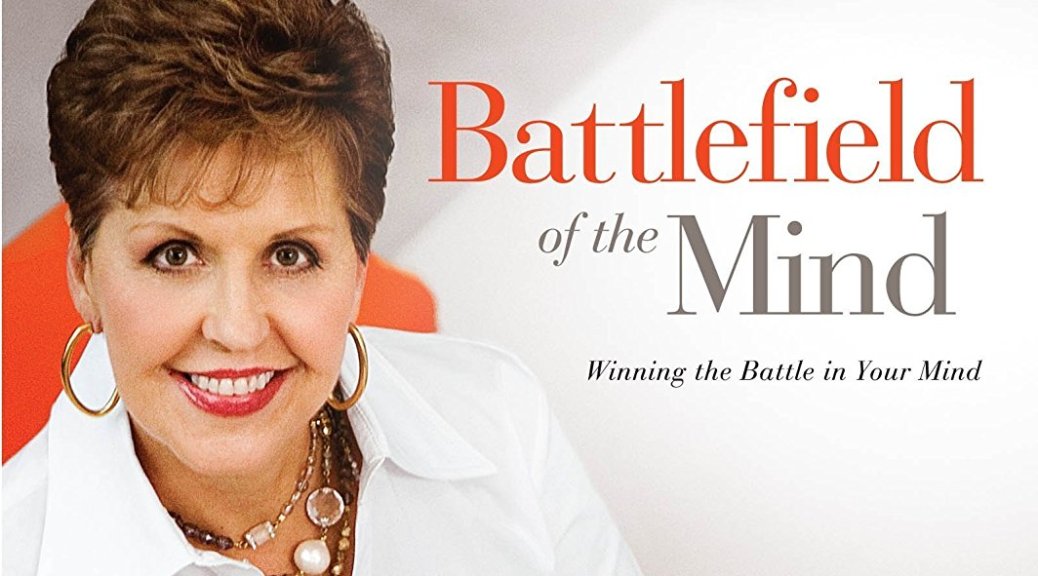
Joyce Meyer – When Progress Is Slow

Moreover [let us also be full of joy now!] let us exult and triumph in our troubles and rejoice in our sufferings, knowing that pressure and affliction and hardship produce patient and unswerving endurance. — Romans 5:3 (AMPC)

It’s important to renew our minds, but it’s also important to realize that this process of reprogramming or renewing our minds will take place little by little. Don’t be discouraged if progress seems slow, or when you have setbacks or bad days. Just get back up, dust yourself off and start again.

When a baby is learning to walk, he falls many, many times before he develops the ability to walk without falling; however, the baby is persistent. He may cry for a while after he falls down, but he always gets right back up and tries again.

Learning to change our thinking works the same way. We struggle and fall down, but God is always there to pick us up. Rather than get frustrated, remember to do what the Bible says and “triumph” in your hardship, because the very fact that you’re struggling means you’re fighting the good fight of faith.

There will be days when we don’t do everything right—days when our thinking is negative. But never stop trying. God is gradually bringing us around to His way of thinking, as long as we don’t give up!


http://www.joycemeyer.org

Campus Crusade for Christ; Bill Bright – You Can Bear It

“There hath no temptation taken you but such as is common to man: but God is faithful, who will not suffer you to be tempted above that ye are able: but will with the temptation also make a way to escape, that ye may be able to bear it” (1 Corinthians 10:13, KJV).

I find great comfort and encouragement in this promise from God, one of my favorite Scriptures. Believing in this promise has saved me from falling into sin more times than I could ever begin to count.

As Christians, we are on the offensive. We do not have to cringe, trembling in our boots, wondering when Satan is going to attack again and what form it will take. We are the ones on the move. We are to be the aggressors, for we have God’s promise that the gates of hell shall not prevail against us (Matthew 16:18).

There is no stronghold of Satan that cannot be recaptured for our Lord, who promises to fight for us. God’s Word reminds us that all authority in heaven and on earth is given to the Lord Jesus, and He promises always to be with us, never to leave us.

Satan would have you believe that there is no hope for you. You are discouraged, you have financial problems physical problems, sorrow from losing loved ones. The whole world seems to be caving in on you, and Satan says, “God doesn’t love or care for you. He can’t help you. You’re on your own. You might as well give up.”

When that temptation comes, we cry out to God in believing prayer and we resist the enemy who is the author of depression. He is the author of negative thinking. He is the author of criticism, lies and all things that are contrary to the will of God.

If we are going to take a proper offense, we must live in the power of the Holy Spirit. That is the reason our Savior – after commanding the disciples to go and preach the gospel to all men everywhere – also commanded them to wait in Jerusalem until they were endued with power from on high. “Ye shall receive power, after that the Holy Ghost is come upon you: and ye shall be witnesses unto me both in Jerusalem, and in all Judea, and in Samaria, and unto the uttermost part of the earth” (Act 1:8, KJV).

The key to escaping temptation and resisting sin is faith in the faithfulness of God to keep His promise that you will not be tempted more than you are able to bear.

Bible Reading:I Corinthians 10:9-12

TODAY’S ACTION POINT:  I will not go into the spiritual battle unarmed, but will count on God’s Holy Spirit to make a way of escape when temptation comes. I will tell others how they too can be victorious over temptation.


http://www.cru.org

Max Lucado – On Tiptoe Watching

Listen to Today’s Devotion

It’s funny how Scripture remembers different people. Abraham is remembered as trusting; John as loving; Paul’s place is carved out by his writing. But Simeon was the man… looking!

Eight days after the birth of Jesus, Joseph and Mary brought Jesus to the temple. Luke 2:27 contains this curious statement: “Prompted by the Spirit, he (Simeon) came to the Temple.” The previous verse 26 tells us “The Holy Spirit had revealed to him that he would not die until he had seen him—God’s anointed King.” Simeon was a man on tiptoe, wide-eyed and waiting for the one who would come to save Israel. Haven’t we, like Simeon, been told of the coming Christ? Aren’t we, like Simeon, prompted by the Spirit? Are we not longing to see the same face? Simeon reminds us to wait patiently, vigilant, always ready!

From When Christ Comes

For more inspirational messages please visit Max Lucado.

Home

Denison Forum – Chinese space station will soon crash into Earth

The sky is falling, literally.

China has lost control of Tiangong-1, its 8.5-ton space station. It will collide with our planet’s atmosphere sometime between March 24 and April 19. It is likely to hit somewhere in the northern US.

However, the odds of being struck by debris are one million times smaller than the odds of winning the Powerball jackpot.

There’s plenty of other news to worry about, from the Nor’easter bearing down on the East Coast today, to Russia’s expanding role in the Middle East, to “superbugs” that are resistant to all known antibiotics. But there has always been plenty to worry about.

And every obstacle is an opportunity for people of faith.

A “teachable moment” for all time

Exodus 14 is a chapter that changed the world.

Before the cataclysmic events of this narrative, the Jews were enslaved to the mightiest empire the world had ever known. After this chapter, they were an empowered people protected by the mighty God of the universe. Their lives and destiny would never be the same.

Continue reading Denison Forum – Chinese space station will soon crash into Earth

Charles Stanley – Intimacy With God


Isaiah 6:1-4

The length of a relationship is not always an accurate gauge of intimacy. You can spend a lifetime with someone yet never really know him or her. What’s required for an intimate relationship is mutual willingness to open up and reveal ourselves.

This same truth applies to our relationship with God. For His part, the Lord already knows everything about us: our thoughts, desires, ways, values, and priorities. He has also provided everything necessary for us to truly know Him—through His Son. But are we responding to His self-revelation, or have we settled for superficial knowledge of Him?

The prophet Isaiah had his understanding of the Lord dramatically deepened when God suddenly revealed Himself “sitting on a throne, lofty and exalted, with the train of His robe filling the temple” (Isa. 6:1). Isaiah’s mind was awestruck with the knowledge that He was in the presence of the majestic King. His ears resounded with cries of the seraphim calling out, “Holy, Holy, Holy is the Lord of hosts” (Isa. 6:3). Nothing was ever the same for Isaiah after that. He was willing to do anything God said to do—no matter where he had to go, no matter what the task involved. (See Isa. 6:8.)

Although it’s unlikely that we will ever have such a vivid vision of the Lord, we hold in our hands something no less authentic—the Word of God. If we’ll submerge ourselves in His Word, spending time focused solely on Him and absorbing the truths He reveals about Himself, our intimacy with Him will increase. The result will be a mind and spirit attuned to God’s voice, sensitivity to His continual presence, and unrestrained obedience.

Bible in One Year: Joshua 4-6


http://www.intouch.org/

Our Daily Bread — Like a Little Child

Read: Mark 10:13–16 | Bible in a Year: Deuteronomy 1–2; Mark 10:1–31

Let the little children come to me, and do not hinder them. Mark 10:14

The little girl moved joyfully and gracefully to the music of praise. She was the only one in the aisle but that didn’t keep her from spinning and waving her arms and lifting her feet to the music. Her mother, a smile on her lips, didn’t try to stop her.

My heart lifted as I watched, and I longed to join her—but didn’t. I’d long ago lost the unselfconscious expression of joy and wonder of my childhood. Even though we are meant to grow and mature and put childish ways behind us, we were never meant to lose the joy and wonder, especially in our relationship with God.

How can you be more like a child in the presence of Jesus?

When Jesus lived on Earth, He welcomed little children to Him and often referred to them in His teaching (Matthew 11:25; 18:3; 21:16). On one occasion, He rebuked His disciples for attempting to keep parents from bringing their children to Him for a blessing, saying, “Let the little children come to me, and do not hinder them, for the kingdom of God belongs to such as these” (Mark 10:14). Jesus was referring to the childlike characteristics that ready us to receive Christ—joy and wonder, but also simplicity, dependence, trust, and humility.

Childlike wonder and joy (and more) open our hearts to be more receptive to Him. He is waiting for us to run into His arms.


Abba (Daddy), Father, help us to be more childlike in our relationship with You. We long to be filled with wonder at all You have done.

Faith shines brightest in a childlike heart.

By Alyson Kieda

INSIGHT

The wonder of what we see in Mark 10:13–16 becomes more stunning when we understand the connection with what follows in Mark’s gospel. One phrase that links the two sections is “the kingdom of God”—the rule of God in our hearts (see Mark 10:14–15). God’s kingdom (which includes eternal life) is the possession of those who are childlike in their dependence on God. They are the ones who are welcomed by Jesus (v. 16).

On the other hand, we see a full-grown man running unhindered to Jesus, but he ends up leaving Him “because he had great wealth” (v. 22). Three times the phrase “the kingdom of God” is used in verses 17–27. “How hard it is for the rich to enter the kingdom of God!” (v. 23); “Children, how hard it is to enter the kingdom of God! It is easier for a camel to go through the eye of a needle than for someone who is rich to enter the kingdom of God” (vv. 24–25, emphasis added). Simple, childlike trust in Jesus is better than “adultlike” independence and trust in lesser things.

How can you be more like a child in the presence of Jesus?


http://www.odb.org

Ravi Zacharias Ministry – Slow Walk to Salvation

The Semana Santa, or Holy Week in Spain, is a week-long series of parades and festivities that culminate on Easter Sunday. Particularly notable in Sevilla, Spain (though held throughout the country and in many other parts of the world) the entire city converges. In fact, Semana Santa week is so vibrant and extraordinary in Sevilla that tourists from around the world often come to partake in these festival days.

One of the notable aspects of these celebrations is the parade floats of Jesus and his mother, Mary. Depicting the events of the last days of Jesus’s life, the statues are the main display of every float that traverses the parade route through the city. The statues themselves are from the seventeenth century and are housed in area churches. I was able to see two of these statues in the historic Church of the Savior on a recent visit to Spain.

Perhaps more notable than the floats themselves is the way in which they are carried through the city streets. Every afternoon during the week, these floats are paraded through the streets for hours and hours. The pace is slow and deliberate, sometimes barely moving inches at a time, even as they are gently moving to the sonorous and doleful tones of the accompanying music. The point of the slow pace, which for the uninitiated seems almost ridiculous, is out of reverence for this historic tradition and the events represented in the life of Jesus.

Continue reading Ravi Zacharias Ministry – Slow Walk to Salvation

Joyce Meyer – Don’t Let Yourself Snap


Truly my soul finds rest in God; my salvation comes from him. Truly he is my rock and my salvation; he is my fortress, I will never be shaken. — Psalm 62:1-2 (NIV)

Has this ever happened to you: You break a rubber band while trying to stretch it around something. You can’t find another one, so you try to fix the broken one by tying the ends together.

Sometimes in our daily lives, we stretch ourselves beyond our capacity, and we snap like the rubber band. We think we’ve fixed the problem by simply tying the ends back together. But soon we fall into the same behavior that caused us to break down in the first place.

Over time with repeated exposure to stress, our lives begin to resemble that worn-out rubber band. It can completely deplete us.

Ignoring God’s laws and His ordained limits for our lives will ultimately cause burnout. You simply can’t continue to overwork your mind, emotions and body without eventually paying the price. But that’s not how God wants you to live.

Adjust your perspective to match God’s. Seek His peace and His pace for your life. Respect your body. Treat good health as a priceless gift. Don’t waste the energy God has given you on stress. Save it for living and enjoying life!


http://www.joycemeyer.org

Campus Crusade for Christ; Bill Bright – How Dearly God Loves Us


“…we are able to hold our heads high no matter what happens and know that all is well, for we know how dearly God loves us, and we feel this warm love everywhere within us because God has given us the Holy Spirit to fill our hearts with His love” (Romans 5:5).

For years I had often spoken on the subject of love – the greatest privilege and power known to man. But, as in the case of most sermons on love, something was missing.

Then many years ago, in an early hour of the morning, I was awakened from a deep sleep. I knew that God had something to say to me. I felt impressed to get up, open my Bible and kneel to read and pray.

What I discovered during the next two hours has since enriched my life and the lives of tens of thousands of others. I learned how to love. With this discovery, God gave me the command to share this wonderful truth with Christians around the world.

There are five things every person needs to know about love.

First, God loves us with an unconditional love. The love that God has for us is without measure and will continue forever.

Second, we are commanded to love. “‘Love the Lord your God with all your heart, soul, and mind.’ This is the first and greatest commandment,” (Matthew 22:37,38). We are commanded to love our neighbors as ourselves and we are even to love our enemies.

Third, we cannot love in our own strength.

Fourth, we can love with God’s love. It was God’s love that brought us to Christ.

Fifth, we love by faith. Everything about the Christian life is based on faith. We love by faith just as we received Christ by faith, just as we are filled with the Holy Spirit by faith and just as we walk by faith.

In 1 John 5:14,15, we read: “And this is the confidence that we have in Him, that, if we ask anything according to His will, He heareth us: And if we know that He hear us, whatsoever we ask, we know that we have the petitions that we desired of Him” (KJV).

Bible Reading:Romans 8:14-17

TODAY’S ACTION POINT:  I will make a list of everyone I do not like. Then, on the basis of God’s command to love all men, I will claim the promise of 1 John 5:14,15 and begin to love others by faith as a way of life.


http://www.cru.org

Max Lucado – Jesus Prepares the Perfect Place


Listen to Today’s Devotion

Several years ago I spent a week speaking at a church in California—and had incredible hosts. All my meals were at a different house. But after a few meals I noticed all we ate was salad! No meat, no dessert—just salad. At first I thought it was a ‘California thing.’ But when I finally asked, the answer was, “We were told you eat nothing but salads!” Well, I quickly corrected them! The hosts meant well, but their information was bad! I’m happy to say we corrected the problem and enjoyed some good meat!

I’m even happier to say Jesus won’t make the same mistake with you! He is preparing the perfect place, the perfect meal! He says, “I have prepared a place for you!” (John 14:2). Trust the promises of Christ! He knows exactly what you need.

From When Christ Comes

For more inspirational messages please visit Max Lucado.


Home


Denison Forum – A description of grace your soul needs today

We live in a culture that separates everyone into two categories: winners and losers.

There were twenty-four winners in Sunday night’s Academy Awards. Conversely, there were ninety-eight losers.

But at least they received nominations. According to the Bureau of Labor Statistics, there are 249,607 actors and other professionals in the motion picture and video production industry; almost all were excluded from the Oscars.

And yet, each of them is a winner in a way. They have a job in the film industry, unlike the multitudes who would like to work in the movies but don’t.

Meanwhile, odds are being calculated for college basketball’s “March Madness” tournament. As baseball’s spring training continues, analysts are debating who is likely to win this year’s World Series.

The underlying message is clear: if you win, you’re a winner; if you lose, you’re a loser.

“The smell of rain is grace”

Continue reading Denison Forum – A description of grace your soul needs today

Charles Stanley – Developing Discernment


Hebrews 5:12-14

We live in a fast-paced culture that demands instant results. For many people, waiting has become a lost art. But God’s way of maturing us in our faith is different from how the world works. The character qualities He values take time to develop.

Discernment is one such trait. Far from being a ready-made skill, it is cultivated by saturating the heart and mind with Scripture. The transcendent Lord of the universe wants to share His thinking with us through His Word. What could be more important or valuable in life than having the capacity to know the mind of God?

Our lives are filled with situations that require discernment. Sometimes we can be so busy trying to determine God’s will and direction for our next step that we fail to hear His voice. He is calling us to come and spend some quiet, unhurried time absorbing the truth of His Word and listening to Him.

After listening to the Lord, we can begin applying what we have learned. Only as we put His Word into practice in our lives will we have our “senses trained to discern good and evil” (Heb. 5:14). The Scriptures open our eyes to see all of our experiences from God’s perspective so that we are able to make wise choices.

Our challenge for today and every day is to make it a priority to spend time with the Lord in His Word. We may have to reorganize our schedule or wake up earlier. But it’s well worth the effort—discernment and wisdom await us if we put into practice the truths we absorb daily.

Bible in One Year: Joshua 1-3


http://www.intouch.org/

Our Daily Bread — Grass or Grace

Read: Genesis 13:1–18 | Bible in a Year: Numbers 34–36; Mark 9:30–50Lot chose for himself the whole plain of the Jordan. Genesis 13:11

My friend Archie came home from vacation to find his neighbor had erected a wooden fence five feet inside his property line. Several weeks went by during which Archie tried to work with his neighbor to remove the fence. He offered to help and to split the cost of the work, but to no avail. Archie could have appealed to civil authorities, but he chose to forgo that right in this instance and allow the fence to stand—to show his neighbor something of the grace of God.

“Archie is a wimp!” you say. No, he was man of towering strength, but he chose grace over a patch of grass.

Lord, help me to show Your love and grace to others.

I think of Abraham and Lot, who fell into conflict because their flocks and herds overwhelmed the land. “Quarreling arose between Abram’s herders and Lot’s. The Canaanites and the Perizzites [the unbelieving community] were also living in the land at that time” (Genesis 13:7). Lot chose the best of the land and lost everything in the end. Abraham took what was left over and gained the promised land (vv. 12–17).

We do have rights and we can claim them, especially when other’s rights are involved. And sometimes we should insist on them. Paul did when the Sanhedrin acted unlawfully (see Acts 23:1–3). But we can choose to set them aside to show the world a better way. This is what the Bible calls “meekness”—not weakness. Strength under God’s control.

Dear Lord, I am prone to look out for myself. Give me wisdom to know when giving up my rights would best demonstrate Your love and grace to others.

My life helps paint my neighbor’s picture of God.


http://www.odb.org

Ravi Zacharias Ministry – The Decomposition of God

“God is dead,” declares Nietzsche’s madman in his oft-quoted passage from The Gay Science. Though not the first to make the declaration, Nietzsche’s philosophical candor and desperate rhetoric unquestionably attribute to its familiarity. In graphic brushstrokes, the parable describes a crime scene:

“The madman jumped into their midst and pierced them with his eyes. ‘Whither is God,’ he cried; ‘I will tell you. We have killed him—you and I! All of us are his murderers…Do we not feel the breath of empty space? Has it not become colder?…Do we smell nothing as yet of the divine decomposition? Gods, too, decompose. God is dead. God remains dead. And we have killed him.”(1)

Nietzsche’s atheism, unlike many contemporary atheistic mantras, was not simply rhetoric and angry words. He recognized that the death of God, even if only the death of an idol, introduced a significant crisis. He understood the critical role of the Christian story to the very underpinnings of European philosophy, history, and culture, and so understood that God’s death meant that a total—and painful—transformation of reality must occur. If God has died, if God is dead in the sense that God is no longer of use to us, then ours is a world in peril, he reasoned, for everything must change. Our typical means of thought and life no longer make sense; the very structures for evaluating everything have become unhinged. For Nietzsche, a world that considers itself free from God is a world that must suffer the disruptive effects of that iconoclasm.

Continue reading Ravi Zacharias Ministry – The Decomposition of God

Joyce Meyer – When Good Things Happen to People Who Have Hurt You


But I say to you, love [that is, unselfishly seek the best or higher good for] your enemies and pray for those who persecute you, so that you may [show yourselves to] be the children of your Father who is in heaven; for He makes His sun rise on those who are evil and on those who are good, and makes the rain fall on the righteous [those who are morally upright] and the unrighteous [the unrepentant, those who oppose Him]. — Matthew 5:44-45

Have you ever seen someone receive a blessing from God and felt like they didn’t deserve it? Have you seen good things happen to someone who has hurt you?

When a person who offended you gets a blessing, it can grate on you…at least it did for me until I learned how to forgive.

The Bible says that good and bad things happen to both the righteous and the unrighteous. When someone who’s hurt you receives a blessing, it makes it even harder to forgive them, but you are still called to pray for them.

I want to encourage you today to bless the people who have hurt you by praying for them, even though you may feel hurt and irritated by them. When you pray for people who have hurt you, it’s a choice you make. And forgiveness is based on your decision – not a feeling. But there’s healing in that for you.

A forgiving lifestyle helps you become more like Christ. As you learn the importance of forgiveness and begin to pray for blessings for those who have hurt you, your heart will heal from bitterness, and your personal growth will lead you to the blessings God has planned for you.


http://www.joycemeyer.org

Campus Crusade for Christ; Bill Bright – No Longer Under Law

“So there is now no condemnation awaiting those who belong to Christ Jesus” (Romans 8:1).

What an exciting fact! We are no longer under the law. We have been liberated from the bondage of trying to please God through our self-effort.

What is our motivation under grace? Under law our motivation was fear, and desire for reward and blessing; under grace, our basic motivation is an expression of gratitude – an inward appreciation and response to God’s love and grace.

Why do we do what we do as Christians? We should respond because we, like the apostle Paul, are constrained by the love of Christ. We live for the glory of God. You will remember that the apostle Paul had been beaten, imprisoned, shipwrecked, starved, buffeted, criticized and condemned, yet he said, “The love of Christ constrains me.”

Even if there were no rewards for those who live godly lives and obey our Savior, the reward of knowing Him as our God and Father, being forgiven of sin and cleansed from all guilt, is more than just enough; it is unfathomable. We can know Him, love Him, worship Him and serve Him by faith – here and now!

A young man I know is writing a book on how to become rich in the kingdom of God. He is basing his theme on the rewards that will be his by winning souls. “I want to be rich in heaven,” he says.

That may be a worthwhile goal, but it is not mine. Mine is gratitude and love. I love Him because He first loved me – died for me, liberated me, set me free.

Bible Reading:Romans 8:2-6

TODAY’S ACTION POINT:  I will sing praises and give thanks in my heart to the Lord upon every remembrance of the liberty and grace that is mine in Christ Jesus, and I will tell everyone who will listen that we are no longer in bondage to sin, for Christ has set us free.


http://www.cru.org