Tag Archives: theology

Presidential Prayer Team; C.P. – The Promise Keeper


At this time of the New Year, you may see your resolutions evaporating like fog on a sunny day. Eat right, exercise more, get up earlier…each one is fading fast. Don’t be surprised: there is only One who can keep promises without fail. He can help you do better at your goals, but you’ll never be perfect this side of Heaven.

And you have kept your promise, for you are righteous.

Nehemiah 9:8

All earthly goals pale in comparison to eternity. Concerning God’s promise of a new Heaven and Earth, Peter says, “The Lord is not slow to fulfill his promise as some count slowness.” (II Peter 3:9) Paul encouraged the Thessalonians to be busy about the Lord’s work until Christ returns, adding that “He who calls you is faithful; he will surely do it.” (I Thessalonians 5:24) Paul’s priority was to preach, “In hope of eternal life, which God, who never lies, promised before the ages began.” (Titus 1:2)

Despite human sin, failure and inadequacy, Jesus is your hope. In 2015, make it your goal to store treasures in Heaven (Matthew 6:20). Renew your attitude and your thinking. Then pray for this nation to turn to the only true Promise Keeper.

Recommended Reading: Colossians 3:1-11

Greg Laurie – The Hope for America


“If my people, who are called by my name, will humble themselves and pray and seek my face and turn from their wicked ways, then I will hear from heaven, and I will forgive their sin and will heal their land” —2 Chronicles 7:14

The first recollection I have of going to church was with my grandparents. I was a little boy, and I didn’t like it at all. I thought it was boring. My grandmother kept shushing me, and I drew cartoons on the church bulletin as the preacher droned on.

Later, when I was in military school for a while, going to chapel was mandatory. I didn’t really enjoy that either.

I remember they would give us money to put in the offering: 10 cents. The reason I remember that is because one Sunday, I decided to keep the 10 cents. I spent it at the canteen instead. We had our own money, but with that dime, I had twice as much: a total of 20 cents to buy the grape licorice I always bought. Even so, I do remember feeling very guilty about stealing God’s money from Him.

Other than these experiences, I really didn’t have a lot to do with the church during my childhood. It was not something I was familiar with. But after I became a Christian at age 17, there was a very persistent guy on my high school campus who made himself my friend. He walked up and told me that he noticed I had become a Christian. Then he said that he wanted to take me to church. I said, “I really don’t want to go to church. That’s OK.”

But he wouldn’t take no for an answer. He was persistent in a friendly way. So I agreed to go to church with him. I still remember walking into Calvary Chapel in Costa Mesa, California. It was during the Jesus Movement, and the place was overflowing with young people. There was almost an electricity in the air. It stopped me cold, and I didn’t want to go in. There seemed to be too much happiness in there, too much smiling and hugging.

Being raised in a very dysfunctional home, I didn’t hear “I love you” a lot. We didn’t hug in our family. And I thought, I don’t want to be hugged at all. So I approached the scene cautiously.

When I saw the place was full, I was relieved, because I thought we wouldn’t have to stay. So I said to my new friend, “Well, there is no room in there.”

But sure enough, someone in the front row saw me, recognized me from school and waved us over. So we ended up sitting in the front row. What I didn’t realize at the time, was that I had a front-row seat to a genuine revival.

Then Pastor Chuck Smith walked out—a middle-aged bald man. That is the last thing I wanted. I thought, He is like a teacher. He is like the principal. This is going to be so boring! But then, as he opened up the Bible and began speaking, it made sense to me. It was relevant to me. And my heart began to change.

I went from being uncomfortable in church to not being able to get enough of church. I went to every service possible and wanted to be a part of everything and learn as much as I could learn. Then, two years later, I found myself in the Southern California city of Riverside, planting a church myself.

However, I did not know I was planting a church at the time. I thought I was just teaching a Bible study for young people at a local Episcopal church. But it began to grow. And pretty soon, people were calling me “Pastor.” When they would address me as such, I would look around, thinking, Where? Oh, you mean me? I can’t be your pastor. I tried to find someone to take over the Bible study, but no one would. It was then I realized that God was calling me to be a pastor.

Fast-forward 40 years, and now I am the old bald guy. But I am as committed to the mission of the church as I was on that day I first discovered how wonderful church can be. And I believe that the hope for America is the church.

Some might be thinking, Now, Greg, wait. I thought you said the hope for America is a revival. Isn’t it really God? Yes, it is. The hope is God—working through His church.

What is revival? It is Christians getting back to what they should have always been in the first place. It is Christians coming back to life. Here is what God has to say to a nation that wants to be healed: “If my people, who are called by my name, will humble themselves and pray and seek my face and turn from their wicked ways, then I will hear from heaven, and I will forgive their sin and will heal their land” (2 Chronicles 7:14 NIV).

If we want to see our land healed, God says that it starts with His people. Christians need to live up to their name: Christ-followers. They need to be Christ-like. And if the church would be what it was meant to be, then it would change our country.

When Jesus walked this earth, He only started one organization, if you will, and that, of course, was the church. It was Jesus Himself who first used that word when He said, “I will build my church, and the gates of Hades will not overcome it” (Matthew 16:18). Jesus was saying, in essence, “This church is here to stay. Against all odds, it will prevail.”

The word church comes from the Greek word ecclesia. Ecclesia is made up of two other terms, “out from” and “called.” Put them together, and the meaning of ecclesia, or church” is “called out from.” Called out from what? Called out from this world, this culture. So in using the word church, Jesus was saying that His followers should be separate from this culture.

If individuals would be what they ought to be as followers of Christ, what difference would it make in the church? And if the church would be what it ought to be, what difference would it make in a city. . .in a state. . .in a nation?

The hope for America is God—working through His church.

Discovering God’s Design – The Miracle of Multiplying Resources


John 6:1–14

The crowd had been following Jesus, so he went up on the mountain with his disciples. He knew what he was going to do. He was going to show them that he was the source, the giver and the essence of nourishment and blessing—both spiritual and physical. Theologian and author Henri J. M. Nouwen (1932–1996) points out that this is a story about gratitude.

This radical shift of vision, from looking at the loaves and fishes as scarce products from God which ask to be gratefully shared, is the movement from wreaking death to bringing forth life, the movement from fear to love. When the story ends, with the glorious statement that the disciples “[filled twelve baskets with the pieces of the five barley loaves left over by those who had eaten],” there is no doubt left that God’s house is a house of abundance, not scarcity.

This event, like all of the miracle stories in the Gospels, is first of all about who Jesus is. Here he is the new Moses, the Messiah, again supplying manna in the wilderness. John makes this connection explicit as he goes on to recount Jesus’ bread of life discourse. But in a non-Messianic—and, therefore, more indirect—sense, the story of the feeding of the five thousand also has something to teach about multiplying resources.

Holistic stewardship writer Guy L. Morrill (1873–1966) thinks that the principle of multiplying resources was not confined to the miracles Jesus performed with bread and fish, but is also active in the life of a steward. He says, “Money is a miracle because it increases when you give it away. There is a divine law in connection with our giving. Christ with a few loaves and fishes feeds thousands. When the woman of Zarephath responded to the request of Elijah, her scanty store became a bountiful sufficiency … Perhaps you have never thought of the miracle of money before.”

Expository preacher Stephen F. Olford (1918–2004) also calls the principle of multiplying resources a “miracle.”

The miracle of giving is that it produces a ministry of giving. When God can trust his people with money, he sees to it that they always have plenty for themselves and more for others. So the apostle quotes Psalm 112:9 to support the divine principle: “[they have freely scattered their gifts … in honor].” There is honor and reward where generosity has been exercised. God is no man’s debtor. And we are fulfilled in the enrichment of usefulness in giving because he meets our requirements, multiplies our resources, and motivates our responsibility … God alone is responsible for the measure in which these resources are multiplied, for the promise is clear and sure: he multiplies the seed that is sown.

Think About It

  • When you approach God, do you perceive him as a God of abundance or scarcity?
  • How does your answer affect your prayers?
  • When have you seen God perform miracles in your life?

Pray About It

God, thank you for your abundance and generosity to me. I pray that I will see you as you are: a God who delights in giving gifts to his children

Streams in the Dessert – Go Where?


Acts 16:7

Have you ever played a game where you were blindfolded and your friends shouted directions about which way you should go? If you have, you know it’s scary. It’s hard to trust that your friend will keep you safe. They might let you walk into a wall. They might not see a curb you could trip over. You might not understand their directions and ram into something. Often when we are trying to figure out what God wants us to do, we might feel blindfolded. We may have to just listen to his directions and keep walking even though we can’t see where we are going. Is it scary? You bet!

But God will guide us and keep us safe in his care. He’s promised. Our job is to pray, trust in God’s wisdom, and listen for his direction. So if we have to change schools or don’t make a team we tried out for, it doesn’t have to discourage us. Often God closes doors to lead us in a different direction, meet a new person, or offer us a new opportunity that will help us to grow and change. It might be scary at first, but we’re never alone.

Dear Lord, Help me believe that you will guide me even when I can’t see anything ahead. Help me to keep walking and listening until you show me the next path to take. Amen.

Charles Stanley – Keeping a Young Attitude

Read | Psalm 103:1-5

We all want to live each day fully. To do that, we need to maintain a youthful attitude instead of letting ourselves grow old and useless to the kingdom. Here are some suggestions for staying young all our life.

First, we need to keep laughing. We are never more like children than when we are having fun with our friends. Yet in order to laugh, we at times must let go of emotional baggage. Some people have been hurt deeply, and their laughter is buried under old pains. But clutching past bitterness and feelings of rejection will age us quickly. Jesus Christ is willing to remove all that ugliness when we lay it down, which we do by forgiving ourselves and others—perhaps repeatedly. Every day is a fresh start and another chance for our indwelling God to help us smile and laugh.

Second, we should keep longing. That means we ought to keep chasing our dreams and working toward goals. When a person wakes up with something to accomplish or a friend to aid, he or she experiences more of the joy life has to offer. As soon as we settle for watching the world go by, we start to age.

Finally, and most importantly, we must keep leaning on the Lord. If we live with childlike trust, God will bless our life and use us to bring blessing upon others. He will give a sense of contentment so deep that no trial or spiritual attack can shake us.

As believers, we have the opportunity to take part in the Lord’s work every day of our life. If we give up before He wants us to stop, we cheat both God and ourselves.

God’s Refreshing Word

Read: Isaiah 55:8-11

Bible in a Year: Genesis 39-40; Matthew 11


When I was a boy, our family would occasionally travel across Nevada. We loved the desert thunderstorms. Accompanied by lightning bolts and claps of thunder, huge sheets of rain would blanket the hot sand as far as the eye could see. The cooling water refreshed the earth—and us.

Water produces marvelous changes in arid regions. For example, the pincushion cactus is completely dormant during the dry season. But after the first summer rains, cactuses burst into bloom, displaying delicate petals of pink, gold, and white.

Likewise, in the Holy Land after a rainstorm, dry ground can seemingly sprout vegetation overnight. Isaiah used rain’s renewal to illustrate God’s refreshing Word: “As the rain comes down, and the snow from heaven, and do not return there, but water the earth, and make it bring forth and bud, that it may give seed to the sower and bread to the eater, so shall My word be that goes forth from My mouth; it shall not return to Me void, but it shall accomplish what I please, and it shall prosper in the thing for which I sent it” (Isa. 55:10-11).

Scripture carries spiritual vitality. That’s why it doesn’t return void. Wherever it encounters an open heart, it brings refreshment, nourishment, and new life.

—Dennis Fisher

God’s Word is like refreshing rain

That waters crops and seed;

It brings new life to open hearts,

And meets us in our need. —Sper

The Bible is to a thirsty soul what water is to a barren land.

INSIGHT: We cannot know God unless He reveals Himself to us. An attribute of God is a characteristic that God has chosen to reveal about Himself through His Word.Incommunicable attributes are those that belong to God alone (e.g., omniscience [all-knowing]; omnipotence [all-powerful]; omnipresence [present everywhere]; immutability [unchangeable]; infinite [having no limits]; transcendence [beyond comprehension]).

Communicable attributes are those that human beings can also possess (e.g., compassion, love, mercy, goodness). In Isaiah 55:8-9, God reveals that He is unlike any other being and our finite minds can never fully understand Him (see Job 11:7-9; Ps. 131:1; Rom. 11:33). Throughout Scripture we are told that there is no one like God (see Ex. 15:11; Ps. 35:10; 89:6-8; Isa. 40:25).

Ravi Zacharias Ministry – Every Problem of Pain


“On a scale of 1 to 10, how would you rate your pain today, Sir?”

Ironically, the question, a hospital’s attempt to understand and manage the pain of cancer patients, only seemed to cause my father more pain. He hated the daily inquiry that seized him almost as consistently as the sting of the growing tumor. It aggravated him deeply, more than I could say I understood. It was a philosophical quagmire for him that somehow mocked pain and amplified the problem of suffering. If he answered “10” in the midst of a painful morning, only to discover a greater quantity of pain in the afternoon, the scale was meaningless. The numbers were never constant, and what is a scale if its points of measurement cannot stand in relation to one another? If he answered “10” on any given day would that somehow control the ceiling of his own pain? He knew it would not, and that uncertainty seemed almost literally to add painful insult to an already fatal injury.

Considerations of pain and suffering are among the most cited explanations for disbelief in God, both for professionally trained philosophers and for the general public. If a good, powerful, and present deity exists, why is there so much pain and suffering in the world? Even for those who argue that the existence of God and the presence of evil can be reconciled, the vast amount of suffering in the world certainly compounds the dilemma. We can sympathize with Ivan Karamazov in his depiction of the earth as one soaked through with human tears. Imagine not merely one person measuring their pain on a scale of 1 to 10 but innumerable individuals: the temptation is to add all of these scales together as one giant proof against God.

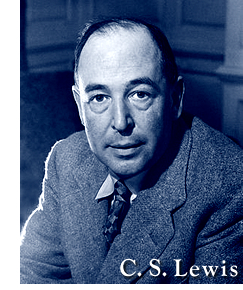
In his 1940 book The Problem of Pain, C.S. Lewis warns us against espousing such a temptation. “We must never make the problem of pain worse than it is by vague talk about the ‘unimaginable sum of human misery,’” he writes. “Search all time and space and you will not find that composite pain in anyone’s consciousness. There is no such thing as a sum of suffering, for no one suffers it.”(1) Or, said in another way, there are as many problems of pain as there are conscious beings—and God must deal with each and every one of them.

For someone like my dad, for whom weighing pain was both disparaging and unfeasible, this would perhaps have been one comfort in a maddening abyss of darkness. It means his own problem of pain was not lost in a sea of meaningless scales and indescribable measurements. It means that his frustrating, inconsistent ceiling of sorrow was itself held in the arms of God—and not vaguely absorbed in an immeasurable sum, nor given a distant, theoretical answer. It means that God had to come near not simply to pain in general, but to him and his cancer in person.

This is the scandalous confession of Christian hope. As Hans Urs von Balthasar writes, “When life is hard and apparently hopeless, we can be confident that this darkness of ours can be taken up into the great darkness of redemption through which the light of Easter dawns. And when what is required of us seems too burdensome, when the pains become unbearable and the fate we are asked to accept seems simply meaningless—then we have come very close to the man nailed on the Cross at the Place of the Skull, for he has already undergone this on our behalf and, moreover, in unimaginable intensity.”(2) On the cross, in the person of Christ, the problem of pain was God’s own, felt acutely, absorbed personally, endured as one person—and answering as many problems of pain as there are sorrowing creatures.

Jill Carattini is managing editor of A Slice of Infinity at Ravi Zacharias International Ministries in Atlanta, Georgia.

(1) C.S. Lewis, The Problem of Pain (New York: Touchstone, 1996), 103.

(2) Hans Urs von Balthasar, “The Scapegoat and the Trinity,” You Crown the Year with Your Goodness: Sermons through the Liturgical Year (San Francisco: Ignatius, 1989), 87.

Alistair Begg – What! Not Help You?


I am the one who helps you, declares the Lord.  Isaiah 41:14

This morning let us hear the Lord Jesus speak to each one of us: “I will help you.”

“It is but a small thing for Me, your God, to help you. Consider what I have done already. What! Not help you? Why, I bought you with My blood. What! Not help you? I have died for you; and if I have done the greater, will I not do the less? Help you! It is the least thing I will ever do for you; I have done more, and will do more. Before the world began I chose you. I made the covenant for you. I laid aside My glory and became a man for you; I gave up My life for you; and if I did all this, I will surely help you now. In helping you, I am giving you what I have bought for you already. If you had need of a thousand times as much help, I would give it to you; you require little compared with what I am ready to give. It is much for you to need, but it is nothing for me to bestow. Help you? Fear not! If there were an ant at the door of your granary asking for help, it would not ruin you to give him a handful of your wheat; and you are nothing but a tiny insect at the door of My all-sufficiency. I will help you.”

O my soul, is this not enough? Do you need more strength than the omnipotence of the united Trinity? Do you want more wisdom than exists in the Father, more love than displays itself in the Son, or more power than is manifest in the influences of the Spirit? Bring here your empty pitcher! Surely this well will fill it. Hurry, gather up your wants, and bring them here–your emptiness, your woes, your needs. Behold, this river of God is full for your supply; what else can you desire? Go forth, my soul, in this your might. The Eternal God is your helper!

Fear not, I am with you, oh, be not dismay’d! I, I am your God, and will still give you aid.

Today’s Bible Reading

The family reading plan for January 16, 2015
Genesis 17
Matthew 16


Devotional material is taken from “Morning and Evening,” written by C.H. Spurgeon, revised and updated by Alistair Begg.

Charles Spurgeon – Corn in Egypt


“Now when Jacob saw that there was corn in Egypt, Jacob said unto his sons, Why do ye look one upon another? And he said, Behold, I have heard that there is corn in Egypt: get you down thither, and buy for us from thence; that we may live, and not die.” Genesis 42:1,2

Suggested Further Reading: Matthew 13:24-34

God in his wisdom has made the outward world, so that it is a strange and wonderful picture of the inner world. Nature has an analogy with grace. The wonders that God does in the heart of man, each of them finds a parallel, a picture, a metaphor, an illustration, in the wonders which God performs in providence. It is the duty of the minister always to look for these analogies. Our Saviour did so. He is the model preacher: his preaching was made up of parables, pictures from the outer world, accommodated to teach great and mighty truths. And so is man’s mind constituted, that we can always see a thing better through a picture than in any other way. If you tell a man a simple truth, he does not see it nearly so well as if you told it to him in an illustration. If I should attempt to describe the flight of a soul from sin to Christ, you would not see it one half so readily as if I should picture John Bunyan’s pilgrim running out of the city of destruction, with his fingers in his ears, and hastening with all his might to the wicket gate. There is something tangible in a picture, a something which our poor flesh and blood can lay hold of; and therefore the mind, grasping through the flesh and the blood, is able to understand the idea, and to appropriate it. Hence the necessity and usefulness of the minister always endeavouring to illustrate his sermon, and to make his discourse as much as possible like the parables of Jesus Christ.

For meditation: How observant are you? The world around us is always teaching us lessons and underlining the truths of God’s Word (Matthew 6:26-30; Mark 13:28,29; Romans 1:20; 1 Corinthians 11:14,15).

Sermon no. 234

16 January (1859)

John MacArthur –  Anticipating Your Inheritance


“In [Christ] also we have obtained an inheritance” (Eph. 1:10-11).

As a member of God’s family, you have obtained a future inheritance that has many present benefits.

An inheritance is something received by an heir as a result of a will or legal process. It’s a legacy one receives from family connections.

As a member of God’s family, you are an heir of God and fellow heir with Christ (Rom. 8:17). As such you have obtained an inheritance that Peter called “imperishable and undefiled . . . reserved in heaven for you” (1 Pet. 1:4). It cannot perish, fade away, or be defiled because heaven is timeless and sinless. It is a secure inheritance.

In Ephesians 1:11 Paul refers to it in the past tense (“have obtained”). That’s significant because the fullness of your inheritance won’t be revealed until you are glorified in God’s presence (1 John 3:2). But your inheritance is so sure, Paul refers to it as if it was already in hand.

Although its fullness is yet future, your inheritance has present benefits as well. In addition to inheriting Christ and the Holy Spirit, you also inherit peace, love, grace, wisdom, joy, victory, strength, guidance, mercy, forgiveness, righteousness, discernment, and every other spiritual benefit. Paul sums it all up in 1 Corinthians 3:22-23: “All things belong to you, and you belong to Christ; and Christ belongs to God.”

Nowadays many Christians are so preoccupied with acquiring material goods that they miss many of the present benefits of their spiritual inheritance and the joy of anticipating its future fulfillment. Don’t fall into that trap!

Looking forward to your eternal inheritance will help you maintain a proper perspective on temporal things and motivate you to praise and adore God.

Suggestions for Prayer; Praise the Lord for the incredible inheritance that awaits you in heaven.

Thank Him for the present benefits of your inheritance, which are yours to enjoy daily.

For Further Study; One precious aspect of your eternal inheritance is God’s mercy. Psalm 136 reflects on the mercy God demonstrated toward Israel. Read that psalm, noting the manifestations of mercy that relate to your life.

Joyce Meyer – Give God Your All


Praise the LORD, my soul; all my inmost being, praise his holy name. Praise the LORD, my soul, and forget not all his benefits—who forgives all your sins and heals all your diseases . . . —Psalm 103:1–3 NIV

The tiny word “all” is used 5,675 times in the Bible, give or take a few depending on which translation you are reading. It is a small word that means a great deal, and yet we pay so little attention to it. If we read a scripture that has the word all in it and ignore the “all,” it changes the entire context of the scripture. The word all takes us into infinity. Where does “all” stop? How far does it go and what does it include?

Jesus is the Lord of all. Our Al-mighty God, all-sufficient Savior, all blessings flow from Him, and He is all that we need. We frequently say that God is our all, but have we ever stopped to truly understand the impact of that one little word? “All” leaves nothing outside of God’s control.

God knows all things (see John 21:17)! Don’t miss the “all” in that statement. He knows the end from the beginning, so He must know everything in the middle. He also has all power, all authority; all things are under His feet, and He fills everything everywhere with Himself (see Matt. 28:18 and Eph. 1:21–23). He sees all, hears all, and is everywhere all the time. If these things are true, then why do we still worry and become anxious? Why do we get emotionally upset when we have a problem or things are not going our way? It must be because we truly don’t believe He has all power, knows all things, and loves us with all of the love that exists in the universe.

How many of our sins does He forgive? Does He forgive some, most, or all? The Bible says that He forgives them all and continually cleanses us from all unrighteousness. It is one of those “all and forever-now” things. God did not put our sins off to the side so He could glance over at them occasionally; He has removed them completely (see Ps. 103:12).

Trust in Him “All” leaves nothing outside of God’s control, so turn all your problems and worries over to Him. Give Him your all, and you can trust that He will be your all in all.

Campus Crusade for Christ; Bill Bright – The Supernatural Power of Praise

“With Jesus’ help we will continually offer our sacrifice of praise to God by telling others of the glory of His name. Don’t forget to do good and to share what you have with those in need, for such sacrifices are very pleasing to Him” (Hebrews 13:15,16).

Sometimes, in my busy schedule which takes me from country to country and continent to continent, my body is weary, my mind is fatigued, and if I am not careful, my heart will grow cold. I have learned to meditate on the many blessings of God and to praise Him as an act of the will. As I do so, my heart begins to warm and I sense the presence of God.

The psalmist often catalogued the blessings of God and found new reason to praise Him. I would like to share with you several reasons why I believe praise of God is so important in the life of the believer.

1) God is truly worthy of praise.

2) Praise draws us closer to God.

3) All who praise God are blessed.

4) Praise is contagious.

5) Satan’s power is broken when we praise God.

6) Praise is a witness to carnal Christians and non-Christians.

7) Praise opens our hearts and minds to receive God’s message.

8) Praise is a form of sacrifice.

9) Praise makes for a more joyful life.

10) Praise enhances human relationships.

11) Praise is a supernatural expression of faith.

A further elaboration of the benefits and power of praise is found in my book Believing God for the Impossible. An entire chapter is devoted to this exciting subject.

With the promise of His blessings, so clearly delineated by the psalmist, comes the privilege and responsibility of offering up sacrifices of praise, and this leads to a supernatural life made possible by the indwelling Holy Spirit.

Bible Reading: Jeremiah 33:9-14

TODAY’S ACTION POINT I will look deliberately today for reasons to praise my heavenly Father, knowing that I will find many. Whether I feel like it or not, I will praise Him throughout the day, seek to do good and to share His love with others, knowing that such sacrifices are pleasing to Him.

Presidential Prayer Team; P.G. – Walk with Care


For every minute of every day since July 2, 1937, select military have guarded the Tomb of the Unknowns at Arlington National Cemetery. But they aren’t standing still. The follow a precise pattern: 21 steps across the tomb, turn and face the tomb for 21 seconds, then turn again and walk 21 steps back across. This is repeated over and over, ever the same. The numeral 21 represents America’s highest honor.

I therefore, a prisoner for the Lord, urge you to walk in a manner worthy of the calling to which you have been called.

Ephesians 4:1

In the same way those who perform that duty know their steps, Christians have been given precise steps to follow in a life worthy of their calling. The Bible says you are to walk a different way – following Christ – with steps of humility, gentleness, patience, forgiveness, compassion and love. No matter your circumstances, good, bad or beyond your control, and no matter how blurred the path into the future, Jesus calls you to order each step.

Walking in a way that honors the Lord is a daily commitment. Pray for wisdom to know which steps to take. Then intercede for those with authority in government to take their first step to knowing Christ, and then follow Him.

Recommended Reading: Ephesians 4:25-5:2

Greg Laurie – What to Do When You Mess Up


So just as sin ruled over all people and brought them to death, now God’s wonderful grace rules instead, giving us right standing with God and resulting in eternal life through Jesus Christ our Lord.—Romans 5:21

There is a game I like to play with my granddaughters that I call Squiggles. I will tell them, “Just put down anything you want on a piece of paper. Make any line—just a little drawing. I don’t want it to be anything.”

So they will draw some crazy little lines. Then I will take their squiggles, their lines on paper with no rhyme or reason, and I will turn them into something. Usually it’s a funny face or a character.

In a much greater way, God can do the same for you. Maybe you have messed up. Maybe you have made a mistake and have done a wrong thing. Guess what? We serve the God of second chances. So you can come to Him and say, “Lord, I have really messed up. Can you help?”

His answer is yes. God will come and redeem the mistakes we have made.

Even Christians can wander away from the Lord. Even Christians can make bad decisions and do really bad things. We are effectively capable of doing anything, even as followers of Jesus, because we still have free wills and old natures. However, if you are a true Christian, even when you have blown it or gone astray, you always will come home again.

Hopefully you will learn from your mistakes. Hopefully you will not go and repeat them again. Hopefully you can fail forward, which means learning from your mistakes, determining to live a more godly life, and helping others not to fall in the same area.

The good news is that God can forgive you and give you a second chance. He will complete the work that He has begun in you (see Philippians 1:6). So even if you have messed up, God still can turn it around.

Max Lucado – Don’t Allow Fear to Win


The fear-filled cannot love deeply. They cannot give to the poor. Benevolence has no guarantee of return. They cannot dream wildly. What if their dreams sputter and fall from the sky? Fear paralyzes people. Are you afraid?  Afraid of job loss? Afraid of what people are saying about you?

Jesus wages a war against fear. In Matthew 10:28 He says, “Do not be afraid of those who kill the body but cannot kill the soul.” In John 14:27 Jesus says, “Do not let your hearts be troubled and do not be afraid.”

Fear’s main goal is to keep you from God’s plan for your life. Don’t allow it to win! Punch fear in the face! If anything should be afraid, it should be fear itself.

From Max on Life

Charles Stanley – Beyond Ourselves


2 Corinthians 12:5-10

The apostle Paul understood what it meant to be pushed to the limit. According to his letters, he knew a lot about hardships and suffering. But he was most knowledgeable about the ultimate importance of all of those painful experiences—namely, glorifying Jesus through his weakness.

We don’t like to feel that we’re helpless or lacking control of our own lives. But we can learn from Paul and from our personal life experiences that the prelude to great strength is great weakness. Take note of this important lesson about the Christian life: Our weakest moments—when we feel the most desperate—are the very times when God is free to do His greatest work by empowering and strengthening us. It is in those difficulties during which we whisper, “Father, I cannot go on” that we are granted the best equipping and the greatest enabling to endure adversity.

Human nature cries out for strength, courage, and adequacy to meet life’s challenges. Consequently, many people avoid fiery trials and valley experiences at all costs so they won’t have to face weakness. They tell themselves, I am able to handle life on my own terms; my strength is sufficient. But we can never understand the supernatural empowerment to go beyond our own limits unless we experience it for ourselves. The only way to have conviction about the Lord’s adequacy is to endure weakness and then witness the strength that springs from it. No matter what’s going on in our lives, there is power available to the children of God.

Our Daily Bread – Kindness Gone Viral


Let the little children come to Me, and do not forbid them; for of such is the kingdom of God. —Mark 10:14

Read: Mark 10:13-16

Bible in a Year: Genesis 36-38; Matthew 10:21-42

News of a simple act of kindness on a New York subway has gone around the world. A young man, head covered by a hooded sweatshirt, fell asleep on the shoulder of an older passenger. When someone else offered to wake the young rider, the older man quietly said, “He must have had a long day. Let him sleep. We’ve all been there.” Then he let the tired fellow rider sleep on his shoulder for the better part of the next hour, until the older man gently eased away to get up for his stop. In the meantime, another passenger snapped a photograph and posted it on social media, and it went viral.

The man’s kindness seems to resonate with what we all long for—the kindness that reflects the heart of God. We see this gentleness in Jesus when His friends tried to protect Him from the noise and bother of little children. Instead, Jesus insisted on taking the little ones in His arms and blessing them (Mark 10:16). In the process, He invited all of us to trust Him like a little child (vv.13-16).

Jesus lets us know that all of us are safe in His presence. Whether awake or asleep, we can lean on Him. When we’re exhausted, He provides a safe place for us to rest.

Scripture carries spiritual vitality. That’s why it doesn’t return void. Wherever it encounters an open heart, it brings refreshment, nourishment, and new life.—Mart De Haan

Under His wings, I am safely abiding,

Though the night deepens and tempests are wild;

Still I can trust Him—I know He will keep me,

He has redeemed me and I am His child. —Cushing

God is a safe resting place.

INSIGHT: Jesus demonstrated that true faith in God was not bound by cultural concerns. In a patriarchal society, He met and talked with women (see John 4). He ate and drank with those who were considered impure (see Luke 7:36-30; 17:11-19; 19:1-10). He even embraced children, when most would push them aside (Mark 10:13-14). Jesus didn’t simply say that He had come to “seek and save the lost” (Luke 19:10); He demonstrated it by showing that God’s love is open to everyone.

Ravi Zacharias Ministry –  The Cross and the Pitcher


The Kumbh Mela is the largest gathering on earth. During its last celebration in 2013, it was conservatively estimated that around ten million people would gather in the city of Allahabad in Northern India. Some even quoted a seemingly exaggerated figure of one hundred million pilgrims to this religious gathering! The Kumbh Mela (etymologically, “pitcher fair”) takes place every four years in Prayag, Haridwar, Ujjain, and Nasik by rotation. In 2013, the festival was called the Maha (meaning “Super”) Kumbh Mela, which happens only once every 144 years. It is estimated that this Kumbh cost around 210 million dollars (US), but thankfully also generated approximately ten times that amount, as calculated by India’s Associated Chambers of Commerce and Industry.

Even people from far-flung places came to make this event a success. Andrew Turner from Australia along with his wife and children built an 18 by 6 feet boat to ferry devotees from one side of the river to the other—free of charge. “I am living a dream at the moment,” he said. “When I heard that this Kumbh was happening after 144 years, I thought, I will never get a second chance…. I joined the locals and landed in Prayag and walked several kilometers with devotees… The zealous faith snapped my ties with logic and reason. It was mesmerizing.”

Hindu tradition says that there was a war between the gods and the demons over divine nectar, and in the process, four drops of nectar fell from the pitcher. These fell on four different locations, which overlap the cities where the Kumbh is held. One of those drops fell at Haridwar where the river Ganges flows, while another fell at the Sangam. The Sangam is the confluence of three rivers—the Ganga, Yamuna, and the mythological river Saraswati in Prayag. The other two drops fell at Kshipra in Ujjain and Godawari in Nasik. A dip in these rivers on auspicious dates during the Kumbh is said to rid pilgrims of their sins.

The reality of sin is clearly expressed in the Christian Bible. The universality of sin has also been declared in Romans as “all have sinned and fallen short of the glory of God.” Anyone who reads the newspaper and honestly reflects on it is hard-pressed to deny the reality and universality of sin. Through the ages, humans have tried to rid themselves of sin and its consequences. Religious rituals, idols, journeys, and sacrifices have all tried to assuage and comfort the sinner’s heart, but have been found wanting.

Robert Lowry wrestles with this question in the lyrics of a hymn and arrives at a significantly different answer:

What can wash away my sins,

Nothing but the blood of Jesus.

What can make me whole again,

Nothing but the blood of Jesus.


Oh precious is the flow,

that makes me white as snow,

No other fount I know

Nothing but the blood of Jesus

In the Christian religion, grace that is made available through the death and resurrection of Jesus is the very fount which offers release from the burden of sin and restores our relationship with God. And thankfully, we do not need to snap our ties to logic and reason, but rather embrace an honest and rational examination of a real person. This would lead us to the empty grave of Jesus—the Lamb of God who takes away the sin of the world. Death no longer has a hold on him and this victory he extends to a fellow humanity: O Death, where is your sting? O grave where is your victory?

The resurrection of Jesus from the dead offers freedom not only from the sting of death but also from bondage to sin and our many attempts to assuage it—this, not at any cost to us or anyone else, for God has freely offered the gift. Thus, we can confess Jesus as Lord anytime, anywhere, and we will be saved! It makes one gasp in wonder at the overarching simplicity and compelling elegance of this very good news.

Cyril Georgeson is a member of the speaking team with Ravi Zacharias International Ministries in Mumbai, India.

Alistair Begg – Put God’s Promises into Circulation


Do as you have spoken. 2 Samuel 7:25

God’s promises were never meant to be thrown aside as wastepaper; He intended that they should be used. God’s gold is not miser’s money but is minted to be traded with. Nothing pleases our Lord better than to see His promises put in circulation; He loves to see His children bring them up to Him and say, “Lord, do as you have said.”

We glorify God when we plead His promises. Do you think that God will be any poorer for giving you the riches He has promised? Do you dream that He will be any less holy for giving holiness to you? Do you imagine He will be any less pure for washing you from your sins? He has said, “Come now, let us reason together, says the LORD: though your sins are like scarlet, they shall be as white as snow; though they are red like crimson, they shall become like wool.”1

Faith lays hold upon the promise of pardon, and it does not delay, saying, “This is a precious promise–I wonder if it be true?” but goes straight to the throne with it and pleads, “Lord, here is the promise. Do as you have said.” Our Lord replies, “Be it unto you even as you will.” When a Christian grasps a promise, if he does not take it to God, he dishonors Him; but when he hastens to the throne of grace and cries, “Lord, I have nothing to recommend me but this, You have said it,” then his desire shall be granted. Our heavenly Banker delights to cash His own notes.

Never let the promise rust. Draw the word of promise out of its sheath and use it with holy violence. Think not that God will be troubled by your importunately reminding Him of His promises. He loves to hear the loud outcries of needy souls. It is His delight to bestow favors. He is more ready to hear than you are to ask. The sun is not weary of shining, nor the fountain of flowing. It is God’s nature to keep His promises; therefore go at once to the throne with, “Do as You have said.”

1) Isaiah 1:18

The family reading plan for January 15, 2015

* Genesis 16

* Matthew 15

Devotional material is taken from “Morning and Evening,” written by C.H. Spurgeon, revised and updated by Alistair Begg.


Charles Spurgeon – A home question


“But are there not with you, even with you, sins against the Lord your God?” 2 Chronicles 28:10

Suggested Further Reading: Matthew 7:1-5

Tell him that his sins deserve the wrath of hell. Make him feel that it is an awful thing to fall into the hands of our God, for he is a consuming fire. Then throw him down on a bed of spikes, and make him sleep there if he can. Roll him on the spikes, and tell him that bad as he is, he is worse by nature than by practice. Make him feel that the leprosy lies deep within. Give him no rest. Treat him as cruelly as he could treat another. It would only be his deserts. But who is this that I am telling you to treat so? Yourself, my hearer, yourself. Be as severe as you can, but let the culprit be yourself. Put on the wig, and sit upon the judgment-seat. Read the king’s commission. There is such a commission for you to be a judge. It says—Judge thyself—though it says judge not others. Put on, I say, your robes; sit up there Lord Chief Justice of the Isle of Man, and then bring up the culprit. Make him stand at the bar. Accuse him; plead against him; condemn him. Say: “Take him away, jailor.” Find out the hardest punishment you can discover in the statute book, and believe that he deserves it all. Be as severe as ever you can on yourself, even to the putting on the black cap, and reading the sentence of death. When you have done this, you will be in a hopeful way for life, for he that condemns himself God absolves. He that stands self-convicted, may look to Christ hanging on the cross, and see himself hanging there, and see his sins for ever put away by the sacrifice of Jesus on the tree.

For meditation: Does your heart condemn you before God? The Lord Jesus Christ is your defence lawyer, but only if you are trusting in him as your Saviour, and he can silence even the condemnation coming from your own heart (1 John 2:1; 3:19-23).

Sermon no. 294

15 January (1860)