The Fall Of An Anti-Christian Regime? What Maduro’s Capture Could Mean For Venezuelan Christians

These past few weeks, Venezuela has been in the news as a narco-terrorist state, but in addition to that, it has become a territory where anti-Christian socialism violates the religious freedom of millions of believers. And we, as Christians, cannot think of a better way to rebuild a free Venezuela than respecting…


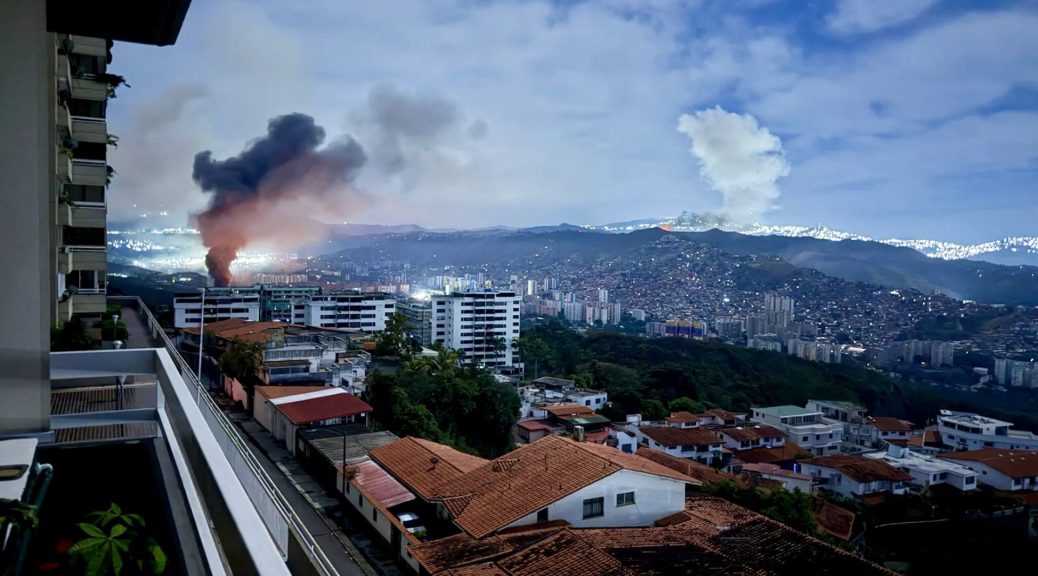
Nicolas Maduro, longtime dictator of Venezuela, has been captured by an incredible operation that bombed Fuerte Tiuna, the biggest military base in Caracas. The implications are still unknown, but the region has been shaken, for sure, as Venezuelans looked at the sky for Chinook, Black Hawk, and Little Bird helicopters.

In Cuba, the socialist regime concentrated in Havana will observe solidarity in support of the Chavista dictatorship. Now the frequent blackouts across the island will be more frequent. The jewel in Cuba’s iron crown has fallen.

Meanwhile, in Spain, the leftist politician Pablo Iglesias has embraced the pro-Maduro narrative: the United States is “bombarding Venezuela to steal its oil and impose a puppet government.” The truth is that Venezuelan oil was being consumed by the barrel by the dictators of Iran, Russia, and Cuba. In the case of Cuba, it was even more outrageous, because while the Cuban people were suffering through prolonged power outages, the regime was reselling the crude oil in illicit operations.

These past few weeks, Venezuela has been in the news as a narco-terrorist state, but in addition to that, it has become a territory where anti-Christian socialism violates the religious freedom of millions of believers. And we, as Christians, cannot think of a better way to rebuild a free Venezuela than respecting religious freedom.

Some stories are terrible. In 2021, several men armed with sticks and knives occupied the Men of Valor Christian Restoration Center in Mérida. They were members of the ferocious “colectivos” (copies of the Castroist Rapid Response Brigades) that function as paramilitaries in the service of dictator Nicolás Maduro and the United Socialist Party of Venezuela. At the Center, where Pastor Cristian Dugarte tries to reintegrate young former drug addicts into society, several people present were forced to chew pages of the Bible, beaten to the point of fracturing limbs and ribs, and felt the edge of knives cutting their skin in the shape of a cross.

Dugarte had previously received threats to stop his activities, as he had refused to provide information about the identity of the people receiving his help. Did the attackers fear that the pastor was stealing their drug customers? Or perhaps that someone would talk about the links between neighborhood drug trafficking and Chavista officials?

A local source told the Latin American Observatory for Religious Freedom (OLIRE) about this 2021 event that the attack targeted elements of the faith that motivated this type of ministerial work; that the members of the “colectivo” and the regime did not allow leaders like Dugarte to challenge their power and work without their consent; and that rehabilitating drug addicts was an unwanted and therefore prohibited activity.

In a report, the organization Outreach Aid to the Americas (OAA), which monitors human rights in the Caribbean basin, recalled that although dictator Hugo Chávez sought to approach evangelicals during his election campaign, he soon lost their support. Especially because of his national expropriation policies, the government’s infiltration of churches, support for Cuba, his diatribes against Israel, and Holocaust denial.

Years later, Maduro, his successor, seeing how the military and evangelicals had collaborated to overthrow his Bolivian ally Evo Morales and their influence in the elections of other countries, commissioned a survey that revealed that 30% of Venezuelans considered themselves evangelical, a figure higher than most estimates, according to OAA. “As a result, Maduro provided superficial initial support to these churches, including authorizing the distribution of Bibles, but ultimately followed Chávez’s failed policies and lost almost all support.”

During the COVID-19 pandemic years, Maduro restrained the ministerial work of many churches and Christian organizations regarding the receipt of humanitarian aid. He was perhaps seeking control of all those resources entering the country, and he would not share the monopoly of solidarity, in order to reinforce the image of the state as the provider of aid. In the process, he violated the religious freedom of those leaders and faithful who, because of their values, sought to lend a helping hand to those in need in the impoverished South American nation.

On March 30, 2021, the Ministry of Interior and Justice published a new “anti-terrorism” requirement: NGOs and other nonprofit organizations had to provide confidential information about activities, contributions, and names of beneficiaries, which in practice amounts to government surveillance, OAA recalled.

This ordeal has continued to this day. The United States Commission on International Religious Freedom (USCIRF) confirms this in its recent report, “The Repression of Religious Freedom in the Authoritarian Triad of Latin America: Cuba, Nicaragua, and Venezuela.”

According to the document, although Chavismo has not intensified its persecution against religious groups to the level of Cuba or Nicaragua, it does engage in similar patterns of repression, such as persistent harassment of religious communities, threats and summonses, public attacks, arbitrary detentions, and surveillance of faith groups. “In Venezuela, religious leaders who are not considered supporters of Maduro by intelligence services face intimidation, including threats from both anonymous sources and state agents,” USCIRF reported. In 2025, for example, the journalist for the religious radio station Fe y Alegría, Carlos José Correa Barros, was arrested by masked military personnel. He remained missing until his release nine days later.

The impact of the closing of civic space on religious organizations is clear under Chavismo, mainly with the emergence of laws that also affect freedom of religion.

Since 2024, the Law on the Supervision, Regulation, Operation, and Financing of Non-Governmental and NonProfit Social Organizations has required NGOs to obtain government authorization to operate, allowing the state to suspend those that promote “fascism” — that old political corpse, a cousin of socialism, which is trotted out from time to time in demonizing diatribes.

As if he were a character from 1984, Maduro brandishes the application of the so-called Hate Law to punish church leaders critical of corruption.

Venezuela also follows in Cuba’s well-trodden footsteps in the systematic abuse of legal registration, maintaining, according to USCIRF, the requirement that religious groups register with the Directorate of Justice and Religion. Bureaucracy delays the registration process “for up to a decade for churches that do not demonstrate loyalty.”

The situation is no better in prisons. Chavista authorities frequently deny or prevent church leaders from entering detention centers. Caracas has learned from Havana over the years how to break not only bones but also spirits.

Let’s hope that a new Venezuela, with republican values, emerges after the Maduro capture. Maria Corina Machado, the opposition Venezuelan leader, said in a recent communication that she expects a moment for the “popular sovereignty prevails in Venezuela, the release of political prisoners and the return of exiles.” Many Christians are among them! Rejoice for the possibility of a free land in South America, and one less government oppressing our brothers and sisters.


Source: The Fall Of An Anti-Christian Regime? What Maduro’s Capture Could Mean For Venezuelan Christians – Harbinger’s Daily

Turning Point; David Jeremiah – A Tiny Little Check


NEW!Listen Now

And this stone which I have set as a pillar shall be God’s house, and of all that You give me I will surely give a tenth to you.
Genesis 28:22

Recommended Reading: Genesis 28:16-22

Samantha Dobbins wrote in the newsletter of her South Carolina church how she and her husband had a new baby but very little income. They were discouraged searching for a job. One Sunday as she sat in church, Samantha felt the Lord whisper to her, “If you tithe, I will provide.” On a whim, she wrote a “tiny little tithe check.” The very next day a friend called her husband and offered him a job that grew into a successful career.1

In the book of Genesis, Jacob had been a despicable scoundrel until he encountered God at Bethel in Genesis 28. That’s when his life began to change. He had a long way to go, and his story had ups and downs. But from the beginning he committed to giving God a tenth of his income, just as his grandfather Abraham had done in Genesis 14:20.

When we put God first and tithe, we can trust Him to lead us, provide for us, and bless us in unexpected ways.

I don’t even have to think about giving anymore. It’s just something I want to do now, and I can’t explain that.
Samantha Dobbins

  1. “How Giving a Little Turned Into a Whole Lot More,” Newspring Church.


https://www.davidjeremiah.org

Our Daily Bread – Seeking the Christ Child


They bowed down and worshiped Him. Matthew 2:11

Today’s Scripture

Matthew 2:1-2, 7-12

Listen to Today’s Devotional

Apple LinkSpotify Link

Today’s Devotional

When writing teacher Peter Turchi sees a map, he looks for the adventure it holds. “To ask for a map,” he says, “is to say, ‘Tell me a story.’ ” I seized on that idea when preparing to teach a Sunday school class during Christmas on the “Faith of the Wise Men.” As I studied maps, I learned the Magi traveled some nine hundred miles—perhaps over several months—to find the Christ child, finally finding not a babe in a manger but a toddler living with His parents in a house. Their reaction after such a long trip? “They bowed down and worshiped him” (Matthew 2:11).

Their journey invited my students and me to plan with intention to seek Christ more fully. As Scripture tells us, when the Magi finally arrived in Jerusalem, their urgent question was: “Where is the one who has been born king of the Jews? We saw his star when it rose and have come to worship him” (v. 2).

Distance didn’t deter their worship. Nor did danger or delays. Herod’s deadly demand was ironic: “Go and search carefully for the child” (v. 8). Nobody had searched more diligently for Jesus than the Magi.

We can heed the example of the wise men by seeking Christ diligently too. Then, as we worship Him, we can expect our heavenly Father to speak to our hearts, leading us from old ways to new paths to journey with Him.

Reflect & Pray

How can you seek Christ this new year? How can you worship Him?


Dear Father, please help me to seek Your Son Jesus with all my heart and worship Him with all I have.


To learn more about seeking Jesus, watch In Pursuit of Jesus.


Today’s Insights

Matthew alone shares the account of star-gazing Magi who traveled in search of the newborn king of the Jews. Though this was a one-time phenomenon, the diligence of these men as they searched for Jesus deserves our attention and emulation. As we search and study the Scriptures, we’ll find Him too. Stressing the fact that the Old Testament Scriptures spoke of Christ, He said to the fault-finding religious leaders of His day: “You study the Scriptures diligently because you think that in them you have eternal life. These are the very Scriptures that testify about me, yet you refuse to come to me to have life” (John 5:39-40). The Bible (Old and New Testaments) testifies about Jesus (see also Luke 24:27, 44-45). As we seek Him and worship Him, we’ll grow in our faith, and God will lead us from our old ways to new paths.


http://www.odb.org

Denison Forum – Woman burned by pro-Maduro forces begs judge to lock up dictator


A woman protesting against the Venezuelan government in 2021 was disfigured when military forces tossed boiling water on her. Yesterday, she took part in demonstrations in New York City, where she begged a Manhattan federal judge to lock up dictator Nicolás Maduro for as long as possible.

She identified herself only by her first name because she said she has family back in Venezuela and fears for their safety since she’s speaking out. “I was tortured for expressing myself and having an opinion,” she said. By contrast, Maduro told the judge at his court appearance, “I am innocent. I am not guilty. I am a decent man, the constitutional president of my country.”

In other headline news:

  • Today is the fifth anniversary of the attack on the United States Capitol in Washington, DC.  Many blame President Trump for what happened that day, while others fault then-House Speaker Nancy Pelosi for allegedly refusing to deploy the National Guard.
  • Minnesota Gov. Tim Walz announced yesterday that he would not seek a third term so he can focus on fraud issues plaguing his state. He blamed President Trump and Republicans for exacerbating the problem, while others blame his administration.
  • And federal health officials on Monday announced what the New York Times calls “dramatic revisions to the slate of vaccines recommended for American children.” Some public health experts protested the revisions, while HHS Secretary Robert F. Kennedy Jr. said, “We are aligning the US childhood vaccine schedule with international consensus while strengthening transparency and informed consent.”

In each case, we are left to debate who is right and who is wrong, which leads to my larger point today.

 “The indispensable pillars of modern civilization”

Klaus Schwab is the founder of the World Economic Forum and author of the new book, Thriving and Leading in the Intelligent Age. In it he states, “Our economies, our institutions, our very concept of what it means to be human are all being transformed by forces of intelligence. These changes are not abstract; they are already redefining how we learn, how we work, how we govern, and how we relate to each other and to our planet.”

This transformation is clear to anyone who follows developments with regard to artificial intelligence and technology. But in a Time article published yesterday, Dr. Schwab writes, “Beneath a surface of political volatility and technological acceleration lie two quietly deteriorating foundations: truth and trust. Their erosion is reshaping the global landscape more profoundly than the events that dominate headlines.”

He notes that “in past decades, societies could rely on a shared understanding that truth, however contested, was worth pursuing.” However, “Digital networks and algorithmic curation have fragmented public life into discrete informational universes.” Synthetic media and AI have accelerated this fragmentation. Consequently, “It is increasingly difficult for citizens to determine whether what they see and hear is authentic. As a result, the very idea of a shared reality is weakening.”

He concludes:

The warning is clear: no society, no institution, no technological system can stand for long on foundations that are no longer believed. Truth and trust remain the indispensable pillars of modern civilization—and the degree to which they can be restored or reimagined will determine the contours of our future.

Three logical assertions

Watching US politicians react to the news regarding Venezuela along such starkly partisan lines reinforces his point. A “post-truth” society cannot sustain itself, since consensual truth is essential to the consensual actions by which society functions.

In response, I’d like to suggest a brief apologetic framed around three logical assertions.

One: Objective truth exists by logical necessity. To make the postmodern claim that “there is no such thing as objective truth” is to make an objective truth claim.

Two: Objective truth must logically be grounded ultimately in a source that transcends our fallen minds and subjective opinions. We require a compass for direction, a dictionary for the meaning of words, a Constitution for framing laws, and laws for framing personal behavior. In the same way, humans require a transcendent truth that our fallen minds cannot produce. Such truth must come not from our fallen creation but from our Creator.

Three: If God is “the truth” (John 14:6), God’s “word is truth” (John 17:17), and “God is love” (1 John 4:8), his character logically requires him to make his truth available to humanity. A loving father wants his children to know what is right so they can do what is right. This impulse explains the work of God’s Spirit in inspiring, preserving, interpreting, and applying biblical truth (cf. 2 Peter 1:21). God wrote a book, and we can read, understand, and obey it today.

When “God opens his mouth”

But any book, even God’s book, must be read to accomplish its intended purpose.

According to Klaus Schwab, our future as a society depends on “the stability of the conceptual architecture that supports collective life.” The Architect of such life intends us to depend upon his word because he knows that such dependence is the only path to our highest flourishing.

The good news is that if you and I choose this path today, the Spirit will then “guide you into all the truth” (John 16:13). We will discover for ourselves that “all Scripture is breathed out by God and profitable for teaching, for reproof, for correction, and for training in righteousness, that the man of God may be complete, equipped for every good work” (2 Timothy 3:16–17).

And our changed lives will become the change we wish to see as the Spirit uses our godly character and compassionate witness as a catalyst for moral and spiritual awakening. Thus it has been across our nation’s history, and thus it will be again in our time.

Tim Keller was right: “A perfect God could have nothing less than perfect communication with his people.” Mark Batterson added: “When you open your Bible, God opens his mouth.”

And the Scottish theologian Alexander Whyte (1836–1921) observed,

“There are two ways to read Scripture: the way a lawyer reads a will and the way an heir reads a will.”

Which way will you read God’s word today?

Quote for the day:

“The Bible is not an end in itself, but a means to bring men to an intimate and satisfying knowledge of God, that they may enter into him, that they may delight in his presence, may taste and know the inner sweetness of the very God himself in the core and center of their hearts” —A. W. Tozer

Our latest website resources:


Denison Forum

Harvest Ministries; Greg Laurie – Not Ashamed


 If anyone is ashamed of me and my message in these adulterous and sinful days, the Son of Man will be ashamed of that person when he returns in the glory of his Father with the holy angels. 

—Mark 8:38

Today’s social media encourages people to stand up and be counted—to unapologetically announce and promote an agenda that they want to be associated with. Exactly what it is they stand for seems to be of secondary importance. I’m often amazed at the perverse, even horrendous, things people are willing to promote and defend.

In contrast, many Christians seem to be embarrassed by the biblical truths that make them Christian. The followers of Christ have been entrusted with a life-changing—and world-changing—message. Yet many are ashamed by the gospel. They’re reluctant to share the words Jesus wants them to say.

But the time has come for believers to speak boldly, regardless of the consequences. To stand up and be counted as Christ’s disciples—for the world’s sake and for their own. Jesus said, “If anyone is ashamed of me and my message in these adulterous and sinful days, the Son of Man will be ashamed of that person when he returns in the glory of his Father with the holy angels” (Mark 8:38 NLT).

In the first century AD, the idea of Jesus dying on the cross was scandalous to Jewish people. The Greeks, who prided themselves on their cultural and intellectual attainments, thought the story of Jesus’ crucifixion was ridiculous. Yet the apostle Paul wrote, “So when we preach that Christ was crucified, the Jews are offended and the Gentiles say it’s all nonsense. But to those called by God to salvation, both Jews and Gentiles, Christ is the power of God and the wisdom of God” (1 Corinthians 1:23–24 NLT).

In today’s culture, many Christians struggle with Jesus’ words in John 14:6: “I am the way, the truth, and the life. No one can come to the Father except through me” (NLT). The idea of Jesus being the only path to God bothers them. More to the point, the idea of telling others that Jesus is the only way to the Father—and the means for eternal life—bothers them. It’s safer to be inclusive and affirm the truth of all beliefs. But Jesus doesn’t give His followers that option.

Are you ashamed of the simple message of the gospel? I hope not, because God’s righteousness is revealed in it. And that’s important. We all have our own sense of righteousness—our own opinions about right and wrong. But God’s righteousness is different from ours. It’s perfect. And it’s impossible to fulfill His righteousness apart from Jesus’ sacrifice on the cross. So, it’s through the gospel, the Good News of Jesus, that the righteousness of God is revealed.

Jesus’ followers have been entrusted with that Good News. And no amount of discomfort or embarrassment should keep us from sharing it.

Reflection Question: How do you handle your discomfort concerning certain difficult biblical truths—whether it’s in embracing them or sharing them with others? Discuss this with believers like you on Harvest Discipleship


Harvest.org | Greg Laurie

Days of Praise – My Strength and Victory


by John D. Morris, Ph.D.

“And he said unto me, My grace is sufficient for thee: for my strength is made perfect in weakness. Most gladly therefore will I rather glory in my infirmities, that the power of Christ may rest upon me.” (2 Corinthians 12:9)

Verse two of “Jesus! What a Friend for Sinners” highlights Jesus’ strength. David wrote of encountering and benefitting from it when he hid safely in Him. “For in the time of trouble he shall hide me in his pavilion: in the secret of his tabernacle shall he hide me; he shall set me up upon a rock” (Psalm 27:5).

Jesus! what a Strength in weakness!
Let me hide myself in Him;
Tempted, tried, and sometimes failing,
He, my Strength, my vict’ry wins.

In times of opposition, we can go to Him for comfort and protection. In Psalm 23:4, we are comforted to read, “Yea, though I walk through the valley of the shadow of death, I will fear no evil: for thou art with me; thy rod and thy staff they comfort me.” We can likewise pass this along to bolster others in need, for “we may be able to comfort them which are in any trouble, by the comfort wherewith we ourselves are comforted of God” (2 Corinthians 1:4).

When conflict comes, our Friend for sinners provides a way out. “God is faithful, who will not suffer you to be tempted above that ye are able; but will with the temptation also make a way to escape, that ye may be able to bear it” (1 Corinthians 10:13).

Ultimately, victory is ours through His great strength and wisdom. In eternal glory, we are told that “now is come salvation, and strength, and the kingdom of our God, and the power of his Christ: for the accuser of our brethren is cast down, which accused them before our God day and night” (Revelation 12:10). Forever we will hide safely in Him. JDM


https://www.icr.org/articles/type/6

Joyce Meyer – Begin Again


Therefore, if anyone is in Christ, he is a new creation. The old has passed away; behold, the new has come.

2 Corinthians 5:17 (ESV)

The promise of new beginnings is abundantly clear in Scripture. The good news is not only that this promise provides benefits to new believers in Christ, but that it is available to us as often as we need it. The one requirement for its fulfillment is that we let go of failure and take hold of the new beginning God offers us.

I have needed to apply this promise to my own life recently. I believe God has asked me to do something, and although I agree with Him and get started well, I seem to eventually fail and need to start over again. My two choices are to feel guilty because of my failure or to begin again. I choose to begin again—and if you need a new beginning, I pray that you will do likewise.

No matter how you need a new beginning in some area of your life, Jesus has His arms outstretched and is waiting for you to let Him help you begin again.

Prayer of the Day: Father, thank You for new beginnings. Help me let go of the old and start fresh without feelings of guilt and failure. In Jesus’ name, amen.


http://www.joycemeyer.org

Max Lucado – Pray Bold Prayers 


Play

How bold are your prayers? As John Wesley crossed the Atlantic, he was reading in his cabin and became aware of heavy winds knocking the ship off course. He responded in prayer. A colleague wrote it down:

Almighty and everlasting God…Thou holdest the winds in thy fists and sittest upon the water floods…command those winds and these waves that they obey Thee. Take us speedily and safely to the haven whither we would go.

Having offered the prayer, Wesley took up his book and continued reading. On deck his colleague found calm winds and the ship on course. Wesley made no mention of the answered prayer. His friend wrote, So fully did he expect to be heard that he took it for granted he was heard.

How bold are your prayers?


Home

Today in the Word – Moody Bible Institute – Numbers: God Punishes


Read Numbers 11:1–35

Each year I get the privilege of welcoming freshman students to the Moody Bible Institute. In those first weeks they want to know what they are required to do for class. They also want to know the consequences if they fail to do what they are supposed to do. As we turn to the book of Numbers, we learn that disobedience to God carries consequences. While we have just learned that God provided a way for forgiveness, we also know that God is willing to hold the line even if it means punishing His people. This is a significant theme in the Bible.

After meeting God at Mt. Sinai, the nation made its way to the land God had promised. Along the way He tested them to see if they would obey Him. Often their living circumstances were difficult. They were in a desert without the food and comforts Egypt had provided. Often, they complained bitterly (v. 4). Ironically, they forgot they were slaves in Egypt!

On their desert journey, God had provided miraculous food in the form of manna (v. 9). Still, they complained. We see that, more than just a sign of displeasure, their complaining signified a deep spiritual problem. They refused to trust that God would bring them to the promised land. They doubted He would care for them. They even suspected He meant ill for them. All of these were deeply displeasing to God. He made promises to them based on His character. Their behavior implied He was unreliable. They were committing the sin of unbelief (Heb. 3:19).

As tragic as these narratives are, they taught Israel and teach Bible readers today an important lesson: God judges unbelief. We learn that unbelief, like other sins, has consequences. God has made promises to you. Trust Him!

Go Deeper

Why did the Israelites complain? How did their complaints signify unbelief? Have you struggled to believe God’s promises? Recommit yourself to believing His promises today.

Pray with Us

As we move to the book of Numbers, we receive a somber warning about the sin of unbelief. Almighty God, may we never forget that Your mercy and forgiveness go together with judgment. Teach us to trust You completely.

The anger of the LORD burned against the people.Numbers 11:33


https://www.moodybible.org/