
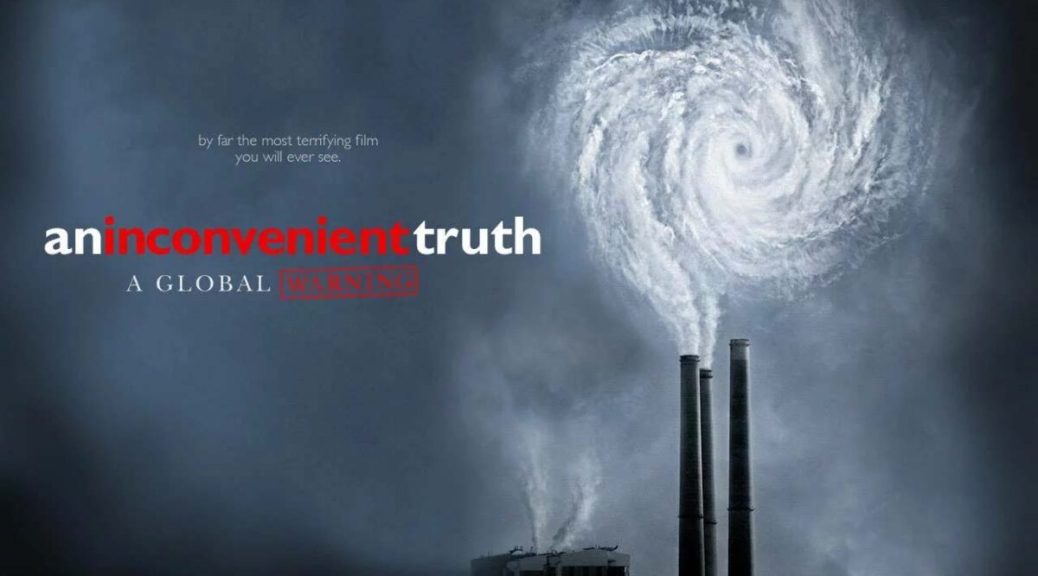
Two decades after Al Gore’s “An Inconvenient Truth” documentary was released, multiple climate predictions have proven largely inaccurate, including forecasts of Mt. Kilimanjaro.
It’s no understatement to say that the 2006 documentary “An Inconvenient Truth” changed the direction of public policy. And in fact, that’s exactly what failed presidential candidate Al Gore intended the film to do. Fortunately for him, he found a willing audience of Hollywood celebrities and left-wing media outlets to uncritically promote his ideology and activism.
Unfortunately for him, 2006 is now far enough in the past that we can test some of the predictions, claims, and statements of fact he makes in that film. So that’s exactly what we did.
At the start of 2026, nearly 20 years after the film hit theaters and helped pave the way for Europe’s delusional “net zero” policies, electric car mandates, and low-flow showerheads, OutKick rewatched “An Incovenient Truth” to see how well it held up over time. Spoiler alert: not particularly well!
The film starts off as a glowing tribute to Al Gore himself, an unsurprising beginning given his obvious ego and hubris. Almost immediately afterward, it jumps straight into the propaganda. He references Hurricane Katrina as an example of more extreme weather events in the modern world. There’s a “Simpsons” video with propaganda of “global warming,” remember, this is pre-rebrand to “climate change,” with a young girl seeing her ice cream cone melt. Gore talks about what got him into this field which is one professor who took some measurements of CO2, then made vague predictions of what would happen if we didn’t make changes.
He says we started measuring CO2 in 1958, which, of course, thoroughly discredits his activism. Assuming the latest estimate is accurate, the earth is billions of years old. It keeps growing by the year, but as of January 2026, it’s 4.54 billion years. Sure, you can estimate CO2 concentrations for part of that past, but not all of it. Or even a sizable percentage of it. And making predictions and assumptions on such limited data is awful science.
But ignoring the past and focusing on the future, one of his most concrete predictions of doom came regarding Mt. Kilimanjaro. In his discussion, he shows pictures of snow on the African mountain from decades ago, then images from the early 2000’s with much less snow. He blames this on global warming, then ominously predicts, “Within the decade there will be no more snows on Kilimanjaro.”
How’d that age?
Gore’s Predictions Prove Woefully Wrong
Well, we’re now two decades removed from this claim, and there continues to be snow on Kilimanjaro. In fact, one story from The Times of London published a few years ago specifically highlighted how wrong Gore’s forecast was. Methley Swai, the owner of a trekking company for Kilimanjaro excursions, told The Times: “Many people have made Kilimanjaro a bucket list priority because of the Al Gore deadline but when they get here they are pleasantly surprised to find lots of snow.”
Sure enough, the story also reported, “There were also abnormally high snowfalls in 2018, which led to the highest recorded growth for the total snow depth on Tanzania’s inactive volcano, an aggregated increase of 1.2m.”
Whoops! We’re not done there!
His next example of declining snow is Glacier National Park. Gore tells a story about how he personally climbed it with his daughter in 1998, then shows pictures of less glacier activity in the mountains. Then, the kicker. A concrete prediction of what would happen to the park.
“Within 15 years this will be the park formerly known as Glacier,” he says, to oohs and aah from the crowd.
Nailed it again, buddy.
He mentions Argentina and Peru as countries where glaciers that are in danger of disappearing. Yet, as you’d expect, there are still glaciers in Argentina and Peru in 2026. In fact, one travelog from 2025 posted photos of the El Pertito Moreno glacier in Argentina, with the comment “Just west of El Calafate, this frozen river is one of the few glaciers in the world still growing.”
Nailed it again buddy.
Gore then uses a graph to show how our climate is warming, though, naturally, it’s purposefully misleading. The warming period he demonstrates in the modern era barely reaches above 0.0, after decades of well below average weather. Essentially, we experienced decades of cooling, as immortalized in a Time magazine cover from the 1970’s warning of global cooling, and the trend reversed. He also claims we can use ice in Antarctica to look back 650,000 years and show CO2 concentration at that point in time That’s nice, but again, doesn’t come close to covering 4.54 billion years of world history. He talks about Ice Ages, with zero acknowledgment that those Ice Ages ended without human intervention.
He uses a prop lift to show that we have the highest CO2 levels yet, and within 50 years, or 2056, he expects the concentration of CO2 will be well over 750ppm, doubling in a matter of decades. It’s currently around 420ppm. When the movie was made, two decades ago, it was 380ppm. At that rate of increase, it would take 185 years from when he made his prediction to reach 750ppm.
Whoops.
Oddly enough, after years of climate “experts” saying that weather isn’t climate, meaning individual weather events or yearly outcomes aren’t representative of changes in climate, Gore repeatedly references record warm temperatures in 2005 as “proof” of global warming. He specifically mentions the number of days over 100 degrees in western US cities to back up his fearmongering. Naturally, these trends have not been consistent. For example, in 2006 when this movie was released, Las Vegas had 86 days when temperatures reached 100 degrees. In 2025, there were 77.
Gore Makes Hurricane Predictions, Drought Predictions, That Prove False
Later on, Gore references hurricanes in the South Atlantic, once again using those as proof of increasing extreme weather, as if we have measurements of all hurricane activity in that ocean for 4.54 billion years. He claims that Katrina is yet more proof, using a graphic to show that it intensified because it went over warmer waters. These extreme storms will become more frequent, he says, because of warming temperatures. There is, of course, no evidence that this has happened. There were 14 hurricanes that made landfall from 2003-2005 in the United States. There were eight that made landfall from 2022-2024 in the United States.
Just this past year, the NOAA predicted an above-average hurricane season in 2025, literally a few months in advance. They were completely wrong, as there was average to below-average activity, with no increase in hurricane strength. Every single time.
Global warming causes more rain, but also more drought, Gore continues. He mentions extreme drought in middle Africa and Lake Chad evaporating to back it up. Here’s what a quick search on Lake Chad reveals today: “Despite historic shrinkage, satellite imagery from 2024 and 2025 indicates the lake has not continued to decline and has shown signs of replenishment since the early 2010s.”
Whoops again!
He highlights the decline of Arctic sea ice, again saying it’s rapidly diminishing. Except, current measurements for 2025-2026 show that sea ice extent is roughly in line with 2012-2013, just barely below the 1980-2010 average. Which is, of course, influenced by the period of colder weather that existed in the 1970’s.
Ironically, Gore then shows himself going on an airplane, after saying this is all the fault of human beings and their activity. Zero awareness.
One of his biggest and most terrifying claims is that the ice sheet covering Greenland is in danger of melting. The audience once again reacts in horror as he shows simulations of oceanic sea rise that would cover much of The Netherlands, San Francisco, Florida, Beijing, Calcultta, Manhattan, and Shanghai in such a catastrophic scenario.
Per the NOAA Arctic report card, here’s how the Greenland ice sheet did in 2024: “The Greenland Ice Sheet lost 55 ± 35 Gt of mass in 2024, the lowest annual ice loss since 2013. This occurred due to above-average snowfall and below-average melting.”
Temperatures didn’t change either. “We report monthly mean air temperatures measured at weather stations in Greenland. Air temperatures observed over the 2024 mass balance year were close to the 1991-2020 average.”
The 2025 report also found that the mass balance in the Greenland Ice Sheet showed “less loss than the 2003-24 annual average. “Above-average snowfall and below-average melt” contributed to “losing less mass this year.”
Additionally, a study published in January 2026 found that “Prudhoe Dome, a 500-meter-thick ice cap on the northwestern Greenland ice sheet, was completely ice-free around 7,100 years ago with temperatures 3-5°C higher than they are today,” per meteorologist Chris Martz. As he explains, it “goes to show that these processes can happen naturally without any anthropogenic influence.”
Gore’s Hypocrisy Is Evident Throughout
As the documentary continues, he brings up the Aral Sea disappearing as a further example of the dangers of human intervention in our climate. Except the Aral Sea dried up in part because “poorly thought-out irrigation strategies introduced by the Soviet Union in the 1960s-70s.” Restoration efforts are underway to undue some of that damage, and as of 2025, “the volume of water in the North Aral has increased by 42%.”
He appeals to authority, saying that peer-reviewed research unequivocally says global warming is factual and not up for dispute. Of course, this has changed over time, with plentiful new research contradicting his claim of consensus. To the point where Gore and his partners had to change their messaging to “climate change” to avoid dealing with many of their predictions not coming true.
Without a hint of irony, he puts up a quote saying: “It’s difficult to get a man to understand something when his salary depends upon him not understanding it.” Precisely the critique leveled at “global warming” scientists who rely on government funding. No problem to solve? No funding. Gore himself benefits from this; no demand for his presentation? No gigantic speaking fees.
He then says it’s dishonest to say we need to make a choice between the economy and the planet, an incredibly inaccurate prediction considering the damage countries like Germany and the United Kingdom have done to their economies by producing less energy to satisfy Gore’s ravings. Literally just this past week, U.S. Energy Secretary Chris Wright made headlines by explaining that Germany has invested “half a trillion” in clean energy, doubled the capacity of their grid, yet produce 20% less electricity than they did before the half trillion dollar investment, and they sell it at three times the price.”
Coincidentally, Gore says “If we do the right thing, then we’re going to create a lot of wealth and a lot of jobs.” Not only has the jobs part been proven false, but the “wealth” that’s been created has mostly gone to people like Gore. Meanwhile, in the real world, California’s “Ivanpah Solar Power Facility,” which cost $2.2 billion to construct, is shutting down after it never met its energy production goals, killed birds and harmed the desert landscape.
Hard to be more wrong than that.
He concludes by putting up a world map showing his travels to show his slideshow, again, completely ignoring the CO2 emitted by his paid travel. There’s more charts, demanding higher mileage per gallon standards, saying that it wouldn’t hurt car manufacturers. Sure enough, car manufacturers have lost billions upon billions chasing his goals, including by building electric cars that aren’t actually less polluting when viewed in totality. Ford has shut down its “Lightning” truck after poor demand, and Porsche sent itself into a tailspin by investing in EV’s, to the point where their CEO was forced to resign in 2025 after damaging the company. As just a few examples.
He then extols the virtues of making choices to individually limit our carbon footprint. Excellent timing, considering his pal Kamala Harris just bought an $8 million mansion in Malibu. Surely a decision made to limit her carbon footprint, and in fear of losing her house to the sea level rise Gore warns about.
“Are you ready to change the way you live?” the documentary asks over the credits. The answer, as demonstrated by Gore and his celebrity pals, is that absolutely none of them are willing to change anything about their lives in order to “solve” climate change. Because they don’t actually believe in it, they just want a cause to signal their virtue. They want something to provide meaning to their lives. Gore gave them that, much in the same way he discusses a single college professor giving him meaning with global warming. The good news is that based on the track record of predictions in the documentary, they have nothing to worry about anyway.
click here for full article with nice pictures
Source: Predictions From Al Gore’s “An Inconvenient Truth” Have Proven Completely False | OutKick









 DAILY DEVOTIONS, NEWS AND INFORMATION