Turning Point; David Jeremiah – Exterior Versus Interior


NEW!Listen Now

Woe to you, scribes and Pharisees, hypocrites! For you are like whitewashed tombs which indeed appear beautiful outwardly, but inside are full of dead men’s bones and all uncleanness. Even so you also outwardly appear righteous to men, but inside you are full of hypocrisy and lawlessness.
Matthew 23:27-28

Recommended Reading: Mark 7:17-23

In the Old Testament and in Jesus’ day contact with a dead body rendered a person ceremonially unclean (Numbers 19:16). For that reason, graves and tombs were often whitewashed to keep people from accidentally coming in contact with them. Bright and white on the outside but unclean on the inside.

Jesus used this well-known custom to illustrate that what is on the outside of a person may be very different from what is on the inside. Religiously lifelike on the outside but spiritually dead on the inside. The same can be true today: Being religious on the outside is no guarantee of being spiritually alive on the inside. Jesus said that it is necessary to be born again to enter the Kingdom of God (John 3:3). We must become a “new creation” through faith in Christ (2 Corinthians 5:17).

Have you become a new person in Christ? Don’t confuse religious life with true spiritual life.

The Christian faith is ultimately not only a matter of understanding or of intellect, it is a condition of the heart.
D. Martyn Lloyd-Jones


https://www.davidjeremiah.org

Our Daily Bread – Defined by Christ


Life does not consist in an abundance of possessions. Luke 12:15

Today’s Scripture

Luke 12:13-21

Listen to Today’s Devotion

Apple LinkSpotify Link

Today’s Devotion

Some years ago, artist Michael Landy counted up everything he owned, making a list of 7,227 possessions. What he did next was eye-opening. Setting up a factory in London’s busiest shopping district, Landy publicly destroyed it all. Clothes, artwork, love letters, even his car, were broken down, placed on a conveyor belt, and fed into grinders. As consumers darted in and out of department stores nearby, Landy’s performance art asked, “Who are we without our possessions?”

It’s an important question because most of us buy things to define ourselves or secure our futures. Jesus told a parable about a man who horded his wealth and embraced a consumerist lifestyle. “You have plenty of grain laid up for many years,” the man tells himself. “Take life easy; eat, drink and be merry” (Luke 12:19). But what was left when his life was “demanded” from him that night? Only God’s rebuke at having missed what’s most important (vv. 20-21).

It isn’t a sin to own things. Michael Landy still needed clothes. But when we’re tempted to find life and identity in what we own, Jesus reminds us that “life does not consist in an abundance of possessions” (v. 15). Who would you be without all your goods? Still a dearly loved child of God (Psalm 103:17; Ephesians 5:1). Out of this secure identity, we can be rich toward God and others.

Reflect & Pray

What do your possessions say about you? What might being “rich toward God” (v. 21) mean for you?


Dear Father, please help me resist the lie that I am what I own, and live richly toward You and others instead.


Today’s Insights

Luke’s gospel emphasizes God’s justice for the poor (1:52-53; 14:12-14). Luke describes a reversal in God’s kingdom, where the poor are blessed while the unjust wealthy are judged. In Luke 16:19-31, for example, a rich man ignores a suffering beggar, but in death, their roles are reversed. Jesus’ parable in Luke 12:16-21 warns against greed (v. 15) through depicting a rich man who shows no concern for using material possessions justly. In Jewish tradition, material abundance was considered something entrusted for the sake of others (see Proverbs 19:17; Deuteronomy 15:7-11). But the rich man thinks only of himself, as seen in his self-referential language (Luke 12:19). He’s identified by God as a “fool” (v. 20). In contrast to the rich fool, those who know they’re loved by God are freed to invest in what truly lasts—God’s kingdom and the needs of others (vv. 32-34).


http://www.odb.org

Denison Forum – California city council advances polyamory protections


March 24, 2026

The Dow surged 631 points yesterday after President Trump said the US and Iran have held “very good and productive conversations regarding a complete and total resolution of our hostilities in the Middle East.” In response, the president postponed strikes on Iranian power plants for a five-day period.

However, I’m following a different story today that I believe to be enormously significant as well. I have not seen it widely reported, which points to my point.

According to the Los Angeles Times, West Hollywood’s city council has unanimously approved advancing what the article calls a “registry of multi-partner domestic relationships.” The writer explains that West Hollywood is now “the latest of a few cities in the US to pursue legal protection for groups of more than two adults living in a single household who are romantically or otherwise committed to each other.”

Advocates claim that such protections are needed for a broad group of people, such as immigrant households that depend on extended family members for child care and support. Multigenerational families living together would be another example.

And of course, the ordinance is intended to “protect” polyamorous households where multiple sexual partners live together.

Would today’s article be illegal?

Even though I strongly disagree with polyamory on biblical, moral, and practical grounds, I understand that our secularized culture does not typically legislate morality with regard to such consensual behavior. For example, though 90 percent of Americans consider “married people having an affair” to be “morally wrong,” adultery is not illegal in the US.

But here’s the part of the article that could easily be overlooked: the West Hollywood city council also “outlawed discrimination against polyamorous people and others in nontraditional family structures” and has added “family or relationship structure as a protected class in the city alongside race, religion, gender, and other categories.” The anti-discrimination law will go into effect in mid-April.

Will it mean a church or ministry would be forced to hire someone in a polyamorous relationship? What about Christians operating a business? What about believers who use their influence to defend biblical morality in this context?

Would today’s article be illegal in West Hollywood?

“The greatest danger to our future”

For several years, I have spotlighted the four-stage strategy employed by LGBTQ advocates in our society: normalize immoral behavior through popular media, legalize such behavior, stigmatize those who disagree as “homophobic” and otherwise dangerous, and criminalize such opposition. Today’s discussion is one example of the fourth stage.

Jane Goodall, the famed British primatologist and animal rights activist, once warned:

“The greatest danger to our future is apathy.”

However, as a strong advocate for LGBTQ causes, she meant her warning in precisely the opposite way that I am endorsing it today.

It is human nature to focus on issues that seem most relevant to us personally. This “fight-or-flight response” is our natural, automatic reaction to stress or danger. Whether you attribute it to evolutionary development or God’s design (I choose the latter), you can understand the need to evaluate all experiences, including this article, through a prism of personal relevance.

Consequently, unless you live in West Hollywood or in the few cities in Massachusetts or on the West Coast where polyamory “protections” have been enacted, this threat to religious liberty can seem remote and thus less relevant to you.

But that’s only because we tend to overlook how this strategy works. Statutes deemed legal in small towns can then be advanced to major cities. What starts in one part of the country can advance to others. And when such actions rise to the level of federal civil rights, they can supersede states’ rights (as occurred in 1973 when Roe v. Wade overturned abortion prohibitions in at least thirty-one states).

Three reasons to reject moral apathy

Consequently, moral apathy is indeed “the greatest danger to our future.” Consider three reasons.

The first is legal, as we have seen.

When Massachusetts legalized same-sex marriage in 2004, the response by evangelicals would likely have been much stronger if we had foreseen that the US Supreme Court would discover this “right” in the Constitution a decade later and impose it on the entire country. Why should we think the same cannot happen with polyamory?

The second is personal.

Because Satan hates us, he will never tempt us to commit sin that will pay more than it costs us. He loves to turn down the moral lights in our cultural room so gradually that our eyes adjust and we find ourselves in the dark without complaint. And he knows that sin we tolerate in others often metastasizes into sin we commit personally.

This is why God’s word warns: “Desire when it has conceived gives birth to sin, and sin when it is fully grown brings forth death” (James 1:15). Because Satan always seeks to “steal and kill and destroy” (John 10:10), “death” and nothing less is his ultimate goal. And moral apathy is one of his most effective means to this end.

The third is collective.

Because God is holy (Isaiah 6:3Revelation 4:8), he must judge unconfessed sin. His word is clear: “I will punish the world for its evil, and the wicked for their iniquity” (Isaiah 13:11). He therefore warns us, “Repent and turn from all your transgressions, lest iniquity be your ruin” (Ezekiel 18:30).

Our Father deals with us as gently as he can or as harshly as he must. The more society chooses moral apathy, the more we force him to choose the latter. This is why “righteousness exalts a nation, but sin is a reproach to any people” (Proverbs 14:34).

“Conscience asks the question, ‘Is it right?’”

Dr. Martin Luther King Jr. observed:

Cowardice asks the question, “Is it safe?” Expediency asks the question, “Is it politic?” Vanity asks the question, “Is it popular?” But conscience asks the question, “Is it right?” And there comes a time when one must take a position that is neither safe, nor politic, nor popular, but one must take it because one’s conscience tells one that it is right.

Where do you need to take such a position today?

Quote for the day:

“The world won’t be destroyed by those who do evil, but by those who watch them without doing anything.” —Albert Einstein

Our latest website resources:


Denison Forum

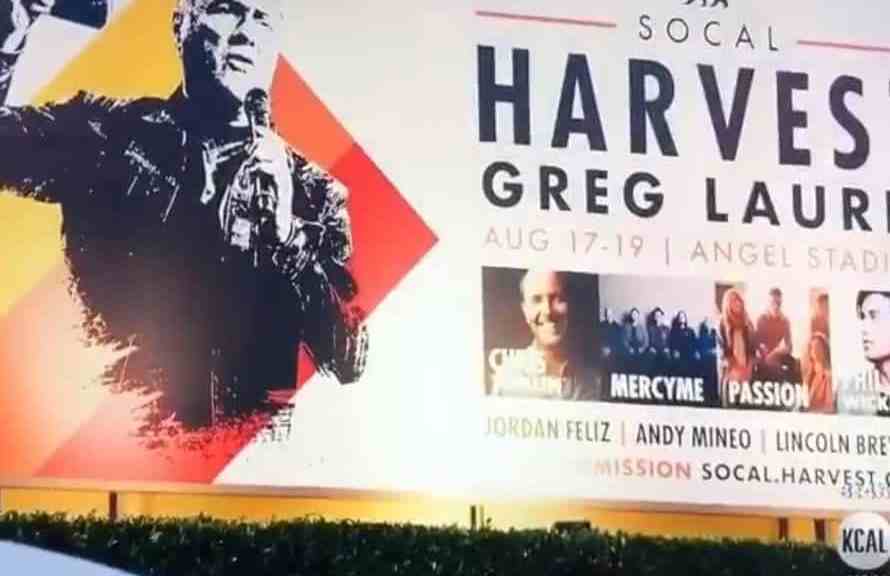
Harvest Ministries; Greg Laurie – The Hard Truth About Thankfulness


 Be thankful in all circumstances, for this is God’s will for you who belong to Christ Jesus. 

—1 Thessalonians 5:18

Scripture:

1 Thessalonians 5:18 

In her remarkable book The Hiding Place, Corrie ten Boom relates an amazing story about the importance of being thankful. Corrie and her sister Betsie were held in a concentration camp known as Ravensbrück, where they lived in barracks that were plagued by fleas. Fleas were everywhere—in their hair and on their bodies. One day Betsie told Corrie they needed to give thanks for the fleas.

Corrie thought Betsie had gone too far. She couldn’t imagine thanking God for fleas. But Betsie insisted, reminding her sister that 1 Thessalonians 5:18 says, “Be thankful in all circumstances” (NLT). Still, Corrie didn’t want to thank God for the fleas. But as it turned out, Corrie and Betsie were trying to reach the other women in their barracks with the message of the gospel, and they had been holding Bible studies. They found out later that because of the fleas, the guards would not go into those barracks, and therefore, the women were able to have their Bible studies. As a result, they had the freedom to minister to numerous women. So, God can use even fleas.

If the Bible said, “Be thankful in some circumstances,” I would say, “No problem there!” But it says, “Be thankful in all circumstances.” And that’s not an easy thing to do. Yet it’s necessary because “this is God’s will for you who belong to Christ Jesus.” It’s also beneficial.

Our attitude does, in fact, impact our circumstances. Being thankful won’t change events that have occurred, and it won’t prevent trials and suffering from coming our way. But when we lead with a spirit of thankfulness and joy, we change our relationship to our circumstances. We see them in a different light. We see them in the context of the big picture of God’s faithfulness.

This isn’t simply a matter of choosing to be a “glass half full” person or to “always look on the bright side of life.” It’s a matter of choosing to see God at work in our lives, no matter how bad our circumstances get. It’s a matter of wrapping ourselves in His presence when life threatens to overwhelm us. It’s a matter of staying in constant contact with Him during trials and never losing sight of the awesome privilege of being able to do so.

Maintaining a spirit of thankfulness will not only impact our lives, but it will also impact the lives of others in our orbit. Nothing speaks louder about the life-changing potential of the Christian faith than a believer who remains faithful and thankful when things go bad.

First Thessalonians 5:18 doesn’t say we should be thankful for all circumstances, but rather in all circumstances. There are many things that happen that I’m not glad about. But I am glad that, despite the tragedies, God is still on the throne, and He is still in control of all circumstances that surround my life.

Reflection Question: What would being thankful in all circumstances look like in your life? Discuss this with believers like you on Harvest Discipleship!


Harvest.org | Greg Laurie

Days of Praise – Reporting on the Parables


by Henry M. Morris, Ph.D.

“And he began to speak unto them by parables. A certain man planted a vineyard, and set an hedge about it, and digged a place for the winefat, and built a tower, and let it out to husbandmen, and went into a far country.” (Mark 12:1)

This parable of the vineyard had an obvious meaning, for even “the chief priests, and the scribes, and the elders,” to whom He was speaking (Mark 11:27), “knew that he had spoken the parable against them” (Mark 12:12). The same parable and the events surrounding it are reported in Matthew 21:33–46 and Luke 20:9–16.

But there is another question that has been raised about this parable, as well as all the other parables that have been reported in two or more different gospels. That is, if the Bible is inerrant in its very words as Jesus taught (e.g., Matthew 5:18John 10:35), then why did the writers often vary in their reporting of the words of the parable?

It should be remembered, however, that Jesus probably spoke in Aramaic, whereas the written accounts were in Greek. Furthermore, two of the writers (Mark and Luke) were not present at the time and so would have obtained their accounts from someone who was there (e.g., Luke 1:1–2). Flexibility in translation and reporting is always possible with different translators and different reporters.

The doctrine of divine inspiration of the Scriptures (2 Timothy 3:16), however, applies not to the process but to the result. The Spirit of God was free to use the writer’s own research, vocabulary, and style in reporting an event so long as there were no factual errors or irrelevancies in the final result. In fact, such minor differences often give greater depth and credence to the reported event since they help in proving that the different writers were not in collusion but simply were telling of a real event from different perspectives. HMM


https://www.icr.org/articles/type/6

Joyce Meyer – Be God’s Ambassador


And [pray] also for me, that [ freedom of ] utterance may be given me, that I may open my mouth to proclaim boldly the mystery of the good news (the Gospel), for which I am an ambassador in a coupling chain [in prison. Pray] that I may declare it boldly and courageously, as I ought to do.

Ephesians 6:19-20 (AMPC)

If you start your day right, you will have a better day, and you will be a better witness for the Lord. Dedicate yourself to God afresh each morning.

Tell Him, “Lord, I give You the gifts and talents that You put in me. I want to use them for Your glory. I want to lead somebody to You. Put in my path someone to whom I can minister, someone I can encourage. Help me to be a blessing to someone today. Lord, I want to be Your ambassador and represent You today.”

Prayer of the Day: Lord, I dedicate this day to You. Use my gifts for Your glory, lead me to encourage others, and help me represent You well in every moment, amen.


http://www.joycemeyer.org

Max Lucado – God’s Door is Open 


Play

If you were told you were free to enter the Oval Office at the White House, you’d shake your head and chuckle, “You’re one brick short of a load, buddy.” Multiply your disbelief by a thousand, and you’ll have an idea how a Jew would feel if someone told him he could enter the Holy of Holies— a part of the Temple no one could enter except the high priest and then only one day a year.

Why? Because the glory of God was present there. God is holy, and we are sinners, and there is a distance between us. Like Job, we say, “If only there were a mediator who could bring us together” (Job 9:33). 1 Timothy 2:5 says, “There is one God and one mediator between God and men, the man, Jesus Christ.”

God welcomes you. He is not avoiding you. The door is open. God invites you in.


Home

Today in the Word – Moody Bible Institute – Final Judgments


Read Revelation 20:7–15

“An important aspect of apocalyptic literature,” wrote professor Leland Ryken, “is the final triumph of good and defeat of evil. The battle is not a battle between equals, but this does not minimize the strength of the life-or-death struggle. The power of evil in apocalyptic literature is terrifying and often drives us to temporary despair.” But, Ryken assures us, “the book of Revelation ends with a hero on a white horse who kills a dragon, marries his bride, celebrates the wedding with a feast, and lives happily ever after in a palace glittering with jewels.”

There are a few “loose ends” remaining at the end of the Millennium. One is Satan, the dragon (vv. 7–10). He’s had a thousand years to think it over and can see for himself the results of Christ’s perfect rule. Even so, he’s unchanged and goes out to deceive the nations, to gather them for another “final battle.” Some believers and unbelievers survived the Tribulation. They and their descendants are Satan’s targets. Apparently, some people can choose lies and unbelief, even while living in utopia with glorified believers.

This battle never happens because fire from heaven devours God’s enemies. “Gog and Magog” represent the nations of the world (as in Ezekiel 38–39). Satan is thrown into hell, alongside the beast (Antichrist) and his false prophet, for eternal punishment. This is followed by the Great White Throne judgment (vv. 11–15). The remaining dead are resurrected and brought before the Lamb to determine their eternal destinies. If they are “judged according to what they had done,” they end up in hell because good works cannot save. If their names are in the Lamb’s book of life, they go to heaven. Finally, death itself is thrown into hell, symbolizing its definitive conquest (1 Cor. 15:24–26).

Go Deeper

How can we explain the ongoing stubbornness and rebelliousness of sinners, both in Revelation and in our times? What lessons might we learn for making faith-filled choices?

Pray with Us

Holy God, we know that You are victorious over all evil! Nothing can stop Your righteous judgments. May we hope in this truth and live for You.

I saw a great white throne and him who was seated on it.Revelation 20:11


https://www.moodybible.org/