All posts by broboinhawaii

Bible believing christian worshiping God in Hawaii and Pennsylvania

Denison Forum – Russia’s invasion of Ukraine, four years later


A reflection on geopolitics, morality, and our best future

On this day four years ago, Russia invaded Ukraine.

What became the largest ground war in Europe since World War II has reshaped global security, energy markets, and geopolitical alliances. Russian forces now occupy roughly one-fifth of Ukraine, with the front lines largely unchanged for months.

Attacks on Ukrainian energy, water, and railway infrastructure are continuing. The number of troops from both countries who have been killed, wounded, or missing is nearing two million. The war is forcing Russia to cannibalize its non-military economy to feed its war machine, with dire consequences for its future. By the end of last year, its army was losing more men than it could recruit.

Russia’s illegal and immoral attack on Ukraine continues to devastate Ukrainians as well. Millions have been uprooted from their homes, creating the largest and fastest displacement crisis in Europe since World War II. More than twelve million people have required humanitarian assistance.

Nor is this conflict likely to be limited to Ukraine.

After the war eventually ends, according to Finland’s 2025 military intelligence review, Moscow is expected to more than double the number of troops it stations along NATO’s northern frontiers. Last November, Germany’s defense minister said Russia would be ready to attack by 2029 and quoted “certain military historians” who said the continent had already lived through its “last peaceful summer.”

In December, NATO Secretary-General Mark Rutte announced that Russia could attack a NATO country in the next five years and warned that member states “should be prepared for the scale of war our grandparents or great-grandparents endured.”

I’m certain that you believe Vladimir Putin’s criminal invasion of Ukraine and his ongoing threats to the future of Europe to be morally wrong.

My question is, Why?

Would you save your dog or a stranger?

I’m not asking if you agree or disagree with Putin’s supposed justifications for his actions. Or whether you can marshal geopolitical arguments for or against his regime. I’m asking why you believe there are such categories as right and wrong.

Your answer is crucial, not just to wars and politics but to the way you live your life today.

Public intellectual and author Dennis Prager’s latest book, If There Is No God: The Battle Over Who Defines Good and Evil, is being published today. I will read it as soon as possible, but I am grateful for the excerpt he shared with the Free Press. In it, he notes that humans can live by their feelings or their values, but not both.

He illustrates: If you would rather rescue your drowning dog than a drowning stranger, you are operating on feelings. If you prioritize the man you don’t know over the dog you love, you are operating on biblical values that identify humans as made in the image of God.

Unfortunately, as Prager writes, “The great moral tragedy of our time is that feelings have replaced values.” From abortion and euthanasia to the “sexual revolution” and all it has fostered, Americans are doing what feels right to them with no consideration for objective truths or moral standards.

In fact, many do not believe that such standards exist. They are absolutely certain that there are no absolute truths, despite the oxymoronic illogic of such a belief.

Then a horrific moral tragedy such as Putin’s invasion of Ukraine comes along, itself a consequence of such subjective immorality. And we are forced to grapple with the fact that if all morality is a matter of preference, we have no way to disagree with even the most monstrous evils in our world.

How to be moral people in a moral world

Of course, you and I know better.

We believe that our God is holy (Isaiah 6:3Revelation 4:8) and that he has given us a book by which we can live according to the moral standards he requires (2 Timothy 3:16–17). We therefore have solid rational ground for branding Vladimir Putin’s atrocities as atrocities and his immorality as immoral. We can do the same with other “culture war” issues of our time.

Until, that is, we are forced to choose between feelings and values for ourselves.

I cannot think of the last time I faced a temptation in which I genuinely did not know right from wrong. In the moment, the conflict between what I want to do and what I know to do is the heart of the issue (cf. Romans 7:15–24). The same is true of omissions as well as commissions: “Whoever knows the right thing to do and fails to do it, for him it is sin” (James 4:17).

There is no legal way out of this moral quagmire. All the laws in the world cannot force us to change our feelings about what we want; only the methods by which we seek to obtain it.

This is why, if we want to be moral people in a moral world, we need the transformation only Jesus can bring.

When Jesus is making us like himself

One day, “The wolf shall dwell with the lamb” and “the earth shall be full of the knowledge of the Lᴏʀᴅ as the waters cover the sea” (Isaiah 11:69). Until then, wars and conflicts, crimes and immorality will only cease to the degree that the Messiah, who will one day change the world, first changes us.

The path to our best future lies through our hearts.

This is why “preaching the word,” which was the core purpose of Jesus, must be ours as well (Mark 2:2). It is why sharing Christ with our neighbor is the most significant way we can love our neighbor as ourselves (Matthew 22:39).

And it is why we need to know our Savior so intimately that we become the change we need to see.

You and I can know that Jesus is making us like himself when we no longer want to do the wrong things we used to do, and we want to do the right things we used to avoid.

By this measure, how close to him are you today?

Quote for the day:

“You change your life by changing your heart.” —Max Lucado

Our latest website resources:


Denison Forum

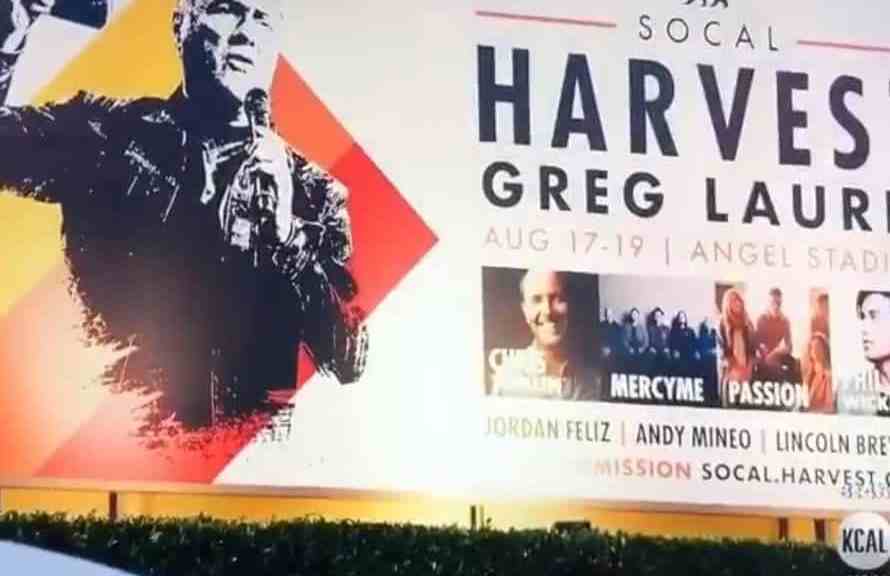
Harvest Ministries; Greg Laurie – Don’t Play with Fire


 Can a man scoop a flame into his lap and not have his clothes catch on fire? Can he walk on hot coals and not blister his feet? 

—Proverbs 6:27–28

Scripture:

Proverbs 6:27–28 

When I was a kid, I was fascinated by fire. This fascination prompted me to do some stupid things, like taking little green army men and lighting their plastic rifles on fire so that I could watch them melt into little green puddles. Once, however, I was doing this on a piece of newspaper, which also caught on fire. So, I grabbed the newspaper with the burning green army men and threw it all into a wastebasket. The wastebasket, unfortunately, was made of bamboo, and it, too, was set ablaze. Thankfully, I was able to put out the fire.

That is how sin works. It starts small, and then it grows out of control. That’s what the author of Proverbs 6 was talking about when he wrote, “Can a man scoop a flame into his lap and not have his clothes catch on fire? Can he walk on hot coals and not blister his feet?” (verses 27–28 NLT).

Samson learned that lesson the hard way. He thought he could handle sin. He thought he could keep playing the game. But the devil knows how to package his wares. He knows how to sell his stuff. The devil sized up Samson and figured out that he was a he-man with a she weakness. He couldn’t bring Samson down on the battlefield, so he brought him down in the bedroom. And he found a willing accomplice in Samson, who thought he could handle it.

Temptation comes in attractive packages, but for temptation to succeed, we must be willing participants. For temptation to work, there must be desire on our part. James 1:14–15 says, “Temptation comes from our own desires, which entice us and drag us away. These desires give birth to sinful actions. And when sin is allowed to grow, it gives birth to death” (NLT).

For the devil to succeed, we must listen to him, yield to him, and desire what he is offering. The devil can throw anything at us. He offers different kinds of bait. But it isn’t the bait that constitutes sin. It’s the bite.

That’s why Jesus warned, “Keep watch and pray, so that you will not give in to temptation. For the spirit is willing, but the body is weak!” (Matthew 26:41 NLT). It’s why Paul wrote, “If you think you are standing strong, be careful not to fall. The temptations in your life are no different from what others experience. And God is faithful. He will not allow the temptation to be more than you can stand. When you are tempted, he will show you a way out so that you can endure” (1 Corinthians 10:12–13 NLT). It’s why James advised, “So humble yourselves before God. Resist the devil, and he will flee from you” (James 4:7 NLT).

Temptation can get the better of us only if we choose to play with spiritual fire.

Reflection Question: How can you thwart temptation in your life? Discuss this with believers like you on Harvest Discipleship!


Harvest.org | Greg Laurie

Days of Praise – God’s Shadow


by Henry M. Morris, Ph.D.

“Keep me as the apple of the eye, hide me under the shadow of thy wings.” (Psalm 17:8)

There are 12 references in the Bible to God’s “shadow,” understood as a type of His invisible but very real guiding presence. The reference in our text above is the first, and there are three other references to this beautiful metaphor—the “shadow” of the wings of God. Psalm 36:7 assures us that men can “put their trust under the shadow of thy wings,” and Psalm 57:1 states that we can take refuge there “until these calamities be overpast,” and then we can “rejoice” there (Psalm 63:7).

The Lord’s presence is like “the shadow of a great rock in a weary land,” according to Isaiah 32:2. The same prophet quoted God as saying that “I have covered thee in the shadow of mine hand” even as He formed the heavens and the earth, while hiding us “in the shadow of his hand” (Isaiah 51:16; 49:2).

Then there is the wonderful promise of Psalm 91:1: “He that dwelleth in the secret place of the most High shall abide under the shadow of the Almighty.” He can also be “a shadow from the heat, when the blast of the terrible ones is as a storm against the wall,” bringing down “the heat with the shadow of a cloud” (Isaiah 25:4–5). Similarly, He is “a tabernacle for a shadow in the day time from the heat, and for a place of refuge, and for a covert from storm and from rain” (Isaiah 4:6).

The last reference speaks of “the anointed of the LORD” (that is, of the Messiah, Jesus Christ), assuring God’s people that “under his shadow we shall live among the heathen” (Lamentations 4:20). These are all “exceeding great and precious promises” (2 Peter 1:4). Hidden under the shadow of God is indeed a good and safe place to be in times like these. HMM


https://www.icr.org/articles/type/6

Joyce Meyer – Let the Spirit Take the Lead


I am the Lord your God, Who teaches you to profit, Who leads you in the way that you should go.

Isaiah 48:17 (AMPC)

Most people are afraid not to be like everyone else. Many people are more comfortable following specified rules than daring to follow the leading of God’s Spirit. When we follow man-made rules, we please people, but when we step out in faith and follow God’s Spirit, we please Him. We do not need to feel pressured to pray a certain way for a certain length of time or to focus on specific things because other people are doing so. Instead, we need to be free to express our uniqueness as we pray the way God is teaching us. God uses each of us to pray about different things and that way all the things that need to be prayed about get covered.

Somehow we feel safe when we are doing what everyone else is doing, but the sad thing is that we will feel unfulfilled until we learn to “untie the boat from the dock,” so to speak, and let the ocean of God’s Spirit take us wherever He wills. I spent many years tied to the dock following specified rules and regulations of prayer that others had taught me and it was a good beginning, but eventually my prayer experience became very dry and boring. When I learned to untie my boat from the dock and give myself to the leadership of the Holy Spirit, a freshness and creativity came and it has been wonderful. I find that the Holy Spirit leads me differently almost every day as I pray, and I no longer do it according to rules, regulations, and time clocks.

Start right now asking God to show you who you are in the uniqueness He has given you and to help you hear and follow His voice according to the one-of-a-kind, wonderful way He has created you.

Prayer of the Day: Holy Spirit, free me from comparison and man-made expectations. Teach me to pray in the unique way You created me, and help me follow Your leading with confidence and joy, amen.


http://www.joycemeyer.org

Max Lucado – Trust God, the Provider 


Play

In Luke 12:19-20, the rich man said to himself, “You have plenty of good things laid up for many years.” But God said to him, “You fool!  This very night your life will be demanded from you” (NCV).

The rich fool went to the wrong person—  himself. And he asked the wrong question— What shall I do? His error was that his plans did not include God. Jesus did not criticize the man’s affluence. He criticized his arrogance.

Accumulation of wealth is a popular defense against fear. We think the more we have, the safer we are. God does not want his children to trust money. God is the great provider. The great giver. Absolutely generous and utterly dependable. Trust him, not stuff!


Home

Today in the Word – Moody Bible Institute – 2 John: Do Not Run Ahead


Read 2 John 1

Brands protect their reputations vigorously. They work hard to hire the best spokesperson and generally pay that person well. But if that representative does something to tarnish their image, brands will release them from their contracts just as purposefully as they hired them. Associations matter and brands understand that association with the wrong people can hurt.

In this brief second letter, John warns his readers to be on guard against people who associate with Christians but reject a core doctrine of the faith. They do not believe that Jesus Christ appeared in the flesh (v. 7). By this time, the gospel had spread widely enough, and different communities developed in different parts of the Roman world. As a result, strange teachings about Christ began to appear. One argued that Jesus Christ was not actually a flesh-and-blood human being but only appeared to be such. False teachers were spreading this doctrine as they travelled.

John feared that his readers would give in to this false teaching, and he would lose what he worked for and the reward that comes with faithfulness in Christ (v. 8). These people are deceivers (v. 7)! His advice is simple: Stick with what you have been taught. Stay with Christ who leads through His teaching. Reject Christ’s teaching, and you reject God. There are many details about the Christian life that God has not fully explained. Avoid speculation!

But what should we do with the false teachers who want to associate with us? Do not welcome them or even bring them into your home (v. 10). This may seem harsh, but the consequence of such friendship is clear. If you associate with them, you associate with their wickedness.

Go Deeper

Are you connected to people who question your confidence in Christ and God’s Word? Might they be in a position to influence and even deceive you? How does John suggest we respond? Expanded Reading:

2 John

Pray with Us

Holy Spirit, give us discernment and wisdom to reject false teachers who reject Christ. Help us stay rooted in Christ, follow Him faithfully, and remember our first love.

Anyone who runs ahead and does not continue in the teaching of Christ does not have God.2 John 1:9


https://www.moodybible.org/

Turning Point; David Jeremiah – Bad Days


NEW!Listen Now

For there is a proper time and procedure for every matter, though a person may be weighed down by misery.
Ecclesiastes 8:6, NIV

Recommended Reading: Ecclesiastes 8:1-8

Do you ever ask yourself, “How much more can I take?” We may think others don’t have hardships, but actor Drew Carey said, “Just because you’re a celebrity and you have money doesn’t mean bad things don’t happen to you or you don’t have bad days. Everybody’s a person.”1

Yes, but not everybody learns the procedure for leaning on Jesus during hard times. We’ll always have to do things we don’t want to do; we all experience things we’d like to avoid. But this is part of what teaches us humility. It causes us to realize we’re not in control, nor are we above the circumstances of life. We aren’t in heaven yet, but God has His proper times and procedures that allow us to trust Him.

Notice the relationship between humility and faith in 1 Peter 5:6-7: “Therefore humble yourselves under the mighty hand of God, that He may exalt you in due time, casting all your care upon Him, for He cares for you.” When faced with difficult situations that you can’t avoid, obey God in humility and rely on Him to guide you.

There is a fit way and season for the accomplishment of every business, which is known to God.
Albert Barnes

  1. Martin Holmes, “Drew Carey Opens Up About His Suicide Attempts & Mental Health Struggles,” TV Insider, February 1, 2024.


https://www.davidjeremiah.org

Our Daily Bread – Humble Leadership


Among you stands one you do not know. . . . the straps of whose sandals I am not worthy to untie. John 1:26-27

Today’s Scripture

John 1:19-28

Listen to Today’s Devotional

Apple LinkSpotify Link

Today’s Devotional

My friend Butch Briggs has been the beloved coach for the swim teams at a local high school for fifty-one years. Out of curiosity, I asked him how many state championships he’d won during his five decades. In his trademark, gentle tone he quipped, “I’ve not won a single championship because I’ve never swum in a single race.” Trying again, I asked him, “How many championships have your swimmers won?” He happily responded, “Thirty-nine.”

Butch taught me a valuable lesson. A coach plays an important role, but he didn’t want to take credit for what his swimmers accomplished.

Butch’s humility reminds me of how John the Baptist saw his role. John was tasked with pointing people to Jesus as the Messiah—the one who fulfilled God’s promise to send a rescuer. But John garnered so much attention that the religious leaders wanted to find out exactly who he was. In response, Scripture records that John “confessed freely, ‘I am not the Messiah’ ” (John 1:20). Even when they pressed him, John was clear that his role was to announce Jesus’ arrival (vv. 21-23). Jesus was the one they’d longed for (v. 27).

This aspect of humility—not taking more credit than is due—is a way we can keep a proper perspective regarding our accomplishments while recognizing others for the assignments or roles they’ve been given.

Reflect & Pray

Where might you struggle to display humility? How might the Spirit empower you to act humbly?


Dear Jesus, please grant me grace to act with the humility You so vividly displayed and modeled for us during Your life and death.

Christ calls us to love each other by being hospitable. Learn more by reading Humble Hearts, Open Hands.

Today’s Insights

In John 1:19-28, John the Baptist offers a striking picture of humble leadership. When questioned by religious authorities, he refuses to elevate himself. He’s not the Messiah, Elijah, or the Prophet they were expecting. Instead, he identifies himself simply as “the voice of one calling in the wilderness” (v. 23), pointing others to the coming Jesus. John’s leadership is defined by clarity of purpose—he knows who he is and who he isn’t. Rather than seeking recognition, he lowers himself, declaring that he’s unworthy even to untie the sandals of the one coming after him (v. 27). This posture of humility gives power to his witness. John’s role wasn’t to gather followers for himself, but to prepare the way for Christ. His example invites us to embrace humility and not seek our own recognition but to direct our attention to Jesus.


http://www.odb.org

Denison Forum – Why the Supreme Court ruling on tariffs is good news


Any of these stories could be the focus of today’s Daily Article:

  • The Winter Olympics concluded yesterday, with Norway winning forty-one medals and the US in second place with thirty-three. The US men’s hockey team won the gold medal in overtime, its first since the “Miracle on Ice” forty-six years earlier.
  • A historic winter storm has placed fifty-nine million people in the Northeast under weather warnings today.
  • At least fourteen people were killed yesterday, including seven National Guard troops, as violence erupted across Mexico after the army killed the country’s most-wanted drug lord.
  • With US forces in place across the Middle East, President Trump is said to be considering his options for Iran.
  • Authorities in Arizona are continuing their search for Nancy Guthrie more than three weeks after she disappeared.

But today, I’m focusing on Friday’s Supreme Court decision striking down President Trump’s global tariffs. I consider it an even more foundational story, though not for reasons you might think.

As you know, I lead a nonprofit ministry committed to neutrality with regard to partisan politics. It may therefore surprise you that I am writing this morning to claim that the Court’s decision is good news for every American.

The reason I can do so and remain missional is that my assertion has nothing to do with partisan politics or tariffs and everything to do with our national and cultural future.

 “If men were angels, no government would be necessary”

In his Pulitzer Prize-winning book, The Radicalism of the American Revolution, historian Gordon Wood writes that our revolution “did not just eliminate monarchy and create republics; it actually reconstituted what Americans meant by public or state power and brought about an entirely new kind of popular politics and a new kind of democratic officeholder.” As political scholar Yuval Levin has written, “The Constitution establishes a politics in which no one is in charge and, therefore, in some sense, everyone is in charge.”

We tend to focus on the Founders’ positive view of humanity that counters centuries of European monarchical thinking with “all men are created equal.” In such a worldview, anyone can be elected president, sit on the Supreme Court, or serve in Congress.

But the Founders also understood the negative side of humanity. In Federalist No. 51, James Madison wrote:

If men were angels, no government would be necessary. If angels were to govern men, neither external nor internal controls on government would be necessary. In framing a government which is to be administered by men over men, the great difficulty lies in this: you must first enable the government to control the governed; and in the next place oblige it to control itself.

Accordingly, Madison and the other framers of our Constitution created checks and balances to ensure no individual or group would possess unaccountable power. In our system, the Supreme Court can overturn the actions of the president, the president can veto laws made by Congress, and Congress can overturn court decisions through legislation (cf. the horrific Supreme Court Dred Scott decision of 1857 vs. the Civil Rights Act of 1965).

Laws can replace laws, as can constitutional amendments. Presidents and members of Congress can be replaced by voters, and they and justices can be impeached.

A foundational fact for our national future

This system is intended to prevail even in the face of partisan pressure.

For example, in his response to Friday’s ruling, President Trump said he was “absolutely ashamed” of some justices who ruled six-to-three against him. Vice President JD Vance similarly called the high court decision “lawlessness” in a post on X.

The Wall Street Journal headlined that the ruling “rips open Trump’s relationship with the Roberts Court.” The president especially singled out Justices Amy Coney Barrett and Neil Gorsuch, whom he nominated in his first term, as a “disgrace to our nation.”

But he is abiding by the ruling and adopting other means of imposing tariffs. This outcome shows that our democratic republic continues to function 250 years after it was created. This is a foundational fact for which all Americans should be grateful.

I thought Christianity was a system of morality

However, a “government of laws, not of men,” as John Adams famously described our system, can only take us so far. Legality is a poor substitute for morality.

In our system, we can do whatever we want so long as we are not caught doing it. Much that is immoral and damaging to our lives and culture is nonetheless legal, from abortion and euthanasia to adultery, pornography, and same-sex marriage.

The only path to our best lives is one that changes not just what we do but the essence of who we are. This is an offer made by no legal system, worldview, or religion—except Christianity.

Only Jesus says we can be “born again” (John 3:3). Only he can make us a “new creation” (2 Corinthians 5:17). Only he can change our hearts.

Our culture does not understand this. I didn’t know it for many years before I became a Christian.

And, to my point today, I overlooked it for many years after I did.

I thought Christianity was a system of morality by which I could please God and receive his blessing in return. Reading the Bible, praying, attending church, sharing my faith, and so on were the expected ways for Christians to behave. I believed the credo, “What you are is God’s gift to you; what you make of yourself is your gift to God.”

But what I could “make of myself” was not enough. Somehow in my soul I knew there was more than this. My “God-shaped emptiness” was not yet filled. To cite St. Augustine, my heart was still “restless” because it had not yet come to “rest in him.”

“Rejoicing for weariness and radiance for dreariness”

It was a spiritual formation course in seminary where I first became acquainted with the idea that God’s Spirit could make me like God’s Son, that if I would surrender my life to him every day, he would then transform me in ways I could neither imagine nor produce.

This is what famed missionary J. Hudson Taylor called the “exchanged life.” In They Found The Secret: 20 Transformed Lives That Reveal a Touch of Eternity, the late Wheaton College President V. Raymond Edman wrote:

It is new life for old. It is rejoicing for weariness and radiance for dreariness. It is strength for weakness and steadiness for uncertainty. It is triumph even through tears and tenderness of heart instead of touchiness. It is lowliness of spirit instead of self-exaltation and loveliness of life because of the presence of the altogether Lovely One.

Would you like to make such an exchange today?

Quote for the day:

“I used to ask God to help me. Then I asked if I might help him. I ended up by asking him to do his work through me.” —J. Hudson Taylor

Our latest website resources:


Denison Forum

Harvest Ministries; Greg Laurie – Finish Well


 The end of a thing is better than its beginning; the patient in spirit is better than the proud in spirit. 

—Ecclesiastes 7:8

Scripture:

Ecclesiastes 7:8 

The poet Henry Wadsworth Longfellow said, “Great is the art of beginning, but greater is the art of ending.” And Solomon, the wisest man who ever lived, wrote, “The end of a thing is better than its beginning” (Ecclesiastes 7:8 NKJV).

Starting strong is overrated. Take sports, for example. Few baseball statisticians keep track of which team was ahead after the first inning. What matters is the final score. Likewise, starting strong is overrated in our spiritual journey. The Bible gives us examples of people who started strong in their service to the Lord, only to falter later. Scripture doesn’t celebrate these early successes; instead, it uses the people’s experiences as cautionary tales for other believers. One of the most memorable of these cautionary tales is that of Samson.

Samson had a great beginning. He was blessed with superhuman qualities. Physically, there was no one stronger. We get a sense of his power in Judges 14:5–6: “As Samson and his parents were going down to Timnah, a young lion suddenly attacked Samson near the vineyards of Timnah. At that moment the Spirit of the LORD came powerfully upon him, and he ripped the lion’s jaws apart with his bare hands. He did it as easily as if it were a young goat” (NLT).

Samson was a one-man army, a judge chosen by God to make a difference on behalf of His people. On one occasion Samson killed thirty Philistines—the enemies of the Israelites—to settle a bet. On another occasion he killed 1,000 Philistine warriors on the battlefield with a bone that he picked up from the ground. He wasn’t a fictitious superhero; he was the real deal.

For a time, Samson was a mighty man of God. And for a time, he was even a true world changer. Eventually, however, the world began to change him. Samson turned his back on God. He had an amazing beginning but a tragic ending.

One day your life will be summed up in a paragraph or two on a bulletin that will be handed out at your memorial service. No one will care about how much money you made or how much stuff you owned. No one will care how high you climbed in your profession. Instead, they’ll talk about what kind of person you were.

We don’t decide the day of our death any more than we decided the day of our birth. But we do determine the spiritual state we’ll be in when we die. God wants us to be close to Him. God wants us in friendship and fellowship and intimacy with Him. But it’s our choice whether to have a relationship with the Lord or not to have a relationship with Him. We must choose wisely so that we finish well.

Reflection Question: How do you want to finish your walk with the Lord? Discuss this with believers like you on Harvest Discipleship!


Harvest.org | Greg Laurie

Days of Praise – Explain, Expound, Expect


by Brian Thomas, Ph.D.

“And when they had appointed him a day, there came many to him into his lodging; to whom he expounded and testified the kingdom of God, persuading them concerning Jesus, both out of the law of Moses, and out of the prophets, from morning till evening.” (Acts 28:23)

In this final scene of Paul’s spiritually intense life, he convinced the Jewish leaders in Rome to visit him while he was under unjust house arrest. How did he handle them? Three actions set an example for those who wish to live for Jesus.

First, he explained Jesus from the Scriptures. Perhaps Paul pointed to Isaiah 53, even as the Lord Himself did, saying, “For I say unto you, that this that is written must yet be accomplished in me, and he was reckoned among the transgressors: for the things concerning me have an end” (Luke 22:37). Paul may have explained why Jesus is indeed that “seed” promised to arise from “the woman” who would deal the devil a death blow (Genesis 3:15). Are we ready to explain how Jesus fulfilled specific Scriptures?

Not satisfied with mere academics, Paul expounded on what the Lord Jesus had done in his life when he “testified the kingdom of God.” For example, Paul told King Agrippa, “I heard a voice speaking unto me, and saying in the Hebrew tongue, Saul, Saul, why persecutest thou me?” (Acts 26:14). Are we likewise prepared to tell just how Jesus has woven us into His kingdom?

Last, Paul offered expectations. Do we communicate what we expect hearers to do with this good news? “Repent therefore of this thy wickedness, and pray God, if perhaps the thought of thine heart may be forgiven thee” (Acts 8:22). After he explained, expounded, and expected, “some believed” (Acts 28:24). May every Christian follow Paul’s three-step approach of evangelism modeled in our text. BDT


https://www.icr.org/articles/type/6

Joyce Meyer – God Always Finishes What He Starts


And I am convinced and sure of this very thing, that He Who began a good work in you will continue until the day of Jesus Christ [right up to the time of His return], developing [that good work] and perfecting and bringing it to full completion in you.

Philippians 1:6 (AMPC)

God chooses us according to His foreknowledge, and He begins a good work in us. Most of us struggle at times and feel we are not making any progress. We may even feel we are going backward in our spiritual growth. Today’s scripture is a great one to go to when you feel this way because He who began a good work in you, meaning God, will bring it to completion. He doesn’t tell us how long it will take, but He never fails to finish what He started.

Part of how long the good work takes depends on how responsive we are to the teaching and correction of the Holy Spirit. Correction is not a bad thing; it is really just direction about how to do the right thing. If we receive it graciously and thankfully, we can grow much faster than if we are stubborn and rebellious. God’s way is always the best way. Submit to it quickly, and your walk with Him will be much easier.

Prayer of the Day: Lord, thank You for beginning a good work in me. Help me welcome Your correction with gratitude, submit quickly to Your leading, and trust You to complete everything You’ve started in my life, amen.


http://www.joycemeyer.org

Max Lucado – Fear of Persecution 


Play

Good people aren’t exempt from violence. We aren’t insulated. But neither are we intimidated. In Matthew 10:28, Jesus says, “Do not fear those who kill the body but cannot kill the soul” (NKJV).  Jesus had just told the disciples to expect scourging, trials, death, hatred, and persecution.  To their credit, none defected.

Psalm 118:6 declares, “The Lord is on my side; I will not fear. What can man do to me?” Satan unleashed his meanest demons on God’s Son.  Yet the devil of death could not destroy the Lord of life. I pray God spares you such evil.  May he grant you long life and peaceful passage. Remember, God wastes no pain.


Home

Today in the Word – Moody Bible Institute – 1 John: Love Your Family


Read 1 John 2:1–11

As a young man I went on a caving expedition in the Adirondack mountains of New York. Along with my co-campers, I squeezed myself through narrow passages and down cracks in the rock until we came to a large room underground. At that point we all agreed to turn our lights off. I was not prepared for the depth of darkness that enveloped us. Without light, we were completely lost. If we tried to leave the cave without light, we would never have made it out.

In his first letter, John uses light and darkness to motivate Christians to love one another (v. 10). He argues that anyone who hates a fellow Christian is like someone who walks around in the dark, they are lost because they have been blinded by darkness (v. 12).

Why use such a powerful illustration? Because hating a fellow Christian is unbecoming of a person who claims to believe in Jesus Christ. Consider the incongruity of a person who claims to love Christ and yet hates those for whom Christ died. We would look askance at someone who says, “I love Jesus, but I hate others who love Jesus.” That person would be blind to the truth of the gospel. In Christ, those who have believed are family. Family members ought not hate one another. We may disagree, we may argue, we may struggle with one another, but we never hate each other.

On the other hand, anyone who loves a fellow Christian is like a person who walks around in a well-lit environment! That individual will not stumble because they can see any obstacle in their way (v. 10). Loving fellow believers should be the normal setting for Christians because we believe in the Light of the World!

Go Deeper

Are there believers whom you hate? Did you try to justify these feelings? Why is hating a fellow believer like walking in darkness? Extended Reading:

1 John 2-3

Pray with Us

What a blessing that You saved us into the family of faith! We are not alone! As we read about love in John’s letters, we pray, Jesus, that You will give us genuine love for our brothers and sisters.

Anyone who claims to be in the light but hates a brother or sister is still in the darkness.1 John 2:9


https://www.moodybible.org/

One of the Most Important Small-Town Papers of the Industrial Age Closing

The Derrick, a historic small-town newspaper in Oil City, PA, ceases publication after 150 years amid industry decline.


OIL CITY, Pennsylvania — The Derrick will be no more.

Derrick Publishing Company, publisher of The Derrick and The News-Herald, announced on Feb. 5 that it will cease publication. Employees were told the decision was driven by the long-term decline in support for newspapers, along with regional losses in employment, retail activity, advertising revenue and readership.

The last day of publication of both newspapers will be March 20.

Founded in 1871 as the Daily Derrick by C.E. Bishop & Company, The Derrick earned an international reputation for the quality of its reporting. Its correspondents’ dispatches and wire stories were circulated around the world, including its authoritative publication of oil spot prices — set in Oil City — as well as widely used annual statistical compendiums.

By 1871, this region was firmly established as oil country, a transformation that began just 13 years earlier when Edwin Drake struck oil in what had been the rugged wilderness of western Pennsylvania, a land of dense forests and more bears than people.

People who lived here in the mid-18th century always noticed the green-black oil that lingered on the top of Oil Creek. Aside from using it for a primitive medical salve, locals mostly ignored its presence.

At the time, the nation stood on the cusp of the Industrial Revolution, but meeting the growing demand for reliable illuminating oil posed a major challenge. Whale oil had become prohibitively expensive, and whaling was rapidly depleting the population. Alternatives such as lard oil, tallow oil and coal oil distilled from shale existed, but none were yet abundant or affordable enough to meet the country’s needs.

The shortage of affordable lighting fuel was slowing both industrial expansion and urban growth. Without reliable light after dark, factories stood idle, and businesses closed their doors at sunset.

That changed when Drake successfully drilled for oil — the first person to deliberately extract it from beneath the earth’s surface. His breakthrough sparked the oil boom and made kerosene a practical, widely available commodity.

Land prices soared, and boomtowns such as Pithole City sprang up almost overnight. Speculators drilled wells wherever they could, sometimes erecting derricks directly beside, or even atop, one another. Fortunes were chased at a fever pitch, with little regard for the toll on the land or on rival workers. Conditions in the fields were perilous, and accidents were frequent, often fatal.

Fortunes were won, lost, won again, and lost sometimes forever as these wildcatters would try to make sense of the fluctuations of the price of oil.

At the time, nowhere else in the world was drilling for oil. The region’s economy exploded with growth, but the boom came at a steep cost as vast stretches of lush, green wilderness were cleared and scarred in the rush for petroleum.

And until The Daily Derrick began reporting on it, there was little sustained coverage of the industrial engine transforming the region — the oil trade that fueled the rising steel centers of Pittsburgh and Cleveland. There was also scant attention paid to a Cleveland bookkeeper named John D. Rockefeller, whose financial discipline and business instincts would eventually allow him to dominate the industry as founder of Standard Oil.

As energy author Bob McNally put it in his 2017 book “Crude Volatility: The History and the Future of Boom-Bust Oil Prices,” “The Derrick’s the sole source for continuous reporting on prices, news, and fundamentals for the early decades of the modern oil industry.”

The Derrick’s reporting, research and daily documentation of the oil industry became an essential source for Ida Tarbell, the famed muckraking journalist, as she chronicled the “oil wars” of the 1870s.

Tarbell, whose family life was affected by the domination of the industry because her father had been an independent oil man, is known by journalists for her 19-part series “The History of the Standard Oil Company,” published from November 1902 through October 1904 in McClure’s Magazine and published as a book in 1904.

Her work brought national attention to the untapped impact industrial monopolies would have on American businesses and was considered a catalyst to the Supreme Court’s decision to break up the Standard Oil monopoly.

Without the reporting of The Derrick, she may have never been able to write her serial or her book.

In a month, it will be gone. Its passing will likely draw less attention than the possible closure of the Pittsburgh Post-Gazette 90 miles to the south, the 300 jobs recently cut at The Washington Post 300 miles away, or the 50 positions eliminated at the Atlanta Journal-Constitution 800 miles from here.

It is part of a crisis no one seems able to solve. Last year alone, more than 135 newspapers across the country shut their doors, the latest chapter in a two-decade decline. Since 2005, the number of newspapers published in the United States has fallen from 7,325 to fewer than 4,500.

Today’s front page of the Derrick featured a story on tempers flaring at a Sugarcreek Borough meeting, alongside coverage of township council sessions and local school board debates. It also included reporting on the everyday issues shaping life in the region — snow removal, flooding, road closures and legislation in Harrisburg that could affect residents’ lives.

That kind of coverage will now disappear. So will the ability to speak truth to power. The power here may not be what it was in the 1870s, but someone still needs to hold water authorities, county commissioners and school boards accountable — and soon, no one will be left to do it.

It’s troubling when a major city such as Pittsburgh or a powerful hub like Washington, D.C., loses local journalism. But it may matter even more in a small community such as Oil City, where the loss creates a true news desert, weakening the region’s social fabric, eroding its sense of connection, and leaving those in power with no guardrails at all.

In small towns especially, the loss can depress local voter engagement and open the door to government corruption and incompetence when no one is left to hold officials accountable.

There are no easy answers. Newspapers, long sustained by benevolent — and often wealthy — owners, have seen the revenue streams that once supported them evaporate: legal notices, classifieds, major retail advertising and paid print subscriptions have all declined in the internet era.

But the loss of local newspapers doesn’t just affect the journalists who worked there. It harms residents too — people who may never learn that a water authority decision could raise their taxes, or that there was even a public meeting where they could have voiced objections.


    Salena Zito is a staff reporter and columnist for the Washington Examiner. She reaches the Everyman and Everywoman through shoe-leather journalism, traveling from Main Street to the beltway and all places in between. To find out more about Salena and read her past columns, please visit the Creators Syndicate webpage at http://www.creators.com.

Salena Zito 2:00 PM | February 21, 2026

Source: One of the Most Important Small-Town Papers of the Industrial Age Closing – HotAir

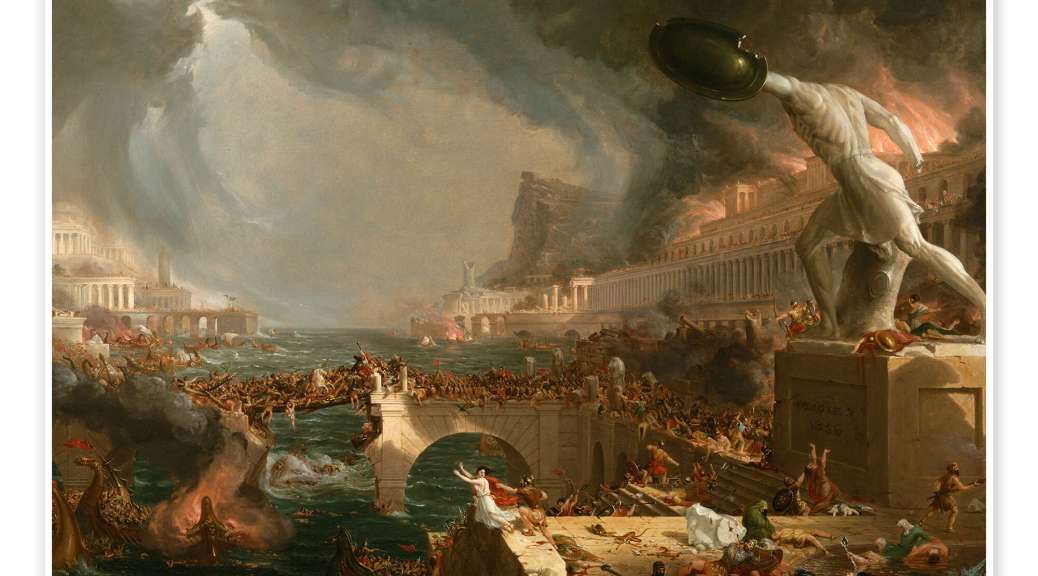
Echoes of Empire

Parallels between the fall of Rome and the looming collapse of the modern West.


Western Europe, traditionally viewing itself as the cultural and institutional heir to Greco-Roman antiquity, confronts anxieties reminiscent of the late Roman experience.

The Western Roman Empire did not collapse suddenly or for a single reason; rather, it disintegrated through the cumulative interaction of internal fragility and external pressures. In a comparable manner, contemporary Europe and its cultural extensions are facing demographic imbalance, institutional erosion, cultural exhaustion, and sustained migratory pressures. While historical analogy should be applied cautiously, the parallels between late antiquity and the present are striking enough to warrant closer scrutiny.

Historians have debated Rome’s fall for centuries, attributing it variously to barbarian invasions, economic stagnation, overextension, corruption, climate fluctuation or epidemic disease. Modern scholarship prefers “multi-” to “unicausality.” Thus, Rome fell because its political, demographic, economic, and cultural systems insidiously eroded, decreasing resilience in the face of external shocks. In a civilizational perspective, the modern West appears vulnerable along four analogous dimensions: (a) large-scale migration, (b) demographic decline among native populations, (c) cultural decadence or exhaustion, and (d) the erosion of core institutions. If these trends continue unchecked, the foundational achievements of Western civilization—constitutional governance, individual liberty, and the rule of law—may suffer irreparable damage.

The Western Roman Empire saw a “civilian invasion” reflecting extensive population movements during the Migration Period (c. 300–600). Not so much as raiders as displaced populations seeking security, land, and opportunity, migrating tribes—Visigoths, Ostrogoths, Vandals, Franks, and Saxons—crossed the eastern border (Limes). Incursions by Huns and other nomadic groups further destabilized border regions. At the same time, the capacity of Roman legions to repel migrants decreased. The Rhine crossing of 406 symbolized the breakdown of Roman border control, culminating in the sack of Rome in 410 and the deposition of Romulus Augustulus, the last emperor, in 476.

Westward migrations were never inherently aggressive. In fact, barbarians admired Roman civilization, determined to enjoy the benefits of order and prosperity. However, Rome’s internal challenges—political instability, reliance on foederati, and erosion of military discipline—meant that integration increasingly failed. Autonomous power structures emerged by default, Roman law lost authority, and imperial cohesion dissolved. What proved fatal was not “diversity” as such, but state inability to assimilate newcomers into a shared civic and legal culture, defining and transmitting a unifying identity.


Contemporary Europe experiences demographic transformation through sustained mass immigration, particularly from regions whose indigenous populations—Christians and Jews—have been persecuted and oppressed by Muslims since the seventh century. As of the mid-2020s, the latter constituted approximately 6% of Europe’s population, with projections varying widely depending on migration and fertility trends. A reflection of deeply entrenched dogmatism in the diasporic ummah, security services have documented disproportionate involvement of immigrants in terrorist activity. These realities place strain on intelligence, policing, and social cohesion, analogous—though not identical—to the external pressures experienced by Rome when its borders gave way.

Demographic decline constituted a critical internal challenge in late Rome. From the late Republic onward, elite fertility rates fell sharply. Augustus attempted to reverse this trend through the Lex Iulia (18 BC) and Lex Papia Poppaea (9 AD), which incentivized marriage and childbirth. Despite these measures, economic burdens, urbanization, inheritance practices, and changing social norms limited success. Recurrent epidemics—most notably the Antonine Plague (165–180)—accelerated the population reduction, contributing to labor shortages and military vulnerability.


Contemporary Western societies face comparable demographic challenges. Fertility rates across Europe and North America remain well below replacement level. Scholars identify multiple causes: secularization, delayed family formation, economic insecurity, and the prioritization of individual autonomy over collective continuity. Immigrant populations normally exhibit higher fertility, gradually reshaping demographic profiles.

Douglas Murray’s argument in The Strange Death of Europe (2017) centers on this demographic asymmetry, a looming collapse that both presupposes and aggravates a loss of cultural self-confidence. Rather than holding immigration solely responsible for decline, he emphasizes what he sees as elite reluctance to articulate or defend Western cultural norms, compounded by historical guilt. While critics fault him for “selective evidence”, his central claim—that demographic decline among native populations weakens societal continuity—is broadly supported in demographic literature. Importantly, he refuses to assert demographic “replacement” as an inevitable biological process, identifying a political and cultural failure of integration and confidence.


Rome’s own demographic weakness forced reliance on barbarian recruits and settlers, altering the composition and loyalty of its institutions. Population reduction thus became not only a numerical problem but also a structural one, undermining resilience and continuity.

In The History of the Decline and Fall of the Roman Empire (1776–1788), Edward Gibbon famously attributed Rome’s fall in part to moral decline, though modern historians interpret “decadence” less as hedonism than as institutional complacency. Much as Roman elites indulged in luxury, the deeper issue lay in decreasing civic engagement, economic rigidity, and dependence on coercive bureaucracy. Citizens disengaged from public responsibility, content with state provision of entertainment and sustenance.

In the modern West, cultural decadence manifests less through excess than through relativism and institutional self-doubt. Universities, once guardians of intellectual tradition, prioritize ideological conformity over scholarly rigor. Critics argue that identity-based frameworks displace universalist inquiry, eroding shared academic foundations. Addressing overall trends, commentators such as Eric Zemmour contend that multiculturalism undermines social cohesion—a claim with historical precedent in Rome’s gradual cultural fragmentation.

A particularly vivid symptom of this cultural exhaustion is the widespread iconoclasm directed at symbols of Western heritage by younger generations. Following the 2020 Black Lives Matter protests, activists—typically university students and indiscriminate hooligans, as ideologically uncompromising as historically ignorant—toppled or defaced statues of figures like Christopher Columbus in Boston and Minneapolis, Edward Colston (a slave trader) in Bristol, and even Founding Fathers such as George Washington and Thomas Jefferson, whose legacies include slavery despite their roles in establishing freedoms. In Portland, statues of Abraham Lincoln and Theodore Roosevelt were pulled down amid accusations of racism towards Native Americans.

Similar actions targeted colonial-era monuments in Europe, including those of King Leopold II in Belgium. Proponents view these acts as “reckoning” with historical injustices, removing glorification of oppression from public spaces. Yet critics, including Murray, see them as manifestations of profound self-loathing: a rejection of the West’s complex inheritance, where imperfect figures advanced enlightenment values, rule of law, and the individual rights underpinning modern liberty.

This turning against one’s own civilizational symbols echoes Rome’s late-era apathy towards its proud traditions. By denying pride in ancestors who, flaws notwithstanding, forged a heritage of freedom and innovation, young Westerners risk forfeiting their birthright to a confident future. Masochistic gestures do not erase history but signal a tragic reluctance to defend or transmit it, leaving societies vulnerable to invasion—just as Rome’s loss of cultural assertiveness proved fatal amid external pressures.

Cultural exhaustion erodes the willingness to defend inherited norms. As Rome’s citizens increasingly avoided military service, contemporary Western societies exhibit decreasing civic participation and trust. This erosion does not destroy societies immediately, but renders them vulnerable to disciplined ideological movements, whether Islamist or Marxist.

Institutional decline ultimately sealed Rome’s fate. The third-century crisis exposed systemic fragility: rapid imperial turnover, fiscal collapse, and military mutiny. Diocletian’s reforms delayed collapse but entrenched bureaucracy and authoritarianism. The permanent division of the empire in 395 weakened the West irreversibly. By the fifth century, taxation crushed agricultural productivity, trade plummeted, and law receded.

Parallels in the modern West include decreasing trust in democratic institutions, polarization, and executive overreach. Secularization has left a moral vacuum, with Christianity’s social influence waning sharply across Europe. While profane governance is not invariably destabilizing, the loss of shared metaphysical assumptions complicates social cohesion. In America Alone (2006), Mark Steyn’s warnings of civilizational decline—predictably criticized for “alarmism”—underscore the risks of institutional fragmentation and cultural disunity.

The fall of Rome inaugurated centuries of economic regression and cultural contraction in Western Europe. While history never repeats mechanically, it may rhyme. The modern West is caught in an identity crisis. Renewal remains possible, as demonstrated by Byzantium’s example, but only through deliberate reaffirmation of demographic vitality, institutional integrity, cultural confidence, and moral purpose. Rome’s lesson is not that decline is inevitable, but that neglect ensures it.


Lars Møller | February 22, 2026

Source: Echoes of Empire – American Thinker

What Happened with the Tariffs Ruling

Here is what happened, and where the justices were coming from.


The Supreme Court’s February 20, 2026 decision in Learning Resources, Inc. v. Trump (consolidated with Trump v. V.O.S. Selections, Inc.) is a striking illustration of the enduring tension between strict adherence to constitutional procedure and the pursuit of practical policy outcomes.  In a 6-3 ruling, the Court invalidated the administration’s use of the International Emergency Economic Powers Act (IEEPA) to impose its broad “reciprocal” tariffs (applied to nearly all trading partners to address trade deficits) and “trafficking” tariffs (targeting imports from Canada, Mexico, and China to combat fentanyl flows and border security threats).  This outcome highlights a fundamental question: When does insistence on procedural perfection undermine effective governance?

The Binary Frame Imposed by the Court

The administration treated tariffs as a multifaceted tool capable of addressing several interconnected problems at once.  Economically, they aimed to reduce persistent trade imbalances and protect domestic industries.  Legally, they relied on IEEPA’s emergency authority to act swiftly.  Strategically, they linked trade policy to national security imperatives, including border control and the fentanyl crisis.  This approach sought to solve multiple challenges through a single mechanism, creating a layered, three-dimensional strategy.

The Supreme Court, however, reduced the issue to a simpler, two-dimensional conflict.  Chief Justice Roberts, writing for the majority (joined in full by Justices Sotomayor, Kagan, Gorsuch, Barrett, and Jackson on key holdings), emphasized that tariffs are taxes and that Article I, Section 8 of the Constitution assigns the taxing power exclusively to Congress.  The Court rejected the administration’s interpretation of IEEPA’s language (“regulate … importation”) as authorizing broad tariff imposition, pointing to the absence of historical precedent and invoking the Major Questions Doctrine: Significant new powers cannot be inferred from vague or ambiguous statutory wording.  By enforcing this strict procedural boundary, the Court dismantled the administration’s policy, confining future action to a narrower, more conventional legislative path.

The Collapse of a Multidimensional Approach

The administration’s strategy had attempted to balance three distinct but overlapping dimensions:

  • Economic and trade policy
  • Statutory emergency authority
  • National security and border-related imperatives

The ruling effectively eliminated executive flexibility on the third dimension, forcing the policy back into a two-dimensional space dominated by congressional authority and explicit statutory limits.  This flattening of a complex problem into a simpler opposition — executive overreach versus congressional prerogative — mirrors a broader pattern in modern governance: multidimensional challenges reduced to binary choices that limit adaptive options and increase the risk of gridlock or escalation.

The Administration’s Immediate Reorientation

Rather than accepting the Court’s two-dimensional constraint, the administration responded swiftly with alternative legal pathways.  Within hours, it invoked Section 122 of the Trade Act of 1974 (balance-of-payments authority) to impose a temporary 10% global tariff for 150 days.  It also signaled plans to reframe the invalidated tariffs under more targeted statutes, such as Sections 301 (addressing unfair trade practices) and 232 (national security threats).  These moves preserved much of the original policy intent while aligning with procedurally narrower, more defensible statutory authority.  The pivot demonstrated resilience: when one avenue is blocked, shift to others that achieve similar ends through different means.

Divisions Within the Court’s Reasoning

The 6-3 vote concealed meaningful internal differences among the justices, revealing competing priorities:

  • Roberts, Gorsuch, and Barrett focused on structural integrity and the Major Questions Doctrine, prioritizing the long-term stability of constitutional boundaries over short-term policy gains.
  • The dissenters (Thomas, Kavanaugh, and Alito) emphasized practical necessity, arguing that the emergency context — fentanyl deaths, trade imbalances, and border vulnerabilities — justified broader executive latitude.

Even within the majority, concurrences varied in emphasis — some stressing textual limits, others constitutional principles — showing that interpretive disagreements can create subtle but significant variations in how rigid rules are applied.

A Fundamental Stress Test

At its core, the decision poses a classic dilemma: Is the “perfect” enforcement of constitutional procedure the enemy of the “good” policy result?  The majority viewed the constitutional framework as fixed and non-negotiable: If the legal machinery is bent to achieve immediate objectives, the system risks long-term instability and erosion of checks and balances.  The administration, by contrast, contended that rigid adherence to procedure at the expense of urgent national needs — economic security, public health, border integrity — undermines the very purpose of government: to protect and serve the people.

This ruling is more than a tariff case.  It is a structural stress test for American governance in an era of accelerating crises and rapid technological change.  As problems grow increasingly interconnected and urgent, the tension between procedural purity and pragmatic flexibility will only intensify.  The Court’s insistence on congressional primacy may safeguard institutional integrity, but it also raises the question of whether such constraints will enable timely adaptation or instead drive reliance on workarounds, political brinkmanship, and alternative power centers.

In the end, the decision reminds us that governance is not merely about following rules; it is about whether those rules remain capable of addressing the real-world challenges they were designed to manage.  When perfection in process blocks progress toward the common good, the system faces a choice: Preserve the machine at all costs, or risk bending it to preserve the people it serves.


David DeMay | February 22, 2026

Source: What Happened with the Tariffs Ruling – American Thinker

Today in the Word – Moody Bible Institute – 2 Peter: All Inclusive


Read 2 Peter 1:1–11

For ten years I led trips to Israel for students. Since I was serving young people, it was important for them to understand the cost of the program. I wanted no confusion about how much they had to pay and how much cash was needed for expenses. Everything was included up front. Once they paid that price, they didn’t need to bring any money with them.

Knowing his readers were facing the pain of persecution, Peter reminded them that God “has given us everything we need for a godly life” (v. 3). In the face of difficulty, it is easy for Christians to assume we are missing something…that we need more. We may even come to doubt God’s goodness and believe He is withholding something from us.

Peter reminds us that we know God’s character! This knowledge should enable us to understand how to live (v. 3). God is gloriously good and His call on our lives, even if it means difficulty, is a good thing. When we cling to His promises, our desire is for Him rather than the world (v. 4). He has forgiven our sins and cleansed them (v. 9). We will be with Him one day! Clinging to these promises takes faith. We don’t have all the benefits now, but we will, for they have already been paid for.

With faith in God and His promises established, Peter calls us to press on by growing in a series of behaviors which will make our knowledge of God productive. It’s not enough to have knowledge if it doesn’t work itself out in life. Like a person who pays for an all-inclusive trip but forgets that all their meals have been paid for, we might forget that God cleansed us from sin. We need to remember what He has promised, paid for and provided!

Go Deeper

What do these promises described by Peter mean to you? How will they change your outlook when facing difficulty? Extended Reading:

2 Peter

Pray with Us

Merciful God, we are thankful for Peter’s exhortations and advice in his letter to the churches. Thank You for this wise disciple! May we cling to Your promises and Your divine power.

His divine power has given us everything we need for a godly life.2 Peter 1:3


https://www.moodybible.org/

Our Daily Bread – Schooled in Love


We love because He first loved us. 1 John 4:19

Today’s Scripture

1 John 4:16-21

Listen to Today’s Devotional

Apple LinkSpotify Link

Today’s Devotional

Woody Cooper stood in the loud mob the day Dorothy Counts, a Black girl, enrolled in his all-White high school in North Carolina. Taunting her, some boys yelled racial slurs and threw trash at Dorothy, but Woody didn’t rebuke them, even staying silent when a woman cried out, “Spit on her, girls!” He later asked himself, Why didn’t you at least say something? She was just another student coming to school. Haunted for decades by his sin of omission, especially after seeing himself in a news photo from that day, Woody finally reached out to Dorothy forty-nine years later to apologize.

As Woody learned, showing love and support for another human being isn’t just being brave; it’s also making a choice to be like Jesus. John the apostle taught this lesson to churches burdened by false teaching about Christ and His love.

“We love because He first loved us,” John wrote. “Whoever claims to love God yet hates a brother or sister is a liar” (1 John 4:19-20). John recalled this great command: “Anyone who loves God must also love their brother and sister” (v. 21).

Woody and Dorothy reflected that love as they became close friends. They spoke at churches and schools together. On the night before he died, she came to see him. “I loved him,” she said, “and I know that he loved me.” That’s the Jesus way. It can be our way too, as God brings us together in His transforming love.

Reflect & Pray

When did you fail to love like Christ? How can you better show His love?


Please guide me to love like You, Jesus.

Are you longing for redemption? Find out how Jesus is the answer by reading The Failure of Humanity and Longing for Redemption.

Today’s Insights

Jesus loves us so much He made a way for us to be with Him forever by dying on the cross for our sins (John 3:16; Romans 5:8). All we need to do is believe in Him and come to Him in repentance. Christ says to “love each other as I have loved you” (John 15:12; see 1 John 4:11). We exhibit this love by being “devoted to one another” and honoring others “above ourselves” (Romans 12:10), by not harming each other (13:10), and by “[carrying] each other’s burdens” (Galatians 6:2). This love is beautifully described in 1 Corinthians 13 as “patient, . . . kind, . . . not self-seeking, . . . not easily angered” (vv. 4-5). It “does not delight in evil but rejoices with the truth” (v. 6). This love is possible only through the Holy Spirit’s work in us—transforming us to be more like Christ (Romans 5:5; 2 Corinthians 3:18) and enabling us to truly love others.


http://www.odb.org

Days of Praise – Creation in Praise of God


by Henry M. Morris, Ph.D.

“For ye shall go out with joy, and be led forth with peace: the mountains and the hills shall break forth before you into singing, and all the trees of the field shall clap their hands.” (Isaiah 55:12)

Every now and again, the biblical writers were so lifted up in spirit as they contemplated the glory of God and His great works of creation and redemption that they could sense the very creation itself singing out in happy praises. “The heavens declare the glory of God” (Psalm 19:1) is one of the most familiar of these divinely inspired figures of speech, but there are many others. “Make a joyful noise unto the LORD, all the earth . . . . Let the sea roar, and the fulness thereof. . . . Let the floods clap their hands: let the hills be joyful together before the LORD; for he cometh to judge the earth” (Psalm 98:4, 7–9).

Often these praises are in contemplation of God’s final return to complete and fulfill all His primeval purposes in creation, as in the above passage. This better time is also in view in our text, which looks forward to a time when “instead of the thorn shall come up the fir tree, and instead of the brier shall come up the myrtle tree: and it shall be to the LORD for a name, for an everlasting sign that shall not be cut off” (Isaiah 55:13). God has triumphed over evil!

And this all points ahead to the eventual removal of the great Curse that now dominates creation because of man’s sin (Genesis 3:14–19). For the present, “the whole creation groaneth and travaileth in pain together until now” (Romans 8:22). One day, however, the groaning creation “shall be delivered from the bondage of corruption” (Romans 8:21). Therefore, “let the heavens rejoice, and let the earth be glad . . . . Let the field be joyful, and all that is therein: then shall all the trees of the wood rejoice” (Psalm 96:11–12). HMM


https://www.icr.org/articles/type/6