Tag Archives: human rights

Denison Forum – Watching seven playoff games but avoiding the Golden Globes


It was a busy weekend for some subsets of American society.

If you’re a college football fan, you likely watched Miami and Indiana win their playoff games (Indiana “looks like it will never lose again,” according to one of my favorite sports commentators). If you’re a pro football fan (as many seem to be these days), you had five games to watch, including the Bears’ comeback for the ages Saturday night, with one more contest tonight. If you’re a movie and TV fan, you likely watched the Golden Globes last night, where One Battle After Another and Hamnet won their categories.

If you’re none of the above, you’re wondering if you should keep reading this morning.

I understand the question. While I watched every football game I mentioned, I have not seen even one of the movies or TV shows for which Golden Globes were awarded. As a result, I am avoiding reviews of last night’s ceremony this morning. Time is too short to spend it on what is irrelevant to me today.

This fact is more relevant to our souls than many people seem to know.

The “container” and its “contents”

The Franciscan priest Richard Rohr begins Falling Upward, his meditation on the spiritual life, this way:

There is much evidence on several levels that there are at least two major tasks to human life. The first task is to build a strong “container” or identity; the second is to find the contents that the container was meant to hold.

In this first “task,” we ask the essential questions, “What makes me significant?”, “How can I support myself?”, and “Who will go with me?” However, the “container” these questions help to define “is not an end in itself, but exists for the sake of our deeper and fuller life, which we largely do not know about ourselves.”

When we focus on the “container” but not the “contents,” over time, we inevitably resign ourselves to lives without meaning, or we fixate on means as ends and commit ourselves to aims unworthy of our divine purpose. But when we learn to focus on the purpose for which our lives are intended in what Rohr calls the “second half of life,” several positive consequences occur:

We have less and less need or interest in eliminating the negative or fearful, making again these old rash judgments, holding onto old hurts, or feeling any need to punish other people. Our superiority complexes have gradually departed in all directions. We do not fight these things anymore; they have just shown themselves too many times to be useless, ego-based, counterproductive, and often entirely wrong.

So, what is the purpose for which our lives and our time are best spent?

“When we know whose we are”

I learned recently that I am a direct descendant of two of the passengers on the Mayflower voyage to the New World in 1620. In fact, my great-grandfather (times ten) was apparently the last of these passengers to die.

In the moment I learned this about myself, I viscerally felt myself to be a person of greater historical significance. It was as though I became the child of a celebrity and thus a celebrity myself. Absolutely nothing tangible changed about my life: I didn’t suddenly become richer or wiser. But knowing whose I am, in this context, enhanced my sense of who I am.

Br. Geoffrey Tristam of the Society of St. John the Evangelist in Boston claims that my impulse is more foundational and empowering than I thought: “When we know whose we are, we know who we are.” He points to Jesus’ baptism, commemorated yesterday by many Christian traditions, at which the Father proclaimed, “This is my beloved Son, with whom I am well pleased” (Matthew 3:17).

Then he notes that Jesus’ subsequent temptations were “precisely about doubting and denying his true identity.” The first two began, “If you are the Son of God . . .” (Matthew 4:35). The third similarly tempted Jesus to abandon his identity as God’s Son and worship Satan instead (v. 9).

According to Tristam, “It is only after he has gone through this inner struggle that he could emerge and begin his public ministry.” Through the rest of that ministry, Jesus never wavered from his identity as his Father’s Son. He sought his Father’s glory, prayed for his blessing, chose his will over his own, committed his spirit to him in death, returned to him in Paradise, and intercedes at his right hand today.

Now he wants to help us embrace his identity as our own.

From “son of thunder” to “apostle of love”

As you know, when we trust in Christ as our Lord, we become “children of God” (John 1:12). Now our Father wants his children to become like his Son.

As Paul explained, “The Lord—who is the Spirit—makes us more and more like [Christ] as we are changed into his glorious image” (2 Corinthians 3:18 NLT). God’s purpose is to “sanctify you completely” so that “your whole spirit and soul and body [will] be kept blameless at the coming of our Lord Jesus Christ” (1 Thessalonians 5:23).

However, we separate clergy from laity and thus believe (though we might not say it in words) that true godliness is for the professionals. This makes sense in other realms: professional golfers and musicians perform in ways we cannot, and so on.

But Jesus wants his entire church to be “holy and without blemish” (Ephesians 5:27). Our Father’s goal is that every one of us be “guiltless in the day of our Lord Jesus Christ” (1 Corinthians 1:8).

Why?

God’s purpose in making us like Christ is not just that we experience the “abundant” life he intends for us (John 10:10). It is also that we become catalysts for restoring humanity to him, salt and light in a decaying and dark world, witnesses whose words and works are so compelling that multitudes are drawn to him.

The Spirit transformed a fearful fisherman into a fearless evangelist (Acts 2). He made the church’s greatest persecutor into its greatest evangelist, missionary, and theologian (cf. 1 Timothy 1:15–16). He turned a “son of thunder” (Mark 3:17) into the “apostle of love” (cf. 1 John 4:7–12).

And people changed by Jesus into the character of Jesus changed the world. They still do.

For what purpose will you spend your time and life? With what “contents” will you fill your “container”? How will you express your identity as God’s child?

God’s Spirit will make us as much like God’s Son as we choose to be.

How much like Jesus do you want to be today?

Quote for the day:

“Sanctification means being made one with Jesus so that the disposition that ruled him will rule us. It will cost everything that is not of God in us.” —Oswald Chambers

Our latest website resources:


Denison Forum

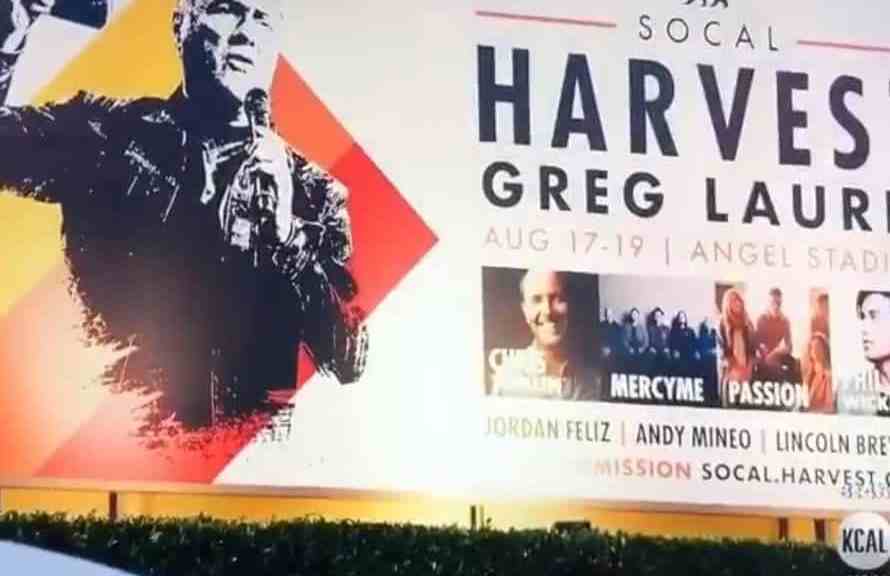
Harvest Ministries; Greg Laurie – The Soil of the Heart


 Still other seeds fell on fertile soil, and they sprouted, grew, and produced a crop that was thirty, sixty, and even a hundred times as much as had been planted! 

—Mark 4:8

Scripture:

Mark 4:8 

The Bible has a lot to say about the human heart. Jeremiah 17:9 says it’s “the most deceitful of all things, and desperately wicked” (NLT). Mark 12:30 says the heart is part of the whole self with which people must love God. Proverbs 27:19 says “the heart reflects the real person” (NLT).

In Mark 4, Jesus compares the heart to soil and says it’s the key to nurturing the seed of God’s Word in our lives. In the parable of the sower, Jesus describes seeds falling on four different types of soil that represent four different types of hearers’ hearts—that is, four different reactions to the Word of God: the hard heart, the shallow heart, the crowded heart, and the fruitful heart.

First, there is the hard heart, the seed that falls along the roadside. This represents people who hear the Word of God but never really believe. They may reject it outright because they think it asks too much of them or because it doesn’t align with the way they want to live. They may be too distracted to pay attention to its message. Or they may prefer a different belief system.

Then there is the shallow heart. That is the seed that falls on stony ground. This signifies the people who hear the Word of God and receive it with joy, but because there is no root to sustain them, they wither. Maybe they’re just looking for an emotional experience—something to make them feel good for a while. Or maybe they’re just using Scripture as a resource to prove a point.

Next, there is the crowded heart. That is the seed that falls on ground where weeds choke out its growth. Slowly and surely, these people, busy with the cares and riches of the world, just lose interest in the things of God. That’s an easy trap to fall into with the constant distractions of the 24/7 news cycle, the never-ending scrolling on social media, and the binging of movies or TV shows.

Finally, there is the fruitful heart that receives the Word. The seed falls on good ground, and the plants produce a rich harvest. These are the people who see God’s Word for what it is and allow it to change them—forever and for the better.

We are the ones who determine what kind of soil our hearts will be. We decide whether we will have a hard heart, a shallow heart, a crowded heart, or a receptive heart. This is exactly what James meant when he said, “Therefore lay aside all filthiness and overflow of wickedness, and receive with meekness the implanted word, which is able to save your souls” (James 1:21 NKJV).

The Word of God cannot work in our lives unless we have receptive hearts.

Reflection Question: How do you prepare your heart to receive God’s Word? Discuss this with believers like you on Harvest Discipleship!


Harvest.org | Greg Laurie

Days of Praise – A Mighty Man


by Henry M. Morris, Ph.D.

“And the angel of the LORD appeared unto him, and said unto him, The LORD is with thee, thou mighty man of valor.” (Judges 6:12)

Gideon was not a very promising leader to all outward appearances. He was of the undistinguished and divided tribe of Manasseh, and “my family is poor in Manasseh, and I am the least in my father’s house” (v. 15).

But that’s exactly the kind of man God knows He can use, for “God hath chosen the weak things of the world to confound the things which are mighty” (1 Corinthians 1:27). God, therefore, greeted him thus: “The LORD is with thee, thou mighty man of valor” (text verse).

As a matter of fact, there were other qualities in Gideon that must have commended him to God. He was already busy threshing “wheat by the winepress, to hide it from the Midianites” (v. 11). He was not sitting idly but was already doing what he could for his people. Furthermore, even though he lived in a time of great apostasy when even his own father kept an altar for the god Baal, he still worshiped the true God and was greatly exercised that “the LORD hath forsaken us, and delivered us into the hands of the Midianites” (v. 13). He was burdened for his people, but all he had been able to do was to try to feed them, hiding his wheat from the invaders. Before the Lord could use him further, however, he had to destroy the family idol and offer his own sacrifice to the true God, even though he knew his family and neighbors might try to kill him (vv. 25–32). God, then, did indeed “save Israel from the hand of the Midianites” through Gideon (v. 14).

If we would be mighty for God, like Gideon, we must begin like him: poor yet faithful, burdened for the Lord’s truth, and doing what we can—putting away every idol of the mind and acknowledging our Savior’s sacrifice for us. HMM


https://www.icr.org/articles/type/6

Joyce Meyer – Seeing Yourself the Way God Sees You


God said, Let Us [Father, Son, and Holy Spirit] make mankind in Our image, after Our likeness…

Genesis 1:26 (AMPC)

Many people struggle with poor self-image because they focus on their flaws instead of remembering how God sees them. The truth is that He created you in His image and likeness, which means you have great value and purpose. You are not an accident or a mistake—you are a masterpiece designed by the Creator Himself.

When you see yourself through God’s eyes, you can walk in confidence, knowing that you are deeply loved and fully accepted. The enemy tries to fill your mind with fear, shame, and insecurity, but God wants to renew your thoughts with His truth. You are righteous in Christ and equipped with everything you need to fulfill His plan for your life.

Instead of focusing on your shortcomings, meditate on what God says about you in His Word. Speak it out loud every day until it becomes your reality.

Prayer of the Day: Lord, help me see myself through Your eyes. Replace my fear and insecurity with confidence in Your love and remind me daily that I am righteous in Christ, amen.


http://www.joycemeyer.org

Max Lucado – Keep Your Mind on Heaven 


Play

Do you feel as if your best years have passed you by? Hogwash! You’ll do your best work in heaven. Do you regret wasting seasons of life on foolish pursuits? So do I. But we can stop our laments. We have an eternity to make up for lost time.

Colossians 3:1 (NKJV) is a great reminder to “seek those things which are above, where Christ is sitting at the right hand of God.” Seek heaven the way a sailor seeks the coast or a pilot seeks the landing strip. Colossians 3:2 (NCV) says, “Think only about” it. Other translations say, “Keep your mind on” it. Pursue the things over which Christ presides.

In other words, obsess yourself with heaven. Open your eyes, Christ invites. Lift up your gaze. You were made for more than this life.


Home

Today in the Word – Moody Bible Institute – 1 and 2 Chronicles: God Has a Plan


Read 2 Chronicles 36:15–23

If you own stock in a company, you are keenly aware of one thing: If the company goes out of business, your dividends disappear. You can’t expect to be paid when the company that is supposed to pay you no longer exists!

God made promises of forgiveness to Israel, but at the end of 1 and 2 Kings the nation was in exile. Had God gone out of business? What happened to the promises He made? The books of 1 and 2 Chronicles retell the story of God’s people in light of their return from exile. More than a repetition of 1 and 2 Kings, Chronicles allows us to re-read this part of their story with the knowledge that God brought them back, just as He promised. These books show that God planned to save enough Israelites who would return and reconstitute the nation decades after they went to Babylon. In His wisdom, He coordinated the collapse of the Babylonian empire (Jer. 25:11–12), and orchestrated the rise of Cyrus, king of Persia (Isa. 44:28). It was God’s plan all along, and He was faithful to complete it.

But more important than this change in their physical circumstances was a change in their spiritual condition. God used the exile to lead Israel back to Himself for forgiveness. Their restoration to the land would coincide with their restoration to faithfulness, and it started with the rebuilding of the House of the Lord (2 Chron. 36:23). The Temple was the focus of Israelite worship. It was the place where God promised to meet His people, receive their sacrifices, and forgive their sins! In raising up Cyrus to rebuild the Temple, God began with what mattered most: returning His people to Himself. Solomon’s prayer (2 Chron. 7:14) anticipated that Israel would always find their God in business, ready to forgive them when they turned to Him.

Go Deeper

Are you having a difficult time accepting God’s forgiveness? Turn to promises He made to His people and remind yourself that He has a plan. In Christ He has forgiven you! Extended Reading: 

2 Chronicles 36

Pray with Us

King Jesus, we pray that Your wonderful promises of forgiveness and restoration will spur us to seek a closer communion with You. Our hearts are full of gratitude. Thank You for Your salvation!

I will hear from heaven, and I will forgive their sin.2 Chronicles 7:14


https://www.moodybible.org/

Today in the Word – Moody Bible Institute – 1 and 2 Kings: Leadership Fails


Read 1 Kings 14:7–16

When experiments go wrong, it can be an opportunity for learning. Thomas Edison famously quipped, “I have not failed. I’ve found 10,000 ways that won’t work.” But when a failed experiment doesn’t provoke change, there is no progress. We must learn from our mistakes, or we will repeat them.

Israel had received the king they desired. They followed the example of the nations around them, raising up leaders that valued power, wealth, and influence. But God desired a different kind of kingship, one that valued obedience, righteousness, and humility.

Time and time again, the nation followed leaders who chose a worldly path and led the nation away from God. Jeroboam, the first king of the Northern Kingdom of Israel, set the standard for wickedness. He was given his throne by God, yet when he came to power he quickly gave in to ungodly fear and set up idols to worship, and the nation followed him (v. 9)!

The kings of Israel, like the judges, were supposed to lead the nation closer to the Lord. Instead, Jeroboam led them astray. Judgment came swiftly, “You have aroused my anger and turned your back on me,” God said. He declared that the nation would go into exile for what Jeroboam did (v. 15).

One would expect the nation to learn from this disastrous experiment and turn to God in repentance and righteousness, but they did not. The rest of the books of 1 and 2 Kings detail the repeated failures of Israel leaders and the failure of the people to reject wicked leadership. What would come of the promise to Abraham to bless the nation? Could there ever be a king who could lead the nation like David did? The failures of kingship created an expectation for the one King who would light the world.

Go Deeper

Why do we often repeat the same sinful behaviors over and over? What can we learn from today’s reading that might help us learn and improve? Extended Reading: 

1 Kings 14

Pray with Us

As we read about the failed leadership of Israel’s kings in 1 and 2 Kings, we long even more for the true King, the Savior, the Light of the world. Come, Lord Jesus!

You have done more evil than all who lived before you.1 Kings 14:9


https://www.moodybible.org/

Our Daily Bread – Thank God for His Gifts


We have lost our appetite; we never see anything but this manna! Numbers 11:6

Today’s Scripture

Numbers 11:1-2, 4-11

Listen to Today’s Devotional

Apple LinkSpotify Link

Today’s Devotional

The elderly man was taking a long time looking at the children’s backpacks in the store. He told me, “It’s my granddaughter’s birthday. I hope she likes my gift.” At the checkout, he clutched a pink backpack with a cartoon character design. He looked excited.

Later in a restaurant, I saw him again with a little girl and her parents. When the child opened her gift, she said, “I don’t like this character! And I hate pink!” Her parents made her apologize, but she still complained. My heart broke for her grandpa.

I was reminded of how I sometimes respond to God’s gifts. I complain because I want something different, failing to see the miracle before me—that God Himself has lovingly given something for me. The Israelites behaved similarly. God had kept His promise to them: “I will rain down bread from heaven for you” (Exodus 16:4). God’s faithful provision in the wilderness was sure: “When the dew settled on the camp at night, the manna also came down” (Numbers 11:9).

But instead of being thankful, the Israelites complained about God’s expression of loving provision: “We never see anything but this manna!” (v. 6). Instead of humbly requesting other food from God, they wailed over His gift.

I still remember the hurt look in the grandfather’s eyes that day. It made me think of how our heavenly Father must feel when we complain. Let’s be grateful for the gifts He’s given us.

Reflect & Pray

What blessings have you complained about? How can you thank God for them?

Dear Father, please forgive me for the times I’ve complained.

Today’s Insights

God provided physical nourishment for the wilderness travelers in the form of manna, but their unthankful attitudes made their dining experience distasteful (Numbers 11:6).

John 6 describes the spiritual nourishment that Jesus provides: “I am the bread of life. Whoever comes to me will never go hungry, and whoever believes in me will never be thirsty” (v. 35). The response to this amazing offer? “At this the Jews there began to grumble about him because he said, ‘I am the bread that came down from heaven’ ” (v. 41). These examples illustrate the failure to be grateful for God’s provision of both our physical and spiritual needs. As we reflect on all that He’s provided, we can respond with a grateful heart.


http://www.odb.org

Joyce Meyer – The Power of Integrity


Stand therefore [hold your ground], having tightened the belt of truth around your loins and having put on the breastplate of integrity and of moral rectitude and right standing with God.

Ephesians 6:14 (AMPC)

Integrity is vitally important to our walk with God. People with integrity take responsibility for their actions. They keep their commitments instead of making excuses for not keeping them. They do what they tell people they’re going to do, and if for some reason they absolutely cannot, they contact the person, give an explanation (not an excuse), and ask to be released from the commitment. We expect God to keep His promises, and He expects us to keep ours.

If people truly understood what the word integrity means, we would hopefully have more people in the world with good character, striving to keep their integrity. Since God has given us the “breastplate of integrity,” we know we are to do battle against the enemy of deceit. Let us all choose to do right and trust God to honor our decisions.

Prayer of the Day: Lord, help me walk in integrity every day. Give me strength to keep my word, honor my commitments, and live in a way that reflects Your truth and character, amen.


http://www.joycemeyer.org

Turning Point; David Jeremiah – Wisdom for the Year: Wait on the Lord


January 10, 2026

NEW!Listen Now

To everything there is a season, a time for every purpose under heaven.
Ecclesiastes 3:1

Recommended Reading: Isaiah 40:28-31

A music trivia question: Which number one hit song has the distinction of containing the oldest lyrics? The answer is “Turn! Turn! Turn!” released by the folk-rock group The Byrds in 1962. The song was originally written by Pete Seeger in 1959 using—almost exclusively—the words of Ecclesiastes 3:1-8 which were written by King Solomon in the tenth century B.C.

While Seeger originally wrote the song as a protest anthem—“A time of war, and a time of peace” (Ecclesiastes 3:8)—Solomon’s motivation in writing his words was different. Solomon’s words were like those in Psalm 31:14-15: “I trust in You, O Lord…. My times are in Your hand.” Solomon wrote Ecclesiastes while looking back on his life filled with momentous challenges and events. His perspective was one of patience, of trust in God’s plan and timetable. There is a time for everything that God has ordained. Our challenge is to wait on the Lord and His timing to be revealed (Isaiah 40:31).

You no doubt have plans for the coming year. Solomon would say, “Wait on the Lord; submit your plans to God. There is a time for everything.”

To wait on God is to live a life of desire toward Him.
Matthew Henry


https://www.davidjeremiah.org

Our Daily Bread – Today Is Precious


You do not even know what will happen tomorrow. James 4:14

Today’s Scripture

James 4:13-17

Listen to Today’s Devotional

Apple LinkSpotify Link

Today’s Devotional

Vietnamese collector Pham has salvaged twenty church clocks from around Europe, many of which had been replaced with electronic versions. One clock, made in Italy, dates back to 1750 and, remarkably, still keeps time accurately. Pham enjoys restoring and preserving the timepieces, saying they remind him of how precious time is and to savor each moment.

In James 4, the writer encouraged his readers to recognize the preciousness of time by reminding them that their lives are like “a mist that appears for a little while” before vanishing (James 4:14). James warned against making plans to “go to this or that city, spend a year there, carry on business and make money” (v. 13) without consulting God. Instead of presuming on God for the timing and success of their ventures, he reminded them that they “do not even know what will happen tomorrow” (v. 14). Designing our own successes is actually boastful and arrogant if it leaves God out of the picture.

When we recognize the brevity of our lives, we’re able to hold our plans for the future more loosely and better embrace the present moment. We live and work according to God’s design and purpose, which means we can humbly entrust our future to Him and savor each day as the gift from Him it truly is—no matter what it may hold.

Reflect & Pray

When have you left God out of your plans? How can you embrace today for the gift it is?


Thank You, God, for the gift of today. I trust my future to You.


Discover more by reading Making Decisions God’s Way.

Today’s Insights

James has a strong warning. “Now listen,” he says (James 4:13), before cautioning us against trusting in the reliability of our plans. It’s not wrong to make plans; in fact, it’s foolish not to do so. But it’s arrogant to make those plans without consulting the wisdom of the Bible and looking to our heavenly Father to instruct us by His Spirit. No one “plans” to have trials, nor do we want them, but some of God’s greatest gifts are surprises that grow out of immense difficulties. In the opening lines of this letter, James says, “Consider it pure joy, my brothers and sisters, whenever you face trials of many kinds, because you know that the testing of your faith produces perseverance” (1:2-3). As we entrust our lives and future to God, we can hold our plans loosely. And even in the midst of trials, we can treasure each day as a gift.

http://www.odb.org

Joyce Meyer – Trust God’s Plan for Your Future


For I know the thoughts and plans that I have for you, says the Lord, thoughts and plans for welfare and peace and not for evil, to give you hope in your final outcome.

Jeremiah 29:11 (AMPC)

We would all like to know what the future holds for us. God does have a good plan for each of us, but we have to be willing to follow His plan rather than going our own way in order to experience it.

God wants us to live the good life that He has prearranged and made ready for us to live. In order to press on, we must forget what lies behind us. Your future has no room in it for bad feelings from your past. Take the good things from the past and the lessons you’ve learned along with you but let go of anything that’s holding you back or keeping you stuck in fear or insecurity of any kind.

You can have hope instead of hopelessness. Start believing today that your future is filled with good things and refuse to settle for less than God’s best for you.

Prayer of the Day: Lord, I trust Your plan for my life. Help me release the past, overcome fear and insecurity, and look forward with faith, knowing my future is filled with hope, amen.


http://www.joycemeyer.org

Turning Point; David Jeremiah – Lord of All


NEW!Listen Now

For by [Christ] all things were created that are in heaven and that are on earth, visible and invisible, whether thrones or dominions or principalities or powers. All things were created through Him and for Him.
Colossians 1:16

Recommended Reading: John 1:1-3

Any attempt to take away a favorite food or toy from a toddler may be met with a stern look and a firm, “Mine!” Even at a young age, the rights of ownership seem to be built in.

The fallacy of the two-year-old’s thinking is that nothing is “Mine!” Everything is part of creation and, therefore, the property of the Creator, Jesus Christ. He created everything in heaven and on earth; every earthly ruler is subject to the Ruler of all. “All things were created through Him and for Him.” With these words the apostle Paul echoed the words of Psalm 2 where the Davidic Messiah-King would be given the nations and all the earth as His possession. Kings and rulers are warned to be wise and submit to Him in fear and trembling. But not just kings—the same warning applies to us.

As part of creation, we are bound to recognize Christ as Lord of our lives. Recommit yourself today to His lordship in your life.

Christianity . . . is a bowing of the knee to the lordship of Christ.
Frederick R. Wood


https://www.davidjeremiah.org

Our Daily Bread – The Future God’s Preparing


Forget the former things; do not dwell on the past. Isaiah 43:18

Today’s Scripture

Isaiah 43:16-21

Listen to Today’s Devotional

Apple LinkSpotify Link

Today’s Devotional

We live in a world where the internet forgets nothing—every photo, post, and blog entry is seemingly stored forever. One major search engine, however, introduced a privacy feature allowing users to request the removal of personal data like phone numbers, home addresses, and more. While this doesn’t erase the data from the internet entirely, it significantly reduces its visibility, giving people a sense of control over their digital footprints.

This idea of “scrubbing” the past echoes the prophet’s words in Isaiah 43:18-19. God said, “Forget the former things; do not dwell on the past. See, I am doing a new thing.” These verses were spoken to Israel during their exile in Babylon—a period of deep despair and longing for restoration. God commanded His people to not fixate on their past failures or the pain of captivity but to look forward to the new work He was about to do—a new and more significant exodus—their deliverance from Babylon and return to their homeland. He wasn’t just erasing the past but “making a way” (v. 19) to a future filled with hope and purpose.

Instead of dwelling on failures or regrets, let’s trust that God has “scrubbed” our past sins, regrets, and shame and—through Jesus’ sacrifice (Hebrews 10:10)—“remembers [our] sins no more” (Isaiah 43:25). God propels us toward the future He’s preparing.

Reflect & Pray

Why is it so difficult to let go of the past? How might you deepen your trust in God for new beginnings?


Dear God, please help me say goodbye to my past and look forward to the future.


Learn more about Dealing with the Past.

Today’s Insights

God exiled Judah to Babylon because of her sins (Isaiah 39:6-7). Hundreds of years earlier, He’d mightily rescued them from the Egyptians (43:16-17), but they weren’t to “dwell on the past” (v. 18) because their miraculous journey in the first exodus would pale in comparison with the “new thing” God would do for them (v. 19). He’d bring them back from exile (vv. 5-7) and give them a glorious future (vv. 20-21). More importantly, He’d blot out their sins (v. 25). This forgiveness wasn’t because they were deserving—for they’d failed to honor Him as their God (vv. 22-24)—but because of who God is (v. 25).

God forgives our sins because He’s “a forgiving God, gracious and compassionate, slow to anger and abounding in love” (Nehemiah 9:17). We can look forward to the future rather than dwell on our past sins because of the “new thing” God did through Jesus.


http://www.odb.org

Denison Forum – Was the ICE shooting in Minnesota justified?


While the circumstances surrounding the shooting of Renee Nicole Good on Wednesday are complicated and none of the narratives that came out shortly after the story went viral are entirely accurate, the basic truth is that she would still be alive if anyone involved had chosen to de-escalate the situation.

Why it matters: The speed at which officials from President Trump and DHS Secretary Kristi Noem to Governor Waltz and Mayor Frey felt the need to get their version of events out to the public meant that many people made up their minds on what happened before all the details were known. However, the truth of the situation is that there is plenty of blame to go around, and unless people take the time to learn from those mistakes, it’s far too likely to happen again.

The backstory: What happened on Wednesday?

On Wednesday afternoon, three Immigration and Customs Enforcement (ICE) officers approached a vehicle blocking their way in a neighborhood in Minneapolis, Minnesota. There are conflicting reports about what happened next, but here’s what we know so far:

  • Some witnesses claim that the officers told the driver—37-year-old Renee Nicole Good—to exit the vehicle, while others say they told her to leave. Audio from the recordings—at least three videos quickly went viral—seems to indicate that she may have received different instructions from the different officers. Whatever those instructions may have been, the result was tragic.
  • Good put her car in reverse while agents attempted to open her door, then she turned the wheel and tried to drive away while a third officer was standing in front of her SUV. He had originally been on the opposite side of the vehicle from the other officers, but had begun to circle around as they approached.
  • Whether Good was attempting to hit him or steer around him is difficult to tell from the video. Either way, the vehicle appears to make some contact with him—though not enough to knock him down—as he drew his gun and fired three times, killing Good.

The story quickly took over social media, and President Trump, DHS Secretary Kristi Noem, Minneapolis Mayor Jacob Frey, and Minnesota Governor Tim Walz all released statements offering conflicting explanations within hours of the shooting.

Noem said the woman committed an act of “domestic terrorism” by disobeying the officers’ commands and then weaponized her SUV in an attempt to “run a law enforcement officer over.” President Trump echoed that understanding, saying Good was “a professional agitator” who “violently, willfully and viciously ran over the ICE officer.” He then added, “Based on the attached clip, it is hard to believe he is alive, but is now recovering in the hospital.”

Conversely, Frey claimed that “This was a federal agent recklessly using power that resulted in somebody dying,” before telling ICE, “We do not want you here. Your stated purpose for being in this City is to create some kind of safety, but you are doing exactly the opposite.” Walz said much the same, arguing that “We do not need any further help from the federal government,” before issuing a “warning order” to prepare the Minnesota National Guard for deployment in case the shooting resulted in riots.

So which version of the story should we believe?

The officer’s past

In the time since the shooting took place, the narrative around what occurred has started to change from the version both sides put out in its immediate aftermath. The video clearly shows that the claims saying the officer who shot Good was lucky to be alive and did so to defend “his fellow officers,” as described in the DHS’s official statement, are overstated at best.

It’s entirely possible—and, perhaps, even probable—that the officer who pulled the trigger did fear for his life in that moment. And given that he was involved in a similar incident six months ago, where his taser proved ineffective, and he was dragged roughly 100 yards while trying to make a similar stop, it’s understandable that he would be so quick to pull his gun on Wednesday.

Vice President Vance pointed to that event, saying, “You think maybe he’s a little bit sensitive about someone ramming him with an automobile?”

But while the situations are similar, they are not the same, and the video clearly shows that his fellow officers were in no immediate danger by the time the car started to pull forward.

Good should still be alive

Ultimately, the officer’s actions may have been legal, but they also stemmed from a series of mistakes that had put him in that position to begin with. DHS officers are never supposed to stand in front of a vehicle or discharge their firearm at a moving vehicle unless they have “no other objectively reasonable means of defense.”

In both cases, Good’s death would have been avoided if the officer who shot her had taken the proper approach to the situation. That said, she would also be alive if she had simply heeded the officers’ warnings instead of attempting to drive away or had not chosen to interfere with ICE in the first place.

City leaders claim she was acting as “a legal observer” during a nearby ICE raid, though Noem stated that Good had been “stalking and impeding their work” by “blocking them in” and “shouting at them.” At this point, it’s difficult to know how much of Noem’s description is accurate, but Frey and Walz laying the blame entirely on the ICE officers also seems out of touch with the reality of the situation.

At the end of the day, this was a tragedy that could have been easily avoided if any of the principal actors had chosen a different approach. That’s not to say the blame should be assigned equally, but if anyone involved had been more interested in de-escalating the situation before it reached the point that a gun was drawn, then Good would still be alive. My prayer is that others heed that lesson before something like this happens again.

However, if I’m being honest, it’s a lesson I could stand to apply in my own life as well.

Spiritual application: Don’t be like David

While not every sin in my life is something I could see coming, far too many are the result of failing to heed the warning signs that the Holy Spirit threw in my way before I proceeded to step right over them. And I don’t think that problem is unique to me. Fortunately, God’s word has something to say on this subject.

In the Sermon on the Mount, Jesus told his followers:

If your right eye causes you to sin, tear it out and throw it away. For it is better to lose one of your members than that your whole body be thrown into hell. And if your right hand causes you to sin, cut it off and throw it away. For it is better that you lose one of your members than that your whole body go into hell. (Matthew 5:29–30)

This instruction was given originally in the context of combating lust, but the basic idea applies to sins of all kinds. The longer we allow sin to fester in our lives, the more the consequences of that sin will escalate and the harder it will be to stop.

While God is not calling us to literally maim ourselves—after all, even a blind or crippled person can be tempted—Jesus wanted to make sure we understood the importance of not letting sin linger. And lust is a perfect illustration of just how quickly sin can escalate from thought to action.

Take the story of David and Bathsheba, for example:

“It happened, late one afternoon, when David arose from his couch and was walking on the roof of the king’s house, that he saw from the roof a woman bathing; and the woman was very beautiful” (2 Samuel 11:2).

David’s sin was not noticing the woman; it was in persisting to look and dwelling on that beauty long after the first glance. Because he allowed that look to escalate into lust, he ended up taking her into his room, getting her pregnant, deceiving her husband, and then having the man carry his own death sentence back with him to the army David should have been leading.

Rarely are we able to see where our sins will lead if left unchecked. David did not plan on murdering an innocent man or essentially forcing himself on the beautiful woman he saw from his balcony. Yet, that’s precisely what happened because he attempted to manage his sin rather than stop it from escalating further.

While I hope your sins have not escalated to the precipice of sexual assault or murder, we all have areas of our lives where we’re especially prone to letting temptation fester.

So, take some time today to ask the Lord to help you identify any of those areas in your life. Then turn them over to him and take whatever measures are necessary to ensure that the temptation does not escalate into action.

God is ready to help. Are you ready to let him?

Latest from DM

Denison Forum: Who is Nick Fuentes, and why do you need to know?

First 15: Communion with God: Building Blocks for your Time with God

Christian Parenting: Navigating mental health with faith and community with Erin Kerry

Foundations: Trusting God from the seat of a chariot

God is good: “God’s mercy continues after the world burns”

It’s been just over a year since the first of the fires that eventually burned more than 37,000 acres and claimed thirty lives began to spread outside of Los Angeles. Yet, in that time, God has been moving in a powerful way. He has helped churches that have lost buildings and families who have lost homes learn that the church is more than just brick and mortar. As one pastor described, “God’s mercy continues after the world burns. That’s one lesson churches in Los Angeles learned this year.”

Kingdom impact:

While many of the churches lost to the fires will eventually be rebuilt, the opportunities to serve the communities of Los Angeles and to model what it means to trust God in the midst of tragedy will hopefully endure long after life has returned to some semblance of normal. Will you join me in praying that the churches in these neighborhoods will remain beacons of hope and stability for the communities in which God has placed them?

Christianity Today has more on the story.


Denison Forum

Harvest Ministries; Greg Laurie – Service Above and Beyond


 Some of those at the table were indignant. ‘Why waste such expensive perfume?’ they asked. ‘It could have been sold for a year’s wages and the money given to the poor!’ So they scolded her harshly. 

—Mark 14:4–5

Scripture:

Mark 14:4–5 

As you read the New Testament, you can’t help but notice how little it says about the major events of world history. You might think Scripture would mention Rome and all its mighty conquests. But it doesn’t. Instead, the events of the Roman Empire are mere backdrops for more personal events in history, ones that God chose to spotlight. Ones that still resonate two thousand years later. God focuses on teachings and personal stories that transcend mere dates and accomplishments.

In Mark 12:41–44, Jesus tells the story of a woman who gave everything she had, just two small coins, to the Temple collection box. In contrast to her, the Roman emperor and certain citizens possessed wealth beyond measure. But that didn’t matter to the Lord. Theirs was meaningless wealth—the use of riches that God saw no reason to celebrate in His Word.

And in Mark 14:3–9, we find the story of a woman who made an incredible sacrifice for Jesus. While Jesus was visiting the home of a man named Simon, an unnamed woman poured out a jar of expensive perfume to anoint Jesus.

Her actions are memorable because she seemed to recognize that Jesus needed to be anointed for His upcoming burial (see verse 8). So, with complete abandon, she gave Him everything she had. The perfume cost over three hundred denarii. In those days, three hundred denarii equaled a year’s wages. But it wasn’t the cost of the gift that mattered. It was the heart that made her want to give. It was her motives that touched Jesus, because He knew she had sacrificed nearly everything for Him.

Mark 10:17–31 tells the story of a man who asked Jesus, “Good Teacher, what must I do to inherit eternal life?” (NLT). The man was confident in his spiritual standing because he had obeyed all the commandments since he was young.

“Go and sell all your possessions and give the money to the poor,” Jesus said (verse 21 NLT). That was something the man couldn’t do because he had many possessions. So, he went away sad.

Those who follow Jesus must keep a light grasp on their riches and possessions. We must be willing to sacrifice anything and everything for Him.

Are you willing to sacrifice anything and everything? Are you doing all that you can for the Lord? Some people, like many of the dutiful Pharisees, will give only what is required. They will try to get by with the bare minimum. It’s a tempting approach, but one that you will always regret. Today, won’t you commit to serving the Lord above and beyond what is required—like the women in Jesus’s stories did?

Reflection Question: What would an act of service above and beyond the bare minimum look like in your life? Discuss this with believers like you on Harvest Discipleship!


Harvest.org | Greg Laurie

Days of Praise – Christ In You, the Hope of Glory


by John D. Morris, Ph.D.

“To whom God would make known what is the riches of the glory of this mystery among the Gentiles; which is Christ in you, the hope of glory.” (Colossians 1:27)

The last six words of this text have been the theme of many sermons, and surely they are worth our study, for the concept is used throughout Scripture. They also are included in the final verse of “Jesus! What a Friend for Sinners.”

Jesus! I do now receive Him,
More than all in Him I find;
Christ in me, the Hope of glory,
I am His, and He is mine.

Christ does indeed live in each believer and fills and controls as allowed by the individual. But for those filled with His abundance, He provides the certain “hope of glory.” We have assurance of salvation, adoption, grace, Spirit-filled life, and eternal glory as we are in Christ. “I am crucified with Christ: nevertheless I live; yet not I, but Christ liveth in me: and the life which I now live in the flesh I live by the faith of the Son of God, who loved me, and gave himself for me” (Galatians 2:20).

Scripture specifically teaches that God loves sinners as they are and moves as a gracious “Friend” to pay the penalty for their sin. “If thou shalt . . . believe in thine heart that God hath raised him from the dead, thou shalt be saved” (Romans 10:9).

The words “believe” and “receive,” while not the same, can often be used interchangeably in Scripture. Once we truly believe, we receive Him, for when we believe we simultaneously receive God’s forgiveness and salvation. We can then affirm, “I am His, and He is mine.” His sweet friendship will last for all time. JDM


https://www.icr.org/articles/type/6

Joyce Meyer – Making Right Choices Makes Life So Much Better


Strive to enter by the narrow door [force yourselves through it], for many, I tell you, will try to enter and will not be able.

Luke 13:24 (AMPC)

Like most of us, you are probably tempted to take all the easy paths, but God’s path is rarely easy. The Bible describes those other paths—the ones that lead to destruction—as “broad” because not a lot of effort is required to remain on them. We are encouraged by God to take the narrow path, the more difficult one, which is also the one that leads to life.

We have to make a strong effort to push through the negativity in the world, but if we will do our part, God will always do His. Not everyone is willing to make the effort. They are addicted to ease and simply flow with their feelings. Jesus died for us so we could have a wonderful, abundant life that is filled with peace, joy, power, success, and every good thing. He was willing to go to the cross and pay for our sins even though physically, mentally, and emotionally it was very difficult. We, too, must be willing to do what is right, and our reward will surely come. God’s grace will always enable us to do the right thing if we are willing to do so.

Study the Word of God regularly, and then when trouble comes, you will already have your spiritual tank full of fuel that will enable you to make right choices. Don’t be the kind of person who prays or has time for God only when you feel like it or have a disaster. Seek God because you know you cannot navigate safely in this world without Him.

You and I can let our minds drift aimlessly day after day, and we can be controlled by our emotions, or we can strive to gird up our minds, choose our thoughts carefully, and manage our emotions. God has set before us life and death, good and evil, and has given us the responsibility of making the choice (see Deut. 30:19). Choose life!

What choice are you currently facing? What path will you choose? Remember, the right choice won’t always be easy, but you can trust God, Who gives you strength and rewards you, to help you do it.

Prayer of the Day: Lord, help me choose Your path even when it’s hard. Give me strength to resist the easy way, fill me with Your Word, and empower me to walk in truth, amen.


http://www.joycemeyer.org

Max Lucado – God Will Never Let You Go 


Play

Satan tried to write his own story in which he was the hero and God is an afterthought. He admitted as much: “I will ascend to the heavens…I will make myself like the Most High” as quoted in Isaiah 14:13-14. Satan wanted to take God’s place, but God wasn’t—and isn’t—moving. Satan wants to win you to his side, but God will never let you go. You have his word!

Even more, you have his help. Scripture says, “For our high priest (Jesus) is able to understand our weaknesses…he was tempted in every way that we are, but he did not sin. Let us then…come before God’s throne where there is grace…to help us when we need it” (Hebrews 4:15-16). You don’t have to face Satan alone. We shout, and God runs—at the right moment.


Home

Today in the Word – Moody Bible Institute – Judges: Chaos and Kindness


Read Judges 2:10–23

Experts in financial investing understand that investor memory is not to be relied upon. Investors tend to downplay or even forget downturns in the market and remember very clearly the upswings with exciting returns. We tend not to learn from the pain. The book of Judges can feel a lot like those financial markets. The nation swung from times of obedience and victory to times of disobedience and suffering. Their situation reflected the forgetfulness of people and their need for a strong, godly leader. They didn’t learn from the pain; someone would have to guide them.

When Joshua died, no national leader emerged to shepherd the nation, and they lost spiritual momentum. They failed to drive the Canaanites out and instead became like them! God disciplined Israel by empowering their enemies. The discipline had its intended effect; the people turned to God and begged for help. God raised up judges, who led them to victory and a time of righteousness (v. 16). But when the judge died, like a forgetful investor, they forgot the bad times and turned from the Lord again and again.

Turning from the Lord meant following other gods, serving and even worshiping them (v. 19). As expected, their disobedience provoked the Lord to anger, and He declared that He would not drive out the Canaanites before them. Instead, they would remain as a test for Israel (v. 22). It was a test they would often fail. But during this difficult time, there were some Israelites who dedicated themselves to obeying the Lord and following His commands. An example is given in the book of Ruth. We are reminded that following God takes sacrificial commitment, and the blessings God showered upon the faithful are worth the sacrifice!

Go Deeper

Have you minimized the effects of sin in your life? Have you forgotten what life apart from God looks like? Take time to remind yourself of your need to remain close to Him. Extended Reading: 

Judges 1-2

Pray with Us

Merciful Father, we receive Your somber warning today about the deadly power of sin in our lives. May we stay close to You and to Your faithful love, we pray.

The LORD raised up judges, who saved them out of the hands of these raiders.Judges 2:16


https://www.moodybible.org/