Tag Archives: Jesus

Alistair Begg – Why a “Sachet of Myrrh”?


My beloved is to me a sachet of myrrh. Song of Songs 1:13

Myrrh may well be chosen to typify Jesus because of its preciousness, its perfume, its pleasantness, its healing, preserving, disinfecting qualities, and its connection with sacrifice. But why is He compared to “a sachet of myrrh”?

First, because it speaks of plenty. He is not a drop of it–He is a basketful. He is not a sprig or flower of it, but a whole bundle. There is enough in Christ for all my needs; do not let me be slow to avail myself of Him.

Our well-beloved is compared to a “sachet,” again, for variety, for there is in Christ not only the one thing needful, but “in him the whole fullness of deity dwells bodily”;1 everything needful is in Him. Consider the numerous aspects of Christ, and you will see a marvelous variety–Prophet, Priest, King, Husband, Friend, Shepherd. Consider Him in His life, death, resurrection, ascension, second coming; view Him in His virtue, gentleness, courage, self-denial, love, faithfulness, truth, righteousness–everywhere He is a sachet of preciousness.

He is a “sachet of myrrh” for preservation–not loose myrrh tied up, but myrrh to be stored in a container. We must value Him as our best treasure; we must prize His words and His ordinances; and we must keep our thoughts of Him and our knowledge of Him as under lock and key, in case the devil should steal anything from us.

Furthermore, Jesus is a “sachet of myrrh” for specialty. The emblem suggests the idea of distinguishing, discriminating grace. From before the foundation of the world, He was set apart for His people; and He gives His perfume only to those who understand how to enter into communion with Him, to have close dealings with Him–blessed people whom the Lord has admitted into His secrets, and for whom He sets Himself apart.

Choice and happy are those who can say, “My beloved is to me a sachet of myrrh.”

  1. Colossians 2:9

Devotional material is taken from “Morning and Evening,” written by C.H. Spurgeon, revised and updated by Alistair Begg.

Charles Spurgeon – A willing people and an immutable leader


“Thy people shall be willing in the day of thy power, in the beauties of holiness from the womb of the morning: thou hast the dew of thy youth.” Psalm 110:3

Suggested Further Reading: 1 Kings 19:9-18

Christ shall always have a people. In the darkest ages Christ has always had a church; and if darker times shall come, he will have his church still. Oh! Elijah, thy unbelief is foolish. Thou sayest, “I, only I, am left alone, and they seek my life.” No, Elijah, in those caves of the earth God has his prophets, hidden by seventies. Thou too, poor unbelieving Christian, at times thou sayest, “I, even I, am left.” Oh! If thou hadst eyes to see, if thou couldst travel a little, thy heart would be glad to find that God does not lack a people. It cheers my heart to find that God has a family everywhere. We do not go anywhere but we find really earnest hearts—men full of prayer. I bless God that I can say, concerning the church wherever I have been, though they are not many, there are a few, who sigh and groan over the sorrows of Israel. There are chosen bands in every church, thoroughly earnest men who are looking out for, and are ready to receive their Master, who cry to God that he would send them times of refreshing from the presence of the Lord. Do not be too sad; God has a people, and they are willing now; and when the day of God’s power shall come, there is no fear about the people. Religion may be at a low ebb, but it never was at such a low ebb that God’s ship was stranded. It may be ever so low, but the devil shall never be able to cross the river of Christ’s church dry shod. He shall always find abundance of water running in the channel. God grant us grace to look out for his people, believing that there are some everywhere, for the promise is, “thy people shall be willing in the day of thy power.”

For meditation: Do you feel one of the few? God’s people may be nearer and more numerous than you imagine (Acts 18:9,10); even when we are very few, Christ is nearer than we sometimes imagine (Matthew 18:20).

Sermon no. 74
13 April (1856)

John MacArthur –Being Filled with Mercy


“Blessed are the merciful, for they shall receive mercy” (Matt. 5:7).

Mercy is a characteristic of true believers.

Like the other beatitudes, Matthew 5:7 contains a twofold message: to enter the kingdom you must seek mercy. Once there, you must show mercy to others.

The thought of showing mercy probably surprised Christ’s audience because both the Jews and the Romans tended to be merciless. The Romans exalted justice, courage, discipline, and power. To them mercy was a sign of weakness. For example, if a Roman father wanted his newborn child to live, he simply held his thumb up; if he wanted it to die, he held his thumb down.

Jesus repeatedly rebuked the Jewish religious leaders for their egotistical, self-righteous, and condemning attitudes. They were intolerant of anyone who failed to live by their traditions. They even withheld financial support from their own needy parents (Matt. 15:3-9).

Like the people of Jesus’ time, many people today also lack mercy. Some are outright cruel and unkind, but most are so consumed with their quest for self-gratification that they simply neglect others.

Christians, on the other hand, should be characterized by mercy. In fact, James used mercy to illustrate true faith: “What use is it, my brethren, if a man says he has faith, but he has no works? Can that faith save him? If a brother or sister is without clothing and in need of daily food, and one of you says to them, ‘Go in peace, be warmed and be filled,’ and yet you do not give them what is necessary for their body, what use is that? Even so faith, if it has no works, is dead, being by itself” (James 2:14- 17). He also said mercy is characteristic of godly wisdom: “The wisdom from above is first pure, then peaceable, gentle, reasonable, full of mercy and good fruits, unwavering, without hypocrisy” (3:17).

As one who has received mercy from God, let mercy be the hallmark of your life.

Suggestions for Prayer

  • Thank God for His great mercy.
  • Ask Him to give you opportunities to show mercy to others today.

For Further Study

Read Luke 10:25-37.

  • Who questioned Jesus and what was his motive?
  • What characteristics of mercy were demonstrated by the Samaritan traveler?
  • What challenge did Jesus give His hearer? Are you willing to meet that challenge?

Joyce Meyer – Be Prepared


Strength and dignity are her clothing and her position is strong and secure; she rejoices over the future [the latter day or time to come, knowing that she and her family are in readiness for it]! Proverbs 31:25

This woman’s strength and dignity are her clothing, and her position is strong and secure. This certainly must have increased her confidence. She isn’t afraid of losing her position or something bad happening. She boldly faces the future because she knows she and her family are prepared for it.

Proverbs 27:23 tells us: Be diligent to know the state of your flocks, and look well to your herds. Lack of preparation is one of the major causes for low confidence. Being prepared requires working ahead of time instead of putting things off until the last minute. Matthew 25 tells us of the five wise virgins who took extra oil with them as they waited for the bridegroom to come, but the five foolish virgins didn’t do anything to prepare. When the bridegroom was delayed, the foolish lost their opportunity to meet the bridegroom.

This same scenario happens to many people in life. They procrastinate until it is too late to take advantage of an opportunity that could have been a tremendous blessing to them. Knowing you are prepared for whatever comes will increase your confidence in an amazing way.

Lord, help me to be diligent and prepared for the opportunities You will bring my way. I want to walk in the confidence that I am always ready to go. Amen.


Campus Crusade for Christ; Bill Bright – Inner Strengthening 


“That out of His glorious, unlimited resources He will give you the mighty inner strengthening of His Holy Spirit” (Ephesians 3:16).

In Christ are all the attributes and characteristics promised to His children as the fruit of the Spirit. And the Holy Spirit was given to glorify Christ.

  • Do you need love?

The Lord Jesus Christ is the incarnation of love. Paul prays that our roots may “go down deep into the soil of God’s marvelous love; and may you be able to feel and understand, as all God’s children should, how long, how wide, how deep and how high His love really is; and to experience this love for yourselves (though it is so great that you will never see the end of it, or fully know or understand it”) (Ephesians 3:17-19).

  • Do you need peace?

Christ is the “Prince of Peace.” “I am leaving you with a gift,” said Jesus, “peace of mind and heart! And the peace I give isn’t fragile like the peace the world gives” (John 14:27).

  • Do you need joy?

Christ is joy.

  • Do you need patience?

Christ is patience.

  • Do you need wisdom?

Christ is wisdom.

  • Are you in need of material possessions so that you can better serve Christ?

They are available in Him, for God owns “the cattle on a thousand hills,” and He promised to supply all our needs (Philippians 4:19).

All that we need is to be found in Christ and nowhere else. The supernatural life is Christ, for in Him dwells all the fullness of the Godhead bodily.

Bible Reading: Ephesians 3:17-21

TODAY’S ACTION POINT:  Knowing that God’s unlimited resources make possible the mighty inner strengthening in my life, I shall focus my attention upon Him through reading His inspired Word and obeying His commands.

Presidential Prayer Team; H.L.M. – Cry Out


Keith Thibodeaux was cast in 1956 as Little Ricky, the drum-playing son of Lucille Ball and Desi Arnaz on the hit series “I Love Lucy.” Thibodeaux’s abilities led him to a national tour and various acting stints on many shows. Yet the former child star left Hollywood at age 15 after his parents’ divorce. He joined a band called David and the Giants and got involved with drugs. That’s when Thibodeaux realized he needed help.

His Son from heaven, whom he raised from the dead, Jesus…delivers us from the wrath to come.

I Thessalonians 1:10

“I needed a Savior because I got down to the end of my rope when I was playing rock,” he said, “and just went down into the drug world and I was clinically depressed. It was at that point God answered my prayer – my cry. I found Jesus. And God did the work in my life.”

“For God has not destined us for wrath,” I Thessalonians 5:9 says, “but to obtain salvation through our Lord Jesus Christ.” Every person has the opportunity to turn from sin and embrace the love of God for eternity. Pray that all Americans and their leaders would, like Thibodeaux, cry out to the Lord as the source of their eternal peace.

Recommended Reading: Romans 13:8-14

Greg Laurie – Giving Place to the Word of God


Now it came to pass, when Jesus finished commanding His twelve disciples, that He departed from there to teach and to preach in their cities. —Matthew 11:1

There are times when I have gone into the pulpit with a prepared message and have ended up saying things that I never planned on saying. I believe that is because God will speak through the person who is teaching His Word. Something supernatural takes place when we hear God’s Word being taught in person.

There are times when people have walked up to me after a church service and said, “That thing you said. . . . It was just like it was for me!”

I’ll tell them that maybe it was. That is because I didn’t plan on saying it.

Others have said, “Who has been telling you about me?” They seriously want to know.

“What do you mean?”

“You were talking about the details of a person doing a certain thing, and that is what I have been doing.”

When we open our hearts to the Word of God, He will speak to us in a specific way. That happens when we are gathered together as the church. And the job of a pastor is to preach and teach the Word of God. Paul wrote to the young pastor Timothy, “Preach the word! Be ready in season and out of season. Convince, rebuke, exhort, with all longsuffering and teaching” (2 Timothy 4:2). Preaching is God’s primary way of reaching lost people.

Yet there are churches today that don’t give place to the Word of God. For them, it is more about music and drama and skits and interpretive dance and clips from movies. But give me something that I can’t find anywhere else. Give me the Word of God. That is what I need to hear. And that is what you need to hear. That is what we should be longing to hear: the Word of God.

Max Lucado – The Power of a Godly Touch


The power of a godly touch! Have you known it? The doctor who treated you, the teacher who dried your tears? Was there a hand holding yours at a funeral? A handshake of welcome at a new job? A pastoral prayer for healing? Can’t we offer the same?

Many already do! You use your hands to pray over the sick. If you aren’t touching them personally, your hands are sending notes, making calls, baking pies. You’ve learned the power of touch. But others of us tend to forget. Our hearts are good; it’s just that our memories are bad. We fear saying the wrong thing, acting the wrong way. So rather than do it incorrectly, we no nothing at all.

Aren’t we glad Jesus didn’t make the same mistake? Jesus touched the untouchables of the world. Will you do the same?

From Just Like Jesus

Charles Stanley – OVERCOMING FEAR AND INSECURITY


Have you ever been afraid of obeying God? Have you avoided responsibility because you felt inadequate? God wants you to place your confidence in Him, not yourself. In this Bible study about Gideon’s life, you’ll learn about victory over fear and insecurity.

Read Judges 6-8.

  1. Feeling afraid or unworthy doesn’t disqualify us from being used by God.
  • Briefly describe Israel’s situation in Gideon’s day (Judg. 6:1-6).


  • Read Exodus 33:20. Why did speaking with God make Gideon afraid (v. 22)?


How could Gideon survive “seeing God”? Since God is Spirit (John 4:24), no man has ever seen the Father in His essence. However, in Judges 6 (as in other Old Testament passages), He assumes a visible form (Gen. 32:24-30, Ex. 24:9-10, Isa. 6:1, Dan. 7:9). Some scholars believe references like this one to “the angel of the Lord” describe Jesus before He was clothed in human flesh.

  • God asks Gideon to tear down His father’s altar to Baal, the false god some Israelites worshipped at the time. How does Gideon approach his first assignment (Judg. 6:27)?


  • What does his neighbors’ reaction reveal about the hearts of the Israelites at this time (v. 30)?


  • What frightens you about fully obeying all God asks of you?


  1. Exchanging our viewpoint for God’s perspective is essential to winning our battles.
  • From God’s perspective, who would deliver Israel (vv. 8-10)?


  • On what did Gideon focus (v.13)?


  • Contrast Gideon’s perception of himself with God’s view (vv. 12,15).


By refusing to help Gideon—who was God’s chosen deliverer—the leaders of Succoth and Penuel aligned themselves with the Midianites by default (Judg. 8).

  • What does Gideon’s threat to them reveal about how he viewed himself after victory over the Midianites (vv. 5-9)?


  • Name a difficulty or challenge you face. Where do you tend to look for a solution in your own strength? How do you think God wants you to approach it?


  1. The Lord is prepared to confirm His will.
  • Initially, Gideon doesn’t believe he’s really talking with God. What sign does Gideon prepare (Judg. 6:18-21)?


When several enemy armies assembled near Gideon’s home, he used a sheep’s fleece to ask God for a confirmation of Israel’s deliverance.

  • Why was his action unnecessary (vv. 36-37)?


  • Why do you think Gideon was afraid the Lord’s anger would burn against him (v. 39)?


Although God was patient with Gideon, this method of determining His will is generally not the best. It can take our focus off of the Lord, placing it on a “sign,” which may or may not indicate God’s will accurately.

  • What finally convinced Gideon that the Lord had given victory into the Israelite’s hands (Judg. 7:13-15)?


  1. When we obey God despite our weaknesses, He gets the glory. On his first assignment from God—tearing down the altar to Baal—Gideon acts at night, in fear.
  • Why did Gideon suddenly have the confidence to assemble an army and declare himself its head (Judg. 7:34)?


  • Why did God want to decrease the number of warriors (v. 2)?


  • Why do the two eliminations also make sense from a practical standpoint (vv. 3-7)?


Gideon’s army attacked at night, around 10 p.m., right as the first watch was ending. The retiring guards had not yet returned to their tents and probably were mistaken for Israelites by the confused Midianties.

  • Why do you think the strategy of breaking the jars and blowing the trumpets was successful?


  • Why couldn’t Gideon take credit for what happened as a result of their surprise “attack” (v. 22)?


When the Israelites returned home after their victories, the men of Israel asked Gideon to rule over them (Judg. 8:22).

  • Why do you think Gideon responded as he did (v. 24)?


  • Gideon’s disobedience in making and worshipping the ephod could have been due to ignorance or the low moral standards at the time. What were the consequences (vv. 24-27)?


  • Despite the ephod, what did God do for Israel as a result of Gideon’s victory (v. 28)?


Closing: What is God asking you to do? Be willing to obey, trusting that He will provide all you need. No matter what happens, your faithfulness will result in deep inner peace, which is the fruit of being right with the Lord.

Prayer: Lord, thank You for the gift of the Holy Spirit, Who helps me accomplish Your will. Teach me to take my eyes off of my circumstances and the solutions the world offers—and instead look to You. I pray this in Jesus’ name. Amen.


John MacArthur – Evaluating Your Righteousness


“Blessed are those who hunger and thirst for righteousness, for they shall be satisfied” (Matt. 5:6).

Your relationship with God is the measure of your righteousness.

Righteousness means “to be right with God.” When you hunger and thirst for righteousness, you passionately desire an ongoing and ever-maturing relationship with God Himself.

Righteousness begins with salvation and continues in sanctification. Only after you abandon all self- righteousness and hunger for salvation, will you be cleansed from sin and made righteous in Christ. Then you embark on a lifelong process of becoming as righteous as Christ—a process that will culminate when you are in His presence fully glorified (Rom. 8:29-30; 1 John 3:2). There’s always need for improvement in this life (Phil. 3:12-14), but satisfaction comes in communing with Christ and growing in His grace.

You can know if you’re hungering and thirsting for righteousness by asking yourself some simple questions. First, are you dissatisfied with your sin? Self- satisfaction is impossible if you are aware of your sin and grieve when you fall short of God’s holy standard.

Second, do external things satisfy your longings? A hungry man isn’t satisfied until he eats. A thirsty man isn’t satisfied until he drinks. When you hunger and thirst after righteousness, only God’s righteousness can satisfy you.

Third, do you have an appetite for God’s Word? Hungry people don’t need to be told to eat. It’s instinctive! Spiritual hunger will drive you to feed on the Word to learn what God says about increasing in righteousness.

Fourth, are you content amid difficulties? A hungry soul is content despite the pain it goes through because it sees every trial as a means by which God is teaching greater righteousness. If you react with anger or resentment when things go wrong, you’re seeking superficial happiness.

Finally, are your hunger and thirst unconditional? The rich young ruler in Matthew 19 knew there was a void in his life but was unwilling to give up his possessions. His hunger was conditional.

Christ will fully satisfy every longing of your heart, yet you will also constantly desire more of His righteousness. That’s the blessed paradox of hungering and thirsting after righteousness.

Suggestions for Prayer;  Read Psalm 112 as a hymn of praise to God.

For Further Study; Read the following verses, noting how God satisfies those who trust in Him: Psalm 34:10; 107:9; Isaiah 55:1-3; John 4:14; 6:35.

Campus Crusade for Christ; Bill Bright – Without Me – Nothing 


“Abide in Me, and I in you. As the branch cannot bear fruit of itself, except it abide in the vine; no more can ye, except ye abide in Me. I am the vine, ye are the branches: He that abideth in Me, and I in him, the same bringeth forth much fruit: for without Me ye can do nothing” (John 15:4,5, KJV).

As a young man in college and later in business, I used to be very self-sufficient – proud of what I could do on my own. I believed that a man could do just about anything he wanted to do through his own effort, if he were willing to pay the price of hard word and sacrifice, and I experienced some considerable degree of success.

Then, when I became a Christian, the Bible introduced me to a whole new and different philosophy of life – a life of trusting God for His promises. It took me a while to see the fallacy and inadequacy of trying to serve God in my own strength and ability, but that new life of faith in God finally replaced my old life of self-sufficiency.

Now, I realize how totally incapable I am of living the Christian life, how really weak I am in my own strength, and yet how strong I am in Christ. God does not waste our ability and training. We do not lay aside our God-given gifts and talents. We give them back to Him in service, and He multiplies them for His glory.

As Paul says, “I can do all things through Him [Christ] who strengthens me” (Philippians 4:13, NAS). In John 15, the Lord stresses the importance of drawing our strength from Him:

“Take care to live in Me, and let Me live in you. For a branch cannot produce fruit when severed from the vine. Nor can you be fruitful apart from Me. Yes, I am the vine; you are the branches. Whoever lives in Me and I in him shall produce a large crop of fruit. For apart from Me, you can’t do a thing” (John 15:4,5). Our strength, wisdom, love and power for the supernatural life come from the Lord alone.

Bible Reading: John 15:6-11

TODAY’S ACTION POINT:  I will make it a special goal to abide in Christ so that His life-giving power for supernatural living will enable me to bear much fruit for His glory.

Presidential Prayer Team; C.H. – Pre-qualified


Want a new job? You must meet the position qualifications. Want to compete in the Olympics? You’ll have to qualify. Thinking of running for office? Qualifications are necessary there, too. You must qualify for a loan, college, health insurance, food stamps and club memberships.

Thanks to the Father, who has qualified you to share in the inheritance of the saints in light.

Colossians 1:12

But there is one thing for which you have earned pre-qualified status – an inheritance in Heaven. Jesus Christ qualified you for that with His own blood. God wanted you to spend eternity with Him so much, He allowed His own child to die in order for you to be deemed worthy. You qualify! There isn’t a list of requirements in order for you to receive salvation. All you have to do is accept the gift.

In a world where restrictions are placed on every position and opportunity, your salvation is pre-qualified. Take time now to thank God for His free gift. Praise Jesus for paying the price for you to share in His inheritance. Pray, too, for your national leaders to accept their pre-qualification status.

Recommended Reading: Romans 10:5-13


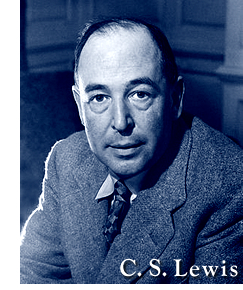
C.S. Lewis – Today’s Reading – On heaven


But God will look to every soul like its first love because He is its first love. Your place in heaven will seem to be made for you and you alone, because you were made for it—made for it stitch by stitch as a glove is made for a hand.

From The Problem of Pain

Charles Stanley – Following God’s Schedule


Read | Romans 11:33-36

Most of us enjoy feeling in control of our own schedule and grow frustrated when things don’t go according to plan. Yet if we truly desire to walk in the center of God’s perfect will, we must become willing to cooperate with His time frame.

Consider how you pray about situations in your life. Without realizing it, you may be demanding that God follow the schedule you’ve constructed according to your very limited human wisdom. Yet if we believe He is who He says He is, how can surrendering to His way not be to our benefit? Think about His unique, praiseworthy qualities:

  • His all-encompassing knowledge. The Lord has complete understanding of our world and the details of every individual life—past, present, and future.
  • His complete wisdom. God understands man’s every motive, whereas none of us are able to accurately discern people’s intentions. We make choices based on partial information, whereas He has the wisdom to take action based on truth.
  • His unconditional love. Our Creator is always motivated by love and constantly has our best in mind. Unless we trust His heart, our view of reality will be distorted.
  • His perfect sufficiency. At just the right time, God will provide us with everything we need to carry out His plan.

Submitting to God’s timetable requires faith and courage. Believe in the goodness of His heart and His plans—and wait until He gives the signal to move forward. Then, as you follow His schedule, you’ll experience the joy of watching Him make all things beautiful in His timing.

Our Daily Bread — When We’re Let Down


Read: 1 Samuel 17:33-50
Bible in a Year: 1 Samuel 17-18; Luke 11:1-28


The Lord does not save with sword and spear; for the battle is the Lord’s and He will give you into our hands. —1 Samuel 17:47

On August 4, 1991, the MTS Oceanos cruise ship ran into a terrible storm off the coast of South Africa. When the ship began to sink, the captain decided to abandon ship and left with his officers, failing to notify those onboard of any problem. Passenger Moss Hills, a British musician, noticed that something was wrong and sent out a Mayday signal to the South African coast guard. Then, taking matters into their own hands, Moss, his wife Tracy, and other entertainers on board helped organize the evacuation of all passengers by assisting them as they were lifted into helicopters.

Sometimes those we look to for leadership can let us down. When King Saul and his officers faced the belligerent insults of the Philistine giant Goliath, they responded with fear and timidity (1 Sam. 17:11). But a young musician and shepherd boy named David had faith in God that transformed his perspective on this threat. David said to Goliath, “You come to me with a sword . . . . But I come to you in the name of the Lord of hosts” (v.45). David defeated the enemy and turned the tide of battle (v.50). He did not look to earthly leaders for his strength but to the living God.

When others let us down, God may be calling us to provide leadership in His strength and for His honor. —Dennis Fisher

Dear Lord, I don’t have the power on my own to lead others through a difficult situation. But You are all-powerful. Give me the courage to help others as I rely on Your strength that cannot fail.

Only as we follow Christ can we lead others in the right direction.

Alistair Begg – Bruised and Broken


I am poured out like water, and all my bones are out of joint. Psalm 22:14

Did earth or heaven ever witness a sadder spectacle than this? In soul and body, our Lord felt Himself to be weak as water poured upon the ground. The placing of the cross in its socket had shaken Him with great violence, had strained all the ligaments, pained every nerve, and more or less dislocated all His bones. Burdened by His own weight, the impressive sufferer felt the strain increasing every moment of those six long hours. His sense of faintness and general weakness were overpowering, and He felt Himself to be nothing but a mass of misery and swooning sickness.

When Daniel saw the great vision, he describes his sensations in this way: “No strength was left in me. My radiant appearance was fearfully changed, and I retained no strength.”1 How much more devastating must it have been for Jesus when He saw the dreadful vision of the wrath of God and felt it in His own soul! Sensations that our Lord endured, we could not have faced, and unconsciousness would have had to come to our rescue. In His case He was wounded and felt the sword; He drained the cup and tasted every drop.

O King of Grief! (a title strange, but true,

To Thee of all kings only due)

O King of Wounds! how shall I grieve for Thee,

Who in all grief savest me!

As we kneel before our ascended Savior’s throne, let us carefully remember the way by which He prepared it as a throne of grace for us; let us in spirit drink of His cup, that we may be strengthened for our hour of heaviness whenever it may come. In His natural body every member suffered, and so must it be in the spiritual; just as out of all His griefs and woes His body emerged uninjured to glory and power, similarly His mystical body will come through the furnace with not so much as the smell of

  1. Daniel 10:8

Devotional material is taken from “Morning and Evening,” written by C.H. Spurgeon, revised and updated by Alistair Begg.

Charles Spurgeon – Providence


“But the very hairs of your head are all numbered.” Matthew 10:30

Suggested Further Reading: Acts 16:6-10

I shall always regard the fact of my being here today as a remarkable instance of providence. I should not have occupied this hall probably, and been blessed of God in preaching to multitudes if it had not been for what I considered an untoward accident. I should have been at this time studying in College, instead of preaching here, but for a singular circumstance which happened. I had agreed to go to College: the tutor had come to see me, and I went to see him at the house of a mutual friend; I was shown by the servant into one drawing-room in the house, he was shown into another. He sat and waited for me two hours; I sat and waited for him two hours. He could wait no longer, and went away thinking I had not treated him well; I went away and thought he had not treated me well. As I went away this text came into my mind, “Seekest thou great things for thyself? Seek them not.” So I wrote to say that I must positively decline; I was happy enough amongst my own country people, and got on very well in preaching, and I did not care to go to College. I have now had four years of labour. But, speaking after the manner of men, those who have been saved during that time would not have been saved, by my instrumentality at any rate, if it had not been for the remarkable providence turning the whole tenor of my thoughts, and putting things into a new track. You have often had strange accidents like that. When you have resolved to do a thing, you could not do it anyhow; it was quite impossible. God turned you another way, and proved that providence is indeed the master of all human events.

For meditation: God is never taken by surprise or inconvenienced by accidents. He puts his people in the right place at the right time (Esther 4:14).

note: Spurgeon commenced this sermon with an account of an event at Halifax the previous Wednesday (7 April) during a snow storm. He preached in a wooden structure to thousands in the afternoon and evening. With only a hundred people left to exit, some flooring collapsed, injuring a couple. Three hours later the whole building collapsed. Had it not been for a fast thaw, there could have been a catastrophe.

Sermon no. 187
11 April (1858)

John MacArthur – How’s Your Spiritual Appetite?


“Blessed are those who hunger and thirst for righteousness, for they shall be satisfied” (Matt. 5:6).

Your appetite for righteousness should equal your appetite for food and water.

David was a man after God’s own heart. In Psalm 63:1 he writes, “O God, Thou art my God; I shall seek Thee earnestly; my soul thirsts for Thee, my flesh yearns for Thee, in a dry and weary land where there is no water.” He communed with God and knew the blessings of His sufficiency: “The Lord is my shepherd, I shall not want. . . . He leads me beside quiet waters. He restores my soul; He guides me in the paths of righteousness. . . . Thy rod and Thy staff, they comfort me” (Ps. 23:1-4). He endured unjust persecution for the Lord’s sake: “Zeal for Thy house has consumed me, and the reproaches of those who reproach Thee have fallen on me” (Ps. 69:9).

David’s zeal for God illustrates what Jesus meant when He said, “Blessed are those who hunger and thirst for righteousness” (Matt. 5:6). The words translated “hunger” and “thirst” speak of intense desire. They are present participles, which imply continuous action. The idea is paradoxical: the believer’s continuous and intense desire for righteousness is continually satisfied by Christ.

J.N. Darby, an early leader of the Plymouth Brethren movement, said, “To be hungry is not enough; I must be really starving to know what is in [God’s] heart towards me. When the prodigal son was hungry he went to feed upon husks, but when he was starving, he turned to his father” (quoted in Martyn Lloyd-Jones’s Studies in the Sermon on the Mount, vol. 1, p. 81). When you have that kind of desperation, only God can satisfy it!

Does your desire for righteousness drive you to Christ for satisfaction? I pray that the words of the psalmist will be yours as well: “As for me, I will behold thy face in righteousness; I shall be satisfied, when I awake, with thy likeness” (Ps. 17:15, KJV).

Suggestions for Prayer

Ask God to use the events of today to increase your hunger and thirst for righteousness. Look to Him in all things, knowing that He alone can satisfy.

For Further Study

Read Philippians 3:1-14.

  • What does it mean to place confidence in the flesh?
  • How did Paul define true righteousness?

Campus Crusade for Christ; Bill Bright – As Much As We Need 


“But you should divide with them. Right now you have plenty and can help them; then at some other time they can share with you when you need it. In this way each will have as much as he needs” (2 Corinthians 8:14).

I like Paul’s emphasis on spiritual equality. In his letter to the church at Corinth, this principle is clearly expressed:

“You can help them…they can share with you…each will have as much as he needs.”

Not one of us is a total body within himself; collectively, we are the body of Christ.

The hand can accomplish only certain kinds of functions.

The eyes cannot physically grasp objects, but they can see them.

The ears cannot transport the body like feet can, but ears can hear many sounds.

The hand needs the eye, and the eye needs the hand. All parts of the body need each other in order to function as a healthy body.

Are the parts the same? No. Do they have equality? Yes.

While the Christians at Corinth possessed all the spiritual gifts, they were not glorifying Christ or building up one another. Instead, they were glorifying themselves, glorifying their special gifts, and exercising their gifts in the flesh instead of in the power and control of the Holy Spirit.

Time and again, the apostle Paul stressed to the Corinthians that an atmosphere of godly love, agape, must prevail or the exercising of their gifts would be fruitless.

Bible Reading: II Corinthians 8:7-15

TODAY’S ACTION POINT:  I will be content with my place in the Body of Christ, whether it be large or small, realizing that every part of the body is vitally important in God’s kingdom.


Presidential Prayer Team; J.K. – Message First


The apostle Paul knew there was more than one way to get things done. He was in Rome, imprisoned, and false friends and enemies were taking advantage of that situation. In fact, they were preaching Christ out of envy and rivalry, wishing only to cause more grief to Paul. But his response was one of joy – not in their motivation, but in the results…to advance the gospel and save souls.

Only that in every way, whether in pretense or in truth, Christ is proclaimed.

Philippians 1:18

He was not the first to realize that Jesus and His message must come first. John the Baptist spoke of Christ’s coming and announced, “Therefore this joy of mine is now complete. He must increase, but I must decrease.” (John 3:29-30) Each man knew his message: to let others know the salvation offered through Jesus, their Lord and Savior.

Do you have that desire? Let Christ be magnified in you. Be transformed to the will of God that you might be His instrument, not discouraged by others, but encouraged by the Holy Spirit through prayer for yourself and for the leaders of this nation. May they learn to know and trust in Jesus as Lord.

Recommended Reading: Philippians 1:12-21, 27-28