Tag Archives: Jesus

Ravi Zacharias Ministry – We Must Play


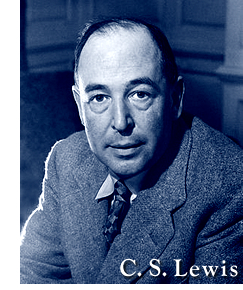
In August of 1963, due to his ailing health and increasing responsibilities, C.S. Lewis announced his retirement from Cambridge. His stepson Douglas Gresham and friend Walter Hooper were sent to the university to sort out his affairs and bring home the two thousand or so books that lined the walls of his Magdalene College office. Knowing the house was already filled to its bursting point with books, the pair wondered all the way home where on earth they would find the space to put them. But Lewis had already contrived an intricate plan for their use.

A nurse named Alec had been hired to stay up nights in case Lewis fell ill and needed his assistance. As the men returned with the enormous load of books, Alec was asleep in his room on the ground floor. As the truck pulled into the driveway, Lewis appeared, cautioning them to silence. “Where’ll we store the books?” Hooper whispered, to which Lewis responded with a wink. Carrying each stack with tedious concern so as not to wake the sleeping victim, the three men piled the works around the nurse’s bed, sealing him in a cocoon of manuscript and literature. When they were finished, the books were stacked nearly to the ceiling, filling every square inch of the room where the snoring nurse still slept.

Much to the relief of the anxious culprits who were waiting outside, Alex finally awoke. From within the insulated tomb, first came sounds of bellowing, and finally the tumbling of the great literary wall. An amused nurse emerged from within the wreckage.

The characters in this story are every bit as spirited as some of the playful personalities from Lewis’s imaginary worlds. These are the whimsical scenes—fiction and non-fiction—that seal in my mind the many weighty lessons I have wrought from him. But perhaps namely: Christianity is a religion with room—and reason—for life and laughter.

Much of the thought and work of C.S. Lewis wrestles with the existential evidences of the life-giving presence of God and the winsome invitations around us that beckon us to participate in this life. I am not alone in saying it was Lewis who first taught me to move toward the questions that reappear though we bury them and to at least be honest about the logical outworkings of the philosophies we hold, even loosely. It was Lewis who taught me to search after God with both heart and mind and energy, but with the wonder and imagination of a child who is able to be startled by the very thing she is looking for. A former atheist, Lewis came to believe with everything in him that Christianity gives an explanation—and a face—to the joy we stumble across, joy that “flickers on the razor-edge of the present and is gone.”

On the one hand, if life is but time and happenstance, why do we laugh or wonder, or experience a desire to play, however fleetingly at all? Is the encounter of delight simply the mind’s attempt to distract us from pain? What good is joy, what purpose is humor or laughter or beauty, if life is but a series of instincts to survive and the universe at a cosmic level is meaningless? On the other hand, if we are made in the image of a holy, loving, imaginative God, how wonderful that God has made us with both logic and laughter, with intrinsic worth and immortal wonder.

Nearing the end of one of his most remarkable lectures, in which he spoke hauntingly of the glory of the God and the immortality of the soul made in God’s image, Lewis added a word of warning: “This does not mean that we are to be perpetually solemn. We must play. But our merriment must be of that kind (and it is, in fact the merriest kind) which exists between people who have, from the outset, taken each other seriously.”(1)

The resurrected, vicariously human Son of God invites us in to such a story, a creator who made us to live fully, coming in person to confront our desolation and to be our consolation, that we might encounter what the very word means. What if the door on which we have been knocking all our lives will one day open at last? Seeking and playing, finding and living may well be among life’s greatest efforts.

Jill Carattini is managing editor of A Slice of Infinity at Ravi Zacharias International Ministries in Atlanta, Georgia.

(1) C.S. Lewis, Weight of Glory (New York: Harper, 1980), 46.

(2) Photo by Ben May Media. http://benmaymedia.zenfolio.com/ Used by permission. Bangalore, India. These children were playing a board game at one of Agni Raksha’s’ recovery facilities. Agni Raksha helps burn victims who are burned maliciously – sometimes if a dowry is not paid by a father marrying off his daughter, the husband or mother-in-law will light the girl on fire. Often times when a child sees their mother on fire, they run to try and help them and get severely burned themselves.

Alistair Begg – Comfort on the Hill


…the place that is called The Skull. Luke 23:33

The hill of comfort is the hill that is called The Skull or Calvary; the house of consolation is built with the wood of the cross; the temple of heavenly blessing is based upon the riven rock–riven by the spear that pierced His side. No scene in sacred history ever gladdens the soul like Calvary’s tragedy.

Is it not strange, the darkest hour

That ever dawned on sinful earth,

Should touch the heart with softer power,

For comfort, than an angel’s mirth?

That to the Cross the mourner’s eye should turn,

Sooner than where the stars of Bethlehem burn?

Light springs from the midday-midnight of Golgotha, and every herb of the field blooms sweetly beneath the shadow of the once accursed tree. In that place of thirst, grace has dug a fountain that runs continually with water pure as crystal, each drop capable of alleviating the woes of mankind. You who have had your seasons of conflict will confess that it was not at Olivet that you ever found comfort, not on the hill of Sinai, nor on Tabor; but Gethsemane and Golgotha have been a means of comfort to you. The bitter herbs of Gethsemane have often taken away the pains in your life; and the groans of Calvary yield rare and rich comfort.

We never would have known Christ’s love in all its heights and depths if He had not died; nor could we guess the Father’s deep affection if He had not given His Son to die. The common mercies we enjoy all sing of love, just as the seashell, when we put it to our ears, whispers the sounds of the deep sea from which it came; but if we desire to hear the ocean itself, we must not look at everyday blessings, but at the transactions of the crucifixion. If you want to know love, then go afresh to Calvary and see the Man of Sorrows die.

Devotional material is taken from “Morning and Evening,” written by C.H. Spurgeon, revised and updated by Alistair Begg.


Charles Spurgeon – The best of masters


“Peace I leave with you, my peace I give unto you: not as the world giveth, give I unto you.” John 14:27

Suggested Further Reading: 1 Thessalonians 5:23-28

It is the same with the world at this day. Everyone greets us in writing with a “Dear sir,” or a “My dear sir,” and concludes with “Yours very truly,” and “Yours sincerely.” We call all “friends,” and if we meet but casually we express the utmost anxiety with regard to one another’s health, and we carefully enquire after each other’s families; when perhaps we shall no sooner have passed by the person than we shall forget his existence, and certainly shall entertain no anxious thoughts with regard to his welfare, nor any loving remembrance of him. The world gives very largely when it gives compliments. Oh, what blessings would descend upon all our heads, if the blessings uttered could be blessings bestowed. Even when the “Good bye” is given, which translated means, “God be with you”—if that could be but true, and if God could be with us, in answer to that prayer, so little understood, how rich might we be! But alas! the way of the world is, “Be ye warmed and filled;” but it has not that which should warm, nor that which should fill. It is a world of words; high-sounding, empty, all-deceiving words. Now this is not so with Christ. If he says “Peace be with you,” his benediction is most true and full of sweet sincerity. He left his own peace in heaven, that he might give the peace which he enjoyed with his Father, to us in this world of sorrow, for thus he puts it, “My peace I give unto you.” Christ, when he blesses, blesses not in word only, but in deed. The lips of truth cannot promise more than the hands of love will surely give. He gives not in compliment. Furthermore, even when the world’s wishes of peace are sincere, what are they but mere wishes?

For meditation: Greetings and best wishes from the lips of a Christian should be modelled on Christ, not the world. Do you go in for the “polite lie” or are your concerns for others genuine (Philippians 2:20; 3 John 2)?

Sermon no. 247
10 April (1859)

John MacArthur – Rejecting Worldly Ambitions


“Blessed are those who hunger and thirst for righteousness, for they shall be satisfied” (Matt. 5:6).

Only Christ can satisfy your deepest needs.

Within every man and woman is a hunger and thirst only God can satisfy. That’s why Jesus said, “I am the bread of life; he who comes to Me shall not hunger, and he who believes in Me shall never thirst” (John 6:35).

Sadly, most people search for happiness in the wrong places. The prodigal son in Luke 15 is one example. He turned from God to pursue sinful pleasures, but soon discovered that sin cannot satisfy a hungering soul. That’s when he returned to his father’s house, where he was given a great feast—a picture of salvation.

The rich fool in Luke 12 thought that amassing possessions was the key to happiness, saying to himself, “What shall I do, since I have no place to store my crops? . . . This is what I will do: I will tear down my barns and build larger ones, and there I will store all my grain and my goods. And I will say to my soul, ‘Soul, you have many goods laid up for many years to come; take your ease, eat, drink and be merry.’ But God said to him, ‘You fool! This very night your soul is required of you; and now who will own what you have prepared?’ So is the man who lays up treasure for himself, and is not rich toward God” (vv. 17- 21). Unlike the prodigal son, the rich fool never turned to God in repentance. Consequently he lost everything.

The rich fool is typical of many people today: they ignore Christ and attempt to fill the void with worldly pleasures. Most are oblivious to the eternal peril that awaits them if they don’t repent.

Those who love God shun worldliness, pursue righteousness, and know the satisfaction that comes from pleasing Him. That’s the essence of the Sermon on the Mount: “Seek first His kingdom and His righteousness; and all [you need] will be added to you” (Matt. 6:33). Keep that goal uppermost in your mind as you face the challenge of each new day.

Suggestions for Prayer

Thank God that He satisfies the deepest desires of your heart.

For Further Study

Read Daniel 4:28-37.

  • What was Nebuchadnezzar’s sin?
  • How did God punish Him?
  • How did Nebuchadnezzar respond after being punished?


Joyce Meyer – Where’s My Pony?


My son, attend to my words; consent and submit to my sayings. Let them not depart from your sight; keep them in the center of your heart. For they are life to those who find them, healing and health to all their flesh.   —Proverbs 4:20-22

In these verses, the writer used the words, attend to my words, which is another way of exhorting us to meditate. I love the fact that God not only frequently tells us to meditate—to ponder seriously—His Word, but He frequently promises results. It’s as if God says, “Okay, Joyce, if you meditate, here’s what I’m going to do for you.”

In this passage, the promise is life and health. Isn’t that amazing? It’s even a promise that when you contemplate and brood over the Bible, it will affect your physical body.

We’ve known for a long time that when we fill our minds with healthy, positive thoughts, it affects our body and improves our health. This is just another way of repeating this truth. Or take the opposite viewpoint: Suppose we fill our minds with negative thoughts and remind ourselves how frail we are or how sick we were the day before. We soon become so filled with self-pity and self-defeating thoughts that we get even sicker.

In the previous pages, I’ve already mentioned the idea of prosperity (see Psalm 1 and Joshua 1:8). I believe that by “prosperity,” God means that we’ll be enriched and prosper in every part of our lives. It’s not a promise of more material wealth, but an assurance of being able to enjoy all the wonderful blessings we have.

Recently when I meditated on several passages in the Bible, I realized God was showing me that the Word has hidden treasures in it—powerful, life-giving secrets—which God wants to reveal to us. They are there for those who muse, ponder, and contemplate the Word of God.

What we often forget is that God wants our fellowship, our company, and our time with Him. If we want a deep relationship with our heavenly Father, we have to make quality time for God. I recently heard someone say, “Quality time comes out of quantity times.” In other words, it’s only as we spend time with God on a regular, daily basis that we have those special, life-changing moments. We can’t program them to happen, but if we’re there on a daily basis, God will cause some of those times to be quality times of special blessing.

  1. L. Moody once said that the Bible would keep us from sin, or sin would keep us from the Bible. That’s the principle here. As we concentrate on God’s Word and allow it to fill our thoughts, we will push away all desire to sin or to displease God in any way. We become more deeply rooted in Him. Again, think of it in the negative. When our mind remains focused on our problems all the time, we become consumed with them. If we meditate on what’s wrong with others, we see even more flaws and faults. But when we concentrate on God’s Word, light comes into our souls.

I want to go back one more time to that powerful statement in Philippians 4:8. No matter which translation or paraphrase we read it in, the message is powerful and exactly what we need to do to condition our minds for victory.

Here’s Eugene Peterson’s paraphrase in The Message: “Summing it all up, friends, I’d say you’ll do best by filling your minds and meditating on things true, noble, reputable, authentic, compelling, gracious—the best, not the worst; the beautiful, not the ugly; things to praise, not things to curse.”

Dear Father in heaven, teach me the blessings of pondering Your Word, of filling my heart and mind with Your spiritual manna. May I grow into maturity and become more and more like Your Son, Jesus. It’s in His name that I pray. Amen.

Campus Crusade for Christ; Bill Bright – His Gifts and Powers 


“It is the same and only Holy Spirit who gives all these gifts and powers, deciding which each of us should have” (1 Corinthians 12:11).

As I counsel in the area of Christian service, I find much confusion among many Christians regarding the gifts of the Holy Spirit.

Believers often are so involved in trying to discover or receive additional spiritual gifts that they are not developing and using their known gifts and abilities to do God’s will.

For this reason, I caution against going to great lengths to discover one’s spiritual gifts. Rather than emphasize gifts, I encourage a person to surrender fully to the lordship of Jesus Christ and appropriate by faith the fullness of the Holy Spirit.

Then, by faith and hard work, while depending on the Holy Spirit, a person can set out with determination to accomplish that to which God has called him.

Paul wrote about this important principle in his letter to the Philippians:

“Dearest friends, when I was there with you, you were always so careful to follow my instructions. And now that I am away you must be even more careful to do the good things that result from being saved, obeying God with deep reverence, shrinking back from all that might displease Him….

“For I can do everything God asks me to do with the help of Christ who gives me the strength and power” (Philippians 2:12; 4-13). This, of course, can be done only if a Christian totally submits himself to the lordship of Jesus Christ and the control of the Holy Spirit.

Bible Reading: I Corinthians 12:1-10

TODAY’S ACTION POINT:  I’ll be more concerned about being yielded to the moment-by-moment direction and control of God’s Holy Spirit than about discovering my spiritual gift(s).


Presidential Prayer Team; C.P. – With Him


When Jesus went into the grave, your sin went with Him (Ephesians 2:2). When He rose, if you believe, your spirit rose with Him (2:5). When He returned to Heaven, spiritually speaking, you are seated with Him in heavenly places (2:6). Now His Spirit lives inside of you (I Corinthians 6:19) and “if the Spirit of him who raised Jesus from the dead dwells in you, he who raised Christ Jesus from the dead will also give life to your mortal bodies through his Spirit who dwells in you.” (Romans 8:11)

Made us alive together with Christ—by grace you have been saved.

Ephesians 2:5

Until that day, what are believers to do? You are not saved by good works, but you are called to do them (Ephesians 2:8-10). You are to use whatever gift you have to serve others (I Peter 4:10). Consider your skills, talents and resources, and how you can use one of them to help someone this week – not to earn your salvation, but in gratitude for it.

Pray, too, for your leaders and the citizens of this nation to receive the free gift of salvation and do the good works they are called to do.

Recommended Reading: Hebrews 13:1-8, 15-17

Greg Laurie – The Matter of the Heart


“These people draw near to Me with their mouth, and honor Me with their lips, but their heart is far from Me.”  —Matthew 15:8

Have you ever found yourself distracted during a time of worship? As you’re singing, maybe you’re thinking, I am so sick of this song. Why are we still singing this song? Or maybe you’re looking around and saying to yourself, I’m more spiritual than anyone here. I’m such an awesome worshiper. Then again, you might be thinking, I wonder what I should eat after church?

During a worship service, it’s possible to have no thought of God whatsoever. But here’s what we need to know: Worship is not an art form; it is a heart form. God looks at what is going on inside. Quoting from Isaiah, Jesus said, “These people draw near to Me with their mouth, and honor Me with their lips, but their heart is far from Me” (Matthew 15:8).

Jesus told the story of a Pharisee and a tax collector who both went to the temple to pray. Tax collectors were despised in the eyes of nearly everyone, while Pharisees were the most religious guys around. Jesus said that the “Pharisee stood and prayed thus with himself, ‘God, I thank You that I am not like other men—extortioners, unjust, adulterers, or even as this tax collector. I fast twice a week; I give tithes of all that I possess’ ” (Luke 18:11–12).

The tax collector, however, stood at a distance in the temple. He wouldn’t even look up to heaven as he beat his breast and prayed, “God, be merciful to me a sinner!”

Jesus concluded by saying, “I tell you, this man went down to his house justified rather than the other” (verse 14). Why? Because his heart was right toward God.

When we worship, let’s do it from our heart. Because the heart of the matter is the matter of the heart.


Max Lucado – Into His Likeness


Strange as it may seem, Paul tells us in 1 Corinthians 2:16 that Christians actually have within themselves a portion of the very thoughts and mind of Christ. Strange is the word! If I have the mind of Jesus, why do I still think so much like me? Why do I still have the hang-ups of Max? Why do I still hate traffic jams?

God has ambitious plans for us. The same one who saved your soul longs to remake your heart. His plan is nothing short of a total transformation. Colossians 3:10 reminds us, “You have begun to live the new life, in which you are being made new and are becoming like the One who made you. This new life brings you the true knowledge of God.” Let’s fix our eyes on Jesus! Perhaps in seeing him, we will see what we can become.

From Just Like Jesus

Night Light for Couples – A Most Extraordinary Event

A Most Extraordinary Event – by Jo Ann Larsen

Larry and Jo Ann were an ordinary couple. They lived in an ordinary house on an ordinary street. Like any other ordinary couple, they struggled to make ends meet and to do the right things for their children. They were ordinary in yet another way—they had their squabbles.

Much of their conversation concerned what was wrong in their marriage and who was to blame—until one day when a most extraordinary event took place.

“You know, Jo Ann, I’ve got a magic chest of drawers. Every time I open the drawers, they’re full of socks and underwear,” Larry said. “I want to thank you for filling them all these years.”

Jo Ann stared at her husband over the top of her glasses. “What do you want, Larry?”

“Nothing. I just want you to know I appreciate those magic drawers.”

This wasn’t the first time Larry had done something odd, so Jo Ann pushed the incident out of her mind until a few days later.

“Jo Ann, thank you for recording so many correct check numbers in the ledger this month. You put down the right numbers fifteen out of sixteen times. That’s a record.”

Disbelieving what she had heard, Jo Ann looked up from her mending. “Larry, you’re always complaining about my recording the wrong check numbers. Why stop now?”

“No reason. I just wanted you to know I appreciate the effort you’re making.”

Jo Ann shook her head and went back to her mending. “What’s gotten into him?” she mumbled to herself.

Nevertheless, the next day when Jo Ann wrote a check at the grocery store, she glanced at her checkbook to confirm that she had put down the right check number. “Why do I suddenly care about those dumb check numbers?” she asked herself.

She tried to disregard the incident, but Larry’s strange behavior intensified.

“Jo Ann, that was a great dinner,” he said one evening. “I appreciate all your effort. Why, in the past fifteen years I’ll bet you’ve fixed over 14,000 meals for me and the kids.”

Then, “Gee, Jo Ann, the house looks spiffy. You’ve really worked hard to get it looking so good.” And even, “Thanks, Jo Ann, for just being you. I really enjoy your company.”

Jo Ann was growing worried. Where’s the sarcasm, the criticism? she wondered.

Her fears that something peculiar was happening to her husband were confirmed by sixteen‐year‐old Shelly, who complained, “Dad’s gone bonkers, Mom. He just told me I looked nice. Even though I’m wearing all this makeup and these sloppy clothes, he still said it. That’s not Dad, Mom. What’s wrong with him?”

Whatever was wrong, Larry didn’t get over it. Day in and day out he continued focusing on the positive.

Over the weeks, Jo Ann grew more accustomed to her mate’s unusual behavior and occasionally even gave him a grudging “Thank you.” She prided herself on taking it all in stride, until one day something so peculiar happened that she became completely discombobulated.

“I want you to take a break,” Larry said. “I am going to do the dishes. So please take your hands off that frying pan and leave the kitchen.” (Long, long pause.) “Thank you, Larry. Thank you very much!”

Jo Ann’s step was now a little lighter, her self‐confidence higher, and once in a while she hummed. She didn’t seem to have as many blue moods anymore. I rather like Larry’s new behavior, she thought.

That would be the end of the story except one day another most extraordinary event took place. This time it was Jo Ann who spoke.

“Larry,” she said, “I want to thank you for going to work and providing for us all these years. I don’t think I’ve ever told you how much I appreciate it.”

No matter how hard Jo Ann has pushed for an answer, Larry has never revealed the reason for his dramatic change of behavior, and so it will likely remain one of life’s mysteries. But it’s one I’m thankful to live with.

You see, I am Jo Ann.

Looking ahead…

As Larry demonstrated, a little encouragement can transform a marriage. None of us—king or queen, president or business leader, husband, housewife or child—is without the human craving for appreciation. Mark Twain once said, “I can live for two months on a good compliment.” A kind word is like that. It fuels our energy and infuses us with new enthusiasm for facing the challenges life throws our way.

I invite you during this week’s discussion to consider the incredible power of encouragement. As you apply each principle, I think you’ll find that the sun shines a little brighter and your day runs a bit smoother. You might begin by simply telling your partner how much you appreciate having him or her around.

– James C Dobson

  • From Night Light For Couples, by Dr. James & Shirley Dobson

Ravi Zacharias Ministry – Easter in Academia


Lock atheist philosophers who do not specialize in religion in a room with theist philosophers who do specialize in religion (well, don’t really, but if you did), and if you listened to the ensuing debates, you “would have to conclude that the theists definitely had the upper hand in every single argument or debate.”(1)

Those are not my words but the words of an atheist. And not just any atheist, an atheist who is a respected professional philosopher with 12 books and over 140 articles to his name.

Despite his atheism, Quentin Smith draws the theism-friendly conclusion that “God is not ‘dead’ in academia; he returned to life in the late 1960s and is now alive and well in his last academic stronghold, philosophy departments.”(2)

God is alive. And not only in philosophy, but in sociology as well. Fifty years ago sociology was convinced that God was on the way out. The scholars had bought into secularization theory; you know the idea: The more modern and technological the world becomes, the more secular it becomes.

Peter Berger was one of the leading proponents of this theory. Today he has completely abandoned it.

At an academic conference in Miami in 2011, Berger said that he and almost everyone in the field changed their minds simply because that is what the evidence demanded. He said that if you look at the contemporary world,

“The real situation is that most of the world is as religious as it ever was. You have enormous explosions of religion in the world… In fact, you can say every major religious tradition has been going through a period of resurgence in the last 30, 40 years or so… anything but secularization.”(3)

Probably the most influential British philosopher of religion of the last half century is longtime Oxford professor Richard Swinburne. In 2003 he published a book entitled The Resurrection of God Incarnate, and in that book he concludes that on the available evidence today, it is 97% probable that Jesus truly—miraculously—rose from the dead, proving that he is the God he claimed to be.

Do all philosophers agree with Swinburne? Of course not. And even Swinburne recognizes that we can’t take the exact percentage too seriously. He likes to work with probability theory so he plugs in numbers at each point in the argument; they are only meant to provide a rough estimate.

Still though, the fact that someone of his intellectual credibility can make that claim in print, have it published by Oxford University Press, and then ably defend it at top academic conferences all around the world speaks to the fact that the intellectual case for the Christian faith is strong.

A number of popular authors have suggested otherwise in recent years. But these New Atheists are generally not engaged with current philosophical scholarship. In fact, much of the New Atheism at the popular level can be traced directly back to old scholarship at the academic level.

Richard Dawkins denies the existence of a God who can ground good and evil, right and wrong. But criticism without alternative is empty. What is his alternative?: a world in which the disturbing response to being asked whether the wrongness of rape is as arbitrary as the fact that we’ve evolved five fingers rather than six is, “You could say that, yeah.”(4)

Quentin Smith denies the existence of a God who can raise the dead. What is his alternative?:

“The fact of the matter is that the most reasonable belief is that we came from nothing, by nothing and for nothing… We should…acknowledge our foundation in nothingness and feel awe at the marvelous fact that we have a chance to participate briefly in this incredible sunburst that interrupts without reason the reign of non-being.”(5)

Is this any less extraordinary than a resurrection from the dead? On second thought, is this not itself a resurrection from the dead?

If we think it is our minds that keep us from God, we may not be dealing with the arguments at the highest level. My own story is one of reasoning that if God really made me, and if he made me with my mind, then he would ensure that a sincere intellectual search would point in his direction.(6)

To my surprise, that is just what I found. And when I was finally willing to open to God not only my mind but also my heart, I found so much more.

Vince Vitale is a member of the speaking team at Ravi Zacharias International Ministries in Oxford, England.

(1) Quentin Smith, “The Metaphilosophy of Naturalism,” Philo. 4.2 (2001), 197.

(2) Ibid.

(3) Peter Berger, “Six Decades as a Worldwide Religion Watcher: Observations & Lessons Learned.” Ethics & Public Policy Center. n.p., n.d., accessed online on July 22, 2014 at http://eppc.org/publications/berger/.

(4) Richard Dawkins, Interview by Justin Brierley, “The John Lennox—Richard Dawkins Debate.” Bethinking.org, 2008. Web. 25 April 2014. http://www.bethinking.org/atheism/the-john-lennox-richard-dawkins-debate.

(5) Quentin Smith, “The Uncaused Beginning of the Universe,” in William Lane Craig and Quentin Smith, Theism, Atheism, and Big Bang Cosmology (1993), 135. Emphasis added.

(6) Some of the ideas expressed in this Slice are also recorded in the following video: http://bit.ly/WC1rrg

Also see Why Suffering?: Finding Meaning and Comfort When Life Doesn’t Make Sense, co-authored with Ravi Zacharias. Vince Vitale wrote his PhD on the problem of suffering. He now teaches at Wycliffe Hall of Oxford University and is Senior Tutor at The Oxford Centre for Christian Apologetics.

Charles Spurgeon – The jeer of sarcasm, and the retort of piety


“Then David returned to bless his household. And Michal… came out to meet David, and said, How glorious was the king of Israel today, who uncovered himself today in the eyes of the handmaids of his servants, as one of the vain fellows shamelessly uncovereth himself! And David said unto Michal, It was before the Lord, which chose… to appoint me ruler… over Israel: therefore will I play before the Lord. .” 2 Samuel 6:20-22

Suggested Further Reading: 1 Peter 3:1-7

It is a happy thing when we are enabled to rejoice together in our family relationships; when husband and wife help each other on the path to heaven. There can be no happier position than that of the Christian man who finds, in every holy wish he has for God, a helper; who finds that often she outstrips him; that when he would do something, she suggests something more; when he would serve his Master there is a hint given that more yet might be done, and no obstacle put in the way, but every assistance rendered. Happy is that man and blessed is he. He has received a treasure from God, the like of which could not be bought for diamonds. That man is blessed of the Most High; he is heaven’s favourite, and he may rejoice in the special favour of his God. But when it is the other way, and I know it is the case with some of you, then it is a sore trial indeed. Perhaps, though a careful, cautious, prudent, and excellent worldly woman, she cannot see with you in the things which you love in the kingdom of God, and when you have done something which in the excess of your zeal seems to be but little, she thinks it inordinate and extravagant. “Oh,” says she, “do you go and mix with these people? Does King David go and wear a linen ephod like a peasant? Do you go and sit down with that rabble? You? You can stand up for your dignity—put ‘esquire’ after your name, and yet walk in the street with any beggar that likes to call himself a Christian. You,” says she, “you that are so cautious in everything else, you seem to have lost your head when you think about your religion.”

For meditation: Those close to the Lord Jesus Christ, his friends and family, could not understand him (Mark 3:21; John 7:5) but God worked in their lives (Acts 1:14; 1 Corinthians 9:5). Don’t despair of your loved ones who seem so far from God (1 Corinthians 7:16).

Sermon no. 321
9 April (Preached 8 April 1860)

John MacArthur – Inheriting the Earth


“Blessed are the gentle, for they shall inherit the earth” (Matt. 5:5).

Someday God will reverse the curse and return the earth to His people.

God said to Adam and Eve, “Be fruitful and multiply, and fill the earth, and subdue it; and rule over the fish of the sea and over the birds of the sky, and over every living thing that moves on the earth” (Gen. 1:28). But their sin cost them their sovereignty and brought a curse upon the earth (Gen. 3:17-18).

The apostle Paul said, “The anxious longing of the creation waits eagerly for the revealing of the sons of God . . . in hope that the creation itself also will be set free from its slavery to corruption” (Rom. 8:19-21). Someday that curse will be reversed and God’s people will once again inherit the earth.

The Greek word translated “inherit” (Matt. 5:5) means “to receive an allotted portion.” The earth is the allotted portion of believers, who will reign with the Lord when He comes in His kingdom (Rev. 20:6). That’s an emphatic promise in Matthew 5:5, which literally reads, “Blessed are the gentle, for only they shall inherit the earth.”

Many Jewish people of Christ’s day thought the kingdom belonged to the strong, proud, and defiant. But Jesus said the earth will belong to the gentle, meek, and humble. Proud, self-righteous people don’t qualify (cf. Luke 1:46- 53). Jesus said, “Unless you are converted and become [humble and submissive] like children, you shall not enter the kingdom of heaven” (Matt. 18:3).

As a recipient of God’s promises, you should be thrilled knowing that you will inherit the earth and reign with Christ in His earthly kingdom. Be encouraged to know that even when evil people and godless nations seem to prosper, God is in complete control and will someday establish His righteous kingdom on earth.

Rejoice in that assurance, and seek to be all He wants you to be until that great day.

Suggestions for Prayer

  • Thank God that all of creation will someday be freed from sin’s corrupting influences.
  • Praise Him for His mighty power, which will bring it all to pass.

For Further Study

Read 1 Corinthians 6:1-8.

  • What issue did Paul address?
  • How does the future reign of Christians apply to that issue?


Joyce Meyer – Positive Belief


[For Abraham, human reason for] hope being gone, hoped in faith that he should become the father of many nations, as he had been promised, so [numberless] shall your descendants be. He did not weaken in faith when he considered the [utter] impotence of his own body, which was as good as dead because he was about a hundred years old, or [when he considered] the barrenness of Sarah [deadened] womb. No unbelief or distrust made him waver (doubtingly question) concerning the promise of God, but he grew strong and was empowered by faith as he gave praise and glory to God, fully satisfied and assured that God was able and mighty to keep His word and to do what He had promised. Romans 4:18-21

The story of Abraham amazes me no matter how many times I read it. It’s not just the birth of a son when he was a hundred years old. That’s a miracle. But just as amazing is the information that he waited twenty-five years for the fulfillment of the promise. He was seventy-five when God promised him a son.

I wonder how many of us would believe God and live in expectation for twenty-five years. Most of us probably would have said, “I didn’t really hear from God.” “Oh, I guess maybe God didn’t really mean that.” Or, “I need to go somewhere else to get a fresh word from the Lord.”

Sarah and Abraham did have problems holding on to that promise. As a means of attempting to get what they wanted, they had Sarah’s handmaiden, Hagar, bear him a son, but God let him know that wasn’t the way it was going to be. I believe their actions delayed the arrival of God’s promised child.

In our impatience, we often take matters into our own hands. I say we get “bright ideas” plans of our own, which we hope God will bless. These plans open the door for confusion and chaos. Then their results must be dealt with, which often delays our miracle.

When Moses came down from Sinai after having received the Ten Commandments from God, He saw the wickedness of the Israelites who had become impatient in waiting. In anger, he broke the tablets on which God had written the commands. Although we can understand Moses’ anger, we must remember that it was not initiated by God. Therefore, Moses had to ascend Mount Sinai again and once more go through the process of obtaining the Ten Commandments. Moses may have enjoyed a momentary emotional release, but it cost him a lot of extra work. This is a good lesson for all of us. We must pray first and agree with God’s plan, not plan and pray that our plan will work.

It’s often difficult to believe God and hold on year after year after year. Sometimes after my meetings, people come to me and tell me many sad stories. I encourage them to become positive and upbeat. Some people will listen to every word I say; nod, maybe even smile, and then they say the most negative word of all: “But …” With that single word, they are negating everything I’ve said. That’s not the spirit of Abraham.

The Bible gives us promises, hope, and encouragement. God promises good to those ofus who serve Him. Despite the adversity of our circumstances and some people have absolutely terrible situations God still promises good. Our sense of goodness, however, may not be the same as God’s. Getting what we want immediately may not be best for us. Sometimes waiting is the best thing because it helps develop the character of God in us.

The Lord chooses to do good to us and to make us happy; the devil chooses to do wrong and to make us miserable. We can remain patient and keep believing God’s promises, or we can allow the evil one’s whisper to fill our ears and lead us astray.

Too many of us have ignored the fact that God is the originator of miracles. He specializes in doing the impossible: He provided a son to barren Sarah; He opened the Red Sea for the Israelites to walk across on dry land; He destroyed Goliath with a single stone from a slingshot. Those are miracles. That’s the Holy Spirit at work, defying the laws of nature (He made the laws, so He can break them).

Hebrews 11 is a chapter about faith and the people of God who dared to believe the promises. But without faith it is impossible to please and be satisfactory to Him. For whoever would come near to God must [necessarily] believe that God exists and that He is the rewarder of those who earnestly and diligently seek Him [out] (v. 6).

As I consider that verse, I can see how the devil creeps in. He says to us, “Yes, that’s true. Those were special people. You are nobody. God won’t do anything special for you. Why should He?”

That is a satanic lie and one that too many easily accept. God loves each of us, and the Bible says Hes our Father. Any good father loves to do good things for his children. God wants to do good things for you and for me. Expect a miracle in your life. Expect many miracles.

Positive belief in God’s promises yields good results because the Good One sends them to us. Refuse to give up, and you will see the result of your positive belief.

Dear Father in heaven, forgive my lack of belief. Forgive me for allowing Satan to deceive me or make me think I’m worthless or unworthy of Your miracles. I am worthy because You made me worthy. You are the God of the impossible, and I ask You to help me wait on You and never give up. In the name of Jesus Christ my Lord, I pray. Amen.


Campus Crusade for Christ; Bill Bright – Examples of His Love 


“Little children, let us stop just saying we love people; let us really love them, and show it by our actions” (1 John 3:18).

The story is told about two farmers. Every day, one of them would haul pails of water up the steep slope to his terraced field and irrigate his meager crop.

The second farmer tilled the terrace just below, and he would poke a hole in the dyke and let the other farmer’s water run down into his field.

The first farmer was upset. Being a Christian, he went to his pastor and asked for advice. The pastor told him to keep on watering as before and to say nothing. So, the farmer returned to his fields and the watering of his crop, but the farmer below him continued to drain off his water. Nothing had changed.

After a few days, the first farmer went to his pastor again. The pastor told him to go a step further – to water his neighbor’s crop! So the next day, the farmer brought water to his neighbor’s field and watered the crops. After that, he watered his own field.

This went on for three days, and not a word was exchanged between the two farmers. But after the third day, the second farmer came to the first farmer.

“How do I become a Christian?” he asked.

There is a saying, ‘Love your friends and hate your enemies.’ But I say: Love your enemies!…If you are friendly only to your friends, how are you different from anyone else? Even the heathens do that. But you are to be perfect, even as your father in heaven is perfect” (Matthew 5:43-48).

Bible Reading: I John 3:14-17

TODAY’S ACTION POINT:  I will make every effort to demonstrate the love of Christ by the way I act toward others.

Presidential Prayer Team; J.R. – Astonishing Abandonment


The Romans were known for their brutality to those they conquered, but they also imposed harsh penalties upon miscreants in their own ranks. Topping the list was “fustuarium,” a particular method of capital punishment reserved for soldiers who deserted their units. This was administered by the deserter’s own legion; they would fall upon the man and beat him to death with a cudgel.

I am astonished that you are so quickly deserting him who called you in the grace of Christ.

Galatians 1:6

This savagery was no doubt on the mind of the apostle Paul when he wrote with astonishment that the Galatian Christians were blithely deserting the faith for false gospels. Unlike the Romans, whose justice was meted out with unwavering ruthlessness, Christ offered grace and mercy to all. But Paul cautioned that forsaking the true gospel was no small matter, and that those who preached deceit would be cursed.

Today in America, “false gospels” are epidemic – and producing great clouds of confusion and tumult. But today, pray that you may be an example and testimony to the love of the One, the Only, Jesus to those who need to trust Him as Lord. This is your duty as a soldier of Christ!

Recommended Reading: Galatians 1:6-17


Greg Laurie – You Are Being Watched


They worshiped together at the Temple each day, met in homes for the Lord’s Supper, and shared their meals with great joy and generosity all the while praising God and enjoying the goodwill of all the people. And each day the Lord added to their fellowship those who were being saved.—Acts 2:46–47

There is a direct connection between a Christian’s worship and a Christian’s witness. Believers are being watched both inside and outside of the church.

When you go to church every week and things are going your way, when you have the perfect little family, a great job, a nice home, and your health is good, people will look at you and say, “Well yeah, you are not living in reality. Of course you are happy.”

But then one day maybe tragedy befalls you. You lose that job or one of your children or your health. When something difficult happens and you are still praising God, that is a testimony to a lost and watching world.

Your worship is a witness to people at church as well. When nonbelievers go to church, they are checking everything out. They are taking it all in. What kind of witness are you to the people sitting near you? They may be Christians, or they may not be. They may be there for the first time—and maybe for the last time. They will form an evaluation on what they believe about God and Christianity largely based on what they see.

You might say, “Well, that is a lot of pressure, Greg.” All I am saying is that you are being watched. And I think it’s a powerful testimony when you are worshiping the Lord and a nonbeliever is standing there next to you thinking, What is this all about?

It was watching Christians worship the Lord on my high school campus that opened my heart to listen to the gospel. And then when someone shared from God’s Word, I wanted to hear it, and I ended up believing that day. My heart was opened by watching Christians worship with sincerity.

Worship is a witness.

Max Lucado – Your Heart, His Home


The crowning attribute of Christ was this: his heart was spiritual. His thoughts reflected his intimate relationship with the Father. Our hearts seem so far from his. He is pure; we’re greedy. He is peaceful; we’re hassled. He is purposeful; we’re distracted. He is pleasant; we’re cranky. The distance between our hearts and his seems so immense! How could we ever hope to have the heart of Jesus?

Ready for a surprise? You already do. One of the supreme yet unrealized promises of God is simply this: if you’ve given your life to Jesus, Jesus has given himself to you. He has made your heart his home. It would be hard to say it any more succinctly than Paul does in Galatians 2:20, “Christ lives in me.”

God is willing to change us into the likeness of the Savior. Shall we accept his offer?


From Just Like Jesus

Encouragement for Today – The Moment that Saved My Marriage   LYSA TERKEURST


“Let your gentleness be evident to all.” Philippians 4:5a (NIV)

We all have them. Weak places. Places inside us that make us wonder if we’ll ever get it together like the together people. Places that make us feel “less than” the next girl.

One of those weak places for me has always been my tendency to let my emotions boss me around, especially in conflict.

My deepest desire is to let my “gentleness be evident to all” like our key verse says … but the truth is my reactions haven’t always reflected my desire for gentleness. I really think I was born with firecrackers in my blood.

But when my relationships began to suffer due to my emotionally driven tirades, I found myself crying out to the Lord for help. He prompted my heart to pause and let the Holy Spirit intervene on my behalf when my emotions rallied to be right.

Honestly, I wasn’t totally convinced that this whole “giving it over to God” thing really worked. Until one day I saw the beginnings of my imperfect progress.

A few years ago, my husband Art and I hit a rough place financially. Some investments we’d made went bad and we lost nearly our entire life savings. I was knee deep in caring for three small children at the time and hadn’t a clue that financial danger was looming on the horizon.

That is, until Art came home and the look on his face spoke of utter defeat. How could we have lost so much? He’d been wise with our finances. He’d done his research. He was a faithful saver. I stood stunned in our foyer that day, as Art told me the news.

There were many different directions my reaction could have gone in the minutes that followed. I was upset. When Art first talked of making these particular investments, I shared with him that I didn’t have a good feeling about it. But, in the end, I let him make the final decision.

So many times in my marriage, I’ve chosen the wrong words — words that were tainted with bitterness, words that were emotionally toxic. But I’m so thankful the Lord had been working on preparing my heart for this moment, and instead of reacting immediately with what would have been a disastrous response, I paused. I allowed the Holy Spirit a few seconds to interrupt my natural flesh feelings.

Then, because of God’s Spirit working in me, I was able to wrap my arms around my husband and speak life-giving words into his weary heart: “I love you, Art. I loved you yesterday when we had everything. I love you today when we have nothing. I love you for who you are, not what you have.”

Now please understand … I was only able to have this response by God’s grace working in me. I still did quite a bit of wrestling to let my feelings catch up to the gentle words I felt led to speak out loud.

But a few years later, I saw incredible fruit from this one good reaction. Art and I were interviewed on a radio program. On the show Art was asked, “I know you and Lysa had a rough start to your marriage. But what happened that made you know you’d stick by her forever, no matter what?”

Without hesitation, Art recounted my reaction over the lost investments.

I cried. I couldn’t help but think this could have been the moment that saved my marriage.

Had I been left to my own flesh reaction that day, it could have set us on the road to marital disaster. But, because of God’s response being stored up in me, this situation wound up bringing us closer together than we’d ever been.

And I realized how crucial it is to always be aware of God’s preparation in our lives.

One way to be more discerning of this is to commit to exchange whispers with God before shouts with the world every day. Before you check your cell phone or scroll through social media, spend time with Him. Listen for Him. And then go look for rich evidence of Him at work in your life.

Because God stands in our yesterday, today and tomorrow, He sees all. And He knows the perfect way to prepare our hearts for every situation.

When we embrace His preparations, even a girl with firecrackers in her blood like me can have reactions that honor God and breathe life into relationships.

Dear Lord, I’m choosing to let You take control of my reactions. Help me to always exchange whispers with You before shouts with the world. In Jesus’ Name, Amen.

TRUTH FOR TODAY:
Proverbs 29:11, “A fool vents all his feelings, But a wise man holds them back.” (NKJV)

REFLECT AND RESPOND:
What situation have you been in recently where you could have paused to let the Holy Spirit work on your behalf?

If you didn’t have a good reaction, don’t give up! The beauty of imperfect progress isn’t having it all together right away. It’s allowing the Lord to take you by the hand and lead you through slow steps of progress wrapped in grace.

Night Light for Couples – Let’s Make a Deal


“People who want to get rich fall into temptation and a trap.” 1 Timothy 6:9

Some of you are old enough to remember Monty Hall and the game show Let’s Make a Deal—the one where contestants could keep what they had already won or risk trading it in for the mystery prize behind “door number one, door number two, or door number three.” Believe it or not, I once convinced Jim to go with me to one of the shows.

There we were: I had toy birds fastened everywhere on my head and blouse, and Jim (reluctantly) held a sign that said, “My wife is for the birds.” Our getup was enough to earn us seats in the contestants’ row, and before we knew it, we were in front of the cameras trying to name the correct price of four items to win a brand‐new Camaro. And believe me, we needed that car! Jim had just graduated from USC, and we had invested every available dollar in his tuition and expenses.

We guessed the first three items within the three‐dollar margin of error, but we missed on the last one—a Hoover vacuum cleaner. So we didn’t win the Camaro. Yet we walked away from that show with a new vacuum cleaner and another, much more valuable prize: a greater appreciation for how easily greed could overcome us.

Since that time we have observed that Satan appears to offer whatever a person hungers for in exchange for a spiritual compromise. In our case, a new automobile was the perfect enticement to unleash our greed. If illicit sex is your desire, it will eventually be made available. If your passion is for fame or power, the object of that lust will be promised (even if never delivered). Likewise, if you thirst for great wealth—beware! People who care passionately about money are often suckers for wild‐eyed schemes and shady deals. They are always on the verge of a bonanza that seems to slip through their fingers. Instead of getting rich, they get taken.

This is the threat posed by greed. Material comforts or money in the bank can become our first love—our greatest treasure and passion. And when that happens, God becomes almost irrelevant. But the Lord will not settle for second place (“You shall have no other gods before me”— Exodus 20:3). We encourage you to say, “Let’s make a deal” right now. Agree now that you’ll always keep money in its place and the Lord as the first love of your life.

– Shirley M Dobson

From Night Light For Couples, by Dr. James & Shirley Dobson