Tag Archives: Peace

John MacArthur –Comprehending What You Have


“[I pray] that the God of our Lord Jesus Christ, the Father of glory, may give you a spirit of wisdom and of revelation in the knowledge of Him” (Eph. 1:17).

Your inheritance in Christ is so vast and profound that you cannot comprehend it apart from God’s enabling.

The late newspaper publisher William Randolph Hearst invested a fortune in collecting great works of art. One day he read of an extremely valuable work that he determined to add to his collection. His agent searched the galleries of the world but to no avail. Finally, after many months of effort and at great expense, the agent found the prized art work: it had been stored in one of Hearst’s own warehouses all along!

That story parallels Christians who are constantly searching for something more because they don’t understand what they already have in Christ. Since Paul knew that was a potential problem, he prayed for God to enable us to comprehend our spiritual riches.

“Spirit” in verse 17 refers to a disposition or attitude of humility, such as, “Blessed are the poor in spirit” (Matt. 5:3). “Revelation” is knowledge that God imparts through His Word. “Wisdom” is the application of that knowledge to daily living. The combined effect is a humble attitude toward God’s Word that compels you to learn it and integrate it into every aspect of your life.

On the human level the fullness of your inheritance in Christ is incomprehensible. God’s Word reveals many of its benefits and the Holy Spirit empowers you as you learn to live according to its principles, but much of it will remain a mystery in this life (1 John 3:2). Paul’s prayer is that you will understand as much as possible so that godly wisdom and revelation will govern all your attitudes and actions. Let that be your goal today.

Suggestions for Prayer

  • Thank God for the incomprehensible riches that are yours in Christ.
  • Pray that you might always approach His Word with a submissive and teachable heart.

For Further Study

  • Reviewing God’s promises motivates praise and reminds us of His gracious provisions. Read the following passages, noting the promises they contain: Psalm 29:11; Isaiah 26:3; 41:10; Matthew 6:25-33; John 14:2- 3, 13-14; 1 Corinthians 10:13; 2 Corinthians 1:3-4; Philippians 4:6-7; 1 John 1:9; 5:11-12; Revelation 21:3-4.
  • Study your life. Does it demonstrate confidence in God’s promises?

Joyce Meyer – Give God Everything


If we [freely] admit that we have sinned and confess our sins, He is faithful and just (true to His own nature and promises) and will forgive our sins [dismiss our lawlessness] and [continuously] cleanse us from all unrighteousness [everything not in conformity to His will in purpose, thought, and action]. —1 John 1:9

I don’t know about you, but every day I tell the Lord, “Father, You are looking at a desperate woman. I need You, Lord. Without You I can do nothing.”

The Bible teaches us that if we admit our sins and confess them, He will forgive us and cleanse us from all unrighteousness. Start by freely admitting all your faults. Hold nothing back. Admit them to God and to people. Don’t make excuses or place blame elsewhere. As you do this, you will experience a new freedom, and your relationship with Jesus and with people will improve greatly. I have found that if I tell people my faults before they find them on their own, neither one of us is as bothered by them. Be open with people. Most people respect and admire honesty and openness. It is what we try to hide that comes back to haunt us.

Invite Jesus into every area of your life. Don’t hide your faults from Him. He knows all about them anyway. Don’t hold anything back; give God everything!

Lord, I ask You to come into every area of my life. I confess my sins and faults to You and ask Your forgiveness. Cleanse me from all unrighteousness and make me whole. Amen.


Campus Crusade for Christ; Bill Bright – He Sets Us Free


“I don’t understand myself at all, for I really want to do what is right, but I can’t. I do what I don’t want to – what I hate…When I want to do good, I don’t; and when I try not to do wrong, I do it anyway….It seems to be a fact of life that when I want to do what is right, I inevitably do what is wrong…So you see how it is: my new life tells me to do right, but the old nature that is still inside me loves to sin. Oh, what a terrible predicament I’m in! Who will free me from my slavery to this deadly lower nature? Thank God! It has been done by Jesus Christ our Lord. He has set me free” (Romans 7:15,19,21,24,25).

Harry gave every indication of being a happy, joyful, fruitful Christian. He was active in every major event of the church and many large citywide Christian efforts. He always had a high visibility, and because of his extrovertive, outgoing personality he seemed to be a model Christian.

Then one day I saw the real Harry. He just blurted it out.

“I’m a hypocrite – miserable, defeated, frustrated. I’ve lived a lie and worn a mask all my life, never wanting to reveal my true self. But I need help. I’m seriously thinking of committing suicide. I just can’t live the Christian life, no matter how hard I try.”

As I began reading Romans 7:15-25, he said, “That is my biography, the story of my life. I’ve done everything I know to find victory – to live the Christian life as I know I’m supposed to live it. But everything fails for me no matter how hard I try.”

I encouraged him to read on. Paul asks the question in the 25th verse, “Who will free me from my slavery to this deadly lower nature?” Then he answers that question by saying “Thank God! It has been done by Jesus Christ our Lord. He has set me free.”

If you are living a carnal life, as described in Romans 7, you can be liberated to experience a full and abundant, victorious and fruitful life, as you by faith claim the fullness and power of the Holy Spirit day by day, moment by moment.

Bible Reading: Romans 7:18-23

TODAY’S ACTION POINT: By faith, I will claim the power of the Holy Spirit to enable me to live the abundant, supernatural life that Jesus promised, so that I can bring glory to God by bearing much fruit.


Presidential Prayer Team; P.G. – Are You a Culture Warrior?


“Over the last two decades there has been waged an all-out assault on common sense and on the common values of the American people. We now stand at a crossroads.” So said William Bennett, former U.S. Secretary of Education. Few would disagree. In fact, it seems that in addition to common sense and common values, the very Christian heritage of the nation is under fire in what has been called a culture war.

Restore us to yourself, O Lord, that we may be restored!

Lamentations 5:21

While you call upon God to restore America – and you should – evaluate your own self and what are you doing to build His kingdom. Hearts are only changed from the inside. Are you a living, breathing Gospel that draws others to the Savior? Does the joy of the Lord radiate from your life? Or are you only showing anger, disgust, maybe even defeat?

Pray earnestly for national restoration of faith in Almighty God. William Penn, founder of Pennsylvania, said, “If we aren’t governed by God, we will be ruled by tyrants.” Remember, therefore, to intercede for the leaders of America’s government to submit their wills to the will of the Lord. Then be joyful. Jesus said He has overcome the world!

Recommended Reading: Lamentations 5:16-22

Greg Laurie – The Pursuit That Will Leave You Empty


But know this, that in the last days perilous times will come: For men will be . . . lovers of pleasure rather than lovers of God.—2 Timothy 3:1–2, 4

Has there ever been a more pleasure-mad culture than ours today? It seems that we can’t be entertained enough. We have continuous media coming our way with constant imagery and sounds, all things that are supposed to bring us pleasure.

In fact, some people would say, “For me, life means living for pleasure. You know, it’s all about having a good time. It’s all about the weekend. It’s all about the next party. It’s all about the next thrill in life.”

That philosophy is nothing new. The apostle Paul’s contemporary, the emperor Nero, believed that the purpose of life was to live as an unbridled beast in pleasure, passion, and parties. And that is exactly how he lived.

There also was a Greek philosophical group at that time who called themselves the Epicureans. Basically, these were people who lived for pleasure. And we still have people like this today. In fact, the Bible tells us that one of the signs of the last days is that people will be “lovers of pleasure rather than lovers of God” (2 Timothy 3:4). What a waste to live this way, because the Bible says that “she who lives in pleasure is dead while she lives” (1 Timothy 5:6).

The apostle Paul said, “For to me, to live is Christ, and to die is gain” (Philippians 1:21).

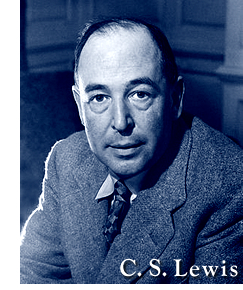
Joy Davidman, the wife of C. S. Lewis, said, “Living for your own pleasure is the least pleasurable thing a man can do. If his neighbors don’t kill him in disgust he will die slowly of boredom and powerlessness.”

What do you live for? What gets your blood pumping? What would you say is the greatest passion of your life? Only the person who can say, “To live is Christ” can also say, “To die is gain.”


Max Lucado – A Special Date


A quiet time with God is very similar to a special date. Denalyn and I like to go to the same restaurants over and over again. When we’re there we remember special moments we’ve shared before. Our hearts open up. We talk to each other. We listen, we laugh, and sometimes we cry. I love those times!

So does God. A quiet time with God is very similar to a special date. Here are some tools to help you keep your date with Him special. Select a slot in your schedule and claim it for God. Take as much time as you need. Your time with God should last long enough for you to say what you want and for God to say what he wants.

Bring an open Bible—God’s Word, his love letter to you. Bring a listening heart and listen to the lover of your soul. Make sure your date with God is on the calendar, and do everything in your power to keep it special!

From Max on Life


Charles Stanley – Life Before Grace


Read | Ephesians 2:1-3

Grace is the unmerited love that God shows to sinful people. He expressed this love through the sacrificial death of His Son. It becomes ours when we confess that we are sinners and receive Jesus Christ as our Savior. Because of grace, we’re forgiven by God and adopted into His family.

Today’s passage describes our life before grace—we were dead in our trespasses and sins. This means that every person is born with a deadness to the things of God; we come into this world with no spiritual life. Our nature leans away from the Lord and toward ourselves. In addition, our thinking and behavior follow that of the world, which, according to Scripture, is under Satan’s control. His plan always opposes God’s and leads us to rebel against divine commands.

Before encountering grace, Paul was very religious but blind to the Lord’s perspective and plan. He actively opposed those who followed Christ (Acts 26:9-11). With a goal of destroying the church, he sought to eradicate the Christian faith, which he deemed false. Paul continued persecuting believers until he encountered Jesus on the road to Damascus (9:3-6). Only then did the future apostle surrender his will to God’s and become a true follower of Christ.

If you have not trusted in the Savior, then you are spiritually dead, separated from God, and under His judgment. Like Paul, you may be very religious and yet lack a personal relationship with Jesus Christ. God offers you salvation today through faith in Him. How will you respond?


Our Daily Bread – A Wonderful Explosion


As I have loved you, . . . you also love one another. —John 13:34


Read: John 13:31-35
Bible in a Year: Exodus 4-6; Matthew 14:22-36

In the book Kisses from Katie, Katie Davis recounts the joy of moving to Uganda and adopting several Ugandan girls. One day, one of her daughters asked, “Mommy, if I let Jesus come into my heart, will I explode?” At first, Katie said no. When Jesus enters our heart, it is a spiritual event.

However, after she thought more about the question, Katie explained that when we decide to give our lives and hearts to Jesus “we will explode with love, with compassion, with hurt for those who are hurting, and with joy for those who rejoice.” In essence, knowing Christ results in a deep care for the people in our world.

The Bible challenges us to “rejoice with those who rejoice, and weep with those who weep” (Rom. 12:15). We can consistently display this loving response because of the Holy Spirit’s work in our hearts. When we receive Christ, the Holy Spirit comes to live inside us. The apostle Paul described it this way, “Having believed [in Christ,] you were sealed with the Holy Spirit” (Eph. 1:13).

Caring for others—with God’s supernatural assistance—shows the world that we are His followers (John 13:35). It also reminds us of His love for us. Jesus said, “As I have loved you, . . . you also love one another” (v.34). —Jennifer Benson Schuldt

Dear Jesus, help me to experience Your
love more deeply so that I can share it
with others. Empower me through Your
Holy Spirit so that I can glorify You.

Love given reflects love received.

INSIGHT: Love is one of the most repeated themes in both John’s gospel and letters (1, 2, and 3 John). John’s emphasis on love reflects Jesus’ own emphasis. Jesus said that He was giving a new command when He said to love one another. But how is this a new command? The key is not in the what, but in the how. In the law of Moses, it was commanded to love others as we love ourselves, but Jesus set a new standard: His love for us. In the hours before He went to the cross, He would both tell and show that love. “Greater love has no one than this, than to lay down one’s life for his friends” (John 15:13).

Ravi Zacharias Ministry –  Is the Bible Sexist?


There is a widespread belief around about the Bible that it is some kind of powerful patriarchal conspiracy which has been used to oppress women. As a female speaker I find that this question is frequently asked: “How can you as a woman promote such a sexist book? The church has tried to keep women down!” As a Christian, I believe I need to be sensitive to the issues which underlie such an emotive question. While it may indeed seem to be the case that women have been discriminated against by religion, the Bible itself deserves closer examination on the subject. How is it that many of the greatest Jewish and Christian pioneers have been women? What does the Bible really say about this subject?(1)

Throughout the Bible there are numerous positive images of women and stories that involve women. In the Old Testament women share the image of God at creation. At the end of time at the Second Coming of Jesus, the church is represented as the bride of Christ. All the way through from beginning to end, the Bible includes the feminine as an integral part of the Judeo-Christian tradition. While it is true that the Bible is written over a long period of time into specific cultures and that some of these contexts did not give equal social advantages to women, it would not be true to say that the message of the Bible is sexist or discriminatory against women.

In the New Testament, there are quite a number of significant events involving women, particularly considering the conservative cultural attitudes of the context into which it was written. This context is demonstrated by a simple statement in John’s Gospel in the famous encounter between Jesus and the Samaritan woman at the well. There is a telling little sentence in 4:27 which sheds a great deal of light on just how radical the Bible is in affirming women. The disciples come across Jesus during his conversation with the woman and we are told they “were surprised to find him talking with a woman.” This is the context of Jesus’s ministry and yet he goes against these cultural trends time and time again.

He does this firstly by having female disciples. In a culture where the idea of women travelling around with a group of men, or having the status of disciple was seriously questionable, Jesus has a number of women who are included in his travelling circle who also contributed financially to the needs of the group. In fact, when Jesus is told that his mother and brothers are waiting outside to see him, he points to his disciples and says, “Here are my mother and brothers.” This statement is unthinkable unless there were women among his disciples. In the Middle Eastern culture of the 1st century, it would be unspeakably offensive to point to male disciples and use female imagery to describe them. The group of disciples referred to must have included some women.

We also see Jesus teaching women in the New Testament. In Luke 10:38, we read of Mary who sits at the feet of Jesus and engages in theological study, much to her sister’s chagrin. This phrase “to sit at the feet of” is the same formulation as Acts 22:3 where Paul describes his training under Gamaliel. The clear implication here is that Mary is affirmed as worthy of a Rabbi’s theological instruction; indeed, it is interesting that later on in John’s Gospel we read of Martha, Mary’s sister, who is the first to be taught one of the most astounding theological statements of the New Testament. Jesus says to her, “‘I am the resurrection and the life. He who believes in me will live even though he dies.” In contrast to the cultural norms of the time, Jesus made a habit of revealing great theological truths to women. The first person who discovers Christ’s true identity in John’s Gospel is the Samaritan woman at the well. We must not underestimate how radical this is: Jesus was turning cultural taboos on their heads by teaching women and allowing women to be his disciples.

In reality, it is clear that women played a full and vibrant role in the ministry of Jesus, both as examples within his teaching and as recipients of it. While this may seem absolutely right and proper in our 21st century context we must remember how radical this was in first century Palestine. Jesus intentionally affirmed and included women. We see a continuation of this in the early church, from Lydia and Tabitha to Philip’s daughters, where women undertook various roles. While it is true to say that there are two particular passages in Paul’s writings which seem to go against all of this, by commanding some women to be silent and forbidding others from teaching, these must be read and interpreted in the context of the rest of the Bible. Paul himself gives guidelines for women when they publicly prophecy and mentions women who do teach like Priscilla.

When we come to the text of the Bible with the issue of sexism in mind, we must be clear that while God is predominantly spoken of with male imagery and ultimately is incarnated in the man Jesus, this is not to say that women are undermined or undervalued. Some female imagery is used of God, and Jesus constantly affirms the value of women, teaching them and interacting with them as human beings. Both male and female are created in the image of God and both are so precious that Christ comes to the earth to redeem both male and female with his blood shed on the Cross.

Amy Orr-Ewing is director of programmes for the Oxford Centre for Christian Apologetics and UK director for Ravi Zacharias International Ministries in Oxford, England.

(1) A version of this article was first published in Idea Magazine, Jul/Aug 2005. See also Is the Bible Intolerant? by Amy Orr-Ewing (Downers Grove, IL: InterVarsity Press, 2006).

Alistair Begg – What are You without Grace?


Son of Man, how does the wood of the vine surpass any wood, the vine branch that is among the trees of the forest?  Ezekiel 15:2

These words are for the humbling of God’s people; they are called God’s vine, but what are they by nature more than others? They, by God’s goodness, have become fruitful, having been planted in a good soil; the Lord has trained them upon the walls of the sanctuary, and they bring forth fruit to His glory. But what are they without their God? What are they without the continual influence of the Spirit, begetting fruitfulness in them?

O believer, learn to reject pride, seeing that you have no ground for it. Whatever you are, you have nothing to make you proud. The more you have, the more you are in debt to God; and you should not be proud of that which renders you a debtor. Consider your origin; look back to what you were. Consider what you would have been but for divine grace. Look upon yourself as you are now. Does not your conscience reproach you? Do not your thousand wanderings stand before you and tell you that you are unworthy to be called His son? And if He has made you anything, are you not taught thereby that it is grace that has made you to differ?

Great believer, you would have been a great sinner if God had not made you to differ. O you who are valiant for truth, you would have been as valiant for error if grace had not laid hold upon you. Therefore, do not be proud, though you have a large influence–a wide domain of grace, for once you did not have a single thing to call your own except your sin and misery. Oh, strange infatuation that you, who has borrowed everything, should think of exalting yourself–a poor, dependent pensioner upon the bounty of your Savior, one who has a life that dies without fresh streams of life from Jesus, and yet is proud! Fie on you, O silly heart!

Today’s Bible Reading

The family reading plan for January 22, 2015
* Genesis 23
Matthew 22


Devotional material is taken from “Morning and Evening,” written by C.H. Spurgeon, revised and updated by Alistair Begg.

Charles Spurgeon – The treasure of grace


“The forgiveness of sins, according to the riches of his grace.” Ephesians 1:7

Suggested Further Reading: 1 Corinthians 15:5-11

Paul proclaimed the grace of God—free, full, sovereign, eternal grace—beyond all the glorious company of the apostles. Sometimes he soared to such amazing heights, or dived into unsearchable depths, that even Peter could not follow him. He was ready to confess that “our beloved brother Paul, according to the wisdom given unto him,” had written “some things hard to be understood.” Jude could write of the judgments of God, and reprove with terrible words, “ungodly men, who turned the grace of God into lasciviousness.” But he could not tell out the purpose of grace as it was planned in the eternal mind, or the experience of grace as it is felt and realized in the human heart, like Paul. There is James again: he, as a faithful minister, could deal very closely with the practical evidences of Christian character. And yet he seems to keep very much on the surface; he does not bore down deep into the substratum on which must rest the visible soil of all spiritual graces. Even John, most favoured of all those apostles who were companions of our Lord on earth—sweetly as the beloved disciple writes of fellowship with the Father and his Son Jesus Christ—even John does not speak of grace so richly as Paul, in whom God first showed forth “all long-suffering as a pattern to them which should hereafter believe on him to life everlasting.” Not, indeed, that we are at liberty to prefer one apostle above another. We may not divide the Church, saying, I am of Paul, I of Peter, I of Apollos; but we may acknowledge the instrument which God was pleased to use; we may admire the way in which the Holy Ghost fitted him for his work; we may, with the churches of Judea, glorify God in Paul.

For meditation: Paul always looked back with amazement when he recalled God’s grace to him, the chief of sinners, who so persecuted the Church (1 Corinthians 15:9-10; Galatians 1:13,15; Ephesians 3:7,8; 1 Timothy 1:13-15). Our gratitude and love to God can sadly be limited by our failure to realise how sinful we really are and how much he has forgiven us (Luke 7:41-47).

Sermon no. 295

22 January (1860)

John MacArthur – Praying for Believers


“For this reason I too, having heard of the faith in the Lord Jesus which exists among you, and your love for all the saints, do not cease giving thanks for you, making mention of you in my prayers” (Eph. 1:15-16).

Your love for other Christians is as much a mark of true faith as your love for God.

The Ephesian Christians demonstrated two important characteristics of genuine Christian faith: faith in the Lord Jesus and love for fellow believers.

“Faith in the Lord Jesus” implies both an affirmation of Christ’s deity and submission to His sovereignty. Because He is God, He is the Sovereign Lord, so we must obey what He commands (John 14:15; 1 John 2:3-6).

Your “love for all the saints” is as much a mark of true faith as your love for God. John said, “The one who says he is in the light and yet hates his brother is in the darkness until now” (1 John 2:9). In that passage “light” is a metaphor for righteousness and truth, and “darkness” is a metaphor for sin and error. It is sinful and erroneous to claim you love God if you have no love for other believers. Those who love God will love fellow believers as well.

If you love others, you will pray for them and praise God for their spiritual progress—as Paul did for the Ephesians—and they will do the same for you. That’s a wonderful dynamic within the Body of Christ, and one that you must diligently pursue.

Suggestions for Prayer

  • If you haven’t done so already, start a prayer list of individuals for whom you will pray each day. List their names and some specific requests. Record answers to your prayers as you see God moving in their lives.
  • Remember to thank God for their spiritual progress as well as praying for their needs. Let them know you are praying for them. That could be a source of great encouragement for them.
  • If you are at odds with another believer, seek to reconcile immediately (Matt. 5:23-24) so your witness will be strong and the Lord’s name won’t suffer reproach.

For Further Study; Read Philippians 1:9-11 and Colossians 1:9-14.

  • What requests and concerns did Paul express in his prayers?
  • Do your prayers reflect Paul’s priorities? If not, what adjustments must you make to have a more biblical pattern of prayer?


Joyce Meyer – Help Is Here


And I will ask the Father, and He will give you another Comforter (Counselor, Helper, Intercessor, Advocate, Strengthener, Standby), that He may remain with you forever. —John 14:16

Many people have received Jesus as Savior and Lord. They will go to heaven, but never draw on the full capacity of the Holy Spirit that is available to them or experience the true success God wants them to enjoy on Earth. Simply put, many will be on their way to heaven, but they won’t enjoy the trip.

We often look at those who have wealth, position, power, fame, and other resources in abundance and we consider them “successful.” But many people who are considered successful still lack good relationships, good health, peace, joy, contentment, and other true blessings through a personal relationship with Jesus Christ. Such people are still independent; they have never learned to depend completely on the power of the Holy Spirit.

People who are self-sufficient often think depending on God is a sign of weakness. But the truth is that by drawing on the ability of the Holy Spirit, they can accomplish more in their lives than they ever could by working in their own strength.

God created us in such a way that although we do have strengths, we also have weaknesses and we need His help. We know He wants to help us because He sent a Divine Helper, the Holy Spirit, to live inside us (see 1 Corinthians 6:19).

We often struggle needlessly because we do not receive the help available to us. I encourage you to depend on Him, not on your own strength. Whatever you are facing, you don’t have to go through it alone.

Campus Crusade for Christ; Bill Bright – He Sets Us Free


“I don’t understand myself at all, for I really want to do what is right, but I can’t. I do what I don’t want to – what I hate…When I want to do good, I don’t; and when I try not to do wrong, I do it anyway….It seems to be a fact of life that when I want to do what is right, I inevitably do what is wrong…So you see how it is: my new life tells me to do right, but the old nature that is still inside me loves to sin. Oh, what a terrible predicament I’m in! Who will free me from my slavery to this deadly lower nature? Thank God! It has been done by Jesus Christ our Lord. He has set me free” (Romans 7:15,19,21,24,25).

Harry gave every indication of being a happy, joyful, fruitful Christian. He was active in every major event of the church and many large citywide Christian efforts. He always had a high visibility, and because of his extrovertive, outgoing personality he seemed to be a model Christian.

Then one day I saw the real Harry. He just blurted it out.

“I’m a hypocrite – miserable, defeated, frustrated. I’ve lived a lie and worn a mask all my life, never wanting to reveal my true self. But I need help. I’m seriously thinking of committing suicide. I just can’t live the Christian life, no matter how hard I try.”

As I began reading Romans 7:15-25, he said, “That is my biography, the story of my life. I’ve done everything I know to find victory – to live the Christian life as I know I’m supposed to live it. But everything fails for me no matter how hard I try.”

I encouraged him to read on. Paul asks the question in the 25th verse, “Who will free me from my slavery to this deadly lower nature?” Then he answers that question by saying “Thank God! It has been done by Jesus Christ our Lord. He has set me free.”

If you are living a carnal life, as described in Romans 7, you can be liberated to experience a full and abundant, victorious and fruitful life, as you by faith claim the fullness and power of the Holy Spirit day by day, moment by moment.

Bible Reading: Romans 7:18-23

TODAY’S ACTION POINT: By faith, I will claim the power of the Holy Spirit to enable me to live the abundant, supernatural life that Jesus promised, so that I can bring glory to God by bearing much fruit.

Presidential Prayer Team; C.P. – Divine Dining


Hymn writer Charles B. Widmeyer penned the words, “He who fed the multitude / turned the water into wine / to the hungry calleth now / come and dine.” What marks a special occasion better than eating together? Feasting connotes celebration, thanksgiving and fellowship.

If anyone hears my voice and opens the door, I will come in to him and eat with him, and he with me.

Revelation 3:20

Jesus illustrated spiritual teachings with food. “I am the bread of life; whoever comes to me shall not hunger, and whoever believes in me shall never thirst.” (John 6:35) Before Christ died, He ate the Passover meal with His disciples and instituted the Lord’s Supper (Luke 22:14-23). To the woman at the well, Jesus said, “Whoever drinks of the water that I will give him will never be thirsty again.” (John 4:14)

God desires intimate communion with His people. “I in them and you in me, that they may become perfectly one.” (John 17:23) “Draw near to God, and He will draw near to you.” (James 4:8). As you thank God for your food today, remember to invite Him in to fellowship with you and your family. Then pray that each citizen of the United States will come to know the friendship with God that He desires.

Recommended Reading: John 15:12-17

Greg Laurie – Homesick for Heaven


But if I live on in the flesh, this will mean fruit from my labor; yet what I shall choose I cannot tell. For I am hard-pressed between the two, having a desire to depart and be with Christ, which is far better.—Philippians 1:22–23

Have you ever been to a really beautiful place that stayed with you long after you returned home? Maybe you have a picture of it as your screensaver, and you just sit and gaze at it. You love that place.

That is how Paul felt about heaven. He longed for it. It’s why he could say, “For I am hard-pressed . . . , having a desire to depart and be with Christ, which is far better” (Philippians 1:23).

Paul had already been to heaven at this point. At one time in his life—we don’t know when—he was killed and went to the third heaven. He wrote in 2 Corinthians 12 that he was “caught up into Paradise and heard inexpressible words, which it is not lawful for a man to utter” (verse 4).

Having experienced the sounds and sights of heaven, Paul was homesick. This doesn’t mean that Paul had a death wish. He just knew that when he died, it was ultimately a promotion.

When Paul said that he had “a desire to depart and be with Christ, which is far better” the word he used for depart is an interesting one. One way it is translated from Greek is “to strike the tent.” It’s the idea breaking camp. On more than one occasion, the Bible compares the human body to a tent. And one thing we know about tents is they are not meant to last forever. So why did Paul say this was far better? It’s because he was moving from a tent to a mansion.

When Christians die, they go straight to heaven, because to be absent from the body is to be present with the Lord. The moment they take their last breath on earth, they take their first breath in heaven.


Max Lucado – Don’t Count Sheep


Fretting over tomorrow’s problems siphons the strength you need for today, leaving you anemic and weak. So, when you can’t sleep—don’t count sheep. Read Scripture.

Worry takes a look at catastrophes and groans, “It’s all coming unraveled.” But God says in Romans 8:28 that “every detail in our lives of love for God is worked into something good.”

Worry claims, “The world has gone crazy.” God’s Word disagrees. Mark 7:37 says, “He has done it all and done it well.”

Worry wonders if anyone is in control. Yet God’s Word calls Him “the blessed controller of all things.” (1 Tim. 6:14-15 Phillips)

Worry whispers this lie: “God doesn’t know what I need.” But God’s Word declares in Philippians 4:19, “God will take care of everything you need.”

Worry never sleeps. But God’s children do!

From Max on Life

Charles Stanley – A Lifestyle of Waiting on God

Read | Psalm 37:1-11

Ever notice how some people will ask a question but then rush out the door before you can respond? We can act the same way toward the Lord when we fail to wait on Him.

To develop a lifestyle of waiting on God, we need to have:

Faith. We must be willing to trust the Lord when a solution isn’t obvious and we can’t see a way through our struggle. Meditating on Scripture and applying it to life’s trials will result in strengthened faith (Rom. 10:17).

Humility. Recognizing that we can accomplish nothing apart from Jesus, we should be willing to endure until God reveals His answer (John 15:5). His ways are always perfect; our cleverest plan will not be as adequate.

Patience. A calm demeanor and inner peace come from believing that the Lord is who He says He is and that He will do exactly as He’s promised. The Holy Spirit will help us to face stressful circumstances without complaint and accept life’s challenges instead of trying to manipulate a way out.

Courage. It is human nature to want to be in control—we yearn to know what’s going to happen and when. Courage is necessary if we are to resist following our own schedule or caving in to pressure from others. With the Holy Spirit’s enablement, we can hold steady to wait on God, even when people around us disapprove of our choices.

Wisdom and right action come through seeking God and His will. Won’t you quiet your heart and mind and listen to what He has to say?

Our Daily Bread – Pointing To God


Remember now your Creator . . . before the difficult days come. —1 Ecclesiastes 12:1


Read: Deuteronomy 8: 11-18
Bible in a Year: Exodus 1-3; Matthew 14:1-21

“God bless our homeland, Ghana” is the first line of Ghana’s national anthem. Other African anthems include: “O Uganda, may God uphold thee,” “Lord, bless our nation” (South Africa), and “O God of creation, direct our noble cause” (Nigeria). Using the anthems as prayers, founding fathers called on God to bless their land and its people. Many national anthems in Africa and others from around the world point to God as Creator and Provider. Other lines of anthems call for reconciliation, transformation, and hope for a people often divided along ethnic, political, and social lines.

Yet today, many national leaders and citizens tend to forget God and do not live by these statements—especially when life is going well. But why wait until war, disease, storms, terrorist attacks, or election violence occurs before we remember to seek God? Moses warned the ancient Israelites not to forget God and not to stop following His ways when life was good (Deut. 8:11). Ecclesiastes 12:1 urges us to “remember now your Creator … before the difficult days come.”

Getting close to God while we are strong and healthy prepares us to lean on Him for support and hope when those “difficult days” in life come.—Lawrence Darmani

Father, I always need You. Forgive me for
thinking I am sufficient in myself. Help me to
follow You and Your ways whether life is easy
or difficult. Thank You for caring for me.

Remembering our Creator can be our personal anthem.

INSIGHT: Deuteronomy records a significant moment in Old Testament history. At the end of Israel’s wilderness wanderings, Moses reaffirmed the laws of God. A generation had died in the wilderness and the new generation needed these lessons to prepare them for entry into the land of promise. The challenges that awaited them in Canaan made it important to remind the people of both God’s provisions and God’s instructions.

Ravi Zacharias Ministry – The Scene of Miracle


Middlemarch is the epic novel by Mary Anne Evans, better known by her male penname George Eliot. The work is considered one of the most significant novels of the Victorian period and a masterpiece of English fiction. Rather than following a grand hero, Eliot explores a number of themes in a series of interlocking narratives, telling the stories of ordinary characters intertwined in the intricate details of life and community. Eliot’s focus is the ordinary, and in fact her lament—in the form of 700 pages of detail—is that we not only so often fail to see it, but fail to see that there is really no such thing. There is neither ordinary human pain nor ordinary human living. “If we had a keen vision and feeling of all ordinary human life,” she writes, “it would be like hearing the grass grow and the squirrel’s heartbeat, and we should die of that roar which lies on the other side of silence. As it is, the quickest of us walk about well wadded with stupidity.”(1)

The world Eliot saw around her is not unlike our own in its capacity to silence the dissonance of details, the frequency of pain, the roar of life in its most minute and yet extraordinary forms. We silence the wild roar of the ordinary and divert our attention to magnitudes more willing to fit into our control. The largest tasks and decisions are given more credence, the biggest lives and events of history most studied and admired, and the greatest powers and influences feared or revered most. And on the contrary, the ordinary acts we undermine, the most common and chronic angst we manage to mask, and the most simple and monotonous events we silence or stop seeing altogether. But have we judged correctly?

Artists often work at pulling back the curtain on these places we have wadded out of sight and sound, showing glimpses of life easily missed, pulling off the disguises that hide sad or mortal wounds, drawing our attention to all that is deemed mundane and obscure. Their subject is often the ordinary, but it is for the sake of the extraordinary, even the holy. Nowhere does Eliot articulate this more clearly than in her defense of the ordinary scenes depicted in early Dutch painting. “Do not impose on us any aesthetic rules which shall banish those old women scrapping carrots with their work-worn hands….It is so needful we should remember their existence, else we may happen to leave them quite out of our religion and philosophy, and flame lofty theories which only fit a world of extremes.”(2) For the artist, ordinary life, ordinary hardship, ordinary sorrow is precisely the scene of our need for God, and remarkably, the scene of God and miracle.

In this sense, maybe, the psalmist and prophets and ancient storytellers are all struggling artists, closing the infinite distance between the grandeur of God and an ordinary humanity in which God mysteriously wills to dwell. What are human beings that You are mindful of them? Mortals that You care for them?

The parables Jesus tells are also richly artistic, theological pauses upon the ordinary. Presented to people who often find themselves beyond the need for stories, whether puffed up with wealth and self-importance, or engorged with religion and knowledge, his stories stop us. Jesus seems acutely aware that the religious and the non-religious, the self-assured and the easily distracted often dance around idols of magnitude, diverting their eyes from the ordinary. And yet his very life proclaims the magnitude of the overlooked. The ordinary is precisely the place that God chose to visit—and not as a man of magnitude.

Whatever one’s philosophy or worldview, attention to the ordinary will be a gift, rooting bodies in this mysterious place, aweing these bodies to the miraculous. It is far too easy to miss the world as it really is, to hold a philosophy in hand and mind that cannot hold the weight of ordinary life. While Jesus’s own disciples bickered over the most significant seats in the kingdom, they were put off by a unwanted woman at a well, they overlooked a sick woman reaching out for the fringe of Christ’s robe, and they tried to silence a suffering man making noise in an attempt to get Jesus’s attention—all ordinary scenes which became the place of miracle. Even in a religion where the last are proclaimed first, where the servant, the suffering, and the crucified are lifted highest, the story of the widow’s coin is still easily forgotten, the obscure faces Jesus asked the world to remember easily overlooked. How telling that the call to remember the great acts of God in history is itself a call to remember the many acts of life we mistakenly at times see as less great. For the ordinary is filled with a God who chooses to visit.

Jill Carattini is managing editor of A Slice of Infinity at Ravi Zacharias International Ministries in Atlanta, Georgia.

(1) George Eliot, Middlemarch, (London: Penguin, 1994), 194.

(2) George Eliot, Adam Bede (London, Penguin, 1980), 224.