Tag Archives: Peace

Alistair Begg – The Joy of Safety


And in this way all Israel will be saved.  Romans 11:26

When Moses sang at the Red Sea, it was his joy to know that all Israel was safe. Not a drop of spray fell from that solid wall until the last of God’s Israel had safely planted his foot on the other side of the flood. That done, immediately the floods dissolved into their proper place again, but not till then. Part of that song was, “You have led in your steadfast love the people whom you have redeemed.”1 In the last time, when the elect shall sing the song of Moses, the servant of God, and of the Lamb, it shall be the boast of Jesus, “Of all whom you have given me, I have lost none.”

In heaven there shall not be a vacant throne.

For all the chosen race
Shall meet around the throne,
Shall bless the conduct of His grace,
And make His glories known.

As many as God has chosen, as many as Christ has redeemed, as many as the Spirit has called, as many as believe in Jesus shall safely cross the dividing sea. We are not all safely landed yet:

Part of the host have crossed the flood,
And part are crossing now.

The vanguard of the army has already reached the shore. We are marching through the depths; we are at this day following hard after our Leader into the heart of the sea. Let us be of good cheer: The rearguard shall soon be where the vanguard already is; the last of the chosen ones shall soon have crossed the sea, and then shall be heard the song of triumph, when all are secure. But oh, if one were absent–oh, if one of His chosen family should be cast away, it would make an everlasting discord in the song of the redeemed and cut the strings of the harps of paradise, so that music could never be extorted from them.

1) Exodus 15:13

Today’s Bible Reading

The family reading plan for January 21, 2015
* Genesis 22
Matthew 21

Devotional material is taken from “Morning and Evening,” written by C.H. Spurgeon, revised and updated by Alistair Begg.

Charles Spurgeon – The personality of the Holy Spirit


“And I will pray the Father, and he shall give you another Comforter, that he may abide with you for ever: Even the Spirit of truth; whom the world cannot receive, because it seeth him not, neither knoweth him: but ye know him: for he dwelleth with you, and shall be in you.” John 14:16,17

Suggested Further Reading: Acts 2:32-39

Observe here, that each person is spoken of as performing a separate office. “I will pray,” says the Son—that is intercession. “I will send,” says the Father—that is donation. “I will comfort,” says the Holy Spirit—that is supernatural influence. Oh! if it were possible for us to see the three persons of the Godhead, we should behold one of them standing before the throne with outstretched hands crying day and night, “O Lord, how long?” We should see one girt with Urim and Thummim, precious stones, on which are written the twelve names of the tribes of Israel; we should behold him crying unto his Father, “Forget not thy promises, forget not thy covenant;” we should hear him make mention of our sorrows, and tell forth our griefs on our behalf, for he is our intercessor. And if we could behold the Father, we should not see him a listless and idle spectator of the intercession of the Son, but we should see him with attentive ear listening to every word of Jesus, and granting every petition. Where is the Holy Spirit all the while? Is he lying idle? Oh, no; he is floating over the earth, and when he sees a weary soul, he says, “Come to Jesus, he will give you rest.” When he beholds an eye filled with tears, he wipes away the tears, and bids the mourner look for comfort on the cross. When he sees the tempest-tossed believer, he takes the helm of his soul and speaks the word of consolation; he helps the broken in heart, and binds up their wounds; and ever on his mission of mercy, he flies around the world, being everywhere present. Behold how the three persons work together.

For meditation: Salvation is all of God—the work is all done by him. And yet he grants to believers the privilege of being co-opted as his fellow-workers to advertise the gospel on his behalf (2 Corinthians 5:18-6: 1).

Sermon no. 4

21 January (1855)

John MacArthur – Reflecting God’s Ownership


You were sealed with the Holy Spirit “with a view to the redemption of God’s own possession, to the praise of His glory” (Eph. 1:14).

Someday God will take full possession of all that is rightfully His.

Yesterday we saw that God seals us with the Holy Spirit as a pledge of our eternal inheritance. Here Paul says He does so “with a view to the redemption of [His] own possession.” That refers to when God takes full possession of all that is rightfully His.

Everything is God’s by creation, but Satan has usurped God’s rulership to become the “god of this world” (2 Cor. 4:4) in whose power the whole world currently lies (1 John 5:19). Consequently, all creation is in bondage to decay and “groaning as in the pains of childbirth right up to the present time” (Rom. 8:22, NIV). It eagerly awaits the time when the curse of Genesis 3 is reversed, all Christians are fully glorified, and sin is eternally vanquished. What a glorious time that will be!

You are God’s special possession because you are His by redemption as well as creation. In Revelation 5:9 the four living creatures and the twenty-four elders sing to the Lord, “Worthy art Thou . . . for Thou wast slain, and didst purchase for God with Thy blood men from every tribe and tongue and people and nation.” In Acts 20:28 Paul charges the Ephesian elders to guard carefully “the church of God which He purchased with His own blood.”

That makes you a priceless commodity to God—part of “a chosen race, a royal priesthood, a holy nation, a people for God’s own possession, that you may proclaim the excellencies of Him who has called you out of darkness into His marvelous light; for you once were not a people, but now you are the people of God” (1 Pet. 2:9-10).

As God’s special possession, you should reflect His ownership and sovereign rule in everything you do. Remember, “you are not your own . . . for you have been bought with a price: therefore glorify God in your body” (1 Cor. 6:19-20).

Suggestions for Prayer

  • Thank God that you are His treasured possession.
  • Seek His Spirit’s leading in proclaiming His excellencies to others through your words and deeds.
  • Ask Him to teach you to esteem other believers as highly as He does.

For Further Study; Read Ephesians 2:1-13, noting the spiritual privileges and responsibilities that are yours in Christ.

Joyce Meyer – Hang On ’til Joy Comes!


Weeping may endure for a night, but joy comes in the morning. — Psalm 30:5

I gained an excellent piece of wisdom through personal experience: Do not be afraid of pain! As strange as it may seem, the more you dread and resist the pain of healing, the more you increase the effect that pain has upon you.

An example of this truth happened years ago when I went on a fast for the first time in my life. God called me to a twenty-eight-day juice fast. In the beginning, I went through some really hard times. I was very, very hungry. In fact, I was so famished that I was in actual pain. As I cried out to the Lord, complaining that I just could not stand it any longer, He answered me. Deep within me I heard the “still small voice” (1 Kings 19:12 KJV) of the Lord say to me, “Stop fighting the pain; let it do its work.” From that time on, the fast was much easier, even enjoyable, because I knew that every time I felt discomfort, it was a sign of progress.

The rule is that the more pain is resisted, the stronger it becomes. When a pregnant woman goes into labor, the advice she is given by her attendants is, “Relax.” They know that the more she fights the pain, the stronger it will become, and the longer the delivery process will take.

When you are experiencing pain, do not fight it. Allow it to accomplish its purpose. Remember this promise, They who sow in tears shall reap in joy and singing. (Psalm 126:5) Learn to endure whatever you need to, knowing that there is joy on the other side!

Campus Crusade for Christ; Bill Bright – He Will Tell You


“I advise you to obey only the Holy Spirit’s instructions. He will tell you where to go and what to do, and then you won’t always be doing the wrong things your evil nature wants you to” (Galatians 5:16).

Major conflicts in life are resolved when, by an act of the will, one surrenders to the control of the Holy Spirit and faces temptation in His power.

It should be explained that there is a difference between temptation and sin.

Temptation is the initial impression to do something contrary to God’s will. Such impressions come to all people, even as they did to the Lord, and they are not sin in themselves.

Temptation becomes sin when we meditate on the impression and develop a strong desire, which is often followed by the actual act of disobedience.

For practical daily living, we simply recognize our weakness whenever we are tempted and obey the Holy Spirit’s instructions. When we do not yield to temptation, we breathe spiritually and resume our walk with God.

“At what point does one who practices spiritual breathing become carnal again?” Whenever one ceases to believe God’s promise that He will enable us to be victorious over all temptations. The fact is, one need never be carnal again. So long as a believer keeps breathing spiritually, there is no need to live a life of defeat.

The moment you realize that you have done that which grieves or quenches the Spirit, you simply exhale spiritually by confessing immediately, and then inhale as by faith you claim God’s forgiveness and the fullness of the Holy Spirit, and you keep walking in the light as God is in the light.

Bible Reading: Galatians 5:17-26

TODAY’S ACTION POINT: I will consciously seek to obey the Holy Spirit’s instructions revealed to me in His holy, inspired Word.

Presidential Prayer Team; A.W. – Chosen for a New Start


Can you guess what Julius Caesar, Nelson Mandela, Bill Clinton, Cyrus the Great and Eleanor Roosevelt have in common? They were all leaders raised by someone other than their parents. They rose to fame and changed the lives of others despite difficult beginnings.

The king loved Esther more than all the women, and she won grace and favor in his sight…so that he set the royal crown on her head and made her queen instead of Vashti.

Esther 2:17

Esther, a young orphaned Jewish woman, was raised by her cousin Mordecai. They were in captivity in Persia when King Xerxes removed Vashti as queen. The king sought to find a new wife and had all the young women brought before him. Esther won his favor. She was chosen for a new beginning – and it changed the lives of all of her people as she stopped a plot to kill them.

Has your beginning in life been less than ideal? God may be orchestrating events to lead you to a new start. Remember, you are chosen by the King of Kings. Pray today for Him to show you how to make a difference as Esther did. Pray also for the nation’s leaders to aim for a new start that honors God and changes the lives of America’s citizens.

Recommended Reading: Psalm 113:1-9

Greg Laurie – Heavenly Minded


For to me, to live is Christ, and to die is gain.—Philippians 1:21

A quick look at history reveals that some of the greatest things that have ever been done have been done by Christians who believe what the Word of God says. They have done things to help others, from building hospitals to founding relief organizations.

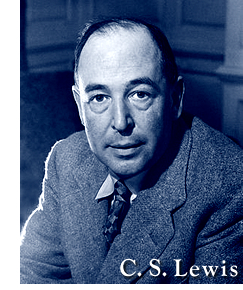
As C. S. Lewis said, “The Christians who did most for the present world were precisely those who thought most of the next.”

Some people have been criticized for being so heavenly minded that they are no earthly good. But in response to that, I would say there are far more people today who are so earthly minded that they are no heavenly good. And when you are truly heavenly minded, then you will be of the greatest earthly good.

The apostle Paul said, “To live is Christ, and to die is gain” (Philippians 1:21). I think that statement could have been attached to any Christian in Paul’s day: “To live is Christ, and to die is gain.” Look at the church of the first century and the way they changed their world. Those first-century Christians didn’t outargue the pagans, they outlived them. They also outthought and outprayed the nonbelievers, and the world was a different place as a result.

That is the kind of Christianity we need today. I wonder what would sum up the lives of a lot of Christians today. Would it be “to live is Christ, and to die is gain”? Maybe it would be something more along the lines of, “Hey, what about my needs?” That seems to be the battle cry of a lot of people today. If we train people to be consumers instead of communers, then we are going to end up with customers instead of disciples. I think we need to get back to this first-century model.

Max Lucado – Love is a Decision


When we look at the love of Christ, we make a wonderful discovery. Love is more a decision than an emotion! Christ-like love applauds good behavior. At the same time Christ-like love refuses to endorse misbehavior. Jesus loved his apostles, but he wasn’t silent when they were faithless. Jesus loved the people in the temple, but he didn’t sit still when they were hypocritical.

Love does whatever is in the best interest of a person. The cheating husband says to his wife, “If you loved me, you’d forget what has happened and let me come home.” That may not be true. Love does what’s in the best interest of a person. Love sets boundaries and seeks counsel.

The love of Christ is no sweet sentiment—but rather a heartfelt resolve to do what’s in the best interest of another person. Sometimes that means dying on a cross!

From Max on Life


Charles Stanley – The Rewards of Waiting

Read | Psalm 33:12-22

We have all experienced many times of waiting—in doctors’ offices, traffic jams, or checkout lines. While there, we have nothing to do but wait for our turn. In God’s kingdom, waiting is defined as an active stillness—active because we are continuing in our present situation, and still because we are focusing our attention on Him for guidance. A lifestyle of active stillness requires a purposeful and expectant attitude, a patient and determined frame of mind, and a prayerful and obedient heart.

There are rewards for waiting on the Lord. One involves receiving the supernatural strength needed for godly living. When we feel overwhelmed, we might be tempted to get out of step with God. Even though we know He is calling us to keep a steady pace, we may start lagging behind. At other times, our schedules leave us little time to think. So we make quick decisions, pushing ahead of Him. In either case, we risk becoming weary and emotionally spent because we are operating in our own strength. Patiently waiting on God will bring us the physical energy and emotional reserves we need to keep going.

Here are two additional benefits of waiting: discovering God’s will, which is always for our good (Rom. 8:28), and gaining spiritual victory in life’s trials.

Our omniscient and omnipotent God is always right on time. It is we who leave too early or arrive too late. Pick a situation in which you are tempted to overrule the Lord’s perfect timing. Then submit to Him, realizing the issue is a matter of trust.

            Our Daily Bread – When God Is Quiet    


As [Elijah] lay and slept under a broom tree, suddenly an angel touched him, and said to him, “Arise and eat.” —1 Kings 19:5


Read: 1 Kings 19:1-12
Bible in a Year: Genesis 49-50; Matthew 13:31-58

I love to take pictures of sunsets at Lake Michigan. Some are subtle shades of pastel. Others are bold strokes of bright color. Sometimes the sun sinks quietly behind the lake. Other times it goes down in what looks like a fiery explosion.

In pictures and in person, I prefer the latter. But both show the handiwork of God. When it comes to God’s work in the world, my preferences are the same. I would rather see dramatic answers to prayer than ordinary provisions of daily bread. But both are the work of God.

Elijah may have had similar preferences. He had grown accustomed to being the center of God’s grand displays of power. When he prayed, God showed up in dramatic ways—first in a miraculous defeat against the prophets of Baal and then in the end to a long and devastating drought (1 Kings 18). But then Elijah felt afraid and started to run. God sent an angel to feed him to strengthen him for his journey. After 40 days he arrived in Horeb. God showed him that He was now communicating in a still small voice, not in flashy miracles (19:11-12).

If you’re discouraged because God hasn’t shown up in a blaze of glory, perhaps He’s revealing Himself with His quiet presence. —Julie Ackerman Link

Lord, may we see You today in the small
details of life in ways that we hadn’t noticed
before. Thank You for the gift of Your quiet
presence, wherever we may find it today.

God is in the small things as well as the great.

Ravi Zacharias Ministry – The End of Atheism


In the last decade, a rash of fundamentalist atheists has become a publishing phenomenon. Touting that God is a delusion destructive to human life and civilization, and heralding the end of faith, these authors see only positive results at the end of atheism. Reason and rationality will conquer any “zealous” adherence or devotion to a transcendent God.

It’s fairly easy to identify with the concerns that motivate these authors towards atheism. Like them, I grieve over the violence perpetrated in the world in the name of God and religion. I can understand how Mother Teresa would poignantly wonder about God’s presence with her in the suffering wasteland of Calcutta. And certainly, I, like many others, have had life experiences that raise questions concerning God’s involvement in my life, and God’s love toward me. I can understand the despair-filled temptation towards agnosticism, or even atheism.

Yet, the world many atheists envision without God or faith is ultimately unrealistic, overly optimistic at best. Their beautiful portraits of what the world could look like if we only jettison our faith are painted with glowing brushstrokes of romantic imagery and language:

“This universe is shot through with mystery. The very fact of its being, and of our own, is a mystery absolute, and the only miracle worthy of the name. The consciousness that animates us is itself central to this mystery and the ground for any experience we might wish to call ‘spiritual….’ No personal God need be worshiped for us to live in awe at the beauty and immensity of creation….love our neighbors, and [know that] our interdependence demands that people everywhere be given the opportunity to flourish.”(1)

I find this vision completely out of step with a world in which innocent civilians are being silenced and slaughtered by the thousands. Indeed, in light of the state of our world, an optimistic ending for atheism is as out-of-touch with reality as belief that the world is flat.

This vision of a godless world being a better world is, in fact, shattered by the writings of the prescient prophet and atheist, Friedrich Nietzsche as well. Nietzsche, the German philosopher who wrote in the nineteenth century, predicted what an atheistic society would look like. And unlike the pseudo-optimism of our popular atheists today, Nietzsche’s vision is harrowing and disturbing. “The story I have to tell,” he wrote, “is the history of the next two centuries…. For a long time now our whole civilization has been driving, with a tortured intensity growing from decade to decade, as if towards a catastrophe: restlessly, violently, tempestuously, like a mighty river desiring the end of its journey, without pausing to reflect, indeed fearful of reflection.” He claimed that the world was entering an “era of monstrous wars, upheavals, explosions and that there will be wars such as have never been waged on the earth.”(2)

Why such pessimism about the future of the world? Nietzsche argued that the actions of human beings had rendered God superfluous. In The Gay Science his madman yells, “‘Where is God?’ Well, I will tell you. We have killed him, you and I.” He goes on to doubt if even reason and the advance of theoretical knowledge, as our modern-day atheists posit, could heal the “wound of our existence.” Indeed, science, reason, and history could not overcome the reality that human beings “can rise or sink to no other reality than the reality of our drives.” One of those drives, Nietzsche argued, is the will to power, ultimately fulfilled by rogue regimes in World War I, and in World War II by the Nazi regime and the Communist regime led by Joseph Stalin.

In other words, Nietzsche’s utter suspicion of reason calls the entire optimistic program advocated by popular atheists into question. God’s absence would not make for a better world, according to Nietzsche. Indeed, his picture of a world without God, without a divine Creator intimately involved in re-creation, is a very grim place filled with darkness, amorality, and despair.

In contrast to the godless future predicted by Nietzsche or our current atheistic prophets, the prophet Isaiah, even in the midst of warnings of exile, destruction, and suffering had a hope-filled vision of a world permeated with the presence of God: “The wolf will dwell with the lamb, and the leopard will lie down with the kid, the calf and the young lion and the fatling together; and a little child will lead them… they will not hurt or destroy in all my holy mountain, for the earth will be full of the knowledge of the Lord as the waters cover the sea.”(3) This vision of a God-filled future is what Christians hope for and work towards, even as we wrestle with the challenges and the difficulties of a God-famished world. The alternative is far less hopeful.

Margaret Manning Shull is a member of the speaking and writing team at Ravi Zacharias International Ministries in Bellingham, Washington.

(1) Sam Harris, The End of Faith (New York: W.W. Norton and Company, 2004), 227.

(2) Quoted in Erich Heller, The Importance of Nietzsche (Chicago: University of Chicago Press, 1988), 5.

(3) Isaiah 11:6, 9.

Alistair Begg – A Foreshadowing of Christ


Abel was a keeper of sheep.  Genesis 4:2


As a shepherd Abel sanctified his work to the glory of God and offered a sacrifice of blood upon his altar, and the Lord had respect unto Abel and his offering. This early type, a foreshadowing of our Lord, is exceedingly clear and distinct. Like the first streak of light that tinges the east at sunrise, it does not reveal everything, but it clearly manifests the great fact that the sun is coming. As we see Abel, a shepherd and yet a priest, offering a sacrifice of sweet fragrance unto God, we discern our Lord, who brings before His Father a sacrifice to which Jehovah ever has respect.

Abel was hated by his brother–hated without a cause; and even so was the Savior. The natural and carnal man hated the accepted man in whom the Spirit of grace was found, and did not rest until his blood had been shed. Abel fell and sprinkled his altar and sacrifice with his own blood, and therein sets forth the Lord Jesus slain by the enmity of man while serving as a priest before the Lord. “The good shepherd lays down his life for the sheep.”1

Let us weep over Him as we view Him slain by the hatred of mankind, staining the horns of His altar with His own blood. Abel’s blood speaks. “And the LORD said, What have you done? The voice of your brother’s blood is crying to me from the ground.'”2

The blood of Jesus has a mighty tongue, and the import of its prevailing cry is not vengeance but mercy. It is precious beyond all preciousness to stand at the altar of our Good Shepherd–to see Him bleeding there as the slaughtered priest, and then to hear His blood speaking peace to all His flock–peace in our conscience, peace between Jew and Gentile, peace between man and his offended Maker, peace all down the ages of eternity for blood-washed men. Abel is the first shepherd in order of time, but our hearts shall ever place Jesus first in order of excellence.

Great Keeper of the sheep, we, the people of Your pasture, bless You with our whole hearts when we see You slain for us.

1) John 10:11   2) Genesis 4:10

Today’s Bible Reading

The family reading plan for January 20, 2015
* Genesis 21
Matthew 20


Devotional material is taken from “Morning and Evening,” written by C.H. Spurgeon, revised and updated by Alistair Begg.

Charles Spurgeon – Words of expostulation


“And now what hast thou to do in the way of Egypt, to drink the waters of Sihor? or what hast thou to do in the way of Assyria, to drink the waters of the river?” Jeremiah 2:18

Suggested Further Reading: 2 Corinthians 6:14-7: 1

In the life of Madame Guyon, who, though professedly a Papist, one must ever receive as being a true child of God, I have read an anecdote something to this effect. She had been invited by some friends to spend a few days at the palace of St. Cloud. She knew it was a place full of pomp, and fashion, and, I must add, of vice also; but being over-persuaded by her friend, and being especially tempted with the idea that perhaps her example might do good, she accepted the invitation. Her experience afterwards should be a warning to all Christians. For some years that holy woman had walked in constant fellowship with Christ; perhaps none ever saw the Saviour’s face, and kissed his wounds more truly than she had done. But when she came home from St. Cloud, she found her usual joy was departed; she had lost her power in prayer; she could not draw near to Christ as she should have done. She felt in going to the lover of her soul as if she had played the harlot against him. She was afraid to hope that she could be received again to his pure and perfect love, and it took some months before the equilibrium of her peace could be restored, and her heart could yet again be wholly set upon her Lord. He that wears a white garment must mind where he walks when the world’s streets are as filthy as they are. He that has a thousand enemies must take care how he shows himself. He that has nothing on earth to assist him towards heaven should take care that he does not go where the world can help towards hell. O believer, keep clear of fellowship with this world, for the love of this world is enmity against God.

For meditation: Commonsense should tell us that when something clean and something unclean brush against one another, the unclean object is not improved but the clean object is changed for the worse (Haggai 2:11-14).

Sermon no. 356

20 January (1861)

John MacArthur – Rejoicing in Assurance


“You were sealed in Him with the Holy Spirit of promise, who is given as a pledge of our inheritance” (Eph. 1:13-14).

The Holy Spirit is God’s first installment on your eternal inheritance.

The Holy Spirit’s ministry in your life is multifaceted and profound. Among other things He brings salvation, conviction, guidance, and strength. He indwells and equips you for spiritual service and gives assurance of your salvation. He is your Helper and Advocate. He is the Spirit of promise, who seals you until the day when your redemption is fully realized (Eph. 4:30).

Sealing speaks of security, authenticity, ownership, and authority. Ancient kings, princes, and nobles placed their official seal on documents or other items to guarantee their inviolability. To break the seal was to incur the wrath of the sovereign whom it represented (cf. Dan. 6:17; Matt. 27:62-66).

A seal on a letter authenticated it as from the hand of the one whose seal it bore. Legal documents such as property deeds and wills were often finalized with an official seal. Those who possessed the sealed decree of a king had the king’s delegated authority to act on that decree.

Each of those aspects of sealing is a picture of the Spirit’s ministry. He is God’s guarantee that your salvation is inviolable and that you are an authentic member of His kingdom and family. You are His possession—having been purchased with His Son’s precious blood (1 Cor. 6:20). You are His ambassador with delegated authority to proclaim His message to a lost world (2 Cor. 5:20).

The Spirit is the pledge of your eternal inheritance (Eph. 1:14). The Greek word translated “pledge” in that verse (arrabōn) was used of down payment or earnest money given to secure a purchase. Rejoice in the assurance that God, who cannot lie (Titus 1:2), has given you His Spirit as a guarantee that He will keep His promises.

Suggestions for Prayer

  • Praise God for the security of your eternal inheritance.
  • Praise the Spirit for His many ministries in your life. Be sensitive to His leading today so that your ministry to others will be powerful and consistent with His will.

For Further Study; Read Esther chapters 3, 8. What role did the king’s signet ring play in the decree of Haman (chapter 3)? The decree of Ahasuerus and Mordecai (chapter 8)?

Joyce Meyer – Jesus Lived a Life of Thanksgiving


At all times and for everything giving thanks in the name of our Lord Jesus Christ to God the Father. —Ephesians 5:20

Part of prayer’s power is the power of thanksgiving . . . because there is not powerful living apart from a life of thanksgiving. During His earthly ministry, Jesus lived a life of thanksgiving. He gave thanks to the Father on many occasions and for many things.

For example, He gave thanks to God when He broke the loaves and fishes and fed the 4,000 people (see Matthew 15:36). He thanked God that He had heard His prayer concerning the raising of Lazarus from the dead (John 11:41– 42).

And He gave thanks to God when He gave the bread and wine to His disciples at the Last Supper even though He knew His suffering and death were very close (see Mark 14:22– 23).

If it was important for Jesus to live a life of thanksgiving, it should certainly be important for us to do the same thing.

Prayer of Thanks Thank You, Father, for the example of Jesus and the thankful life He modeled for us. Help me to enter Your gates with thanksgiving every time I come to You in prayer. You are good and You are worthy of my thanksgiving and my praise.

Campus Crusade for Christ; Bill Bright – He Will Tell You


“I advise you to obey only the Holy Spirit’s instructions. He will tell you where to go and what to do, and then you won’t always be doing the wrong things your evil nature wants you to” (Galatians 5:16).

Major conflicts in life are resolved when, by an act of the will, one surrenders to the control of the Holy Spirit and faces temptation in His power.

It should be explained that there is a difference between temptation and sin.

Temptation is the initial impression to do something contrary to God’s will. Such impressions come to all people, even as they did to the Lord, and they are not sin in themselves.

Temptation becomes sin when we meditate on the impression and develop a strong desire, which is often followed by the actual act of disobedience.

For practical daily living, we simply recognize our weakness whenever we are tempted and obey the Holy Spirit’s instructions. When we do not yield to temptation, we breathe spiritually and resume our walk with God.

“At what point does one who practices spiritual breathing become carnal again?” Whenever one ceases to believe God’s promise that He will enable us to be victorious over all temptations. The fact is, one need never be carnal again. So long as a believer keeps breathing spiritually, there is no need to live a life of defeat.

The moment you realize that you have done that which grieves or quenches the Spirit, you simply exhale spiritually by confessing immediately, and then inhale as by faith you claim God’s forgiveness and the fullness of the Holy Spirit, and you keep walking in the light as God is in the light.

Bible Reading: Galatians 5:17-26

TODAY’S ACTION POINT: I will consciously seek to obey the Holy Spirit’s instructions revealed to me in His holy, inspired Word.

Presidential Prayer Team; H.L.M.- Climb Higher


John Dahlem’s goal is to continually reach new heights! At 67 years of age, John was the second-oldest American to summit Mount Everest. He’s also the oldest to complete the Explorers Grand Slam, which is climbing the seven summits – the tallest mountains on each continent – plus pulling a sled to the North and South Poles. So what did John do to celebrate his seventieth birthday? He and his wife returned to Nepal to trek to Everest Base Camp!

Seek the things that are above, where Christ is, seated at the right hand of God.

Colossians 3:1

I Corinthians 9:23 says, “I do it all for the sake of the gospel, that I may share with them in its blessings.” After God captured Paul’s life and heart, the apostle always looked upward toward heavenly goals. Paul’s perspective on life was to become more like Jesus Christ and bring as many people as he could to Heaven.

Whatever mountains you may face this year, strive to put heavenly priorities into daily practice. Spend quality time with God. Look for opportunities to share His love with others through your actions and your words. Pray also that America’s leaders would focus on the eternal rather than the temporal in their personal and public decisions.

Recommended Reading: Philippians 3:12-21

Greg Laurie – The Hide of a Rhinoceros


The former preach Christ from selfish ambition, not sincerely, supposing to add affliction to my chains.

—Philippians 1:17

It is one thing to be criticized by nonbelievers. I expect that. But what is troublesome to me are those times when fellow believers are the critics. Now, I think there is a place for critiquing one another. If I have said something that is theologically incorrect or have done something that isn’t right, and someone brings it to my attention, then I certainly want to change. I think we can learn a lot by listening to our critics.

But criticism from other Christians isn’t unique to our time. It also happened in the early church. Paul wrote to the believers in Philippi, “Some indeed preach Christ even from envy and strife, and some also from goodwill: The former preach Christ from selfish ambition, not sincerely, supposing to add affliction to my chains” (Philippians 1:15–16). Paul’s critics were suggesting that he must be out of God’s will by being incarcerated. But Paul knew it was where he needed to be.

Here’s what I have learned. When you are doing a work of God, you are going to come under attack. Those attacks will come from the outside, but sometimes they will even come from the inside. Believers, as well as nonbelievers, can be used by the Devil. So what do I do? I take the advice of a great British preacher I heard years ago. He said, “Every leader has to have the mind of a scholar, the heart of a child, and the hide of rhinoceros.”

So I just press forward with what I believe God has called me to do. And instead of discouraging me and slowing me down, the criticism and opposition remind me that I am on the right track. These things can be a confirmation that we are doing the work of God.


Max Lucado – Don’t Replace God


Vengeance fixes your attention on life’s ugliest moments. Score settling freezes your stare at cruel events in your past. Is that where you want to look? Will rehearsing and reliving your hurts make you a better person? By no means. It will destroy you. Revenge moves God away from the equation. It replaces God.

“I’m not sure you can handle this one, Lord. You may punish too little or too slowly. I’ll take this matter into my hands.”

So, God reminds us in Romans 12:19, “I’ll do the judging. I’ll take care of it.” [My paraphrase] Only God assesses accurate judgments. Vengeance is His job. Leave your enemies in God’s hands. Forgiveness is not endorsement of misbehavior. You can hate what someone did without letting hatred consume you. Remember, God occupies the only seat on the supreme court of heaven!

From Max on Life

Charles Stanley – Walking With God

Read | Genesis 6

Once we receive Jesus as Savior, His Spirit indwells us permanently. Yet there is a difference between having salvation and actually walking with the Lord. Being saved involves the forgiveness of sin and the blessing of eternal security, whereas walking with God is a privilege that we live out day by day.

To understand this idea more fully, let’s consider the example of Noah. Genesis 6:9 identifies him as a man who followed the Lord in a God-pleasing way. In other words, he lived by faith. Surely Noah did not understand God’s direction to build an ark. After all, there had never even been any rain, let alone a cataclysmic deluge. Until the flood, mist would rise from the ground to nourish vegetation. But because the Almighty spoke, Noah believed and obeyed.

For us, walking by faith need not mean something as monumental as building an ark to save wildlife from destruction. Instead, it’s likely to involve something more commonplace, such as living with godly priorities, spending time in the Word, or holding to God’s values in a world that belittles them. In fact, it is frequently when there is no crisis or quandary to motivate us that our true character is revealed. When we are faithful with the simple, mundane things, our heavenly Father will entrust us with more.

Believing God and acting accordingly is an important aspect of following Him. Do you have such trust that you obey even when His directions are difficult or confusing? Ask Him to increase your faith, and renew your commitment to follow wherever He leads.