Tag Archives: Truth

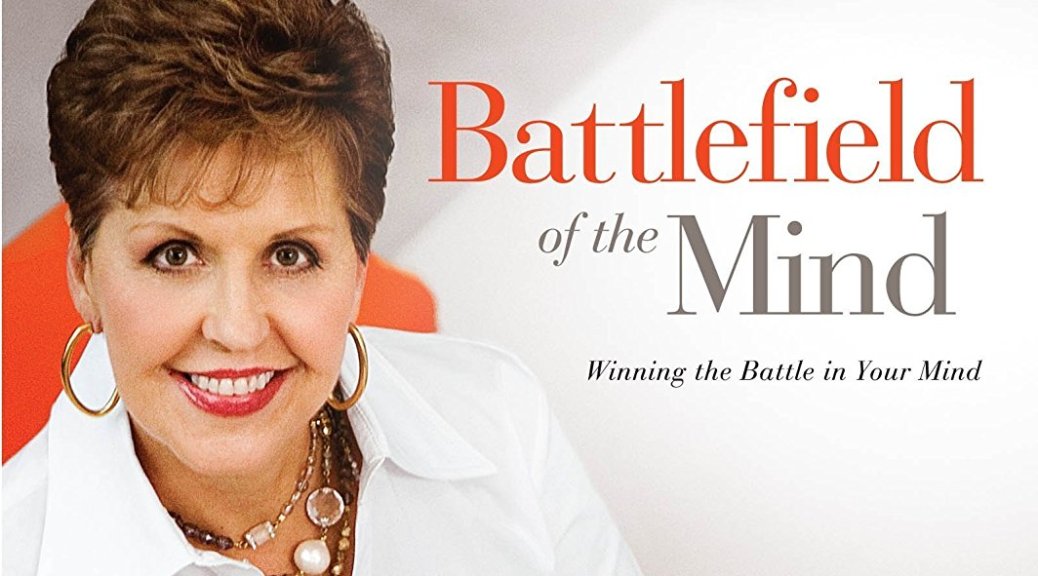
Joyce Meyer – Walk with Boldness


The wicked flee when no man pursues them, but the [uncompromisingly] righteous are bold as a lion.— Proverbs 28:1

Some people exude boldness, while others struggle with living boldly as a beloved child of God. I had that problem until God showed me some important keys that helped me live boldly, and I want to share them with you.

  1. Refuse to live in fear. Fear is epidemic in our society. The Bible instructs us in Hebrews 10:38 to live by faith and not draw back in fear.
  2. Put setbacks behind you. You are not a failure because you try new things and they don’t work out. You fail only when you stop trying. Don’t be afraid to make mistakes, and if you do, recover quickly and press on.
  3. Don’t draw comparisons. Boldness will be impossible as long as you compare yourself to others. Boldness comes from accepting who you are and being the best you can be.
  4. Be willing to take action. Search your heart and ask yourself what you believe God wants you to do—and then do it.

Pray about these four keys and ask the Holy Spirit to help you live them out. In Christ, and by His grace, you can have confidence and be filled with boldness.


http://www.joycemeyer.org

Campus Crusade for Christ; Bill Bright – You Can Trust Him


“So don’t worry at all about having enough food and clothing. Why be like the heathen? For they take pride in all these things and are deeply concerned about them. But your heavenly Father already knows perfectly well that you need them, and He will give them to you if you give Him first place in your life and live as He wants you to” (Matthew 6:31-33).

As a young businessman, I was strongly attracted to the material things of the world and worked very hard to achieve success. But when I became a Christian, I could not ignore the logic of Christ’s command, “Seek ye first the kingdom of God and His righteousness” (Matthew 6:33, KJV).

I made my commitment to obey His command. Since that day so many years ago, I have sought to be obedient to that command. The Lord has graciously and abundantly blessed me with the fulfillment of the promise of His supernatural provision which follows:

“Your heavenly father already knows perfectly well (the things you need), and He will give them to you if you give Him first place in your life and live as He wants you to.”

God is trustworthy, and the obedient, faithful Christian soon learns that he, like the psalmist of old, can proclaim:

“I have never seen the Lord forsake a man who loves Him, nor have I seen the children of the godly go hungry” (Psalm 37:25).

Bible Reading: Matthew 6:25-30

TODAY’S ACTION POINT: Resting on the absolute certainties of the Word of God, I will refuse to worry about anything today (recognizing that concern involves others, while worry involves only myself). “All things work together for good to them that love God…” (Romans 8:28). “My God shall supply all your need…” (Philippians 4:19). By trusting these and other promises from God’s word, I have no reason to worry


http://www.cru.org

Moody Global Ministries – Today in the Word – WAITING IS HOPING IN THE LORD


Micah 7:1–7

Struck blind by an unknown disease in the middle of his career, English poet John Milton wondered in a famous sonnet what God expected him to do. Were his literary and other talents now “useless”? “Doth God exact day-labour, light denied?” In the poem, Patience answered, reminding him that God does not need our work: “They also serve who only stand and wait.”

Biblically, waiting is not just waiting for God to do something—it is waiting for God Himself. In other words, our hope is founded upon the character of God. This kind of hope is not tentative but guaranteed. Godly waiting is therefore accompanied by a joyful anticipation and strong faith that He is on the way: “In the morning I lay my requests before you and wait expectantly” (Ps. 5:3).

Waiting on the Lord is part of our overall relationship with Him. It is an orientation toward God—an attitude of the heart, mind, and will. We’ll explore different elements of this relationship, orientation, or attitude in the next five days in order to see a definition of biblical waiting.

Today’s reading reveals hope as a key ingredient in spiritual waiting. Micah’s lament for Israel mourns that pretty much everything that could go wrong had gone wrong. Harvests failed (v. 1), people acted in hurtful and violent ways (v. 2), and corruption and exploitation were rampant (vv. 3–4). Relationships were broken at every level, including community, friendship, even marriage and family (vv. 5–6). The only bright side was God Himself—but He is enough!

Waiting on the Lord doesn’t mean a “wait and see” attitude, nor is it mere human optimism. Instead, Micah watched in hope. He waited for the God he knew would be a Savior. And he boldly asserted, “My God will hear me” (v. 7).

APPLY THE WORD

Waiting might not be easy, but Scripture promises that God is present even in our waiting and He will strengthen us to hope and to trust. Keep this verse nearby as a reminder: “Those who hope in the LORD will renew their strength. They will soar on wings like eagles; they will run and not grow weary, they will walk and not be faint” (Isa. 40:31).


http://www.todayintheword.org

Words of Hope – Daily Devotional – On My Knees

Read: Ephesians 3:14-21

For this reason I bow my knees before the Father . . . that you may be filled with all the fullness of God. (v. 14)

The apostle Paul spent a lot of time on his knees praying, often from a prison cell as in today’s passage. In his prayer for the believers in the wealthy port city of Ephesus, Paul’s prayer is basically this: “Oh God, may they know you, and not only about you!” Perhaps more than any other activity, it is in prayer that we get to know God more intimately. In his book Knowing God, Christian theologian J. I. Packer says, “What matters supremely, therefore, is not, in the last analysis, the fact that I know God, but the larger fact which underlies it—the fact that he knows me” (p. 41). Why is Paul on his knees? He wants God’s agenda to be at the forefront of every faith community.

The more Paul realized God’s purpose in his life, the deeper and more robust his intercession became. When we find ourselves literally on our knees, somehow we can better express proper humility and devotion to God. A kneeling posture in prayer shows an attitude of reverence and submission. Even if we can’t physically kneel down, we can bow our heads in times of dire need and acknowledge with our hearts that everything we need comes only from our heavenly Father. And the goal, says Paul, is that we “may be filled with all the fullness of God.” —David Mojica

Prayer: Lord, let me comprehend the breadth and length and height and depth of the love of Christ. Amen.


https://woh.org/

Charles Stanley – Grace to Keep Going


Acts 15:7-11

As believers, we readily attribute our salvation to God’s grace, but what does “this grace in which we stand” mean to us now (Rom. 5:2)? How does it work out in everyday life, especially when we’re going through periods of trial or suffering?

  1. The Lord’s grace releases His supernatural power within us so we can endure life’s hardships with a godly attitude. In fact, we’ll even be able to rejoice over what He is doing in us through the adversity.
  2. Grace builds our confidence in the sovereign Lord. Nothing looks hopeless when we focus on Him instead of on our problems.
  3. We discover the assurance of God’s sustaining presence as He walks with us every step of the way.
  4. Because we’ve experienced His care for us, we are able to show empathy and love to others facing hard times.
  5. During fiery trials, grace works to transform our character so that others can see Jesus reflected in us.

Difficulties in life are unavoidable. So we need a daily dose of God’s grace in order to walk through trials with confidence that there is great reward on the other side. If we rely on our own strength, however, obstacles will appear insurmountable, leaving us discouraged and ready to give up.

Too often believers rely on Christ for their salvation but then try to go solo. If God’s grace was needed to save us, then logic says we also need it for the rest of our days. Only through a continuous infusion of His sustaining power can we live a victorious Christian life.

Bible in One Year: John 10-11


http://www.intouch.org/

Our Daily Bread — That Famous Smile

Read: Psalm 28:6–9

Bible in a Year: Jeremiah 32–33; Hebrews 1

The prospect of the righteous is joy.—Proverbs 10:28

After my wife and I had the privilege of visiting the Louvre in Paris, I called our eleven-year-old granddaughter Addie on the phone. When I mentioned seeing da Vinci’s famous painting Mona Lisa, Addie asked, “Is she smiling?”

Isn’t that the big question surrounding this painting? More than 600 years after Leonardo captured this subject in oil, we still don’t know if the lady was smiling or not. Though enraptured by the painting’s beauty, we are unsure about Mona Lisa’s demeanor.

The “smile” is part of the intrigue of the painting. But how important is this anyway? Is smiling something the Bible mentions? In reality, the word appears less than five times in Scripture, and never as something we are told to do. However, the Bible does suggest for us an attitude that leads to smiles—and that is the word joy. Nearly 250 times we read about joy: “My heart leaps for joy,” David says as he thinks about the Lord (Ps. 28:7). We are to “sing joyfully to the LORD” (Ps. 33:1); God’s statutes are “the joy of [our] heart” (119:111); and we are “filled with joy” because “the LORD has done great things for us” (126:3).

Clearly, the joy God provides through everything He has done for us can bring a smile to our face. —Dave Branon

You are a good Father, dear God, and You do make us smile. You provide joy that is beyond what anything the world can offer. Help us show that joy to others by our countenance.

Hope in the heart puts a smile on the face.

INSIGHT: In addition to the Psalms, the New Testament uses joy many times. In Paul’s letters, he spoke often of both his joy and the joy we can experience. In the book of Philippians the apostle mentioned joy to his friends at the church of Philippi six times in only four chapters. As he instructed them, Paul prayed for them with joy (1:4), spoke of the joy of spiritual development (1:25), called on them to give him joy through their unity (2:2), described his hardships in the gospel as a joy to share with them (2:17), and asked that their joy would likewise be shared with him (2:18). In sending helpers to them for their growth in Christ, Paul asked that those mutual friends be received with joy (2:29) and referred to the Philippians themselves as his “joy and crown” (4:1).

It’s interesting to note the repeated emphasis on a joy that is relational. How often are relationships a source of joy for you? Bill Crowder


http://www.odb.org

Wisdom Hunters – Self Righteousness 

To some who were confident of their own righteousness and looked down on everybody else, Jesus told this parable. Luke 18:9

Self-righteousness is ugly. It is ugly to God and it is ugly to others. Self-righteousness is a blind spot of the worst kind, as it invites avoidance. Everyone is offended by it except the one exuding its offensive odor. There is an air of rejection waiting to be injected into its victim. Their goal is to afflict the comfortable. They look for those comfortable in sin, as defined by their self-righteous standards. They strain to apply their petty preferences to everyone else. It is really sad and a little pathetic, but many of us have been down this harsh and critical road ourselves. Much to our embarrassment, we have been the culprits of caustic and unfair judgment of others.

Conversations inevitably degrade to a tone of “us” versus “them”. It is a slippery and seductive slope that sucks one into a nauseating cycle of one-upsmanship. It becomes a competition between who is the “most spiritual.” It may be measured by tone of voice. The rationale is that the most spiritual-sounding voice must be the most righteous. What is even more “spiritual” is to accent the spiritual tone of voice with churchy words and phrases that only the insiders can interpret. Religious activities become a parade of people hungering and thirsting for the accolades of others. Pleasing and sucking up to people replace passion for God. It is a sad state of affairs when the self-righteous become the influencers.

Continue reading Wisdom Hunters – Self Righteousness 

Joyce Meyer – Does God Love You When You Make Mistakes?

But God shows and clearly proves His [own] love for us by the fact that while we were still sinners, Christ (the Messiah, the Anointed One) died for us.— Romans 5:8

Have you ever wondered if you are good enough for God to love you? Unfortunately, many people believe God loves them only as long as they don’t make mistakes.

Perhaps it was this outlook that caused the psalmist to ask, What is man that You are mindful of him?… (Psalm 8:4). Yet, the Bible tells us that we are God’s creation—the work of His hands—and that He loves each one of us unconditionally.

Let’s face it: Jesus didn’t die for you because you were great and wonderful; He died for you because He loves you. Romans 5:8-9 confirms this truth by telling us that He died for us while we were still sinners.

God loved you enough to give His only begotten Son, not only to die for your sins, but also to cover your daily mistakes. He loves you so much, He wants you to live each day in power and victory.

God loves you, and He wants you to believe it and receive it all the time…even when you make mistakes.


http://www.joycemeyer.org

Campus Crusade for Christ; Bill Bright – Prayer Has Great Power

“Admit your faults to one another and pray for each other so that you may be healed. The earnest prayer of a righteous man has great power and wonderful results” (James 5:16).

“I can take my telescope and look millions and millions of miles into space,” said the great scientist Sir Issac Newton , “but I can lay it aside and go into my room, shut the door, get down on my knees in earnest prayer, and see more of heaven and get closer to God than I can assisted by all the telescopes and material agencies on earth.”

Among many other things, the carnal Christian is characterized by a poor prayer life. The spiritual Christian, on the other hand, is characterized by an effective fruitful prayer life.

Prayer is simply communicating with God by listening as well as talking. The acrostic ACTS is helpful in recalling the various components of effective prayer, though the order is not necessarily rigid.

“A” is for adoration – worship of God, first for who He is; and second for all of His benefits. He alone is worthy of our adoration and praise.

“C” stands for confession. “If we confess our sins, He is faithful and just to forgive us our sins, and to cleanse us from all unrighteousness.” Sometimes this component should take priority, especially for the unbeliever and the disobedient believer, because God does not hear the prayers of the disobedient until they confess. “If I regard iniquity in my heart, the Lord will not hear me” (Psalms 66:18, KJV).

“T” is for thanksgiving – gratitude to God for His blessings.

“S” represents supplication – expressing our petitions to God for individuals and specific things and events.

Bible Reading: James 5:13-18

TODAY’S ACTION POINT: I will claim great power and wonderful results for supernatural living by a righteous life and by giving priority to prayer. I will remember to bring my adoration, confession, thanksgiving and supplication to God throughout the day


http://www.cru.org

Why Johnny Can’t Read…the Bible: The ‘Teach the Bible in Schools’ Campaign

Last month I told you about a growing movement in the U.S. called “Bring Your Bible to School Day,” organized by our friends at Focus on the Family. It’s part of a growing national movement to encourage our kids to bring their Bibles back to public schools, and perhaps 500,000 young people participated this year! But that’s not all we can do, not by a long shot, despite what you may think.

As you probably know, prominent atheist Madalyn Murray O’Hair brought a case before the U.S. Supreme Court, Murray v. Curlett, that ended devotional Bible-reading in public schools in 1963. Schools then threw the baby out with the bath water and stopped teaching the Bible academically, which the U.S. Supreme Court upheld. The results, speaking modestly, have been disastrous. In our schools, suicide, pregnancy rates, and violence have risen dramatically, while our scores in reading, writing, and math have plunged. Of course, while it’s not causation, the correlation is hard to miss.

Bible knowledge, a foundation of Western civilization, has also collapsed. According to Gallup, only a minority of American teens are “Bible literate.” It’s no wonder that over half of the graduating high school seniors in one poll thought that Sodom and Gomorrah were husband and wife and that Billy Graham preached the Sermon on the Mount! Truly, Johnny can’t read … the Bible!

It’s simply impossible for kids to be fully educated without basic knowledge of the world’s greatest book. Without the Bible, students can’t really understand fully the English language, English literature, history, art, music or culture—and the experts agree. In a poll of high school English teachers, 98 percent said that students who don’t know the Bible are disadvantaged when reading English literature.

Continue reading Why Johnny Can’t Read…the Bible: The ‘Teach the Bible in Schools’ Campaign

Streams in the Desert for Kids – Every Single Thing

Mark 9:23

Everything? Wow! That’s some promise, Jesus! The promise was given when a man brought his son to Jesus. The boy had an evil spirit living inside him. It made the boy do strange and sometimes dangerous things. The father said to Jesus, “If you can do anything, take pity on us and help us.” That’s when Jesus answered with a question, “‘If you can’?” and then said, “Everything is possible for one who believes.”

So what do you want from Jesus? Would it be good to pray for something then add, “If it is your will”? That’s the hard part of knowing how to pray—are we praying the way God wants us to pray?

Understanding that Jesus can do everything is easy because God’s Word says it is true. But that doesn’t mean God will automatically do everything you ask. Even though he can, he may delay an answer—or do something else—to develop your faith. For example, God told Joseph that Joseph would rule in Egypt one day. But many years passed before God put Joseph on a throne. During that time, God tried Joseph’s soul but developed his faith.

The challenge for us is to believe God’s Word that says he can do anything, but then trust that if he doesn’t do what we ask, he is up to something else for our good.

Dear Lord, I believe it. You are the one who can do everything. I trust you and whatever answers you give me. Amen.

Charles Stanley – Sufficient Grace


2 Corinthians 12:7-10

I thought the Christian life was going to be easier than this. Have these words ever entered your mind? Sometimes we come before our heavenly Father, thinking that He will fix all of our problems and devote Himself to our happiness and comfort. However, that is not the reality portrayed in Scripture. The apostle Paul was a man whom the Lord used greatly, and yet his life was anything but easy.

In fact, at one point Paul thought his pain was too much to bear, and he begged God to remove it. There’s nothing wrong with asking the Lord to relieve our suffering, but what should our response be if He doesn’t? The apostle probably had no idea that His experience would find its way into the Bible, to comfort and guide believers throughout the ages. The promise God gave him applies to us as well: “My grace is sufficient for you” (2 Corinthians 12:9).

God’s grace could be defined as His provision for us at the point of our need. The problem is, there may be times when it doesn’t seem the Lord is truly meeting our need. But He frequently sees deficiencies, outcomes, and complications that we don’t. His goals for us involve spiritual growth, the development of Christlike character, and strong faith. And trials play a vital role in achieving such things.

The important issue is how we respond. If all you want is relief, you could descend into anger and doubt. But if your desire is to become the person God wants you to be, you’ll see each trial as an opportunity for Christ to display His character and strength in you.

Bible in One Year: John 8-9


http://www.intouch.org/

Our Daily Bread — Powerful Baby

Read: Psalm 13

Bible in a Year: Jeremiah 30–31; Philemon

How long, LORD? Will you forget me forever? . . . But I trust in your unfailing love.—Psalm 13:1, 5

The first time I saw him, I cried. He looked like a perfect newborn asleep in his crib. But we knew he would never wake up. Not until he was in the arms of Jesus.

He clung to life for several months. Then his mother told us of his death in a heart-wrenching email. She wrote of “that deep, deep pain that groans inside you.” Then she said, “How deeply God carved His work of love into our hearts through that little life! What a powerful life it was!”

Powerful? How could she say that?

This family’s precious little boy showed them—and us—that we must depend on God for everything. Especially when things go horribly wrong! The hard yet comforting truth is that God meets us in our pain. He knows the grief of losing a Son.

In our deepest pain, we turn to the songs of David because he writes out of his own grief. “How long must I wrestle with my thoughts and day after day have sorrow in my heart?” he asked (Ps. 13:2). “Give light to my eyes, or I will sleep in death” (v. 3). Yet David could give his biggest questions to God. “But I trust in your unfailing love; my heart rejoices in your salvation” (v. 5).

Only God can bring ultimate significance to our most tragic events. —Tim Gustafson

Where do I turn when a crisis hits me? Do I ever get angry with God when facing grief and loss? Am I afraid to share my true emotions with Him? Have I ever asked God for His peace?

God can do the most with what we think is least.

INSIGHT: We may be surprised to hear a cry of abandonment coming from David, a man who knew God intimately. Psalm 13 describes David’s struggle. He was threatened by powerful enemies and distressed by God’s seeming prolonged apathy and absence, feeling forsaken in the time of his greatest need. “How long, LORD?” he asks. David questioned if God would ever come to his rescue (vv. 1-2). Even as he felt the sting of abandonment, David turned his turmoil over to God, asking Him for a deeper understanding of his circumstances (vv. 3-4). Anchoring himself in God’s unfailing covenantal love, David renews his trust in God (vv. 5-6).

Like David, you may be going through a rough patch, engulfed by feelings of dread and abandonment. God may seem silent, but He is never absent. Scripture confirms He will never leave or forsake anyone who calls on Him (Heb. 13:5-6). Sim Kay Tee


http://www.odb.org

Ravi Zacharias Ministry – Behold, the Crucified

Even modern English Bible versions often end up retaining the rather un-modern term “behold” in their translations of the Hebrew word hinneh and the Greek word idou. This is because there is no other equivalent English word that quite does the job that behold does. All the three terms—Hebrew, Greek, and English—have a certain gravitas, and, whenever used, command us to pay careful attention to what follows.

In John’s narrative of the trial and the crucifixion of Jesus, there are five occurrences of the term—three coming from the mouth of the unwitting prophet, Pilate, and twice from the mouth of our Lord Jesus. Each occurrence summons us to a facet of the person and work of Christ.

In John 19:4, “Pilate came out again and said to them, ‘Behold, I am bringing Him out to you so that you may know that I find no guilt in Him.’” We may render Pilate’s words as: “Behold, the Guiltless One!” Christians have always claimed, and will always claim, that Jesus, the Innocent, bore the sins of a guilty world. When his executioners twisted together a crown of thorns and thrust it upon his head, little did they know that they were enacting a prophetic truth! For in that single image—the crown of thorns on his head—is encapsulated the central Christian claim: that this guiltless-but-crucified one bore upon himself the guilt and curse of the whole of creation. Remember: “Cursed is the ground because of you…. Both thorns and thistles it shall grow for you.”(1)

The following verse is the second time the word occurs: “Jesus then came out, wearing the crown of thorns and the purple robe. Pilate said to them, ‘Behold, the Man!’” (v.5). Jesus is the window to God; He is also the mirror to man. In him, we see what is wrong with us, and what we are meant to be. The poetic poignancy of the occurrence is also found in the allusion that, just as the first human being, Adam, takes stage on the sixth day of creation, Christ, the New Human Being, takes center stage on the sixth day—Good Friday—of new creation.(2) And we are summoned to pay close attention to him, the man.

Continue reading Ravi Zacharias Ministry – Behold, the Crucified

Joyce Meyer – Abiding in the Word

If you live in Me [abide vitally united to Me] and My words remain in you and continue to live in your hearts, ask whatever you will, and it shall be done for you.— John 15:7

Most Christians know the importance of reading the Bible, but many do not understand the importance of abiding in the Word and allowing the Word to abide in them.

When we are diligent to study the Word and hold it in our hearts, we have instant access to Scripture whenever we need it. And Jesus promised that we can ask for whatever we need in prayer and receive it.

Abiding in the Word and allowing the Word to abide in us makes us true disciples of Jesus (see John 8:31). It gives us more power in our prayer lives, and having power in prayer gives us power over the enemy.

Are you abiding in God’s Word…and allowing it to abide in you? If the answer is no, I encourage you to take action. Make reading and studying the Word a priority. Start memorizing scriptures and tucking them away in your heart. Then, when you face the battles of life, you will be fully armed and prepared to win the war.


http://www.joycemeyer.org

Campus Crusade for Christ; Bill Bright – He Welcomes You

“Come unto Me, all ye that labour and are heavy laden, and I will give you rest. Take My yoke upon you, and learn of Me; for I am meek and lowly in heart: and ye shall find rest unto your souls. For My yoke is easy, and My burden is light” (Matthew 11:28-30, KJV).

Several years ago I had the privilege of meeting with a world-famous theologian. This great scholar had denied the deity of Christ and had taught thousands of seminarians who had studied under him that Jesus was only a great man and a great teacher. He was not God incarnate, and surely could not forgive sin and provide rest to His followers. Yet, in a unique way God had created a hunger in his heart for truth and for two years he had done an in-depth study of the life of Jesus.

As we met together in his office, he asked, “What do you tell a student when he asks you how to become a Christian?”

When I realized he was sincere, I proceeded to explain why I believe Jesus Christ is the Son of God and why all men everywhere need Him as their Savior and Lord, and how anyone who wants to can receive Him.

“I am persuaded,” he said after a long while, “that no honest person who is willing to consider the overwhelming evidence for the deity of Christ can deny that He is the Son of God.”

This great scholar, who had denied the deity of Christ all his life and encouraged millions of others to think likewise, bowed in prayer and received Christ into his life as Savior and Lord.

Jesus Christ stands out clearly as the one supernaturally unique figure in all of history. He is incomparable. He invites all who will to experience His love and forgiveness. “Come unto Me.” He welcomes “all you that labour and are heavy laden, and I will give you rest…My yoke is easy and My burden is light.”

Bible Reading: Matthew 11:23-27

TODAY’S ACTION POINT: Through the enabling of the Holy Spirit, I will seek to make sure that every loved one, every friend, every contact I make today is fully aware of the fact that God loves him, that Jesus Christ died for him and will welcome him into His family through a simple act of faith. I will tell him that He offers peace and rest – from life’s burdens – to all who follow Him in faith and obedience


http://www.cru.org

Max Lucado – Jesus Knows How You Feel

Remember when you sought a night’s rest and got a colicky baby? Remember when you sought to catch up at the office and got even further behind? And you can add to the list of interruptions sorrow, excitement, and bedlam. Sound familiar? Take comfort—it happened to Jesus too.

You may have trouble believing that. You probably believe Jesus knows what it means to endure heavy-duty tragedies. You’re no doubt convinced Jesus is acquainted with sorrow and has wrestled with fear. Most people accept that. But can God relate to the hassles and headaches of my life? Of your life? For some reason this is harder to believe. Jesus knows how you feel. His eyes have grown weary. His heart has grown heavy. He has had to climb out of bed with a sore throat. He has been kept awake late and has gotten up early. Jesus knows how you feel!

From Lucado Inspirational ReaderFor more inspirational messages please visit Max Lucado.

Home

Denison Forum – Are Christians the most persecuted faith on earth?

Sunday is the International Day of Prayer for the Persecuted Church. Why do we need such a day?Sunday is the International Day of Prayer for the Persecuted Church. Why do we need such a day?

In The Global War on Christians, John Allen calls the worldwide persecution of Christians “the most dramatic religion story of the early twenty-first century, yet one that most people in the West have little idea is even happening.” The respected journalist describes this persecution as “the most compelling Christian narrative of the early twenty-first century.” According to him, “Christians today indisputably are the most persecuted religious body on the planet.”

What evidence does Allen offer for his claim?

The scope of persecution

According to the evangelical group Open Doors, one hundred million Christians face interrogation, arrest, torture, and/or death because of their religious convictions. Todd Johnson of Gordon-Conwell Theological Seminary documents that one hundred thousand Christians, eleven per hour, have been killed on average every year of the past decade. The Catholic humanitarian group Aid to the Church in Need describes this global assault on believers as “a human rights disaster of epic proportions.”

While 30 percent of the world’s population identifies as Christian, 80 percent of all acts of religious discrimination around the world are directed at Christians. One scholar estimates that 90 percent of all people killed on the basis of their religious beliefs are Christians.

Terrorist attacks against Christians escalated 309 percent between 2003 and 2010. There have been seventy million martyrs since the time of Christ, forty-five million of them in the twentieth century. In other words, more Christians died for their faith in the last century than in the previous nineteen centuries combined.

Persecution and Islam

Continue reading Denison Forum – Are Christians the most persecuted faith on earth?

Charles Stanley –Satan’s Strategy


Luke 22:31-34Luke 22:54-62

Every one of us makes tracks through the valley of failure. The question is, How are you going to respond? Plenty of people give up and exchange a vibrant kingdom-serving life for a defeated existence. But failure need not be the end of the story. It’s a chance for a new beginning, living in Christ’s strength.

Peter had a life-altering failure. Jesus warned that Satan had asked permission to “sift” the disciple like wheat (Luke 22:31), referring to the vigorous shaking required to separate wheat kernels from debris. The enemy wanted to shake Peter’s faith hard in hopes that he’d fall away from Jesus like chaff.

Peter believed the promise he’d made to Jesus: “Even though all may fall away, yet I will not” (Mark 14:29). But Satan knows a few things about the power of failure. He realized that the disciple would be wounded by his own disloyalty. A man with tattered pride can’t help but question his usefulness.

When Satan sifts believers, his goal is to damage our faith so much that we’re useless to the Lord. He wants us shelved far from the action of God’s kingdom. Therefore, he goes for our strengths—the areas where we believe ourselves to be invincible, or at least very well protected. And when the devil succeeds, we are disappointed and demoralized. But we don’t have to stay that way.

If we are willing, God can use our failure to do spiritual housecleaning. Peter laid down his pride and instead put on the Holy Spirit’s courage. Thereafter, he risked humiliation, persecution, and death to proclaim the gospel. Failure was the catalyst that led to greater faith and true servanthood.

Bible in One Year: Daniel 3-4


http://www.intouch.org/


Our Daily Bread — Stay Awhile

Read: Hebrews 11:8–13

Bible in a Year: Proverbs 16–18; 2 Corinthians 6

All these people were still living by faith when they died. They did not receive the things promised; they only saw them and welcomed them from a distance, admitting that they were foreigners and strangers on earth.—Hebrews 11:13

During a discussion of The Lord of the Rings movie trilogy, a teenager said he prefers his stories in books rather than movies. When asked why, the young man replied, “With a book, I can stay there as long as I want.” There is something to be said for the power of lingering in a book, especially the Bible, and “inhabiting” the stories there.

Hebrews 11, often called “the faith chapter” of the Bible, mentions nineteen people by name. Each one traveled a road of difficulty and doubt, yet chose to obey God. “All these people were still living by faith when they died. They did not receive the things promised; they only saw them and welcomed them from a distance, admitting that they were foreigners and strangers on earth” (v. 13).

How easy it is to rush through our Bible reading without pondering the people and events in the text. Our self-imposed time schedule robs us of going deeper into God’s truth and His plan for our lives. Yet, when we are willing to stay awhile, we find ourselves caught up in the real-life dramas of people like us who chose to stake their lives on God’s faithfulness.

When we open God’s Word, it’s good to recall that we can stay as long as we want. —David C. McCasland

Father in heaven, thank You for Your written Word and the examples of people who lived by faith. Help us to follow You as they did.

Linger in God’s Word and you’ll find stories of faith.

INSIGHT: Hebrews 11 provides examples of how authentic faith leads to a changed life. Belief and action produce acts of courage and perseverance. As we ponder the deep and impressive faith our spiritual ancestors demonstrated through their actions, it encourages us to follow in their footsteps. The examples of those who have preceded us—those who lived as “foreigners and strangers on earth” (v. 13)—help us to fix our eyes on Jesus (12:2).

As you reflect on today’s reading, how are you inspired in your walk with Christ? J.R. Hudberg


http://www.odb.org