The Chomsky Moment And The Cracks In Cultural Hegemony


Cultural hegemony = a concept developed by Antonio Gramsci, refers to the dominance of a ruling class that maintains power by shaping society’s beliefs, values, and norms to appear as natural, “common sense” truths. It works through cultural institutions (media, education) rather than force, gaining the consent of subordinate groups to support the status quo.


The end of moral asymmetry in American intellectual life.

In 2023, newly disclosed documents related to the late financier Jeffrey Epstein revealed meetings and financial interactions between Epstein and the eminent linguist and public intellectual Noam Chomsky. The disclosures did not accuse Chomsky of criminal conduct. But they confirmed that, years after Epstein’s 2008 conviction for soliciting a minor, Chomsky met with him multiple times and discussed financial matters.

Chomsky’s response was characteristically blunt: his meetings with Epstein, he said, were “none of your business.” The tone may have been legally defensible. Culturally and symbolically, it was something else.

Because Chomsky is not merely a professor emeritus at MIT. For over half a century, he has been one of the central intellectual pillars of the American Left — a figure whose authority extends far beyond linguistics into foreign policy, media criticism, and moral judgment on American power. His 1988 book Manufacturing Consent shaped generations of students’ understanding of media, propaganda, and elite influence. To admirers, he has represented intellectual courage against empire; to critics, an implacable critic of Western liberal democracies.

But in either case, he has stood as a moral voice.

And that is precisely why the Epstein association matters — not as a criminal allegation, but as a symbolic rupture.

From the 1960s to Cultural Hegemony

To understand the magnitude of that rupture, one must place Chomsky within the broader intellectual ecosystem that reshaped American academia after the 1960s. While not formally a member of the Frankfurt School, his work converged with its critique of capitalist modernity, mass culture, and liberal-democratic institutions. Thinkers such as Herbert Marcuse and Theodor Adorno helped institutionalize a style of critical theory that viewed Western society as structurally oppressive beneath its democratic veneer.

Overlay that with the influence of Antonio Gramsci and his theory of cultural hegemony: the idea that ruling classes maintain dominance not only through economic power but by shaping cultural norms, education, and moral language. Change the culture, and you change the political order.

The American New Left absorbed this framework. Over decades, it migrated from street protest to faculty lounges, from counterculture to curriculum committees. The result is what we now call Critical Theory’s progeny: identity-centered scholarship, postcolonial critique, and ultimately the framework popularly labeled CRT. While Chomsky himself has often criticized certain excesses of identity politics and has not endorsed every development in “woke” culture, his lifelong assault on American institutions provided intellectual scaffolding for the suspicion of Western norms that now permeates large sectors of academia.

The point is not that Chomsky caused CRT. It is that he helped legitimize a moral architecture in which America is presumptively guilty, power is presumptively corrupt, and Western institutions are structurally suspect.

For decades, that critique carried a tacit moral asymmetry: the critics stood above the system they condemned.

The Weberian Problem

Here is where the scandal intersects with political theory.

Max Weber famously distinguished between the “ethic of conviction” and the “ethic of responsibility.” The former acts from purity of principle; the latter accounts for the foreseeable consequences of one’s actions in the public sphere.

Chomsky’s career embodies the ethic of conviction. He has consistently argued from first principles against war, imperialism, and elite hypocrisy. But when a public intellectual of such stature maintains a relationship — however defined — with a convicted sex offender embedded in elite financial networks, the question shifts from private intention to public consequence.

Even if the meetings were purely intellectual.

Even if the financial discussions were routine.

The symbolic impact is unavoidable.

A figure who built his reputation exposing the moral compromises of power was, at minimum, socially entangled with a man whose entire operation depended on elite protection.

That tension does not prove corruption. It exposes fragility.

The Collapse of Moral Asymmetry

For many on the Right, the Epstein scandal has become shorthand for elite decadence across party lines. But for the American Left, it strikes deeper. The post-1960s intellectual project has relied not only on critique, but on moral differentiation — the implicit claim that progressive institutions and thinkers occupy higher ethical ground than the corporate, military, or conservative establishments they oppose.

The Chomsky episode does not invalidate every argument he has ever made. It does something subtler: it undermines the aura of moral insulation.

If even the most relentless critic of American elite corruption can be found in the appointment book of one of the most notorious financiers in recent memory, then the narrative of unilateral moral superiority begins to erode.

And once moral asymmetry collapses, the logic of cultural hegemony weakens.

Because Gramscian influence depends on credibility. Cultural authority must appear ethically elevated to justify reshaping curricula, institutions, and norms. If the intellectual class is perceived as subject to the same gravitational pull of wealth, access, and prestige as everyone else, its claim to exceptional moral insight diminishes.

A Myth from the Sixties Meets the Twenty-First Century

The myth born in the 1960s was that radical critique purified the critic. That standing outside “the system” conferred immunity from its temptations. Over time, that myth helped fuel a worldview in which America’s sins were magnified, while the critic’s own milieu was presumed enlightened.

The Epstein revelations do not topple Chomsky’s scholarly contributions to linguistics. They do not erase his influence. But they puncture the myth that critique equals virtue.

And that puncture comes at a moment when the intellectual descendants of the New Left are facing growing resistance from parents, voters, and lawmakers who question the premises of CRT and institutionalized “wokeness.”

The Chomsky moment, then, is not about scandal in the tabloid sense. It is about the exposure of a structural paradox: those who claimed to unmask power were not immune to its proximity.

Cultural hegemony depends on the perception of moral altitude. When that altitude drops, even slightly, the entire architecture wobbles.

The collapse is not judicial.

It is symbolic.

And symbols, in politics, often matter more than verdicts.


S.R. Piccoli | February 18, 2026

Samuel Robert Piccoli is a blogger and the author of several books, among them Being Conservative from A to Z (2014) and Blessed Are the Free in Spirit (2021). He lives in the Venice area.


Source: The Chomsky Moment And The Cracks In Cultural Hegemony – American Thinker
President Trump Not an Outlier on Climate

Green activists may be appalled by the Trump administration’s placement of economic growth, national security, and energy affordability ahead of fighting climate change — but they don’t have the final word.


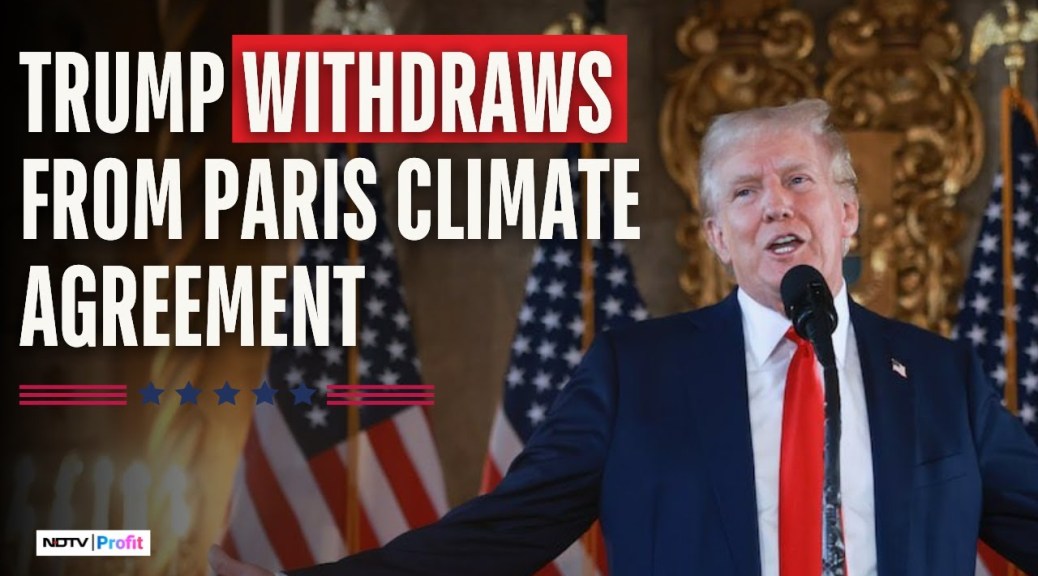
Qn February 12, President Donald Trump rescinded the “endangerment finding” by the Environmental Protection Agency which asserted in 2009 that so-called greenhouse gases were a threat to public health. It became the legal basis, absent action by a divided Congress, for efforts to rein in emissions for vehicles, power plants, the oil and gas sector, high-energy manufacturing, methane from landfills (and perhaps cattle), even aircraft; anything the EPA wanted to target. This recission supports three of the pillars of the “Powering the Great American Comeback” initiative the EPA announced last February: supporting energy “dominance,” the domestic auto industry, and AI data centers with their massive demand for electricity.

The EPA deregulation followed an executive order issued the day before “directing the Department of War to prioritize long-term Power Purchase Agreements with America’s beautiful, clean coal fleet to ensure military installations and critical defense facilities have uninterrupted, on-demand baseload power.”

A day earlier, the Tennessee Valley Authority, the nation’s largest public utility (and sixth largest utility in the country), to which President Trump has just appointed four new board members, announced it would not close two coal-fired power plants it had planned to shutter. TVA explained, “As power demand grows, TVA is looking at every option to bolster our generating fleet to continue providing affordable, reliable electricity to our 10 million customers, create jobs and help communities thrive.” Emphasis will be on new generating capacity based on natural gas and nuclear power.

Green activists are appalled by the Trump administration’s placement of economic growth, national security, and energy affordability ahead of fighting climate change. However, the U.S. President is not an outlier among world leaders on setting these priorities, as was demonstrated at the 30th annual United Nations Climate Conference of the Parties (COP30) held in Belem, Brazil last November. Ambitions had been lowered as expressed by UN Secretary-General António Guterres when reporting on the release of the 2025 Emissions Gap Report. It concluded that even if Nationally Determined Contributions are fully implemented by 2035, global warming would reach 2.3 degrees Celsius, well above the UN target of 1.5 C or the 2.0 C rise developing countries wanted the UN to shift to so as not to impede their economic growth. However, Guterres still claimed that “1.5 degrees by the end of the century remains our North Star.” Yet everyone knows “end of the century” goals are not serious.

The UN remains a membership organization, whose members are nation-states endowed with sovereign authority over their own actions. The UN has no authority to mandate anything, nor should it have. Even President Barack Obama held to this core principle. Though given the Nobel Peace Prize in the hope that he would embrace the UN climate campaign, he ended the notion that the UN could mandate national actions even though he expressed support for meeting UN goals. The result are Nationally Determined Contributions which can vary widely between countries and within countries when governments change as demonstrated by President Donald Trump’s rejection of the UN climate agenda and the U.S. boycott of COP30.

The target for Net Zero — the cutting of greenhouse gas emissions to as close to zero as possible, with any continued emissions being reabsorbed by carbon “offsets” — has been moved from 2035 to 2050, with many major emitters (including China and India) saying they cannot meet that goal because improving living standards and building economic strength are higher priorities. India’s coal consumption will likely double by 2050.

Bill Gates made headlines less than three weeks before COP30 by reversing his former views on climate. In his memo he wrote, “Although climate change will have serious consequences — particularly for people in the poorest countries — it will not lead to humanity’s demise. People will be able to live and thrive in most places on Earth for the foreseeable future.” And even in the poorest countries, Gates noted climate “will not be the only or even the biggest threat to their lives and welfare. The biggest problems are poverty and disease, just as they always have been.” The way out is more economic growth driven by innovation and the expansion of resources which Gates finds more finite today than they should be. He wants policy to “be prioritized by its ability to save and improve lives cost-effectively” which is what all those who have objected to the restrictions posed by the Greens want.

Green activists had hoped there would be a “roadmap” of policies nations would have to adopt to eliminate the use of fossil fuels. This idea was discarded early as the developing countries know this is impossible. The real world intruded with the annual report of the International Energy Agency (IEA) which was released during COP30. It projected that oil and gas demand will continue to grow until 2050 at least. Between today and 2035, half of the growth in the global automotive fleet comes from emerging and developing economies outside China, while Chinese growth will continue as well. Whether motive power comes from gasoline or electricity, energy demand will go up.

Coal will continue to be a major generator of electricity. While renewable energy, particularly solar, is growing as its technology evolves, it is being used to expand output more than replace existing fossil fuels use. China leads the world in both new solar energy and expanded coal use as it seeks every way it can to expand and do so with domestic sources for security reasons. Across Asia, coal generates half of the electricity. Natural gas has been used as a replacement for coal, but the Greens count is as a fossil fuel to be eliminated, but it won’t be.

The IEA had good news for the nuclear power industry. Surging demand for electricity means that “after more than two decades of stagnation, global nuclear power capacity is set to increase by at least one-third to 2035.” Nuclear is a clean power source. On the sidelines of COP30, the World Nuclear Association confirmed continued expansion of its nuclear coalition of 33 nations (including the U.S.) supporting the global tripling of nuclear power by 2050. Last month, German chancellor Friedrich Merz admitted it had been a “huge mistake” to close all of his country’s nuclear power plants, driving up costs and weakening national security. COP28 had listed nuclear power as one of the “low emissions” technologies that needed to be accelerated (see my earlier reports on COP27,  COP28 and COP29).

The Economist reported “COP30 ends with a whimper.” This was shown by Secretary-General Guterres when in a late plea to the conference asked, “how much more must we suffer?” He was referring to the planet, but it was more accurately aimed at the UN itself, which again found its expensive, anti-growth Green agenda not to the liking of leaders of nations operating in the real world where people expect their living standards to continually improve.


William R. Hawkins | February 19, 2026

William R. Hawkins is a former economics professor who has worked for several Washington think tanks and on the staff of the U.S. House Foreign Affairs Committee. He has written widely on international economics and national security issues for both professional and popular publications including for the Army War College, the U.S. Naval Institute, and the National Defense University, among others. 


Source: President Trump Not an Outlier on Climate – American Thinker

Using Biblical Reasoning, Rubio Pinpoints Why Globalism Is A Recipe For Disaster

‘Ignoring Human Nature’: Using Biblical Reasoning, Rubio Pinpoints Why Globalism Is A Recipe For Disaster


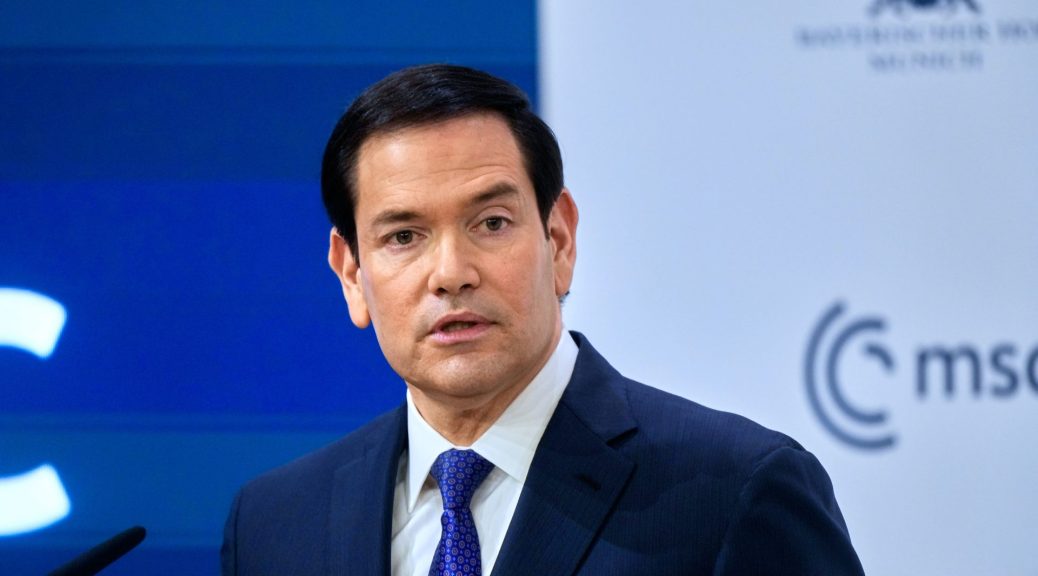
US Secretary of State Marco Rubio’s powerful message at the Munich Security Conference (MSC) has garnered well-deserved attention. Standing before a room of European and Western leaders, Rubio boldly exposed the folly of globalist policies and how they have been used to undermine sovereignty, national strength, and the Judeo-Christian foundation of Western civilization.

One particular statement was truly profound, and its tremendous accuracy stems from being bred out of a Biblical worldview.

Discussing the collapse of communism in Germany, Rubio warned that the celebration of this success in the West quickly morphed into an ill-conceived fantasy about the future of nations.

“The euphoria of this triumph led us to a dangerous delusion: that we had entered, ‘the end of history;’” Rubio emphasized, “that every nation would now be a liberal democracy; that the ties formed by trade and by commerce alone would now replace nationhood; that the rules-based global order – an overused term – would now replace the national interest; and that we would now live in a world without borders where everyone became a citizen of the world.”

This globalist mentality, he stressed, “was a foolish idea that ignored both human nature and it ignored the lessons of over 5,000 years of recorded human history. And it has cost us dearly.”

The Secretary of State correctly pinpointed the fatal flaw of today’s globalism: “human nature.”

This vital truth is confirmed by Scripture.

By man’s naivete, globalism sounds like a perfect ideal. What could be wrong with a world united together in harmony? Even popular science fiction series like Star Trek envision a future in which we have “evolved” past the supposedly barbaric concept of individual nations into a global system of governance. No more bloody wars, corruption, violations of human rights, hunger, and wicked regimes. Surely no one could argue against a future like that!

To many, especially the young, those who fight against globalism are viewed as selfish, power-hungry, and lacking humanity. This is not reality. Those who resist globalism do so out of wisdom.

Equipped with an understanding of human nature and history, we know that globalism would not produce a worldwide “utopia” but rather the creation of a global regime—equipped with all the wicked qualities of human nature—whose power would be limitless. The danger is obvious.

Unfortunately, despite the discernment of Rubio’s warning from Munich, his impactful words will ultimately fall on deaf ears.

God, who knows the future, told us that a day is coming when there will be a global government—and it looks nothing like the appealing picture of peace and harmony presented from the buildings of Davos.

This global government will fall under the leadership of an individual whom the Bible refers to as “the anti-Christ.” While he will come with lofty and deceptive words promising “peace,” his global regime will be blood-soaked and freedom-crushing (Daniel 9:27Rev. 6:2). Its leader will impose his own religious system, and, like all good tyrants, he will demand to be worshipped as god (2 Thess. 2:3-4). Those who refuse will be unable to buy and sell and will be systematically killed (Revelation 13:15-18). Jesus Christ will be the only one with the power to decisively end his rule—and He will do just that (Rev. 19:202 Thess. 2:8).

Even prior to this global government, as Rubio highlighted, globalist-driven policies have “cost us dearly.” The Secretary of State said plainly that the push for open borders has resulted in disastrous mass immigration, the “climate cult” has impoverished societies, and the hostility toward national sovereignty has weakened the West and emboldened global bad actors.

Far from bringing harmony and peace, the agenda-driven goals of globalists have sown instability and catered to the power-hungry.

Which brings us to the other side of globalism. Is “ideal globalism” possible? You might be surprised to learn that it is… but only when sinful human nature is no longer a factor. The Bible tells us that after the collapse of the anti-Christ’s regime, Jesus Christ will establish a global kingdom for a thousand years, with Himself as the head. Those who rule and reign with Him will be resurrected saints—those who, through Christ’s shed blood, have had the chains of sinful human nature broken.

During this time, the world “shall beat their swords into plowshares, and their spears into pruninghooks: nation shall not lift up sword against nation, neither shall they learn war any more” (Isaiah 2:4).

There will be no need to train for war, no injustice or government corruption, and no ideology driven supression of freedom. People are not wrong to want to live in a world like that; however, ignoring sinful human nature and attempting to bring it about with the exclusion of Christ is a recipe for a disaster that is global in scope.


Source: ‘Ignoring Human Nature’: Using Biblical Reasoning, Rubio Pinpoints Why Globalism Is A Recipe For Disaster – Harbinger’s Daily

Turning Point; David Jeremiah – Better Than Money


NEW!Listen Now

Wisdom is good with an inheritance…. For wisdom is a defense as money is a defense, but the excellence of knowledge is that wisdom [preserves the life of] those who have it.
Ecclesiastes 7:11-12

Recommended Reading: Proverbs 8:33-36

The late primatologist Jane Goodall was the first to provide evidence that some primates made and used tools. Her discovery reversed the long-standing belief that only humans were capable of making and using tools.

Almost everything humans do is accomplished with tools, all of which are inanimate objects. Tools have no life or mind of their own; they are employed by a human facilitator. Whether tools are used for positive or negative ends depends entirely on the wisdom of the owner. Take money, for example. It can serve good ends and bring positive benefits to the owner. But compared to wisdom, tools like money are limited. Money can be used for many things, but it cannot ultimately preserve, protect, or provide life to those who have it. Solomon, who made this observation, knew what money could and couldn’t do—he had more than anyone in his day.

Whatever amount of money God has entrusted to you, pray for even more wisdom. Whoever finds wisdom finds life (Proverbs 8:35).

We may love money without having it, just as we may have money without loving it. 
J. C. Ryle


https://www.davidjeremiah.org

Our Daily Bread – Lavish Love


If one of your fellow Israelites falls into poverty . . . allow him to live with you. Leviticus 25:35 nlt

Today’s Scripture

Leviticus 25:35-43

Listen to Today’s Devotional

Apple LinkSpotify Link

Today’s Devotional

Todd invited his younger brother Alex, a recent college graduate, to come live with him in the house he’d built. He wanted to help his sibling gain some financial footing by allowing him to live rent-free for a while. After six months, Todd asked Alex to begin paying rent. Years later, Alex made an offer on his own home. When the offer was accepted, Todd surprised him by telling him that he’d deposited Alex’s rent payments in a savings account over the years and that the substantial sum of money was now his! Alex wept as he received the lavish gift.

In Leviticus 25, God gave Moses commands for the Israelites that included allowing those in need “to live with you” (v. 35 nlt). This command was part of God enacting “a jubilee year” (v. 10 nlt)—when debts were forgiven, those in poverty were helped, and the enslaved were freed (vv. 23-55). He declared that He’d lovingly led His people “out of Egypt to give [them] the land of Canaan and to be [their] God” (v. 38). He’d provided a new homeland, and now they were to imitate Him by showing love and opening their homes to others.

The apostle John would later write, “See what great love the Father has lavished on us, that we should be called children of God!” (1 John 3:1). By Jesus’ sacrifice we can receive the fullness of that lavish love (v. 16). And as He helps us, we can lavish it on others.

Reflect & Pray

How have you experienced God’s lavish love? How can you extend it to others?


Loving God, please help me pour out Your amazing, lavish love on others.

God’s very nature is love. Learn more by reading this piece by Oswald Chambers.

Today’s Insights

As the nation of Israel began to take shape, God wanted them to understand how they were to treat each other. Enslaving fellow Israelites was never to be part of the equation. “If any of your fellow Israelites become poor and are unable to support themselves among you,” He said, “help them as you would a foreigner and stranger” (Leviticus 25:35). And if any of them “become poor and sell themselves to you, do not make them work as slaves” (v. 39). Even this arrangement of indentured servitude wasn’t permanent. God said, “They are to work for you until the Year of Jubilee [every fiftieth year]. Then they and their children are to be released, and they will go back to their own clans and to the property of their ancestors” (vv. 40-41). It’s God’s desire that we never exploit one another but look out for each other’s interests. Because He lavished His love on us by sending Jesus, He’ll help us lavish His love on others.


http://www.odb.org

Denison Forum – Why are the new voter ID laws so controversial?


Republicans have been trying to pass some version of voter ID laws for years, with the latest attempt set for a vote in the Senate coming soon. Few expect the bill to pass, though, despite overwhelming popular support. And the reasons why have less to do with the ID requirements than with the rest of what the law is trying to change.

Why it matters: Election integrity remains a focal point for the Trump administration and many in the Republican Party. If Democrats continue to oppose the SAVE America Act, it could prompt Republicans to remove or alter the filibuster in ways that would have a profound impact on how laws are passed down the line. Or, if the bill stalls, President Trump has promised to push it through via executive order, even though a similar attempt was already deemed illegal last year. Either way, the issue doesn’t appear to be headed toward a resolution anytime soon.

The backstory: Third time’s a charm?

For the third consecutive year, the House of Representatives has passed a version of the Safeguard American Voter Eligibility Act, or the SAVE Act for short. So far, it has died in the Senate each time without even getting a vote. Senate Majority Leader John Thune promised that it would not happen again, given that he now has the support necessary to bring it to the floor and force representatives to go on record as either supporting or rejecting it.

Still, few expect the law to pass. It would need sixty votes unless Republicans either get rid of the filibuster—a step leadership has repeatedly said they will not take—or change the requirements to oppose the bill. There’s a lot of risk either way, though, and it’s unclear if Thune will be willing to take that step.

Continue reading Denison Forum – Why are the new voter ID laws so controversial?

Harvest Ministries; Greg Laurie – You Serve


 Who will listen when you talk like this? We share and share alike—those who go to battle and those who guard the equipment. 

—1 Samuel 30:24

Scripture:

1 Samuel 30:24 

In 1 Samuel 30, we find the story of David leading his men to victory in battle against Amalekite raiders who had plundered and burned the town of Ziklag. As David and the four hundred soldiers who had fought with him were returning home, those who had stayed behind to guard the camp and the supplies met them. Some of the troublemakers who had fought in the battle didn’t want to give any of the spoils of the battle to those who stayed by the camp. David said to the troublemakers, “Who will listen when you talk like this? We share and share alike—those who go to battle and those who guard the equipment” (1 Samuel 30:24 NLT).

Those who fought in the battle assumed that their role in God’s plan was more important than those who didn’t fight. David didn’t see it that way—and neither did God. And that principle still applies today to people who answer God’s call.

Whether God has called you to serve Him in such a way that people see you or whether He has called you to serve Him by supporting others who are seen, God will bless you and reward you for your service.

Maybe you feel as though your life isn’t really making a difference or that what you have to offer God doesn’t mean all that much. If so, you’ll be in for some surprises in Heaven, because what may not seem very valuable on earth will be of great value in Heaven.

God’s Word leaves little doubt as to our worth in God’s eyes. The apostle Peter wrote, “But you are not like that, for you are a chosen people. You are royal priests, a holy nation, God’s very own possession. As a result, you can show others the goodness of God, for he called you out of the darkness into his wonderful light” (1 Peter 2:9 NLT).

We also have immeasurable value because we are God’s creation. The apostle Paul wrote, “For we are God’s masterpiece. He has created us anew in Christ Jesus, so we can do the good things he planned for us long ago” (Ephesians 2:10 NLT).

I read a story about a man who found an old, blue-and-white vase while he was cleaning his attic. He took it to an auction to sell it, thinking he would probably get twenty or thirty dollars from it, maybe one hundred dollars if he was lucky. To his utter amazement, the vase turned out to be an original fifteenth-century work of art from the Ming Dynasty. It sold for $324,000.

What may not seem especially valuable now will prove to be extremely valuable later. Until then, we need to be faithful with what God has given us to do.

Reflection Question: What value does God see in your acts of faithfulness and service? Discuss this with believers like you on Harvest Discipleship!


Harvest.org | Greg Laurie

Days of Praise – With Christ


by Henry M. Morris, Ph.D.

“Set your affection on things above, not on things on the earth. For ye are dead, and your life is hid with Christ in God.” (Colossians 3:2–3)

The apostle Paul, looking forward to the time when we shall “ever be with the Lord” (1 Thessalonians 4:17), wrote, “For I am in a strait betwixt two, having a desire to depart, and to be with Christ; which is far better: nevertheless to abide in the flesh is more needful for you” (Philippians 1:23–24).

The fact is, however, that we can be “with Christ” even while still abiding in the flesh, as Paul himself emphasized. This is the great principle called positional truth. “Positionally,” we are already “with Christ,” for that is where God sees us and how He relates to us. He has “raised us up together, and made us sit together in heavenly places in Christ Jesus” (Ephesians 2:6).

Before we could be raised up with Christ, however, we first had to die with Him. “I am crucified with Christ: nevertheless I live; yet not I, but Christ liveth in me” (Galatians 2:20). God even saw us as buried with Christ when He was buried, and this is the great truth symbolized in our baptism. “We are buried with him by baptism into death” (Romans 6:4).

“Now if we be dead with Christ, we believe that we shall also live with him: knowing that Christ being raised from the dead dieth no more” (Romans 6:8–9). He died for us, so our deserved death became His substitutionary death, and His victorious resurrection becomes our own unmerited deliverance from death in eternal resurrection life. This is our position now, and our assured everlasting possession then, for we are with Christ, who “dieth no more.”

This truth is not only a wonderful doctrine, but as we see in our text, it is a focus for our thoughts and a real incentive for godly living. HMM


https://www.icr.org/articles/type/6

Joyce Meyer – Sanctification of the Soul


So get rid of all uncleanness and the rampant outgrowth of wickedness, and in a humble (gentle, modest) spirit receive and welcome the Word which implanted and rooted [in your hearts] contains the power to save your souls.

James 1:21 (AMPC)

Once you are born again, your spirit has been reborn, and you will go to heaven when you die. But God is not finished—He is just beginning. You need to “work out your own salvation with fear and trembling” (Philippians 2:12 KJV). In other words, your soul needs to be saved. The soul is often defined as the mind, the will, and the emotions. Each of these areas needs salvation.

The Holy Spirit works relentlessly to transform the whole man into God’s perfect will. This process is called sanctification. When your soul is renewed with His Word, you think His thoughts and not your own. Submit yourself to the Holy Spirit and allow Him to change every thought and motive.

Prayer of the Day: Holy Spirit, renew my mind, will, and emotions. Help me submit every thought to You. Shape my motives, guide my steps, and continue Your sanctifying work in me each day, amen.


http://www.joycemeyer.org

Max Lucado – Look for Jesus in the Storm 


Play

Peter and his fellow storm riders knew they were in trouble. According to Matthew 14:24-26, “But the boat was now in the middle of the sea, tossed by the waves, for the wind was contrary.” About 4:00 a.m. the unspeakable happened. They spotted someone walking on the water. “‘A ghost!’ they said, crying out in terror!” They didn’t expect Jesus to come to them this way.

Neither do we. We expect to find Jesus in morning devotionals, church suppers, and meditation. We never expect to see him in a storm. But that’s where he does his finest work, for it is in storms that he has our keenest attention. He said. “Take courage; I am here” (Matthew 14:27 NLT).

Look over your shoulder friend; that’s God following you. Look into the storm friend; that’s Christ coming toward you.


Home

Today in the Word – Moody Bible Institute – Hebrews: Better Than


Read Hebrews 3:1–6

I recently watched a documentary about the laying of the first transatlantic telegraph cable. It was a heroic enterprise. At the time, communication between Europe and North America was limited by the speed at which a ship could cross the ocean. The first cable allowed for near instant communication. It was described as the conquering of space and time. Today such means of communication seem quaint at best. Anyone with a cell phone knows what they have is just better.

The writer of Hebrews wrote to Christians who were tempted to return to keeping the Law of Moses. They were facing persecution and believed it would be better to abandon faith in Christ and return to faith in their own ability to keep the Law. The writer of Hebrews warns them against this decision. Central to his argument is the idea that Jesus and the new covenant are better than what they had before (vv. 3, 6).

It’s not that the old covenant was bad, it is just that the work Jesus does for those who trust in Him surpasses anything that came before. Jesus inaugurated a new covenant, which freed people from the obligation to keep the Mosaic Law as a means of relationship with God (Luke 22:20).

This was a hard thing for some early Christians to accept. They came from a Jewish background, committed to keeping the Law of Moses as a way of earning favor with God. But the writer notes that Jesus is a better high priest. While the Israelite high priests served in a physical Temple, offering physical gifts according to the Mosaic covenant, Jesus serves in heaven, the true sanctuary of God, according to a better covenant (vv. 1, 6). This new covenant is built on better promises (v. 6). Why would anyone return to the old covenant?

Go Deeper

Why did people want to return to their old ways of worship? What did Jesus provide that the old way never could give? Extended Reading:

Hebrews 1-3

Pray with Us

God, we are grateful for the deep truths of faith in the book of Hebrews. Thank You that in Your Son we received a better law, a better covenant, and a better high priest. Jesus, Your love is better than life!

Fix your thoughts on Jesus, whom we acknowledge as our apostle and high priest.Hebrews 3:1


https://www.moodybible.org/