Civility in an uncivil age: Why polite rhetoric cannot reform a corrupt system

The problem with pearl-clutching …

In a recent op-ed excerpt from his forthcoming book, former Vice President Mike Pence made a familiar plea: “the next generation of conservative leaders must embrace civility.”

Democracy, he argues, depends on “heavy doses” of it, avoiding personal attacks, modeling restraint, and pursuing principled compromise.

Pence’s call echoes a longstanding strain of institutionalist conservatism that values decorum and process above all.

Yet in the current political and cultural climate, this vision feels not just aspirational but dangerously detached from reality.

I argued during President Trump’s first term in “The Trump Administration’s Disruptive Reform of Political Communication,” that traditional political discourse had become a genteel game that preserved a corrupt status quo. The old rules, polite euphemisms, carefully calibrated rhetoric, and refusal to name enemies plainly, rewarded stasis. They allowed entrenched interests in Washington, the media, academia, and the permanent bureaucracy to maintain power while ordinary Americans watched their borders dissolve, their jobs shipped overseas, their culture eroded, and their children’s futures mortgaged.

Trump’s breakthrough was not just bluster; it was a necessary disruption that reframed communication as a tool for reform rather than ritualistic preservation of elite norms. Conforming once again to those old conventions today would signal surrender, not strength.

Verbal civility and measured debate are luxuries afforded by functional systems operating in good faith. When the stakes involve systemic betrayal on a massive scale, they are meaningless instruments of defeat.

Consider the evidence all around us.

We have witnessed open and organized resistance to law enforcement, the threat of eliminating law enforcement altogether through “defunding police,” violent protests that obstruct and risk the lives of ordinary citizens (every street obstructed by protesters risks the life, health, or safety of a person awaiting emergency services), and riots that destroy communities, only for political leaders and media allies to excuse or minimize the destruction while taxpayers foot the bill for rebuilding.

Billions wasted on corrupt boondoggles line the pockets of insiders with no real consequences. Endless ill-conceived policies, whether green energy fantasies, open borders, or regulatory strangulation sacrifice American jobs and futures while their architects face neither political reckoning nor legal accountability.  Prosecutors and judges repeatedly return violent and dangerous criminals to the street and shrug at the predictable carnage.

Nowhere is the righteous indignation more justified and evident than in the battles over our children.

Across school board hearings nationwide, parents have voiced raw outrage at teachers and administrators who betray their trust by facilitating social transitions of minors without parental knowledge or consent. Academia repeatedly surrenders our youth to incompetent, ill-conceived, or indoctrinating programs and practices that leave them vulnerable, broken, and incapable while blaming parents for “teacher’s” hurdles. Young girls are forced to compete against biological males in sports, their dreams crushed and their voices silenced by accusations of “hate” for stating biological reality.

This is not policy disagreement; it is a profound moral violation that strikes at the heart of family, community, epistemic cohesion, and fundamental fairness.

The bureaucratic cruelty is on display in places like California. Los Angeles, under Mayor Karen Bass, provides another stark example. After California failed to competently prevent or prepare to fight devastating wildfires, its leaders heap insult and political castration on injury with years of bureaucratic obstruction.

Citizens who lost everything are prevented from demolishing ruins and rebuilding homes, despite the pleas from a sitting president to slash red tape, and they even tried to prevent them from voting if they had to move away temporarily and didn’t file the right paperwork.

Whether directed at the president or the poor citizen, the lesson is one of power politics.  “You don’t have the power, and you can’t make us.”

A whole party deploys the power dynamics of an elementary school playground, with similar results.   A political system riddled with corruption that impairs basic governance demands more than gentle words. Polite petitions have repeatedly failed. Blunt exposure of failure is required.

We are still learning how deep is the rot caused by decades of appeals to identity and “truth to power” politics to corruptly achieve and retain power.

Only recently we learned that institutions like the Southern Poverty Law Center,  which weaponized “hate” labels to smear dissenters, actually paid to perpetuate the hate it ostensibly opposes. In Minnesota, social services were managed with patterns of willful ignorance or worse, risking harm to vulnerable children and families through wanton misuse of resources.  All accomplished under the watch of those in power.

These aren’t isolated missteps but symptoms of a cesspool too wide and too deep for civility to bridge.  Some wrongs are so fundamental that responding with mere civility minimizes the scope of the damage and risks admitting defeat. Some betrayals cannot be condemned politely. When one side has abandoned reason, civilized norms, and the pursuit of any common good beyond retention of raw power, “heavy doses of civility” function as unilateral disarmament.

The Democrat party’s trajectory, prioritizing power over governance, identity hierarchies over equality, and institutional capture over reasoned debate, has so betrayed the interests of working and investing Americans that traditional debate is obsolete. They do not seek compromise; they seek conquest of the culture and permanent dominance.

“Hell No!” is the gentlest possible rebuttal.

The political and cultural war we face requires realism and strength. Conservatives must prioritize the best interests of U.S. citizens through secure borders, secure elections, economic opportunity, parental rights, rule of law, and national sovereignty, over performative decorum that the other side exploits.

Trump’s disruptive style proved that bold, unfiltered communication can break through institutional inertia, and contrived conventional wisdom and reconnect politics with the people. His governance has been real rather than performative, offering actual solutions rather than excuses and blame The next generation of leaders should not retreat to the comfortable rhetoric or timid governance of yesterday. They must confront systemic corruption head-on, with the clarity and urgency the moment demands. In an age this uncivil, only truthful disruption offers a path to genuine reform.


Monty Donohew | May 28, 2026

Source: Civility in an uncivil age: Why polite rhetoric cannot reform a corrupt system – American Thinker
Turning Point; David Jeremiah – Be a Friend


NEW!Listen Now

By this all will know that you are My disciples, if you have love for one another.
John 13:35

Recommended Reading: John 15:12-15

Far too many churches and denominations have been founded for reasons that were less than loving. Yet Jesus told His disciples that love among Christians would be the hallmark of those who follow Him. He gave His disciples a new name—He called them friends rather than servants. And a new command: As friends, they were to love one another.

If all followers of Jesus are His friends, that makes all followers of Jesus friends with one another. As mutual friends, love for one another is to be what separates Christians from the world. So serious was Jesus about love for one other that He said it would require laying down one’s life for one’s friends—which is what He did for His friends (John 15:13). Do you have a friend who would lay down his or her life for you? Are you the kind of friend who would lay down your life? “Friend” is a covenant term in Scripture (James 2:23). Under the old covenant, a true friend was closer than a blood brother (Proverbs 18:24).

Be the kind of friend you would like to have and show the world that you are a friend of Jesus.

In necessary things, unity; in doubtful things, liberty; in all things, [love].
Richard Baxter


https://www.davidjeremiah.org

Our Daily Bread – Waiting on God


Be strong and take heart and wait for the Lord. Psalm 27:14

Today’s Scripture

Psalm 27:7-14

Listen to Today’s Devotion

Apple LinkSpotify Link

Today’s Devotion

As a little girl, I got so excited when I’d see special signs appear on the side of the road. I thought colorful signs meant my family had arrived at the popular amusement park we were driving to. I’d joyfully start gathering my things, only to be disappointed to see more signs and have to wait even longer before we reached the park. Eventually I realized those signs announced that visitors were getting closer but were still miles away.

Like an excited child wondering “are we there yet?” we can also be impatient and anxious to arrive at our next destination.

Waiting for God to move in our lives, or to rescue us from our trials, can be challenging. David was facing much adversity, which he mentions throughout Psalm 27. Yet he still placed his hope and trust in God and waited for Him to respond. David didn’t know how long it would take for God to act, but he knew God would help him. “I remain confident of this: I will see the goodness of the Lord in the land of the living” (v. 13).

It may take longer than we’d like to experience our breakthrough, but let’s take courage in these words: “Wait for the Lord; be strong and take heart and wait for the Lord” (v. 14). As we turn to the Psalms and the rest of Scripture for encouragement, we can take comfort in knowing God is working even while we wait.

Reflect & Pray

Why is it hard sometimes to wait for God’s answer? How can you remain hopeful as you wait?

Dear God, thank You that You’re working even while I wait.

Today’s Insights

When pursued by powerful enemies, David focused on God instead of the danger he was in. With God as his “light” and “salvation” and the “stronghold of [his] life,” he had nothing to fear (Psalm 27:1-3). God would keep him safe—“out of reach on a high rock” (v. 5 nlt). Even in the unlikely event of being abandoned by his parents, who were supposed to protect him, David confidently trusted that “the Lord will take care of me” (v. 10 nkjv). God would deal with the difficulties and dangers just as a human father would for his child. The psalmist invites us to “be strong and take heart and wait for the Lord” (v. 14). To wait for God is to put our trust in Him. We affirm with David, “We wait in hope for the Lord; he is our help and our shield” (33:20).

Watch more about waiting for God.


http://www.odb.org

Denison Forum – First the roof, then the rest


Why Housing First is the most Christ-like response to homelessness

On June 1st, the Trump Administration is changing how homelessness-reduction initiatives are funded. According to an official statement, the Department of Housing and Urban Development (HUD) is reversing the “status quo of ‘housing first’ and ‘harm reduction,’” arguing that those approaches “have failed at great cost to those suffering on our streets and to working American taxpayers.” Instead, the administration is prioritizing treatment-focused responses aimed at addressing addiction and mental illness.

On its surface, that sounds compassionate. Addiction should be treated. Mental illness should be taken seriously. Christians, of all people, should care deeply about helping people heal.

Yet the new funding requirements misunderstand both the causes of homelessness and the conditions people need in order to recover.

The National Alliance to End Homelessness defines Housing First as an approach that “does not require people experiencing homelessness to address the all of their problems including behavioral health problems, or to graduate through a series of services programs before they can access housing.” This approach is founded on the belief that “people need basic necessities like food and a place to live before attending to anything less critical.”

Continue reading Denison Forum – First the roof, then the rest

Harvest Ministries; Greg Laurie – Absent from the Body, Present with the Lord


 So we are always confident, even though we know that as long as we live in these bodies we are not at home with the Lord. For we live by believing and not by seeing. Yes, we are fully confident, and we would rather be away from these earthly bodies, for then we will be at home with the Lord. So whether we are here in this body or away from this body, our goal is to please him. 

—2 Corinthians 5:6–9

Scripture:

2 Corinthians 5:6–9 

What happens to us as believers when we die? We go straight into the presence of God. The apostle Paul wrote that when we are “away from these earthly bodies . . . then we will be at home with the Lord” (2 Corinthians 5:8 NLT). There’s no waiting period or shipping delays. The moment our time on earth ends, our time in God’s presence begins.

That’s why Paul wrote, “For to me, living means living for Christ, and dying is even better. But if I live, I can do more fruitful work for Christ. So I really don’t know which is better. I’m torn between two desires: I long to go and be with Christ, which would be far better for me. But for your sakes, it is better that I continue to live” (Philippians 1:21–24 NLT). He wanted to continue his work on earth, but the thought of Heaven was irresistible.

When Stephen was being martyred for his faith, he was given a glimpse of glory, which he then described to the people who were putting him to death. “But Stephen, full of the Holy Spirit, gazed steadily into heaven and saw the glory of God, and he saw Jesus standing in the place of honor at God’s right hand. And he told them, ‘Look, I see the heavens opened and the Son of Man standing in the place of honor at God’s right hand!’” (Acts 7:55–56 NLT).

According to Acts 6:15, “Everyone in the high council stared at Stephen, because his face became as bright as an angel’s” (NLT). Because Stephen was seeing the other side, his face radiated God’s glory.

When the great evangelist D. L. Moody was on his deathbed, his last words were, “Is this dying? Why, this is bliss. There is no valley. I have been within the gates. Earth is receding; Heaven is opening; God is calling; I must go.” After saying this, Moody soon breathed his last breath and passed into eternity.

It comforts me to think that when my son Christopher left this world, he was carried by angels into God’s presence. I believe that with all my heart. And I believe that’s true of all Christians when their lives on earth come to an end.

When we leave this world, we’ll be carried by angels into the presence of the Lord, where we’ll stay forever, filled with utter peace, fulfillment, joy, and awe. If we, too, could see how glorious Heaven is, I’m sure that it would change everything about how we view death.

Enjoy this life while you can but never lose sight of what lies beyond it.

Reflection question: What are you most excited about when it comes to Heaven? Discuss this with believers like you on Harvest Discipleship!


Harvest.org | Greg Laurie

Days of Praise – Worship of Idols and Demons


by Henry M. Morris, Ph.D.

“They sacrificed unto devils, not to God; to gods whom they knew not, to new gods that came newly up, whom your fathers feared not.” (Deuteronomy 32:17)

This terrible indictment was in the farewell song of Moses, written just before the tribes of Israel prepared to enter the promised land. Perhaps Moses was thinking mainly of the golden calf fashioned by Aaron, who had told the people: “These be thy gods, O Israel” (Exodus 32:4).

Aaron and the people certainly knew that the man-made calf was not a god, but they knew that there were many invisible spirit beings in the world and that these “devils” (actually fallen angels) could indwell images made by men as objects of worship. These evil spirits do possess certain powers, which can be used to impress their worshipers with the magical insights and abilities of the images.

This was also a problem in the early church. Paul warned his converts at Corinth, “The things which the Gentiles sacrifice, they sacrifice to devils, and not to God: and I would not that ye should have fellowship with devils” (1 Corinthians 10:20). John’s closing word to his own flock was “Little children, keep yourselves from idols” (1 John 5:21).

It is a serious problem today—not only in lands where images and animalistic spirits abound, but even in the “Christian” West, both in the proliferating New Age cults and in mainline churches that have diluted sound Bible teaching with humanism and ritualistic pantheism. And remember, too, that “covetousness” (that is, coveting money, or power, or anything more than the will of God) “is idolatry” (Colossians 3:5). When the prince of these devils himself sought the worship of Jesus, the Lord answered: “Get thee hence, Satan: for it is written, Thou shalt worship the Lord thy God, and him only shalt thou serve” (Matthew 4:10). We need to remember and follow His example. HMM


https://www.icr.org/articles/type/6

Joyce Meyer – The Most Important Thing


And He replied to him, You shall love the Lord your God with all your heart and with all your soul and with all your mind (intellect).

Matthew 22:37 (AMPC)

I once heard a great woman of God say, “Love God and then do what you please.” My initial thought was that if we all did what we pleased, we would do a lot of bad things. But if we truly love God, that would not be the case. Jesus said, If you [really] love Me, you will keep (obey) My commands (John 14:15 AMPC). Out of our love for God, we want to please Him. We’ve become sons and daughters, not slaves.

A slave follows all the rules in order not to get into trouble, but sons and daughters learn the Father’s heart and delight in pleasing Him. When we find an area of disobedience in our lives, or we feel that we cannot resist temptation to sin, instead of fighting the sin, we have a better option: We can draw closer to God, falling more deeply and intimately in love with Him, recognizing His amazing goodness. Then the sin will not be tempting or attractive. As we draw close to God, we are resisting sin and it finds no place to make its nest in our lives.

Prayer of the Day: Father, I want to please You at all times. Draw me to You and teach me to know You better and to love You more, amen.


http://www.joycemeyer.org

Max Lucado – A Life of Joy and Abundance 


Play

Jesus was accused of much, but of being a grump, sourpuss, or self-centered jerk?  No. People didn’t groan when he appeared. They didn’t duck for cover when he entered the room.  He called them by name. He listened to their stories. He answered their questions. He visited their sick relatives and helped their sick friends. He fished with fishermen and ate lunch with the little guy and spoke words of resounding affirmation. He went to enough parties that he was criticized for hanging out with rowdy people and questionable crowds.

People were drawn to Jesus! Thousands came to hear him. Hundreds chose to follow him. They shut down their businesses and walked away from careers to be with him. His purpose statement read, “I came to give life with joy and abundance” (John 10:10 The Voice). Jesus was happy and wants us to be the same.


Home

Today in the Word – Moody Bible Institute – Remember the Journey


Read Numbers 33

Samuel Pepys, a 17th-century English naval administrator, kept daily diary entries in 1660–1669, documenting everything from the Great Fire of London to personal finances. Years later, those journals would become valued historical sources, preserving important truths about England’s past. Memory has the power to sustain us when the road ahead looks uncertain.

The principle of remembering our journey lies at the heart of Numbers 33, where Moses presents a detailed record of Israel’s wilderness wanderings. The chapter opens with Moses’ careful documentation: “Here are the stages in the journey of the Israelites” (v. 1). At God’s command, Moses created a permanent record of divine faithfulness through four decades. The list reads like ancient GPS coordinates, they “left Rameses and camped at Sukkoth. They left Sukkoth and camped at Etham…They left the Red Sea and camped in the Desert of Sin” (vv. 5–11). Each location held memories—some of rebellion, others of provision. Every stop represented encounters with God’s grace and judgment.

This detailed record served multiple purposes. For the generation entering Canaan, it demonstrated God’s faithfulness despite their parents’ failures. God had sustained them through every stage, providing manna, water, and protection. But the record also included sobering reminders of consequences, such as Aaron, who would not enter the Promised Land, “because both of you broke faith with me” (Deut. 32:51; Num. 33:38–39). Moses concludes with future instructions for conquering Canaan (vv. 50–56). Their experiences with God would give them confidence for future battles. God never wastes a step. Every part of the journey shapes us to trust Him more deeply and walk more faithfully into our calling.

Go Deeper

Reflect on the “stages” of your life. What has God taught you along the way? Let your past remind you of His unfailing guidance.

Pray with Us

Father God, thank You for Your guiding hand on our lives. You have been with us through the twists and turns of this journey. We rest assured that nothing is a surprise to You!

I will remember the deeds of the LORD.Psalm 77:11


https://www.moodybible.org/

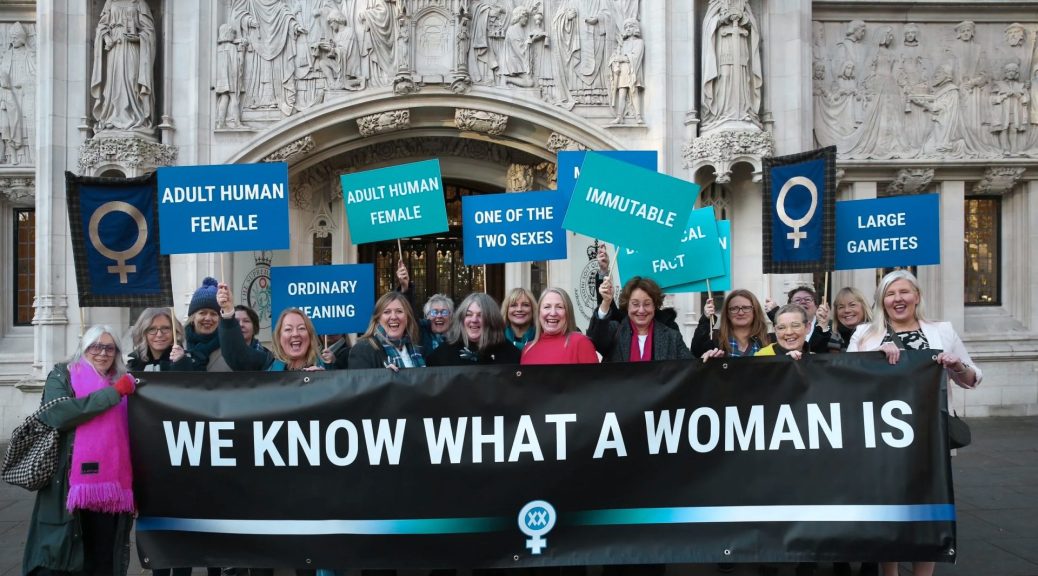
After Years Of Legal Wrangling, Updated UK Guidance Draws A Clear Line Firmly Anchoring ‘Sex’ To Biological Reality


In a move that could reshape how public services, businesses, and charities across Great Britain operate, the Equality and Human Rights Commission (EHRC) has released an updated Code of Practice. This guidance firmly anchors the definition of “sex” in the Equality Act 2010 to biological reality, drawing a clear line after years of legal wrangling and institutional hesitation.

A New Dawn for Single-Sex Spaces

The revised code explicitly states that “sex” refers only to biological sex—not so-called “gender identity.” Private spaces such as bathrooms, changing rooms, and hospital wards must align with a person’s biological sex at birth—not their self-identified gender.

This clarification carries significant weight because, as the code emphasizes, allowing biological males in female-only spaces or vice versa effectively nullifies the purpose of single-sex provisions.

The code’s core conclusion cuts through the ambiguity that has lingered for years: “a person’s sex remains their biological sex” regardless of how they feel, and designated spaces should reflect that biological reality.

Strong Words from Government and Advocates

Equalities Minister Bridget Phillipson welcomed the development as “an important step in ensuring that organizations across Great Britain have clear guidance regarding its implementation, protecting people’s rights across our country.”

She added: “At the heart of the Act is a simple principle: ‘sex’ means what it says—male and female. What people call themselves and how they dress doesn’t change their sex. Neither does getting updated paperwork.”

Phillipson warned that any “business, charity or public service provider” operating differently has taken “a wrong turn.” Policies that blur biological boundaries “must now urgently” be fixed.

She acknowledged that “the guidance could be clearer” in places but asserted that “it’s absurd to say that it is ‘unlikely to be either practical or appropriate’ to ask an individual what sex they are in relation to facilities such as toilets: on the contrary, if a man walks into a women’s space it will be not just appropriate to challenge him, but essential. Otherwise, women’s rights to single-sex spaces cannot be enforced.”

Voices from the Front Lines

Andrea Williams, chief executive of the Christian Legal Centre, hailed the code as long-overdue confirmation of existing law: “This Code of Practice confirms what should never have been in doubt: the law has always required the protection of single-sex spaces. Public bodies, including the NHS, have had a legal duty to comply, yet many have failed to do so, choosing instead to hide behind ‘awaiting guidance’ while pursuing unlawful policies.”

Bethany Hutchison, a Darlington nurse and president of the Darlington Nursing Union, echoed the frustration: “The publication of the EHRC Code of Practice must mark the end of delay and denial. The NHS and other public bodies should have been following the law, and the Supreme Court’s ruling, all along.”

She highlighted how “waiting for guidance” became “a smokescreen to avoid making the necessary changes and to prolong the imposition of radical, Stonewall-influenced gender identity policies that have placed both staff and patients in deeply difficult situations. There are now no excuses, no more smoke and mirrors. The law must be followed.”

“Frontline nurses have paid a heavy price for speaking up,” Hutchison concluded. “We now need urgent, system-wide reform to restore confidence, protect patient dignity, and ensure staff can carry out their duties without fear of reprisal.”

Concerns Over Loopholes and Stronger Enforcement

Supporters of strong single-sex protections welcome the code. However, many remain concerned it still leaves room for loopholes that could weaken enforcement.

Critics highlight the risk of subjective interpretations that allow resistant organizations to continue prioritizing gender-identity policies under the guise of flexibility. Practical verification is another worry: updated official documents (such as birth certificates or driver’s licenses) and other constraints may leave providers without clear, reliable ways to confirm biological sex.

Many also fear the code doesn’t go far enough in mandating universal single-sex spaces, especially in high-risk settings like refuges, prisons and health care. Without stricter monitoring, mandatory training and tighter language to close interpretive gaps, some worry the “awaiting guidance” delays could simply evolve into new forms of evasion.

Nonetheless, the updated guidance has been widely embraced as a victory for common-sense gender policies. The guidance now sits before Parliament for a 40-day scrutiny period. If unchallenged, it will take full effect, offering what many hope will be the clarity needed to restore trust and safety in public life.

And as England takes this major step, many are watching to see if U.S. leaders follow suit in ensuring strict biological distinctions in both private spaces and women’s and girls’ sports—which has been a stated priority of the second Trump administration.


Source: After Years Of Legal Wrangling, Updated UK Guidance Draws A Clear Line Firmly Anchoring ‘Sex’ To Biological Reality – Harbinger’s Daily

Turning Point; David Jeremiah – Christ in You


NEW!Listen Now

Nevertheless, I tell you the truth. It is to your advantage that I go away; for if I do not go away, the Helper will not come to you; but if I depart, I will send Him to you.
John 16:7

Recommended Reading: Romans 8:9-11

Jesus’ preparation of His disciples for His return to the Father in heaven was disconcerting for them. For three years they had witnessed His teaching and His merciful healings—not to mention His companionship and counsel. What would they do without Him?

The solution He revealed to them was new. He would send to them a Helper who they came to understand was the Holy Spirit—given to them a few weeks later at the Feast of Pentecost (Acts 2). In fact, Jesus said it would be to their advantage for Him to go away and for the Spirit to come in His place, enabling them to do even greater works than He had done (John 14:12). So the Holy Spirit was given to all believers to empower the life of Christ in each one who believes (Romans 8:11; Galatians 2:20; 5:22-23).

Never forget during difficult moments: If you belong to Christ by faith in Him, He dwells in you by His Spirit.

He who has the Holy Spirit in his heart and the Scripture in his hands has all he needs.
Alexander MacLaren


https://www.davidjeremiah.org

Our Daily Bread – It Was Me


If [Israel] will confess their sins . . . I will remember my covenant with Jacob. Leviticus 26:40-42

Today’s Scripture

Leviticus 26:40-45

Listen to Today’s Devotion

Apple LinkSpotify Link

Today’s Devotion

In an old movie comedy, a bumbling but brilliant programmer is chosen for the first manned mission to Mars. Constantly making foolish mistakes, the programmer has a habit of blurting out, “It wasn’t me!” When the crew lands on Mars, the programmer slips from the top of the ladder and falls to the planet’s surface—just before his partner sets foot on it. The first words spoken on Mars are, “It wasn’t me!”

It’s a farcical story, but that programmer’s phrase is hauntingly realistic. Whenever there’s blame to go around, our response can sound a lot like, “It wasn’t me!”

God desires our obedience. But He also knows we’re prone to disobey Him. In Leviticus 26:1-13, God outlined His plan for Israel. If they obeyed His commands, He said, “I will look on you with favor and make you fruitful and increase your numbers” (v. 9). But habitual disobedience would bring curses and afflictions designed to bring the people to repentance. Then God said that if disobedient Israel would “confess their sins and the sins of their ancestors” (v. 40), He would remember His covenant with them.

The key to restoring relationship with God is our admission of what we’ve done wrong. Blaming others keeps us trapped in the guilt cycle, powerless to vindicate ourselves.

Feeling far from God? A good place to start is by saying, “It was me.”

Reflect & Pray

What is your reflexive reaction when you might be to blame for something? Think of a time when you’ve been truly honest with God. What did it look like?

Loving God, I want to be honest with You about _______.

Today’s Insights

The word translated “confess” (yadah) in Leviticus 26:40 can also be translated “praise” (Genesis 29:35; Psalm 18:49) or “give thanks” (Psalm 7:17). The first time in the Bible, however, this word carries the idea of “confession” is in Leviticus 5:5: “When anyone becomes aware that they are guilty . . . they must confess in what way they have sinned.” Here we find a guiding principle: When sin is exposed, it should be acknowledged and confessed. Sometimes, the Scriptures and the Spirit bring conviction from within. At other times, God uses people and circumstances to help us see what we can’t or are unwilling to see. Regardless of how the discovery comes, the prescription remains the same: Our relationship with God is restored when we confess and take responsibility for our sin. As John writes, “If we confess our sins, he is faithful and just to forgive us our sins, and to cleanse us from all unrighteousness” (1 John 1:9).

Learn more about the gift of confession. 


http://www.odb.org

Denison Forum – Hormuz deal “hangs in balance” as Iran targets US air base


Iran said this morning that it had targeted a US air base in response to recent US military attacks. According to Forbes, a deal over the Strait of Hormuz now “hangs in [the] balance.”

The US shot down four Iranian drones and struck a ground control station near the Strait of Hormuz that its military assessed as presenting a direct threat to American forces and commercial shipping. Iran’s announcement today came as US ally Kuwait reported its air defenses were responding to “hostile missile and drone threats.”

Hours earlier, President Trump signaled that an agreement between the two sides wasn’t close. The global oil benchmark soared above $98 per barrel early this morning after reports of the attacks emerged.

When Americans were captured at the US Embassy in Tehran in 1979, ABC News covered the ongoing crisis under the title, “America Held Hostage.” It seems we have been held hostage to Iran ever since.

Our country is six times larger than theirs; our population is nearly four times larger. Our economy is over sixty times larger than theirs. They are some six thousand miles from us. And yet, for my entire adult life, Iran has been in our headlines, nearly always for nefarious reasons.

Continue reading Denison Forum – Hormuz deal “hangs in balance” as Iran targets US air base

Harvest Ministries; Greg Laurie – The Cheerful Giver


 Remember this—a farmer who plants only a few seeds will get a small crop. But the one who plants generously will get a generous crop. You must each decide in your heart how much to give. And don’t give reluctantly or in response to pressure. ‘For God loves a person who gives cheerfully. 

—2 Corinthians 9:6–7

Scripture:

2 Corinthians 9:6–7 

If you ask people to list the top priorities in their lives, you’ll probably get a lot of thoughtful and inspirational answers. But if you really want to know what their top priorities are, you have to look at their financial records. The way people use their money is one of the best indicators of where their priorities lie.

Jesus explained it this way: “Wherever your treasure is, there the desires of your heart will also be” (Luke 12:34 NLT). The reality is that we all invest in our passions. If you want to find out what people are truly passionate about, follow the money.

God certainly does. Not because He needs our money, but because everything we have ultimately comes from Him. Not only does He supply our needs, but He also expects us to be wise stewards of our resources, which are actually His resources.

The apostle Peter wrote, “God has given each of you a gift from his great variety of spiritual gifts. Use them well to serve one another” (1 Peter 4:10 NLT).

The author of Proverbs wrote, “The generous will prosper; those who refresh others will themselves be refreshed” (Proverbs 11:25 NLT).

The message is consistent throughout Scripture. We need to take what God has given us and be wise stewards of it, investing generously in the work of the kingdom of God. God will generously bless those who heed the message.

The apostle Paul wrote, “Remember this—a farmer who plants only a few seeds will get a small crop. But the one who plants generously will get a generous crop. You must each decide in your heart how much to give. And don’t give reluctantly or in response to pressure. ‘For God loves a person who gives cheerfully’” (2 Corinthians 9:6–7 NLT).

Some people may say, “I can’t afford to give.” Really? I can’t afford not to give. Giving isn’t just for rich people; it’s for all people. Everyone should invest in God’s kingdom. Here’s something to consider: If you’re having financial struggles, maybe one of the reasons is that you’re not honoring the Lord in your giving.

I’m not saying that if you give, God will make you rich. But there’s no denying that the Bible makes a connection between giving and receiving. Paul follows up his words in 2 Corinthians 9:6–7 with this statement: “And God will generously provide all you need. Then you will always have everything you need and plenty left over to share with others” (verse 8 NLT).

Make God’s work your passion and then invest accordingly. See what happens in your life.

Reflection question: What would cheerful giving look like in your life? Discuss this with believers like you on Harvest Discipleship!


Harvest.org | Greg Laurie

Days of Praise – A Little Flock


by Henry M. Morris, Ph.D.

“Fear not, little flock; for it is your Father’s good pleasure to give you the kingdom.” (Luke 12:32)

The world tends to measure success by size, and this seems generally true in the Christian world as well. The most successful churches are considered to be those with the largest congregations, the largest budgets, the greatest number of converts baptized each year, or some other quantitative index. But this is not God’s criterion. At the judgment seat of Christ, “the fire shall try every man’s work of what sort it is” (1 Corinthians 3:13): not how big it is but of what sort it is! Quality, not quantity, is the criterion.

Christ’s encouraging words to the “little flock” were given toward the end of an extended warning against the desire to accumulate wealth. “Take heed, and beware of covetousness,” He had said (Luke 12:15), speaking to His small group of followers. He was their Shepherd and would provide for the needs of His “little flock.”

Christ’s warnings against individual covetousness evidently apply also to group covetousness. A church or any other Christian organization needs continually to guard against the desire to be impressive in the eyes of the world. The cities of Christendom exhibit many ornate cathedrals and temples that are now mostly empty and spiritually dead.

The Lord Jesus promised an “open door” to the little church at Philadelphia because it had “little strength” and had “kept [His] word” (Revelation 3:8), but He threatened to “spue . . . out of [His] mouth” the tepid church at Laodicea, which was boasting that it was “rich, and increased with goods” (Revelation 3:16–17). Not every “little flock” has kept God’s Word, nor has every big flock become lukewarm, but Christ’s words serve as both warning and encouragement. The greater blessings of the coming kingdom have been promised to the faithful “little flock.” HMM


https://www.icr.org/articles/type/6

Joyce Meyer – Finding Freedom from Emotional Pain


You have heard that it was said, “Love your neighbor and hate your enemy.” But I tell you, love your enemies and pray for those who persecute you, that you may be children of your Father in heaven.

Matthew 5:43–45 (NIV)

Many of us have suffered emotional wounds over the course of our lives, or we may still be in emotional pain. These wounds can fester and cause us to struggle in various ways if we do not seek the healing God offers us.

Emotional wounds may come from abuse, rejection, abandonment, disappointment, criticism, judgment, or other types of hurt. If you have an emotional wound of any kind, I want you to know today that Jesus can heal you everywhere you hurt. According to the prophecy in Isaiah 61:1 (NIV), Jesus came to bind up the brokenhearted and to proclaim freedom for the captives. He heals our broken hearts and sets us free from pain and other forms of bondage. He also came to comfort all who mourn and to give us a crown of beauty instead of ashes, the oil of joy instead of mourning, and a garment of praise instead of a spirit of despair (Isaiah 61:2–3).

To begin to heal emotionally, we need to make godly choices while we are still hurting. Pressing through our feelings in this way can be difficult, but it’s worth doing because it leads to freedom and wholeness. For example, according to today’s scripture, the world would tell us to love people who are good to us and hate our enemies. But this leads to bitterness. And bitterness is a negative emotion that keeps our pain fresh and prohibits us from feeling peaceful.

Jesus says to forgive those who have hurt us and to love and pray for our enemies. This is the way to peace, healing, and freedom.

Prayer of the Day: Thank You, Jesus, for teaching me to forgive so I can be healed and set free from emotional pain.


http://www.joycemeyer.org

Max Lucado – Finish the Race 


Play

The Christian race is demanding, grueling, and sometimes agonizing.  It takes a massive effort to finish strong. But many don’t. They may come to church and warm a pew, but their hearts aren’t in the race.

Jesus is the classic example of one who endured, in spite of temptation, accusations, and shame. The devil tempted Jesus nonstop for forty days. Jesus’ own family called him a lunatic. And, on the cross, he bore the collective shame of all humanity. How did he endure?  By focusing on “the joy that God put before him”—that was the prize of heaven. And what he saw gave him strength to finish—and finish strong.

Someday we will be seated, and Christ will christen the meal with these words: “Well done, good and faithful servant.” And in that moment, the race will have been worth it.


Home

Today in the Word – Moody Bible Institute – Comfort and Compromise


Read Numbers 32

In 2008, financial advisor Bernie Madoff promised investors huge returns. What they didn’t know is that he was using money from new investors to pay off earlier ones. When the Ponzi scheme finally collapsed, it destroyed thousands of lives. His victims learned that hidden shortcuts and easy paths often lead to devastating consequences.

This principle of inevitable accountability emerges powerfully in Numbers 32, where two and a half tribes attempted to take an easier path. As Israel approached the Promised Land, the tribes of Reuben and Gad noticed something appealing about the land east of the Jordan River: “They saw that the lands of Jazer and Gilead were suitable for livestock” (v. 1). Why cross the Jordan and fight for land when good pasture lay right before them?

Their request to Moses was reasonable on the surface: “If we have found favor in your eyes, let this land be given to your servants as our possession. Do not make us cross the Jordan” (v. 5). But Moses immediately recognized the danger, comparing their attitude to the faithless spies who had discouraged Israel forty years earlier (vv. 6–15). Moses’ response contains a principle that transcends every generation: “But if you fail to do this, you will be sinning against the LORD; and you may be sure that your sin will find you out” (v. 23). Our choices have consequences that cannot stay hidden forever.

The tribes eventually agreed to fight alongside their brothers before settling east of the Jordan (vv. 16–19), but their compromise would have lasting effects. These eastern tribes would be the first captured when enemies invaded, separated from the protection and unity of the main community.

Go Deeper

Why was the request from those tribes problematic? As you reflect on your own life, are there hidden sins or compromises you need to bring before God?

Pray with Us

Jesus, open our eyes to see the areas in our life where we might be sinning or making compromises that will allow sin to creep in. We ask Your forgiveness, Lord, for the times we have failed You.

You may be sure that your sin will find you out.Numbers 32:23


https://www.moodybible.org/

Turning Point; David Jeremiah – Another Place


NEW!Listen Now

[Peter] said, “Go, tell these things to James and to the brethren.” And he departed and went to another place.
Acts 12:17

Recommended Reading: Acts 12:5-17

The first twelve chapters of Acts concern Peter. In Acts 12, an angel freed him from prison, and he went to the home of John Mark and spoke to the disciples. Then he left for “another place.” Starting with chapter 13, the remainder of the book of Acts concerns the apostle Paul.

Where did Peter go? The Bible doesn’t tell us, but ancient traditions say John Mark led him from Jerusalem to a section of Egypt known as “Babylon” or “Old Cairo.” It was possibly the same place Joseph and Mary fled with the baby Jesus, beyond the reach of Herod. It was a place of refuge.1

We all need a place of refuge. Deuteronomy 33:27 says, “The eternal God is your refuge, and underneath are the everlasting arms.” When we face trouble, we can retreat to our Refuge. He is always there, easily accessible. We have only to turn to Him. When everything else fails, there is still another place—His everlasting arms.

God will our strength and refuge prove, in all distress a present aid, and though the trembling earth remove, we will not fear or be dismayed.
The Presbyterian Psalter

  1. Thomas C. Oden, The African Memory of Mark (Downers Grove: IVP, 2011), 118-122.


https://www.davidjeremiah.org

Our Daily Bread – Joy from Jesus


I will continue to rejoice. Philippians 1:18

Today’s Scripture

Philippians 1:18-21

Listen to Today’s Devotion

Apple LinkSpotify Link

Today’s Devotion

Nancy’s cancer treatment caused so many ulcers in her mouth and throat that she couldn’t even swallow a piece of bread. She had to rely on milk to fill her stomach for many painful days. The only thing that brought a smile to the sixty-year-old’s face was the joy of knowing Jesus—and her grandsons. Being with them each week helped her to not dwell on her situation. “If not for the boys, I would have given up,” she said.

The apostle Paul also found joy in Jesus and others despite his difficulties. His joy came from Jesus and living for Him. Despite being imprisoned (Philippians 1:13), he found strength to encourage others. He spoke of the joy that came from partnering in sharing the good news about Jesus, and from knowing what awaited him upon death (vv. 3-5, 18, 20). That confidence enabled him to say, “To me, to live is Christ and to die is gain” (v. 21).

Paul could rejoice because Jesus was his life. His sense of contentment and security didn’t come from any possession or situation but from knowing he belonged to Christ. Thus, in a letter written in the worst of circumstances, he could say in Philippians 4:4, “Rejoice in the Lord always. I will say it again: Rejoice!”

May we find joy in Jesus, who loves us, cares for us, and gives us strength to rejoice in any circumstance.

Reflect & Pray

What challenging situation are you facing now? What difference does it make to know Jesus is always with you?


Please grant me the strength to press on and keep my eyes on You, dear Jesus, for Your presence brings me joy.


Today’s Insights

As Paul endured imprisonment, he knew that not all who taught the good news of Jesus did so with good motives. He noted how some “preach Christ out of selfish ambition, not sincerely, supposing that they can stir up trouble for me while I am in chains” (Philippians 1:17). Yet he found joy even amid these personal offenses by never losing sight of his mission—preaching the good news of Jesus. By doing so, he exemplified the spirit of Christ, who embraced suffering in order to glorify His Father in heaven. Later in this letter, the apostle writes, “I want to know Christ—yes, to know the power of his resurrection and participation in his sufferings, becoming like him in his death” (3:10). In this life, we’ll face attacks that will offend us personally. Like Paul, we can find joy in our trials. They make us more like Christ.

For further study, read In His Presence.


http://www.odb.org

Scriptures, Lessons, News and Links to help you survive.