Days of Praise – A Debtor to Grace


by John D. Morris, Ph.D.

“For I know that in me (that is, in my flesh,) dwelleth no good thing: for to will is present with me; but how to perform that which is good I find not.” (Romans 7:18)

All too often we find ourselves as frustrated as the apostle Paul in that we often know to do the right thing, to abstain from a particular sin, but we quickly fall right back into that sin. We must daily recognize our sinful habits and determine in our hearts, with strength from the Holy Spirit, to withstand the sin and overcome temptation. “I thank God through Jesus Christ our Lord. So then with the mind I myself serve the law of God; but with the flesh the law of sin” (Romans 7:25). The writer of “Come Thou Fount” had the same frustration.

O to grace how great a debtor
daily I’m constrained to be!
Let thy goodness, like a fetter,
bind my wandering heart to thee.
Prone to wander, Lord, I feel it,
prone to leave the God I love;
Here’s my heart, O take and seal it,
seal it for thy courts above.

Scripture tells us we are secure in Christ, never to be separated. Christ informed His disciples that “my sheep hear my voice, and I know them, and they follow me: and I give unto them eternal life; and they shall never perish, neither shall any man pluck them out of my hand. My Father, which gave them me, is greater than all; and no man is able to pluck them out of my Father’s hand” (John 10:27–29). We are safe in Christ’s hand surrounded by the Father’s hand. And then the transaction is sealed by “the Holy Spirit of God, whereby ye are sealed unto the day of redemption” (Ephesians 4:30).

Take courage. We are secure in Him. JDM


https://www.icr.org/articles/type/6


Joyce Meyer – Go Beyond Words and Help Others


But if anyone has this world’s goods (resources for sustaining life) and sees his brother and fellow believer in need, yet closes his heart of compassion against him, how can the love of God live and remain in him?

1 John 3:17 (AMPC)

We are all different, and we each have different needs. I urge you to go the extra mile and begin to truly listen to what people tell you about their needs, being ready to help them. Because sometimes we give people what is easy for us to give, but we are still not meeting their need.

Perhaps you can easily give people words of encouragement, so you tend to encourage everyone. This is good because everyone needs some words of encouragement, but you might be giving those words to people who really need you to see that, more than words of encouragement, they need practical help in some way.

They may be three months behind on the rent and instead of simply encouraging them to believe God will provide, they need you to help them pay the rent. If you are not able to help financially, that is understandable, but it is good to at least consider doing something extra to go along with your words when the situation calls for more action.

Prayer of the Day: God, help me truly see the needs of others. Teach me to love people through both encouraging words and meaningful action, amen.


http://www.joycemeyer.org

Max Lucado – God’s Providence 


Play

Sometime ago I made a special visit to the American Colony Hotel in Jerusalem. I wanted to see the handwritten lyrics that hang on the wall, framed and visible for all to see. Horatio Spafford wrote them, never imagining they would become the words to one of the world’s best-loved hymns.

On December 2, 1873, he received a telegram from his wife that began, “Saved alone. What shall I do?” The ship she was on had collided with another ship and had sunk. Their four daughters drowned and Anna survived.  While sailing on the ship to bring her home, Spafford wrote the lyrics to a song that would become an anthem to the providence of God. “Whatever my lot, Thou has taught me to say…It is Well with My Soul!”


Home

Today in the Word – Moody Bible Institute – False Prophets


Read Matthew 7:15–16

Fans of the Peanuts comic strip know that Linus often talks about the Great Pumpkin around Halloween. He tries to convince others to sit with him in the pumpkin patch on Halloween night, waiting and hoping for the Great Pumpkin to appear. Some kids call him a “false prophet.” “No one in my class has ever seen a false prophet,” says Sally. “How about joining me for ‘Show and Tell’?”

There are two kinds of prophets implied in today’s reading: true and false. Followers of Christ are to watch out for and be on guard against false prophets (v. 15). The picture of a wolf in sheep’s clothing tells us that false prophets are deceptive and harmful. They might claim to be telling God’s truth but they’re lying. They’re “ferocious,” actively prowling to do damage. This word has also been translated “ravenous” or “vicious.”

We will recognize false prophets by their fruit, that is, the results of their words and actions (v. 16). After all, people do not pick grapes from thornbushes or figs from thistles! But they might tickle our ears and fill us with false hopes: “They speak visions from their own minds, not from the mouth of the LORD” (Jer. 23:16). All this suggests that false prophets won’t be difficult to recognize… if we’re careful and on our guard.

Watchfulness is an underrated virtue, but one that is often recommended by Jesus. He spoke of it in connection with His return (Matt. 24:42–43). The end times will be characterized by false prophets who might deceive even true followers of Christ (Matt. 24:24). In fact, “Many will follow [false prophets’] depraved conduct and will bring the way of truth into disrepute” (2 Peter 2:1–3). But don’t worry—their doom is assured!

Go Deeper

Are there false prophets today? How would we recognize one? Are we bold enough to call them out in the name of Christ? Why or why not?

Pray with Us

Lord, we want to be on our guard against false prophets. As we are bombarded by messages, fill us with discernment to know Your truths. We are grateful that we can always trust You.

They come to you in sheep’s clothing, but inwardly they are ferocious wolves.Matthew 7:15


https://www.moodybible.org/

As Socialism Rises In America, Mike Johnson Warns That ‘The Barbarians Are Inside The Gate’

Speaking to the rise of socialist candidates within the Democratic Party, House Speaker Mike Johnson (R-La.) warned that “the barbarians are inside the gate.” He went on to explain, “We are fighting right now in Congress over whether we’re going to maintain our status as a constitutional republic… or go down this dark road of death to communism.”

The Speaker isn’t crying wolf; the threat is real. But the battle to preserve the Republic will not ultimately be won in Congress. There will be legislative fights. There will be elections where your vote could determine the balance of power and whether socialist policies further undermine our freedoms. But if the barbarians are already inside the gate, we need to ask: How did they get in? And how do we get them out?

Congress reflects culture more than it creates it. Laws can restrain evil, but they cannot create virtue. A constitutional republic depends on citizens with the moral character to govern themselves and families that instill virtue in the next generation. Culture is ultimately shaped by what people believe about God, truth, and morality. When those foundations erode, political institutions follow.

To understand how this ideological and spiritual challenge gained traction in America, we have to look beyond politics to the forces that shape a nation’s character.

In his 1983 book “The Gravedigger File,” author and social critic Os Guinness warned that secularization was hollowing out the institution that had long guided Western civilization: the church. As Biblical faith weakened, society’s moral foundations weakened, creating a vacuum secular ideologies would inevitably fill.

A little more than a decade later, Judge Robert Bork approached the same crisis from a different direction. In “Slouching Toward Gomorrah,” he argued that America’s moral and cultural foundations were being eroded by radical individualism and radical egalitarianism, weakening the institutions upon which constitutional government depends. Nominated to the Supreme Court by Ronald Reagan in 1987, Bork was rejected because of his originalist view of the Constitution. Though writing as a constitutional scholar rather than a theologian, he arrived at a remarkably similar conclusion.

After coming to Washington, I hoped to meet Robert Bork. I invited him to lunch, and he graciously accepted. During our conversation, I asked for his prognosis of America’s future.

He replied, “The culture is too far gone for the country to turn around.”

For a moment, I thought there was no hope.

Then he added, “There is one thing that could save the country, a genuine renewal of religion in America. But unfortunately, the church has been, and continues to be, in decline.”

So how did the barbarians get inside the gate? Through the church’s loss of its preserving influence as the salt of the earth. And how do we secure the gate once again?

Jesus said, “You are the salt of the earth.” Salt preserves what would otherwise decay. History has confirmed what Christ taught. The decisive battle for America’s future will not ultimately be won in Congress, but in the church as it once again shapes the nation’s moral character. Change the nation’s character, and its politics will follow.

“In God We Trust” cannot remain merely a motto etched in stone. It must once again become the conviction written upon our hearts and reflected in how we live.


Source: As Socialism Rises In America, Mike Johnson Warns That ‘The Barbarians Are Inside The Gate’ – Harbinger’s Daily

Today in the Word – Moody Bible Institute – The Narrow Gate


Read Matthew 7:13–14

The narrow gate and the narrow way are vividly visualized in John Bunyan’s classic The Pilgrim’s Progress. The main character, Christian, meets others who climb over the fence instead of passing through the narrow gate, and some who choose an easier path. At times he’s tempted off the right path himself but nothing good ever happens in these cases. Christian learns his lesson, but other would-be pilgrims fail spectacularly.

The Sermon on the Mount some-what resembles wisdom literature, in that topics can change quickly. There’s not always a direct connection from one topic to the next. That’s the case throughout much of Matthew 7.

The idea of two spiritual paths is a common metaphor in Scripture, often seen, for example, in Psalms and Proverbs. The wrong path is wide and broad, which leads to destruction, that is, hell (v. 13). The right path is the small gate and narrow road. These lead to life, that is, heaven (v. 14). This is not the same as seeing the world in black-and-white. Wisdom, after all, is contextual. Rather, the metaphor of two paths contrasts two ways of life or two trajectories of choices over time. Most translations also contain the idea that the broad road is easy, and the narrow one is difficult. Our tendency is to choose the easier way, but God’s intention is in the other direction.

Jesus’ teaching is simple: Take one way and not the other. It will be simple to tell the difference. One will be easy and the other hard. One will be taken by many, the other by few. The New English Translation even makes verse 14 an exclamation: “How narrow is the gate and difficult the way that leads to life, and there are few who find it!”

Go Deeper

How can we effectively and winsomely share the gospel with someone this week? And if you aren’t on the narrow path, we invite you to follow Jesus today! Go to moodybible.org/knowing-christ.

Pray with Us

Walking the narrow path on this earth is not always easy, God. Thank You for being with us as we seek to follow You. Give us the strength to choose the hard way.

Small is the gate and narrow the road that leads to life, and only a few find it.Matthew 7:14


https://www.moodybible.org/

Our Daily Bread – Living Water of Christ


Whoever drinks the water I give them will never thirst. John 4:14

Today’s Scripture

John 4:7-8, 13-18, 21, 23-26

Listen to Today’s Devotion

Apple LinkSpotify Link

Today’s Devotion

As I gazed at the intricate etching Christ and the Woman of Samaria by Dutch artist Rembrandt, two interesting details caught my eye. The first was Jesus’ humble pose—leaning over, with His hand over His heart—as he addressed the Samaritan woman. Due to centuries of hostilities between the two groups, Jews typically didn’t “associate with Samaritans” (John 4:9). Yet Jesus reached out with respect and dignity to a woman considered an outcast (vv. 17-18).

Jesus knew the woman’s struggles and offered “living water” (v. 10) to satisfy her deepest need—the gift of cleansing and life-giving grace available through a restored relationship with God.

The second detail that caught my eye was the dark shadow covering the woman’s face, symbolizing her initial struggle to recognize Jesus as the Messiah, or Israel’s promised rescuer. When the woman told Jesus, “I know that Messiah is coming” (v. 25) and He responded, “I am he” (v. 26), her eyes and heart were opened (v. 29).

As we encounter people who are spiritually thirsty, Jesus’ example reminds me to speak with humility and kindness, praying for God to remove the shadow that “has blinded the minds of unbelievers” (2 Corinthians 4:4) so they can fully understand Christ’s life-changing offer of living water.

Reflect & Pray

How did you first experience Christ’s “living water”? Who can you pray for that needs Jesus’ gift of living water?

Heavenly Father, with Your kindness and humility, please help me share with the hurting Your offer of living, life-transforming water.

Today’s Insights

Jesus’ encounter with the Samaritan woman is remarkable on two counts. When He asked her for water, she responded, “You are a Jew and I am a Samaritan woman. How can you ask me for a drink?” (John 4:9). Jews had no dealings with Samaritans because they were a people of mixed-race (see 2 Kings 17:24-41). The woman was also likely surprised that Christ, a man, would speak to her as a woman, for that rarely happened in a public setting. In both cases, Jesus displayed kindness that overruled man-made boundaries. As we encounter people today, God can help us share His love with humility and kindness.


http://www.odb.org

Denison Forum – BURNOUT: Reorienting our disorientation


“Burnout” is a term common to Western Civilization’s vernacular. An AI Overview indicates that Google Search displays 150-200 million general web results (News, blogs, and resources) for “burnout”. Google Scholar indexes over 1.9 million academic studies and scholarly publications on the subject, and Google News offers hundreds of continuously updated articles on burnout across a variety of workplaces and lifestyles.

Often associated with endeavors requiring daily discipline, diligence, redundancy, long hours, and measurable production, this pervasive buzzword and endemic condition seemingly expresses itself in every facet of society and has become the catalyst for all of life’s stress, exhaustion, and dissatisfaction. It has become so prevalent that even the World Health Organization (WHO, 2019) has seen the need to classify the term not as a medical condition but as an occupational phenomenon.

Not even the faith community is exempt. With the tendency of the Western church to “baptize” as her own the popular trends and maladies of the day, even clergy now utilize the term with great frequency.

Continue reading Denison Forum – BURNOUT: Reorienting our disorientation →

Days of Praise – His Precious Blood


by John D. Morris, Ph.D.

“But the LORD thundered with a great thunder on that day upon the Philistines, and discomfited them; and they were smitten before Israel. And the men of Israel went out of Mizpeh, and pursued the Philistines, and smote them . . . . Then Samuel took a stone . . . and called the name of it Ebenezer, saying, Hitherto hath the LORD helped us.” (1 Samuel 7:10–12)

The Philistines had stolen the Ark of the Covenant, given to Israel by God. In a battle to take it back, the Lord miraculously intervened, routed the Philistines, and retrieved the Ark. Samuel, the spiritual leader of Israel, ordered the people to erect a lasting “stone of remembrance,” an ebenezer, to commemorate God’s deliverance of them from their enemies. This scene is reflected in the hymn “Come Thou Fount.”

Here I raise my Ebenezer,
hither by thy help I come;
And I hope by thy good pleasure,
safely to arrive at home.
Jesus sought me when a stranger,
wandering from the fold of God;
He, to rescue me from danger,
interposed His precious blood.

The great “Hall of Faith” in Hebrews 11 extols many Bible heroes for their great works of faith and mentions those who would overcome deadly trials after Bible times. Some survived, some were killed, some wandered to find their dwelling place, but all needed rescue through the shed blood of Jesus. For you “know that ye were not redeemed with corruptible things, as silver and gold . . . but with the precious blood of Christ, as of a lamb without blemish and without spot” (1 Peter 1:18–19), “which he shed on us abundantly through Jesus Christ our Savior” (Titus 3:6). Come quickly, Thou Fount. JDM


https://www.icr.org/articles/type/6

Joyce Meyer – Christ Is Your Strength


..How can you speak good things when you are evil (wicked)? For out of the fullness (the overflow, the superabundance) of the heart the mouth speaks.

Matthew 12:34 (AMPC)

The Bible says that out of the heart the mouth speaks. We can learn a lot about ourselves by listening to ourselves. Do your thoughts and words reflect your complete dependence on God, realizing that His abilities (not your own) empower you to do anything you need to do in life?

I had to examine my own thoughts and words and ask myself if I portrayed a person who had faith in God, and I encourage you to do the same. I didn’t like all of my answers, but the exercise in self-examination did open my eyes to understanding that I needed to make some changes. Realizing we are wrong in an area is never a problem. The problem comes when we refuse to face truth and continue making excuses.

Be willing to face anything God wants to show you and ask Him to change you. If you are trusting in your own strength, begin to trust God instead. If you are trying to do things out of your own human abilities and growing frustrated, tell God you want Him to work through you and let His sufficiency be your sufficiency (Phil. 4:13).

When challenges arise, I encourage you to develop a habit of immediately saying, “I can do whatever I need to do through Christ Who is my strength.” Remember that words are containers for power, and when you say the right thing, it will help you do the right thing. Don’t fill your containers, (words) with things that disable you, for truly you are able to do all things through Christ. God will ask you to do things you’d never be able to do in your own strength, but He will give you His strength to do them.

As you meditate over and over on the thought, I can do whatever I need to do in life through Christ, you will find that you are not as easily overwhelmed by situations that arise. Each time you roll that thought over in your mind or speak it, you are developing a healthy mindset that enables you to be victorious.

Prayer of the Day: God, help me trust Your strength instead of my own. Show me areas where I need to grow and teach me to depend fully on You.


http://www.joycemeyer.org

Turning Point; David Jeremiah – The Solid Rock: A House on the Rock


NEW!Listen Now

Therefore whoever hears these sayings of Mine, and does them, I will liken him to a wise man who built his house on the rock.
Matthew 7:24

Recommended Reading: Luke 6:46-49

“The wise man built his house upon the rock…. And the rains came tumbling down. The rains came down, and the floods came up…. And the house on the rock stood firm.”1

Many Christians have fond memories of singing in their childhood Sunday school classes. One of the most memorable songs they probably sang was about a wise man who built his house on the rock and a foolish man who built his house on the sand. Complete with hand motions, the song taught the lesson found in Jesus’ parable in the Sermon on the Mount (Matthew 7:24-27). Jesus likened the rock to His teachings—building a house (life) on His words would be a strong defense against life’s winds, rains, and floods. Ignoring His teachings would be the equivalent of building a house on the sand. In the Middle East there is no shortage of rocks and sand—the lesson would have been obvious to Jesus’ listeners.

Take Jesus’ words to heart—build your life on the sure foundation of His Word.

My conscience is captive to the Word of God.
Martin Luther

  1. Ann Omley, “The Wise Man and the Foolish Man,” 1948, public domain.


https://www.davidjeremiah.org


Our Daily Bread – Serving God, Not Self


During his lifetime Absalom had taken a pillar and erected it . . . as a monument to himself. 2 Samuel 18:18

Today’s Scripture

2 Samuel 18:12-18

Listen to Today’s Devotion

Apple LinkSpotify Link

Today’s Devotion

The ancient Egyptian pharaoh Ramesses II thought so much of himself that he had numerous structures built in his honor, including many monuments that captured his physical features. One, the colossal statue of Ramesses II, stands thirty-six feet tall and weighs eighty-three tons in all its red-granite glory. Age wasn’t kind to the proud ruler, however. In fact, when he died, he was suffering from bad teeth, arthritis, and chronic heart problems. Some of his monuments might last for a while, but—like all mortals—he himself passed.

Absalom, one of King David’s sons, also built “a monument to himself” (2 Samuel 18:18). Fueled by rage from past tragedy (see ch. 13) and selfish ambition, this younger man worked to steal “the hearts of the people of Israel” from his father (15:6). When Absalom attempted to pilfer the throne, however, God didn’t allow him to overpower David, His anointed king (1 Samuel 16:12-13), and David’s fighting men (2 Samuel 18:6). In the end, Absalom was killed for his treachery. Although his monument still stood (v. 18), he died humbled and defeated.

Building monuments to ourselves and serving our own pride and desires won’t end well. But as we humbly serve God and love Him well (Philippians 2:3-8), we’ll find true meaning and fulfillment in His presence.

Reflect & Pray

Why is living for and serving yourself an empty pursuit? What does it look like for you to humbly serve God?

All-powerful God, please help me to serve You in love and humility. You’re the only one who’s worthy of my worship.

Today’s Insights

In 2 Samuel 13, we learn that Absalom’s sister Tamar is assaulted by their half-brother Amnon. Their father, King David, is furious about the news but does nothing (v. 21). Two years later, Absalom takes matters into his own hands and has Amnon killed (vv. 23, 28-29). Again, David does nothing—for years (see ch. 14). So Absalom’s anger and insurrection against his father was largely due to David’s inaction, poor choices, and lack of guidance. Absalom’s “monument to himself” (18:18) is just one sign of his alienation from David and from God. Today, as believers in Jesus, we have the Holy Spirit inside us to guide us. Empowered by Him, we’re called to trust in God’s sense of justice. He helps us to humbly serve Him and to value others above ourselves.


http://www.odb.org

Denison Forum – What many people don’t know about “The Odyssey”


I saw The Odyssey this week. I’m a bit late to the party: The film has made over $322 million as of today. When BBC Culture asked writers around the globe to pick stories that have endured across generations and changed society, Homer’s poem topped the list. The book has been translated into English at least sixty times and rendered in movies more than three dozen times.

Christopher Nolan’s version is truly spectacular. His film required 5,300 costumes and spanned 91 days of filming in six countries. Moving the Trojan horse alone required 250 actors and stunt performers. The movie amazes audiences with its mythical creatures brought to life largely without CGI.

But there’s more to the story behind the movie than many people know.

Giving the audience “reasons to believe”

The Odyssey is a poem comprising 12,109 lines that is thought to have been composed by the Greek poet Homer around three thousand years ago. The poem circulated orally for centuries before it was written down in the mid-sixth century BC for the Panathenaia Festival, likely on rolls of papyrus. More than a thousand ancient copies of The Odyssey and The Iliad have been found, substantiating the accuracy of the manuscripts we possess.

Continue reading Denison Forum – What many people don’t know about “The Odyssey” →

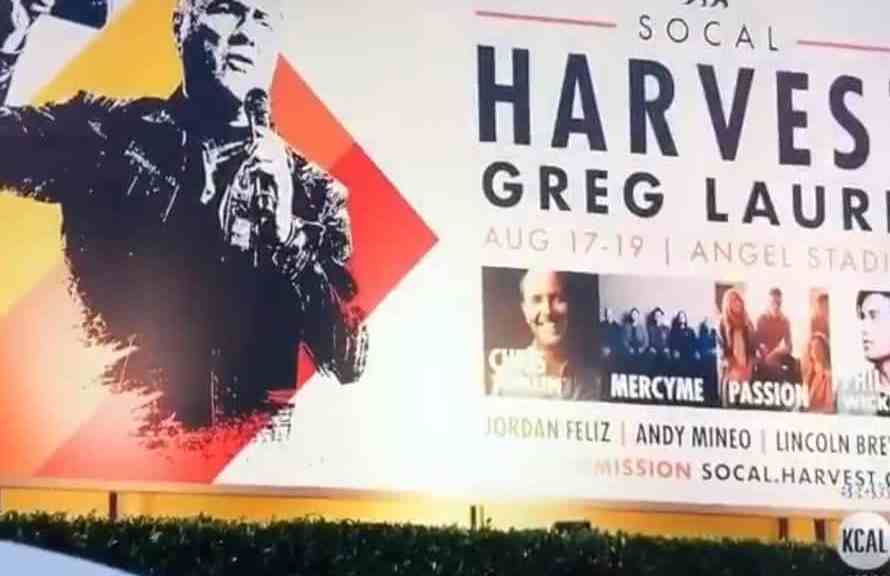
Harvest Ministries; Greg Laurie – The Secret of Success


 That’s the whole story. Here now is my final conclusion: Fear God and obey his commands, for this is everyone’s duty. 

—Ecclesiastes 12:13

Scripture:

It is my belief that one of the reasons for the great success of the United States of America over our 250-year history can be found in our origins, the fact that our nation’s founding was deeply shaped by a belief that liberty depends on moral virtue, and many of the founders saw biblical faith as essential to that virtue.

Now that certainly is a far cry from where we are today. But we desperately need a biblical worldview today, and we desperately need to follow God’s commandments.

We can either accept the truths of Scripture or fight against them as a nation and as individuals. And, I might add, we will reap the inevitable results.

As Vance Havner, a preacher and revivalist, once said, “We speak of ‘breaking the laws of God’ but actually we cannot break them. If you jump from the Empire State Building you don’t break the law of gravitation—you just break your neck! The Ten Commandments stand today, unchanged and unchangeable. When we violate them, we suffer. What we sow, we reap. God is not mocked. When we crash into the pillars of God’s eternal principles, we are smashed but the pillars remain standing.”

He’s right. You can’t break the laws of God, but you will break yourself against them. You can buck against these truths and say, “These don’t apply to me, and I will live the way I want to live.” Or you can see the wisdom God has in giving these commandments to us.

The author of Ecclesiastes could not be any clearer on the matter. “That’s the whole story. Here now is my final conclusion: Fear God and obey his commands, for this is everyone’s duty” (Ecclesiastes 12:13 NLT).

But obeying God’s commands is more than a duty; it’s also an opportunity. Remember, God created us. He knows exactly how we’re wired and what’s best for us. His commands are one of the means He uses to help us discover what’s best for us.

His commands are intended not to restrict us but rather to allow us to enjoy life to the fullest, as He intends. They show us the way to experience soul-deep joy—the kind of joy that doesn’t depend on circumstances or moods. His commands also point the way toward genuine fulfillment and the peace that comes from knowing that we’re doing what we were created to do.

God’s commands keep us in spiritual balance. Obedience is essential to our relationship with our heavenly Father. When we prioritize His instructions and live according to His principles, we enjoy His blessings.

Likewise, our country was created to honor God’s commandments. Until we begin to prioritize them again, we will not fulfill the destiny He has for us.

It’s our choice. We can do it the easy way, or we can do it the hard way.


Reflection question: What helped you recognize the wisdom in obeying God’s commands? Discuss this with believers like you on Harvest Discipleship!


Harvest.org | Greg Laurie

Days of Praise – Come Thou Fount


by John D. Morris, Ph.D.

“And he said unto me, It is done. I am Alpha and Omega, the beginning and the end. I will give unto him that is athirst of the fountain of the water of life freely.” (Revelation 21:6)

Promises of God’s fountain of blessings fill Scripture. They beckon our prayers for fulfillment, not only in heaven but even now. Christ assured us that “I am come that they might have life, and that they might have it more abundantly” (John 10:10). The precious hymn “Come Thou Fount” reminds us of our position of blessing in Christ. The first verse says:

Come, thou Fount of every blessing,
tune my heart to sing thy grace;
Streams of mercy, never ceasing,
call for songs of loudest praise.
Teach me some melodious sonnet,
sung by flaming tongues above.
Praise the mount! I’m fixed upon it,
mount of thy redeeming love.

God acts toward believers in grace and mercy, not deserved justice, eliciting praise from the recipients. His “fount” assures us that He “is able to do exceeding abundantly above all that we ask or think” (Ephesians 3:20).

We look forward to singing and praising our Lord with the angelic “flaming tongues” above for all eternity. “The four and twenty elders fall down before him that sat on the throne, and worship him that liveth for ever and ever . . . saying, Thou art worthy, O Lord, to receive glory and honour and power: for thou hast created all things, and for thy pleasure they are and were created” (Revelation 4:10–11). “I heard the voice of many angels . . . saying with a loud voice, Worthy is the Lamb that was slain to receive power, and riches, and wisdom, and strength, and honor, and glory, and blessing” (5:11–12).

Even so, come Thou Fount. JDM


https://www.icr.org/articles/type/6

Joyce Meyer – God Wants You to Enjoy Life


He who did not withhold or spare [even] His own Son but gave Him up for us all, will He not also with Him freely and graciously give us all [other] things?

Romans 8:32 (AMPC)

Some people seem to have the idea that to be a Christian they have to give up everything they enjoy, but that is not true. God is love, He is good, and He wants us to enjoy good things. The Bible says God gives us all things ceaselessly to enjoy (1 Timothy 6:17). God loves us so much, He sent His Son, Jesus, to earth to take our sins and give us life, and life more abundantly (John 3:16; 10:10). That’s something to be forever grateful for! Anything God teaches us not to do is only for our benefit. We obey His commands for our own good according to the Word of God.

When we receive Jesus, we receive the kingdom of God within us, and that kingdom is righteousness, peace, and joy in the Holy Spirit (Romans 14:17). We can choose to continue living with misery, depression, discouragement, fear, worry, anxiety, guilt, and condemnation, but Jesus wants us to receive freedom from those things. God doesn’t want us carrying them around any longer. Through Jesus, we can live the joyful, overcoming, abundant life we were meant to live.

Prayer of the Day: Father, help me to realize that You have nothing but good things in store for my life. Thank You that even when You correct and instruct me, You are showing me a better way to live. I am grateful for Your goodness and the joyful life I can experience in You.


http://www.joycemeyer.org


Today in the Word – Moody Bible Institute – The Golden Rule


Read Matthew 7:9–12

As I was writing this devotional, my daughter celebrated a birthday. I selected the perfect gift and wrapped it—a rock from our backyard. No. Of course not. What kind of father would do that? Instead, I gave her something called a Squishmallow, a gift I knew she would love.

As Jesus pointed out, if human fathers know how to love their children, how much more does our heavenly Father love us! Our confidence to ask, seek, and knock (as we learned yesterday) is ultimately rooted in the goodness and love of our Father God (vv. 9–11). If our child asked us for bread, we would not give them a stone. Why not? Because we love them and want the best for them. Once again, Jesus was arguing from the smaller to the greater: If we, sinners though we are, know how to give good gifts to our children, how much more will God do the same! So why are we afraid to trust Him?

This is a humbling analogy for us. We know how to give good gifts to our children even though we’re evil (v. 11). Ouch. And that’s a best-case scenario. We all know that some parents do treat their children in truly evil ways. God never does so.

Jesus concluded: “So in everything, do to others what you would have them do to you, for this sums up the Law and the Prophets” (v. 12). This is sometimes called the Golden Rule. If applied, it would definitely slow down our tendency to judge (v. 1)! It’s not just an ethical idea that sounds fair. As we see here, in context, it’s based on the goodness of God: Since God does good things for us, we should do good things for others.

Go Deeper

Why does Jesus tell us that we can fully depend on God? In what ways can we better trust the Lord to be the good and loving Father He is?

Pray with Us

Righteous Father, we look to You in humble gratitude for all that You have given us. Lead us to love others as You love us.

Do to others what you would have them do to you.Matthew 7:12


https://www.moodybible.org/

Democrats Are Walking Into a Minefield

Analysis of Democrats’ challenges and Republicans’ advantages leading to 2026-2028 elections.


Here’s my minority position – I think Republicans are set to do surprisingly well in the 2026 midterms and very, very well in 2028. Oh, I don’t put it beyond the Republicans to screw up any advantage they’ve been handed. Republicans have the uncanny ability to squander a good thing, but what the Democrats are handing over is pure electoral gold. If you look at the relative positioning of both parties in terms of future electoral success, there is zero question that the Republican Party is much better situated to begin a lengthy sojourn in power. The Democrats have walked themselves into a minefield, and they’ve got no map.

The first land mine is an obvious one, but that’s not going to stop them from stomping on it. The Democrats are going harder and harder left. Right now, the success of the socialist insurgents has been limited to deep blue districts. Where they try to do it in more purple areas, they have more mixed success. In Virginia, they managed to elect a sociopath as AG who wants to kill the kids of Republicans to teach them to be good people. It didn’t work in Maine, though; Herr Platner got punted after he was accused of going a rape too far.

Normal Americans don’t like the weird stuff Democrats are getting into. There’s the transsexual stuff, of course. Normal Americans are getting tired of that freak show, but Democrats are doubling and tripling down on it. It’s become a litmus test for them, depriving them of crucial flexibility. They need to reach out to normal people who don’t think some dude should be sporting his turgid pride as he walks through a girl’s locker room. But also, there’s their whole thing about criminals. Normal people are against being murdered. Democrats are going to get painted as enabling the worst of social pathologies, just like they did in the 70s, which helped Ronald Reagan and the GOP take over until Bill Clinton came along and was able to lead a Democrat Party back to at least a semblance of sanity.

There’s a procedural land mine that President Trump has been talking about for years – election fraud. Fraud is a huge part of how they win. It is not going to go away in one fell swoop – the GOP simps are too weak to pass the SAVE Act – but it’s going to be curbed over time. Take voter ID – it is unsustainable for the Democrats to keep to the 20 side of an 80/20 issue forever. Nor can Democrat judges sitting in the Tatooine Federal District Court protect the fraud forever. Between the reforms Trump can impose (it looks like his mail-in voting postal regulations are going into effect), the revelations from the multiple investigations, and the reputational damage to Democrats defending shady practices (is California still counting from last June?), we’re going to end a lot of the scams and run down their reputations as the die on the hill of protecting the remaining grifts.

Another land mine is the swap out at the top of the Democrats’ racial hierarchy. Democrats have always been about constituencies, knitting them together to form a majority. But it’s always in flux. The white working class used to be a big piece of the puzzle, and the Democrats dumped them. In the last few cycles, Democrats have lost their headlock on Hispanics, who don’t appreciate weirdness, and many of whom have personal experience with communism. There’s a lot of talk about how Dems grabbed the affluent college-educated whites who used to be Republican voters, and that’s true, to an extent. But a lot of these are wine women, particularly single ones and including young ones, and they’re psychotic and will further alienate normal people (married women still prefer Republicans).

But the big problem for Democrats is their biggest and most loyal constituency, blacks. We’re already seeing the fallout in Texas, where the darling of the faculty/Chardonnay set, heretical imp James Talarico, defeated noted particle physicist Jasmine Crockett in the Senate primary. Well, Jazzy C and black Texans aren’t taking that very well. They believe, not without merit, that they have been ripped off. And they have been. Democrats take blacks for granted, which is the fault of blacks because they’ve allowed themselves, until now, to be taken for granted. But a black woman just roasted Talarico at one of his rallies, bringing this to a head. He’s already a problem because, well, blacks tend to be religious, and this guy is a blasphemous demon in human form who spreads satanic lies that will lead the unwary to eternal damnation. Black folk aren’t down with that. And it’s only going to get worse for the Democrats because blacks across the country are going to demand their share of the power, power that the ascendant leftists want for themselves.

There is another land mine, the baby bomb. Democrats aren’t breeding like conservatives. A lot of them are single women who have no intention of settling down and having children; when they do get knocked up, abortion remains readily available in blue states, and they make use of it. This blends with another problem for the Democrats, which is that a lot of their boomer base is aging out. If you recall those rallies for the Nazi tattoo guy, behind him on stage were always a bunch of gray crones who all looked like Billy Jack’s girlfriend. They’re not going to be around that much longer, and they are some of the Dems’ most devoted voters. Gen X is much more conservative; we have the advantage of being around for another couple of decades.

And there are other effects that come from Democrats not reproducing, besides upping the average IQ and attractiveness of Americans. The birth dearth means fewer kids being indoctrinated in grade schools and colleges. Academia is where the Democrats not only found places for their members to get paid but gave them a chance to corrupt our youth. But fewer kids mean fewer unionized teachers paying union dues, while a lot of colleges are going away in the bankruptcy. That’s fewer dollars and fewer worker bees making mischief. Combined with new technology that is making old education methods obsolete, as well as cost considerations and conservative attention that is going to work to undermine the leftist hold on these institutions, academia writ large is going to stop being so influential. Democrats have become fatally over-invested in their own version of the buggy whip industry.

Here are some other things that the Democrats might find blow them up. The mainstream media may dismiss the government handout fraud stuff that we’ve been seeing, but fraud resonates. From California’s high-speed rail that’s cost billions of dollars and built about 15 inches of track, to massive Somali learing center schemes, to corrupt USAID payoffs to leftist NGOs and beyond, the crackdown is both going to starve the Democrats of money looted from the treasury and laundered into the pockets of the left and closely associated Democrats with fraud in the minds of the voters.

Then there’s something they really can blame on the Jews. The Dems will have to deal with Jews’ sense of self-preservation as the Democrats fully embrace their new Hamas constituency and work to ensure Israel and the Israelis are annihilated. That’s not putting it too harshly – if you’re Jewish, you can’t take any threat too seriously, and this is a threat. Jewish Democrats are enormous donors to the Democrat Party, and that flow of dollars is going to shrink to a trickle that’s not going to be made up by a bunch of new Dems just imported from Goatbangistan. The money might not go to Republicans – that’s a bridge too far for a lot of liberal Jews – but it isn’t going to the Palisimpian Democrats. We’ve seen massive shortfalls in Democrat donations this cycle, and that was before half of the House Democrat caucus voted to render Israel defenseless in the face of the psychopaths who committed the October 7th attacks.

And when that grotesque regime’s collapse accelerates, a lot of DI officials are going to want to ensure that they don’t swing from a lamppost or worse. I married a Cuban–they’re not a forgiving people, and they’re going to make the people who oppressed them pay. So, if you’re a high-ranking DI officer, you’re going to want to make American intelligence an offer it can’t refuse to save your worthless hide, and that means trading stolen records on the DI’s intelligence network in the United States that includes prominent Democrats. That’s going to happen, and it’s going to be earth-shattering. People throw the word “treason” around a lot, but working with the communists to subvert the United States is literally treason, and it’s been happening. Do not expect the Trump administration to forgive and forget, and even the regime media is going to be unable to hide the indictments. The Democrats will, correctly, be painted as the party of traitors.

Let’s also not forget the collapse of captured institutions. We mentioned academia’s decline, but look at the mainstream media and Hollywood. Both are going away. Moreover, the decades of corporate footsie with Democrats will end as the business world realizes that the DSA types can’t be bought off like the old school Pelosi Dems could be. Plus, there is a generalized anti-woke counter-reaction that places PC Democrats with their spouting off on woke nonsense outside of the zeitgeist. Their own base won’t let them moderate; they’ll be telling us dudes can menstruate for another decade even as over-it normals shake their heads in disgust.

But then again, we are Republicans, and the fact remains that the Republican Party is the only party that can summon up enough dumb to squander these advantages.


Kurt Schlichter  | Jul 23, 2026


Source: Democrats Are Walking Into a Minefield

Turning Point; David Jeremiah – The Spirit Chapter


NEW!Listen Now

The mind governed by the flesh is death, but the mind governed by the Spirit is life and peace.
Romans 8:6, NIV

Recommended Reading: Romans 8:1-9

Some chapters of the Bible are special enough to have nicknames. We call Hebrews 11 the Faith Chapter of the Bible. We think of 1 Corinthians 13 as the Love Chapter. Psalm 23 is the Shepherd’s Psalm. We consider Romans 8 the Holy Spirit Chapter of the Bible. The Spirit is mentioned twice in the first seven chapters of Romans. In Romans 8, the Holy Spirit is mentioned about twenty times.

When our mind is governed by the Spirit, a peace floods our hearts. The Spirit takes the verses of the Bible which we have been studying, and He makes them real to us. We learn to set our minds on Christ and turn our thoughts to things above.

When we have fears and doubts, we can experience the peace of God as the Holy Spirit manifests the life of Christ in and through us. Jesus sent the Holy Spirit to come alongside us to comfort and encourage us. Take steps to make sure your mind is governed by the Spirit. Focus on Scripture. Let the truth of God establish your steps.

The Holy Spirit hath given us relief…by supplying us with a rule of the interpretation of Scripture.
John Owen


https://www.davidjeremiah.org

Our Daily Bread – Anchored in God


We have this hope as an anchor for the soul. Hebrews 6:19

Today’s Scripture

Hebrews 6:17-20

Listen to Today’s Devotion

Apple LinkSpotify Link

Today’s Devotion

It’s morning, so my husband opens his phone to select his favorite gospel song, “My Soul Is Anchored.” The lyrics express hope in God in turbulent times. Dan sings along, the words warning of billows rolling and breakers dashing. But we don’t sway, the song says, because God holds us fast.

The words perfectly describe the work of a ship’s anchor. An anchor steadies a vessel by sinking its “arms” into the seabed, keeping the ship from drifting or getting tossed about during a violent squall.

The anchor has become a classic symbol of the Christian faith—reflecting our hope in Christ, to whom we hold tightly, even in life’s chaos. As the writer of Hebrews said, “We have this hope as an anchor for the soul, firm and secure” (Hebrews 6:19). This hope is Jesus, whose “unchanging nature” (v. 17) is a trusted holding ground for those who believe in Him. Moreover, what God promised He confirmed with an oath, and in these “two unchangeable things . . . it’s impossible for God to lie” (vv. 17-18). That’s why we who hold on to His promises “may be greatly encouraged” (v. 18).

Some may anchor in unreliable things—their own ambition, unhealthy friends, or negative habits. How much better to anchor in the one whom we know we can trust and depend on. When the waves crash around us, we’ll be held fast. Our soul is anchored in God.

Reflect & Pray

In what stormy sea of life have you held tightly to God? Why is He a trustworthy holding ground?

I’m holding tight to You, dear God. Thank you for anchoring my soul amid all of life’s currents.

Today’s Insights

The word translated “anchor” (ankyra) in Hebrews 6:19 is used four times in the New Testament. Three times the reference is to a ship’s anchor (Acts 27:29, 30, 40), a weighted iron connected to a rope or cable used to keep a ship in place. The figurative usage in Hebrews 6:19 speaks of the reliability and trustworthiness of God’s promises and their impact on our soul. Other word pictures are used throughout Scripture to depict the dependability of God, who cannot lie (v. 18). In Psalm 18:1-2, David leads with the word rock and then uses metaphors to celebrate God as his strength: “I love you, Lord, my strength. The Lord is my rock, my fortress and my deliverer; my God is my rock, in whom I take refuge, my shield and the horn of my salvation, my stronghold.” Today, God is still the anchor for our soul, and we can trust Him.


http://www.odb.org

Scriptures, Lessons, News and Links to help you survive.