Joyce Meyer – God Is Listening


Then those who feared the Lord talked often one to another; and the Lord listened and heard it, and a book of remembrance was written before Him of those who reverenced and worshipfully feared the Lord and who thought on His name.

Malachi 3:16 (AMPC)

Today’s verse says God likes conversations in which we talk about how good He is. When He hears them, He gets out His book of remembrance and records them. He does not record our murmuring, grumbling, or complaining, but He records the words we speak when praise is on our lips.

Just think about how you would feel if you overheard your children saying, “Our mom is awesome. We have the greatest mother in the world. Don’t we have the most incredible mom and dad? They’re the best parents around!” I am sure that if you witnessed such a conversation between your children, you could hardly wait to bless them. But, on the other hand, what if you walked into a room and your children were saying, “I’m so sick and tired of Mom and Dad. They never do anything for us. They’ve got all these rules. They don’t want us to have any fun. Mom always nags us and makes us do our homework. If our parents really loved us, they would give us what we want, not what they think is best.” Our lives with God are no different than the two scenarios I have described above. We are God’s children! He hears everything we say and He knows what is in our hearts even when we don’t say it. What does He want to hear us talking about? How great He is! How awesome He is! The wonderful things He’s done, can do, and will do! Speak well of God, from your heart, and you create an atmosphere for God to speak to you.

Prayer of the Day: Lord, help me speak words that honor You. Fill my heart with gratitude and teach me to praise You in every situation. Let my words reflect Your goodness, amen.


http://www.joycemeyer.org

Turning Point; David Jeremiah – The Great Outdoors: Nature Reflects God’s Peace


NEW!Listen Now

For you shall go out with joy, and be led out with peace; the mountains and the hills shall break forth into singing before you, and all the trees of the field shall clap their hands.
Isaiah 55:12

Recommended Reading: Isaiah 55:10-13

Every single day millions of people play ocean sounds from their music streaming services for relaxation, sleep, and ambient noise. The repetitive sounds of waves crashing and receding calm us. Psychologists have noticed that recurring ocean sounds resemble actual biological rhythms such as breathing and heartbeat patterns. The Lord has built these peaceful patterns into His creation for our benefit.

It’s true that nature was diminished by Adam’s sin in Genesis 3. Weeds now grow naturally while crops must be cultivated. Natural disasters occur. But the genius of God’s creative ability still shines through. What restoring, refreshing moments we experience when we sit in the sunshine, gaze across a mountain vista, or even hear the birds chirping! Being outdoors is good for us physically and mentally. There’s value to sitting on the porch or patio watching the sunrise or sunset. Puttering in the backyard or hiking in the forest is therapy for the soul.

This summer find a way to let God’s vast outdoors bring peace and joy to you!

Spending time outside, enjoying God’s creation is good for us.
Gemma Hunt


https://www.davidjeremiah.org

Our Daily Bread – Dependent on God’s Strength


My grace is sufficient for you, for my power is made perfect in weakness. 2 Corinthians 12:9

Today’s Scripture

2 Corinthians 11:23-29

Listen to Today’s Devotion

Apple LinkSpotify Link

Today’s Devotion

Tungsten is something of a paradox. It has the highest tensile strength of any pure element, making it extremely difficult to pull apart. But the Mead Metals website notes, “In terms of impact strength, tungsten is weak—it’s a brittle metal known to shatter on impact.” It’s fascinating that tungsten, the strongest natural metal, is also so weak and brittle.

Human beings display a similar characteristic. Though capable of great strength both physically and mentally, we’re easily crushed under the weight of this fallen, broken world. Paul experienced this personally. In 2 Corinthians 11, he described experiences that overwhelmed him (vv. 23-29). But God encouraged him, “My grace is sufficient for you, for my power is made perfect in weakness.” Paul resolved, “Therefore I will boast all the more gladly about my weaknesses, so that Christ’s power may rest on me” (2 Corinthians 12:9).

Earlier in 2 Corinthians, Paul had written, “We are hard pressed on every side, but not crushed” (4:8). There’s hope, even though the strongest child of God knows all too well that this world is simply too much for us. We’re happily dependent on the strength of His grace if we are to endure. May we, like Paul, embrace our weaknesses so God’s power can carry us through.

Reflect & Pray

When did you experience a moment that felt like it would crush you? How will you rest in God’s strength the next time you’re in a crisis?

Dear Father, please help me to rest in Your strength to carry me through life’s crushing moments.

Today’s Insights

When we feel weak and powerless, God wants us to turn to Him. As Isaiah wrote, our “everlasting God, the Creator of the [earth],” doesn’t “grow tired or weary” (Isaiah 40:28). “He gives strength to the weary and increases the power of the weak” (v. 29). When we put our trust in Him, He renews our strength (v. 31).

Paul reminds us that when we turn to God in our weakness, we can rejoice because through our weakness God’s power is seen (2 Corinthians 11:29-30; 12:9). Romans tells us that “the Spirit helps us in our weakness” and “intercedes for us” even when we don’t know how we should pray (8:26). We can find hope, comfort, and joy “through him who gives [us] strength” (Philippians 4:13). God provides what we truly need to persevere and to live for and serve Him.

Learn more about how God can be our strength.


http://www.odb.org

Denison Forum – SpaceX to make Elon Musk the world’s first trillionaire


SpaceX will launch the largest public offering in history today, valuing the company at $1.77 trillion. The company’s founder, Elon Musk, owns roughly half of its stock, which would put his personal net worth at more than $1 trillion when combined with his stakes in Tesla, The Boring Company, Neuralink, and other ventures.

While Musk was already the richest man in the world, he is now set to become wealthier than the next four richest people combined. That kind of wealth is difficult to fathom, but these figures might help make the point:

  • Since he co-founded the first of his US tech and engineering companies 31 years ago, Musk has amassed an average of roughly $59,492 per minute, totaling $3.6 million per hour and $602 million per week.
  • His net worth exceeds that of 125 countries.
  • His fortune is equal to 3 percent of the US GDP.
  • He could buy every team in the NFL and the NBA with $500 billion left over.

And if you’re still having trouble appreciating just how large $1 trillion is, perhaps the best way to convey its magnitude is to think of it in terms of time. One million seconds is equal to roughly 11.5 days. By comparison, 1 billion seconds amounts to 31 years and 8 months, while 1 trillion seconds equals 31,688 years.

Continue reading Denison Forum – SpaceX to make Elon Musk the world’s first trillionaire

Harvest Ministries; Greg Laurie – A Heart Undivided


 God blesses those whose hearts are pure, for they will see God. 

—Matthew 5:8

Scripture:

The apostle Paul wrote,

“I don’t mean to say that I have already achieved these things or that I have already reached perfection. But I press on to possess that perfection for which Christ Jesus first possessed me. No, dear brothers and sisters, I have not achieved it, but I focus on this one thing: Forgetting the past and looking forward to what lies ahead, I press on to reach the end of the race and receive the heavenly prize for which God, through Christ Jesus, is calling us.” (Philippians 3:12–14 NLT)


This is a prime example of a person with an undivided heart. Many of us today could say, “I focus on these eight things” or “I focus on these four things,” instead of saying, “I focus on this one thing.” Such is the problem of a divided heart.

Jesus emphasized the importance of an undivided heart in His Sermon on the Mount. He said, “God blesses those whose hearts are pure, for they will see God” (Matthew 5:8 NLT). The word pure in this context means “undivided.” In other words, blessed, or happy, are the people who have a singular focus. Happy are the people who strive to maintain a pure heart. Happy are the people who know where they’re going in life, who have priorities and live by them. Happy are the people who aren’t trying to live in two different worlds.

The apostle Peter explained why trying to live in two different worlds isn’t an option for believers: “But you are not like that, for you are a chosen people. You are royal priests, a holy nation, God’s very own possession. As a result, you can show others the goodness of God, for he called you out of the darkness into his wonderful light” (1 Peter 2:9 NLT).

We live in a wicked time, one in which we’re exposed to countless things that are spiritually harmful. This presents a serious problem for believers. As Paul wrote in Romans 16:19, “I want you to be wise in doing right and to stay innocent of any wrong.”

Paul makes the case for an undivided heart in Colossians 3:1–4:


“Since you have been raised to new life with Christ, set your sights on the realities of heaven, where Christ sits in the place of honor at God’s right hand. Think about the things of heaven, not the things of earth. For you died to this life, and your real life is hidden with Christ in God. And when Christ, who is your life, is revealed to the whole world, you will share in all his glory” (NLT).


God is offering you true happiness—happiness that’s not contingent on how much you have but on whom you know. If you don’t align your life properly with God, you will always be chasing an elusive dream. But if you do align your life with Him and pursue His will, you’ll find purpose in life. You’ll find the happiness you’re seeking.


Reflection question: What would an undivided heart look like in your life?Discuss this with believers like you on Harvest Discipleship!


Harvest.org | Greg Laurie

Days of Praise – The Proverbial Tongue


by Henry M. Morris, Ph.D.

“In the multitude of words there wanteth not sin: but he that refraineth his lips is wise.” (Proverbs 10:19)

The book of Proverbs has much wise counsel concerning the use of the tongue. It contains, for example, no less than 27 sober warnings against speaking lies! There are also at least eight condemnations of gossiping, such as “A talebearer revealeth secrets: but he that is of a faithful spirit concealeth the matter” (11:13).

Then there are warnings against using the tongue to criticize, slander, or hurt. A good example is in 12:18: “There is that speaketh like the piercings of a sword: but the tongue of the wise is health.” And 18:8 says, “The words of a talebearer are as wounds, and they go down into the innermost parts of the belly.”

Too much talking is also dangerous, as our text for the day points out, for it often results in sin. In this connection, one of the most picturesque proverbs is the following: “A continual dropping in a very rainy day and a contentious woman are alike” (27:15). The virtues of silence are graphically pointed out in 17:27–28: “He that hath knowledge spareth his words . . . . Even a fool, when he holdeth his peace, is counted wise: and he that shutteth his lips is esteemed a man of understanding.”

Similarly, there are many promised blessings to those who speak carefully and graciously: “A word fitly spoken is like apples of gold in pictures of silver” (25:11). “The wise in heart shall be called prudent: and the sweetness of the lips increaseth learning” (16:21). “A wholesome tongue is a tree of life” (15:4). “The tongue of the just is as choice silver” (10:20). “A soft answer turneth away wrath” (15:1). “A word spoken in due season, how good is it!” (15:23).

May we, indeed, learn to make our speech like choice silver, apples of gold, and a tree of life! HMM


https://www.icr.org/articles/type/6

Joyce Meyer – The Joy of the Lord Is Your Strength


…Do not sorrow, for the joy of the Lord is your strength.

Nehemiah 8:10 (NKJV)

Even though Satan comes only to bring destruction, Jesus came so we might have and enjoy our lives (John 10:10). I was at least 45 years old before I ever let myself enjoy my life. Because of growing up in incest and a joyless atmosphere, I developed the habit of merely trying to survive each day. It never occurred to me that one of the reasons Jesus died and rose from the dead was so we could all enjoy our lives. Due to sexual abuse, I never really got to experience being a child. God actually had to teach me how to enjoy life.

I felt guilty most of the time. If it wasn’t one thing, it was another; but it was all a result of my childhood. I had a wounded soul and needed Jesus to heal it, and He did. He gave me beauty for ashes and the oil of joy for mourning (Isaiah 61:3).

God’s will is for us to enjoy every day of our lives. I have good news for you: Even while you are having trials and problems, you can cast the care of them onto God (1 Peter 5:7) and still enjoy your life. The joy of the Lord is your strength (Nehemiah 8:10). Satan does all he possibly can to steal your joy because he wants us to be weak and powerless. Don’t let him win. Enjoy life and laugh as often as you can. I’m sure the devil hates to hear us laugh.

Prayer of the Day: Lord, heal my heart and restore my joy. Help me release the past, trust You in every season, and choose to enjoy the life You’ve given me, amen.


http://www.joycemeyer.org

Today in the Word – Moody Bible Institute – Life in Community


Read 1 Peter 3:8–12

Conflict in the church is so common that some people even joke about it, like a church splitting over the color of the carpet. Indeed, church history is littered with examples of division. Even so, Jesus claimed, “By this everyone will know that you are my disciples, if you love one another” (John 13:35).

In 1 Peter 3, Peter calls the church to lean hard into this truth. Peter has been talking about how Christians relate to outsiders. Here, he shifts to address the church community. We are to be like-minded, sympathetic, loving, compassionate, and humble (v. 8). Humility helps enable the rest with Jesus as our example. On the night He was betrayed, Jesus washed the disciples’ feet. Taking the role of a servant, Jesus performed a powerful object lesson. “I have set you an example that you should do as I have done for you” (John 13:15). Following Jesus, we are to be sympathetic and loving toward one another.

When conflict arises, our tendency is to fight for our position, especially if we feel we have been treated unjustly. Yet, Peter presents a different way, “Do not repay evil with evil or insult with insult” (v. 9). Jesus had taught Peter that believers were called to love even their enemies (Matt. 5:44). When evil was done to them, they were to repay it—with blessing (v. 9)!

Our speech should be used to build others up and bring life, not tear down and destroy (v. 10). This is only possible because of the Spirit of God at work within us. It is also grounded in the knowledge that God is sovereign, He cares for the righteous, and is “against those who do evil” (v. 12). With faith in God’s fatherly care, we can be free to love others in this radical way.

Go Deeper

Have you experienced division in the church or between members? What were the root causes? Would humility help resolve those issues?

Pray with Us

Life in community always brings challenges. Jesus, when we stumble into conflict, show us how to repay evil with blessing. Give us self-control to build up and bring life with our words and actions.

Do not repay evil with evil or insult with insult.1 Peter 3:9


https://www.moodybible.org/

Turning Point; David Jeremiah – Do Not Grieve


NEW!Listen Now

And do not grieve the Holy Spirit of God, by whom you were sealed for the day of redemption.
Ephesians 4:30

Recommended Reading: 1 John 1:8-9

Everyone knows what it feels like to experience grief or pain and to inflict grief or pain on another person. Ephesians 4:30 is an important verse about the Holy Spirit being a person rather than an impersonal force. Only a person can be grieved.

To determine what can grieve the Holy Spirit, we only need to read the verses surrounding Ephesians 4:30. Paul warns against unwholesome speech (verse 29) and actions such as bitterness, rage, anger, brawling, slander, and malice (verse 31, NIV). Instead, we are to be kind, compassionate, and forgiving toward others as God is toward us (verse 32). So acting in a carnal or sinful way can grieve the Holy Spirit, but acting like God—being “imitators of God” (Ephesians 5:1)—will please the Holy Spirit. What should we do when we know we have grieved the Spirit? We must confess our sin and receive God’s forgiveness and cleansing (1 John 1:9).

Don’t delay confession when you realize you have sinned and grieved the Spirit. It is the only way to continue to experience His filling.

We may grieve the Spirit as truly by not joyfully acknowledging His wonders as by not praying to Him.
Robert Murray M’Cheyne


https://www.davidjeremiah.org

Our Daily Bread – Seasons of Love


At just the right time . . . Christ died for us. Romans 5:6-8

Today’s Scripture

Romans 5:6-8

Listen to Today’s Devotion

Apple LinkSpotify Link

Today’s Devotion

Flowers don’t have to be in bloom to be beautiful, says famed landscape designer Piet Oudolf. Even in the dead of winter, the Dutch gardener’s award-winning designs are known for their stunning appeal. “Beauty is in so many things you wouldn’t think of,” Oudolf says, although some may disagree. “The moment you say I love plants that are dead [dormant],” he said, “then you have a problem because people don’t like dead plants.”

Oudolf’s appreciation of plants’ life cycles echoes a core spiritual principle: While we were dead in our sins, God still loved us. “You see,” explained the apostle Paul, “at just the right time, when we were still powerless, Christ died for the ungodly” (Romans 5:6). Paul continued, “God demonstrates His own love for us in this: While we were still sinners, Christ died for us” (v. 8).

Jesus chose disciples with flaws. He ate meals with known sinners. He healed outcasts. Oudolf, likewise, is “interested in plants not only for their flowers, but also for their personality”—seeing beauty “in things that, on first sight, are not beautiful.”

As bearers of God’s image, we show Him to the world in how we relate to Him and each other. Planted in His love, we’re anointed by our Father to bloom anew in Him—once-dead sinners showing His beauty to a world longing for a glimpse of Him.

Reflect & Pray

In what season of your life did God call you? How can you spiritually bloom so others can see His image in you?

You called me when I was dead in my sins, dear God. Thank You for saving me to bloom anew in You.

Today’s Insights

Romans 5:6-10 uses several unflattering terms to describe those who were apart from God: powerless, ungodly, sinners, enemies. Verse 6 says that “when we were still powerless, Christ died for the ungodly.” The Greek word for powerless is asthenēs, which means “without strength,” “feeble,” “weak,” “infirm.” Ungodly is the word asebēs, which describes one who is “destitute of reverential awe toward God.” Paul says that “while we were still sinners, Christ died for us” (v. 8). The Greek word for sinners (hamartōlos) describes one who is “devoted to sin,” “wicked ones.” Finally, the apostle describes those apart from God as enemies (v. 10).

The same passage that highlights human despair, however, includes rays of brilliant hope—God’s love expressed through Jesus’ death (v. 8). Because of God’s love and grace, believers are now alive in Christ and can show His beauty to those around us.

Learn more about evangelism in the Twenty-first Century.


http://www.odb.org

Denison Forum – Was Fidelity Month created to counter Pride Month?


Utah Gov. Spencer Cox, Arkansas Gov. Sarah Huckabee Sanders, and Michigan’s House of Representatives have all proclaimed June as “Fidelity Month.” This emphasis on faith, family, and country began as a grassroots movement started by Robert P. George, McCormick Professor of Jurisprudence and Director of the James Madison Program at Princeton University.

You might think Prof. George initiated Fidelity Month in response to Pride Month, but this is not so. Prof. George explained:

Back in the spring of 2023, I happened to read a report in the Wall Street Journal. It included polling data showing that the belief of Americans in certain core values—values that had traditionally been sources of unity and strength for Americans—had very considerably diminished over the past decade or decade and a half. I’m talking about values such as religion, family, and patriotism.

And these values have indeed been sources of our unity and strength in the United States of America because we are not a nation who can look to a common racial heritage or ethnic heritage, or even a common religious tradition or cultural heritage for our unity and strength. We Americans come from many, many different racial and ethnic backgrounds. We come from different traditions of faith. Our cultural histories are very different. So what do we have in common? What binds us together? Especially when times get tough—what are our sources of unity and strength?

According to Prof. George, “The polling showed that one value had increased in importance in the minds of Americans, and that was money. Religion went down, family went down, country went down, but the belief in the importance of money went up.”

In response, he announced on his Facebook and Twitter accounts, “By the power vested in me by absolutely no one, henceforth the month of June will be Fidelity Month.” The movement he launched has now grown across the nation.

“When you eat and are full”

I believe there is a simple reason our commitment to religion, family, and country has declined as the importance of money has risen. Think of the first three as one side of a seesaw and the fourth as the other. The higher our love for God, family, and country, the lower our love for money as a mere means to these ends. The reverse is true as well.

Why is this?

In Deuteronomy 6, Moses warned the Israelites as they prepared to enter their promised land:

When the Lᴏʀᴅ your God brings you into the land that he swore to your fathers, to Abraham, to Isaac, and to Jacob, to give you—with great and good cities that you did not build, and houses full of all good things that you did not fill, and cisterns that you did not dig, and vineyards and olive trees that you did not plant—and when you eat and are full, then take care lest you forget the Lᴏʀᴅ, who brought you out of the land of Egypt, out of the house of slavery (vv. 10–12).

But this makes no sense. If the people built nothing they are about to own and enjoy, if God provided it all, why would they “forget” him when they “eat and are full”?

For the same reason we do: Humans want to be our own god (Genesis 3:5). We want to be self-reliant so no one can take away what we rely upon. We want to own what we have as if we deserve it, lest it be taken from us and given to those who deserve it more.

The more religious among us are willing and sometimes even glad to give some of what we have to God and his projects. We will give time, money, and service to causes we deem worthy.

But make no mistake: it is our time, our money, and our service we are donating. We begin each day as the rightful owners of the next twenty-four hours and choose where and how to spend “our” time through “our” day.

Nothing I wrote in the last paragraph is true.

Born in Houston and not Pyongyang

Paul asked, “What do you have that you did not receive? If then you received it, why do you boast as if you did not receive it?” (1 Corinthians 4:7).

Did you have anything to do with your conception and birth? Can you manufacture the next minute of your life? Do you “own” anything in this world that God Almighty cannot take from you this moment?

I was born to loving parents, a privilege many do not experience. The abilities with which I work were given to me apart from any merit on my part. I have had opportunities that much of the world’s population has not, through no fault of their own.

I did nothing to be born in Houston, Texas, and not Pyongyang, North Korea.

The fact that I do not have pancreatic cancer (so far as I know) and Ben Sasse does is no merit on my part or demerit on his. In short, my life is a gift, as is yours.

Fidelity to God’s purpose during Fidelity Month and all year long is therefore an appropriate expression of gratitude for his grace.

Wouldn’t you agree?

Quote for the day:

“God desires from us more fidelity to the little things that he places in our power than ardor for great things that do not depend upon us.” — St. Francis de Sales

Our latest website resources:


Denison Forum

Harvest Ministries; Greg Laurie – Poor in Spirit, Rich in Blessings


 Blessed are the poor in spirit, for theirs is the kingdom of heaven. 

—Matthew 5:3

Jesus began His Sermon on the Mount with these words: “Blessed are the poor in spirit, for theirs is the kingdom of heaven” (Matthew 5:3 NKJV). The word translated as poor comes from a verb that means “to shrink, cower, or cringe.” It describes a destitute person or someone who is completely dependent on others for help.

You’ll notice, however, that Jesus didn’t just say, “Blessed are the poor.” He said, “Blessed are the poor in spirit.” Jesus wasn’t addressing people’s economic situation but rather their spiritual condition. Let’s not miss the implications of His words. Blessed, or happy, are the people who recognize their spiritual poverty apart from God. Blessed, or happy, are those who recognize what they really are in God’s sight: lost, hopeless, and helpless.

Apart from Jesus Christ, everyone is spiritually poor. Regardless of our education, accomplishments, or religious knowledge, we’re all spiritually destitute. We may be tempted to look at someone who’s in prison or who’s down and out or who’s struggling with drug addiction and think, “Now, there’s someone who’s spiritually destitute.” We may be tempted to compare ourselves favorably with them. Maybe we’ve lived a relatively refined life. Maybe we have a good education or have accomplished certain things. If so, we may conclude, “I’m not as destitute as that person.” In one sense, that may be true. But in another sense, it isn’t true at all.

Before God, all people are spiritually destitute and unable to help themselves. Some people have a hard time admitting this. It’s difficult for us to acknowledge we need to reach out to God and need His forgiveness. We prefer the illusion of being spiritually self-sufficient, of being good enough in and of ourselves.

But the Bible doesn’t give us that option. What do we have to offer God—our righteousness? Romans 3:10 says, “No one is righteous—not even one” (NLT).

Our good works? Isaiah 64:6 says, “We are all infected and impure with sin. When we display our righteous deeds, they are nothing but filthy rags” (NLT).

The only thing we can offer God is our sincere humility. James 4:10 says, “Humble yourselves before the Lord, and he will lift you up in honor” (NLT). To receive the blessings Jesus talked about, we must embrace our status as being poor in spirit.

We were created to bring glory to God, not to ourselves. When we prioritize Him by humbling ourselves, we connect to our original purpose. We find a soul-deep sense of satisfaction and fulfillment. We discover our spiritual potential when we acknowledge our spiritual poverty.


Reflection question: How do you maintain a spirit of humility in your relationship with God? Discuss this with believers like you on Harvest Discipleship!


Harvest.org | Greg Laurie

Days of Praise – Things to Beware


by Henry M. Morris, Ph.D.

“Beware of false prophets, which come to you in sheep’s clothing, but inwardly they are ravening wolves.” (Matthew 7:15)

There are three Greek words translated “beware,” all of which stress watchfulness and potential danger. In a world under the control of Satan, there are many of his devices that can deceive and undermine the faith and life of the unwary Christian.

Our text cautions against false prophets who appear to be true prophets (or teachers, or pastors) but whose apparently spiritual teachings subvert biblical truth. John warns that “many false prophets are gone out into the world” (14:1), and Jesus said they “shall deceive many” (Matthew 24:11). Jesus also warned that His followers should “beware of . . . the doctrine of the Pharisees and of the Sadducees” (Matthew 16:12). These sects have their respective modern counterparts in the hypocrisy of legalists and the skepticism of liberals, both of which are destructive of true biblical faith and life.

Very relevant to today’s humanistic intellectualism is the warning of Colossians 2:8: “Beware lest any man spoil you through philosophy and vain deceit, after the tradition of men, after the rudiments of the world, and not after Christ.”

Finally, the apostle Peter says, “Beware lest ye also, being led away with the error of the wicked, fall from your own steadfastness” (2 Peter 3:17). In context, Peter is referring to those Christian brethren who have distorted the Scriptures in order to seek an accommodation with the naturalistic worldview of establishment intellectuals (2 Peter 3:3–6, 16). Thus, Peter, John, and Christ Himself urge us to be constantly wary. HMM


https://www.icr.org/articles/type/6

Joyce Meyer – Healing Is a Process


Therefore humble yourselves under the mighty hand of God [set aside self-righteous pride], so that He may exalt you [to a place of honor in His service] at the appropriate time.

1 Peter 5:6 (AMP)

If you are dealing with a hurt or disappointment today—big or small—please know that God loves you and He wants to help you. Your situation has not been overlooked by Him. He knows exactly where you are and exactly what you are going through.

The healing process isn’t easy. It takes time, a commitment to studying God’s Word, and prayer. However, the Lord is faithful, and as you trust Him, He will bring healing, growth, and new life.

Start by admitting you need God’s help. God helps the humble (1 Peter 5:5–7)! We need to let God take us apart and then put us back together again.

As we renew our minds according to the Word, we will trust God more completely and believe what He says more than what others say about us, more than our feelings, and more than our circumstances. That’s when we live in His beauty, filled with His love, free from the prisons of our past, and healed in our souls.

God loves you more than you can comprehend, and He wants you to be free to walk in His good plans for your life. Take time every day to study His Word. Pray and cast your cares on Him, because He cares about you and wants what is best for you.

Prayer of the Day: God, I need You. I need Your help. Heal my heart and any broken places. Make me who You want me to be, amen.


http://www.joycemeyer.org

Max Lucado – Pray Like Children 


Play

We prayer wimps fear mis-praying. What’s the expected etiquette and dress code of prayer? What if we kneel instead of stand?  Jesus’ answer is in  Matthew 18:3 when he says, “Become as little children.”  Carefree.  Joy filled. Playful. Trusting.  Curious. Trust more—strut less.

God prefers this greeting:  “God, you are my Daddy, and I am your child!” It’s hard to show off and call God “Daddy” at the same time.  Impossible, in fact. Remember, prayer doesn’t depend on how you pray.  The power of prayer depends on the One who hears the prayer.

Here’s my challenge for you! Every day for 4 weeks, pray four minutes. Then get ready to connect with God like never before.


Home

Today in the Word – Moody Bible Institute – Husbands and Wives


Read 1 Peter 3:1–7

We are to live like Jesus, says Peter, so unbelievers will watch our behavior and worship God. In chapter 2, Peter said believers should “live such good lives among the pagans that…they may see your good deeds and glorify God” (v. 12). Peter had explained how this should be demonstrated in their relationship with governing authorities and between believing slaves and their unbelieving owners. In chapter 3, he turns his focus to marriage, specifically to a wife with an unbelieving husband or a husband with an unbelieving wife.

Probably the most surprising aspect of Peter’s message is that he addressed the wives at all. In the culture of that day, a wife would adopt the religion of their husband. Peter here assumes she has not. The question then is how these women should relate to their unbelieving husbands. Peter says they should practice the Christian virtue of submission (v. 1) to win their spouse over through the “purity and reverence of your lives” (v. 2).

Peter also cautions against flaunting wealth or status through clothing (v. 3). This critique would apply mainly to upper class women who could afford more than simple clothing. Instead, they were to showcase the “unfading beauty of a gentle and quiet spirit” (v. 4). As with all believers, they were to be calm and peaceful, not quarrelsome or restless (1 Tim. 2:2; Matt. 5:5; Isa. 66:2). Sarah is held up as an example (v. 6).

Husbands were to treat their wives with respect and consideration (v. 7). In a culture where it would have been easy for a husband to intimidate or abuse his wife because of social and physical advantages, Peter warns against it. Abusing one’s spouse not only goes against Christian ethics but will “hinder your prayers” (v. 7). If you want a close relationship with God, you must cherish your spouse.

Go Deeper

What part of Peter’s advice to men and to women do you think is particularly needed by the modern-day Christian?

Pray with Us

Lord, it is often easy to forget that our actions and behaviors toward the ones we are closest to can be a light for You. May we treat each other with purity and reverence, respect and consideration.

Your beauty should not come from outward adornment.1 Peter 3:3


https://www.moodybible.org/

The Shocking Damage Caused by Covid Policies


The Covid lockdowns may not have been remotely effective, but at least they harmed millions of people and created long-lasting negative impacts that we’re still dealing with today.

That’s the conclusion of a massive new body of research into the nonsensical policies promoted by the public health “expert” class, promoted by their media partners, and enacted by incompetent, cowardly politicians.

Mask mandates had been thoroughly discouraged by decades of pre-Covid pandemic planning. There was no body of research supporting the closing of certain businesses at different hours of the day, as many jurisdictions demanded.

No studies were conducted on the reduction of infection rates resulting from placing directional arrows on the floors of grocery stores to direct people through aisles in predetermined patterns.

There were no randomized controlled trials on closing skate parks and beaches, arresting people surfing alone in the ocean, restricting capacity to random percentages based on inaccurate assumptions of community spread.

We had no idea whether closing schools would be effective or “save lives,” but we did it anyway. We didn’t know if vaccine passports would actually have a meaningful impact on community spread, yet we were encouraged to push that too.

All these “interventions” started with little-to-no evidence. That’s bad enough. What makes it much worse? That we implemented them all with zero consideration of possible side effects resulting from those policies.

Lockdowns were an unprecedented incursion on freedom and liberty. What would that do to society, the economy, mental health, and so on? It appeared that no one involved gave those considerations a second thought, and now we’re paying the price.

Horrifying New Research into Damage from Covid Lockdowns

A massive new systematic review of over 130 studies of Covid policies was published recently in Health Affairs Scholar by writers from the Department of Health Policy, Richard M. Fairbanks School of Public Health in Indianapolis, synthesizing the research into ancillary outcomes from lockdowns, school closures, and other mandates. The goal of this systematic review was to find the “unintended health effects” resulting from those policies. Essentially, putting Covid aside, what were the results when it came to various important measures of health?

They write that while policymakers and public health authorities have produced years of reports and lectures on the importance of mandates and lockdowns in reducing viral transmission, there’s a large “gap in the literature” regarding what other impacts may have resulted from “shelter-in-place/stay-at-home orders, workplace closures, and school closures.”

While peer-review isn’t a guarantee of accuracy, all 132 studies included in the analysis were peer-reviewed. Those 132 studies resulted in finding over 450 unique outcomes. And spoiler alert, the overwhelming majority of those outcomes were negative.

What makes their results even more infuriating is that there was, as they explain, “very low quality” evidence that lockdowns would be effective, as well as a “lack of information on potential unintended downstream consequences.” Yet decision-makers plowed forward anyway, despite the “serious ethical, economic, health equity, and human rights concerns” resulting from such policies.

Not to mention that the researchers found that lockdowns had “little to no effect on COVID-19 mortality,” the most important stated goal of lockdowns. Stay home, save lives, the mantra went. Turns out, like so many other government messages, that this was completely and utterly incorrect.

So we’ve established that there was no reduction in Covid mortality from lockdowns, very low quality evidence supporting lockdowns in the first place, and an overwhelming majority of studies found negative side effects from those policies. All great news so far. But it gets even better when examining what those negative side effects actually were, and how widespread those results were.

What they found, from 132 peer-reviewed studies and 450 specific results, was that “over 90% of mental health, obesity-related, and health-related social need outcomes” were impacted by lockdowns. Of the 454 unique measurements from those studies, 75 percent were reported as “detrimental.”

After years of politicians and public health figures extolling the importance of mental health, mental health outcomes in this research were astonishingly bad. They found that 93 percent of mental health outcomes studied were “deemed detrimental.” And that wasn’t a small sample either, as the researchers found that it was the “most frequently studied category.”

If one only uses Google to search outcomes, lockdowns were associated with increased activity for terms like “boredom,” “loneliness,” “sadness,” and “worry.”

There was a significant rise in positive suicide screenings among adolescents and a consistent increase in mental health facility use for diagnoses like panic disorder and severe stress. Incredibly, they found that “quasi-experimental work found that increases in mental health facility use were more strongly associated with the presence of lockdown policies than with the pandemic or illness itself.” That suggests “policy restrictions exerted an independent effect on population well-being.”

Horrifying.

Every Possible Outcome Got Worse Under Lockdowns

So the lockdowns led to increased suicidal ideation, a massive increase in mental health facility usage, rampant loneliness, panic disorder, and had no impact on mortality rates. But the good news doesn’t end there.

As we know, obesity is one of the most harmful physical conditions, resulting with any number of significant health issues. Well, lockdowns helped there too. Of the analyses studying the effect of lockdowns on obesity, outcomes were “overwhelmingly negative,” with “94.3% of analyses reporting detrimental effects.”

In one specific study, there was an astonishing “19-fold increase in obesity risk among children previously classified at normal weight prepandemic.” Another study found a remarkable “tenfold increase in BMI z-score gain among children during school closures.” Great work, “health” experts!

Thanks to delayed healthcare screenings, the review found substantially higher rates of late-stage lung cancer diagnoses. And the breakdown in social order led to increases in trauma-related admissions due to gun and knife violence.

That’s not a surprise, as lockdowns led to massive unemployment and stress over financial stability. Sure enough, when the researchers examined research on those side effects, they found that “100% of outcomes” related to employment, food access, and economic stability were detrimental.

Similarly, childhood development and education also had detrimental outcomes. In 96.6% of studies, there was significant learning loss and disrupted socialization among younger demographics – who were, of course, at essentially zero risk of significant impacts from Covid itself.

For a group who claims to care about “equity,” and trying to force equal outcomes across different racial and ethnic groups, public health experts somehow ignored the inequitable negative side effects from lockdowns.

Vulnerable demographic groups were significantly more likely to report negative outcomes, over 90 percent of the time, than more stable groups. One hundred percent of outcomes for those vulnerable groups were deemed detrimental regarding important health determinants like obesity, food access, and economic stability.

Nailed it again, health equity experts!

So to sum up, we had no evidence that lockdowns would be effective.

We had no research or consideration for the negative outcomes that would result from lockdowns and they had no impact on Covid mortality.

In postmortem research, the overwhelming majority of studied individual outcomes were negative or detrimental, in important categories like mental health, physical health, economic conditions, and obesity.

And for a group that claims to care about “equity,” public health policies overwhelmingly impacted already vulnerable demographic groups the most.

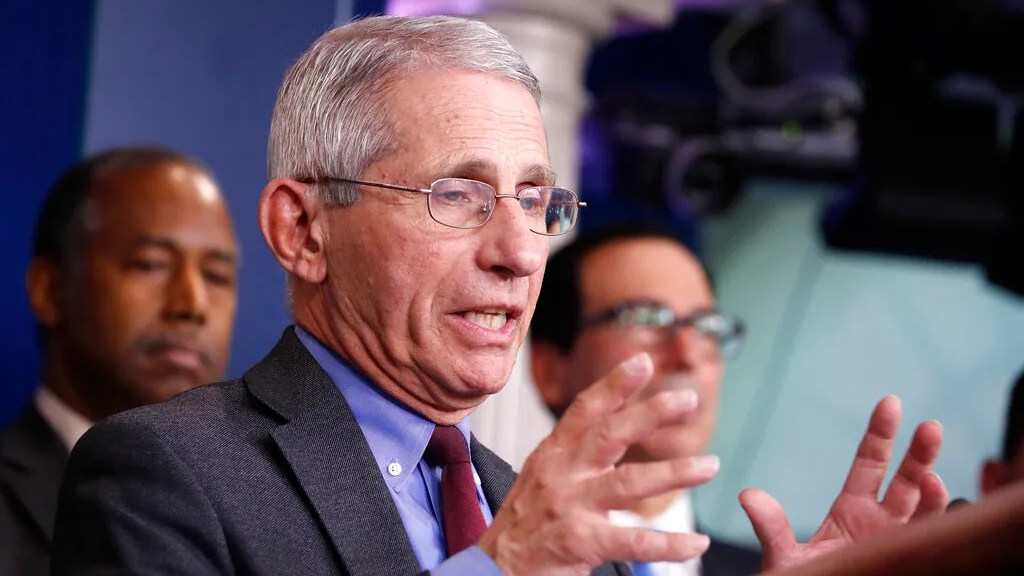
It’s hard to imagine a more comprehensive and thorough repudiation of the Anthony Fauci Covid doctrine.

Do whatever Fauci says, never consider the consequences, then demean and label any and all critics, never admit wrongdoing or take accountability for the damage you’ve caused.

“The Science” in a nutshell.


By    June 5, 2026


Source: The Shocking Damage Caused by Covid Policies

Turning Point; David Jeremiah – Walk in the Spirit


NEW!Listen Now

I say then: Walk in the Spirit, and you shall not fulfill the lust of the flesh.
Galatians 5:16

Recommended Reading: Romans 8:1-4

It comes as a surprise to some new Christians that the habits, temptations, actions, and desires that they experienced as a non-Christian do not disappear when they begin to follow Christ. Man’s sinful nature is not eradicated when a person is born again. Instead, a new conflict begins between the desires of the flesh and desires of the Spirit.

The apostle Paul confessed to experiencing this conflict in his own life (Romans 7:14-25). The things he wanted to do he was not able to do, and the things he didn’t want to do he found himself doing. He declared that only through the power of the Holy Spirit could he be set free from the law of sin and death (Romans 8:2). In Galatians 5:16-25, he contrasts living by the Spirit and living in the flesh. Living by the Spirit means yielding to the leading of the Spirit and trusting in His power to overcome the desires of the sinful nature.

Form the practice daily of asking God to fill you with His Spirit; practice the discipline of sensing and following His leading.

He who has the Holy Spirit in his heart and the Scriptures in his hands has all he needs.
Alexander MacLaren


https://www.davidjeremiah.org

Our Daily Bread – Be Prepared to Share


Be prepared to give an answer to everyone who asks you to give the reason for the hope that you have. 1 Peter 3:15

Today’s Scripture

1 Peter 3:13-17

Listen to Today’s Devotion

Apple LinkSpotify Link

Today’s Devotion

The teenager stood her ground. While her high school group was visiting a home for people in rehab from addictions, Claire engaged in conversation with a twentysomething man who towered over her in size. They talked about faith.

Claire clearly presented the gospel of Jesus. He countered with his spiritual views, which were very different. Back and forth they went in a friendly give-and-take way. Finally, the young man looked at Claire and said, “You got me. I can’t argue with what you’re saying.”

Though he didn’t put his faith in Jesus, a seed had been planted. And while Claire would have loved for the young man to have received Christ, her disappointment was balanced by the reality that she’d done what God had called her to do that day: “Be prepared to give an answer” (1 Peter 3:15). She had lovingly shared God’s plan of salvation.

Claire wasn’t ashamed of the gospel (Romans 1:16). She was prepared to “give an answer to everyone who asks you to give the reason for the hope that you have” (1 Peter 3:15). And she knew how to let her “conversation be . . . full of grace” so she would “know how to answer” (Colossians 4:6) the young man in the right spirit.

What a privilege God gives us to make Christ known to others! Let’s be ready to share with others as He provides what we need.

Reflect & Pray

How can you prepare for an opportunity to share your faith? Who do you know who needs to hear the gospel?

Dear God, please encourage my heart and open my mouth so I can “give an answer” to others who need You.

Learn how to effectively share your witness.

Today’s Insights

The key idea in 1 Peter 3:13-17 is that a hope-filled life in Christ can trigger conversations about the gospel. Notice how the apostle puts it: “Always be prepared to give an answer to everyone who asks you to give the reason for the hope that you have” (v. 15). In a world filled with brokenness and despair, when people see someone living with hope that transcends this world, it gets their attention and can cause them to desire what that person has. When they ask about this hope, we can point them to the message of Jesus, who’s “given us new birth into a living hope through the resurrection of Jesus Christ from the dead, and into an inheritance that can never perish, spoil or fade” (1:3). When we’re prepared to share God’s love with others, we’ll have the privilege of telling them about Jesus, our living hope.


http://www.odb.org

Denison Forum – What Graham Platner’s primary victory means for our culture


Graham Platner, a candidate for the US Senate in Maine, has generated national headlines for weeks. Among the controversies he has faced, his wife stated that he sent sexually explicit messages to several women while married.

Nonetheless, Democrats in his state elected him last night as their nominee.

Ken Paxton, a candidate for the US Senate in Texas, has similarly been accused by his wife of adultery. Nonetheless, Republicans in his state elected him recently as their nominee.

My purpose is not to endorse either candidate, their parties, or their opponents. It is rather to respond to the remarkable dichotomy in our culture between our politics and our personal morals.

According to Pew Research Center, 90 percent of US adults consider adultery to be “morally wrong”; only 2 percent called it “morally acceptable,” while the rest said it is “not a moral issue.” And yet political figures from Alexander Hamilton and Thomas Jefferson to Bill Clinton and Donald Trump have been accused of it. A Wikipedia “List of federal political sex scandals in the United States” contains ninety-four entries. Some faced political consequences as a result, but many (if not most) did not.

Why is this?

And why is the question relevant to us all, even (and especially) those who are not in politics and who have been faithful to our spouses?

“That is about the best we can do”

In a recent New York Times column, Ross Douthat writes that “early-21st-century Americans are profoundly divided about what being moral means.” He explains:

We have enough of a consensus to keep society together, which is why there aren’t a lot of people out there arguing, say, that it’s actually good that a politician cheated on his wife. But once you get beyond the theft-murder-adultery basics, we’re in a world of factional moralities and profound metaphysical divides (his italics).

In such a world, he suggests, moral failings can actually be a political advantage if they assure voters that a candidate is not going to force their moralisms on others. Candidates who espouse and exhibit exemplary ethics, by contrast, might seek to impose a stringent morality that’s alien to the rest of us.

To illustrate: The New York Times reports that when medical aid-in-dying laws are enacted in Illinois and the District of Columbia this fall, nearly a third of Americans will live in states where euthanasia is legal. The article notes, “Despite widespread support in polls, the number of people who actually go through with the practice remains very small.” The rest would not choose euthanasia for themselves, but they apparently believe that they have no right to make such a choice for others.

In a tolerance-centered, post-truth society, the last thing we want is others telling us what to do.

Movie critic and writer Roger Ebert gave voice to what many Americans think about life and happiness: “I believe that if, at the end of it all, according to our abilities, we have done something to make others a little happier, and something to make ourselves a little happier, that is about the best we can do.”

Ebert says he does not fear death because “I believe there is nothing on the other side of death to fear.” Accordingly, he wrote, “All I require of a religion is that it not insist I believe in it.”

“The small gets big and the big gets small”

Writing today’s article has made me deeply sad. Sad for a country whose moral standards have become so personalized as to be virtually nonexistent. Sad for those who tolerate behavior that is profoundly harmful to those who choose it. Sad for those who believe that their beliefs about the afterlife somehow determine its reality, akin to claiming that my denial of the sunset will prevent the sun from setting.

But if all I do with this article is shrug my shoulders and go about my day, I will miss the profound opportunity to admit the ways I am no different.

I sometimes succumb to temptations that personalize morality while denying biblical truth. I sometimes do not share the gospel with people in danger of spending eternity in hell, which is obviously the most harmful outcome of all. And I sometimes ignore the reality that in the afterlife “we must all appear before the judgment seat of Christ, so that each one may receive what is due for what he has done in the body, whether good or evil” (2 Corinthians 5:10).

Does any of this resonate with you?

If so, this is the necessary first step to experiencing what John Donne called a “holy discontent.” Such restlessness is vital for our souls, since we must be discontented with where we are before we will follow God to where he wants us to be.

The author Jennie Allen urges us to believe that God has a “great story” for each of us. When he “prompts our hearts and motivates us to participate in his unfolding story,” she says, we experience “deep joy and satisfaction in realizing that our insignificant moments often contribute to matters of eternal significance.”

As a result, she assures us, “The small gets big and the big gets small, and together we get to be part of giving people God.”

Will you pray for “holy discontent” for your heart and for your nation today?

Quote for the day:

“Great people do not do great things; God does great things through surrendered people.” —Jennie Allen

Our latest website resources:


Denison Forum