Turning Point; David Jeremiah – Putting People Down


NEW!Listen Now

A gossip betrays a confidence, but a trustworthy person keeps a secret.
Proverbs 11:13, NIV

Recommended Reading: 1 Timothy 5:11-16

Psst! Guess what? Did you hear? You’ll never guess what happened? I don’t like to repeat gossip, so listen carefully the first time!

Proverbs warns against participating in gossip, but what exactly is it? We all talk about daily events and the situations our friends face. So when does it become gossip? Perhaps when we share something about another person that they wouldn’t want others to know—speaking behind their back in a way that damages them.

Proverbs says, “The words of a gossip are like choice morsels; they go down to the inmost parts.… A gossip separates close friends…. A gossip betrays a confidence…. Without a gossip a quarrel dies down” (18:8; 16:28; 11:13; 26:20, NIV).

We must be careful not to hear or convey evil speech. Our words should always build up and not tear down. Have you been guilty of repeating unkind or unwise words? If so, ask God to forgive you and to give you the internal discipline to refrain from evil gossip. Be discreet; don’t repeat!

All of us would be wiser if we would resolve never to put people down, except on our prayer lists.
D. A. Carson


https://www.davidjeremiah.org

Our Daily Bread – Fighting for You


The Lord will fight for you; you need only to be still. Exodus 14:14

Today’s Scripture

Exodus 14:10-18

Listen to Today’s Devotion

Apple LinkSpotify Link

Today’s Devotion

Professional boxer Jim Braddock was known as someone who fought not for riches and fame but to put food on the table for his family. The movie Cinderella Man chronicles his fairytale-like comeback from a past-his-prime boxer to the world heavyweight champion. While facing extreme poverty during the Great Depression, Jim repeatedly sacrificed his own resources, health, and pride to provide for his children. He was never intimidated by an opponent and courageously endured pummeling in the ring to keep his family safe.

Jim’s legacy is one of passionate defense of his family. We, too, have a passionate defender who has promised to take our place in the ring. When the Israelites faced Pharaoh’s mighty army after their escape from slavery in Egypt, they were terrified and cried out to God. “It would have been better for us to serve the Egyptians than to die in the desert!” they foolishly said (Exodus 14:12). But Moses replied in faith, “The Lord will fight for you; you need only to be still” (v. 14). And without any action from the Israelites, their enemies were literally swept away by the sea as God supernaturally ended the battle before it even began.

Sometimes it feels like we’re facing the trials of life or arrows from the enemy, Satan, on our own (see Psalm 91:5). But God’s with us (Deuteronomy 31:6), and He fights for us; we need only to be still.

Reflect & Pray

What battle are you tempted to fight on your own? What does it look like to “be still” as you trust God to fight for you?


Dear Jesus, I trust You as You fight for me.

Waiting is hard; there’s no question. But some of life’s most important seasons happen in the in-between. Through Psalms, Romans, and Galatians, this five-day study explores how God draws us closer and shapes our hearts through seasons of waiting. Learn to release control, trust God’s timing, and experience his nearness as you wait with this reading plan from Reclaim Today: Hope In the In Between

Today’s Insights

The theme of God as a divine warrior (see Exodus 14:14) spans the landscape of Scripture. Exodus 15 poetically depicts God at war with Pharaoh’s army, saying, “The Lord is a warrior” (v. 3). One Bible encyclopedia has this to say: “In the New Testament, the Divine Warrior theme is fulfilled in the person and work of Jesus Christ. While the imagery shifts from physical battles to spiritual warfare, the essence of God as a warrior remains. In Revelation, Christ is depicted as the ultimate Divine Warrior who will defeat evil and establish His kingdom.” Today, when faced with temptation, we can rest in God, who fights for us.


http://www.odb.org

Denison Forum – Indy cars race around DC after Court rules on ballroom


How is the Bible relevant to these stories today?

  • What Time called “President Donald Trump’s final event commemorating the US’s 250th birthday” took place in the nation’s capital Sunday as Kyle Kirkwood won the Freedom 250 Grand Prix. Mr. Trump and First Lady Melania Trump rode around the 1.7-mile race track in the presidential limousine ahead of the competition.
  • Supreme Court Chief Justice John Roberts signed a temporary order on Friday allowing work to continue on the White House ballroom while the court considers an emergency appeal from the Trump administration. The ruling came after an appeals court earlier stopped the project.
  • A giant statue mocking Mr. Trump for the US’s role in the Iran war has drawn attention in Washington, DC, as well.
  • Earlier in the war, the Iranian president wrote an open letter to the American people that was widely shared on X and covered by national media.

You don’t need the word of God to explain any of these stories in isolation. Many national leaders have discretion to celebrate significant events as Mr. Trump did with the IndyCar race. Some countries place their chief executive under the final authority of other bodies such as a Supreme Court. Some allow their leader to be mocked in public. And some let the leader of a country with whom they are at war address their public directly.

Continue reading Denison Forum – Indy cars race around DC after Court rules on ballroom

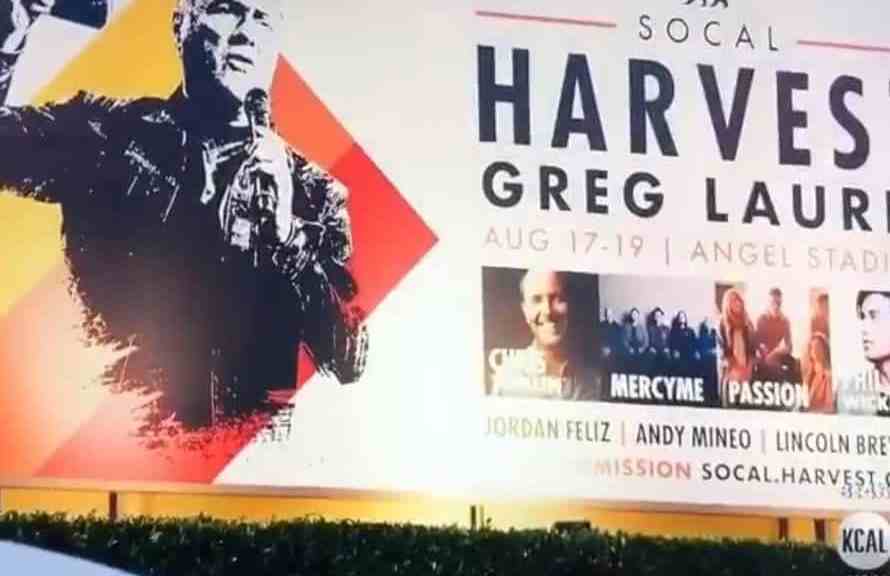
Harvest Ministries; Greg Laurie – The Hidden Word


 I have hidden your word in my heart, that I might not sin against you. 

—Psalm 119:11

Scripture:

Psalm 119:11 

You’ve probably heard the old saying that a Bible that’s falling apart is usually the sign of a life that isn’t. I must admit that I like to see beat-up, marked-up Bibles that are coming apart, because it tells me that they’ve seen heavy use. Their pages are well-worn. Favorite passages can be located immediately because of familiar breaks in the spine. Every scribbled note, every underlined passage tells a story.

I’ve often said that there should be a Bible produced especially for preachers. In fact, I’ve mentioned the idea to people who actually publish Bibles. I told them, “Make a preacher’s Bible. Give it a steel binding.” After all, preachers really use their Bibles. As we’re speaking, we do things like shake it, hold it up, and point to it. Why we do that, I don’t really know.

Of course, as believers, we shouldn’t simply shake our Bibles or hold them up or point to them. We need to read God’s Word. We need to memorize it. We need to follow the example of the psalmist who said, “I have hidden your word in my heart, that I might not sin against you” (Psalm 119:11 NLT).

A purse or a briefcase may serve as a handy carrier for God’s Word, but our heart is an even better one. Jesus kept God’s Word in His heart. When the devil tempted Him in the wilderness, Jesus quoted Scripture to counter him. Three times the devil did his worst. And three times he was rebuffed by the Word of God. Matthew 4:11 says simply, “Then the devil went away” (NLT). He was no match for God’s Word.

Scripture can serve a similar purpose in our lives. We have no way of knowing when and how the devil is going to tempt us. But we do know that God’s Word will thwart his plans. So, it’s important that we carry it with us wherever we go. That way, we can deploy it when we need to.

Hiding God’s Word in our hearts also helps us fulfill the Great Commission. The apostle Paul wrote of unbelievers, “But how can they call on him to save them unless they believe in him? And how can they believe in him if they have never heard about him? And how can they hear about him unless someone tells them? And how will anyone go and tell them without being sent? That is why the Scriptures say, ‘How beautiful are the feet of messengers who bring good news!’” (Romans 10:14–15 NLT).

The more quickly and effectively we can access the Good News, the more powerful our witness will be. Being able to draw from what’s stored in our heart is a tremendous advantage.

God’s Word is a powerful tool, and a powerful weapon against our enemy, whether we hold it in our hands or in our heart.


Reflection question: What would hiding God’s Word in your heart look like in your life? Discuss this with believers like you on Harvest Discipleship!


Harvest.org | Greg Laurie

Days of Praise – Our Rock of Salvation


by Henry M. Morris, Ph.D.

“He is the Rock, his work is perfect: for all his ways are judgment: a God of truth and without iniquity, just and right is he.” (Deuteronomy 32:4)

Here in the song of Moses, which God instructed him to write for the children of Israel as they were about to enter the promised land (note Deuteronomy 31:19), is the first of at least 40 references in the Bible to God as the Rock. There are four others just in this song. In verse 15, He is the “Rock of [Israel’s] salvation.” In verse 18, He is “the Rock that begat thee.” See also verses 30 and 31.

Note some of the other wonderful metaphors picturing God as our great foundation stone. He is “my strong rock” in Psalm 31:2 and “the rock that is higher than I” in Psalm 61:2. In Psalm 62:7, He is “the rock of my strength” and is “the rock of my refuge” in Psalm 94:22. Isaiah calls Him “a great rock in a weary land” and “the rock whence ye are hewn” (Isaiah 32:2; 51:1).

During the wilderness wanderings, the Israelites were supplied with water from a rock, and the apostle Paul tells us “that spiritual Rock that followed them . . . was Christ” (1 Corinthians 10:4). And, of course, Christ told His disciples that Peter’s confession of Himself as the “Son of the living God” was the rock upon which He would build His church (Matthew 16:16, 18).

But to unbelievers He is “the stone which the builders rejected” (Matthew 21:42), “a stone of stumbling, and a rock of offence, even to them which stumble at the word” (1 Peter 2:8). “Therefore,” said Jesus, “whosoever heareth these sayings of mine, and doeth them, I will liken him unto a wise man, which built his house upon a rock: and the rain descended, and the floods came, and the winds blew, and beat upon that house; and it fell not: for it was founded upon a rock” (Matthew 7:24–25). HMM


https://www.icr.org/articles/type/6

Joyce Meyer – Pray Boldly


For we do not have a High Priest who cannot sympathize with our weaknesses, but was in all points tempted as we are, yet without sin. Let us therefore come boldly to the throne of grace, that we may obtain mercy and find grace to help in time of need.

Hebrews 4:15–16 (NKJV)

When we know we have sinned, we often feel we don’t have the right to ask God for anything. If we do ask Him for something, we ask sheepishly or we don’t ask for much. It is wonderful to know that Jesus understands us and our weaknesses, and He doesn’t reject us because of them. It is hard for us to imagine Jesus being tempted in all the same ways we are, but He was, although He never sinned.

According to today’s Scripture verses, we are to go boldly to God’s throne and ask for what we want and need, and He will hear and answer our prayer. He doesn’t answer us because we are good, but because He is good. When we pray in Jesus’ name, we are presenting to God all that Jesus is, not all that we are. I urge you to start praying more boldly than ever before because God is able to do exceedingly abundantly above all that we ask or think (Ephesians 3:20 NKJV).

Prayer of the Day: Lord, thank You for inviting me to come boldly to Your throne despite my weaknesses and my many faults. Please help me pray with confidence, and to trust Your goodness, rather than my own, amen.


http://www.joycemeyer.org

Max Lucado – The Strategy for the Tragedy 


Play

“Some time later the son of the woman who owned the house became ill. He grew worse and worse and finally stopped breathing…Elijah lay on top of the boy three times. He prayed to the Lord, ‘Lord my God, let this boy live again!’” (1 Kings 17:17, 21). The Lord answered Elijah’s prayer, the boy began breathing again, and was alive.

What if Elijah holding the dead boy is a picture of you and me in the midst of a sick society? Did you know that nine out of ten young people in Great Britain believe that life has no meaning? What happens when ninety percent of a generation find no reason to live? Anxiety, anger, depression, despair, suicide. We, like Elijah, have been handed a corpse. Elijah shows us what to do. Prayer was his strategy for the tragedy.


Home

Today in the Word – Moody Bible Institute – Understanding Your Audience


Read 1 Corinthians 9:15–23

In 1962, Don and Carol Richardson went to Papua New Guinea (then Dutch New Guinea) to work among the Sawi tribe. The Sawi people valued revenge and practiced ritualistic cannibalism. So when the Richardsons first shared the gospel with them, they perceived Judas Iscariot as the hero because his actions brought retribution. Then, Don discovered the Sawi custom of the “peace child.” In this ritual, when two warring tribes were seeking peace, one tribe would give a newborn male infant to the other as a pledge. The receiving tribe was then bound to care for the child, ensuring peace for a whole generation. Using this framework, Don retold the gospel. The Sawi were able to grasp the depth of Christ’s sacrifice. The Richardsons’ journey is documented in their book Peace Child.

In 1 Corinthians 9, the apostle Paul discusses his motivation and method for preaching the gospel. In verses 15–18, Paul stated that his motivation was not monetary. Paul had a right to receive compensation for ministry (v. 14). However, Paul wanted nothing to hinder his communication (v. 12). So he preached voluntarily and out of obedience. His only reward was the gospel ministry itself (v. 18).

Then, Paul expressed his methodology. Paul adapted his communicative approach based on his audience. To the Jews, he spoke as a Jew. To the Gentiles, he spoke as a Gentile (v. 20). He never changed the content of the gospel. Instead, he would use humility and cultural awareness to contextualize the message for his intended audience. He wanted each person to understand this life-changing message. This is a model that missionaries and evangelists still follow today.

Go Deeper

Do you know someone (or even a group of people) resistant to the gospel? How might you contextualize the message to help them better understand it?

Pray with Us

Your free gift of salvation crosses all ethnic and cultural barriers, Lord. When we are sharing the gospel with others, please give us the words to say that will help them understand Your love.

I have become all things to all people so that by all possible means I might save some.1 Corinthians 9:22


https://www.moodybible.org/