Days of Praise – Sowing and Sleeping


by Henry M. Morris, Ph.D.

“So also is the resurrection of the dead. It is sown in corruption; it is raised in incorruption.” (1 Corinthians 15:42)

When a believer’s soul and spirit leave the body and return to the Lord, it is significant that the New Testament Scriptures speak of the body not as dead but as sleeping. For example, Jesus said, “Our friend Lazarus sleepeth; but I go, that I may awake him out of sleep” (John 11:11). This state is not “soul sleep” as some teach, for “to be absent from the body, [is] to be present with the Lord” (2 Corinthians 5:8). The body is sleeping—not the soul.

Similarly, when the believer’s body is laid in a grave, Paul speaks of this act not as a burial but as sowing! “But some man will say, How are the dead raised up? and with what body do they come? Thou fool, that which thou sowest is not quickened, except it die: and that which thou sowest, thou sowest not that body that shall be, but bare grain, it may chance of wheat, or of some other grain: but God giveth it a body as it hath pleased him, and to every seed his own body” (1 Corinthians 15:35–38).

Just as a buried grain of wheat brings forth a fruitful plant, so the old, sin-corrupted, aching body of human flesh sown in the ground will some day come forth “fashioned like unto his glorious body” (Philippians 3:21) in which “there shall be no more death, neither sorrow, nor crying, neither shall there be any more pain” (Revelation 21:4).

“So also is the resurrection of the dead. It is sown in corruption; it is raised in incorruption: it is sown in dishonour; it is raised in glory: it is sown in weakness; it is raised in power: it is sown a natural body; it is raised a spiritual body” (1 Corinthians 15:42–44). When a believer’s body is sown in the ground, God will soon reap from it a body of glory that will last for eternity. HMM


https://www.icr.org/articles/type/6

Joyce Meyer – How to Find God’s Will for Your Life


A man’s mind plans his way [as he journeys through life], but the Lord directs his steps and establishes them.

Proverbs 16:9 (AMP)

People often ask me how they can determine God’s will for their lives. Many people spend years waiting to hear a voice or to receive a supernatural sign giving them direction. But receiving direction from God is usually more practical than that. So my advice is: Step out and find out.

Early in my Christian life, I wanted to serve God but didn’t know exactly what to do. When different opportunities would arise, I would try those things that were available. A lot of them didn’t work out for me, but I kept trying until I found an area that fit me. I came alive inside when I had an opportunity to teach the Word of God, and I knew that was what I was supposed to do.

Sometimes the only way to discover the will of God is to practice “stepping out and finding out.” If you have prayed about a situation and don’t seem to know what you should do, take a step of faith. Even if that is not God’s ultimate destination, it will be another step toward the fulfillment of His will for your life.

Prayer of the Day: Lord, help me trust You and step out in faith. Guide my decisions, even when I’m unsure, and lead me step by step into Your perfect will for my life, amen.


http://www.joycemeyer.org

Max Lucado – Prepare for Worship 


Play

Do you prepare for church worship?  We’re sadly casual when it comes to meeting God. Suppose you were invited to a Sunday morning breakfast at the White House?  How would you spend Saturday night?  Would you think about your questions and requests?  Should we prepare any less for an encounter with the Holy God?

Come to worship prepared to worship.  Pray and read the Word of God before you come, and come expecting God to speak. Then you’ll discover the purpose of worship—to change the face of the worshiper.

Paul writes in 2 Corinthians 3:18, “Our faces, then, are not covered.  We all show The Lord’s glory, and we are being changed to be like Him” (EXB).  God wipes away our tears, softens our furrowed brows and touches our cheeks. He changes our faces as we worship.


Home

Today in the Word – Moody Bible Institute – When Leaders Fall


Read Numbers 20

We’ve all witnessed it—the shocking moment when a trusted leader makes a catastrophic decision that destroys a legacy. Whether it’s a politician making an unethical choice under pressure, a coach losing composure in a crucial game, or a pastor falling into moral failure, these moments remind us that even the most faithful can stumble when tested. Such was the case with Moses, God’s chosen deliverer, in one of Scripture’s most sobering accounts.

After 40 years of faithful leadership, Moses faced yet another crisis. The Israelites were complaining—again—this time about water. “Why did you bring us up out of Egypt to this terrible place?” they demanded (v. 5). The scene was all too familiar: grumbling people, an impossible situation, and Moses caught in the middle. God’s instructions were clear: “Take the staff, and you and your brother Aaron gather the assembly together. Speak to that rock before their eyes and it will pour out its water” (v. 8). But Moses chose differently! Instead of speaking to the rock as commanded, he struck it twice with his staff, saying, “Listen, you rebels, must we bring you water out of this rock?” (v. 10).

Water flowed, the people drank, but God’s response was devastating: “Because you did not trust in me enough to honor me as holy in the sight of the Israelites, you will not bring this community into the land I give them” (v. 12). Notice God’s diagnosis—this wasn’t fundamentally about anger, but about trust. Moses revealed a heart that had momentarily lost confidence in God’s perfect plan. His modification of God’s clear instructions showed he doubted whether simply speaking to the rock would be sufficient. This distrust led him to dishonor God’s holiness before the people, taking credit for what only God could accomplish.

Go Deeper

What does Moses’ action reveal about his heart? How do we sometimes fail to trust God’s instruction? What warning does his story carry for us?

Pray with Us

We confess God, that we too have sometimes failed to trust You enough to honor You as holy. Like Moses, we act out, doing things our own way. Forgive us when we lose confidence in You.

You did not trust in me enough to honor me as holy.Numbers 20:12


https://www.moodybible.org/

Where Eagles Dare

Explore American exceptionalism, free speech, and conservatism ahead of the 2026 midterm elections.


Perhaps there are those of you who remember the 1968 film starring Richard Burton and Clint Eastwood about a secret World War II mission to rescue an Allied General deep inside Germany at the fictitious Schloss Adler. The movie itself was fiction, but it was indeed an action thriller. I’m surprised Hollywood has not attempted to remake something of that genre. Then again, they should leave this classic alone. They already screwed up Ben-Hur. The motto of the British SAS is “Who Dares Wins,” and as we begin our trek to the 2026 midterm elections, that maxim is more applicable than ever.

This evening, I will be on the campus of the University of California, Los Angeles (UCLA) to discuss topics of American exceptionalism, illegal immigration, and foreign policy. It is imperative that we do not stop bringing a constitutional conservative message to our American college and university campuses, as we cannot cede any ground to the Marxist left. Am I concerned about “protesters?” Nah, I am a combat veteran. As well, it would be quite interesting to have leftists seeking to shut down the free speech of a Black man who was born in a segregated hospital in Georgia 65 years ago.

Conservatives must indeed go where eagles dare, and challenge the most formidable bastions of Marxism. That was the essence of what Charlie Kirk did so very effectively. I recall meeting the young 19-year-old Kirk back in 2013 and being asked to be part of his Turning Point USA Board of Advisors as he was launching. His personal efforts will be missed, but we cannot focus on just a singular person. As in the movie Spartacus, we must all say, “I’m Charlie Kirk.” The message that our young people are receiving on college and university campuses is completely antithetical to the American ideal, that of individual sovereignty, rights, freedoms, and liberties. That is what America 250 is all about. However, when one ponders what we have devolved into since America 200, when I was fifteen years of age, it is quite telling.

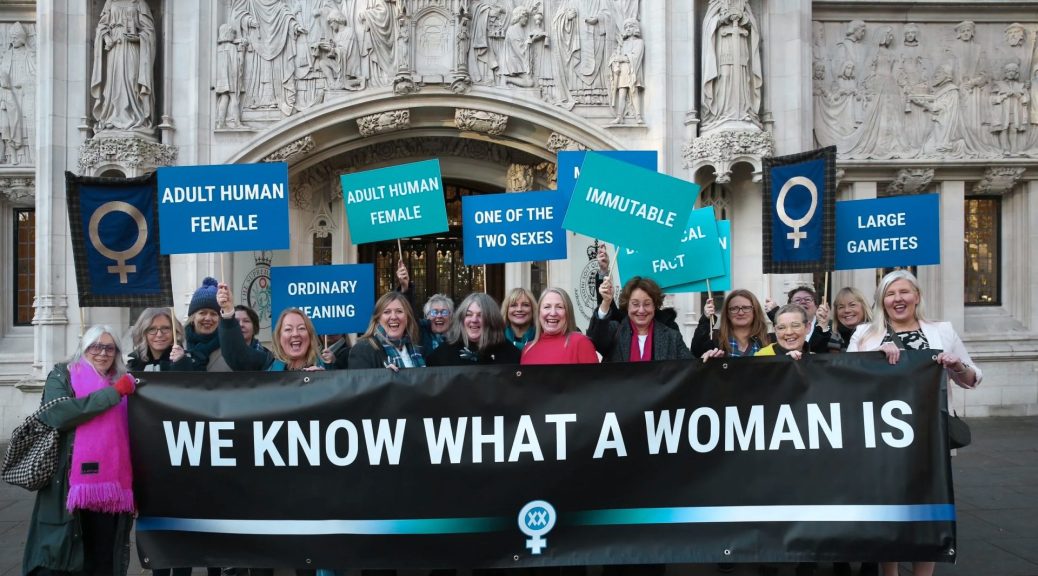
Who in 1976 thought that we would have discussions about defining what a woman is? Or that we would be confused about two scientifically based sexes. Once upon a time, it would have been considered child abuse to recommend that minors undergo body-transforming surgeries and disturb their natural hormonal growth and adolescence. Let’s be real, little kids are not confused about whether they are a boy or a girl. Adults are injecting them with this poison. As a matter of fact, anyone under the age of eighteen is not allowed to have a tattoo, but we are supposed to believe that the removal of healthy body parts is normal?

I remember as a young fella the day when my Dad made his last house payment. It was a source of pride for the ol’ World War II Corporal, as well as for me. He gave me something to achieve: being a homeowner. We all know that our Declaration of Independence was built upon the Natural Rights theory of the English political philosopher, John Locke, called the father of classical liberalism. The three unalienable rights endowed, naturally, to all mankind are life, liberty, and property. Yes, we do need to ensure that the American dream of home ownership is attainable for current and future generations.

However, government-run housing and policies of rent control are not the answer. I got a unique opportunity to see what that looked like — not once but twice — when visiting East Berlin, and government-controlled transportation was ugly. The purpose of government is to protect our life, liberty, and property. French economist Frederic Bastiat wrote of such in his phenomenal essay of 1850 called The Law. It was an apparent direct response to a differing philosophy that was introduced in 1848, the Communist Manifesto by Karl Marx and Friedrich Engels. In Marx’s work, he advocated for heavy progressive taxation and the elimination of private property rights, two things that the Marxist/Islamist mayor of New York City, Zohran Mamdani, has made central to his policy.

I have no issue with those who say that they hate President Trump. I would suggest stopping shooting at him. Americans are free to have differing opinions. It was New York liberal Democrat Senator Daniel Patrick Moynihan who once asserted, “You are entitled to your own opinions, but not your own facts.” The same can be said about the absurdity of claiming one’s own truth, which is rooted in situational morality and ethics.

It is therefore imperative that we go where eagles dare, and not confine ourselves to our respective echo chambers of adoration. I will never forget the young lady on the campus of Northwestern University some eight to 10 years ago who asked me, “Do you identify as Black?” It was a truly shocking inquiry, but reflective of the low standards of academic rigor and critical thinking that exist on many college and university campuses. Northwestern University is one of the top academic institutions in our country, yet someone had filled this young lady’s mind with the folly that one’s skin color should dictate how they think, totally bypassing the brain that God gave to each of us. As my Mom and Dad would say, “some folks got a lot of book learning but ain’t got the common sense to come in outta the rain.”

One of the world’s great minds, Albert Einstein, advocated on behalf of socialism in his 1949 essay Why Socialism? He believed that socialism would quell the “predatory phase” of human development caused by capitalism. As opposed to economic minds like Mises, Hayek, Friedman, and Sowell, Einstein believed that capitalism brought about “economic anarchy” and that the pursuit of profit was less admirable for individuals than a government-planned economic system that ensured social welfare. That sounds a lot like Marx’s “from each according to their ability, to each according to their need,” wealth redistribution schemes.

America has a clear choice in this election cycle, and future ones as well: shall we choose the philosophy of economic servitude and enslavement and collectivism, or do we still believe in the indomitable individual spirit that yearns for freedom, economic empowerment, and yes, rugged individualism? I dare to choose the latter over the former. As history has proven, the former never works out well. As Sir Winston Churchill said, “Socialism is the philosophy of failure, the creed of ignorance, and the gospel of envy.” He also affirmed that “The inherent vice of capitalism is the unequal sharing of blessings. The inherent virtue of Socialism is the equal sharing of misery.” And we know that socialism is the economic model of Marxism.

Go where eagles dare, spread the message of individual entrepreneurial economic achievement.

Steadfast and Loyal.

Allen West | May 18, 2026

Source: Where Eagles Dare

Turning Point; David Jeremiah – Good Question, God’s Answer


NEW!Listen Now

Behold, these are the ungodly, who are always at ease; they increase in riches.
Psalm 73:12

Recommended Reading: Psalm 73:1-28

A timeless question has plagued mankind: Why do the good suffer and the wicked prosper? That question surfaces in the Bible in two extended passages: Job 21 and Psalm 73. Job raised the question because he thought he was a righteous man who had been made to suffer. And the psalmist raised the question because it represented an apparent contradiction. Both writers resolved the question by encountering God and His purposes.

In the latter chapters of his book, Job encountered God and gained understanding about His sovereign ways (Job 42:1-6). The psalmist declared that the contradiction in God’s ways “was too painful for [him]—until [he] went into the sanctuary of God; then [he] understood their end” (Psalm 73:16-17). The “sanctuary” represents Job considering his questions in light of the sovereign purposes of God and the fact that God will balance the scales of justice in the end. For him, it was enough to put his trust in God and “draw near” to Him (verse 28).

Don’t let the carefree lives of those who don’t serve God be a source of frustration. Let Him be your only desire on earth (verse 25).

The humble Christian is far happier in a cottage than the wicked in a palace.
A. W. Pink


https://www.davidjeremiah.org

Our Daily Bread – Anatomy of a Hardening Heart


Today, if you hear [God’s] voice, do not harden your hearts. Hebrews 3:7-8

Today’s Scripture

Hebrews 3:7-15

Listen to Today’s Devotion

Apple LinkSpotify Link

Today’s Devotion

It’s fascinating to see your own heart. Recently, I did. Chest pain led me to see a doctor, who ordered tests that allowed me to see that my heart has calcium buildup. More than I should have. Atherosclerosis, the doctors call it: hardening of the arteries.

I’ve made big diet and exercise changes. But I’ve also realized that my cardiac concerns didn’t emerge overnight. In my case, they were the fruit of unhealthy choices. In time, those habits couldn’t help but impact my heart’s health.

Scripture uses similar language to describe being spiritually unhealthy. Our hearts can gradually grow hardened toward God—one day and one choice at a time. Hebrews 3:7-8 (referencing Psalm 95:7-8) says, “Today, if you hear his voice, do not harden your hearts as you did in the rebellion.” After God delivered His people from Egypt, they “tested and tried [Him]” (v. 9) during their time in the wilderness.

God had faithfully provided for His people, but they refused to see it (vv. 9-10). What about us? What habits nudge us away from God—day by day hardening our hearts against Him? We all make some of those choices. So I’m thankful that today, right now, God offers to exchange our hearts of stone for those softened by His love (see Ezekiel 36:26).

Reflect & Pray

How is God drawing you closer to Him? How can you learn to hear His voice?

Dear Father, sometimes my heart gets tired. Please forgive me for choosing the wrong things. Help me embrace Your offer to cleanse and soften my hard heart.

Today’s Insights

Hebrews 3:7-15 is a reflection on the ongoing relevance of the terms today (vv. 7, 13) and rest (v. 11) from key Old Testament passages. Today in Psalm 95:7, for example, captures a moment in Israel’s wilderness sojourn when they hardened their hearts and didn’t respond with belief—a related theme developed further in Hebrews 4. A whole generation missed the rest that the promised land graciously offered to those who’d take God at His word. The writer of Hebrews compares this rest with the seventh day of creation, which is itself an invitation into God’s rest (vv. 4-6). To completely trust in His work, rather than our own, is literally our ultimate “Sabbath-rest” (v. 9). Today, we can ask God to soften our hardened hearts and rest in His love.

Discover more about hearing the voice of God.


http://www.odb.org

Denison Forum – Three purposes behind America’s founding


Around AD 1000, Norsemen (Germanic peoples from modern-day Denmark, Norway, and Sweden) settled briefly in Newfoundland, making them the first Europeans to colonize North America. Five centuries later, Christopher Columbus famously reached the Bahamas, Cuba, and Hispaniola; in 1496, the first European permanent settlement was built in Santo Domingo, part of what is today the Dominican Republic. Across the next century, the Spanish and Portuguese established significant settlements across what we call Central and South America.

Together, these efforts reveal three distinct purposes behind America’s founding, each of which is important to understanding the nation’s past as well as its future.

Launching evangelistic missions: St. Augustine, Florida

In 1565, the Spanish founded Saint Augustine, Florida, the oldest continuously inhabited European-established settlement in what is today the contiguous United States. The English and French tried but failed to establish settlements in the New World at that time as well.

St. Augustine was established by the Spanish for two reasons: to serve as a military outpost for the defense of Florida, and as a base for Catholic missionary settlements throughout the southeastern part of North America. Numerous missions were established across the region; by the middle of the seventeenth century, their efforts had expanded northward to the Carolinas and westward to present day Tallahassee.

Building a secular economic venture: Jamestown, Virginia

In 1607, the English famously established Jamestown on the Atlantic coast of what is now the state of Virginia. This was their first permanent settlement in America. Across the seventeenth century, the French, Spanish, Scottish, and Dutch built numerous other settlements along the Atlantic coast, efforts that continued in the eighteenth century until shortly before American independence.

Continue reading Denison Forum – Three purposes behind America’s founding

Harvest Ministries; Greg Laurie – The Wrong Kind of Oneness


 Don’t you realize that your bodies are actually parts of Christ? Should a man take his body, which is part of Christ, and join it to a prostitute? Never! And don’t you realize that if a man joins himself to a prostitute, he becomes one body with her? For the Scriptures say, ‘The two are united into one. 

—1 Corinthians 6:15–16

Scripture:

1 Corinthians 6:15–16 

In this week’s devotions, we’re going to focus on passages from the apostle Paul’s first letter to the believers in Corinth. And we’re going to start with his words of wisdom to married couples in 1 Corinthians 6.

Can you imagine what our culture would be like if we obeyed the single commandment, “You must not commit adultery” (Exodus 20:14 NLT)? Can you imagine how different our world would be? How many divorces would have been avoided? How many families would still be together? How many fathers would be home to raise their children?

Many social ills can be traced to the breakdown of the family and specifically to the absence of the father in the home. And often marriages fall apart because of the sin of adultery—that is, sex with someone besides your spouse.

God established marriage as a union and oneness between a man and a woman. Sex is not some toy that we play with to satisfy our desires. The Bible says, “Give honor to marriage, and remain faithful to one another in marriage. God will surely judge people who are immoral and those who commit adultery” (Hebrews 13:4 NLT).

Yet that warning often falls on deaf ears. Some people try to excuse adultery by arguing that anything that happens between two consenting adults is okay. Or by pointing out that spouses aren’t always sexually compatible, which makes it necessary to go outside the marriage. Or by claiming that if no one else ever finds out, it’s a victimless crime.

But the biblical reality is that when a man and a woman come together sexually, a oneness takes place. We are told in 1 Corinthians 6:15–16, “Don’t you realize that your bodies are actually parts of Christ? Should a man take his body, which is part of Christ, and join it to a prostitute? Never! And don’t you realize that if a man joins himself to a prostitute, he becomes one body with her? For the Scriptures say, ‘The two are united into one’” (NLT).

Jesus identified the roots of adultery in His Sermon on the Mount. “You have heard the commandment that says, ‘You must not commit adultery.’ But I say, anyone who even looks at a woman with lust has already committed adultery with her in his heart. So if your eye—even your good eye—causes you to lust, gouge it out and throw it away. It is better for you to lose one part of your body than for your whole body to be thrown into hell” (Matthew 5:27–29 NLT).

Lust, left unchecked, can lead to adultery. That’s why it’s important to separate ourselves from people, scenarios, and settings that can trigger lust. As Jesus points out, no sacrifice is too great to preserve the unity of marriage.

Reflection question: What practical steps can reduce the risk of adultery in a marriage? Discuss this with believers like you on Harvest Discipleship!


Harvest.org | Greg Laurie

Days of Praise – The Message of the Old Testament


by John D. Morris, Ph.D.

“Look unto me, and be ye saved, all the ends of the earth: for I am God, and there is none else.” (Isaiah 45:22)

Ever since sin entered into God’s created world, His message to all people of all ages has been the same. At the time of the Curse, God prophesied that there soon would be a coming Redeemer—the seed of the woman who would crush the head of the serpent, although the Redeemer Himself would be made to suffer in order to do away with the power of sin (Genesis 3:15). “For the life of the flesh is in the blood: and I have given it to you upon the altar to make an atonement for your souls: for it is the blood that maketh an atonement for the soul” (Leviticus 17:11).

God repeatedly warned the people of His hatred of sin and wickedness (see, for example, Psalm 5:4–6; Proverbs 6:16–19), but He recognized that humankind was totally incapable of measuring up to His standard of perfection. That great statement of righteous requirements, the Ten Commandments, demonstrated the utter impossibility of complete compliance (Exodus 20Psalm 14; etc.). Conversely, God repeatedly extended His invitation to be rescued from sin, its effects, and its necessary judgment by confidence in His plan for mankind. In our text, we see that “all the ends of the earth” have the opportunity to be “saved.” “Surely, shall one say, in the LORD have I righteousness and strength: even to him shall men come” (Isaiah 45:24).

This plan of God focuses on the promised Redeemer who would come to buy back humanity from its enslavement to sin. “A virgin shall conceive, and bear a son, and shall call his name Immanuel” (Isaiah 7:14). “He was wounded for our transgressions, he was bruised for our iniquities: . . . and the LORD hath laid on him the iniquity of us all” (Isaiah 53:5–6). JDM


https://www.icr.org/articles/type/6

Joyce Meyer – Quitting Is Not an Option


Looking away [from all that will distract] to Jesus, Who is the Leader and the Source of our faith…

Hebrews 12:2 (AMPC)

It does not take any special talent to give up and lie down on the side of the road of life and say, “I quit.” Anybody, whether they are a believer or not, can do that.

Quitting is a temptation we all face at one time or another, but when you get close to Jesus, or better yet, when He gets close to you, He begins to pump strength and energy and courage into you. And something wonderful begins to happen—He causes you to want to press forward!

I used to want to give up and quit. But now I get out of bed and start each day fresh and new. I begin my day by praying and reading the Bible and speaking the Word, seeking after God. It’s amazing what a difference it makes when you begin your day drawing closer to God.

When you feel the urge or the temptation to quit, don’t give in. Look to Jesus and follow His example. He pressed forward even in the most difficult circumstances, and He will give you the strength to do the same. He is your Leader; He is the Source and the Finisher of your faith.

Prayer of the Day: Lord, give me strength to keep going when I feel like quitting. Help me draw close to You daily and find renewed courage, faith, and determination to press forward, amen.


http://www.joycemeyer.org

Max Lucado – Give God Your Thoughts 


Play

How do I detect God’s unseen hand on my shoulder and his inaudible voice in my ear?

Give God your waking thoughts. Before you face the day, face the Father. Psalm 5:3 (NCV) says, “Every morning, I tell you what I need, and I wait for your answer.”

Give God your waiting thoughts. Spend time with him in silence.

Give God your whispering thoughts. During your lifetime, you will spend six months at stoplights, eight months opening junk mail. Give these moments to God. Simple phrases, such as “Thank you, Father,” can turn a commute into a pilgrimage.

Give God your waning thoughts. Conclude the day as you began it: talking to God. If you fall asleep as you pray, don’t worry. What better place to doze off than in the arms of your Father.


Home

Today in the Word – Moody Bible Institute – Death Requires Cleansing


Read Numbers 19

One of my favorite shirts has a grease stain I cannot remove. Some stains are like that, no matter how much you soak or wash, they just don’t come out, a small reflection of what sin does to the soul.

Numbers chapter 19 introduces one of the most unusual ceremonies in Scripture: the ritual of the red heifer. Spiritual contamination needed intentional cleansing. The ritual wasn’t about shame or superstition; it was about restoration to wholeness and community. Contamination came from contact with death. In a community where burial was a sacred duty, this purification was essential for maintaining spiritual cleanliness.

The instructions were specific: “Tell the Israelites to bring you a red heifer without defect or blemish and that has never been under a yoke” (v. 2). This perfect animal would be slaughtered and burned completely—hide, flesh, blood, and dung—along with cedar wood, hyssop, and scarlet wool. The ashes would be mixed with water to create “the water of cleansing” (v. 9). The purpose was clear: “for purification from sin” (v. 9). Anyone who touched a dead body, bone, or grave would be ceremonially unclean for seven days. Without the purification ritual, they would remain cut off from the community and unable to approach God’s tabernacle.

God declared that this is “a lasting ordinance” (v. 10). The ritual pointed beyond itself to a greater truth—that cleansing from the contamination of death requires divine provision. The writer of Hebrews later connected the red heifer to Jesus: “The blood of goats and bulls and the ashes of a heifer…sanctify them so that they are outwardly clean. How much more, then, will the blood of Christ…cleanse our consciences from acts that lead to death” (Heb. 9:13–14).

Go Deeper

How does this ceremony point forward to the ultimate sacrifice of Christ? God has not left us “stained.” Instead, through Jesus, we are not only made clean—we are made new!

Pray with Us

Lord, it is easy to feel hopelessly stained, like an old shirt marred beyond repair. We are deeply thankful for Your sacrifice, for Your blood that purchased our forgiveness.

He entered the Most Holy Place once for all by his own blood, thus obtaining eternal redemption.Hebrews 9:12


https://www.moodybible.org/

A Society Without God Is a Society Without Truth

Explore how belief in God anchors truth and moral order in society, crucial for civilization’s survival.


Next Thursday evening, Jews will celebrate the holiday of Shavuot. This holiday, which occurs seven weeks and one day after Passover (hence the name Shavuot, which literally means “weeks”), commemorates perhaps the most transformative event in all of human history: the revelation of the Word of God to the ancient Israelite nation. It was at Mount Sinai, congregated at the base of the smoking and trembling mountain, that God promised the Israelites they would be a “kingdom of princes and a holy nation” if they accepted and maintained fidelity to His covenant. In unison, before they had even received the Ten Commandments, the Israelites responded, “All that the Lord has spoken we shall do!”

Because of the breadth and depth of its impact and lasting influence, the Divine Revelation at Sinai was the logical starting point for what we now call Western civilization. Writing thousands of years later at another inflection point in human history, Alexander Hamilton wrote in The Federalist No. 31: “In disquisitions of every kind, there are certain primary truths, or first principles, upon which all subsequent reasonings must depend.” In the United States specifically, and in Western civilization more generally, it was long obvious what those “primary truths” and “first principles” actually meant: the Word of God Himself. Such a properly anchored and oriented society is uniquely suited to improve mankind’s lot and advance human flourishing.

In a Washington Post op-ed earlier this month, Gregory Conti, a politics professor at perennially top-ranked Princeton University, lamented: “Several years ago, one of my colleagues at Princeton University hosted a lecture on religion and free speech. The talk didn’t seem to be landing with the students. Finally, he realized why: The speaker had made repeated reference to the Ten Commandments, and several students didn’t know what they were.” Conti noted that Princeton students are often smart and driven, but they lack basic religious literacy — even the difference between the Old and New Testaments. In short, many of America’s future leaders do not even recognize the “primary truths” and “first principles” upon which our civilization rests.

There is a clear casualty of this ignorance: our ability to accept reality and the truth. Consider, for example, the shocking inability to do precisely that among far too many members of America’s more avowedly secularist political party, the Democrats. A whopping 42% of Democrats believe the attempted assassination of Donald Trump in Butler, Pennsylvania in July 2024 was staged. A similarly galling 34% of Democrats believe the same about the recent attempted assassination of Trump and his Cabinet members at the White House Correspondents’ Dinner in Washington, D.C. There is, of course, zero evidence to support either belief. One might as well believe in Bigfoot, or that Neil Armstrong’s moon landing was fake.

There can be nothing good down this road. Only a society that is rooted in, and oriented toward, the eternal and the transcendental can ever hope to cultivate decent, truth-seeking citizens. When a free people loses the ability to discern between truth and fiction, rightness and wrongness, justice and injustice, there can only be only misery, despair and destruction. We’re losing that because, for far too long, we’ve been missing God. There is no better time than the run-up to America’s semiquincentennial — when we will celebrate the assertion of the self-evident truths that birthed the nation — to find Him once again. Frankly, America’s survival for another 250 years depends on it.

        To find out more about Josh Hammer and read features by other Creators Syndicate writers and cartoonists, visit the Creators Syndicate website at http://www.creators.com.


Josh Hammer  5:00 PM | May 17, 2026

Source: A Society Without God Is a Society Without Truth – HotAir

Our Daily Bread – Deep Roots


Blessed is the one who trusts in the Lord. Jeremiah 17:7

Today’s Scripture

Jeremiah 17:5-8

Listen to Today’s Devotion

Apple LinkSpotify Link

Today’s Devotion

As Douglas Kent, a landscape architect, toured a charred Los Angeles neighborhood after the city’s raging 2025 wildfires, he encountered a shocking surprise—trees, alive and green, right next to melted cars and burned buildings. Many of them bore lush palms and leaves, abundant fruit, and strong trunks and branches. How?

After two consecutive rainy winters, the trees’ roots had reached deep into the soil to draw moisture, carrying it to branches and leaves. In a fire, they proved resistant. “What I saw,” said Kent, “was that if you were deep-rooted, you survived.”

Our faith during the fiery trials of life can be like that. As we set our spiritual roots deep in Christ and His love, we become “like a tree planted by the water that sends out its roots by the stream. It does not fear when heat comes; its leaves are always green. It has no worries in a year of drought and never fails to bear fruit” (Jeremiah 17:8).

Jeremiah, who never minced words, warned that those who trust in “mere flesh” are “cursed” (v. 5). “That person will be like a bush in the wastelands; they will not see prosperity when it comes.” Instead, “they will dwell in the parched places of the desert, in a salt land where no one lives” (vv. 5-6). How much better to trust in God! Well-watered by His sustaining love, we thrive even in raging times, bearing spiritual fruit in Him.

Reflect & Pray

How deep are your roots in Christ? How can you trust Him during fiery trials?

Dear God, as the world seems to burn around me, please remind me to trust in You.

Today’s Insights

Jeremiah warned the unrepentant, idolatrous people of Judah that God would exile them to Babylon for their unfaithfulness (Jeremiah 25:8-11). God persistently and patiently urged them to repent before it was too late (35:15) and promised restoration and blessing once discipline was complete (31:23-28). In chapter 17, Jeremiah contrasts the curses on the ungodly with the blessings on the godly (vv. 5-8). In language reminiscent of Psalm 1:1-3, the prophet proclaims: “Blessed is the one who trusts in the Lord. . . . They will be like a tree planted by the water” (Jeremiah 17:7-8). In contrast, cursed are those who “turn their hearts away from the Lord . . . with no hope for the future” (vv. 5-6 nlt). The curse and blessing motifs are also in line with the covenantal consequences laid out in Deuteronomy 28. In times of adversity, Jeremiah reminds us that our security, stability, faithfulness, and fruitfulness are rooted in our trust in God, not in men.

Learn how to move from a shallow life to the firm foundation of your identity in Christ.


http://www.odb.org

Days of Praise – The Virtue of Having Enemies


by Henry M. Morris, Ph.D.

“Woe unto you, when all men shall speak well of you! for so did their fathers to the false prophets.” (Luke 6:26)

It is no compliment to say about a Christian that he has no enemies, for that could mean he has accomplished nothing. The apostle Paul had many bitter enemies, and they finally got him executed. In fact, almost all of the great heroes of the faith, through all the centuries since Satan gained his victory over Adam and Eve, have had to overcome bitter opposition from that wicked one.

So, instead of resenting our enemies, we should thank God for them, for they enable us to become more like our Lord and Savior, Jesus Christ! Only through such experiences can we learn what it means to say with Paul, “I am crucified with Christ” (Galatians 2:20). Only if we have enemies can we learn to obey Christ’s difficult command to “love your enemies, bless them that curse you, do good to them that hate you, and pray for them which despitefully use you, and persecute you” (Matthew 5:44).

The Lord Jesus easily could have called on 12 legions of angels to rout His enemies (Matthew 26:53). Instead, He submitted to their vicious insults and cruel tortures, even praying in His agony on the cross, “Father, forgive them; for they know not what they do” (Luke 23:34). The enemies of Christ killed Him, but had they not done so He would not have died for our sins, and we would be lost eternally. This is a mystery to ponder and difficult to comprehend, yet, as the Bible promises, “surely the wrath of man shall praise thee” (Psalm 76:10).

The enmity of men can thus be a channel of divine grace to the believer, for “tribulation worketh patience” (Romans 5:3), and “our light affliction, which is but for a moment, worketh for us a far more exceeding and eternal weight of glory” (2 Corinthians 4:17). HMM


https://www.icr.org/articles/type/6

Joyce Meyer – The Power in Jesus’ Name


I tell you the truth, my Father will give you whatever you ask in my name. Until now you have not asked for anything in my name. Ask and you will receive, and your joy will be complete.

John 16:23-24 (AMPC)

When our youngest son was still in school, sometimes people stayed with him when Dave and I traveled. In order for them to get medical treatment for him if it was ever needed, we had to sign a legal document stating they had the right to use our names on our son’s behalf—literally to make decisions in our place.

This is exactly what Jesus did for His disciples and, ultimately, for all who would believe in Him—He gave us the right to use His name when we go to God in prayer. When we pray in His name, it is the same as if He were praying. This privilege seems almost too wonderful to believe! But we can believe it because we have Scripture to back it up.

Prayer of the Day: Lord, thank You for the authority of Jesus’ name. Help me pray with confidence and faith, knowing You hear me and respond as I trust in the power of His name, amen.


http://www.joycemeyer.org

Turning Point; David Jeremiah – May Mothers: The Devotion of Hannah


NEW!Listen Now

[Hannah said], “I prayed for this child, and the Lord has granted me what I asked of him. So now I give him to the Lord.”
1 Samuel 1:27-28, NIV

Recommended Reading: Ecclesiastes 5:4-7

A woman in Israel had been childless for years but had faithfully prayed for a son. She even “made a vow” to God that if He gave her a son, she would dedicate him to God’s service (1 Samuel 1:11).

After years of worship and prayer, Hannah conceived and bore a son. After the boy was weaned, she took him to Eli the priest and fulfilled her vow. She gave her longed-for son to the Lord. The boy, named Samuel, “grew in stature, and in favor both with the Lord and men” (1 Samuel 2:26) and ultimately became God’s chief prophet in Israel (1 Samuel 3:19-21)—all because a mother was devoted to the Lord and kept her promise to Him. Years later, King Solomon would write, “When you make a vow to God, do not delay to pay it …. Better not to vow than to vow and not pay” (Ecclesiastes 5:4-5).

Being devoted to God is not without sacrifice. But with such sacrifice comes blessing.

Sacrifice is the giving up of something we genuinely value in order to express our devotion to God.
John Benton


https://www.davidjeremiah.org

Our Daily Bread – Listening to the Good Shepherd


The thief comes only to steal and kill and destroy; [Jesus has] come that they may have life. John 10:10

Today’s Scripture

John 10:1-10

Listen to Today’s Devotion

Apple LinkSpotify Link

Today’s Devotion

I opened my online banking app and discovered two withdrawals over $500 each, which I hadn’t made. Panicked, I called the bank and discovered my identity had been stolen. With the bank’s help, I was able to reinstate my good standing, but the experience taught me to be alert to prevent such thefts in the future.

In John 10:10, Jesus warns that “the thief comes only to steal and kill and destroy.” Rebuking religious leaders who opposed Him for healing on the Sabbath (9:13-15), Jesus revealed their motive: to steal, kill, and destroy. Our spiritual enemy, Satan, plots to steal our understanding of God’s grace—and the freedom Jesus’ death provides for us. Hope and help come earlier in the passage where Jesus described Himself as the good shepherd who calls His sheep by name (10:2-4). The good shepherd’s sheep “will run away from [a thief] because they do not recognize a stranger’s voice” (v. 5).

We sometimes find ourselves victimized by the evil in our world. But our loving God invites us into a practice of discernment where we learn to recognize and avoid the voice of our enemy who wants to steal, kill, and destroy. As we tune our ears to the voice of our Good Shepherd, we can trust Him to lead us to life “to the full” (v. 10).

Reflect & Pray

Where in your life is “the thief” seeking to harm you? How will you listen for the voice of the Shepherd who longs to lead you to Himself and provide abundant life?

Dear God, please help me discern the voice of the thief and instead tune my ears to Your voice.

Today’s Insights

In John 10, Jesus exposed the agenda of Satan through those who should’ve been shepherding believers well. The endgame of false teachers is “to steal and kill and destroy,” while Christ came so we “may have life . . . to the full” (v. 10). In Ephesians 4, Paul notes that Jesus gives the church leaders “to equip his people” (v. 12) and build them up through sound teaching so that they “will no longer be . . . blown here and there by every wind of teaching and by the cunning and craftiness of people in their deceitful scheming” (v. 14). Today, as in Christ’s day, sincere seekers of truth aren’t exempt from the schemes of those who don’t have their best interest at heart. The Spirit will give us discernment to recognize the true voice of the Good Shepherd.

Learn how to find peace in a troubled world.


http://www.odb.org

Denison Forum – The high-stakes sinking of a Russian ghost ship


Did a Western torpedo stop a nuclear transfer to North Korea?

In 2024, just a couple of days before Christmas, the Russian ship MV Ursa Major sank about 60 miles off the coast of Spain. While the loss was noteworthy, the world moved on pretty quickly. However, the downed ship is back in the news today in large part because CNN released new details on the incident; details which point to the nuclear nature of the ship’s true cargo and a Western plot to ensure that it never reached its final destination.

The Ursa Major was owned by the state-linked Oboronlogistics company and was part of Russia’s “Ghost Fleet”—a group of ships used to evade sanctions and transport illicit or secret cargo. On this particular occasion, the ship’s stated destination was the Far East, where it claimed to carry “significant project cargo as part of state tasks aimed at developing port infrastructure and the Northern Sea Route.”

Ukraine believed it was on its way to retrieve Russian military equipment for Syria after Bashar al-Assad’s regime fell a few weeks before. However, its captain would later state that their final destination was intended to be North Korea, and that revelation was far more concerning.

A nuclear favor

You see, just two months before the Ursa Major made its way to the bottom of the Mediterranean Sea, North Korea sent roughly 10,000 soldiers to support Russia’s invasion of Ukraine. Even at the time, it seemed like a strange move. North Korea and Russia had become closer allies as the war dragged on, but sending its own citizens to die marked a dramatic shift from simply supplying weapons and munitions.

Granted, Kim Jong-un shows so little regard for the lives of his people that he very well could have considered 10,000 soldiers to be an easier price to pay than continuing to empty out his military stores. However, it was widely believed that the return he would receive from Russia would reflect that escalation.

While North Korea’s wish list was long, a nuclear-powered submarine capable of launching nuclear missiles sat prominently at the top. Last December, they released an image of Kim Jong-un grinning while looking at the hull of such a sub, but there’s no indication as of yet that it is close to completion. Still, it’s not for lack of effort, and the Ursa Major appears to have been set to play an important role in that process.

The ship’s listed cargo consisted of two large “manhole covers,” 129 empty shipping containers, and two Liebherr cranes. However, when pressed after the Ursa Major sank, the captain disclosed that the “manhole covers” were, in actuality, components to be used in building two nuclear reactors.

And while he claimed they did not contain nuclear fuel, Spain’s repeated insistence that recovering further data from the sunken ship “is not possible without significant technical resources and risks” has led many to assume that is not the case. The US military has also sent its “nuke sniffer” aircraft to inspect the area on two different occasions since the ship sank, adding further support for the idea that more than equipment could be lost in the wreckage.

The most damning evidence, though, is the steps Russia took to keep the ship from falling into anyone else’s hands.

When doing nothing is the greatest risk

For large parts of its journey, the Ursa Major was accompanied by two Russian military ships. It does not appear these ships were present when it began to sink, though. As a result, when the crew abandoned ship after reporting three explosions on its starboard side, they were picked up by a nearby Spanish rescue team.

Shortly thereafter, one of those Russian military vessels—the Ivan Gren—arrived and demanded that the crew be returned immediately. After Spain refused, citing the need to investigate what happened, the Ivan Gren ordered all other ships to stay at least two nautical miles away from the downed vessel. It then launched a series of flares—perhaps intended to blind infrared sensors on the satellites monitoring the situation—followed by four underwater seismic blasts that finished sinking the Ursa Major within a few hours.

The Yantar—a Russian research ship known to dabble in espionage and other disruptions—arrived at the site a week later and spent five days over the sunken vessel before four more explosions went off among the wreckage.

But while Russia was clearly concerned with ensuring that the Ursa Major would remain at the bottom of the sea, reports indicate that the United States or another NATO ally could be responsible for putting it there in the first place.

A Spanish investigation found that a 50 cm by 50 cm hole in the vessel’s hull was likely made by a “supercavitating torpedo,” which shoots air in front of the torpedo to reduce drag as it travels toward its target. Only the United States, a few of our allies in NATO, Russia, and Iran are thought to possess such technology, and it seems unlikely that Russia or Iran would have used it to bring down the ship initially.

As such, it marks a rare point of escalation at a time when most of NATO—including the US—were trying their best to avoid giving Russia a reason to push harder in its war with Ukraine. But there are times when doing nothing poses the greatest risk, and that truth is relevant to more than just the Ursa Major and Russia’s attempts to hide the ship’s true purpose.

“For him it is sin”

Some of the hardest times to follow God’s will are when we can think of all the ways doing so could go wrong. In those moments, it can be easy to convince ourselves that we’re better off doing nothing than risking relationships, persecution, or humiliation.

For instance, I know there are times when I’ve felt the Lord’s prompting to invite a neighbor to church or to share the gospel, and I put it off because I was afraid it would go poorly and I’d never get another chance. And when I had cancer, I spent far too much time glued to my phone in waiting rooms filled with people in desperate need of the hope only Jesus can provide because I didn’t want to bother them at a time when they were already overwhelmed.

I look back on those moments now and wonder what could have happened if I’d simply had the courage to act when the Holy Spirit prompted me to do so. While I don’t think we’re ever God’s only plan for guiding the lost to salvation or helping those who are hurting, we might have been the ones best suited for the job.

Toward the end of his letter, James writes “So whoever knows the right thing to do and fails to do it, for him it is sin” (James 4:17). While most of us suffer from a litany of temptations and sins, I think the sin of inaction when the Holy Spirit has showed us “the right thing to do” is probably near the top of the list for a lot of Christians.

So, take a few moments to pray and ask the Lord to show you any areas of your life where you’ve neglected to heed his calling. It could be a person God has asked you to share the gospel with, a need he’s asked you to meet, a friend he wants you to hold accountable, or any number of opportunities to act at a time where inaction can seem like the more reasonable course. But if the Lord has shown you the right thing to do, ignoring him is a sin.

Where are you guilty of this sin today?

Note: Yesterday afternoon, the Supreme Court once again ruled that the abortion pill Mifepristone could be freely sent via mail. I addressed this subject in last week’s Focus newsletter, and I encourage you to read that article for more on the legal reasons behind the case, where the pro-life movement can go from here, and why there’s still reason for hope despite what may feel like another loss.

Quote of the day:

“The virtue of courage is a prerequisite for the practice of all other virtues, otherwise one is virtuous only when virtue has no cost.” —C. S. Lewis

Our latest website resources:


Denison Forum